
Back in 2007, when this blog wasn’t yet a blog, but just a small mailing list of friends I would occasionally pester with movie-themed rants or punishingly detailed Oscar commentary, I vented a frustration about Hollywood’s unending parade of remakes. It’s a common enough complaint among movie geeks, to the point that ranting about it has grown a tad boring. Well…get ready to be bored.
That 2007 piece, which was eventually transferred to this blog for the reading pleasure of future generations, was inspired by news that John Carpenter’s Escape from New York was about to go under the remake knife. I had little good to say about the man sloppily wielding the blade: producer Neal Moritz, a stain on the landscape of contemporary cinema. Six years later, the remake train rolls ever on, and although Moritz’s planned Escape from New York hackjob never came to pass, the 1981 cult classic was on Hollywood’s lips again earlier this year, newly targeted for remaking…or to use a term that has gained credence since my initial piece, rebooting. Well, I’ve wanted to reboot this topic for a while, and recently there was a piece of news that prompted me to get on with it. But I’ll come back to that.
CONFESSIONS
I concede that I have a knee-jerk reaction every time I hear about the latest remake plan, regardless of whether I’ve even seen the original film or have any affection for it. My immediate response is to get annoyed and defensive, bemoan Hollywood’s lack of originality, blah blah blah. But if I move past that initial irritation, I would admit a few truths. First, remakes — like sequels, comic books, popular novels, TV shows, etc. — enable studios to traffic in recognizable properties that have built-in fan bases. Hollywood is increasingly wary of rolling the dice on original ideas, especially big budget original ideas like Pacific Rim or Elysium, so with each passing year the studios cling more desperately to known quantities that feel safe and seem more likely to pay off. I’m not saying I like it, but that’s the reality of the business, and it’s a reality that is entirely indifferent to how people like me feel about it. Second, each project should be considered on its own merits. Hating the idea on principle doesn’t change the fact that some movies are good candidates for remaking. Third — and admitting this makes me feel dirty because of that whole principle thing — there are obviously a lot of remakes that are pretty goddamn great. The more exceptions you can make for an argument, the weaker that argument becomes, so it’s hard to completely rail against remakes when they include some of the great movies of all time. The Wizard of Oz was originally made as a silent movie in 1925. Charlton Heston’s Ben-Hur was also remade from a 1925 original. The Maltese Falcon was made as a low-budget picture ten years before the Humphrey Bogart version came along. And I only learned about a year ago that Some Like it Hot was a remake of a 1935 French film called Fanfare of Love. Contemporary classics like The Thing, Scarface, The Fly and Cape Fear are all worthy remakes. So the trend can’t be dismissed outright.

At the risk of descending too deep down the rabbit hole, a few of the movies I just named raise additional points that should be mentioned, and the first requires dialing the discussion back a century. In two recent posts — Movie Mixtape #1 and A New Breed of Sequel — I referenced a book called The Genius of the System, by UT Austin film professor Thomas Schatz. This is a book about the rise and fall of the Hollywood Studio System, which I read for a film class in college. I read it again recently because I knew I wanted to write some posts about sequels, remakes and other Hollywood habits that we tend to treat as current or recent developments, but are in fact practices that have been a part of Hollywood from the beginning. So drawing on Schatz’s book, here are a few facts. Even during the silent film era, studios remade their earlier films. And once sound was introduced, there was yet another opportunity to cash in on familiar titles by making versions with sound. Not only were such 1930’s classics as The Prisoner of Zenda and Gold Diggers of 1933 examples of talkies that were remade from silent films, but they were remakes of silent films that had already been remade at least once before the 30’s versions that are considered definitive. In fact, Gold Diggers was based on a play to begin with, making it not only a third remake, but an adaptation of previously existing material. The version preceding the 1933 release came out four years earlier. Anyone who rolled their eyes about last year’s The Amazing Spider-Man rebooting that franchise a mere five years after Spider-Man 3 (and that includes me) might be strangely comforted to know that this has been going on for nearly 100 years. Remember Gus Van Sant’s head-scratching 1998 remake of Psycho, in which he recreated Hitchcock’s original classic shot for shot? Also not a first. When David O. Selznick put Swedish actress Ingrid Bergman under contract, he introduced her to American audiences with the film Intermezzo, a remake of her Swedish film from a few years earlier. But not just a remake. Selznick’s Intermezzo retained the original film’s lighting, camera angles, framing, blocking…everything. It was as close to an exact reproduction as director Gregory Ratoff could manage.
Whoever said lack of originality was exclusive to today’s studio executives?
The other point to mention, stemming from my examples of good remakes, is my personal allowance that I’m generally okay with American (or perhaps it would be more accurate to say “English language”) remakes of foreign language films. Yes, I would prefer that more Americans would see movies in their native language, but we know that’s not happening anytime soon. Even I could do much better on that front. Most American audiences appear to live in mortal fear of subtitles, and will not expose themselves to foreign films. Given that reality, a well-mounted English-language remake seems like fair game to me in order to get a good story across. If the translation doesn’t work, then yes, you wind up with something that is not only a bad or mediocre movie on its own, but a bastardization of a more successful original (for example, the Nicolas Cage-Meg Ryan romantic drama City of Angels, adapted from Wim Wenders’ Wings of Desire…although that film is partially in English). But you might wind up with a second classic, like The Magnificent Seven (based on Akira Kurosawa’s The Seven Samurai), or if not a classic exactly, then a respectable interpretation, like Steven Soderbergh’s Solaris, Mike Nichols’ The Birdcage or Christopher Nolan’s Insomnia.
(Full disclosure: my American-remake-of-foreign-film exception could well be nothing more than a way to justify my deep and intense love for The Departed — based on the Hong Kong film Infernal Affairs — which absolutely goes in the contemporary classic category.)
 LET THE RIGHT ONES IN
So whether I like it or not, I need to adjust my attitude somewhat about the whole remake machine. Like with sequels, the solution is not to abandon remakes altogether, but for the studios to consider more carefully what movies to remake and what movies to leave the hell alone. Which brings me to the recent news that prompted me to return to this topic. A long-in-development remake of Poltergeist is moving forward, likely shooting this fall, and actors Rosemarie DeWitt and Sam Rockwell have signed on to play the lead roles originated by JoBeth Williams and Craig T. Nelson. It’s salt on the wound when actors I love agree to take part in these examples of cinematic sacrilege. I know, I know; actors gotta eat too. DeWitt is an in-demand working actress, but she probably lacks the clout to pick and choose any project she wants. I’m sure that sometimes she has to take what fits her schedule at any given time in order to keep working. On the other hand, I’d be surprised if Rockwell doesn’t have the freedom to be more choosy, so his involvement is especially bothersome. In my perfect world, good actors would refuse to participate in remakes that are bad ideas, and so the projects would flame out.
And remaking Poltergeist is a bad idea. The 1982 original, produced and co-written by Steven Spielberg, remains perfectly effective – scary, creepy, exciting and emotionally rich. Even the visual effects still look great. The remake is being produced by Sam Raimi, written by Pulitzer Prize winning playwright David Lindsay-Abaire and directed by Gil Kenan, an Oscar nominee for the 2006 animated feature Monster House. Do any of them actually think they can make a better movie than the original? Lindsay-Abaire says he loves the film and hopes to pay it tribute. That’s nice and all, but movies aren’t cheap. Millions of dollars will be spent to make this movie that has already been made and doesn’t stand to gain from being made again. So why bother? Among the many reasons to let the original stand is that it featured actors who had a specific presence that can’t be duplicated. Heather O’Rourke’s Carol Anne isn’t just a generic movie kid; she is the vocal and physical embodiment of some of modern cinema’s most iconic imagery and dialogue. And then there’s Zelda Rubenstein, the diminutive actress who played the psychic Tangina. Rubenstein was a one-of-a-kind personality who added immeasurably to the tone and mood of the film. Who’s going to compete with her? No attempt at a new version of Poltergeist can be anything more than a nostalgia grab and perhaps an excuse to push the envelope of frightening imagery. Even if I’m wrong, and they can make a good movie that has some value, can they make a better one than the 1982 version? I seriously doubt it. And that should be the launching point for any attempt at a remake. Can we do this better than it was done before?

My previous write-up included a list of 70’s and 80’s movies that I feared were in danger of being remade, and Poltergeist was one of them. In the six years since writing that piece, several of those titles have indeed been revisited, or at least targeted. The Karate Kid and Footloose have made it to the screen so far, while Carrie is due out in October. Police Academy, WarGames, and The Cannonball Run are in various stages of development. A Vacation remake/reboot was all set to go earlier this year, with Ed Helms as a grown Rusty Griswold, taking his own brood on a trip. (Because who wouldn’t want to expose their family to the kind of disastrous misadventures that forever scarred their childhood?) Christina Applegate was set to play Rusty’s wife, but the movie was put on hold due to creative differences between the studio and the filmmakers over whether to maintain the R-rated tone of the original or aim for a more inclusive PG-13. But again, here’s a case where the original should be left alone. Vacation remains a classic comedy that is no less funny for anyone watching today than it was for audiences in 1983. A new version would probably be a little more PC and, depending on which way the rating goes, a little more tame in the language and nudity departments. But I’ll bet it won’t be funnier.
 The Carrie remake is a tougher call. On one hand, Brian De Palma’s 1976 original is a classic, and with its chilling third act, Oscar-nominated performances by Sissy Spacek and Piper Laurie, and rich subtext that has provided film theory classes with fodder for over three decades, many probably consider it untouchable. On the other hand, I watched it recently for the first time in years, and it does feel dated in some ways. Much of it is shot through a sort of soft-lens, dreamy haze – a deliberate aesthetic that De Palma was going for to serve his vision for the material, but one that runs the risk of feeling cheesy to newcomers looking at the movie for pure entertainment value. The style might not be an issue for budding film enthusiasts who are open-minded enough to appreciate films as artifacts of the time in which they were made (in other words, the kind of people who might first see Carrie in a college film class). But new generations of viewers who just want the pleasure of a good horror movie might have a hard time connecting with it, even though there is still plenty about it that holds up (Laurie’s performance as Carrie’s fanatical mother, for example, remains potent.) With Chloe Grace Moretz and Julianne Moore, the remake has two strong actresses to fill Spacek and Laurie’s shoes, plus Boys Don’t Cry director Kimberly Pierce could potentially bring an interesting new gender perspective to this female-centric story. So while my early thoughts were, “How dare they remake Carrie!,” the truth is that as remakes go, this one is arguably ripe for a new approach.
Still, if the new Carrie works, it will be among a minority of remakes that do. Other movies that weren’t on my 2007 list but have been remade in recent years include Fright Night, A Nightmare on Elm Street, Clash of the Titans, Red Dawn, Arthur and Conan the Barbarian – none of which needed to be remade. We’ve even entered the era of 90’s reboots with last year’s Total Recall (another Neal Moritz prize, another unnecessary revisitation). Of these movies, Clash of the Titans is the only one that did decent box office, but how many people really loved it? Or even liked it enough to keep it in their personal home viewing rotation? How many of these have taken root in the soil of pop culture? Nothing in the CGI-heavy Titans remake is as memorable or affecting as Ray Harryhausen’s frightening Medusa from the cheesy but charming original. When people talk about Arthur, they’ll be talking about the Dudley Moore version, not Russell Brand’s. When they think of Conan, they think of Arnold Schwarzenegger, not Jason Momoa. When they think of A Nightmare on Elm Street and Freddy Krueger, they think of Robert Englund, not Jackie Earle Haley (another actor who, like Rosemarie DeWitt and Sam Rockwell, should know better). When they think of Fright Night…well, I’m not sure anybody really ever thinks of Fright Night, but I bet those who do are children of the 80’s, and therefore think of the original.

WHAT’S IN A NAME?
In fact, Fright Night represents another problem with the remake machine. If the idea is that studios remake older movies from their back catalogs because there is built-in recognition, why do they remake so many movies that have so little relevance to contemporary audiences? A title like Fright Night probably meant nothing to most young viewers who would be the typical audience for that kind of movie. As for older audiences who remember the original with affection, are there enough of them to justify the investment of time and money in doing a remake that offers few differences from the original other than better production values? It’s a bit of a Catch-22. Studios target remakes to exploit recognizable properties, yet if the property remains recognizable, it’s likely because the original stands the test of time, thereby making the remake a pointless corruption. If the title isn’t recognizable to newer audiences, then where is the value in remaking it to begin with?
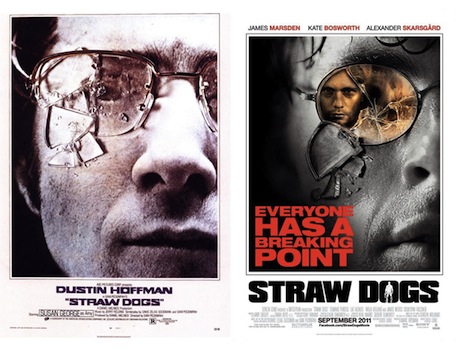
We see this over and over again. Sam Peckinpah’s 1971 thriller Straw Dogs, starring Dustin Hoffman, is considered an important work within the director’s oeuvre, but it was not particularly successful at the box office. So who exactly was the target audience for the 2011 remake starring James Marsden, Kate Bosworth and Alexander Skarsgard? What was to be gained by remaking that movie? It had no resonance with today’s audience, and apparently made little effort to distinguish itself or bring something new to the concept. Gavin Polone, producer of such fare as Gilmore Girls and Zombieland, penned an anti-remake article for Vulture in which he pointed out that the 2011 Straw Dogs did not credit the novel on which Peckinpah’s film was based, but instead credited the original film as the basis for the new screenplay, suggesting there were minimal differences between the two. He also cites the 2006 remake of the classic horror film The Omen, which gave screenplay credit to the original’s writer, David Seltzer…even though he didn’t work on the new film at all. When the 2011 remake of Arthur opened to lousy box office, Entertainment Weekly‘s critic Owen Gleiberman wrote a piece questioning the attempt to make a movie star out of Russell Brand. Near the beginning of that essay, he says, “It’s not just that the $12.5 million it made was significantly below the $18 million that had been predicted. It’s that the $18 million ‘expectation’ was itself a rather pathetic lowball figure, at least for a project that had the nostalgic pedigree, the built-in audience affection, and the ’80s-update curiosity factor that Arthur did.”
The whole idea of Hollywood’s obsession with remakes is that they are an easy and reliable source of income. But Gleiberman is right. If the best a studio could expect for an opening weekend gross was $18 million, then the obsession needs to be seriously reconsidered. Surely the projection was based on how the finished film was tracking; perhaps the studio had higher expectations when they greenlit the project months earlier. Still…how high could their expectations for a remake of Arthur (or of Fright Night or Straw Dogs) really have been? If the hopes are that the title will appeal more to fans of the original than to a new audience, then the insistence on remakes seems even more misguided. Columbia Pictures president Doug Belgrad told The Hollywood Reporter last year in regards to remakes that “…young people don’t know the original, older people have a nostalgia for it….” Yes. Young people don’t know the original, so where is the value in the title? And older people’s nostalgia is for the original, so why would they want to see a remake? Maybe if a piece of material has truly outstanding potential to both connect with modern audiences and be superior to the original, it would make sense to proceed. But it doesn’t seem like the executives making these decisions are lending any serious thought to why a given movie should be revisited. They just see an old title and say, “Hey, it’s been 20 years since that came out. Let’s make it again!
 PASSION AND PAYCHECKS
Not that the entire remake machine is driven by the studios. Plenty of remakes come to pass because a producer, director or actor has an attachment to an older film and wants to bring it to a new audience (and has the clout to do it). I’m generally leery of this argument, as I think that anyone who has that much affection for a certain piece of work should respect it enough to leave it be. When Peter Jackson remade King Kong, I let it slide because he was coming off Lord of the Rings; if he wanted to make a snuff film, I probably would have been cool with it. Plus, I agreed with his argument that contemporary audiences and young viewers don’t want to watch old black and white movies – another fact that I’m not saying I like; just that it’s largely true. It’s kind of the same exception as the one for foreign films, though I’m less inclined to support remaking great old movies just because they’re old. The original King Kong still packs a punch today. I watched it for the first time on the big screen a couple of years before Jackson’s remake, and I was shocked, for example, at how violent the fights between Kong and the dinosaurs were. At one point, the giant ape kills an attacking beast by gruesomely prying back its jaws. And while the creature effects are primitive by today’s standards, there’s still something magical about them. Part of the joy of watching the movie was imagining how shocking and exciting it must have been to audiences in 1933.
Still, Jackson’s drive to remake King Kong was motivated by genuine passion and love, as opposed to cashing in on a title. I wish the same could be said for Neal Moritz, who I mentioned at the beginning…and at length in my previous post on this topic. Fucking Neal Moritz. When he renewed his production company’s deal with Columbia Pictures in 2011, Sony Pictures co-chairman Amy Pascal said, “He has a terrific taste for stories that excite the imagination of audiences everywhere,” while Columbia’s Belgrad said, “He knows what audiences want.” That must explain the complete lack of interest audiences everywhere had in his 2013 films Jack the Giant Slayer and R.I.P.D., as well as last year’s Total Recall remake that nobody gave a shit about (and which lacked all the fun and personality of the Schwarzenegger original). Luckily for him, his commitment to churning out Fast and the Furious sequels keeps his bank account full and his industry standing intact. But really, the only respectable projects he’s been connected to in the last couple of years are the surprisingly enjoyable Jonah Hill/Channing Tatum TV adaptation 21 Jump Street (which is getting a sequel, of course) and the recently wrapped Showtime series The Big C, with Laura Linney. Those titles go on a short list of quality pieces Moritz has delivered over the years…a list that should be much longer when you take into account how much work he’s put out. (His company is called Original Film, which I would assume has to be a deliberate use of irony considering that nearly everything he does is a shitty, bland interpretation of existing material, except that I don’t think Moritz is clever enough to name his company ironically.)
While Moritz may be one of Hollywood’s most egregious examples of creative bankruptcy, he’s far from alone. Michael Bay has a production company called Platinum Dunes which is dedicated to making low-budget horror movies, but which prefers to remake existing ones rather than exert the effort to develop new ideas. Of the ten films Platinum Dunes has released since its first in 2003, seven have been based on previous movies, including genre classics Friday the 13th, A Nightmare on Elm Street, The Amityville Horror and The Texas Chainsaw Massacre. Only three have managed to gross over $100 million worldwide, and just barely at that. But because they were made so inexpensively, they all turned a tidy profit, so I guess there’s no incentive to create something new. At one point, they were developing a remake of Rosemary’s Baby, about which company partner Brad Fuller said, “We certainly come to [the project] with trepidation because of how important [the original] film is. But we’re going to see if there’s a great way to tell that story.” At the time, I suspected the quote continued, “Once we realize there isn’t, we’re going to go ahead and do it anyway.” But for whatever reason, it doesn’t appear to be on their development slate any longer. Don’t worry, though…NBC recently announced they’re going to remake it as a primetime miniseries. I’m sure that will manage to erase all memories of Roman Polanski’s 1968 classic. Platinum Dunes, meanwhile, seems to be branching out to produce non-horror projects, but not necessarily more original ones. Their relaunch of Teenage Mutant Ninja Turtles is coming next year.

It’s easy to dump on Michael Bay and Neal Moritz, but even great filmmakers aren’t immune to the forgettable or inferior remake. The Coen Brothers struck gold with True Grit, but they struck out when they tried to redo The Ladykillers. Among the less heralded work on Steven Spielberg’s filmography is 1989’s Always, a remake of the Spencer Tracy drama A Guy Named Joe. Sydney Pollack dared to mess with Billy Wilder’s Sabrina (sorry, but Julia Ormand is no Audrey Hepburn), while Sidney Lumet had a late career misfire with his take on John Cassavetes’ Gloria. I recall being outraged when Jonathan Demme remade The Manchurian Candidate in 2004, but I’m not sure what was worse: the offense of remaking such a brilliant movie, or the fact that the remake was apparently pretty good, earning favorable reviews and even BAFTA and Golden Globe nominations for Meryl Streep. Despite the positive reaction and presence of actors like Streep, Denzel Washington and Liev Schrieber, I still refuse to watch it. However the results turn out, I’m not quite sure why smart and talented directors like these would choose to spend their time mucking with someone else’s movie. Demme’s Manchurian Candidate seems to be the only one that actually tried to adapt its predecessor in an interesting way, yet with such a sensational original, it may also be the most blasphemous of these examples. So if it sounds like I’m saying that a filmmaker’s passion justifies a remake, I’m not. I don’t know whether the movies mentioned here were initiated by the directors or by the studios, but just because a good director loves an older film and wants to remake it for a new audience doesn’t mean it’s a good idea. Even excellent filmmakers can easily get lost in their own nostalgic notions of paying tribute, too blinded by their reverence to see that they are suffocating the thing they purport to love.
NO RESPECT, I TELL YA
Another problem with the culture of remakes, especially when the original movies are fairly recent, is the lack of respect to the filmmakers — usually still alive, and often still actively working — who made the movie in the first place. Maybe they find it flattering that someone would want to take their movie and try it again, and indeed, some even actively encourage it. Sam Raimi and Bruce Campbell, for example, produced this year’s remake of their influential cult classic Evil Dead. Go ahead and argue that Raimi’s barely budgeted original stood to benefit from better makeup and special effects. I counter that the whole reason Evil Dead remains popular is because it was marked by Raimi’s ingenuity as a director. He used the lack of funds to his advantage, and that prowling, trampling camera and the cheesy effects are exactly what lifted the movie above its simple premise and lent it a sense of fun and even charm, of which the remake seems entirely bereft. In fact, last year’s The Cabin in the Woods was almost an Evil Dead remake in spirit, following the same basic premise but then doing something incredibly fun and original with it. The new Evil Dead had no such creativity up its sleeve, serving no purpose other than delivering its scares in a slicker package and increasing the gore factor tenfold.
But who cares about a creative purpose when there’s money to be made.
 Not all filmmakers share Raimi’s attitude toward their material being rebooted, but few have any power to prevent it, as the rights belong with the studios. (Though I’d bet that if Steven Spielberg wanted to stop Poltergeist from being remade, one phone call is all it would take.) Two years ago, there was an announcement that Martin Scorsese, Leonardo DiCaprio and their Departed screenwriter William Monahan were remaking a 1974 James Caan movie called The Gambler. The original was written by James Toback, who learned about the new version along with the rest of the world, when the news was published on Deadline. He had not been approached by any of the principal filmmakers or by anyone at Paramount, and though legally none of them had any reason to discuss the remake with Toback, he was surprised and offended that no one had bothered to ask for his blessing. In a lengthy reaction piece which Deadline published a couple of days after the announcement, Toback — an old school Hollywood Man’s Man — recounted how the original movie came together, explaining that it was a highly personal and autobiographical story. He writes that although the movie was widely acclaimed, it is largely forgotten, having been released with little attention during a period of leadership transition at the studio. Who knows if this remake will even happen. Movies gets announced all the time and then never materialize. There hasn’t been any news on the project in a year, and those latest reports stated that Scorsese was no longer involved and that Todd Phillips might direct. (That sounds smart. The guy who directed Raging Bull, Taxi Driver and GoodFellas has moved on, so let’s get the guy who directed The Hangover, Road Trip and Due Date.) I wonder how Toback would have felt about his movie being remade even if the players had courted his blessing. In the end he would have no say one way or other, but considering how personal the movie is for him, and how mishandled it was in the first place, I can’t imagine he’d have been pleased with the idea.
But who cares about respecting artists when there’s money to be made.
SUGGESTION BOX
I’m not remotely foolish enough to think Hollywood’s reliance on existing titles is going to change, but a little wishful thinking can be the spoonful of sugar that helps the medicine go down. My wish is that studios could find a way of getting audiences to see older movies instead of spending millions of dollars remaking them, less successfully in most cases. What if popular directors or actors — people like Christopher Nolan or Robert Downey Jr. — could be enticed to make a short film, which would be shown in front of an older movie, along with a brief interview in which they discuss the movie and why they love it? If the movie is old enough that it feels too far removed in tone, mood or style from what today’s audiences are used to, then someone like Nolan (or Scorsese or Fincher or Spielberg or Paul Thomas Anderson or so many others) could help illuminate its place in film history, its significance, and how it paved the way for contemporary movies that are more in an audience’s comfort zone.
 Why not ask Disney, Pixar, Warner Brothers, and other animation companies to produce new shorts that could also be shown in advance of the feature presentation? Or acquire existing shorts from independent animators whose work is never seen by wide audiences? (Those Oscar nominated Best Animated Shorts that no one has ever heard of are coming from somewhere.) The studios could re-release deserving movies surrounded by all of this new content that, taken together, would create a fresh experience (not to mention providing more bang for your buck, considering how expensive it has become to have a night out at the movies). The returns would be smaller, but the investment would be too, and there will still be plenty of money to make from other tent-pole movies that have become the studios’ bread and butter.
Even if older movies could actually get this kind of lavish treatment, it wouldn’t mean the end of remakes, but it might mean that studios could start being more selective with the targeted titles. I said earlier that the guiding question when considering a remake should be, “Can we do this better than it was done before?” But maybe I should amend that to say that it’s not a matter of better, but of whether a new version can genuinely offer something interesting that the original didn’t have. The problem is that in most cases, the filmmakers convince themselves — and then try to convince audiences — that they can. But rarely is that the case. One reason that Scorsese’s Cape Fear stands out as a success is that he gave the victimized family a more fractured and complex dynamic than societal norms allowed in 1962, the year of the original film. By placing flawed, complicated characters into the situation which the original film presented, Scorsese added a moral ambiguity to the story that justified revisting it, and distinguished itself successfully. If more remakes were approached with the same thoughtfulness, perhaps there would be a weeding out process resulting in fewer of them, and those that we got would be better. Remakes shouldn’t be made because studios see dollar signs in an older title, or merely because an old title is sitting around. They should be made because a filmmaker with a vision sees a genuinely creative opportunity to deliver a fresh take on a familiar story. And even then it should be done sparingly. Remakes, like sequels, have always been part of the Hollywood tradition, and that’s not going to change. What needs to change is the lack of thought, care and artistic integrity that results in an ever-growing pile of rotten reboots, reimaginings, and revamps.

Coming Soon: A look at some remakes currently in development, with an assessment of how bad an idea each one is.
 Well, wrong suit, but close enough.
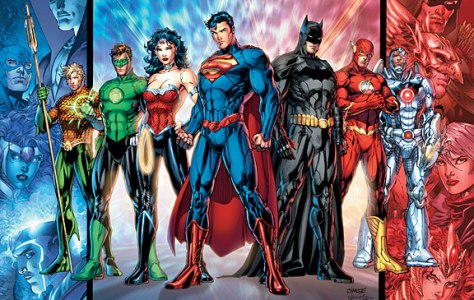
 Me, I’m just surprised. I can’t figure out why Affleck would be interested in such a move at this moment in his career. To understand why it puzzles me, let’s jump back in time again. After Good Will Hunting, Affleck and Matt Damon were Hollywood’s new golden boys. The following year, they each played supporting roles in prestige projects that competed for the Best Picture Oscar (Damon in Saving Private Ryan, Affleck in Shakespeare in Love). They also reunited on-screen in 1999 for pal Kevin Smith’s Dogma. But by and large, those next several years after Good Will Hunting were marked by forgettable movies from Affleck. Boiler Room struck a chord, and Changing Lanes was pretty good, but these were bright spots amidst a spate of bland studio fare and would-be blockbusters that included Pearl Harbor, Reindeer Games, Daredevil (another comic book character, this one from Marvel’s stable), Paycheck, Jersey Girl, The Sum of All Fears, Surviving Christmas and the dreaded Gigli. High profile romances with Jennifer Lopez and Gwyneth Paltrow didn’t help his falling public persona, and by 2004 Affleck was both punchline and punching bag (

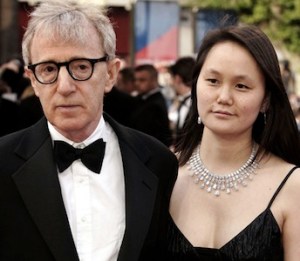 While scrolling through my Facebook wall on Saturday, I came across a post in which a friend — to protect the innocent, let’s call this person Hermione — explained that she had once stated her refusal to see a certain artist’s films in the theater because she did not agree with the person’s life choices. Upon hearing that remark, a colleague responded, “Hate the artist, not the art.” To which Hermione asked her Facebook community, isn’t an artist inextricably linked to his or her art? She added that the artist in question is Woody Allen, and that with Allen’s new movie Blue Jasmine currently earning strong reviews, big box office (“big” for an independent film) and major Oscar buzz for Cate Blanchett, the debate was once again on her mind. It’s a valid question, which elicited about 60 responses from her friends. I read through them all with great interest, and decided that since I’ve given the topic some thought myself in the past, I would raise it here where I could expound on it more than I could on Facebook.
 I fall into the latter category. I don’t let an artist’s real life circumstances interfere with my desire to see their work. “Don’t let” may not be the best way to phrase it, actually, since I never made a conscious decision about it. I simply don’t have trouble appreciating this movie or that because of what its star, director, location manager, etc. has done. I’m a Woody Allen fan, so however sketchy some of his off-screen behavior may be, I’m not going to stop watching his movies. If Roman Polanski has a movie out that interests me, I’m going to see it regardless of his past inappropriate conduct. Ditto for Mel Gibson. Yes, I’m troubled by many of the things he’s said and done in recent years. But I can’t bring myself to reject Lethal Weapon or Braveheart because of it, nor am I going to boycott future works of his that look appealing. I’m sure there are some people who don’t understand how I could continue to support the career of such a person. All I can say is that for me, the work is the work. By avoiding it, I’m only punishing myself. Those that think they’re impacting the artist’s financial rewards by withholding patronage are kidding themselves, but if it makes them feel better, I won’t argue it. I’ll just say that if that’s their sole reason for avoiding something that they would otherwise choose to experience, the loss is theirs, not the artist’s. (And for these people, I’m curious: does your opinion change once the artist has passed away?) If the reason is not monetary, but instead an inability to watch that person’s work without thinking about who they truly are and experiencing some degree of disgust, then they should stand by that, as long as that feeling outweighs their interest in the movie, album, book, etc. I’m not sure what it says about me, if anything, but I have no problem separating my opinions. I can still happily watch The Naked Gun without dwelling on O.J. Simpson’s crimes, or see David Lynch’s Lost Highway and be creeped out by Robert Blake’s character, but not by the man himself and the murder for which he was convicted. When I listen to “Unchained Melody”, “Be My Baby”, “Imagine” or “My Sweet Lord”, I don’t think about Phil Spector serving time for murder (though in truth, I don’t think I knew Spector was involved in any of those songs before watching the recent HBO movie with Al Pacino).
 Simpson, Blake and Spector may be extreme cases, but there are many famous people who have engaged in behavior that some might find troubling. Where do we draw the line about what we’ll tolerate? I ask that not as a defiant challenge intended to trip anyone up on their own morals, but as a legitimate query. In 1965, at the height of his James Bond fame, Sean Connery gave
 But of course, these achievements are not all that he’s known for. Kazan is also infamous for his 1952 testimony before the House Un-American Activities Committee, during which he named names of fellow artists who had been connected to the Communist party. All of the names he provided were already known to the committee, but his appearance as a friendly witness was nevertheless seen by many as a betrayal. His testimony may not have directly led to any blacklisting, but his cooperation upheld Joe McCarthy’s institutional witch-hunt that ended countless careers in Hollywood and beyond. If Kazan had refused to testify or name names, his ability to make films might have ended, but his thriving career in New York theater would likely have continued unaffected. He also had enough clout that if he had challenged HUAC, he might have helped put an end to its despicable activities. Instead, he played ball and saw his good fortune continue to flourish while others saw theirs evaporate. And yet, a mere two years later, Kazan was given the Academy Award for Best Director (his second) for On the Waterfront, a movie that deals with the consequences of informing and which has been interpreted by many as Kazan’s attempt to justify his actions regarding HUAC. When you think about how political the Oscars are known to be, and how many factors other than the movie itself make their way into people’s voting process, Kazan’s 1954 win is stunning. But here was a case where even in the wake of his controversial action, the film community still saw fit to recognize his artistic achievement. And although he went on to continued success and many accolades, including a Kennedy Center Honor in 1982, some organizations, such as the American Film Institute, refused to celebrate him later in his life. His appearance before HUAC — and his refusal over the years to apologize or admit that it was a mistake — were stains that many could not forgive or forget. So when it was announced that Kazan would be presented with an Honorary Oscar for lifetime achievement in 1999, the reaction was unsurprisingly divisive. The Academy’s decision stirred up long-dormant feelings about the McCarthy and blacklist years, with those critical of the selection pointing out that (among other things), Kazan had already won two Oscars, making this an unnecessary tribute. The Academy’s position was that Kazan was being honored for his work, not his politics or his personal behavior, although many other Honorary Oscar recipients over the years were cited for their offscreen morality and good deeds as well as their contributions to cinema. (That includes Kirk Douglas, who received a similar award three years earlier, and whose accomplishments as mentioned by presenter Steven Spielberg included helping to “hammer the blacklist to pieces.”) When Kazan’s Oscar night moment came and he took the stage, many in the room gave him a standing ovation, while others remained defiantly in their seats, arms folded. Some stayed seated but still clapped.
 I Am DB