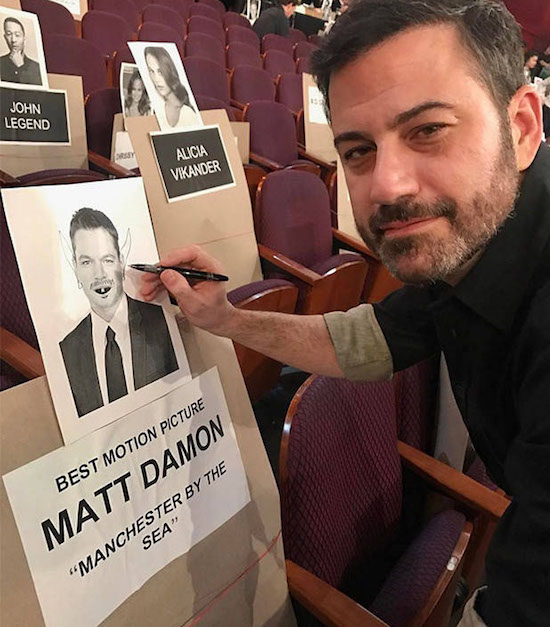
Better late than never, right? I’d promise you that one day I will actually complete this post more than 24 hours before the show begins, but I don’t know if I have it in me to keep doing these long enough to fulfill that pledge. So for what it’s worth at this point, here are my Oscar predictions and requisite over-explanation.
BEST SOUND MIXING AND BEST SOUND EDITING
Sound Mixing:
Arrival – Bernard Gariepy Strobl and Claude La Haye
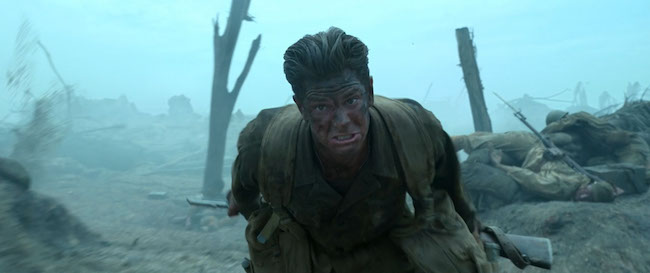
Hacksaw Ridge – Kevin O’Connell, Andy Wright, Robert Mackenzie and Peter Grace
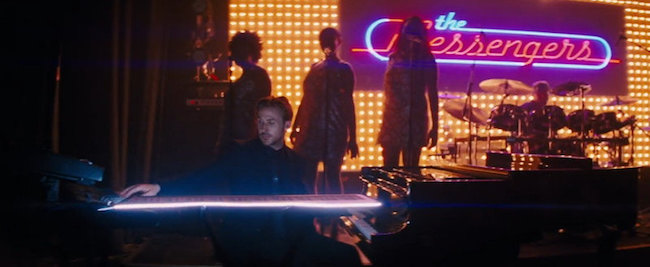
La La Land – Andy Nelson, Ai-Ling Lee and Steve A. Morrow
Rogue One: A Star Wars Story – David Parker, Christopher Scarabosio and Stuart Wilson
13 Hours: The Secret Soldiers of Benghazi – Greg P. Russell, Gary Summers, Jeffrey J. Haboush and Mac Ruth
Sound Editing:
Arrival – Sylvain Bellemare
Deepwater Horizon – Wylie Stateman and Renee Tondelli
Hacksaw Ridge – Robert Mackenzie and Andy Wright
La La Land – Ai-Ling Lee and Mildred Iatrou Morgan
Sully – Alan Robert Murray and Bub Asman
X
Get ready — you’re going to see the words La La Land a lot in this post. (Is La even a word?) Here in the Sound categories, it throws us a curveball. I pointed out when predicting the nominees that musicals have a great track record getting nominated for Sound Mixing, and not such a great one getting nominated for Sound Editing. This year, however, the Sound branch cited La La Land in both categories. I have to assume that most voters from other branches don’t much understand the difference between the two categories, nor what constitutes a great achievement in either of them. If La La Land had just been nominated for Mixing, I’m sure they would have voted for it, and the Sound Editing award would have gone elsewhere. But now that they can vote for it in both categories, will they? And if they decide to go with two different movies, will they honor La La Land in Mixing, where musicals have traditionally succeeded? Or will they honor it in Editing because, hey, they’re actors and cinematographers and costume designers, and they don’t know in which category musicals have traditionally succeeded? Since the impossibility of knowing is even more acute here than in other categories where it’s impossible to know but you still kinda know, I’ll be a traditionalist and predict that La La Land takes the award for Sound Mixing, but not Sound Editing. In that category, any of the nominees feel like viable winners, but I’m going with Hacksaw Ridge. When in doubt, voters might equate the chaotic noise of war with the best achievement in sound. Or, you know…not.
Personal: I rarely have strong feelings about the outcome of these races, being admittedly ignorant about how to judge the work. However, knowing that Sound Editing involves the creation of the aural components, my vote in that race would go to Arrival, as the only nominee of the five that had to imagine otherworldly sounds as opposed to re-creating earthbound ones.
 X
X
BEST VISUAL EFFECTS
Deepwater Horizon – Craig Hammack, Jason Snell, Jason Billington and Burt Dalton
Doctor Strange – Stephane Ceretti, Richard Bluff, Vincent Cirelli and Paul Corbould
The Jungle Book – Robert Legato, Adam Valdez, Andrew R. Jones and Dan Lemmon
Kubo and the Two Strings – Steve Emerson, Oliver Jones, Brian McLean and Brad Schiff
Rogue One: A Star Wars Story – John Knoll, Mohen Leo, Hal Hickel and Neil Corbould
X
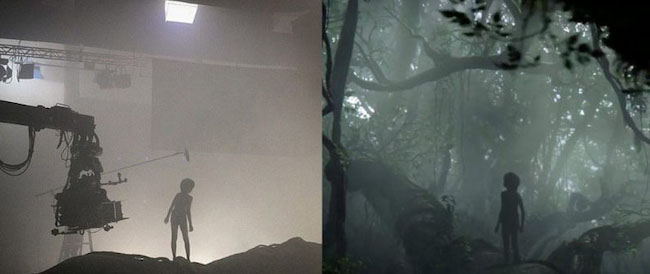
All five nominees boast stellar work that seemed to take certain VFX challenges further than they had been taken before, but the complexity and sheer amount of work that went into The Jungle Book has to be acknowledged. This wasn’t just about adding talking animals that looked believable. This whole damn movie was shot on a soundstage in downtown Los Angeles. The young star Neel Sethi was working on bluescreen and greenscreen stages with only small portions of the jungle set constructed for him to interact with. A boulder here, a small patch of grass there, a short sandy pathway over there….everything else around him was created in a computer. EVERYTHING. Think about that for a minute. Here’s the trailer for the movie. Watch it, and realize that other than what Sethi is actually physically touching at any given moment (not including the animals, of course) and perhaps what’s in his immediate vicinity, the rest of it is computer-generated. That, ladies and gentlemen, is Movie Magic at its most astonishing.
The problem is that voters don’t have the best track record of recognizing Movie Magic at its most astonishing. The good news this year is that there isn’t a Best Picture nominee to muddy the waters, as the inclusion of a prestige film often hijacks this award from a movie that features truly amazing and/or groundbreaking work. That’s how you get Gladiator beating The Perfect Storm, or Hugo over Rise of the Planet of the Apes. But that won’t be an issue this time, leaving a clear pathway for The Jungle Book. But you never know. Watch out for Rogue One: A Star Wars Story.
Personal: It’s gotta be The Jungle Book.
X
BEST HAIRSTYLING AND MAKEUP
A Man Called Ove – Eva von Bahr and Love Larson
Star Trek Beyond – Joel Harlow and Richard Alonzo
Suicide Squad – Alessandro Bertolazzi, Giorgio Gregorini and Christopher Nelson
X
None of the three nominees are movies that lit it up with the Academy, so voters are a bit off the grid here. Don’t discount Suicide Squad just because it seemed to be derided by critics and audiences. Even without having seen it, I know there was an impressive variety to the work. But I’ll put my money on Star Trek Beyond, because Trek is a known quantity to voters whether they saw the movie or not.
Personal: Judging just by pictures from Suicide Squad, the work looks impressive. But Star Trek Beyond is the only one of the three I’ve seen, so I suppose it gets my vote by default. The new alien designs — especially the one sported by Sofia Boutella — do look Oscar-worthy to me. There’s something about that design that makes me want to eat ice cream. What’s that about?

X
BEST ORIGINAL SCORE
Jackie – Mica Levi
La La Land – Justin Hurwitz
Lion – Dustin O’Halloran and Hauschka
Moonlight – Nicholas Brittel
Passengers – Thomas Newman
X
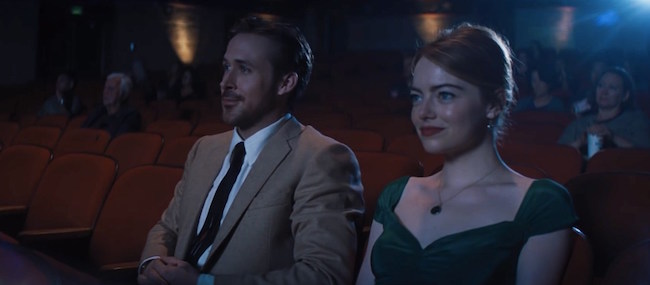
When Disney musicals had their resurgence in the late 80’s and early 90’s, Oscar voters proved keen to award not just their memorable songs, but also their orchestral scores. The Little Mermaid, Beauty and the Beast, Aladdin, The Lion King and Pocahontas all took home the Oscar for Best Original Score even though you kind of got the feeling members were just voting for the scores as a way to vote for the overall music in the movie. I love those soundtracks (well, the first three anyway), but did the scores really deserve to win? Maybe. Maybe not. I bring it up because we’re in a similar situation this year, with La La Land poised to take this prize even though maybe, possibly, perhaps its actual instrumental score isn’t really as strong or memorable as some of its songs. It has a nice theme, for sure, but does the full score really merit an Oscar? Many will think so, and they will vote for it, and it will win.
Personal: I’m probably not being fair. La La Land‘s score is good, and functions successfully in the movie, which is ultimately what should matter with this award, even if — as I say every year — I’m always looking for something that stands tall on its own, apart from the movie. On that score (no pun intended) I think La La Land comes up a little short. It’s between Jackie and Moonlight for me, because both take a similarly unexpected approach to their subject matter. I admire the stylistic choices of both, but found Jackie‘s to be more memorable.
X
BEST ORIGINAL SONG
Audition (The Fools Who Dream) – La La Land — Music by Justin Hurwitz; Lyric by Benj Pasek and Justin Paul
Can’t Stop the Feeling – Trolls — Music and Lyric by Justin Timberlake, Max Martin and Karl Johan Schuster
City of Stars – La La Land — Music by Justin Hurwitz; Lyric by Benj Pasek and Justin Paul
The Empty Chair – Jim: The James Foley Story — Music and Lyric by J. Ralph and Sting
How Far I’ll Go – Moana — Music and Lyric by Lin-Manuel Miranda
X
You avid Hamilton fans eager for Lin-Manuel Miranda to complete his EGOT with an Oscar win had better put your hopes on hold. Despite contributing music to the latest animated film from Disney — as well-trod a path to success in this category as it is in Best Original Score — it’s not going to happen this year. But fear not; Miranda will have plenty of future chances. With a Mary Poppins sequel in the works and a secretive animated project with Sony a few years off, he’s not throwing away his shot.
The winning film will be La La Land, and this time it should be. The only question is which of the movie’s two nominated songs will emerge victorious: “City of Stars,” or “Audition (The Fools Who Dream)?” Nearly every pundit seems to be banking on the former, and that’s the smart bet. I’m going against the grain, however, and guessing that “Audition” pulls off an upset. First of all, there are really two versions of “City of Stars:” Ryan Gosling’s solo version, which has that memorable whistle going for it, but which is basically one verse; and Gosling’s duet with Emma Stone, which is longer, and has additional verses and alternate lyrics. I’d wager that when most people think of the song, they think of the solo, “whistling” version. But will they remember how brief it is? Will they care?
Then you have Stone’s solo, “Audition,” which is one of the most stirring moments in the movie, and a scene that I think people are more likely to remember than either of the scenes “City of Stars” figures into. It marks a major turning point in the story and furthers the journey of the characters; “City of Stars” doesn’t. It also has more evocative lyrics. Voters may not notice or care about these facts, especially with the powerful hook of that whistle echoing in their heads. So I don’t know. If voters are trying to recall the songs long after seeing the movie, “City of Stars” is probably the one that comes to mind. But if they really remember the moments in which the songs play and how they felt when they watched the movie, I’m convinced they’d vote for “Audition.” It’s not the wise move, but I’m sticking my neck out.
Personal: “City of Stars” is wonderful, so I don’t mean to knock it. I just think “Audition” is better. Gosling’s version of “Stars” is tinged with a touching melancholy, befitting the movie’s bittersweet resolution. The duet version, meanwhile, warmly speaks to the joys of finding love. But to me, “Audition” is the song that truly captures the full, blooming, in-love-with-art-and-artists spirit that infuses every frame of the movie, and it too is bittersweet, as it speaks to the struggle of reaching for an elusive dream. Plus, as I was saying, it has a more crucial function in the film. I certainly won’t be upset if “City of Stars” goes all the way, but “Audition” is the more deserving; an ultimately richer song that better encapsulates the themes of the movie.

X
BEST COSTUME DESIGN
Allied – Joanna Johnston
Fantastic Beasts and Where to Find Them – Colleen Atwood
Florence Foster Jenkins – Consolata Boyle
Jackie – Madeline Fontaine
La La Land – Mary Zophres
X
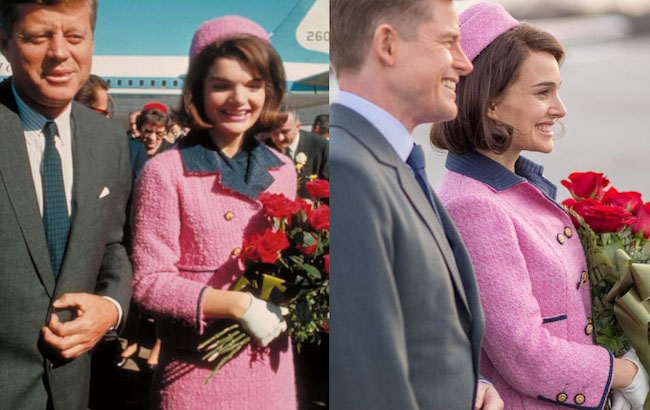
As I said in the previous post, Jackie has beautiful costumes, but many of them are re-creations of well-documented outfits worn by Jackie Kennedy, and to me that means the movie really doesn’t deserve the nomination. A win would be disappointing. The British Academy of Film and Television Arts (BAFTA) went there anyway, while the Costume Designers Guild (CDG) instead awarded Hidden Figures in its Period category. Figures is not among the Oscar nominees, nor is Doctor Strange, which took the prize in the guild’s Fantasy category (besting Kubo and the Two Strings, unfortunately). The only CDG winner included among Oscar’s five nominees is La La Land, which won in the Contemporary category. I think it will come out on top at the Oscars as well. Emma Stone sports one striking dress after another, and I imagine at least a few of those will be top of mind for many voters. On the other hand, Academy voters usually favor period pieces and fantasies — or a melding of the two — in the design categories. You have to go back to 1994 and Priscilla, Queen of the Desert for the last time this award went to a contemporary-set film. Before that? 1979(!) and All That Jazz. So history is against La La Land, but I think the bold colors will prove hard to resist, plus the styles are frequently old-fashioned, which helps lend a period feel to this modern musical.
Personal: La La Land. Those colors, those dresses…pretty much everything Emma Stone wears in this movie is splendid, forget about the rest of the cast. I liked the costumes in Fantastic Beasts and Where to Find Them, particularly Newt’s outfit, but I’ve got to give it up for La La Land.

X
BEST PRODUCTION DESIGN
Arrival – Patrice Vermette, Paul Hotte
Fantastic Beasts and Where to Find Them – Stuart Craig, Anna Pinnock
Hail, Caesar! – Jess Gonchor, Nancy Haigh
La La Land – David Wasco, Sandy Reynolds-Wasco
Passengers – Guy Hendrix Dyas, Gene Serdena
X
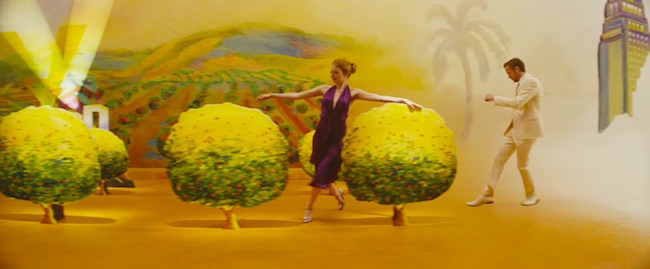
In another category where movies with non-stylized contemporary settings rarely come out on top, La La Land is again likely to defy tradition. The movie is a tribute, among many things, to Technicolor musicals of Hollywood’s heyday, and just as in the Costume Design category, color is key. It’s not so much that the sets and locations are all striking in and of themselves, but rather what the design team did to make ordinary locales pop off the screen. The only other nominee that feels like a potential threat is Arrival, for the compelling interior of the alien craft, so unlike other such settings we’ve seen before. Still, that’s a single and sparse location, and most of the movie takes place outside the ship in more drab or ordinary settings.
Personal: La La Land. Every wall, every windowpane, every prop, every single strip, dash and dot of color seems carefully considered and absolutely deliberate. The cumulative effect is an eye-popping visual palette that feels familiar and new all at once.
X
BEST FILM EDITING
Arrival – Joe Walker
Hacksaw Ridge – John Gilbert
Hell or High Water – Jake Roberts
La La Land – Tom Cross
Moonlight – Nat Sanders and Joi McMillon
X
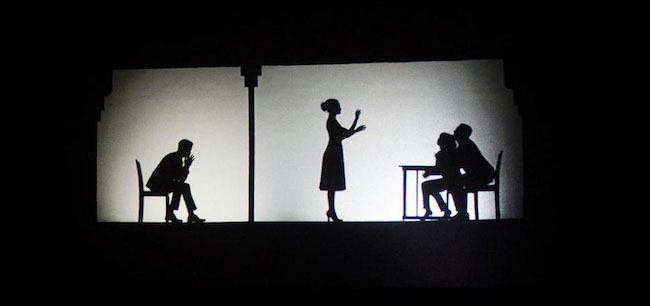
Any outcome feels possible in this category, where the kind of movie that wins is more varied than in some of the other “crafts” categories. Hacksaw Ridge has brutally intense battle scenes but also plenty of quieter, well-paced character drama. Hell or High Water feels tight and efficiently assembled as it moves between the bank robbing brothers and the Texas rangers investigating them. Moonlight divides one character’s story into three distinct chapters, each one feeling complete yet complimentary to the others. Arrival plays with time in unexpected ways that take on greater significance after the movie has ended. And La La Land moves between the fast-paced energy of big musical numbers and intimate moments of a romantic relationship with ease, where it could have left us with whiplash. (Get it?! Whiplash?!!?) The voters could throw us a curveball, but I have a feeling enough of them will associate editing with the rhythms of a musical and cast their vote for La La Land.
Personal: I wouldn’t be disappointed to see any of these take the prize, but I’d vote for Arrival. Amy Adams’ character experiences flashes throughout the story, and as we start to understand what they mean and why she’s having them, the way they interact with her current circumstances becomes crucial to unlocking the movie’s mysteries.
X
BEST CINEMATOGRAPHY
Arrival – Bradford Young
La La Land – Linus Sandgren
Lion – Greig Fraser
Moonlight – James Laxton
Silence – Rodrigo Prieto
X
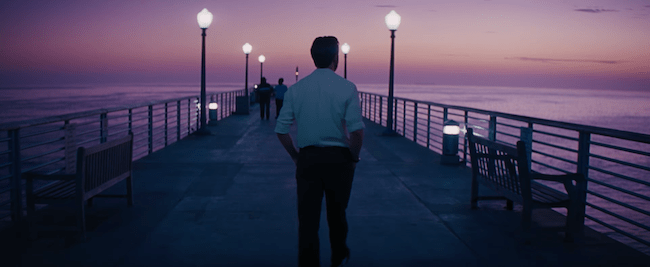
In making my nomination predictions last month, I pointed out that the Academy’s nominees usually don’t match up with those from the American Society of Cinematographers (ASC), and that I thought Greig Fraser’s work on Lion would be the ASC nominee to miss with the Academy. Well, I blew that one. Not only did the Academy’s picks mirror the ASC’s exactly, but Fraser and Lion went on to win the ASC prize. Does that mean Fraser has the Oscar in his sights as well? Probably not. La La Land‘s Linus Sandgren is the frontrunner here. The Academy at large is more likely to remember the play of light (often spotlight) that transports us in and out the movie’s many musical numbers, as well as how the camerawork shows off the rainbow of colors captured within the costume and production design. Part of the reason the colors jump off the screen so vividly is due to the way the lighting illuminates them. All elements of a movie obviously rely on and play off each other, but La La Land‘s costumes, production design and camerawork function in particularly harmonious tandem. It’s hard to imagine the movie winning one and not the other two…though in fact, we don’t need to imagine it. BAFTA spread the love in these categories, giving Cinematography to La La Land, Costume Design to Jackie and Production Design to Fantastic Beasts. So it’s possible. But unlikely, I’m guessing.
Personal: La La Land, for the way the lighting makes the bright colors glow, dance and suck you whole into the world of the movie. Sandgren also gets credit for taking better advantage of Emma Stone than perhaps any cinematographer who’s ever filmed her. She has such an expressive face, so the camera loves her right off the bat. Sandgren really revels in that gift, often holding her in close-up and allowing her to be riveting simply in the act of looking. She brings that to the table, but he has to be there to capture it in all its effectiveness.
X
BEST ANIMATED FEATURE
Kubo and the Two Strings – Travis Knight and Arianne Sutner
Moana – John Musker, Ron Clements and Osnat Shurer
My Life as a Zucchini – Claude Barras and Max Karli
The Red Turtle – Michael Dudok de Wit and Toshio Suzuki
Zootopia – Byron Howard, Rich Moore and Clark Spencer
X
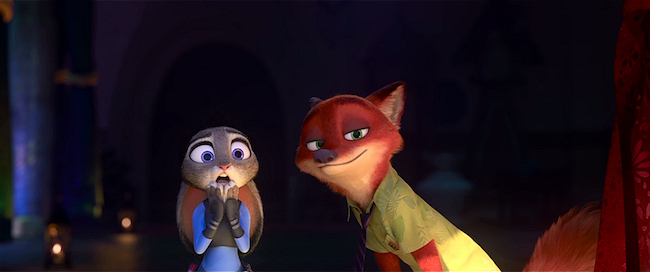
This has been an exciting category to watch throughout the season, with Zootopia and Kubo and the Two Strings running in near lockstep with critics organizations. Zootopia took the Golden Globe and the Broadcast Film Critics Association (BFCA) prize, but Kubo got the BAFTA. Most of the guilds don’t have a category for animation, but those that do — the Producers Guild of America (PGA) and the American Cinema Editors (ACE) — went with Zootopia, and it was also the big winner at the Annie Awards, though I’ve never considered those to be much of a factor with the Oscars. You’d like to think that people only vote in a category if they’ve seen all of the nominees, but some probably vote regardless, and if that applies to anyone with this category, it’s probable that Zootopia — one of the highest-grossing movies of the year — was seen by a lot more people than Kubo…and I’d wager was playing in a lot more family rooms over Christmas vacation. Kubo has made too strong a showing to be counted out, surprising consistently throughout the season with a Best Visual Effects nomination, a groundbreaking nomination from the Costume Designers Guild, and more critics awards than people may have expected. At the end of the day though, the math seems to favor Zootopia.
Personal: Kubo and the Two Strings. Hey, Zootopia is terrific and I’ll hardly be despondent if it wins. But smart, sly, funny and touching as it is, it’s still cut from the familiar cloth of wide-eyed animals occupying bright, cheerful, landscapes. Thematically too, we’ve seen similar efforts rewarded before. Kubo, on the other hand, is a real original, with arresting visuals and the daring to tell a darker story than the typical plucky animated fare. Plus, Laika Studios has been putting out excellent work from the start. Each of its previous three films has been nominated, but none have come this close to the prize before. Who knows when they will again. The movie deserves this win, and so does the studio. (Speaking, by the way, of voting without seeing all the nominees, I still haven’t been able to see The Red Turtle or My Life as a Zucchini. The latter is just now opening, and the former played only for a limited time and not anywhere very accessible for me. I hope to catch them both, but would be surprised if either lured me away from Kubo.)
X
BEST ADAPTED SCREENPLAY
Arrival – Eric Heisserer
Fences – August Wilson
Hidden Figures – Allison Schroeder and Theodore Melfi
Lion – Luke Davies
Moonlight – Barry Jenkins; Story by Tarell Alvin McCraney
X
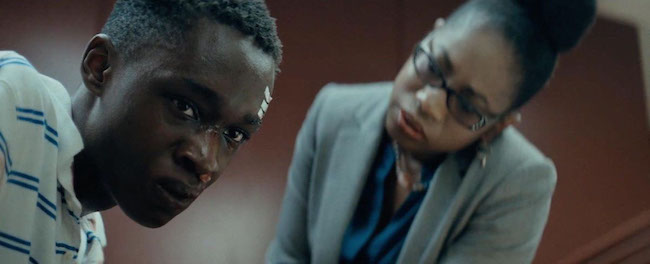
The Writers Guild of America (WGA) honored Arrival in this category, but I’m sure you remember from my predictions post — because you studied it and committed it to memory — that the WGA placed Moonlight in the Original Screenplay category (where it won) while the Academy considers it an adaptation. Really though, we don’t need the guild to provide guidance in this case. Against La La Land and Manchester by the Sea in the Original category, it would have been a battle. But in the Adapted column, Moonlight should sail smoothly to victory. The movie is universally admired, and writer/director Barry Jenkins seems to have charmed and impressed everybody who’s encountered him during the months he’s been promoting the movie at Q&As, festivals, award ceremonies, etc. I think many voters want to not just recognize the movie; they want to recognize Jenkins specifically, and since he’s not one of the producers, that leaves this category or Best Director as the place to do it. He’ll get a lot of votes in both, but he’ll get more here. Arrival has spoiler potential, and without Moonlight to contend with I think its structure and surprises would carry it to a win. But it does have to contend with Moonlight, so that’s that.
Personal: I wouldn’t have said this if I hadn’t had the chance to see it a second time, but since I did, my pick has to be Arrival. Not just for the whoa-factor, but for making an engaging movie about a rather abstract concept. With a story about humans and aliens trying to establish a baseline of communication with two entirely different systems, the movie becomes about the fragility and delicacy of language. How do we ask them complicated questions about their purpose on Earth? Do they even understand what a question is? How do we correctly interpret their attempt to use a word that even among our own kind can be misunderstood and construed in different ways? There’s nothing inherently cinematic about this, but Eric Heisserer’s script presents it as gripping, high-stakes drama, and even though it rather conveniently bypasses the nuts-and-bolts of how the humans come to understand and “decode” the alien language — and vice versa — the script has the courage to be about something scholarly and intellectual while still having great humanity and feeling. No easy task.
X
BEST ORIGINAL SCREENPLAY
Hell or High Water – Taylor Sheridan
La La Land – Damien Chazelle
The Lobster – Yorgos Lanthimos, Efthimis Filippou
Manchester by the Sea – Kenneth Lonergan
20th Century Women – Mike Mills
X
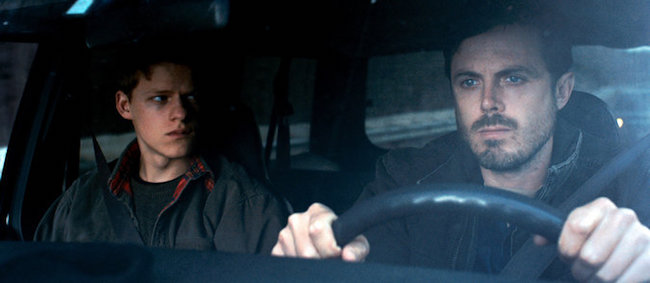
One of the hardest-to-call races this year finds La La Land squaring off against Manchester by the Sea. They tied with the BFCA. La La Land won the Golden Globe. Manchester won the BAFTA. The WGA by-passed them both in favor of Moonlight. So where does that leave us? I don’t know that enough voters — even those who liked La La Land — will think that its screenplay is as much a winning achievement as certain other components or the film as a whole. The heartache and humanity of Manchester seems more the stuff of great screenplays, and since Kenneth Lonergan is unlikely to factor into many Best Director votes, this is the place to reward him. If there are enough voters who love La La Land and just rubber-stamp it up and down their ballot, then surely they’ll choose it here too. But I think this will be one of the few places it misses.
Personal: I love the originality of The Lobster, but I don’t quite love the movie. Really, these are all great (though La La Land is the weakest as a screenplay nominee). But my pick is Manchester by the Sea. Lonergan took somebody else’s skeletal premise — it was actually John Krasinski who birthed the seed of the idea — and made it completely his own, sublimely marrying humor born of character conflict with harrowing circumstances and heartbreaking sadness, to create something deeply moving and unexpectedly funny. Few movies I’ve seen strike the balance so honestly and effectively, and it’s just a great story that seems miraculously imaginative yet completely, believably mundane.
X
BEST SUPPORTING ACTOR
Mahershala Ali – Moonlight
Jeff Bridges – Hell or High Water
Lucas Hedges – Manchester by the Sea
Dev Patel – Lion
Michael Shannon – Nocturnal Animals
X
This year’s acting nominations may have put the #OscarsSoWhite issue on the back burner, but nominations aren’t enough. Some of these folks have to win! And they will, starting here with Moonlight‘s Mahershala Ali, who has nearly swept the circuit so far. He did endure two surprise, high-profile losses on his path to the Kodak Theatre — the Golden Globe went to Aaron Taylor-Johnson of Nocturnal Animals and the BAFTA went to Dev Patel for Lion. But Taylor-Johnson isn’t nominated for the Oscar, and Patel may have benefitted somewhat from a home field advantage in England, and perhaps even some lingering residual love for Slumdog Millionaire. I don’t see him repeating at the Oscars, and can’t really imagine any of these guys coming from behind to overtake Ali. If Jeff Bridges were still seeking his first win, things might be different. But he’s got an Oscar now, so I don’t expect him to collect a second this year, beloved as he is. He’ll get a fair share of votes, I’m sure, but Ali will be crowned the champ.
Personal: Mahershala Ali. My only hesitation is that the part is so small, and I’m always saying that roles should be larger than this to be worthy of an Oscar win. But Ali does so much so beautifully with his limited screentime, and his impact is felt even when he’s not there. His character defies the expected archetype, and Ali makes him wholly believable, speaking volumes while talking softly…and sometimes without talking at all.

X
BEST SUPPORTING ACTRESS
Viola Davis – Fences
Naomi Harris – Moonlight
Nicole Kidman – Lion
Octavia Spencer – Hidden Figures
Michelle Williams – Manchester by the Sea
X
This is your safest bet of the night. Viola Davis probably already has the Oscar at home, engraved, on her shelf, in need of a polish. The ceremony is just a sham for the public. Some may argue that she belongs in the lead actress category, but given the history with the role on Broadway, lead and supporting were both deemed legitimate pathways. In Best Actress, it might not have been so cut and dry. In Supporting Actress, her fellow nominees can’t compete. They’re all good, but Viola has more screentime, her character is easily the most fully drawn of the five, and she just plain totally crushes it. She’s deeply admired and respected by her peers, and this role seemed to be waiting for her to come along. I was disappointed when she didn’t win Best Actress for The Help, partly because she had such good odds and who knew if she’d come that close again. I’m glad I was wrong.
And she still should have won for The Help.
Personal: Viola’s time has come, and I’m right there with her.

X
BEST ACTOR
Casey Affleck – Manchester by the Sea
Andrew Garfield – Hacksaw Ridge
Ryan Gosling – La La Land
Viggo Mortensen – Captain Fantastic
Denzel Washington – Fences
X
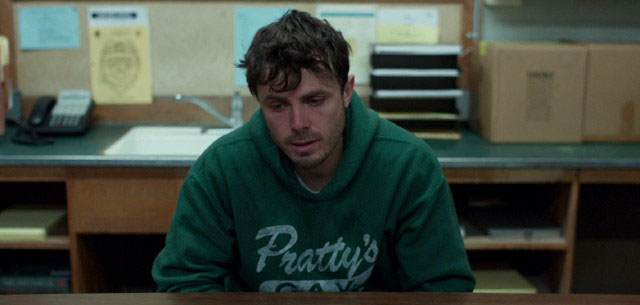
For the longest time, this was shaping up to be as sure a thing as Viola Davis: Casey Affleck won nearly every single award there was to win, cutting what looked like a clear path to the Oscar stage. Then last month, he was toppled at the Screen Actors Guild (SAG) Awards by Denzel Washington, and now this is being called one of the toughest races of the year to call. Since the first SAG Awards in 1994, only four times has the Best Actor winner not gone on to win the Oscar, and the last time was 2003. I throw that out there just for trivia; I put far less trust in those kinds of stats than other pundits. But it’s a fact that had many people shifting their prediction from Affleck to Washington.
The bigger threat is the renewed coverage of sexual harassment charges leveled at Affleck in 2010 by two female colleagues from I’m Not There, his mockumentary collaboration with Joaquin Phoenix. The situation was brought up here and there during Phase One of awards season, but didn’t gain much traction (which, as noted by many of the people who did cover it, stood in stark contrast to the controversy that erupted around Nate Parker and The Birth of a Nation). The chatter got a little louder right after the nominations were announced, most notably from Constance Wu, the lead actress on the hit ABC sitcom Fresh Off the Boat. Wu shamed the Academy for nominating Affleck, yet still the story didn’t blow up. But it could well be steadily simmering below the surface, and it’s impossible to know whether or not it will impact voters’ decisions significantly. Was it part of the reason Affleck lost the SAG award? Possibly. The reason could also have had less to do with denying Affleck than it did awarding Washington, who had never won a SAG award. The organization has occasionally leaned toward a greatly admired actor who has not previously won. In a tight Best Actress race, Julie Christie won the SAG award in 2007 for Away From Her; the Oscar went to Marion Cotillard. The same year, SAG’s Supporting Actress winner was Ruby Dee, but the Oscars chose Tilda Swinton. In 2002, Christopher Walken got the Supporting Actor SAG for Catch Me If You Can; Chris Cooper won the Oscar. SAG’s voters may simply have felt that Washington was due.
Affleck rebounded a few weeks later and won the BAFTA, which like SAG, has some crossover membership with the Academy. But Washington was not nominated for a BAFTA, so there’s that. Plus, he’s a two-time Oscar winner already, so voters who think about that sort of thing won’t feel any pressure to finally award one of the great actors of all time. And hey, maybe Washington won the SAG award because big, showy performances like the one he gives in Fences tend to capture more awards than quiet, inward ones like Affleck’s in Manchester by the Sea. Academy voters could go with Washington for the same reason. His performance is like a big, jagged bolt of lightning; Affleck’s is like the electric current running invisibly inside the wall.
Bottom line, this went from slam dunk to nailbiter. No doubt, Affleck will lose votes from people who can’t ignore his alleged behavior, regardless of their feelings about the performance. Yet controversies like this one haven’t stopped the Academy from handing Oscars to Roman Polanski or Woody Allen. Have things changed in the era of the Pussy-Grabber-in-Chief? One writer asked if Affleck could win in a post-women’s march world. I think he can. My gut tells me that despite the recent twist in the road, this will go down exactly the way it seemed destined to in the first place. In the end, Affleck will pull it off…but from other predictions I’ve seen so far, I appear to be in the minority.
Personal: I don’t have strong feelings about the outcome, surprisingly. I enjoyed all these performances tremendously, and consider Ryan Gosling’s the only one that doesn’t feel substantial enough to win. Judge me if you will, but part of me wants to see Affleck get it just because when someone wins pretty much everything along the way, it’s a bummer to see them lose in the end, no matter how predictable winning is at that point. But if Washington captured his first Oscar in 16 years, or Mortensen somehow shocked us all, I couldn’t argue.
X
BEST ACTRESS
Isabelle Huppert – Elle
Ruth Negga – Loving
Natalie Portman – Jackie
Emma Stone – La La Land
Meryl Streep – Florence Foster Jenkins
X
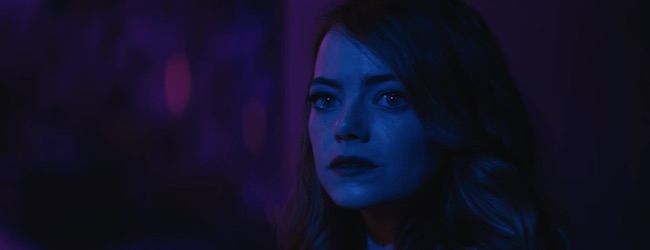
When the critics were having their say, this was a race between Natalie Portman and Isabelle Huppert, with Portman looking like the Oscar frontrunner since Huppert faced the challenge of starring in a foreign language film with a difficult subject matter. Even with a surprise Golden Globe win over Portman in the Drama category, Huppert’s odds remain low. Portman’s have receded as well, however, with Jackie being embraced less enthusiastically by the Academy than by critics. Instead, it’s Emma Stone who’s emerged as the late-season frontrunner. Some thought as far back as November that she was right in the thick of it, but her fortunes seemed to fade as one critics group after another went with Portman and Huppert. Now Stone has come back from behind, fueled by winning the Golden Globe Musical/Comedy award, the SAG and the BAFTA. And everyone loves Emma Stone. They won’t vote for her just because of that, but if they were put off by divisive films like Jackie and Elle, they may feel okay about voting for Stone. Portman could still pull an upset, but at this point it looks like Emma’s got this. For those unsure how it will turn out, keep an eye on Best Original Song. Stone could triumph regardless of that outcome of course, but if it goes to “Audition,” she’s your winner.
Personal: As I said in my nominations post, I haven’t seen Elle. I hate going into Oscar night having not seen all the nominees in the main categories, but from what I know of that movie, I couldn’t stomach seeing in a theater. Of the remaining four, I’d pick Portman. Emma Stone is wonderful in La La Land, but I don’t see hers as an Oscar-winning performance. Portman, on the other hand, did transformative work. That odd Jackie Bouvier accent did some of the heavy-lifting, but there’s a lot more than that going on in her work. She presents us with a woman who has played the passive role of doting wife, hostess, and First Lady, then swiftly finds her strength and resilience when confronted with the shock and horror of her husband’s assassination. Portman shows us Jackie’s grief and uncertainly mingling with the need to step up and control how JFK’s death and the immediate aftermath are seen by the world and immortalized by history. Her performance is fiery and understated all at once.
X
BEST DIRECTOR
Denis Villeneuve – Arrival
Mel Gibson – Hacksaw Ridge
Damien Chazelle – La La Land
Kenneth Lonergan – Manchester by the Sea
Barry Jenkins – Moonlight
X
Damien Chazelle won the Golden Globe, the BAFTA and most importantly, the Directors Guild of America (DGA) award, which has failed to augur the Oscar winner only seven times in its 69 years…and in three of those cases, the DGA winner wasn’t nominated for the Oscar. In fact, in the entire grand game that is Oscar predicting, the DGA is the most meaningful precursor. So considering his victory there, and the general acclaim for La La Land, Chazelle is the man to beat. The only one who can is Barry Jenkins. As I said in the Adapted Screenplay section, I think there are a lot of Academy members who want Jenkins to go home with an Oscar. I said he’ll get a lot of votes for the Screenplay — more than he will here, I think — but he will get a lot of votes here. Probably not enough to overtake Chazelle, but this is a politically tumultuous year where voters looking to not just honor great filmmaking but also make a statement (we’ll get into that a bit more in a minute) could do both by voting for Jenkins.
Personal: I admit to favoring directors who take the helm of epic productions with physical and visual challenges and a daring that extends beyond the narrative and into the production itself. So while I recognize the skill involved in directing character-driven dramas like Manchester by the Sea or Moonlight, I’m inevitably drawn to something like La La Land, which makes Chazelle my choice. But I would have no problem seeing Barry Jenkins take this. He created a small miracle with Moonlight, and it’s a beautiful and assured piece of work. (Of course, so is La La Land. Ack! Making choices is hard.)

X
BEST PICTURE
Arrival – Dan Levine, Shawn Levy, Aaron Ryder, David Linde
Fences – Scott Rudin, Denzel Washington, Todd Black
Hacksaw Ridge – Bill Mechanic, David Permut
Hell or High Water – Carla Hacken, Julie Yorn
Hidden Figures – Donna Gigliotti, Peter Chernin & Jenno Topping, Pharrell Williams, Theodore Melfi
La La Land – Fred Berger, Jordan Horowitz, Marc Platt
Lion – Emile Sherman & Iain Canning, Angie Fielder
Manchester By the Sea – Matt Damon, Kimberly Steward, Chris Moore, Lauren Beck, Kevin Walsh
Moonlight – Adele Romanski, Dede Gardner, Jeremy Kleiner
X
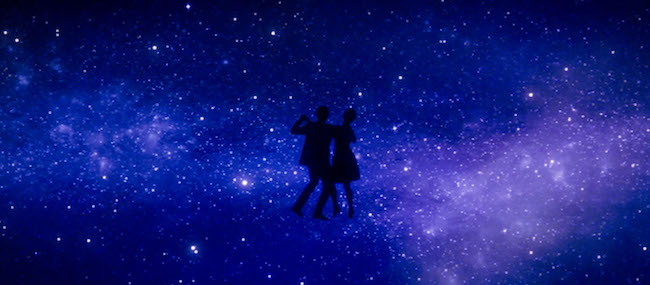
Since Best Picture and Best Director usually go to the same movie, our starting point is that La La Land is the presumptive winner. Not that Chazelle’s Best Director odds alone are boosting La La Land to frontrunner status. The movie’s been thrilling audiences in and out of the industry since it first debuted at the Venice Film Festival in August, landing at the Telluride and Toronto festivals a few weeks later. Although it didn’t actually come out until early December, it has been considered the probable film to beat ever since those early festivals, and that status has been solidified with victories at the Golden Globes (Musical/Comedy), BAFTA and PGA Awards. Many pundits look to the PGA award in the same way they look at the DGA, particularly because in 2009, the PGA adopted the same voting procedure — the preferential ballot — that is used to determine the Best Picture Oscar. Since then, only last year did the PGA winner not go on to take the Oscar. (The PGA had a tie in 2013; one of the two winners — 12 Years a Slave — got the Oscar.
Is there any reason to think La La Land could lose? Well, sure…we can almost find reasons to doubt and wonder. This year, there’s that politics factor. Things are pretty ugly in the world right now. The movies people choose to support — be they “regular” people deciding what to see on a Saturday night or journalists and filmmakers voting for awards — reflect the times, and so the question this year is whether voters want escapism or want to make a statement. La La Land represents escapism. It would be unfair to dismiss the movie as fluff or ignore the honest things it has to say about art and love and the difficult choices some people make between the two. It may arrive at a bittersweet conclusion, but by and large La La Land makes people feel good. Members who want their vote to speak for their conscience could choose movies that celebrate the sort of characters who are undervalued or victimized in our current political climate. Moonlight‘s protagonist is a gay black boy trying to navigate a confusing world. Hidden Figures shines a light on brilliant African-American women who played a major role in launching Americans into space. Lion follows an Indian boy separated from his family and eventually raised by adoptive parents in Tasmania, who years later falls into an obsessive search to find his home. Hell or High Water involves the corruption of banks and the power they hold over ordinary, struggling people. Fences celebrates those people too, those left behind by institutions that saw them as less than. Arrival focuses on the importance of working across cultures — both earthly and extraterrestrial — to achieve a common, positive goal…and how refusal to cooperate could doom us all. So…there are a lot of ways Academy members could use their vote this year to say something that matters.
Still, of all these movies, Moonlight is the only one that could take down La La Land. I could stretch that and call Hidden Figures an incredible long shot, but for all of its pleasures and for highlighting a tragically unknown piece of history, it’s a pretty standard piece of entertainment by Oscar’s yardstick. Consider too, that a victory for Moonlight (or Hidden Figures or Fences) would be the ultimate rebuke to the last two years of #OscarsSoWhite. La La Land, after all, is pretty damn white…not that I think cries of racism will be too prevalent this year if La La Land takes the top two prizes. Oh, and on that point, could we see a Director/Picture split this year? It’s happened 24 times in Oscar’s 88 years, last year being the most recent. If it were to happen this year, which way would it go? Barry Jenkins wins Best Director but La La Land takes Best Picture? Or Moonlight for Picture and Damien Chazelle for Director? In 2013, Alfonso Cuarón won Best Director for Gravity, which boasted incredible technical and visual achievements, while Best Picture went to the powerful, human-scale drama of 12 Years a Slave. Could we see a similar situation this year?
Maybe. Surprises can always happen, but after spinning all of this supposition, the smart money is on things going exactly as the momentum indicates they will…and the momentum is with La La Land.
Personal: When I add up all of the beautiful individual elements of La La Land, I have arrive at that as the movie to which I’m most partial. But Moonlight is exquisite and it would be really wonderful to see something so delicate and humanist win Best Picture. So I’m split between the two. And I loved Manchester by the Sea as well.
X
X
THE REST
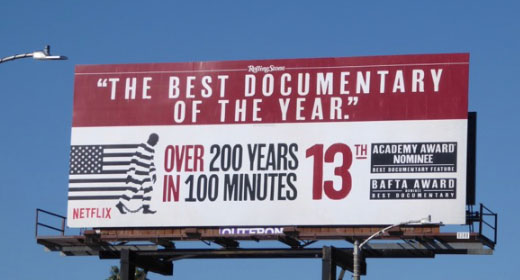
As usual, I can be of little help with Best Documentary Feature, Best Foreign Language Film, or the animated, live-action and documentary shorts. O.J.: Made in America appears to be the favorite for Documentary Feature, assuming voters made time for all eight hours of it. If not, look for I Am Not Your Negro or 13th to step up. As for Foreign Language Film, I haven’t detected a consensus, but I do know that there’s been a movement encouraging people to vote for Iran’s entry, The Salesman, as a middle finger to our Infant-in-Chief’s Muslim travel ban. Before the ban was struck down, the film’s director, Asghar Farhadi — whose excellent film A Separation won this award in 2011 — stated that even if accommodations were made that enabled him to attend, he would not, in protest of the policy. Although he could come now, he has chosen not to, saying he will be represented by two prominent Iranian-Americans. I know The Salesman was well-received, and maybe it would have won if none of this nonsense had happened. If it does win, there will be no way to know if the bulk of votes it collected were because it was members’ favorite movie among the five or because they wanted to make a statement. In my eyes, people should vote for the movie they think is the best, and not for something different because they think it will send a message. In this case especially, the people who need to hear the message won’t be listening, and even if they were, they don’t care. There are better, more effective ways to protest.
Regardless of whether or not this category becomes a political moment during the ceremony, we can definitely expect it to be a politically-charged evening, where many artists will mix their gratitude with expressions of dismay about the state of the world and our nation, and call for peace, tolerance and love. This is anathema to many, who think celebrities should keep their mouths shut when it comes to politics and that award show acceptance speeches (and presentations) should focus on the honors at hand and nothing more. But I’m all for some impassioned commentary on Oscar night. It will certainly make for a more interesting and more emotional show than listening to winner after winner recite a list of names. If the Academy or the ABC Network are worried about this, they shouldn’t be. Awards season so far has been marked by such speeches, most prominently Meryl Streep’s instant-classic takedown of the Asshole-in-Chief at the Golden Globe Awards, and the amazing, rousing call to arms from David Harbour on behalf of the Stranger Things cast when they won Best Ensemble in a Drama Series at the SAG Awards.
These memorable moments have only helped their respective shows by bringing them more attention and generating momentous web traffic. Many other speeches at both events found winners speaking to our fractured times. At the Academy’s annual Nominee’s Luncheon earlier this month, Academy President Cheryl Boone Isaacs addressed travel ban-related absences and set a tone for a political Oscar night. Film journalists like Variety‘s Owen Gleiberman and past Oscar winners like novelist John Irving have written opinion pieces to encourage winners to speak their minds. A few days ago, Michael Moore reflected on his controversial speech from 2003 when he won Best Documentary for Bowling for Columbine days after President Bush launched the war in Iraq, and was essentially booed off the stage. This came a day after Yahoo! published a detailed account of how Moore’s infamous moment came to pass. Just on Friday, the directors of the five Best Foreign Language Film nominees released a joint statement calling for “freedom of expression and human dignity.” Politics have a long history of finding their way into the Oscars, and this year promises to be rife with examples.
JIMMY
Despite the potential for fireworks, it’s still an awards show at the end of the day, and it needs to be fun. With Jimmy Kimmel as host, that shouldn’t be a problem. He pulled hosting duties at the Emmy Awards last fall and hit a home run. Terrific cold open…
…terrific monologue…
…and many terrific moments throughout the evening (skip to 1:38).
(If you don’t get it, you didn’t watch the monologue video).
We can also expect Kimmel to have some fun with his nemesis Matt Damon, who will be in attendance as one of the nominated producers of Manchester by the Sea. Damon crashed the Emmys in brilliant fashion, and no doubt Kimmel will be looking for revenge.
He should more than up to the task of keeping the show entertaining, though it must be said that late night’s other Jimmy threw down the gauntlet with his cold open at the Golden Globes, so Kimmel has his work cut out for him on that front.
Alright, I’ve left you precious little time to mentally prepare for the big night, so I will finally leave you at peace and wish your choices good luck, unless they conflict with my choices, in which case screw you. Here’s a ballot if you still need one, and one last video that you’ve probably seen already, but I’ll include anyway because it’s great and has some fun with a certain bound-for-glory musical.

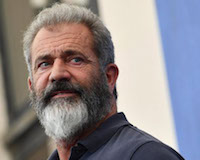 Then again, Gibson was never quite the pariah during these past years that everyone seems to think he was. He’s always had A-list friends in his corner — like Jodie Foster and Robert Downey, Jr. — who stood by him and expressed their firm belief that the person who did and said those things is not the person Gibson is at heart. Beyond that, he continued to find employment. Foster directed him in the The Beaver; he starred in the Warner Bros. revenge thriller Edge of Darkness, which was a modest hit in 2010; and he took on the antagonist roles in the popcorn action flicks Machete Kills and The Expendables 3. They aren’t exactly
 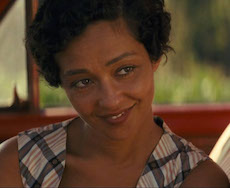 The question of who took Adams’ perceived spot has a different answer depending on how you saw the nominations going. Some might say it was Elle‘s Isabelle Huppert. By this point in the season, however, I felt Huppert was a good bet. So to me, the surprise is Ruth Negga. She didn’t came out-of-nowhere, having remained consistently in the mix since Loving‘s early November release (in fact the buzz for her and the movie really started last May at the Cannes Film Festival). But given the number of compelling performances that could have been nominated this year, Negga had become a longer shot, and she represents the only nomination received by Loving. I was thrilled to see her recognized, as she was one of my personal picks, but it was a fiercely competitive field, and any number of actresses deserved a spot only to miss out. Chief among them in my eyes are Rebecca Hall and Annette Bening. It was never expected to happen for Hall, unfortunately, but Bening was firmly in the running, so her omission is tough to take. She’s wonderful in 20th Century Women — dry, relaxed, introspective…I’ve never seen her play anyone quite like the character she plays here, and I’m sad she wasn’t honored for it.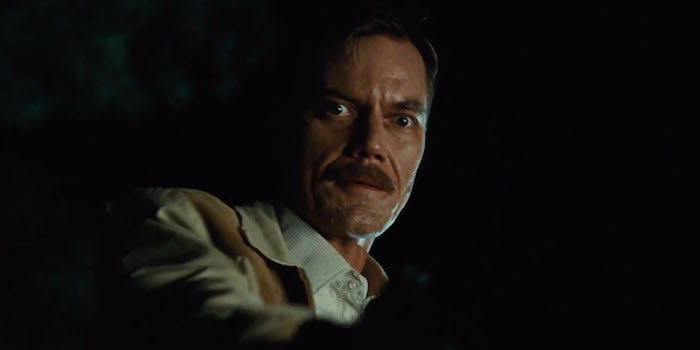





 I Am DB