Oh, Jon. How delighted I was to learn today that you had been on Fox News Sunday with Chris Wallace, in a 25 minute interview that found you, as usual, kicking ass. I can’t elaborate with anything more effective than what what you said yourself, so let’s just roll it.
I think one of the reasons I love the Oscars – and movie awards in general – is that because I see so many movies, I know the pickings pretty well, and feel I can speak about what is and isn’t getting attention with a fair amount of confidence. I love the Emmys too, but as I’ve lamented before, it’s just not possible to watch all the great television out there, and so it’s not possible to fully evaluate the nominees and appreciate the celebration. And if you don’t live in New York City, that’s even more true of the Tony Awards. I’m pop culture savvy enough that I’m usually aware of the biggest, most acclaimed productions on Broadway, but I’ve never been to a Broadway show. The closest I got was when Jersey Boys came to San Francisco with the original cast. But we’re not usually so lucky, and I get a chip on my shoulder about not wanting to see traveling productions if they don’t have the original cast. I mean, when you know that Nathan Lane and Matthew Broderick headlined The Producers, do you really want to see it with anyone else?
But I do miss the stage. Growing up, I participated in my fair share of youth theater, and I’ve seen a lot of community and college performances, but I seldom find myself at splashy, professional productions anymore. I’m always jealous of my friends who live in New York City and have Broadway in their backyard. All of this is to say that I rarely watch the Tony Awards because outside of a general awareness, I don’t know the plays and therefore have no stake in what happens. But Sunday night, I watched the whole shebang, and goddamn if that wasn’t a hell of a show. As a three hour block of televised entertainment, it danced circles around this year’s Oscars. Alright, it’s unfair to even compare the two, since the Tony show literally features dancing in circles. At the Oscars, while we hope for entertaining speeches and some funny comedy sprinkled throughout, the modus operandi is definitely more dry. But the Tonys are as much about the glitz and glitter as the shows they celebrate, with musical numbers from the nominated productions in plentiful supply. So forget the comparison. Just taken on its own, the Tony Awards show was tip-top. Neil Patrick Harris hosted, and he was sensational. For starters, there was his terrific and hilarious opening number, with lyrics by former Daily Show head writer David Javerbaum.
He also shared a good bit with previous Tony host Hugh Jackman.
I don’t watch How I Met Your Mother, but I know Harris consistently earns raves for his performance on the show. His hosting duties were ample evidence of his great comic timing and delivery, both in and out of musical numbers. He did a great bit on the troubled Spider-Man musical (as did the show’s own songwriters Bono and The Edge, also featured in this clip).
As Harris reappeared on stage throughout the evening, he continued to fire off great jokes (credit to the show’s writers, of course). Two of my favorites concerned the night’s winner for Best Play, War Horse. After riding one of the show’s amazing puppet horses onstage, Harris dismounted and quipped, “Ironically, that entire horse is held together by glue.” Then at some point after Daniel Radcliffe performed a number along with his castmates from How to Succeed in Business Without Really Trying, Harris emerged from the wings and said, “Backstage is madness. I just had to stop Daniel Radcliffe from pokin’ out the war horse’s eyes.” (A little Equus joke, for those unfamiliar with the recent history of the Great White Way.)
Speaking of Radcliffe, the boy wizard is definitely doing all he can to prove he’s more than Harry Potter, and I was impressed with the song and dance chops he displayed in the number from his show (introduced by the two actors who previously played the same role on Broadway: Robert Morse and Matthew Broderick).
Other highlights of the night were Chris Rock’s introduction of Best Musical….
…and James Earl Jones’ appearance with his Driving Miss Daisy co-star Vanessa Redgrave, mainly because he spoke about theater with the same force (no pun intended) and eloquence that he used to describe baseball in Field of Dreams.
Another thing that I enjoyed about the Tony Awards? Throughout the entire show, the audience was alive and enthusiastic. You know all those movie stars at the Oscars are bored throughout most of the show and don’t really care about any awards except the big ones. Sometimes they can’t even be bothered to clap for a winner in a “lesser” category. But at the Tony’s, there was a real sense of community. Although the audience was comprised of competitors for this award or that, their reactions to moments throughout the night showed that they are, first and foremost, lovers of theater, rooting for each other and enjoying every performance that unspooled on stage. Those in attendance were clearly having a great time, and that was nice to see.
Harris wrapped it all up with a great closing bit recapping the night’s highlights, and I’ll be pretty surprised if his hosting duties don’t win him another Emmy Award.
Damn! I mean, he was referencing stuff in that rap that happened ten minutes earlier!
So kudos to everyone involved with this great production. It made me want to see more theater, and I think it’s safe to say that from here on I’ll be a regular viewer of the Tonys.
My commentary on this subject comes late as usual, allowing me the necessary time to re-watch, reflect and comment on every little thing that crossed my mind, but the gist of it won’t be much different than what has already been said in all corners of the Oscar-watching world (though I’ll try saying it more nicely than others may have):
That could’ve been better.
The main reason I always enjoy watching the Oscars is that I actually care who wins. Not just Best Picture and Best Actor, but Best Art Direction and Best Makeup and so on. So I’ll always enjoy the Oscars, even if the show itself isn’t that great. And this year’s show wasn’t so great. It was badly produced, badly directed, blandly written…it was, in fact, the weirdest and yes, the worst Oscars I can remember in my 20+ years of Oscar watching. To be fair, the first year I watched the Oscars was 1987, year of the infamous Rob Lowe-Snow White opening number and the dancing Oscar statuettes. That show may have been worse, but I was 10 years-old and don’t actually remember it well enough to say. Now then…let’s get into it.
THE HOSTS
James Franco and Anne Hathaway are taking a lot of the heat for this, but I’m not going to pile it on. I don’t think they’re the reason the show was bad. We all knew from the beginning that they were odd and inappropriate choices to host, and sure, it could be argued that they should have known as much and therefore deserve the blame for taking on the job. But hey, they’re professional actors who were given a rare and pretty cool-sounding opportunity, so why wouldn’t they go for it? I think they did the best they could with the poor material they were given. Well…maybe Franco didn’t do the best he could, but I’m not sure he knew what the hell to do.
Things started off promising enough. The opening video in which Franco and Hathaway traveled, Inception-style, through some of the Best Picture nominees, aided by Alec Baldwin and Morgan Freeman, was funny. Not hilarious, but funny, even if the insert-host-into-actual-movie-scene has been done a lot by now. I’m not sure why the skit came around to inserting them into a scene from Back to The Future, which would have made sense only if the piece had featured other older movies as well. But okay, it was early. No big deal. The duo finally made it onto the stage, but right off the bat it didn’t quite feel right. They just didn’t have the natural ease that comes with knowing how to stand on a stage in front of a lot of people and work the crowd. They’re not comedians. Or Wolverine. Their banter was a little awkward, but okay, that’s the natural state of award banter. Still no big deal. They did the requisite joke about being chosen as hosts in an effort to lure a younger audience, as well as the requisite joke about Franco being nominated while Hathaway was not. It all seemed stiff from the outset. The monologue was brief, the jokes weren’t great, and there was little of the typical give-and-take with the nominees and stars in the audience. Last year’s monologue by Steve Martin and Alec Baldwin featured too much pointing-to-stars, whereas this year’s featured too little. Check out almost any other recent Oscar show and you’ll find the right balance.
As the night wore on, things did not much improve. Hathaway’s song – an abridged and altered version of “On My Own” from Les Miserables which she sang to Hugh Jackman as a sort of follow-up to the great musical comedy bit they did during his 2008 MC gig – was the best hosting moment of the night. Hathaway’s got some genuine pipes, and this bit hinted at the playfulness that the show needed desperately but which was pretty much nowhere to be found. (Sorry, Franco’s Marilyn Monroe get-up didn’t qualify.) Other than that moment, Hathaway had only her enthusiasm to cling to. And she had that in spades, sometimes going overboard. I like Hathaway and think she’s a really good actress, but as herself she sometimes comes off like that girl in drama club who’s a little too theatrical a little too often. On the other hand, can you blame her for overcompensating, considering how little actual material she was given to work with? Also, was it just me or did she seem to be coming out solo a lot? There seemed to be a lot more of Hathaway than Franco. He was probably backstage studying for class while creating an avant-garde installation for MoMA at the same time that he was concurrently shooting and editing a film exploring the inequities between male and female performers as exemplified by Hathaway’s many costume changes, all the while writing an episode of General Hospital which he would run off to shoot during a commercial break. When Franco did show up, he looked bemused, uncomfortable, uncertain…if he was deliberately playing aloof, it was the wrong way to go. Or he just wasn’t doing it well. And it’s not like the guy can’t act. Not really sure what was going on there.
But again, I blame the writers and producers for a lot of this. The producers, Don Mischer and Bruce Cohen, made a mistake hiring Franco and Hathaway in the first place, and then gave them little to work with. Hosts need to do more than just introduce people. There were no bits for them to do, no comedy for them…nothing. It was all very puzzling, to say the least.
THE AWARDS -The first big prize of the night was Best Supporting Actress, and in the curious absence of last year’s Best Supporting Actor Christoph Waltz, the Academy brought out screen legend Kirk Douglas to present the award. It wasn’t pretty. At 94 years old, Douglas still seems pretty sharp, but he kept making jokes that made no sense (Hugh Jackman is laughing at him? Colin Firth isn’t laughing at him?) There was a total non sequiter that found him pretending to fight over his cane with the random young guy who was standing with him onstage. Then, after opening the envelope, he kept delaying the announcement of the winner. Did he think he was being funny? I mean, it was funny…but in a painful, awkward way that makes you want to cover your eyes. Why even have him there to present this particular award? It’s not like there was a theme of Hollywood icons presenting in other categories. That would somewhat go against the stated desire to draw a younger audience to the show, wouldn’t it? Most of today’s teens probably don’t even know who Michael Douglas is, let alone Kirk. His presence wasn’t a logical fit with the show at all. The Oscars are one of the few awards shows all season long where the presenter actually reads the nominee names themselves, rather than the task being handled by some anonymous voice, yet they didn’t have Douglas read the nominees. Why not? He barely shut up while he was there, so why couldn’t he read the names himself? Were the producers worried that people wouldn’t be able to understand him? Hearing-impaired actress Marlee Matlin did it when she presented Best Actor in 1987 (to Michael Douglas, in fact). It just stood out against the rest of the presentations, and highlighted the oddity of him being there. When he finally did announce the winner, it was Melissa Leo, and thrilled for her though I was, her “is this really happening” schtick was a little overdone, and wasn’t helped by Douglas continuing to insert himself in the moment as she accepted her award. The whole thing was just uncomfortable.
-As expected, Aaron Sorkin took the Best Adapted Screenplay award for The Social Network, and kudos to Sorkin for calmly continuing with his speech and ignoring that the orchestra was obnoxiously trying to play him off. I don’t know what their problem was. He hadn’t even been talking that long before they chimed in, and here they had an eloquent, grateful and humorous guy who has a way with words, so why no let him give his speech? Dicks. (Not really the orchestra’s fault; the show director is to blame, and that job was held by co-producer Mischer. )
-In another win for The Social Network, Trent Reznor and Atticus Ross took Best Original Score. It was the one bold choice the Academy made all night (a deserving win, though I would have preferred Inception). But you gotta love that they gave an Oscar to Reznor, the guy who sang “I want to fuck you like an animal.”
-Don’t worry Randy Newman, you were good television. One of the bright spots of the show, in fact.
-If you’ve read my previous Oscar commentaries this season, you probably know that Tom Hooper’s Best Director win is a disappointment to me. It seems that every year, at least one Oscar needs to be given out that can go into the books as one of the all-time bad choices, and Hooper’s win is the one this year. My annoyance was heightened by the look on his face when Kathryn Bigelow said his name. See for yourself at the 1:30 mark, and tell me you don’t kinda want to punch him. (If you think he actually deserved the award, maybe it doesn’t bother you. But I wanted to punch him.) I will, however, give him kudos for his speech, which was gracious and included a nice story about how he came to direct the movie. Still, I’ll never understand how he won this award.
(By the way Academy, here’s one way you can bring your show into the modern era and maybe even cater to some of those younger viewers: let them embed your clips on their blogs instead of making them leave and view them on YouTube).
-Two years ago, each acting award was presented by five previous winners of that same award, each one saluting a current nominee. Last year, an attempt to do something similar by having a past co-star address each nominee stumbled a bit. This year was better than last, with the presentation of Best Actor and Best Actress being done solely by last year’s winners Jeff Bridges and Sandra Bullock, respectively, still speaking to each nominee directly. But where was the love for the Supporting nominees? Just like last year, they were treated like second-class citizens while the extra love was given to the leads. Why is the Academy messing with the hierarchy? If you delineate between actors, it just means everyone else gets shoved further down the food chain. Pretty soon the sound and visual effects artists won’t even be allowed in the building.
THE PRODUCTION: THE GOOD, THE BAD AND THE WEIRD The Good:
You know…there was so much bad and weird that we should really start there, and come back around to the good in an effort to end on a positive note.
The Bad and the Weird:
-The first awards of the evening, presented by Tom Hanks, were for Cinematography and Art Direction. With imagery from Gone With the Wind and Titanic employed to striking effect – the projections grandly filling the proscenium arch – Hanks made the connection between Best Picture winners that had also won the two awards he was giving out. It was an odd way to frame the presentation, since there was no guarantee that the winning movies would go on to win the night’s Best Picture award (and in fact, neither did; Cinematography went to Inception, while Art Direction went to Alice in Wonderland). The evoking of Gone With the Wind and Titanic suggested that the show might incorporate Oscar winning classics as a theme, but the idea turned out to be half-baked. The only other films referenced in such a direct way were Shrek and The Lord of the Rings: The Return of the King, and while there’s nothing wrong with those, they aren’t exactly reaching back into the Oscar history books. How about incorporating some older spectacles, like Lawrence of Arabia or 2001: A Space Odyssey? Maybe The Wizard of Oz or Mary Poppins?
There were a few jumps back in time, but not using specific movies. Presenting the two screenwriting awards, Josh Brolin and Javier Bardem appeared as white-tuxedoed waiters in a replica of Hollywood’s Roosevelt Hotel, where the earliest Academy Award ceremonies were held. Later, a special podium was wheeled out and 18-time Oscar host Bob Hope was projected there to give the audience a glimpse of what it might have been like in the room when Hope hosted. Both segments were nice pieces of nostalgia, but the Roosevelt Hotel bit didn’t quite gel with the rest of the show, and the Bob Hope gimmick was kind of unsettling since it alternated between actual jokes as they’d been spoken by Hope and someone impersonating Hope to comment on the ceremony at hand and introduce the next presenters. It was done affectionately, and so wasn’t as offensive as Fred Astaire dancing with a vacuum cleaner or John Wayne hawking Coors Beer, but it still felt odd.
Bottom line: the theme for the show, such as it was, didn’t really come off.
-The stage was once again used to great effect for the Best Original Score presentation, which found the orchestra projected in silhouette behind the screen and the layers of the proscenium lit up in bright colors while the musicians played a medley of classic movie music from Star Wars, E.T., Lawrence of Arabia and West Side Story (as well as the famous THX sound effect). But while the orchestra proceeded to play selections from the nominated scores, accompanied by a montage of clips from each film, someone in the booth cut away to a crew member leading presenters Hugh Jackman and Nicole Kidman to a different part of the stage. Why would you do that? It was just one of many terrible cutaways throughout the show. While Oprah Winfrey was on stage making a nice point about the power and importance of documentary films, there was a cut to Joel Coen, scratching his ear and looking around like he dropped something. Who was running the booth?!? It’s like someone let their 12 year-old kid come in and direct the show. Actually, I take that back. I directed some cable access TV when I was 12, and I knew better then to cut away to something like that.
Moreover, did you notice how random the reaction shots of the audience were? Usually there are frequent glimpses of movie stars reacting to the jokes or presentations. Here, it was like director Mischer went out of his way not to show celebrities. I lost count of how many medium shots capturing a sea of unrecognizable faces in the middle of the auditorium we were treated to instead of the movie stars that most people are actually tuned in to see. All respect to recent Academy president Sid Ganis, who I saw at least three times, but I suspect people would prefer a cutaway to Halle Berry or Mark Ruffalo. Did anyone notice there was not a single shot of Natalie Portman all night until the Best Actress presentation came around? Not oneshot of the star of the moment – a beautiful, pregnant actress who was the favorite to win one of the night’s top awards. Get your hands on any past Oscarcast and tell me when you’ve seen the likes of that. Forget it, I’ll save you the time: you haven’t seen the likes of that, because it doesn’t happen, because any moron can tell you that the when you have a bunch of movie stars sitting in room full of TV cameras it’s pretty much understood that you actually show some of them.
-Lest we think that Hathaway and Franco had the market on awkwardness cornered, there was plenty to go around. What was going on with Justin Timberlake and Mila Kunis during their presentation of the Animation awards? I liked Timberlake’s opening joke, hesitantly announcing to the audience that he’s actually the mysterious, never-seen graffiti artist Banksy, one of the evening’s nominees for directing Best Documentary contender Exit Through the Gift Shop. But the joke died when Kunis had no real retort, and throughout the rest of their presentation they seemed to either be sharing a private joke or dealing with an incomplete script. After pretending to use his iPhone to decorate the stage with a backdrop of Shrek‘s The Kingdom of Far Far Away, Kunis told him that he missed a spot. Then he stared at her for too long a beat, then she laughed, then he feigned being flustered and began announcing the nominees while we tried to figure out what the hell was going on.
-In a presentation similar to the one for Cinematography and Art Direction, Best Makeup and Best Costume Design were lumped together for no other reason than that both awards had once gone to Best Picture winner The Lord of the Rings: The Return of the King. One of that film’s stars, Cate Blanchett, did the honors, though the connection between the awards was even more tenuous this time since none of the Makeup nominees were among the Best Picture contenders.
Also, for what it’s worth, smarter Oscar producers would have had Blanchett present the award for Best Supporting Actor, instead of Reese Witherspoon. For whatever reason, Blanchett was not at the Oscars the year after she won Best Supporting Actress, and so was unable to carry on the tradition of the previous year’s winner presenting the award to the opposite sex the following year. Blanchett has still never presented an acting award, so given that last year’s winner Mo’Nique was unable to attend this year, it would have been the ideal time for Blanchett to get her chance of presenting to a fellow actor.
-The presentation of Best Original Song included a random “man on the street” segment of people on Hollywood Boulevard talking about their favorite songs from movies. Where did that come from? Who cares what some tourist from Nebraska thinks? If you’re going to do a segment like that, find a way to make it funny. Remember Chris Rock’s hosting gig in 2004, which featured a taped segment of Rock interviewing patrons of a Magic Johnson Theatre (all African-American, except for Albert Brooks)? That’s how it’s done. I wish I could find that clip online. So good. Anyway, this segment was yet another WTF moment. That goofball couple singing “Beauty and the Beast” to each other was just horrible. And on top of that, the interviews weren’t even filmed well! The camera was way too close to the subjects, the shots were badly framed…and then after all these average Joe’s off the street, suddenly there’s President Obama in the White House, commenting on his favorite movie song. Seriously, who put this thing together?!? Awful.
-The actual performances of the nominated songs were not without their problems either. Randy Newman was up first, battling poor sound quality (through no fault of his own, I’m sure) and clumsy staging. It was just Newman at the piano, belting out the tune, yet he was set so far back on the stage. There was a circular platform right in the center, nice and close to the audience. Why couldn’t the piano have been placed there, to create a little more intimacy? Later on, Gwyneth Paltrow performed her song from Country Strong, and while she’s proven she can sing, she didn’t look or sound all that great this time around. As for the song from 127 Hours, it’s a pretty but unconventional song that doesn’t really lend itself to a live performance.
-Following the interviews for Best Original Song, another misfire came with a joke introduced by Franco and Hathaway in which auto-tuning was applied to scenes from Harry Potter and the Deathly Hallows Part I, Toy Story 3, The Social Network and Twilight: Eclipse. A joke like this might play fittingly at the MTV Movie Awards or Broadcast Film Critics Awards, but this is the big leagues. You can do better.
-As has been the case in recent years, the In Memoriam segment, acknowledging the passing of Academy members during the past year, was accompanied by a live song performance, this time by Celine Dion (I’m surprised the Academy didn’t go for Willow Smith). However, unlike in previous years, the names of behind-the-scenes folks who weren’t necessarily familiar to most viewers flashed by without any examples of their work. Usually, the photo of the person or live footage of them is shown alongside a poster, clip or title font of a famous movie or two that they worked on, to provide some context. Not this time, meaning that most people watching the show – even those in the audience, I’d wager – had no idea who many of the people were. How hard is it to get these little things right? Had Don Mischer or Bruce Cohen ever watched the Oscars before? (I know Bruce Cohen has, because he won an Oscar for producing American Beauty.)
-As of last year, honorary awards are no longer given out on Oscar night, but are instead presented at the Governor’s Ball, a special ceremony held a few months earlier. This year, honorary awards went to actor Eli Wallach, director Jean-Luc Godard and film historian and preservationist Kevin Brownlow, while Francis Ford Coppola was given the Irving G. Thalberg Award. (Click here for video highlights from the ceremony.) It would be nice if the television audience was at least treated to a few moments from the Governor’s Ball, just as the Sci-Tech Awards are briefly covered each year. Instead, Coppola, Wallach and Brownlow were trotted onto the stage (Godard did not attend either ceremony) to stand awkwardly while the audience gave them a deserved standing ovation. Yet another poorly conceived moment in the show. Next year, show us some clips from the private reception and then have the recipients stand up in the audience or from special balcony seats and give a wave. That’s what happened last year, and that’s how it should go. They’ll still get their standing O, and it will feel much more natural.
-When it came time for Best Picture, clips from the 10 nominees played in a montage which used Colin Firth’s climactic radio address from The King’s Speech as a through-line. Some people felt this showed favoritism toward Speech, but I thought it was just a nice connective tissue. Didn’t bother me. What did bother me was that the montage cycled back through most of the nominees two or three times before a single clip of Toy Story 3 was shown. A big deal? No, of course not. (None of this crap is a big deal. It’s the friggin’ Oscars, not cancer research). But it was further evidence of the sloppiness that ran through the entire show. Who put that reel together? How hard is it to feature all 10 nominees once before going back and showing each one again?
-Speaking of Best Picture, couldn’t they have found someone else besides Steven Spielberg to present it? Don’t get me wrong – I loves me some Steven Spielberg. But he’s presented Best Picture three times in the last decade (and while we’re keeping score, Michael Douglas, Tom Hanks, and Jack Nicholson have each done it twice). How about having Kirk Douglas do that award? Or Francis Ford Coppola, who was there for his Thalberg win anyway? How about trying to get the retired Gene Hackman to come out and present it? There are more than a few people left in the movie business with the stature to make them worthy Best Picture presenters. Can we get a little more creative?
-Whatever the producers intended as the theme of the Oscar show, “Awkward!” proved to be the actual theme of the night, and the final moments of the show didn’t disappoint on that front. I found it a little hokey when cute kids from Staten Island’s PS22 flooded the stage to sing “Over the Rainbow,” but okay, kids are sweet and what a thrill it was for them and fine, I’ll go with it. But then all the evening’s winners walked out on stage behind the students, ambling about in a scattered assembly, some swaying and joining the song, others just standing there, all clutching their Oscars. Why, I ask you? Why?
-The show’s schizophrenia included its slate of presenters not really being ideal choices for that oh-so-desirable youth audience. Hilary Swank, Oprah Winfrey, Nicole Kidman and Tom Hanks (and again, Kirk Douglas) are not who the kids want to see. And that’s fine, because the show shouldn’t be catering to kids. These are the kind of people who should be at the Academy Awards, so the producers and Academy executives need to start acknowledging that and stop trying to turn the Oscars into something it will never be by trying to cater to an audience that will never care.
The Good, Take 2:
-Okay, I promised we’d come back around to some of the show’s good moments, so let’s get to those. Shouldn’t take long. It may have been a bizarre show, but it certainly wasn’t without its pleasures, some of which I’ve already mentioned and one of which – or four of which – were the acting winners. Although Firth, Portman, Bale and Leo were the favorites and had already won many awards throughout the season, I was no less pleased to see them emerge victorious here. For me, there’s still something special about seeing people win the Oscar, no matter how many other trophies they collect in the months and weeks prior. I’m especially thrilled for Bale and Leo, if only because my confidence in their wins was a bit shaken at this late point in the season. It was also pretty cool that Bale and Portman both began their careers as child actors. I think they were both 13 when they starred in their breakout movies, Empire of the Sun and The Professional, respectively. Both exhibited huge talent even in those early roles, and as we watched them grow up on screen we knew it was only a matter of time before they got their Oscars. Nice to see that promise fulfilled.
-The duos of Helen Mirren and Russell Brand and then Robert Downey, Jr. and Jude Law were among the few presenters who earned a laugh, though each pair was onstage only briefly. Cate Blanchett scored a great moment as well, when she was reading the nominees for Best Makeup and followed the clip of Benicio del Toro’s transformation in The Wolfman with the impromptu, sincere quip, “That’s gross.” The award did go to The Wolfman, and was shared by makeup legend Rick Baker and Dave Elsey. I liked Elsey’s comment, “It was always my ambition to lose an Oscar one day to Rick Baker. This is better.”
-I also appreciated 73 year-old Original Screenplay winner David Seidler’s comment, “My father always said to me I would be a late bloomer.”
-The enthusiastic speech from Best Live Action Short director Luke Matheny demonstrated that sometimes the best or funniest moments come from unlikely sources. The first thing people probably noticed as Matheny made his way down the aisle was his mass of tangled black hair that could easily have been housing a collection of bird eggs, and his first comment upon reaching the microphone was that he should have gotten a haircut. His short speech was a charmer, as he thanked his mother for providing craft services on his film and paid sweet tribute to his girlfriend.
-One of the highlights of the night was the surprise appearance of Billy Crystal, who walked out to an enthusiastic standing ovation. Was that purely out of affection for one of Oscar’s all-time great hosts, or more because the audience was desperate by that point in the evening for someone who knew how to do the job? Hope Franco and Hathaway didn’t take it the wrong way. Billy was there to introduce the aforementioned Bob Hope bit. He did a few jokes and instantly breathed life into a ceremony that was sorely in need of it.
-Although I already questioned Steven Spielberg’s appearance as Best Picture presenter, I did love what he said when he came out. “Well in a moment, one of these ten movies will join a list that includes On The Waterfront, Midnight Cowboy, The Godfather and The Deer Hunter. The other nine will join a list that includes The Grapes of Wrath, Citizen Kane, The Graduate and Raging Bull.” There was enthusiastic applause as he continued, “Either way, congratulations, you’re all in very good company.” It was a wonderful way to frame the award, and a nice reminder that it really doesn’t matter what wins the Oscar. Great work stands the test of time, and the ultimate winners are the audiences who get to enjoy them. (Still doesn’t take the sting away when the wrong thing wins, but oh well.)
-Okay, I’m sorry, I know this is supposed to be The Good section, but thinking about Mirren, Brand, Downey Jr., Law and Crystal just makes me wonder, where was the comedy? If ever there was an Oscar show that needed an infusion of Jack Black and Will Ferrell singing a song, or Ben Stiller and Owen Wilson playfully arguing, this was it.
THE DRESSES
Thank god for beautiful women and their frocks, because this Oscarcast needed all the push-ups it could get. I’m no Joan Rivers or Mr. Blackwell, but for me, the winners of the night were Mila Kunis, Natalie Portman, Jennifer Lawrence, Marisa Tomei, Reese Witherspoon, Amy Adams and Scarlett Johansson. Thank you ladies, for doing your part to help the show.
FINAL THOUGHTS
The takeaway for me from this year’s Oscar show, and it seems like we go through this every year, is that both the Academy and TV critics and viewing audience need to accept that Oscar night should be an evening for celebrating filmmakers first and foremost, and a television show second…while still making it the best television show it can be. That means the Academy needs to stop making decisions based on a desire to get higher ratings, and the at-home audience needs to get over it if they don’t care about any but the top few awards. Everyone, even cinematographers, art directors, visual effects artists and sound designers should be given their moment to speak without being cut off (though yes, they should be encouraged ahead of time to try and avoid reading lists of names, as Randy Newman references in the clip above). The Oscars weren’t created to satisfy the public; they were created to honor achievements in filmmaking. Public interest after the first awards in 1929 led to the ceremony being broadcast on the radio, and eventually television, but us movie fans who want to be included should remember that we are invited guests. Think the show is boring? Don’t care who wins Best Film Editing? Then don’t watch. These days, you can go online the next day and find video of the acceptance speeches by the actors. If that’s all you care about, then don’t subject yourself to the whole three-plus-hour presentation.
On the flip side, the Academy has to accept that the Oscars aren’t the Super Bowl. (They’re my Super Bowl, but I’m abnormal.) They aren’t going to score Super Bowl-level ratings. There may have been a time when they did, but things have changed. The media landscape is overstuffed with information and options. The movie landscape, specifically, is more fragmented as well, with many more movies released each year and the true “event movie” now a rarity. Gone with the wind are the days when the movies the public went to see en masse were the same movies that were of high enough quality artistically to be top Oscar contenders. Now such movies – Titanic, Lord of the Rings, Avatar, Inception – are few and far between, while Oscar is more likely to shine on smaller films, indie films – Secrets & Lies, The Pianist, The Hurt Locker, The King’s Speech. The kind of films that studios hesitate to finance, and the kind of films that don’t ring up billions in ticket sales or entice the large viewership to the Oscarcast that the Academy would like to see.
But there are still millions of viewers who tune into the Oscars, so as I said earlier, stop cheapening the show by trying to attract a demographic that, by and large, isn’t interested. The Oscars celebrate a certain kind and caliber of movie, and most younger people aren’t interested in those movies. The Oscars may be a bit stodgy, a bit old fashioned, but that’s part of their appeal. So focus on creating a show that truly celebrates the nominees and winners, and be comfortable enough to recognize what the Oscars have always been and should continue to be. Then, once you’ve done that, do all that you can to make the show entertaining to the audience – in the room and at home. Hire comedians or skilled comic actors to host it. Write good material and get charismatic presenters (not every movie star is as captivating in reality as they are when playing a character). Hire a competent director to run the booth. Continue making attempts to shake it up, but don’t lose sight of tradition. The acting presentations from the 2008 ceremony – which I mentioned earlier – is the perfect example. Some liked it, some didn’t, but it was a new idea that still colored inside the lines.
My final note to the Academy: I am available to consult, produce, write or direct. Call me.
Aloha friends. The extremely belated arrival of this message probably falls into one of three categories for you:
1. Don’t Care Anymore
2. Never Cared to Begin With
3. Dude, What the Fuck?
Whichever category you fall into, an apology is appropriate. For those of you in number three, I’ll spare you my excuses, legitimate though they may be. I’ll merely say that this was a challenging one to write, and I got so irritated a few times, unable to get across what I was attempting to say, that I had to shut it down and walk away. It didn’t help that I wasn’t doing the usual recapping. There was always more of that than I’d ever intended anyway, and the point was to look at what had already happened in an attempt to figure out what was coming next. But now there is no next. So I’ll offer some thoughts and opinions, simple and unsophisticated as they are (and all over the map – this is the most disorganized write-up I’ve ever done), and that will pretty much be that.
Once more into the breach…
GOODBYE YELLOW BRICK ROAD
I don’t think I’ve ever been asked a question more often in the span of a day or two as I was asked on the post-finale Monday and Tuesday what I thought of the episode. Even people who don’t watch the show asked me. My reputation is known. The short answer was that I liked it, I was happy, it was an emotionally satisfying conclusion. But there’s a longer answer. A much, so much longer answer…and lucky you, that’s what you’re about to get.
I did like the finale. In fact, I loved it. At the end of the previous write-up, I laid out my hopes and dreams for The End. A finale that has my heart racing with suspense? Check. A finale that’s surprising? Check. Brings back old favorites? Check. Answers some of the big questions? Umm…we’ll come back to that one. Carries the story and the character journeys to an emotional and thrilling climax worthy of the six spectacular seasons that got us here? Megacheck.
It had me at hello, with the opening scene cross-cutting between the characters on the island, their SidewaysLand-selves and the coffin of one Christian Shephard arriving in Los Angeles – a development which I didn’t expect, since it was Desmond who called Jack in the previous episode to inform him of the coffin’s impending arrival. But there it was, and my curiosity was further piqued (and hopes slightly raised) when Desmond had the body delivered to Eloise Hawking’s church, Our Lady of the Electromagnetic Pocket-Detecting Pendulum. The episode also made me smile early on by giving top billing not just to the current cast, but to all the returning and recurring actors as well, from L. Scott Caldwell and Sam Anderson (Rose and Bernard) to Maggie Grace and Ian Somerhalder to John Terry (Christian). It was a classy move that honored their indelible contributions throughout the life of the series.
AS I LAY DYING
I’m not quite sure where to begin since I’m not following the usual pattern, so why not start right at the major “what happened,” because even now it still seems to be a matter of uncertainty for some. I can’t say that I was in the Writer’s Room looking at the final script, but I can say with confidence that no, they did not all die when Oceanic 815 crashed on the island. Everything that they experienced on the island was real, from Jack waking up in the jungle to Jack entering his final sleep in the same spot after Ajira 316 soars overhead carrying Kate, Sawyer, Claire, Richard, Miles and Lapidus (Lapidus Lives!!!!) away to safety. Presumably. We really don’t know what happens to them – do they stay on the necessary bearing that allows them to break out of the island’s hold and enter real airspace so that they can make their way back to civilization? Do they have enough fuel? Working radar and radio to keep them from flying into other planes? Imagine being the air traffic controller who gets the call that the lost Ajira 316 is suddenly back in action and looking for a place to land…without most of its original passengers. But I digress. Naturally I believe that Ajira makes it home safely; that Kate helps Claire re-adjust and become a mother to Aaron; that Sawyer gets to meet his daughter Clementine; that Richard invents a line of cosmetics for men; and that Miles and Lapidus do anything that allows them ample opportunity to fire off dry, sarcastic, awesome one-liners.
And while they’re all doing that, Hurley and Ben preside over the island. Though I’m not sure I can claim it as an accurate prediction, I think I earn some points for suggesting halfway through the season that Hurley would be the ideal guardian for the island. The scene in which Jack passes on the responsibility to him was one of the episode’s emotional highlights, thanks largely to Jorge Garcia’s vulnerability, a skill that has always kept him from being mere comic relief. I did wonder about the fact that while Jack gives him water from the creek, he does not recite the incantation that Jacob did when passing on guardianship, or that the Woman in White did when anointing Jacob. Does that mean that the water from the creek alone is what gives the island’s guardian his power? Is the incantation just for show – a verbal Ring of the Schwartz? (Spaceballs? Anyone? “Forget the ring! The ring is bupkus! I found it in a Cracker Jack box! The Schwartz is in you, Lone Star! It’s in you!”) Was there any power associated with the island guardians at all? Perhaps Jacob’s long life and special abilities came from someplace else, and Jack – in his brief stint as the protector – had no such gifts. So without the incantation, did Hurley have any special protection to aid him in his…protection? And why do I suddenly feel like I’m writing a condom commercial?
Whatever the case, the implication is that Hurley remained on the island, with Ben as his second-in-command. Of all the great duos Lost has given us, each worthy of sitcom spin-offs – Hurley and Sayid, Hurley and Miles, Miles and Sawyer – I’d never thought of Hurley and Ben. I was surprised that Ben even survived to the end. As I’ve mentioned before, I’d long been expecting him to die a noble, sacrificial death. When he pushed Hurley out of the way of that falling tree in the bamboo field, I thought my prediction had come true. Obviously Hurley, Sawyer and Kate – with a little help from the shaking island, I think – managed to free him, but the effort was there. In the moment, Ben put himself in harms way to save Hurley. And later he chose to stay on the island when escape was a viable option. I think we can safely say that Benjamin Linus completed his transition from Machiavellian manipulator to good guy, and I like the idea that thanks to Hurley, he was given a real sense of purpose on the island for the first time. With the Man in Black gone, I wonder if Hurley and Ben oversaw an era of peace on the island or if there were difficult times. With Jacob gone, I wonder if people kept crashing into the island. Probably not, just like it might have become easier to get away from the island (based on Ben’s remark, “That’s how Jacob ran things. Maybe there’s another way.”) We don’t know if they were able to get Desmond home to Penny and little Charlie, but we know there were at least a handful of others left on the island to keep them company: Rose and Bernard (and Vincent, another long lost friend who returned) as well as any of the Others who had left the Temple with Man in Locke and survived Widmore’s mortar attack (hopefully Cindy the Flight Attendant and kids Zack and Emma). Apparently the DVD is going to include an extended epilogue that shows us a glimpse of Hurley and Ben’s reign on the island. That will certainly be worth checking out.
OB-LA-DI, OB-LA-DA
Going back to Desmond, I’m not sure I grasp how his storyline played out. When Widmore brought him back to the island and exposed him to the electromagnetism, his consciousness went on a journey that took him into SidewaysLand. I don’t think I even want to go down the rabbit hole of how his mind was now traveling not between time periods – as it did in The Constant or in Flashes Before My Eyes – but between life and afterlife. But however it happened, he made the connection between the two worlds when he found Penny at the stadium. And when he woke up back on the island, he carried with him the knowledge of SidewaysLand’s existence – and apparently he carried understanding of what it meant as well, since in SidewaysLand he immediately set out to find and unite the Oceanic 815 survivors and friends. Okay, so far so good. On the island, he is possessed of a new calm and lack of fear, apparently because he believes that nothing happening on the island matters anymore…a sentiment he explains to Jack before he is lowered into the tunnel of light.
Desmond goes down to the heart of the island – to what the Woman in White called “the source” – and he steps into the pool of water, which immediately begins to flash wildly and bubble up. The effect is much like what Desmond experienced in Widmore’s shack when he was caught between the two solenoids. But despite the pain he expresses, he keeps walking to the center of the pool, where he removes that long stone pillar that acts as a stopper. (One can’t help but think of Jacob’s wine bottle analogy to Richard: “The cork is this island. And it’s the only thing keeping the darkness where it belongs.”) Would anybody else have been able to withstand the energy that Desmond had to move through in order to reach that stone?
Here’s what I’m getting at. Man in Locke tells Ben of Widmore’s confession, “He said Desmond was a fail-safe. Jacob’s last resort in case, God forbid, I managed to kill all of his beloved candidates. One final way to make sure that I never leave this place.” And Man in Locke believes that only Desmond can help him destroy the island – which would suggest that yes, only Desmond could have withstood the energy in the water. Meanwhile, Jack tells Sawyer that he believes Desmond to be a weapon. So does Desmond serve all of those needs? Did Jacob somehow make it that only Desmond would be able to survive going down into the light and removing that pillar, which does begin the destruction of the island (“It looks like you were wrong,” Man in Locke says to Jack) but which also strips Man in Locke of his invincibility (“Looks like you were wrong too,”Jack says in return)? And if so, why doesn’t Jacob tell Jack about Desmond when he makes Jack protector of the island? Jack makes a point of telling Sawyer that Jacob didn’t mention Desmond having a role to play. And did Desmond simply misunderstand his own gift, thinking that once he did his task in the tunnel he would die, knowing what awaited him in SidewaysLand? When Jack goes down the tunnel and finds him, Desmond says that putting out the light didn’t work, and that he thought he would “leave this place.” He says he has to replace the stone – that it has to be him and that Jack will die if he tries. Of course, since Jack is already dying, he sends Desmond back up the rope and remains at the bottom to take care of business.
So I get all the individual pieces. I’m just not sure what they add up to in terms to Desmond’s intended role. How was he Jacob’s last resort to keep Man in Black from escaping? Would Jacob have seen the island destroyed rather than allow Man in Black to leave, in which case the last resort would be for Desmond to enter the tunnel and the remove the pillar, thus initiating the sinking of the island and, as I’m sure Jacob assumed, the Man in Black with it? Or was it that by removing the pillar, Man in Black would become human again and therefore he could be killed? And if he became vulnerable to an ordinary death, would he have still posed the threat to the outside world that he apparently posed with his powers intact? We never really did understand what would happen if Man in Black got off the island. None of it matters now, I know. Whatever happened happened. But this is just one of the vague shadows left in the show’s wake.
DEAD ALIVE
If Desmond’s role on the island remains a bit hazy for me, his role in SidewaysLand couldn’t be much clearer: find his old friends and help them remember their former lives. The episode made it clear to what end he was on that mission. Simply put, as he said to Kate in the car outside the church and later to Eloise during the concert, he wanted to leave. And by the end of the episode, we had an idea of where to. The season-long mystery of the sideways-flashes was resolved with the revelation that in that timeline they were all dead. I hesitate to call it purgatory, as my interpretation of that word carries a somewhat negative connotation. I think of purgatory – perhaps incorrectly – as a limbo between heaven and hell where you face a final judgment that will determine which arena you ultimately enter. That’s not what this was to me. It was a better place – a place that, according to Christian, they made so that they could find each other. But it was also a place where they could make themselves and/or their circumstances better. Jack had lived in a constant state of insecurity instilled by his father, with whom he had a relationship that, while not devoid of love or affection flowing in both directions, was definitely challenging. In SidewaysLand, he gets to be the supportive, nurturing father he didn’t have. Sun and Jin get to escape from the reach of her father (and Jin doesn’t need the island’s power to solve his infertility and knock up the boss’ daughter). Hurley coasts on an endless wave of good luck. Ben gets to be a positive influence in people’s lives, most importantly Alex, who pretty much loathed him in life but who regards him as a father figure in SidewaysLand.
Others, for whatever reason, still had to endure some of the darker events that marred their real lives, but got to explore a more positive side of themselves. Sawyer’s childhood remained tarnished by the murder-suicide of his parents, and though he still seeks revenge, he channels his energy into being a cop instead of a criminal. Sayid sacrifices his happiness so that Nadia can have a better life and a family (that didn’t entirely work out, but I think a case can be made for the nobility of his actions). Locke is still in a wheelchair, but he has a healthy relationship with his father and holds onto Helen. He has love in his life instead of loneliness and abandonment. Then there’s Kate, whose sideways circumstances didn’t seem much different. Maybe that’s because she never believed that she did anything wrong in the first place, so her sideways-self didn’t turn away from her original actions. Still, if they all created this place for themselves, you have to wonder why she would have put herself through the hassle of always being on the run. But I’m probably looking at it too literally. We can’t really examine it too closely, because the how’s and why’s of this afterlife are thinly constructed. They created this place so that they could find each other again? Okay, but how does that work? How did they create it, and what accounts for specific circumstances like Jack and Juliet having been married? Did Sayid’s spiritual entity or subconscious or whatever part of himself contributed to the “creation” of SidewaysLand actually determine that Nadia would be married to his brother, or did he have nothing to do with that?
One of the earliest and most prevalent theories of Lost was that the survivors of Oceanic 815 were not survivors at all, but had in fact all died in the crash and that the island was purgatory. The creators always said that wouldn’t be the case, and it wasn’t. But cheeky monkeys that they are, they took the notion and twisted it on its ear to fit their needs, using the idea to draw the show toward its conclusion without negating everything these characters had experienced over the course of six TV seasons. I kinda love that they did that. They got to have their cake and eat it too by affirming that all the events on the island were real – including the many casualties we had to endure – yet finding a way to bring comforting closure by taking us to a place where things were better for all of them and where we could see them embark on a new journey that would be free of the turmoil and heartache that touched their troubled lives. We experienced the hard times with them, and then said goodbye knowing that it was all behind them and that happiness lay ahead. Damon and Carlton always maintained that death had to be for real on the island or else we could never invest in the character’s fates, but in the end we got to rejoice in the reunions of Charlie and Claire, and Sawyer and Juliet, and feel elated rather than cheated. And to those who might argue that this whole Sideways thing is a hokey device typical of a show limited by its sci-fi/fantasy genre, I’ll remind you that grittier, more realistic shows like The Sopranos and Homicide: Life on the Street (precursor to The Wire) offered up similar storytelling devices during their respective runs.
THE FLAW IN THE PLAN
Stories don’t have to be perfect to be great. Lost is one of the greats, but its imperfections are many and must be covered. I loved the finale, and the show itself takes its place in my top five favorite TV series ever (really just a top four, I guess, since I’m not sure what the fifth would be. Lost, The Sopranos, The Simpsons, Seinfeld and…Cheers? The West Wing? Arrested Development? The Larry Sanders Show?). But I’ve always been quick to point out the show’s missteps and mistakes, and now that it’s all over, the problems have to be talked about, for they will always be there. Everytime I go back and re-watch the series – and I expect I’ll revisit Lost many times over the years – these failures will remain, and at the same time that I love the show I will feel a sense of disappointment. It’s kind of the same feeling I get when watching a movie or performance that was screwed by the Academy. I can’t watch Donnie Brasco without being angry that Pacino wasn’t nominated, or Traffic without being angry that it lost Best Picture (despite wins for Director, Screenplay, Supporting Actor and Editing. C’mon, are you kidding?!?). I know, these are two completely different types of circumstances – one is an outside factor having nothing to do with the work itself while the other was totally in the hands of the creators. But what can I say?
So what was the flaw in the plan? The way I see it, the flaw was that there wasn’t enough of a plan. No, I don’t think they were making it all up as they went along, but it wasn’t plotted as meticulously as we would have liked either. Season One was the only one which had real involvement from J.J. Abrams, and his fingerprints were all over it. Abrams has famously talked about his love of mystery (read his 2009 essay from the Wired Magazine edition he guest edited) and more specifically the concept of the “mystery box” (included in this 20 minute presentation he made in 2007 at the TED conference), and the beginnings of Lost were built on these ideas. A mysterious island with a large, unseen, tree-shaking, airplane-pilot-chomping monster. An island with runaway polar bears. An island from which a French woman’s radio transmission has been emanating for 16 years. And an island that literally had a giant, mystery box in the form of a hatch buried in the ground. Classic Abrams. But that kind of mystery won’t work over the course of a years-long TV series. Eventually, we need to see that monster. We need to find out why that polar bear is there. We need to learn about the French woman. And we need to see what’s in that hatch. (Bad examples, maybe, since we did get answers to all those questions. But you get the point.)
Who knows at what point they figured out that a guy named Desmond was down there, and that he crashed on the island during a solo race around the world sponsored by the wealthy father of his ex-girlfriend who himself had once lived on that island, or that the hatch was one of many on the island built by a group called The Dharma Initiative, which was the brainchild of University of Michigan graduate students Gerald and Karen DeGroot and was funded by The Hanso Foundation. But as the show went on, more of these mysteries started cropping up and fewer of them were getting resolved. So we entered this final season with high expectations of resolution, and we didn’t quite get it. I know that answers are more important to some than to others. For some, it was enough to have a show which was thematically rich and had engaging, complex characters that we came to know and love. Answers weren’t necessarily important or required. And if I agree with those viewers about anything, it’s that not every question needed answering and not every mystery needed solving. Some things are more important than others (although we surely all have our own opinions as to what we wanted explained and what we were willing to overlook). Plus you want a show like Lost to leave you thinking and debating. I wouldn’t have wanted it all wrapped up in a bow.
But there’s a middle ground somewhere in there, and the show failed to deliver on promises it made. For all the viewers described above, there were those for whom the mystery was everything. What kept them coming back week after week, season after season was the promise – the expectation – that all the WTF plot twists and fascinating but frustrating developments would be paid off. They wanted their patience to be rewarded, and instead they got majorly blue-balled.
“EVERY QUESTION I ANSWER WILL SIMPLY LEAD TO ANOTHER QUESTION”
So said the Woman in White to Claudia, biological mother of Jacob and the Man in Black, before crushing her skull with a rock. That may be true…but does it mean you can use it as an excuse not to answer questions that you’ve not just posed, but repeatedly teased us with? I’m no Robert Stack, but let me attempt to walk through some of the unsolved mysteries that Lost left hanging.
Walt – This is number one with a bullet for me. We got tantalizing glimpses in Season One that Walt was in possession of certain abilities that made him…special. Special, in fact, was the name of the episode that showed us Walt’s life before the crash (and Michael’s). In Season Two, after he’d been kidnapped from the raft, he appeared three times to Shannon, dripping wet and speaking unintelligibly. I’ve never been sure whether those instances were extensions of his own abilities or whether it was the Island doing that, but I mention them here anyway. Walt’s talents were further alluded to by the Others a few times at the end of the season, but then he and Michael boated away before we got to learn anything of substance. Walt appeared a few more times – on the island to Locke after he’d been shot by Ben, and off the island when he visited Hurley at the mental institution and was himself visited by Locke outside his school. He didn’t appear in the final season at all, other than in a brief flashback moment.
The Walt question was among the most frequently asked by fans, and last October, Damon addressed it yet again in an interview with USA Today (I included this quote in my first pre-season write-up back in January):
“I think a lot of people are justifiably frustrated by the Walt of it all. We said he has this special ability, and the Others obviously grabbed him and studied him for awhile, then they got freaked out by him and decided to let him go. I think that there are certain stories on the show that feel like dangling participles based on external factors. For us, we were incredibly limited by the fact that Malcolm David Kelley was growing at an exponentially faster rate than the show was progressing. So, you know, when we showed him in Season 5 and Locke is trying to recruit members of the Oceanic Six, the only way that it worked was to see him three years older. But hopefully, why Walt was special and the role he played on the show will have a new significance when all is said and done. And I’m not sure we really need the character of Walt to explain the significance.”
Well guys, all is said and done, and there is no new significance about why Walt was special and the role he played on the show. And don’t try to hide behind the growth thing. What did you think was going to happen when you cast a pre-pubescent kid on a show about a bunch of people trapped on an island? Here’s a mystery I can solve for you: kids grow up. If the creators chose to build a story like this around Walt, then they should have factored in the inevitable aging that would occur, rather than pretending five years later that it caught them by surprise. The fact that they never re-visited the storyline was even rubbed in our faces during Season Four. By then, the show had long moved on from the Walt storyline, but they brought it back to our attention in the minisode Room 23 (taking place during the events of the first three seasons, the minisodes were created as content for Verizon subscribers but then made available online and on the Season Four DVD set). Sure, they weren’t widely seen, but they were canonical contributions to the story. So why go back and remind us of Walt’s powers if there was to be no payoff? (I made the same complaint at the time…and in commenting on last season’s finale…and probably several other times.)
They could have found ways after Walt left the island to bring him back into the story more prominently than with the cameos he had after the Oceanic Six returned to society. Walt could have played as important a role on the island as Desmond was supposed to play if they had chosen to go that route. When I heard that Harold Perrineau was returning to the show in Season Four, my theory was that Jack was going to enlist Michael and Walt’s help in getting back to the island, playing on Michael’s guilt for the murders of Libby and Ana Lucia. But they went in another direction (I’ll talk about that later too), and again this season they ignored an opportunity to bring Walt back and address the mystery of his Shining. Last season, when Eloise Hawking told Jack, Sun and Ben that they had to re-create the conditions of the Oceanic 815 flight as closely as possible, I thought they were going to get Walt to come back with them. Once again, I thought wrong.
Eloise Hawking – And speaking of Eloise, she’s right on Walt’s tail, given that all the intrigue surrounding her never went anywhere. We first met her in Season Three’s Flashes Before My Eyes, the first episode to explore Desmond’s time-traveling consciousness after he turned the failsafe key in the hatch. She appeared to be the proprietor of a jewelry store, but in fact knew who Desmond was and what was happening to him. She went on to appear in a number of episodes, one of the most notable being last season’s 316, in which she instructed Ben, Sun and Jack on how they could return to the island. We also met her as a younger woman, living on the island – first in the 1950’s and later in the 1970’s paired up with Charles Widmore – and came to know her as Daniel Faraday’s mother. There’s no denying that this dame was plugged into the mothership in a pretty singular way. And yet nothing about her was ever explained. How did she have the unique knowledge that she did of the island and the way to access it? How did she come to be running a Dharma station in the basement of a Los Angeles church? What was her history with Widmore? What were her goals in relation to the island? There were many things that she did or said in individual scenes that were mini-mysteries in themselves, so cryptic that they seemed certain to pop up again, and yet they never did. She was a fascinating character who was key to the Lost universe, and yet we never got to understand how or why.
The Cabin – Originally built by The Dharma Initiative’s Horace Goodspeed, “Jacob’s cabin” was the site of some freaky paranormal activity and the home to a mysterious wide-open eye. Oh, and it liked to move around the island. Whether the cabin was ever used by Jacob we don’t know (Ilana and her team did go looking for him there), but we eventually learned enough to know that it had been occupied by the Man in Black in the island’s more recent days. Maybe we’re supposed to infer that the eye belonged to him. But inference doesn’t cut it in this case. What was up with this place? If it was meant to keep the Man in Black trapped within, which seems likely based on the circle of ash that surrounded it, then how was he able to travel around the island in other forms (Smoke Monster, Christian Shephard, etc.)? Why did it change locations on the island?
Death by Pregnancy – So much was made during the first three years of the show about the fact that pregnant women died on the island. It was the reason that the Others brought Juliet there. It was the reason they kidnapped Claire (and planned an attack to kidnap the rest of the women). It was a danger hanging over Sun. Eventually, it was a source of tension between Ben and Richard. And yet after all the emphasis paid to it, the plot point disappeared entirely and was never explained in the slightest. I guess we have to chalk it up to a storytelling miscarriage.
The Dharma Initiative – It’s not that there were burning mysteries around Dharma, but more that there was so much to know about it that remained unexplored. Eloise Hawking explained in the Lamp Post hatch in Los Angeles that the Dharma Initiative had “gathered proof that it [the island] existed. They knew it was out there somewhere, but they just couldn’t find it. Then a very clever fellow built this pendulum on the theoretical notion that they should stop looking for where the island was supposed to be and start looking for where it was going to be.” She references the “clever fellow” a few more times, yet we never learned who it was. And why was the Dharma Initiative looking for the island at all? How did they know about it? Once it was established there, what was happening back in Ann Arbor, its off-island base? Why were food palettes still being dropped 30 years later? Why did Dr. Chang appear under a series of related false names in the orientation videos (Marvin Candle, Mark Wickmund and Edgar Halliwax)? Why did Ben…like…kill them all? (There was an online multimedia game during the show’s early years called The Lost Experience, which delved into some of the Dharma backstory and even offered up an explanation of the Numbers, referring to them as the Valenzetti Equation.)
The Others – The earliest incarnation of the group we saw was in 1950’s, when it was led by Richard and included Eloise “Ellie” Hawking and Charles Widmore in their late teens or twenties. Other than being a little defensive, protective and all-around intense, they seemed a far cry from the vicious and cruel Others who operated under Ben’s rule. (Actually, strike that – they launched an attack of flaming arrows that barbecued some of the castaways, which does fit the “vicious and cruel” mold. But Richard, at least, seemed like a reasonable leader when he met captives Faraday, Charlotte and Miles, or when Sawyer talked to him at the Dharma barracks after the apparent Truce violation.) But going back to that early group in the 50’s – how did Ellie, Charles and the others come to be there? Were they brought by Jacob? How did Widmore and Ellie eventually come to power? How did Ben get Widmore banished and get the remaining Others to acknowledge his authority? Did Ben know Eloise on the island? We always heard about The Others making lists and working off lists, and eventually those lists were tied to Jacob, but if you go back and watch those first few seasons, the way the lists are talked about and even some of the specifics of who was and wasn’t on them does not sync up with what we learned about Jacob’s list in this final season.
Secrets of the Island – We eventually got an explanation of the whispers in the jungle (something else I’ll discuss later), but what about all the strange sights that were seen around the island? We already talked about Walt’s appearances to Shannon. There was also the horse from Kate’s past that she (and Sawyer) saw; Harper Stanhope, the Other whose husband Goodwin had an affair with Juliet, suddenly appeared out of nowhere to Juliet to deliver a message, then disappeared into thin air; Ben’s mother, who appeared to him during his childhood, prior to his first encounter with Richard; Richard’s wife Isabella, who spoke to Hurley and then to Richard; Young Jacob, inexplicably popping up in front of Man in Locke, Sawyer, Desmond and Hurley at various times; and maybe there are others that I’m forgetting. Were all of these actually the Man in Black, taking on those forms just as he took on Christian Shephard’s? (That couldn’t be the case with Young Jacob or Isabella, but maybe the rest?)
And random apparitions in the jungle are not the beginning and end of the island’s mysteries. How was it able to hold sway over people, such that despite all of Michael’s efforts to kill himself back in New York, the island wouldn’t let him die? And what was the deal with the source of light on the island? When we follow Desmond and Jack to the bottom of the tunnel, we see a vast cavern with openings in the walls that look like small caves. There are more Egyptian-looking markings and structures down there (the island’s many ruins being another unexplained feature). And what’s with the pillar plugging up the hole in the bright pool of water? The pillar which, when removed, begins to destroy the island? And on the topic of island holes and electromagnetism, how does the Man in Black make the leap from “we have discovered places all over this island where metal behaves strangely” to figuring out that by inserting a big wheel-crank into a wall beside this energy, he’ll be able to leave the island?
Finally (at least for my current purposes) there were the things that the show did explain…but not quite. It gave us a pretty cool storyline about why Libby was in the mental hospital…except that it was in SidewaysLand, and did not explain why she had been there when we first saw her there, before she and Hurley had ever been to the island. We found out that the Black Smoke was actually a metaphysical incarnation of the Man in Black…but the fact that it made a grinding mechanical sound like a chain being rapidly retracted by a winch, or the fact that it flashed images of people’s lives, were never dealt with. And I already mentioned Jacob’s lists – explained in the final season…but not consistent with information from previous seasons.
I could go on and on and on about ideas, subplots, etc. that played out on the show without ever being explained. And again, those of you who aren’t as infatuated with the mystery-aspect of it all may be asking why everything has to have a reason. Well as I’ve admitted, it doesn’t really. Looking at these last several paragraphs, the further down the list we move, the less closure is probably required. The unanswered questions about Walt and Eloise are the only two that, for me, are egregious omissions. The rest of the list represents a lot of things, big and small, that were thrown at us and never resolved. Okay – they didn’t all need to be…but if the show was going to keep introducing these mysterious elements, then I do believe it should have dealt with more of them than it did. And if it wasn’t important to answer any of those questions, then it probably wasn’t important to introduce many of them in the first place. But the writers kept thickening the plot, even after the show was well established and they knew – and had embraced – the rabid fan base they were dealing with. How could they not expect people to read into things, to build up plot points in their minds, to expect more resolution than they gave us? At what point do you stop saying, “Oh we don’t need to explain everything” or “Oh, only obsessives need every little thing explained” and admit that maybe there was some sloppy storytelling going on? Storytellers have a responsibility – to the integrity of the story itself, and to their audience. I believe there’s some obligation to account for mysteries that you put into your story if so much of your story is going to thrive on those very mysteries.
It’s all the more frustrating because they could easily have dealt with some of these things. The final season felt rushed at times, but it didn’t have to be that way. Each of the final three seasons was abbreviated. The typical network TV series lasts for 24 episodes. But Season Four of Lost was only 14 episodes, while Seasons Five and Six were 17 (Season Four would have been 17 as well, but the writer’s strike threw a wrench in the gears). When faced with writing this final season, surely Damon and Carlton could have asked the network for a few more hours to wrap it all up. Do you really think ABC would have said no? We wouldn’t want them spinning their wheels like The X-Files did in its final years, but Lost could have benefitted from a little more time. Like Marty McFly going back to 1985 earlier than planned so he could warn Doc about the Libyans, so too could Damon and Carlton have taken advantage of the time available to them….1.21 gigawatts not required.
There is a ray of hope on the horizon. There are rumors that the aforementioned DVD-exclusive epilogue about Hurley and Ben’s time on the island may yet address some of these lingering mysteries and curiosities – even the one around Walt. That will be cool, but it will also be a consolation prize.
SCREWING THE POOCH (NO, NOT VINCENT)
While I’m taking Damon and Carlton to task for things they denied us, I must drudge up a few things I wish they’d denied us, for as excellent as Lost’s story arcs usually were (even if they weren’t always complete), there were some that they just flat-out botched. Three, in particular, come to mind.
Michael – I’ve said it before, and I’ll say it one more time: they blew it royally with Michael. So many opportunities to bring that character back in smart and meaningful ways, and they went the lamest route every time. His return in Season Four seemed like a half-baked afterthought, a gesture that reeked of Damon and Carlton feeling obligated to the fans who kept asking what happened to him and Walt when they left the island…as if people weren’t going to want an answer to that. They could have brought him back the way I suggested earlier; the way I thought they would bring him back: having Jack approach him for help getting back to the island. Instead, they saddled him with estrangement from Walt, suicidal tendencies and a deadly mission aboard the freighter. Okay okay, the whole freighter thing…that could have worked. He comes back to try and make up for his betrayal, and finds himself once again living with the people he left behind. If he’d been thrown back into situations with Jack, Sawyer and Hurley, etc., there could have been really great material to mine from his guilt and their feelings toward him. And eventually, they could have built him up to a true redemption. Instead, after he’d barely been back, they shoved him in a room full of C4, blew it up and tried to sell us a bullshit story that he had come back and sacrificed his life for his friends. True? Technically, sure. He died trying to buy them time to escape. But really, it was a total flame-out; the fitting capper to a clumsy storyline and a gross missed opportunity.
They had one more chance this season to repair the damage and give Michael the send-off he deserved – if not in the context of the story itself (since he was already dead), then at least for the fans via a cool SidewaysLand arc. Instead, they fucked him and us again. He got only two brief scenes in one episode – yelling at Hurley (next to Libby’s grave, no less. The gall!) and then telling Hurley that he’s trapped on the island as punishment for what he did. Are you serious? Sawyer killed people in cold blood out of a years-old desire for revenge – one of his victims being the wrong guy, I might add – yet he got to make happy with Juliet in SidewaysLand. They all did bad things – that was the whole point. Yes, Michael killed Ana Lucia and Libby…but he was a father desperate to save his boy, who saw no other way out. I’m not condoning his actions (and surely I’m not taking this to heart and talking about him as if he were a real person, because that would be absurd), but come on! What wouldn’t a parent do to save their child? Michael should have been given the chance to atone properly, and then he should have taken his rightful place in SidewaysLand instead of being relegated to eternal damnation on the island. That shit ain’t right. His absence from that final scene in the church will always sting.
And while we’re talking about disappointing resolutions, the jungle whispers are a chorus of island dead?? I guess that’s not such a bad idea, but it would be easier to accept if it made any sense. When Hurley, out of the blue, solves the riddle of the whispers, Michael tells him, “We’re the ones who can’t move on.” Okay, the island has deemed some souls too corrupt to move on to a happier place, so it keeps them there as eternal punishment. So they roam around the island as a collective, chattering in the leaves at appropriately ominous moments? When Ben kidnapped baby Alex from Rousseau, he gave her a warning: “If you want your child to live, everytime you hear whispers, you run the other way.” What was that supposed to mean? What would have happened if she heard whispers and didn’t run the other way? Was there some kind of pattern to when we heard he whispers? I can’t remember now. All I remember is that when we finally found out what they were, it was a letdown.
And then there’s Christian Shephard. Obviously a big figure in Jack’s life. Also Claire’s father. He traveled to Sydney with Ana Lucia. He drank with Sawyer. He helped Locke move the island. He showed Sun where (make that “when”) Jin was. He was there when Michael blew up. All along it seemed like Christian had a purpose that would factor into Jack’s endgame. Instead, they copped out and revealed that all those times we saw Christian on the island it was just the Man in Black. Nevermind that Christian continued to appear on the island after Man in Black had taken on Locke’s form, even though we were told that once he took Locke’s form he was stuck with it. Look, I’m not a well-paid writer on one of TV’s most creative shows, so I can’t tell you what the truth about Christian Shephard should have been. All I can tell you is that it should have been better than Man in Locke saying, “Oh, that was me. My bad.” Another lame avoidance of dealing with story points they had been unspooling all along without proper foresight.
The one other significant complaint I need to lodge is that given how everything was resolved, the sideways timeline was emphasized too heavily. The sideways flashes were central to the final season, but not to the series overall – yet they wound up being a huge part of the show’s ultimate destination. I remember being disappointed by the finale of Friends because it focused too much on getting Ross and Rachel together for their inevitable Happily Ever After (spoiler alert?) at the expense of storylines for some of the other characters. The Ross and Rachel stuff should have been resolved a few episodes earlier so that the finale could focus on the group of six as a whole and what was happening next for them. By the same token, the finale of Lost was too preoccupied with resolving the sideways-flashes than with ending the story of the island itself. Now given what SidewaysLand turned out to be, it was only fitting that the show end there. For the ending they wanted to deliver, it had to be that way. Yet if the show had run for a few more episodes and if more time had been taken to wrap up the island stories, the time devoted in the finale to the resolution of SidewaysLand wouldn’t have felt like it came at the expense of other subplots and mysteries.
TAKING SIDES
Okay, I don’t want to harsh on the show too long. My overall feelings are definitely positive, not negative. But it is interesting – many things seem so stubbornly unresolved that you almost wonder if they did it to see if they could. Could they wrap this up without dealing with a lot of the mysteries, but tell such a satisfying story from a character point of view that people would still feel like it was all worth it? We may never know their intention, but for me, the answer is yes. As much as I think the show failed to give us answers we were owed, I was fully swept up in the emotional conclusion, enough so that the lack of finality did not leave too bitter a taste in my mouth. I know there are some on the other side of that fence; I randomly stumbled upon this blog from a guy who was so disappointed at the ending that he’s re-editing the final season to remove the sideways storyline completely. I’m not sure what that accomplishes; cutting out SidewaysLand doesn’t magically create the answers he felt cheated out of. But the point is, I’m sure this guy is not alone. And if the paragraph above suggests that I didn’t like the whole sideways angle, nothing could be further from the truth. I dug the concept from the moment it was introduced.
With a couple of exceptions, the finale’s most emotional moments came via SidewaysLand, which is no surprise given the reunions to which we were treated. When Sawyer and Juliet reconnected, the guess made by me and many others that some of her dying words in the season premiere (“We could get coffee sometime. We can go Dutch.”) would come back into play proved correct, and of course had me wondering how a near-death Juliet was able to see into SidewaysLand, causing her to speak those words to Sawyer as he cradled her broken body. (Also, I liked how when he unplugged the vending machine and then plugged it back in, releasing his stuck candy bar, she said to him, “It worked” – the same thing she was attempting to say to him on the island when she breathed her last.)
But of course no reunion for me could top Charlie and Claire’s. Emotion was already welling up when he was onstage at the concert and spotted her in the audience, knowing her only as the woman from his vision of true love which he had described to Desmond earlier in the season. His stares were not lost on her, and taking in his gaze almost seemed to jumpstart her labor. Aaron’s birth and its triggering of both hers and Kate’s memory of the island was a great moment, but then when she realized that she knew Charlie and took his hand, and then he remembered her and started to cry…well the tears on display in my living room weren’t just on the screen. Even though they didn’t recognize it through all of Season Four, when the writers had Claire completely forget about Charlie, they remembered here what a sweet and special relationship they had in those two and made their reunion the episode’s emotional highlight, next to the closing scene.
Nice but not quite as successful was Sayid finding Shannon. It would have been better if Shannon got to play a larger role, but their meet-up felt oddly abbreviated and sort of vaguely arranged. Hurley had apparently found Boone and somehow gotten him to remember the island, then sent him back to Australia to get Shannon and bring her back to the states (not sure how all that could possibly have transpired in the limited amount of time this all happened in, but oh well). I would have liked to see Boone make the connection, and I would have liked more time with both him and Shannon, but brief cameos (including their presence at the church) was all we got. I think it also felt strange because people in SidewaysLand were reconnecting with their true loves, and yet most people would probably agree that for Sayid, that would be Nadia and not Shannon. He and Shannon had a nice little thing going, sure, but weren’t Sayid and Nadia really the ones who belonged together? I wanted to see Maggie Grace return as Shannon, but it should have happened in a stronger way than this.
THE FATHER, THE SON AND THE HOLY GHOST
Of course not all of SidewaysLand’s reunions were romantic. The pivotal encounter came between father and son. After the disappointment of learning that Man in Black had been impersonating Christian Shephard on the island, I thought that was it for the character. But as played by John Terry, Christian was always one of my favorite things on the show, so having him make a final appearance was huge for me. He was there to live up to his name (so overt in its religious connotations that when Desmond tells Kate early in the episode the name of the man whose coffin they were looking at, her skeptical reaction was, “Christian Shephard? Seriously?”), even though the finale didn’t play into one particular religious belief. The room where Jack and Christian meet has images from Judaism, Christianity, Buddhism, Hinduism, and possibly other isms that I missed or can’t recall. I liked that while Jack kept experiencing flashes back to the island – first after Locke makes his own realization post-surgery, and then when he arrives at the concert and Kate kisses him – he seemed almost determined to suppress them whereas everyone else’s flowed freely. But Jack’s didn’t come until he touched his father’s casket. And then it all came pouring back. It always seemed like Jack was destined for some kind of final encounter with his father, and while I always expected it to happen on the island, it turned out to be in the afterlife.
As I said earlier and as the clip presents, Christian describes SidewaysLand as a place they all made together so that they could find each other, adding that the most important part of his life was the time he spent with them. “Nobody does it alone Jack. You needed all of them, and they needed you.” They were each others’ best hope for redemption and they became a family after real family had failed them. I’ve always loved the cosmic interconnectivity of the Lost universe, and the ways that characters crossed paths off the island. There was always the implication that they were bound to each other, and these scenes at the church were a beautiful, final reinforcement of that notion, bringing them all back together so that they could travel to the next plane (no, not the kind of plane that corralled them all in the first place). Although we’re told that they created this place themselves, I like to think that it was Jacob’s final reward to all of them – his way of thanking them for the role they (mostly) unwittingly played in his game. There are no clues to suggest that, but I like thinking of it that way. And if I knew more about religion, there might be other theories to explain it. Reader Denise B. shared an interpretation involving John the Baptist, but you’ll have to research him yourself if you’re so inclined.
Of course, seeing everyone together in the church can’t help but make us think about who wasn’t there. We already covered Michael, who’s stuck whispering in the jungle. I assume Mr. Eko is there with him, having met his end in the wispy yet firm grasp of the Smoke Monster. Ben remained outside the church, choosing not to move on with them – maybe because he didn’t feel he had really earned a right to be there with them, maybe because he wanted to enjoy the better experience of his sideways life for a little while longer, or maybe for some other reason. I wish that Faraday, Miles, Charlotte and Lapidus had been there. None of the 815ers got to spend much time with Charlotte on the island, but Daniel, Miles and Frank each had strong bonds with some of them, which would have made their presence welcome and appropriate (it still bugs me that Lapidus never even showed up in SidewaysLand). It was Faraday – or make that Daniel Widmore – who helped Desmond make the connection between the island and SidewaysLand, even if he hadn’t quite finished making it himself. But Desmond doesn’t return the favor, telling Eloise that he’s not going to bring her son with him. There are some others that were absent from the church – like Richard and Ana Lucia (the former having been described by Desmond as “not ready”) – but maybe their absence is due to them never having been as closely tied into the group. And of course Walt wasn’t there. But, you know…the producers didn’t expect him to grow up, so…what can you do?
LOOSE ENDS/FOOD FOR THOUGHT
-After Jack’s eye closes and we see the final appearance of the closing L O S T credit (nicely done this time as a slow fade-in rather than the usual crash), the credits rolled over images of the Oceanic 815 wreckage on the beach. Ever looking for an angle, many of the fans took this to have some kind of meaning, and thought it really was a way of saying that none of them survived the initial crash. But ABC soon confirmed that they added this, and that no meaning should be taken from it.
-The previous couple of episodes left us wondering about the respective fates of Lapidus and Richard, so of course I was happy to find them both alive in this episode. But I also like that Miles, the guy who’s gifted and cursed with hearing the thoughts of the recently deceased, is also the guy who finds Richard and Frank alive and helps them continue their journeys. (And I haven’t talked about it yet, but the whole sequence with the Ajira plane getting fixed and then taking off was just stellar.)
-I like that Sun’s memory of the island was triggered by Juliet giving her an ultrasound, though I wasn’t sure how Jin’s memory was jogged, since it seemed to happen when he saw the baby on the monitor. He has no corresponding experience from his island life, so it seemed more a matter of necessity and convenience than one of logic. Even less logical? Why he has absolutely no accent once he’s made the connection. Daniel Dae Kim was using his normal voice, which lacks any kind of accent.
-The episode had a lot of clever dialogue that either harkened back to previously used words and phrases, or else came loaded with foreshadowing. When Jack tells Kate that he took the job from Jacob because he had ruined everything in his life and the island is all he had left, Kate tells him that he didn’t ruin anything. “Nothing is irreversible,” she says – the same thing Jack told Locke about his spinal cord injury when they met at Oceanic’s lost baggage desk in SidewaysLand. As Jack and Man in Locke hover over the edge of the waterfall in the tunnel, waiting for Desmond to do what he goes down to do, Locke tells him that when the island drops to the bottom of the ocean, he’ll realize this had all been a fool’s errand. Jack replies, “Well we’ll just have to see which one of us is right then,” – a line which I am positive was used previously, I think by Man in Locke, but I can’t recall when it happened.There were even visual examples of this, such as the shot that showed Man in Locke and Jack peering over the edge of the waterfall in the tunnel as the camera descends, a shot which evokes the last image of Season One, with the two of them peering down the newly-blown open hatch as the camera retreats from them into the abyss.
It all makes you wonder how much of a Usual Suspects element there is to the show, in that re-visiting it from the beginning with the knowledge of how it ends might give certain lines or scenes new meaning. Will it be a new experience watching the show all over again? Probably not too new, since so much of the mythology was ultimately ignored, but I’ll bet more allusions like the ones mentioned here pop up along the way. I suppose it’s possible that at least a second viewing of the final season will reveal lots of clues within the dialogue. For example, in Lighthouse, when Jack approaches his son after tracking him down to a conservatory audition, he tells him that as a boy he was told by his father that he didn’t have what it takes. “I spent my whole life carrying that around with me,” he says. Now that line totally works on the surface of that situation. But another reading could also place it in the past tense. If Jack said, “I have spent my whole life carrying that around with me,” it would be clear that up to that moment in his life he has carried the comment with him. But “I spent my whole life…” could be taken to mean that he’s not alive anymore. Semantics? Maybe. Maybe not. Either way, it will be fun to eventually look for similar clues.
There are also the ironic lines peppered throughout the episode, like Jack telling Locke just before his surgery, “I’ll see you on the other side,” or joking with him that the surgery could fail and that he could kill him…which, on the island, he does. Or when Jack tells Sawyer that it doesn’t matter if they find Desmond or if Locke finds him, because they’re all going to the same place. And later, when Jack tells Hurley he’s going into the tunnel to undo whatever Desmond did, and Hurley says he’ll die. “I’m dead already,” he explains, obviously referring to the knife wound in his gut. But by the end of the episode we know that the line also carries a less literal meaning. Surely there are more of these that I missed or can’t recall.
-Did anyone else get a strong Star Trek II, Spock’s-sacrifice vibe from Desmond entering the pool, the electromagnetism blazing all around him, and removing that oblong rock from a hole in the center? Once again, the needs of many outweigh the needs of the few. Or the one, brotha.
-If Eloise knew what SidewaysLand was, why did it bother her that Desmond was trying to make the others aware as well? Was it because she wanted to continue existing in a place where she hadn’t killed her son and where he was healthy and happy? Wouldn’t she understand that it could not be a permanent resting place for any of them, herself included?
-I feel like I must have missed something here, but I never felt like we got an explanation for why the island was on the bottom of the ocean in the beginning of the season. Sideways Flight 815 flew over the island and continued on toward Los Angeles, and then we plunged into the depths of the ocean and found the island resting on the ocean floor. But what was it doing there? In reality, Jack prevented the island from sinking and we are left to assume that it continues to exist under the leadership of Hurley and Ben. Are we supposed to think that it sinks at some point in the future, so that in SidewaysLand the island is “dead,” just as they all are? Are we supposed to think that it sank sometime during the course of their sideways lives? Remember that the island did exist in SidewaysLand, as Ben and his father made reference to living there and being part of the Dharma Initiative during Ben’s childhood. Obviously the image of the island under the sea was a bold beginning to the season, but again, unless I missed something, it was a provocative notion that went absolutely nowhere. Anyone?
-Not to be forgotten, here are the final installments of Lost Untangled with Muppet Dr. Chang, as well as Lost Slapdown with special guest Kermit the Frog.
-As you know, the season finale was followed by a special episode of Jimmy Kimmel Live, featuring several cast members and some funny alternate endings. If you don’t want to watch the full episode, linked above, here is just the alternate ending portion of the show.
-I’ve mentioned the epilogue that will be featured on the DVD set, but if you’re interested in seeing what else the DVD’s have in store – both the Season Six set and the Complete Series set – take a look here. Of course I’ll need to get that complete series collection, and will be selling my individual season sets to help offset the cost. If any of you who don’t plan to splurge for the big set happen to be interested in buying the previous season sets, let me know. Or feel free to just send large donations my way. The set hits stores on my half-birthday. Just sayin.’
LINES OF THE NIGHT
“Alright, y’all go ahead to your heart of the island and I’ll go get the magic Leprechaun out of that well.” – Sawyer
“I don’t believe in a lot of things, but I do believe in duct tape.” – Miles
FINAL THOUGHTS
It’s now been four weeks to the day since the finale aired, and I still haven’t read everything I wanted to read or watched everything I wanted to watch before sending this message. For all the time it’s taken me to deliver this, I wish I could say that I had some deep, thoughtful comments to make about the series as a whole, but I really don’t. Flawed as it was in the end, I really do think it was one of the greats, ambitious on levels that most shows don’t even reach for. Just in the six years that Lost has been on the air, its influence has been seen in others shows, from Invasion to Heroes to Flashforward, but none have had even remotely the same impact. It’s truly rare to have a mainstream show so filled with ideas. Beyond the cool twists, the character drama and the humor was a show that actually made people think about more than just the story unfurling in front of them. We always hear that TV rots the brain, but Lost was exercise for the brain, a pop-intellectual endeavor that gave us puzzles to solve and inspired people to read and learn about subjects that the writers intricately wove into story. For years to come, college courses in literature, philosophy, religion and even quantum physics will be taught through the prism of Lost, and books on the same subjects will be written. You can’t say that about many programs.
I’ve spent a lot of time in these messages praising the cast, and the actors that have come through the series over the years – as regulars and as recurring and guest stars – have comprised one of television’s great ensembles, and one of its most international. Terry O’Quinn was truly a revelation – a character actor who we knew from numerous movies and TV series, but who found the role of a lifetime in John Locke. Nothing he’d done before gave him the opportunities that Lost did, and he excelled at every one. He brought such grace, subtlety and nuance to the character, and just when you thought he had outdone himself, he came along and set his personal bar even higher. I can say without hesitation that his performance stands up to the best I’ve seen in the movies. And he wasn’t alone. Michael Emerson, Jorge Garcia, Josh Holloway, Elizabeth Mitchell…I could literally list every actor’s name. I hope they can go on to more great work that allows them different types of characters and challenges.
I was thinking that for most of the last decade, I always had three pop culture obsessions going on at any give time. Early in the decade it was The Sopranos, the Harry Potter books and the Lord of the Rings films. Then the Lord of the Rings ended, and within months Lost arrived. And during the run of Lost, The Sopranos aired its last and the final Harry Potter book was written. Now Lost is over, and nothing has yet grabbed me in the way that any of those works did. I’m sure something will eventually, but Lost holds a special place. You watch your favorite shows for years, and they get to be like friends you invite into your home on a regular basis, so when one ends it’s only natural that you miss it. I had been watching ER for nearly half my life when it ended. Lost was only six years, but it was a full six years. I watch a lot of TV, but I don’t write about it all like I did about this. Lost invited that kind of examination, rumination, consideration, deliberation that I’ve been doing here for half its run. The six years I’ve been watching this show happen to have been the most unstable, unpredictable and uncertain of my life, and like the best of art and culture, it has provided a vivid and welcome escape that I can’t imagine not having experienced. You might say (if you were an incredibly large dork) that Lost has been my constant. Now it’s time to move on to the next thing, or as Desmond might say to me, “to let go.” So thanks for hanging in there with me through these weekly mind scrubs. I feel lucky to have been part of the worldwide community of fans who got to witness Lost in the moment, and to have had a few people like you who, for some unfathomable reason, were interested in what I had to say about it. And here I thought I was sick.
Now that’s more like it. After the interesting and yes, important, but nevertheless ill-timed diversion of last week’s mythology-heavy installment, we were back on terra firma for the final hour-long “standard” episode of Lost. Ever. I can’t believe it will all be over in a matter of hours.
THE GATHERING
When Jack wakes up and looks in the mirror, he finds a cut on his neck. It’s in the same spot as the knick he found in the Flight 815 bathroom during the opening minutes of the season premiere, though this time it’s bleeding more heavily. What’s causing this cut, which seems to be from the battle to detonate Jughead in last season’s finale, to keep appearing in SidewaysLand? Jack has breakfast with David and Claire, and confirms that he’ll be attending David’s concert that night. The meal is interrupted by a phone call from an Oceanic rep saying that his lost cargo has been located and will be in L.A. by the end of the day. But deception is afoot, for the Oceanic caller is revealed to be Desmond. The Scottish rogue continues his efforts to bring the Oceanic 815ers together, being so bold as to return to the high school parking lot where he ran down Locke. Once again he sits in his car and watches Locke roll across the parking lot toward the school, but Ben spots him and calls him out on what he did. Desmond gets out of the car and proceeds to bang Ben’s face up against the hood. Ben says he won’t let Desmond hurt Locke again, to which Desmond replies, “I’m not trying to hurt him. I’m trying to help him let go.” Then he begins punching Ben in the face from above, until Ben has a flash of the other timeline: Desmond punching him on the dock after he shot him and almost shot Penny. Desmond leaves Ben to deal with the meaning of this vision.
While being treated for his injuries in the school nurse’s office, Ben receives a visit from Locke, who heard there was an altercation in the parking lot. When Ben tells him who it was and what happened, Locke pulls out his phone and starts to call the police. But Ben says that he believed his attacker when he said he wasn’t trying to hurt Locke but was trying to help him let go. This stops Locke, who hangs up the phone. Later that day, he goes to Jack’s office and recounts the coincidences that began with the two of them being on the same flight and continued through his would-be assailant using the term “let go,” just as Jack did the last time he and Locke met. Jack advises him not to confuse coincidence with fate, but Locke is less interested in semantics than he is in finally agreeing to the surgery that could restore the use of his legs.
Ben’s afternoon unexpectedly brings him to the home of his favorite student, Alex, and her mother, our old friend Danielle Rousseau. With Ben’s arm in a sling, they offer him a ride which turns into a dinner invitation. I gotta say, it was pretty damn weird to see Rousseau as a member of normal society, wearing a dress, smiling. After dinner, she thanks Ben for the interest he’s taken in Alex and tells him that with Alex’s father having died when she was two, Ben is now the closest thing she has to a father. The compliment chokes Ben up, and he and Rousseau have themselves a little moment. A moment! Ben and Rousseau! I guess his newly-opened window to the island timeline has not yet opened so wide for him to recall getting Alex killed or stealing her from Rousseau.
Desmond, meanwhile, goes to Sawyer’s precinct and asks for him specifically. He turns himself into Sawyer, admitting himself to be the suspect in a hit-and-run and an assault. Sawyer brings him into a holding cell…which is occupied by Sayid. Kate lies on a cot in the adjoining cell. Desmond looks from one to the other, and couldn’t be happier. Later in the day, when the three of them are loaded into a van to be transported to county, Desmond tells them that he can get them out of there but in exchange he’ll ask them to do something which they must promise to do. Thinking him to be crazy, Sayid readily agrees and Kate is game to play along. But both are surprised when the van does actually stop and its driver – Officer Ana Lucia Cortez – comes back, uncuffs them and lets them out. Hurley drives up in his yellow humvee and hands an envelope with $125,000 to Ana Lucia (who he recognizes now, accidentally addressing her by name even though she doesn’t know him). When she drives off, Hurley asks why she’s not coming with them. “She’s not ready yet,” Desmond says – the same thing Eloise Hawking said to him when he visited her a few days earlier at the museum where she was organizing an impending benefit event.
And it would seem that that’s where they’re heading. Hurley’s Camaro is already parked where they were dropped off, and he tells Desmond everything is inside. Desmond says Sayid is to go with Hurley in the humvee while Kate comes with him. He holds up a nice cocktail dress and tells her they’re going to a concert. This concert, it appears, will be the point of convergence for all those connected to Flight 815. Miles told Sawyer just before Desmond’s arrival at the precinct that he was attending a benefit that night at his dad’s museum – the one where Eloise’s benefit was being held. (When Desmond visited Eloise at the museum, it seemed like the event was only hours away, and this is obviously happening days later, yet I have to assume this is the same event. The stars seem to be aligning that way.) So assuming I’m right, in addition to Miles and Desmond’s foursome being there, it feels likely we will see Eloise herself, along with her husband Charles Widmore and his daughter Penny. And let’s not forget that Daniel Faraday – Daniel Widmore in this timeline – was to perform at this benefit along with Charlie’s band, Drive Shaft. Charlie ran off after driving Desmond off a pier, but will be turn up? We could see the museum’s Dr. Chang and Charlotte at the event, and I think we can safely assume that the concert David Shephard is performing in is the very same, meaning we’ll see Jack and probably Claire there as well. We’ll meet Jack’s ex-wife, David’s mother, who I’m guessing is Juliet. Maybe we’ll see Dogen turn up, as his child was previously seen at a music audition with David. How will the other key characters factor in? Will Sawyer show up, having been invited by Miles? What about Locke, Sun, Jin and Ben? Will Hurley bring Libby? Will Rose and Bernard be there? A few surprise guests perhaps <*cough Shannon and Boone cough*>?
I can not wait to see how this goes down.
THE JACOBIAN CANDIDATE
Not that there aren’t big to-do’s happening on the island, but I’m kinda more excited by the sideways story at the moment. I think that’s just because I love the narrative device of interconnectivity and seeing seemingly disparate figures come together toward an endpoint. That, and the promise of seeing some old favorite characters. But things on the island are coming to a head as well.
Jack stitches Kate’s wound and along with Hurley and an even more emotionally-wrecked Sawyer – if that’s possible – they head off to find Desmond. On the way, Sawyer admits that Jack was right about the bomb, though Jack is quick to say that he’s been wrong before. “I killed them, didn’t I?” Sawyer asks. I love that Jack quickly and firmly says, “No. He killed them,” not wanting Sawyer to carry that burden. After the Jughead explosion left them all on the island, the grief-stricken Sawyer was enraged at Jack for getting Juliet killed. I suspect that now he feels guilt not only for his role in the deaths on the submarine but also for his earlier attitude toward Jack, now that he knows the feeling.
As Kate and Hurley follow behind, Hurley sees Young Jacob, who demands that Hurley hand over the sack of ashes – adult Jacob’s ashes – that he took from Ilana’s things after she blew up. The boy grabs the bag and runs off. (I wondered why the kid seemed so angry, but then I reasoned it was because he knows he’s going to grow up and unleash a monster made of black smoke which will ultimately kill him. And he’s still got to deal with puberty while living on an island with no access to women other than his loopy mother. I’d be pissed too.) Hurley pursues him and comes upon adult Jacob, sitting by a small campfire. Jacob says his ashes are in the fire and that once it burns out, he’ll be gone for good. “You better get your friends,” he says. “We’re very close to the end, Hugo.” Hurley brings the others back, and they finally meet Jacob…
…and learn his reasons for bringing them to the island.
I’ve heard from a few of you that this scene was a disappointment, particularly because of Jacob’s seemingly casual comment to Kate about her name being crossed out. But I didn’t have a problem with it. I think he makes it clear what the people he brought to the island over the years had in common, and his remark to Kate isn’t saying that his choice of her was insignificant but rather that his reason for ruling her out was instinctual. I think the “why he chose them” is much more meaningful than the “why he crossed them out.” His answer tells me that once a potential candidate had found what he saw as a sense of purpose, protecting the island no longer needed to be that purpose.
I would have liked Jacob’s reasons for choosing them to be a little more developed than they were, or to learn more details about what exactly he did to get them all there, but with the show’s time constraints (self-imposed though they may be – a topic I’ll address in my final write-up), I was satisfied with the scene and liked how it played out. Still, the reasons Jacob gives for choosing them focus on their adult lives despite the fact that he has been watching them since childhood. His off-island encounters with Kate and Sawyer happened when each were young (with Sawyer, maybe you could argue that his flaws had already begun and would just grow more consuming as he aged), and although Jack was already a doctor when they met, the lighthouse mirror revealed an image of Jack’s childhood home, from which we can infer (just as Jack did before smashing the mirror) that he had been watching since Jack’s childhood. So at some point, he must have made a somewhat random choice to watch them, right? Or do his mysterious powers extend to being able to see a child and know their future? I’d consider the possibility of Jacob having identified the candidates as adults and then going back to points in their past to touch them, thereby guiding them to the island, but I’m not sure if that theory holds up. And what about Hurley and Sayid, who were touched by Jacob after their rescue from the island? Did they have another brief, random meeting with him earlier in their lives before going to the island, or were these post-rescue encounters their first run-ins with him?
I also was hoping that Jack, Kate or Sawyer would recognize Jacob from the earlier encounters, but then I had to remind myself that their meetings were just everyday happenings in their own lives. Jack, especially, met Jacob for all of five seconds one day. Sawyer and Kate had more significant encounters with him, but both were young and would never recall the face of a stranger from so long ago. Kate probably remembers that at roughly age 10 she tried to steal a lunchbox from the store and was almost turned in until a nice man showed up and paid for it. And Sawyer might recollect that on the day of his parents’ funeral he began writing his Dear Mr. Sawyer letter on the church steps, where a man approached him to offer condolences and a pen to replace the dried out one he was using. But would either of them recognize Jacob now as the friendly stranger? I wish it were so, since I would have liked to see that, but it’s probably not realistic…which is kinda funny since in this world, an island jumping through time is realistic.
Anyway, with Jack having agreed to be Jacob’s candidate, Jacob leads him across a stream and performs a simple ceremony similar to the one the Woman in White performed the night she made him accept the role of island savior. Jack swallows a cup of water instead of wine, but the liquid itself must matter less than the invocation Jacob recites prior to offering the drink. With the ritual complete, he says to Jack, “Now you’re like me.” And like him, Jack may have to figure out the secrets of the island on his own, since Jacob doesn’t seem to share any of them – not even the words he spoke over the water in case Jack ever needs to find his own replacement. He does tell Jack where to find the tunnel of light (not far from the bamboo field in which he woke up from the 815 crash) and says that’s where the Smoke Monster is trying to go. On the other side of the stream, Sawyer, Kate and Hurley watch them. “And I thought that guy had a God complex before,” Sawyer says flatly, acknowledging a moment later that it’s a low blow. “I’m just glad it’s not me,” Hurley says, and I couldn’t help but wonder in that moment what his role will be in the endgame. Hurley’s not a fighter, so seeing him engage in a physical battle or even a gunfight seems unlikely. But I feel like circumstances will transpire that call for Hurley to step up. He’s done it before – his heroic Dharma van rescue of Sayid, Jin and Bernard from the Others on the beach in Season Three’s finale is one of the show’s classic moments. But what will he do against the force of darkness that is the Man in Black?
GUN FOR HIRE
Elsewhere on the island, we reconnect with Richard, Ben and Miles, last seen splitting from Team Jacob at the burning Black Rock so they could travel to New Otherton and locate more explosives for the Ajira plane. They are still en route to the barracks when we pick up with them (which doesn’t really make much sense given that the Man in Locke will be joining them shortly. In the time since they departed, Hurley’s crew has made it to Locke’s camp, fled Locke for Hydra Island, been captured, busted out and been on the sinking submarine – a full day or two’s worth of events before these three have even made it to their destination. But who’s counting…)
They arrive at Ben’s house (outside of which Miles has one of his sixth sense moments over the spot where Richard says he buried Alex) and enter his hidden secret-agent-man room, where they load a backpack with at least six bricks of C4 before hearing a noise out in the kitchen. They emerge to find Zoe and, much to Ben’s surprise, Widmore. He sends Zoe to the dock to retrieve their things from the canoe, and Ben asks him how he got back to the island. “Jacob invited me,” Widmore answers. Ben says Widmore has never even met Jacob, but Widmore counters, “I most certainly have. He visited me, not long after your people destroyed my freighter. He convinced me of the error of my ways, and told me everything I need to know for this exact purpose.” (To be fair Charles, it was your guy – Keamy – who destroyed the freighter, by rigging it with explosives. Although Ben did kill Keamy knowing that doing so would trigger those explosives, so there is that.)
They’re interrupted when Zoe comes over Widmore’s walkie and reports that Locke is rowing up to the dock. He orders her back to the house and says they need to hide. Not that he’s warming up to his old nemesis, but Ben offers his hidden room. He refuses to hide himself, however, preferring to face Man in Locke and bring this all to an end. Richard says that all Locke wants is for him to join him and maybe if he does he can buy the rest of them some time. Not digging any of these options, Miles decides to make a run for it in the jungle. Before he goes, Ben takes Widmore’s walkies and gives one to Miles. “In case I need you,” he says, keeping the other one. Widmore and Zoe go into the hidden room while Ben follows Richard out in front of the house, where the Black Smoke promptly tears into view and rams into Richard, lifting him off the ground and tossing his ass into the jungle. Is that it for Richard Alpert? Has the ageless island aide finally been killed (and if so will he face the devil, as he feared over a hundred years before), or has he merely been knocked out of commission? If that was it for him, it sure was quick. I don’t need a long, drawn out, overly-theatrical death scene with lots of stumbling around and gasps for breath, but something a little more weighty than that would have been nice. We’ll see…
After watching Richard get thrown like football from the hands of Tom Brady, Ben sits in a chair on the porch and waits. Man in Locke approaches and sits down next to him, pulling out a huge knife and turning it over in his hands while telling Ben that there are some people he needs him to kill. He promises that once he leaves the island, Ben can have it all to himself. Ben accepts the offer and when Man in Locke asks whose canoe full of crates is down at the dock, he gives up Widmore and leads Locke into the secret room.
And so ends the still mysterious life of Charles Widmore. I can’t say we got all the answers about him and his relationship with Ben that I wanted, but I’m not feeling too hung up on that right now. But I was intrigued by his comment about Jacob showing him the error of his ways, and would have liked to know more about that. Do the errors he refers to go all the way back to his time on the island, or are they limited to more recent activity like sending the freighter? And why is it that Ben was able to kill Widmore so easily when in Season Four’s The Shape of Things to Come, he found a way into Widmore’s penthouse but said “We both know I can’t do that” when Widmore asked if he’d come to kill him. And a small point here, but why was Widmore unwilling to explain the details of Desmond in front of Ben?
I don’t know how the rest of you interpreted this, but I firmly believe that Ben is lying to Man in Locke. I don’t think he has any intention of killing anyone for him. Shooting Widmore was the settling of a personal score, but it also allowed him to earn Man in Locke’s trust. I’ve long maintained that Ben would choose the right side in the end and would die a noble death trying to help the good guys, among whom he always counted himself. I remain convinced that his arc will play out that way, and that he will attempt to thwart Locke in the end, possibly even enabling Team Jacob’s ultimate edge – if they’re to have one. And I think the fact that he gave Miles a walkie-talkie is definitely going to come into play. Are both devices turned on? Is he letting Miles hear everything he and Man in Locke are up to? Ben once told Locke (the real Locke), “I always have a plan.” He seemed to lose that mojo once Man in Locke came into the picture, but I think he’s got a plan again…and like many of his plans before, this one involves him playing Locke like a fiddle.
Locke leads Ben out to the well where Desmond should be dead, but is greeted by a different sight – one which elicits a surprising reaction.
Hearing the line at the beginning of the clip about why Locke walks rather than puffs and billows, I was reminded of the antagonist of Stephen King’s epic The Stand, which J.J. Abrams, Damon Lindelof and Carlton Cuse always cited as one of the major sources of inspiration for Lost. It’s been years since I’ve read it, but the line brought back memories of Randall Flagg, who draws followers to his side for the ultimate battle between good and evil. His nickname was The Walkin’ Dude.
EVE OF DESTRUCTION
So Man in Locke intends to destroy the island. That answers a question which popped into my head earlier in the episode, which was why the Man in Locke would go after the light at the center of the island. Jacob says that it needs to be protected from the monster; that that’s where he is headed. I wasn’t sure why at first, since that’s where he came from and I was more in the mindset that he just wants to leave the island. But I can’t really say more without re-visiting my Man in Black II theory from the last write-up, which is highly susceptible to deflation…as are most of my theories. And I know that at least a couple of you had a different take on what happened to Man in Black in that tunnel. So let me just say that my Man in Black II theory comes from two things: 1) having to guess, like we all did, about what happened in the tunnel; and 2) taking at face value Carlton’s comment from a few months ago that Terry O’Quinn is playing a character who wouldn’t be seen until the final episode. Maybe plans changed, maybe I misinterpreted the comment or maybe it was a red herring, but I took it for what it was and came to the conclusion that the Black Smoke is not just what remains of the Man in Black, but something or someone else. But some of you think, and it probably makes more sense, that the Black Smoke is essentially the Man in Black’s soul; that Jacob killed him, or his body at least, and he floated into the tunnel where some force that was already in there latched onto the freshly killed body and extracted his soul or lifeforce or whatever you’re inclined to call it; or that somehow the soul simply broke free from the body, and that Man in Black continues to live on in this way, even though his body is dead. (This doesn’t address any of his abilities, like taking on other people’s form or projecting images of their lives, but for this discussion it doesn’t need to.)
Okay, so assuming that Man in Locke/Smokey is what’s left of the Man in Black, then his desire not just to leave the island but to destroy it is easy to understand. All this time later, he still carries resentment that he was unable to locate the heart of the island after the Woman in White first took him there, and he may still even harbor curiosity about what is down there and about how he became what he did. Not to mention that for ages the island has been his prison. He probably believes that by destroying it once for all, he will be free…and will have the last laugh in the process. Unless he truly is unable to leave the island; is in fact inextricably linked to it and therefore can not destroy it without destroying himself. I like that idea. I like the idea that the Man in Black thinks he knows what he’s doing, but at the end of the day will learn that his understanding of the island is incomplete or incorrect – just as Jacob learned when he threw his brother into the tunnel. Of course, I’m not sure if I should like the idea of the island being destroyed, since it goes against what the Woman in White told the boys when she first took them to the tunnel: that the light is the same as the light that is inside every man, and that if it goes out here it will go out everywhere. But maybe that’s not true. Maybe the island needs to be destroyed. Maybe Jacob has come to realize that. And maybe the job of protector that he passes onto Jack isn’t really about keeping the island safe for more centuries to come, but about keeping it safe long enough for some unknown final act that needs to happen there before Man in Black gets what he thinks he wants.
Or maybe not. Maybe Man in Black isn’t linked to the island and he can destroy it. Maybe the only way he can get off the island is to destroy it, and if he does then the light will be extinguished all over the world, causing everyone to die – which is what we keep hearing will happen if the Man in Black gets off the island: everyone will die.
Oh hell, I don’t know. I just like the concept of the Man in Black thinking that destroying the island is his ticket to freedom when in fact it will seal his doom.
I keep going back to the season premiere and the image of the island at the bottom of the ocean while Oceanic 815 safely soars above. That riddle will surely be addressed in the finale, and I wonder: is it down there as a result of Jughead’s detonation, or as a result of what the Man in Locke is about to do? Or something else? I keep trying to come up with a scenario in which the sinking of the island unifies the two timelines; that it is somehow the end of one timeline and the beginning of another, or something like that. But I can’t. And it hurts my brain to try.
The other “huh?” thing I’m trying and failing to figure out is the whole Desmond factor. Widmore tells Man in Locke, who tells Ben, that Desmond is a last resort, designed to keep the Man in Black from getting off the island. Which means Jacob must have played a part in Desmond having the unique abilities that he does. So how is that to play out? Is Jacob aware of the sideways timeline? Does he know what Desmond is doing? Is Desmond doing what he’s supposed to be doing, or is he unwittingly interfering with a plan designed by Jacob or some other power player, like Eloise Hawking? And speaking of Eloise, I was remembering last season’s Faraday-flashback and how young Daniel was playing the piano when his mother came in looking like she’d just seen a ghost and told her son that he would have to put his interest in music aside and focus all of his efforts and energies on science and mathematics. And years later, she urged Daniel to accept Widmore’s offer of going to the island. In both cases, she seemed to know the course on which she was setting her son, and now I wonder if she was acting on instructions from Jacob himself, who eventually needed Faraday to be a guide of sorts to Desmond in his travels through space and time. If Desmond is Jacob’s failsafe, then maybe Faraday’s purpose in this cosmic game is to ensure Desmond can navigate the path.
Oh yeah, if Jack’s theory is correct, Locke wanted them all dead because only then could he leave the island. So is his plan to kill them all – or arrange to have them all killed, I should say – and then go to the tunnel and destroy the island? Do they have to be dead first? Why can’t he kill them directly? We’ve seen that he has no problem killing others – the bodies littering The Temple are among those who can attest to that. So why not Jack and company? I have to assume it’s because they’ve been marked by Jacob. Maybe that’s why they have to die before he can destroy the island – because they’re carrying a bit of Jacob’s protection and Jacob was in communion with the island. There’s a lot of Voldemort-ish stuff going on here, isn’t there? Let’s hope the finale is as satisfying as the final Harry Potter book.
LOOSE ENDS/FOOD FOR THOUGHT
-The Muppet Invasion continues with the latest editions of Lost Untangled and the Slapdown series, the latter’s focus for this week being on auditions for the Smoke Monster.
-There’s also this awesome video from Jimmy Kimmel, a huge Lost fan who has given the show a lot of attention over the years – spoofing it, visiting the set, bringing Damon and Carlton and the cast members on as guests, etc. On Friday night, in addition to Damon and Carlton being on, he ran a Lost version of a segment he apparently does every week, where he takes clips from a TV show and bleeps out lines that are totally inoffensive…but seem to become offensive based on the bleeping. Funny stuff…
[Note: The original clip embedded here was deleted from YouTube. This replacement is the same one, but as Kimmel notes, it was run around the time that the complete series was released on DVD…which was obviously after this post was published.]
-So in case you don’t know, here’s how it goes down tonight. From 7:00-9:00 there will be a series retrospective that I think is more than just the requisite clip show, but also will feature interviews with cast members and creators. Then the finale itself airs from 9:00-11:30. And then after the news, Jimmy Kimmel Live: Aloha to Lost.
-It’s been reported that the DVD release of Lost – and I’m not sure if this is for the complete series set only or if it will also be on the stand-alone Season Six set – will include a featurette in which some of the show’s more minor, unsolved mysteries will be explained. That’s a cool little gift to the fans, so at least some of the less important (in the creators’ eyes) questions can be addressed for the sake of abating our curiosity.
-I wish I had the time to review every write-up I’ve done this season and to really spend time thinking about all that’s happened to get us to this point, but I don’t. And maybe it’s for the best. Too much overthinking, too much effort looking at all the pieces and trying to make them fit…for all my questions and attempts to understand, predict, make sense of, etc. it’s nice to just sit back and go on the ride. So I don’t have much to offer under this Loose Ends heading this time around. My mind is focused on what’s to come. In SidewaysLand, we have Desmond bringing everyone together at the benefit concert. On the island, we have Man in Locke trying to kill the remaining survivors and destroy the island. Where is Desmond? Does Jack now have Jacob-like abilities? Is Ben really with Locke or does he have a trick up his sleeve? What about the wildcards – Claire, Miles, possibly Richard and maybe-impossibly-but-I’m-still-holding-out-a-sliver-of-hope Lapidus? Where are they and what will they do? How will the two timelines reconcile? Who will live? Who will die? And for the love of God, will we finally find out what happened to Annie, the little girl who was Young Ben’s friend on the island?!? ‘Cause if they don’t solve that mystery…
Kidding. What I really want is a finale that has my heart racing with suspense (something every season finale has accomplished for the last six years), a finale that is surprising, brings back old favorites, answers some of the big questions and carries the story and the character journeys to an emotional and thrilling climax worthy of the six spectacular seasons that got us here. Am I excited? Hell yeah. Sad? Yup. A little worried? Afraid so. But as I said at the outset of the season, when it comes to Lost I’m a man of faith.
It will probably be a couple of weeks before I have a final write-up completed, but whether you like it or not I will be back one more time to infect your Inbox with my ravings. Until then…
LINE OF THE NIGHT
Two, both courtesy of the always reliable quote-machine, Miles:
“Well I lived in these houses 30 years before you did – otherwise known as last week – and I have no idea where the hell we are.”
 I think one of the reasons I love the Oscars – and movie awards in general – is that because I see so many movies, I know the pickings pretty well, and feel I can speak about what is and isn’t getting attention with a fair amount of confidence. I love the Emmys too, but as I’ve

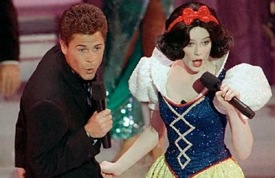 My commentary on this subject comes late as usual, allowing me the necessary time to re-watch, reflect and comment on every little thing that crossed my mind, but the gist of it won’t be much different than what has already been said in all corners of the Oscar-watching world (though I’ll try saying it more nicely than others may have):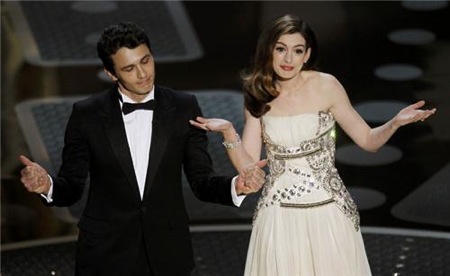
 -The first big prize of the night was Best Supporting Actress, and in the curious absence of last year’s Best Supporting Actor Christoph Waltz, the Academy brought out screen legend Kirk Douglas to present the award. It wasn’t pretty. At 94 years old, Douglas still seems pretty sharp, but he kept making jokes that made no sense (Hugh Jackman is laughing at him? Colin Firth isn’t laughing at him?) There was a total non sequiter that found him pretending to fight over his cane with the random young guy who was standing with him onstage. Then, after opening the envelope, he kept delaying the announcement of the winner. Did he think he was being funny? I mean, it was funny…but in a painful, awkward way that makes you want to cover your eyes. Why even have him there to present this particular award? It’s not like there was a theme of Hollywood icons presenting in other categories. That would somewhat go against the stated desire to draw a younger audience to the show, wouldn’t it? Most of today’s teens probably don’t even know who Michael Douglas is, let alone Kirk. His presence wasn’t a logical fit with the show at all. The Oscars are one of the few awards shows all season long where the presenter actually reads the nominee names themselves, rather than the task being handled by some anonymous voice, yet they didn’t have Douglas read the nominees. Why not? He barely shut up while he was there, so why couldn’t he read the names himself? Were the producers worried that people wouldn’t be able to understand him? Hearing-impaired actress Marlee Matlin did it when she presented Best Actor in 1987 (to Michael Douglas, in fact). It just stood out against the rest of the presentations, and highlighted the oddity of him being there. When he finally did announce the winner, it was Melissa Leo, and thrilled for her though I was, her “is this really happening” schtick was a little overdone, and wasn’t helped by Douglas continuing to insert himself in the moment as she accepted her award. The whole thing was just uncomfortable.
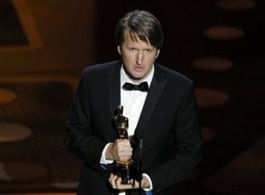 -If you’ve read my previous Oscar commentaries this season, you probably know that Tom Hooper’s Best Director win is a disappointment to me. It seems that every year, at least one Oscar needs to be given out that can go into the books as one of the all-time bad choices, and Hooper’s win is the one this year. My annoyance was heightened by the look on his face when Kathryn Bigelow said his name.
 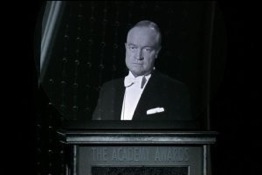 There were a few jumps back in time, but not using specific movies. Presenting the two screenwriting awards, Josh Brolin and Javier Bardem appeared as white-tuxedoed waiters in a replica of Hollywood’s Roosevelt Hotel, where the earliest Academy Award ceremonies were held. Later, a special podium was wheeled out and 18-time Oscar host Bob Hope was projected there to give the audience a glimpse of what it might have been like in the room when Hope hosted. Both segments were nice pieces of nostalgia, but the Roosevelt Hotel bit didn’t quite gel with the rest of the show, and the Bob Hope gimmick was kind of unsettling since it alternated between actual jokes as they’d been spoken by Hope and someone impersonating Hope to comment on the ceremony at hand and introduce the next presenters. It was done affectionately, and so wasn’t as offensive as Fred Astaire dancing with a vacuum cleaner or John Wayne hawking Coors Beer, but it still felt odd.
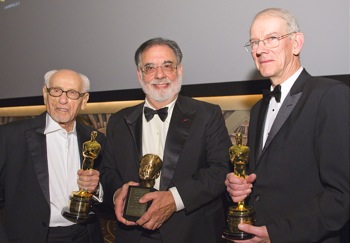

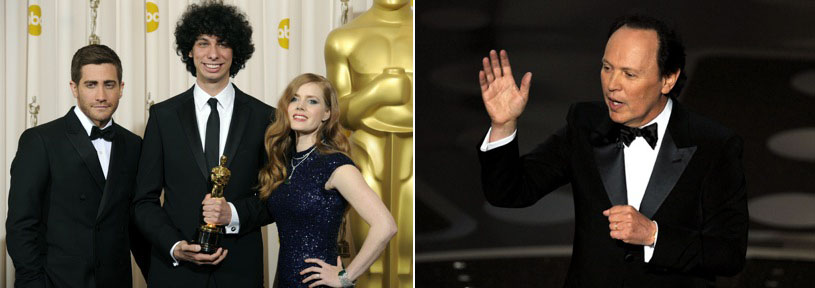

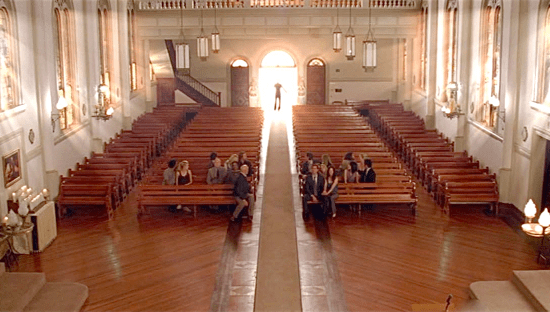
 Presumably. We really don’t know what happens to them – do they stay on the necessary bearing that allows them to break out of the island’s hold and enter real airspace so that they can make their way back to civilization? Do they have enough fuel? Working radar and radio to keep them from flying into other planes? Imagine being the air traffic controller who gets the call that the lost Ajira 316 is suddenly back in action and looking for a place to land…without most of its original passengers. But I digress. Naturally I believe that Ajira makes it home safely; that Kate helps Claire re-adjust and become a mother to Aaron; that Sawyer gets to meet his daughter Clementine; that Richard invents a line of cosmetics for men; and that Miles and Lapidus do anything that allows them ample opportunity to fire off dry, sarcastic, awesome one-liners.
 Here’s what I’m getting at. Man in Locke tells Ben of Widmore’s confession, “He said Desmond was a fail-safe. Jacob’s last resort in case, God forbid, I managed to kill all of his beloved candidates. One final way to make sure that I never leave this place.” And Man in Locke believes that only Desmond can help him destroy the island – which would suggest that yes, only Desmond could have withstood the energy in the water. Meanwhile, Jack tells Sawyer that he believes Desmond to be a weapon. So does Desmond serve all of those needs? Did Jacob somehow make it that only Desmond would be able to survive going down into the light and removing that pillar, which does begin the destruction of the island (“It looks like you were wrong,” Man in Locke says to Jack) but which also strips Man in Locke of his invincibility (“Looks like you were wrong too,” Jack says in return)? And if so, why doesn’t Jacob tell Jack about Desmond when he makes Jack protector of the island? Jack makes a point of telling Sawyer that Jacob didn’t mention Desmond having a role to play. And did Desmond simply misunderstand his own gift, thinking that once he did his task in the tunnel he would die, knowing what awaited him in SidewaysLand? When Jack goes down the tunnel and finds him, Desmond says that putting out the light didn’t work, and that he thought he would “leave this place.” He says he has to replace the stone – that it has to be him and that Jack will die if he tries. Of course, since Jack is already dying, he sends Desmond back up the rope and remains at the bottom to take care of business.
 So what was the flaw in the plan? The way I see it, the flaw was that there wasn’t enough of a plan. No, I don’t think they were making it all up as they went along, but it wasn’t plotted as meticulously as we would have liked either. Season One was the only one which had real involvement from J.J. Abrams, and his fingerprints were all over it. Abrams has famously talked about his love of mystery (read his
 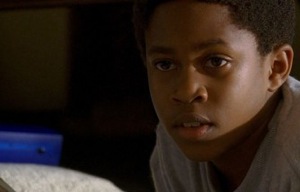 “I think a lot of people are justifiably frustrated by the Walt of it all. We said he has this special ability, and the Others obviously grabbed him and studied him for awhile, then they got freaked out by him and decided to let him go. I think that there are certain stories on the show that feel like dangling participles based on external factors. For us, we were incredibly limited by the fact that Malcolm David Kelley was growing at an exponentially faster rate than the show was progressing. So, you know, when we showed him in Season 5 and Locke is trying to recruit members of the Oceanic Six, the only way that it worked was to see him three years older. But hopefully, why Walt was special and the role he played on the show will have a new significance when all is said and done. And I’m not sure we really need the character of Walt to explain the significance.”
 The Cabin – Originally built by The Dharma Initiative’s Horace Goodspeed, “Jacob’s cabin” was the site of some freaky paranormal activity and the home to a mysterious wide-open eye. Oh, and it liked to move around the island. Whether the cabin was ever used by Jacob we don’t know (Ilana and her team did go looking for him there), but we eventually learned enough to know that it had been occupied by the Man in Black in the island’s more recent days. Maybe we’re supposed to infer that the eye belonged to him. But inference doesn’t cut it in this case. What was up with this place? If it was meant to keep the Man in Black trapped within, which seems likely based on the circle of ash that surrounded it, then how was he able to travel around the island in other forms (Smoke Monster, Christian Shephard, etc.)? Why did it change locations on the island?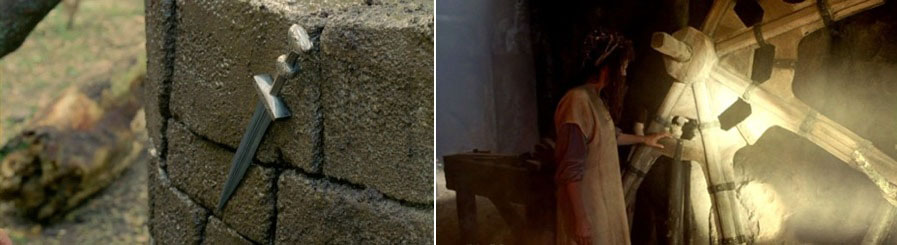
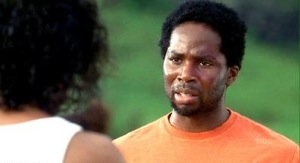 They had one more chance this season to repair the damage and give Michael the send-off he deserved – if not in the context of the story itself (since he was already dead), then at least for the fans via a cool SidewaysLand arc. Instead, they fucked him and us again. He got only two brief scenes in one episode – yelling at Hurley (next to Libby’s grave, no less. The gall!) and then telling Hurley that he’s trapped on the island as punishment for what he did. Are you serious? Sawyer killed people in cold blood out of a years-old desire for revenge – one of his victims being the wrong guy, I might add – yet he got to make happy with Juliet in SidewaysLand. They all did bad things – that was the whole point. Yes, Michael killed Ana Lucia and Libby…but he was a father desperate to save his boy, who saw no other way out. I’m not condoning his actions (and surely I’m not taking this to heart and talking about him as if he were a real person, because that would be absurd), but come on! What wouldn’t a parent do to save their child? Michael should have been given the chance to atone properly, and then he should have taken his rightful place in SidewaysLand instead of being relegated to eternal damnation on the island. That shit ain’t right. His absence from that final scene in the church will always sting.
 But of course no reunion for me could top Charlie and Claire’s. Emotion was already welling up when he was onstage at the concert and spotted her in the audience, knowing her only as the woman from his vision of true love which he had described to Desmond earlier in the season. His stares were not lost on her, and taking in his gaze almost seemed to jumpstart her labor. Aaron’s birth and its triggering of both hers and Kate’s memory of the island was a great moment, but then when she realized that she knew Charlie and took his hand, and then he remembered her and started to cry…well the tears on display in my living room weren’t just on the screen. Even though they didn’t recognize it through all of Season Four, when the writers had Claire completely forget about Charlie, they remembered here what a sweet and special relationship they had in those two and made their reunion the episode’s emotional highlight, next to the closing scene.


 Ben’s afternoon unexpectedly brings him to the home of his favorite student, Alex, and her mother, our old friend Danielle Rousseau. With Ben’s arm in a sling, they offer him a ride which turns into a dinner invitation. I gotta say, it was pretty damn weird to see Rousseau as a member of normal society, wearing a dress, smiling. After dinner, she thanks Ben for the interest he’s taken in Alex and tells him that with Alex’s father having died when she was two, Ben is now the closest thing she has to a father. The compliment chokes Ben up, and he and Rousseau have themselves a little moment. A moment! Ben and Rousseau! I guess his newly-opened window to the island timeline has not yet opened so wide for him to recall getting Alex killed or stealing her from Rousseau.
 Hurley drives up in his yellow humvee and hands an envelope with $125,000 to Ana Lucia (who he recognizes now, accidentally addressing her by name even though she doesn’t know him). When she drives off, Hurley asks why she’s not coming with them. “She’s not ready yet,” Desmond says – the same thing Eloise Hawking said to him when he visited her a few days earlier at the museum where she was organizing an impending benefit event.


 -I wish I had the time to review every write-up I’ve done this season and to really spend time thinking about all that’s happened to get us to this point, but I don’t. And maybe it’s for the best. Too much overthinking, too much effort looking at all the pieces and trying to make them fit…for all my questions and attempts to understand, predict, make sense of, etc. it’s nice to just sit back and go on the ride. So I don’t have much to offer under this Loose Ends heading this time around. My mind is focused on what’s to come. In SidewaysLand, we have Desmond bringing everyone together at the benefit concert. On the island, we have Man in Locke trying to kill the remaining survivors and destroy the island. Where is Desmond? Does Jack now have Jacob-like abilities? Is Ben really with Locke or does he have a trick up his sleeve? What about the wildcards – Claire, Miles, possibly Richard and maybe-impossibly-but-I’m-still-holding-out-a-sliver-of-hope Lapidus? Where are they and what will they do? How will the two timelines reconcile? Who will live? Who will die? And for the love of God, will we finally find out what happened to Annie, the little girl who was Young Ben’s friend on the island?!? ‘Cause if they don’t solve that mystery…

 I Am DB