 Although this blog contains archived writing going back to 2005, many of you know that it only launched a few months ago. The bulk of that older writing previously existed as e-mails sent to small groups of friends. Prior to launch, I was moving all that content over to the blog, finding pictures, video clips, and generally trying to learn my way around WordPress. As such, some things that I might have been compelled to write about passed me by. In most cases, I’ve moved on. But one topic I knew I’d have to circle back around to was the dissolution of one of my favorite bands.
I don’t know when I got into R.E.M. My first vivid memory of their existence is the video for “Losing My Religion” (from the album Out of Time), which was all over MTV when I was in eighth grade. Some of you might remember MTV as a channel that used to air music videos. I think now they just play Jersey Shore and shows about teen pregnancy, but there was a time when Music Television actually was about the music, and in the spring of 1991, this video was in heavy rotation.
Aww, would ya look at those baby-faced kids? Michael Stipe still had hair! That video was huge. It won six MTV Video Music Awards, including Video of the Year. Truthfully, I don’t remember if I got into the band at that time. I seem to remember making fun of the video with some friends, particularly the flailing-arm dance style that Stipe exhibits at a few points. But secretly, I think I thought I saw his moves as kinda cool. It was sometime after their next album – Automatic for the People – came around in 1992 that I really became a fan. The first big single off Automatic was “Everybody Hurts,” but once I dug into the album, it proved to be an amazing collection of songs from start to finish. “Try Not to Breathe,” “Monty Got a Raw Deal,” “Drive,” and the achingly beautiful, album-closing double punch of “Nightswimming” and “Find the River.” By the time they released Monster in ’94, I had dug into the back catalog and they had become my favorite active band.
Monster represented the most radical shift in their sound up to that point. There were no fuzzy pop songs like “Shiny Happy People” (from Out of Time) or “Stand” (from Green). Automatic for the People had moved in a more somber direction from those two albums, but the connective tissue was still evident. Monster, however, was a whole different sound. Jagged, distorted, rough, electric. Their follow-up – 1996’s New Adventures in Hi-Fi – was mostly written while the band was on tour supporting Monster. The songs were recorded during sound checks on the road, and the album balanced Monster‘s grungy rock sound (on songs like “So Fast, So Numb,” “Leave” and “Bittersweet Me”) with more dreamy and/or melancholy tracks (including “New Test Leper,” “Be Mine” and “How the West Was Won and Where it Got Us”).
By this time, the band’s wider popularity had started to fall off, though they had plenty of devoted fans who stayed with them, even as their sound shifted again. After the Monster tour was over, drummer Bill Berry departed the band, probably having reassessed his priorities after collapsing on stage one night due to a brain aneurysm. He insisted that Stipe, Peter Buck and Mike Mills move forward without him, which they did, taking the opportunity to change things up once again. Their first post-Berry album was 1998’s Up, which is when I feel like many of their fans started to fall by the wayside. I loved the album from the start. There was a texture to it that was new for them. There was something…I don’t know, I don’t have a great vocabulary for describing music, but something psychedelic about it. The whole soundscape was sort of…swirly. That’s what always came to mind when I listened to it. The music was swirly, like the soundtrack to a kaleidoscope. That feeling continued on 2001’s Reveal, which I also loved as much as any album they’d released even though it would generally be considered inferior. Their next album – 2005’s Around the Sun – is the only one in their catalog that I could never get into. I give it a spin every now and then to see if I can catch something that I missed before, but it doesn’t do much for me….with the exception of two songs that I love: “Leaving New York” and “The Outsiders.”
 Two more albums followed before the band amicably called it quits last year. The first, Accelerate, recaptured a bit of the Monster feeling, though the songs were generally shorter, leaner and angrier. (R.E.M. were always open about their liberal politics, and this album came out in early 2008, near the end of Dubya’s second term.) Though the band was considered past its prime, Accelerate still debuted at #2 on the Billboard charts and earned great reviews from music critics. Their final record, Collapse Into Now, came out in 2011, and while I like it, I haven’t been able to soak it in yet as I have with the older albums. It’s a solid effort that I’m sure I’ll come to appreciate more over time as I get more familiar with it.
I was stunned when Stipe, Buck and Mills announced last year that they were disbanding. Maybe that’s why I didn’t write about it earlier. Maybe it’s taken me until now to process the news. R.E.M. has been a major presence in my life, and although they always will be, it was a blow to learn there would be no more new music. During my moody late teens and early 20’s, Automatic for the People, New Adventures in Hi-Fi and Up were the anthems of my angst. Those albums always provided an accommodating soundtrack for whatever emotional state I was experiencing, usually running a spectrum from doleful to glum. Of course, their music works for me anytime, in any mood, and they have a lot of songs which I’ve connected with personally for one reason or another. I’ll miss the promise of new material coming along every few years. I only got to see them in concert once. Bastards!
With R.E.M. off the scene, I had an opening for Favorite Active Band. It was swiftly filled by The Decemberists, and I’d like to think that if Stipe, Mills, Buck and Berry actually took the slightest interest in my musical habits, they would feel this choice is worthy of their own legacy. In fact, Buck guested on three songs off The Decemberists’ last album, The King is Dead, including the bouncy “Calamity Song,” whose opening chords invoke “Talk About the Passion,” and which in general sounds like it could be an R.E.M. tune from the mid-to-late 80’s.
My friends over at Rumors on the Internets have a recurring series called Deep Cuts, in which they proffer some less well-known tracks by popular bands. They dove into the R.E.M. pool in 2010 with a great list (supported by a nice write-up) covering the first half of the band’s career. I thought I would take a page from their book and, as a way of paying tribute and belatedly bidding farewell to a band that has meant more to me than most, offer up some of my favorite tracks from the second half of their repertoire. The ROTI team weren’t as enamored with this period of R.E.M.’s run, but as I said earlier, I thought they continued to do great work well into the aughts. The ROTI list goes as far as Monster, so we’ll overlap a bit while I start there and move forward into New Adventures and then the post-Berry era. I don’t know if these would be considered deep cuts, but I wouldn’t say they were big radio hits or got the kind of exposure garnered by the band’s best known songs.
Like I said earlier, I have no vocabulary for talking about this topic. I’m terrible at trying to describe music, so my comments below are extremely brief attempts to get at something about the songs that has made them favorites of mine. I’ve embedded YouTube clips, but for anyone who might be interested in listening to them all, I also created playlists in both Spotify (for those who’ve downloaded it or want to) and Grooveshark (for those who just want to stream it). Scroll to the bottom for those.
So if you’ll indulge me one lame R.E.M. reference: this one goes out to the one I love, with respect and thanks.
Bang and Blame (Monster)
Probably the best known of the ten samples I’m presenting, “Bang and Blame” is marked by that great throbbing bass line that underscores the whole song – flowing in, receding, coming back. Or maybe that’s not the bass line I’m talking about. I don’t know what it is, frankly. I just know I likes it.
x
Be Mine (New Adventures in Hi-Fi)
Stipe is in sweet love song mode here, with the lyrics taking front and center as he sings of an overwhelming affection, offering himself up as, among other things, “the sky above the Ganges.” I see this song as a companion to “You Are Everything,” from Green. If that was an expression of gratitude to someone who has been the narrator’s Everything, this is an offer to be everything.
x
Falls to Climb (Up)
It’s probably good that I didn’t start with this one, because I’m not sure anyone who isn’t already a fan would keep listening. It’s not the band’s most exciting song, or their most melodic, but it’s a favorite of mine.
x
I’ll Take the Rain (Reveal)
There’s a sadness to Stipe’s vocals here that always spoke to me, yet the swell toward the end contrasts the wistfulness with something more hopeful.
x
I’ve Been High (Reveal)
The second song on Reveal, a great album that deserved much more praise and attention than it received. For my money, this is one of R.E.M.’s loveliest songs ever, from Stipe’s gentle, longing vocals to the richly textured instrumentation.
x
Leave (New Adventures in Hi-Fi)
I love this one for the sudden tone shift, among other things. It begins with a slow, stripped down introduction. Then at the 1:00 mark, it suddenly goes schizo with what sounds kinda like record scratching before the sound fills out and the lyrics kick in. There’s an interesting alternate version, which appears on the soundtrack to A Life Less Ordinary, as well as on the B-sides/rarities disc of In Time: The Best of R.E.M. 1988-2003. It has a more haunting quality, and is airy where this version is heavy.
x
The Outsiders (Around The Sun)
Phrases like “Knocked a future shock crowbar upside my head” and “promising volcanic change of thought” always stuck with me, as did Q-Tip’s rap at the end. I don’t know who the outsiders are or why they’re gathering, but the song captures a general sense of calm foreboding that intrigues me.
x
So Fast, So Numb (New Adventures in Hi-Fi)
There’s a hard edge to this song that I dig. Everyone in the band is playing with a tinge of aggression, though the lyrics also express some regret. I couldn’t find the album version, but this live take is solid.
x
Strange Currencies (Monster)
More lyrically straightforward than a lot of R.E.M.’s songs, this is just a simple and beautiful tune about someone pining for a love that will probably never come to pass. Who can’t relate to that? Well…maybe really good-looking people. The rest of us might identify.
x
You (Monster)
There’s a poisoned-honey drip to Stipe’s vocal here, along with a high-pitched fragility that contrasts nicely with the heavy, dank guitar work, resulting in something darkly dreamlike. (For some reason, the only video I could find is set to scenes from the Elizabeth Taylor/Montgomery Clift/Shelley Winters film A Place in the Sun.)
x
There were four other songs vying for inclusion in this list, but in an effort to somewhat adhere to the “deep cuts” idea, I omitted them because they appeared on one or both of the band’s official greatest hits collections featuring their later work (In Time: The Best of R.E.M. 1988-2003, and Part Lies, Part Heart, Part Truth, Part Garbage 1982–2011). But I don’t think any of them – “At My Most Beautiful,” “Electrolite,” “Leaving New York” or “New Test Leper” – are widely known beyond the fanbase, or were played on radio as much as their true biggest hits. On the one in a million chance that this post is actually reaching people who aren’t familiar with the band or never considered themselves fans but are giving them a shot, I’ve tacked these tracks onto the playlists below, along with the alternate version of “Leave.” And what the hell, I also threw in the boys’ groovy cover of Tommy James’ “Draggin’ the Line,” from the Austin Powers: The Spy Who Shagged Me soundtrack.
If you want to read an R.E.M. adieu from somebody who actually writes about music for a living, here’s a September 2011 piece from Rolling Stone‘s Rob Sheffield. Or if you’d rather just listen for yourself, click here to stream the Grooveshark playlist, or run it through Spotify below.
 As this was pre-texting and pre-Twitter – meaning that word of mouth actually was word of mouth – the movie’s commercial viability wasn’t immediately clear.
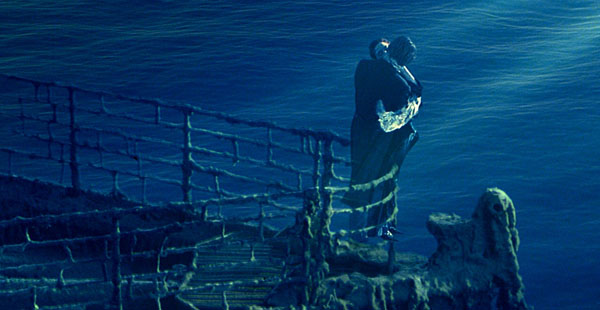
  My visceral reaction can probably be equated, in part, to the fact that I was in the throes of my own tragic love story at the time. (Tragic to me; not tragic to the girl in question, nor to anyone else. Ahh, the bitter pangs of unrequited love.) But I also saw something in the movie that I missed the first time. The love story resonated with me on a whole other level, whatever the reason. I realized that the key to the movie was the modern-day bookending sequence featuring 101 year-old Rose. Lots of movies, before and since, have opened with an elderly character recounting a tale from their youth. Edward Scissorhands, The Green Mile, Saving Private Ryan and Young Guns II are a few that leap to my mind. (That’s right – Young Guns II. Billy the Kid lives!) But the framing device is not as essential to any of them as it is to Titanic. I’ll assume that if you’re reading this, you’ve seen the movie, so you know that at the end, old Rose walks out to the deck of Brock Lovett’s ship and reveals to the audience that she has the diamond which Lovett has been seeking from the Titanic wreckage far below them. She tosses the jewel into the water, and the next thing we see is her asleep in bed, followed by a final descent to the sunken ship.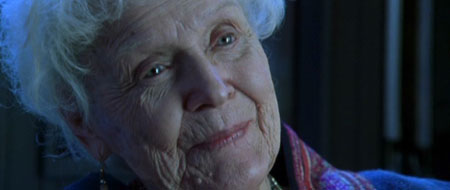


 Rarely does an actor have as amazing a debut year as you had in 1996. It started with Primal Fear – what a breakout! The movie was a slick Hollywood thriller, but your performance elevated it and announced the arrival of a special talent. Your audition tape burned through the industry, landing you juicy roles in Milos Forman’s The People vs. Larry Flynt and Woody Allen’s Everyone Says I Love You before Primal Fear had even come out. By year’s end, all three movies had been released and you were winning critics awards for your work in all of them. You took home a Golden Globe for Primal Fear, and an Oscar nomination for the same. After this hat trick of superb supporting performances, leading roles seemed yours for the taking. Yet instead of going that route, you chose another supporting part for your next film, playing wingman to Matt Damon in the poker flick Rounders. Granted, you had the more colorful part, that of a cocky gambling addict whose irresponsible behavior gets him – and his friend – in trouble with the wrong people.

 If I had started this blog a couple of years earlier, I probably would have fallen into the habit of writing regular weekly pieces about Glee. Not because I love the show the way I loved Lost, and not because it invites the same sort of feverish conversation and rumination that Lost did, but because nary an episode went by that didn’t leave me with things to say, whether positive, negative or both. Tonally, it must be the most schizophrenic show on television. It ping-pongs between absurdist comedy and sensitive, keenly-observed realism so wildly that the genre it should really be assigned to is not Comedy or Drama, but Fantasy. As a result, the show is majorly uneven, but always interesting.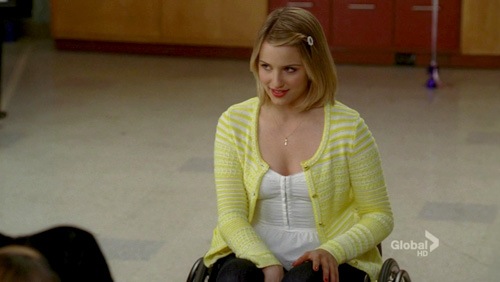


 I Am DB