
Gather round, one and all, and stand witness as I once again engage in the mysterious, socially-questionable practice of Oscar prognostication. It’s a little bit science, a little bit art, and a whole lot of hours spent watching and reading about movies. If you ever wondered how I maintain my pallid skin tone, wonder no more. Read on if you dare, and then talk amongst yourselves about planning my intervention.
BEST PICTURE
2011 was the first year that the Academy adjusted the Best Picture category so that it would include somewhere between five and ten nominees. Being a weak year, it was generally assumed that there would be seven, maybe eight, nominees. It turned out there were nine. 2012 was a much stronger year, so a full slate of ten films was expected. Once again, the tally came in at nine. And I’m guessing that’s where things will land this time as well. It’s been another impressive year with lots of viable candidates, but nine might be the magic number.
Surely that nine will include 12 Years a Slave, Gravity and American Hustle, which have been the dominant three movies on the circuit of precursor awards from critics and industry guilds. Although the former two have been the pair, ever since October, deemed to battle it out through the season, Hustle came on strong when it began screening in late November, and its stock has only risen. Over the weekend, it took home the Golden Globe for Best Picture – Musical or Comedy, while 12 Years won for Best Picture – Drama (its only award of the night).
Her has been a big hit with the critics as well, and earned nominations from the Producer’s Guild of America (PGA) and the Writers Guild of America (WGA). I initially thought it would be too offbeat for the generally conservative Academy, but now I think it’s striking a broader cord; broad enough to put it over the edge. The way nomination math works, a movie only requires a few hundred passionate supporters who name it their number one film of the year. I think Her will manage that. Nebraska is a safe bet, as is Captain Phillips, but neither are sure things. From there, it gets fuzzier. The old fashioned, feel-good Hollywood craftsmanship of Saving Mr. Banks was expected to play like gangbusters within the industry, even more so for being a movie about movies. But it landed a bit softly with the Screen Actors Guild (SAG), missing out on expected nominations for Best Ensemble and Best Supporting Actor for Tom Hanks. It was also overlooked by the WGA, leading some to wonder if the Academy will find a place for it. Also missing out with all the top guilds is the Coen Brothers critically adored Inside Llewyn Davis. Academy members have been kind to the Coens in recent years, but is this one a little too hard to love? I don’t know…if they liked 2009’s A Serious Man enough to nominate for Best Picture and Best Original Screenplay, surely they like Inside Llewyn Davis enough. But this is a more competitive year than ’09, so maybe “enough” isn’t enough. The PGA nominated Blue Jasmine, but while Woody Allen’s latest is well-liked, I don’t know that it’s loved as much as his last Best Picture nominee, Midnight in Paris. It feels like a long shot to me. The Wolf of Wall Street is definitely in the running too, but I really have no grasp on where the consensus is falling.
 The three remaining titles most likely to show up are Lee Daniels’ The Butler, Dallas Buyers Club and Philomena. Dallas, whose awards prospects initially seemed limited to the performances by Matthew McConaughey and Jared Leto, has proven unexpectedly popular, earning a SAG nomination for Best Ensemble, plus nods from the PGA and WGA. As for The Butler and Philomena, both are said to play extremely well to the Academy’s older contingent, which remains a large voting bloc. I don’t know though; I have a hard time imagining enough people naming Philomena as their favorite movie of the year to secure it a nomination. The Butler seems more likely to hit those numbers. Neither film was nominated by the PGA, which was notable because their exclusion — along with that of August: Osage County, which has not made the splash once expected for a star-studded adaptation of a Pulitzer Prize and Tony Award winning play — meant that Oscar junkie Harvey Weinstein was shut out. Rare is the Best Picture slate that doesn’t include a movie from Harvey Weinstein. As in any other category, the guild nominees do not tend to line up perfectly with the Academy, so the PGA’s Weinstein-free slate doesn’t necessarily bode ill. I feel like The Butler, which has Weinstein’s muscle behind it and which hits the “sentimental epic” notes that will appeal to voters who loved Forrest Gump and Extremely Loud and Incredibly Close, will make it in. If it doesn’t, and if Philomena misses too, then that violent shaking felt across Los Angeles on Thursday morning won’t be an earthquake. It will be the wrath of Weinstein.
Predictions:
American Hustle
Captain Phillips
Dallas Buyers Club
Gravity
Her
Lee Daniels’ The Butler
Nebraska
Saving Mr. Banks
12 Years a Slave
Personal Picks:
Before Midnight
Captain Phillips
Gravity
Her
Inside Llewyn Davis
Mud
Nebraska
Prisoners
12 Years a Slave
BEST DIRECTOR
Alfonso Cuarón pioneered new filmmaking techniques in an effort to realize his vision for Gravity, while Steve McQueen fearlessly plunged the depths of slavery in America for 12 Years a Slave. Both are almost guaranteed a nomination. I say “almost” because they occupy the same frontrunner status held last year by Argo‘s Ben Affleck and Zero Dark Thirty‘s Kathryn Bigelow. Need a reminder of how that turned out? Still, I think last year’s omissions were the unfortunate result of a collective honest mistake, with many voters choosing less obvious candidates because they figured Affleck and Bigelow would be covered by others. So those who truly want to ensure that Cuarón and McQueen are nominated might be more careful this year and cast their vote accordingly, rather than assuming that everyone else will vote for them.
David O. Russell, included last year for Silver Linings Playbook should find himself back again for American Hustle. All three of these gentlemen were cited by the Director’s Guild of America (DGA), along with Paul Greengrass for Captain Phillips and Martin Scorsese for The Wolf of Wall Street. The same quintet were nominated by the British Academy of Film and Television (BAFTA) as well, a body which, like the DGA (and other guilds) shares some membership with the Academy. But the Oscar nominations rarely align with the DGA’s selections, so where will the discrepancy lie? A few weeks ago, I probably would have said that Greengrass was in and Scorsese out. That could certainly be how it goes. But I also wonder if the controversy surrounding Wolf of Wall Street won’t rally those fellow directors who were impressed by the movie — and by Scorsese’s ability to still make vital, passionately-debated movies at the age of 71 — to throw their support his way. On the other hand, Greengrass doesn’t just impress for the skill and effectiveness of his usual intense and vérité approach, but also for drawing such impressive performances from the four Somali leads, none of whom had ever acted professionally before.
 Still, if he or Scorsese miss (assuming it’s one of them, and that only one nominee is different between the Academy and the DGA), who gets the fifth slot? The Director’s branch often backs filmmakers with esoteric or unconventional visions, and I’m guessing that tendency will show up this year and boost Her‘s Spike Jonze, a remarkable and highly selective director, into the final five.
There are plenty of other worthy names in the mix. Some stand a strong chance of breaking in (Alexander Payne for Nebraska), others a less likely chance (the Coen Brothers for Inside Llewyn Davis, Woody Allen for Blue Jasmine, J.C. Chandor for All is Lost) and still others pretty much no chance, no matter how deserving they may be (Richard Linklater for Before Midnight, Jeff Nichols for Mud, Jean-Marc Vallee for Dallas Buyers Club).
I’m really unsure what to do about Greengrass and Scorsese. I don’t think Scorsese would be nominated if The Wolf of Wall Street isn’t also nominated for Best Picture, which I’m not predicting. Since the Best Picture race expanded beyond five films, all of the directing nominees have had their movie in the Picture race as well. But only directors nominate directors, whereas the entire Academy votes for Best Picture. So given the different voting contingents, it’s conceivable that a director could be nominated while his or her film is not. Right? Probably unlikely…but conceivable. Grrrrrr. I’m probably backing the wrong horse here, but I’ll stick with my initial sense that Wolf will miss Best Picture but Scorsese will make it for Director.
Predictions:
David O. Russell – American Hustle
Alfonso Cuarón – Gravity
Spike Jonze – Her
Steve McQueen – 12 Years a Slave
Martin Scorsese – The Wolf of Wall Street
Personal Picks:
J.C. Chandor – All is Lost
Alfonso Cuarón – Gravity
Spike Jonze – Her
Harmony Korine – Spring Breakers
Steve McQueen – 12 Years a Slave
BEST ACTOR
Here’s where it starts to get bloody. Because while it has been a strong year for movies, it has been an extraordinary year for performances. All of the acting races are rich with contenders, and as usual, Best Actor is the most crowded. It’s going to be brutal.
Since as far back as October, most Oscar pundits — professional and amateur — have expected the lineup to consist of Chiewtel Ejiofor for 12 Years a Slave, Tom Hanks for Captain Phillips, Matthew McConaughey for Dallas Buyers Club, Bruce Dern for Nebraska and Robert Redford for All is Lost. That’s a goddamn beautiful list right there. But let’s pretend those five names are not in play. So maybe the category features Leonardo DiCaprio in The Wolf of Wall Street, Oscar Isaac in Inside Llewyn Davis, Michael B. Jordan in Fruitvale Station, Joaquin Phoenix in Her and Christian Bale in American Hustle (or Out of the Furnace, in which he is magnificent). Once again, a stellar line-up. Now let’s take those guys out of the picture too. How about Forest Whitaker for The Butler (nominated for a SAG award), Hugh Jackman for Prisoners (or Jake Gyllenhaal, just as good), Tye Sheridan for Mud (don’t discount him because of his youth; his performance is every bit as worthy of recognition as veterans like Redford, Dern and Hanks), Daniel Brühl for Rush (he’s being campaigned as a Supporting Actor, but that’s bullshit; he’s a lead), and Idris Elba for Mandela: Long Walk to Freedom.
In a normal year, there would be somewhere between five and ten performances that are truly deserving. This year, you could fill the category three times over and, with any configuration, have a dynamite slate. So…yeah. The voters in the acting branch face an impossible challenge, and no matter how it shakes out, some people who were good enough to win won’t even get nominated.
Looking again at the five who have longest been considered the likely nominees, Ejiofor and McConaughey feel secure, while Redford appears to be the most vulnerable. He is the only actor onscreen in All is Lost, and he has barely any dialogue. It’s acting at its purest, from a highly respected industry legend who has only been nominated as an actor once, back in 1973 for The Sting. But surprisingly, he was passed over by SAG voters, with Forest Whitaker taking the spot he was expected to occupy. The only prize he’s collected is a Best Actor win from the New York Film Critics Circle, though he has been nominated by a number of regional critics organizations, and made the list for the Golden Globes and Broadcast Film Critics Association. Redford hasn’t played the campaigning game that can often make the difference, but he’ll have the support of his fellow actors.
Hanks could miss out too. The most powerful moments of his performance in Captain Phillips come at the very end of the movie, and they’re shattering. Up until that point though, his work is more subtle and contained. Excellent, but the kind of unflashy turn that could conceivably be overlooked. Still, the movie seems to be generating across-the-board support, and it’s the first movie Hanks has done in a long time that has that awards-friendly glow to it. His last nomination was for Cast Away back in 2000. It would be nice to see him back in the hunt.
Earlier in the season, I was unsure about Bruce Dern’s likelihood of going all the way, but Nebraska is holding strong, and Dern has been campaigning like a machine, appearing at countless Q&A’s and events to promote the movie and mingle with voters. At 77 years-old, Dern has been in the business a long time, worked with a lot of great people and collected an endless supply of colorful stories that have charmed audiences during all this promotion. His performance in Nebraska is low-key, but beautifully affecting. In the wake of the movie’s warm reception at the Cannes Film Festival, where he was named Best Actor, it was unclear whether Paramount would campaign him for Best Supporting Actor or Best Actor. He definitely belongs in the latter, but his chances of winning would be much better in the former. The studio made the right call going with the lead actor category, and Dern agreed, telling The Hollywood Reporter, “If I go supporting, I’m a whore.” He made similar remarks, in his typical, entertainingly frank manner, to Deadline. Dern should have a lot of support from the acting branch’s older members, many of whom he has worked with and/or known for years.
 The last movie of the year to be seen by voters and critics was The Wolf of Wall Street, and by then the category seemed impenetrable. Yet many think DiCaprio can’t miss. Pete Hammond of Deadline wrote after one of the film’s first industry screenings, “It would be unthinkable to imagine he won’t be in the top five.” I have to disagree. Given the competition, it’s easily thinkable. And while I’m not counting him out by any means, the Academy has not sparked to DiCaprio of late. His last nomination was in 2006 for Blood Diamond. Since then, he’s been overlooked for J. Edgar (a superb performance, whatever your thoughts on the movie) and Django Unchained. Maybe voters will feel his time has come around again. Though even if they do, that doesn’t mean he’ll make the cut in such a competitive year.
Oh, and on a side note, can people please stop calling Leo’s performance in Wolf the best of his career? Because it’s not. It’s really good, and surely one of his most energetic and fun. It’s certainly a highly committed performance; he does so much impassioned screaming that it’s a miracle he didn’t permanently blow his vocal chords. But career-best? No. It’s not better than What’s Eating Gilbert Grape (will anything be?), and it’s not better than The Departed. So let’s everyone just dial it back a bit.
I do think DiCaprio, along with Forest Whitaker and Christian Bale, are the guys with the best chance of breaking the Ejiofor-McConaughey-Hanks-Dern-Redford stronghold. Whitaker’s win in 2006 for The Last King of Scotland is the only time he’s been nominated, so it would be nice to see him in play once again. (Personally, I think there are several stronger and more worthy performances that deserve inclusion, but I can’t deny I’d be happy for him). The SAG nomination means he can’t be discounted, but I’m unconvinced he’ll make the cut in the end. If Bale makes it in, he’ll have the momentum of American Hustle to thank. Not to suggest he isn’t great, because he is, but in such a fiercely competitive year, his chances would be lower if he weren’t in such a beloved movie (probably part of the reason that his buzz is all about Hustle instead of Out of the Furnace.) David O. Russell’s last two movies racked up seven acting nominations and three wins (Bale and Melissa Leo for The Fighter, and Jennifer Lawrence for Silver Linings Playbook). Silver Linings earned nominations in each of the four acting categories, and it’s possible that Hustle could do that same. But of the four actors likely to make that happen, Bale faces the steepest uphill battle. In his favor, he was nominated for a Golden Globe, a BFCA award and a BAFTA award. Keep in mind though, that the Globes have categories for Drama and Comedy, while the BFCA nominate six actors, not just five.
 I wish Oscar Isaac stood a stronger chance for Inside Llewyn Davis, but despite impressing many voters even beyond the film with his performances at a few concert events celebrating the soundtrack, there’s simply too much competition. And I really, really wish — though this isn’t even in the remotest realm of possibility — that teenager Tye Sheridan had a chance for his wonderful work in Mud. 17 years-old now but 14 when he shot it, Sheridan gives a nuanced, emotionally bare performance that deserves as serious consideration as any A-lister in the running.
A lot could happen in this race, but having to commit to predictions, I think the biggest surprise might be that it plays out exactly how it looked at the start.
Predictions:
Bruce Dern – Nebraska
Chiwetel Ejiofor – 12 Years a Slave
Tom Hanks – Captain Phillips
Matthew McConaughey – Dallas Buyers Club
Robert Redford – All is Lost
Personal Picks:
Chiwetel Ejiofor – 12 Years a Slave
Oscar Isaac – Inside Llewyn Davis
Matthew McConaughey – Dallas Buyers Club
Joaquin Phoenix – Her
Tye Sheridan – Mud
(Even for me, whose picks mean absolutely nothing to nobody, the choices are impossible. I can’t sacrifice any of these guys, but I so badly want to include Bale and Hanks. What a year…)
 BEST ACTRESS
Like the Best Actor race, this one has seemed inflexible for quite a while. Cate Blanchett is so certain to win this award for Blue Jasmine that filling out the rest of the category is pretty much just ceremonial. Michael Barker, co-president of Jasmine‘s distributor Sony Pictures Classics, told Deadline back in June that no matter what else came along, Blanchett had the Oscar in the bag. Not the first time studio execs have made such bold claims, but this one will probably play out. Still, since she can’t stand alone quite yet, the conventional wisdom has been that she will keep company with Gravity‘s Sandra Bullock (considered her strongest competition), August: Osage County‘s Meryl Streep, Philomena‘s Judi Dench and from Saving Mr. Banks, Emma Thompson. And like Best Actor, there was enough great work to fill the category a second time, if not quite a third.
Of the next wave of contenders, the only one likely to break through is Amy Adams for her multifaceted work in American Hustle. The dark horse candidates are Brie Larson, playing a director at a foster care facility in the acclaimed indie Short Term 12; Julie Delpy, continuing to amaze as she deepens her now 19 year relationship with her character Celine in Before Midnight; and newcomer Adèle Exarchopoulos as a young woman in the throes of first love in the French film Blue is the Warmest Color, for which she and co-star Léa Seydoux shared the Cannes Film Festival’s Palme d’or prize with the director — a first in that award’s history. The chances that any of them could hear their name read are slim to none, but they’ve received a lot of love on the critics circuit. Adams and Delpy earned Golden Globe nominations in the Musical/Comedy category, as did Julia Louis-Dreyfus for her terrific performance in Enough Said, and Greta Gerwig for Frances Ha. (I really like her, but I didn’t care for the movie.) The BFCA, with six available slots, found room for Larson alongside Blanchett, Bullock, Dench, Streep and Thompson.
Bérénice Bejo, a Supporting Actress nominee two years ago for The Artist, garnered some early talk for her role in The Past, from Iranian director Asghar Farhadi. He took home the Best Foreign Language Film award the same year, for the outstanding domestic drama A Separation. Alas, even the critics awards haven’t found room for Bejo, so any dreams of Oscar will have to stay that way. (Unfortunately, I haven’t yet had a chance to see The Past, or Blue is the Warmest Color, so I can’t factor Bejo or Exarchopoulos into my own picks.) And lastly there’s Kate Winslet, who starred in Jason Reitman’s Labor Day. The movie didn’t earn the kind of acclaim that usually meets Reitman’s work, and while Winslet is quite good in the role, the movie is pretty low on the radar. She managed a Golden Globe nomination, but that’s as far as she’ll go.
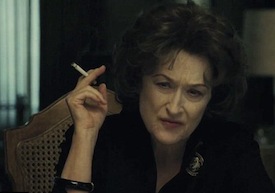 The category could definitely play out as expected, which is also how the SAG nominations went. But I don’t know…I have a feeling Streep might sit this one out. August: Osage County, with its grand pedigree and powerhouse cast, came into the season with high expectations, but it was met with mixed reviews and has not generated a lot of buzz. It did play well with SAG, who awarded it two individual nominations and one for Best Ensemble, so that counts for something since actors nominate actors. And this is Meryl Streep we’re talking about. She’s been nominated for lesser work than this, and she is revered and beloved by all. But she’s also not hurting for recognition, having won her third Oscar two years ago on her 17th nomination. It’s not impossible that voters could decide to pass her over this time around. If so, her loss would be Amy Adams’ gain. I’ve bet against Adams before and been wrong each time. Dare I underestimate her popularity with the Academy yet again? She could also make it in at the expense of Dench or Thompson, both of whom are safe but not certain bets. But if I go with a gut feeling that’s been building for a while, I’d say Streep misses.
Predictions:
Amy Adams – American Hustle
Cate Blanchett – Blue Jasmine
Sandra Bullock – Gravity
Judi Dench – Philomena
Emma Thompson – Saving Mr. Banks
Personal Picks:
Cate Blanchett – Blue Jasmine
Sandra Bullock – Gravity
Julie Delpy – Before Midnight
Brie Larson – Short Term 12
Meryl Streep – August: Osage County
BEST SUPPORTING ACTOR
All of the advance buzz for Dallas Buyers Club focused on Matthew McConaughey, but when the movie hit, Jared Leto received as much acclaim and attention as his co-star, playing a transgender AIDS patient who becomes McConaughey’s business partner. Leto’s performance — his first after a six year absence from acting — has nearly swept the critics awards, and made him the frontrunner for the win. Expect him to be joined by Michael Fassbender for 12 Year a Slave. After missing out on a nomination for Shame (for shame, Academy), his previous collaboration with Steve McQueen, the magnetic Fassbender should be a slam dunk nominee this time around as a drunken, brutish plantation owner.
 SAG rounded out the category with newcomer Barkhad Abdi for Captain Phillips, Daniel Brühl for Rush, and James Gandolfini for Enough Said. Abdi is a good bet to make it in. He’s been a consistent presence on the landscape all season long, earning Golden Globe and BFCA nominations in addition to SAG, and his inexperience as an actor makes his performance that much more impressive. Brühl’s chances are less assured. He too was nominated for a Golden Globe and BFCA award, which were pleasant surprises considering that Rush had largely faded from the conversation since its September release. The movie is said to have a lot of admirers, and while that support may not carry it into the Best Picture race, which once seemed possible, it could be enough to get Brühl nominated. However I should say, for what it’s worth, that by no stretch of the imagination is this a supporting performance. Brühl is without question a co-lead alongside Chris Hemsworth, and Universal’s decision to campaign him as a supporting actor is just a way to give him a better chance at getting nominated, since he would never be able to break into such an overcrowded Best Actor field. Bruce Dern must think him a whore. As for James Gandolfini, he is absolutely deserving of a nomination for his change-of-pace role as a tender divorced man entering into a new relationship. The SAG nomination is welcome recognition, but had he not passed away this year, I think he would have been squeezed out. He’s received plenty of nominations from critics groups, but I don’t think he’s going to make it into the Oscar race. Respected as he is, he’s still most associated with his television work, and Oscar voters aren’t necessarily sentimental about these things. He could make it, but I’m not counting on it.
Who else is waiting in the wings? Bradley Cooper and Jonah Hill deliver colorful, incredibly entertaining performances in American Hustle and The Wolf of Wall Street, respectively. Neither managed a SAG nomination, but that is likely because their films weren’t ready in time to be seen by enough voters. Cooper has Globe and BFCA nominations, but Hill missed out on both of those. Cooper’s chances may be better, since voters are expected to go big with American Hustle, whereas Wolf of Wall Street‘s popularity within the Academy is more of a question mark. Hill, meanwhile, is known to have done a lot of improv that provides Wolf with some of its funniest moments, so that could work to his advantage with his fellow actors.
Tom Hanks was considered a strong contender for his role as Walt Disney in Saving Mr. Banks, but after missing out on SAG, Globe and BFCA nominations, he would now appear to be a long shot. Another Best Actor frontrunner who has a chance here, though not as much as it might have seemed earlier in the year, is Matthew McConaughey for his work as a charming fugitive in Mud. Will Forte has received some love from critics for Nebraska, but I don’t see it cutting through the competition. Among the actors relegated to long shot/near impossible status but who are nonetheless worthy of consideration: Harrison Ford for the Jackie Robinson biopic 42; Woody Harrelson and Casey Affleck, both quite powerful in Out of the Furnace; David Oyelowo for The Butler; John Goodman for a small but excellent turn in Inside Llewyn Davis; the perennially overlooked Sam Rockwell in The Way, Way Back; and Chris Cooper for a standout performance in August: Osage County.
And then there’s James Franco. His Spring Breakers is far outside the realm of movies that Oscar voters pay attention to, but it’s a textbook case to demonstrate that their narrow box often excludes work that absolutely deserves recognition. There are a number of categories where Spring Breakers deserves to be cited (you already saw me include its director Harmony Korine among my personal picks for Best Director), and if Academy voters took off their blinders, how could they not stand up for Franco’s sensational work as a hilariously materialistic DJ and drug dealer for whom spring break is a state of mind? The film’s indie distributor, A24, has mounted a campaign for Franco, but they only have so much money to spend, and none of it is likely to penetrate the Academy’s bubble. If Franco had a shot, he probably would have needed a SAG nomination, and that actually seemed like a possibility. SAG voters, after all, nominated Nicole Kidman’s somewhat gonzo turn in The Paperboy last year. Unfortunately, Franco was passed over, and a similar fate awaits him tomorrow morning. But if he somehow manages to get a surprise nomination, expect the gathered journalists in the room to let out an enthusiastic round of applause, hoots and hollers.
Predictions:
Barkhad Abdi – Captain Phillips
Daniel Brühl – Rush
Bradley Cooper – American Hustle
Michael Fassbender – 12 Years a Slave
Jared Leto – Dallas Buyers Club
Personal Picks:
Barkhad Abdi – Captain Phillips
Michael Fassbender – 12 Years a Slave
James Franco – Spring Breakers
Jonah Hill – The Wolf of Wall Street
Jared Leto – Dallas Buyers Club
(Again, I agonize over my meaningless picks. Kills me to leave off Coopers Bradley and Chris.)

BEST SUPPORTING ACTRESS
Lupita Nyong’o was in her final months at Yale Drama School when she auditioned for 12 Years a Slave, and at the moment she’s the frontrunner to win the Oscar for her debut film. Not a bad way to break into the biz. But first the nomination. She’ll be there. As will last year’s Best Actress winner Jennifer Lawrence, who tears it up in American Hustle. For many viewers, she’s been the standout. On the other end of the age and experience spectrum is 84 year-old June Squibb, the veteran character actress who steals the show as Bruce Dern’s outspoken wife in Nebraska. It’s hard to imagine she won’t make the cut. Another good bet, though not a lock, is Oprah Winfrey for The Butler. Winfrey doesn’t act too often, but when she does, she somehow pulls off the seemingly impossible challenge of embodying a character despite being one of the most ubiquitous figures in the world. No small task. She was nominated in this category nearly 30 years ago for The Color Purple, and I suspect she’ll be back.
That leaves one slot, and any number of people it could go to…all of whom could also land in the final five if Winfrey or Squibb should miss. 2011’s winner Octavia Spencer was touted as a likely nominee ever since Fruitvale Station came out in July, but her chances seem to have diminished in the season’s later days. She could still make it, but after missing out on SAG, the Golden Globes and even the BFCA, I’m not counting on it. All three of those groups did, however, nominate Julia Roberts for August: Osage County. Like Daniel Brühl, Roberts should be in the lead category, but The Weinstein Company didn’t want her and Streep to contend with each other. Can Roberts make it in? I’m not sure. But it would be nice to see her there again. Like Tom Hanks, her last nomination came in 2000, when she won for Erin Brockovich.
 One nomination that almost certainly won’t happen, but should, is Scarlett Johansson for Her. Although she never appears on camera, make no mistake: she is the movie’s female lead, and creates a fully developed, three dimensional character with just her voice. Several critics groups have nominated her, including the BFCA, but that’s unlikely to make a difference. Although the performance is eligible for an Oscar nomination, I don’t see actors going there, no matter how much they admire the film and her work in it. Whether it’s Robin Williams voicing the Genie, or Andy Serkis being replaced by a creation of visual effects in The Lord of the Rings or Rise of the Planet of the Apes, if the performer doesn’t appear on camera, actors don’t seem to consider it an award-worthy performance. Too bad, since I would think actors would understand the challenges of this work, and should be all the more impressed when it connects so successfully. Maybe someday this barrier will fall, but I don’t think voters are ready yet. However, in this case, there is a way to get around it…sort of. Johansson’s work in Her was not her only great performance this year. She was also excellent as the jersey girl sexbomb with unrealistic notions of romance in Joseph Gordon-Levitt’s directorial debut Don Jon. That performance is worth consideration on its own, but could pull double-duty as proxy recognition for Her.
 If there’s a surprise in this category that catches most people off guard, it may well be Jennifer Garner for Dallas Buyers Club. She is not considered a likely contender, and in fact hasn’t received a single nomination in all of the precursor awards except as a member of the movie’s SAG-cited ensemble. But that Best Ensemble recognition was itself a big surprise, and the movie has been faring well in general. Garner is good in it, but doesn’t get to do the kind of transformative work that benefits McConaughey and Leto. Still, The Hollywood Reporter‘s awards analyst Scott Feinberg thinks she has an excellent chance, and his logic makes good sense. He says that voters only have time to watch so many movies, and when they find something they really like, they tend to vote for it across the board. It was by that reasoning that he was one of the few pundits to predict Jacki Weaver’s nomination last year for Silver Linings Playbook. There is usually at least one big surprise on nomination morning that most people didn’t see coming, and given the popularity Dallas Buyers Club seems to have, Garner could be it. Plus, after all of the accolades her husband Ben Affleck collected for Argo last year — not to mention the strange comments he kept making in his attempts to thank her, which made it sound like their marriage was a daily struggle — maybe voters feel that Garner has earned some recognition of her own. I can’t bring myself to predict it; I think this is the one acting category that will match the SAG list five-for-five. But if Garner does score a nod, I’ll definitely be applying Feinberg’s logic to future races.
Another surprise could be Sally Hawkins, who played Cate Blanchett’s sister in Blue Jasmine. She’s received a smattering of mentions from critics, as well as Golden Globe and BAFTA nominations. Never discount an actress in a Woody Allen film. Other names that have popped up but would make for shocking nominations, however well deserved, are Sarah Paulson for her cruel plantation mistress in 12 Years a Slave; Julianne Nicholson and Margo Martindale as family members harboring secrets in August: Osage County; Melissa Leo as the caretaker of a young man suspected of abducting two little girls in Prisoners; and Léa Seydoux as a new couple’s more experienced lover in Blue is the Warmest Color.
Predictions:
Jennifer Lawrence – American Hustle
Lupita Nyong’o – 12 Years a Slave
Julia Roberts – August: Osage County
June Squibb – Nebraska
Oprah Winfrey – Lee Daniels’ The Butler
Personal Picks:
Scarlett Johansson – Her
Jennifer Lawrence – American Hustle
Lupita Nyong’o – 12 Years a Slave
June Squibb – Nebraska
Oprah Winfrey – Lee Daniels’ The Butler
BEST ORIGINAL SCREENPLAY
Expect to see American Hustle and Nebraska among this year’s crop. Her, whether or not it can manage recognition for Best Picture or Best Director, would seem like a given here as well. I would also have said that the Coen Brothers’ Inside Llewyn Davis was a sure bet, but its lack of a WGA nomination, or broad guild support in general, makes it a tougher call. But the biggest question mark is Gravity. While the movie is expected to be one of the most nominated of the year, its chances here are cloudier. Even many who love the film would say that the story is slight and that the movie’s screenplay is not where it stands out. Others would argue that it’s much weightier on the story and thematic front that it’s been given credit for. I suspect the writers will pass on it, but given its frontrunner status for other top awards, it could absolutely land here.
The indefatigable Woody Allen stands a good chance at his 16th writing nomination for Blue Jasmine. He got the WGA nod alongside Hustle, Her, Nebraska and Dallas Buyers Club, which is another strong but by no means certain contender. I’d say Dallas‘ chances depend on what happens with Gravity and Inside Llewyn Davis. Saving Mr. Banks could find some love here, but having not been the big player so far that it was initially expected to be, it’s hard to anticipate what the Academy will do with it. Enough Said and Fruitvale Station are also on the fringe, but I’m not expecting either to get this far. And if the writer’s branch decides to throw a curve ball or two, look out for Mud, All is Lost or Prisoners.
Predictions:
David O. Russell, Eric Warren Singer – American Hustle
Woody Allen – Blue Jasmine
Spike Jonze – Her
Ethan Coen, Joel Coen – Inside Llewyn Davis
Bob Nelson – Nebraska
Personal Picks:
Spike Jonze – Her
Ethan Coen, Joel Coen – Inside Llewyn Davis
Jeff Nichols – Mud
Bob Nelson – Nebraska
Aaron Guzikowski – Prisoners
[Update, January 26: My personal picks originally included Seth Rogen and Evan Goldberg’s script for This is the End, but last night I remembered that script doesn’t qualify as original because it’s based on a short film: Seth and Jay vs. the Apocalypse. I removed it from my list and replaced it with Bob Nelson for Nebraska.]
BEST ADAPTED SCREENPLAY
The Writers Guild nominations aren’t as much of a guideline in this category since, as always, some scripts were ruled ineligible for guild consideration. This was true for Best Original Screenplay too, but the only disqualified movie in that field which is expected to be a contender is Fruitvale Station, and that’s hardly a frontrunner. Not so on this side of the fence, where 12 Years a Slave, which could well be the winner come Oscar night, did not qualify with the WGA. But you can bet it will be on the Oscar shortlist, probably joined by Captain Phillips and Before Midnight. Richard Linklater, Julie Delpy and Ethan Hawke, the trio behind the latter, were nominated in this category back in 2004 for the previous film in the series, Before Sunset. They should repeat for this continuation which has been received just as enthusiastically, if not more.
Another strong possibility which didn’t meet the WGA’s standards is Philomena. With that and 12 Years out of play, the guild found room for August: Osage County and Lone Survivor. August still stands a chance with the Academy, but I wouldn’t bet on Lone Survivor. Not to take anything away from it; it’s a good movie. But a screenplay nomination seems like a stretch. The final WGA nominee, along with August, Survivor, Phillips and Midnight, is The Wolf of Wall Street, which I think will repeat here. Last summer’s beautifully spun teen romance The Spectacular Now collected a number of nominations from critics groups, but is a long shot to go the distance with the Oscars. Ditto the indie drama Short Term 12. These are the kind of wonderful small movies that, despite excessive praise from critics, never seem to attract the eyes necessary to lift them to Oscar-level awareness.
Predictions:
Richard Linklater, Julie Delpy, Ethan Hawke – Before Midnight
Billy Ray – Captain Phillips
Steve Coogan, Jeff Pope – Philomena
John Ridley – 12 Years a Slave
Terence Winter – The Wolf of Wall Street
Personal Picks:
Richard Linklater, Julie Delpy, Ethan Hawke – Before Midnight
Destin Daniel Cretton – Short Term 12
John Ridley – 12 Years a Slave
Carroll Cartwright, Nancy Doyne – What Maisie Knew
Terence Winter – The Wolf of Wall Street
BEST ANIMATED FEATURE
It has not been a strong year for animation. At least, not in the mainstream. Several of the 19 films submitted to the Academy for consideration are foreign entries that did not get wide release or promotion here in the states, so I can’t speak to those. But homegrown projects were not, as a group, the best we’ve seen. If at least 16 of the 19 submitted films are accepted by the Academy, the field will qualify for five nominees. Less than 16 will mean a field of four nominees, and less than 13 will result in three. A three nominee field could sport an impressive group. Five will be pushing it, at least based on what Hollywood turned out.
There’s also been a change this year to how the nominees will be selected. In the past, a committee of 100 Academy members had to attend special screenings of all the qualifying films in order to vote for which to nominate. Now the committee will be larger, and its members will be allowed to view screeners of the nominees at home. But according to The Wrap, it is unclear if the Academy would provide those screeners or if they expect the studios to do so. (I’m guessing the former.)
Disney’s Frozen, a huge hit and well-reviewed fairy tale, leads the way, while The Wind Rises, Japanese animation master Hayao Miyazaki’s final film as director (he says he’s retiring), is a good bet. If the category tops out at three nominees, I expect Monsters University will round it out. But there will probably be at least four, and knowing so little about the foreign contenders makes it hard to tell what might make the cut. Only the French film Ernest & Celestine, a hand-drawn tale of friendship between a bear and a mouse, has landed on my radar, and word is that it’s excellent. Despicable Me 2 was a massive hit, but can the sequel get nominated if the original couldn’t? I suppose so, but I just don’t get what the big deal is with those movies…not that my personal feelings have any place in the subtle art of Oscar predicting. I just have to imagine that some of the foreign offerings are better than Despicable Me 2, or The Croods or most of the other Hollywood options (though I’ll admit I did like most of Epic). Of course, better doesn’t always mean anything. Depending on how much larger the voting committee is, and how members see the movies, the final slate could favor bigger, well-known films, or instead offer some surprises from beyond our borders.
Predictions:
The Croods
Ernest & Celestine
Frozen
Monsters University
The Wind Rises
Personal Picks:
Epic
Frozen
Monsters University
The Wind Rises
BEST CINEMATOGRAPHY
Moving into the below-the-line categories, expect to see a lot of one word in particular: Gravity. It should come as no surprise that the astonishing outer space drama leads the way in this category, where it is likely to be joined by 12 Years a Slave and Inside Llewyn Davis. Those three movies were among the nominees for the American Society of Cinematographers award, where a three-way tie resulted in a seven-nominee race, rounded out by Captain Phillips, The Grandmaster, Nebraska and Prisoners. Usually there are one or two differences between the guild’s nominees and the Academy’s, but does the guild’s larger field mean the five Oscar nominees will come from this pool of seven? If so, that eliminates the gorgeous lensing of Her, which I had hoped would be a no-brainer.
If the branch looks beyond the ASC’s seven, and beyond the limits of traditional Academy fare, they would be wise to recognize the stunning work on display in Spring Breakers. Other films from earlier in the year that would make deserving nominees but that are probably too far removed from the Academy’s consciousness, whether by time or beause they aren’t sprinkled with whatever pixie dust deems them Oscar worthy: the Tom Cruise sci-fi film Oblivion, the creepy Mia Wasikowska thriller Stoker; and Sofia Coppola’s The Bling Ring, the last film shot by Harris Savides before his untimely death.
Based on no evidence whatsoever, I feel like the branch will take the opportunity to celebrate a striking black and white film whenever one is an option, so I’m guessing Nebraska will make the cut. As for that fifth slot, I could see it going to the beautiful imagery of The Grandmaster, the cold, dark compositions of Prisoners, the contrast of character intimacy and scenic vastness in All is Lost, and the simultaneously warm and cool clarity of Her. I’ll go with The Grandmaster. But man, what a tough call. Some really excellent work this year.
Predictions:
Phillippe Le Sourd – The Grandmaster
Emmanuel Lubezki – Gravity
Bruno Delbonnel – Inside Llewyn Davis
Phedon Papamichael – Nebraska
Sean Bobbitt – 12 Years a Slave
Personal Picks:
Emmanuel Lubezki – Gravity
Hoyte van Hoytema – Her
Bruno Delbonnel – Inside Llewyn Davis
Roger Deakins – Prisoners
Benoît Debie – Spring Breakers
BEST FILM EDITING
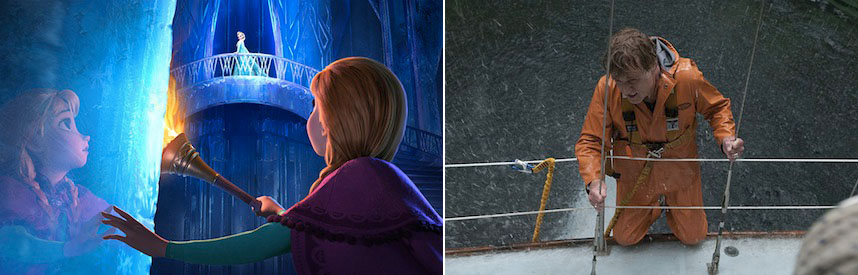
Best Picture frontrunners usually land a nomination for Editing, so expect Gravity and 12 Years a Slave to be here, and probably American Hustle and Captain Phillips as well. The fifth slot could go to another movie from the list of usual suspects, with The Wolf of Wall Street, Her, Nebraska, Dallas Buyers Club or Inside Llewyn Davis standing the best chance. Or it could go to a well-crafted, action-heavy movie like World War Z, Lone Survivor or The Hobbit: The Desolation of Smaug. But the best shot may be Ron Howard’s Formula 1 race car film Rush, once considered a strong possibility for contention in the top categories. Things didn’t work out that way, but if Rush can get some love anywhere, it might be here.
Predictions:
American Hustle
Captain Phillips
Gravity
Rush
12 Years a Slave
Personal Picks:
Captain Phillips
Gravity
Inside Llewyn Davis
Spring Breakers
World War Z
BEST PRODUCTION DESIGN
12 Years a Slave will probably find a home here due more to its place as one of the year’s major players than because it’s one of the five best art/set decorated films of the year. Gravity has a good shot too, though its limited locations make me wonder if it will be overlooked. American Hustle is a possibility, but I’m not convinced. It’s 1970’s setting does make it a period piece — and the design branches love their period pieces — but it isn’t as elaborate or obvious as the kind of period pieces that usually score here, which makes me doubt its chances. I hope that the subtle futurism and wonderful color scheme of Her will be recognized, but for some reason I don’t feel confident about it. Moving beyond the big dogs, the dazzling excess of The Great Gatsby should land a spot, and since all of Peter Jackson’s Middle Earth films have been nominated, it would stand to reason that The Hobbit: The Desolation of Smaug will follow suit. It’s possible that the voters could be tired of these, but with all the new locations on display, the films aren’t necessarily repeating themselves. Still, the familiarity of the world casts some doubt at this point. Meanwhile, the elegant scenery of Stoker and Oblivion deserve consideration, and Saving Mr. Banks is a possibility here too.
Predictions:
American Hustle
Gravity
The Great Gatsby
The Hobbit: The Desolation of Smaug
12 Years a Slave
Personal Picks:
The Great Gatsby
Her
The Hobbit: The Desolation of Smaug
Oblivion
Stoker

BEST COSTUME DESIGN
Again, chances are good that we’ll see 12 Years a Slave here even though, yes, again, there are more interesting and imaginative choices to be made. American Hustle is expected to score here too, although I’m a tad wary. While the 70’s always allow for some entertaining fashion selections, the Academy doesn’t always take notice. Then again, signature pieces like the white macramé swimsuit worn by Amy Adams should push Hustle to the final five. The members of this branch are always on the hunt for an 1800s or early 1900s period piece and the elaborate outfits that mark that era, and they will likely find their champion this year in The Invisible Woman, a film about Charles Dickens and his younger mistress that was directed by and stars Ralph Fiennes. The Great Gatsby will probably break through here too. As for other period films that might pop up, there’s Saving Mr. Banks, although I’m not sure there is enough variety to secure it a nod. Inside Llewyn Davis features nice work too. Amidst the desaturated camerawork, the colors worn by John Goodman, Carey Mulligan, Justin Timberlake and F. Murray Abraham stand out nicely.
On the less historical, more fantasy-based side of the closet, The Hobbit: The Desolation of Smaug is a possibility. The previous Hobbit film missed in this category, but not for lack of worthiness, so perhaps it will happen this year. There’s also The Hunger Games: Catching Fire, which features a wide variety of creative looks. I was a little surprised that the first Hunger Games film didn’t land a nomination here, and wondered if its chances would have been better had it come out at the end of the year rather than in March. Catching Fire was a November release, so we’ll see if that makes a difference.
While not exactly fantasy, the clothes in Her do a lot to sell the concept of a near-future that is logically grown out of the present day. It’s probably not flashy enough to do the trick for these voters, but it would be a nice surprise if it showed up. And since contemporary clothing almost never gets recognized, no matter how well or uniquely designed and suited to its film it is, we will almost certainly be denied nominations for Blue Jasmine and Stoker, both of which would be commendable surprises from the costume branch.
Predictions:
American Hustle
The Great Gatsby
The Hobbit: The Desolation of Smaug
The Invisible Woman
12 Years a Slave
Personal Picks:
The Great Gatsby
The Hobbit: The Desolation of Smaug
The Hunger Games: Catching Fire
Inside Llewyn Davis
Stoker
BEST ORIGINAL SONG
This continues to be a frustrating category, not only because it is governed by some stupid rules, but because the evaluation process is flawed. Steve Pond lamented these issues last week in The Wrap. For starters, a song can only qualify if it appears during the course of the movie itself or if it is the first song during the end credits. If it’s the second song in the credits, it’s ineligible. That might not happen often, but it happens. Also, members are asked to judge the contenders — and for the second year in a row there were 75 eligible songs — by watching a DVD that contains clips of each number as it appears in the movie. This puts end credit songs at a disadvantage, since voters have to watch them over scrolling names, with no context for how they actually fit into their movie or build on the final scenes. Worse than that, clips are limited to three minutes. If a song is longer, it simply cuts off. How can a song be judged fairly if it isn’t even offered in its entirety? Okay, I’ll concede it’s unrealistic to expect voters to sit through every full movie that has an eligible song just to see how that song fits into the whole, so context may always be a problem. But since that issue may exist no matter what, why not send a CD which contains each song in full, so that members have a second option for listening to the many contenders? It might be easier to listen to all the options if they can take it in the car with them, or elsewhere on the go. At the very least, whether delivered on a CD, a DVD or both, it’s offensive to the process not to include each complete song.
So with all that said, what are we looking at? So many possibilities means a 100% accurate prediction is unlikely, but there are a couple of selections that are probably locks, beginning with “Let it Go” from Disney’s Frozen. It’s a fairly standard empowerment number, but Idina Menzel belts it out something terrific. U2 picked up the Golden Globe for “Ordinary Love,” their contribution to Mandela: Long Walk to Freedom, and will probably be in the running here. In addition, there are five eligible songs from The Great Gatsby, including efforts by Jay-Z and Florence + the Machine. But the one with the most buzz is Lana Del Rey’s “Young and Beautiful.” Last month, there was an anonymous effort to mislead voters into thinking the song was disqualified, but there was no truth to it. Who knows if the trick was played by a rival studio, or one of the many Lana Del Rey haters out there, but the song is eligible, and in my opinion, deserving.
Unfortunately, my favorite song from a movie all year IS ineligible. “Fare Thee Well” from Inside Llewyn Davis, although new to me, is not new to the world. (If you’re a fan, check out some of its earlier incarnations courtesy of Vulture.) None of the wonderful songs from Llewyn Davis qualify, as they are all either older tunes being performed anew, or adaptations of previously existing ones. Several critics groups gave their Best Original Song award to the movie’s amusing track “Please Mr. Kennedy,” but the song borrows from a few similar pieces written during the era depicted in the movie, disqualifying it for Academy consideration.
One of the best songs of the year is not the typical studio-produced piece, but a bare bones rap clocking in at less than two minutes, performed by actor and musician Keith Stanfield, who plays a foster home resident in Short Term 12. It’s a song that would appear to perfectly encapsulate the intentions of the music branch, as it speaks directly to the character’s experiences and how he feels about his life. If the Academy’s goal is to recognize songs that are organic to their movies and have an impact on the story, than this isn’t just a nominee; it’s the winner.
Other songs that I really wanted to include among my personal picks were Ed Sheeran’s “I See Fire” from The Hobbit: The Desolation of Smaug, José González’s “Stay Alive” from The Secret Life of Walter Mitty, and Kings of Leon’s “Last Mile Home” from August: Osage County. If you’re interested in an assessment of the full field by someone who actually listened to all 75 contenders, here again is The Wrap‘s Steve Pond with his thoughts. In the end, anyone taking a shot at predicting this category is bound to miss at least one. But that won’t stop us trying. Having not heard anywhere near all of the options, here are my dart throws.
Predictions:
Let it Go – Frozen
Young and Beautiful – The Great Gatsby
The Moon Song – Her
Ordinary Love – Mandela: Long Walk to Freedom
We Ride – Spark: A Burning Man Story
Personal Picks:
Young and Beautiful – The Great Gatsby
The Moon Song – Her
Oblivion – Oblivion
So You Know What It’s Like – Short Term 12
Becomes the Color – Stoker
BEST ORIGINAL SCORE
Gravity and 12 Years a Slave will show up again here, but this is a case where the frontrunners will earn below-the-line nominations on true merit, not just because voters are selecting it lazily and without consideration. Or…I suppose maybe that is why they will select them, but at least they deserve to be here.
I’m sure I’ve said somewhere on this blog before (feel free to look around for it) that my favorite film scores are those that do their primary job of serving the movie, of course, but are also memorable enough in their themes and motifs to stand on their own as listening experiences. I find such scores are tragically rare these days. The only one from 2013 that stayed with me in that way was Hans Zimmer’s music for 12 Years a Slave. Mark Orton’s score for Nebraska has been growing on me too, but is ineligible for Oscar consideration because much if it was used in an earlier movie. Even The Hobbit: The Desolation of Smaug didn’t offer up any new themes that resonated with me after the movie.
 And yet there were a great numbers of scores this year that made an impression on me in the context of their films, even if most of them were not distinctive enough on their own to become essential additions to my soundtrack collection…other than to serve as nice background music. Which is relevant here because…oh right, it isn’t. I’m just saying, there was a wealth of excellent music that provided atmosphere and emotional resonance to their films, if not exactly classic themes that will become part of the zeitgeist. Alex Ebert, frontman for the band Edward Sharpe and the Magnetic Zeros, just won a Golden Globe for his beautiful music from All is Lost, which plays an especially important role since the movie has barely any dialogue. Ebert was just one of many musicians who successfully dabbled in film composing this year. Skrillex worked with composer Cliff Martinez on Spring Breakers, and Muse contributed to the World War Z score composed by Marco Beltrami — though neither result appears on the list of 114 eligible scores). M83 created the music for Oblivion, and Spike Jonze enlisted his friends from Arcade Fire to provide original music for Her, either of which would be welcome nominees. Perhaps there were additional examples that I’m unaware of, but I thought this was interesting.
Among other scores that impressed me were Prisoners, Ain’t Them Bodies Saints, Mud, Stoker, Philomena, Labor Day, The Grandmaster and Out of the Furnace (the latter two are also missing from the eligibility list).
John Williams, who is basically retired at this point except for anything directed by Steven Spielberg, as well as his impending return to the Star Wars saga, was apparently such a fan of the novel The Book Thief that he approached the producers and offered his services. Nobody’s going to say no to that, and the results are of course being talked up for a nomination. Williams is always a good bet, but the score didn’t leave much of an impression on me. There has also been some buzz for Hans Zimmer’s Man of Steel score. It was decent (certainly not better than the Williams score we all know and love, not that it was trying to be…or needed to be), but I don’t see that nomination happening. Zimmer could also be a contender for Rush, and his protégé Henry Jackman is in the mix for Captain Phillips. Once upon a time, Disney musicals were a given for score nominations, so Frozen could crack the list, and Saving Mr. Banks — a movie about Disney — might earn another nomination for Thomas Newman (though frankly, the only parts of that score that stood out to me were the moments that incorporated music from Mary Poppins). I didn’t get a chance to see Mandela: Long Walk to Freedom, but the fact that its music was among the Golden Globe nominees means it stands a shot at an Oscar nomination too.
It’s clearly a packed field this year, with many possible outcomes. But here goes.
Predictions:
Alex Ebert – All is Lost
John Williams – The Book Thief
Steven Price – Gravity
Alexandre Desplat – Philomena
Hans Zimmer – 12 Years a Slave
Personal Picks:
Daniel Hart – Ain’t Them Bodies Saints
Steven Price – Gravity
William Butler, Owen Pallett – Her
Clint Mansell – Stoker
Hans Zimmer – 12 Years a Slave
BEST MAKEUP AND HAIRSTYLING
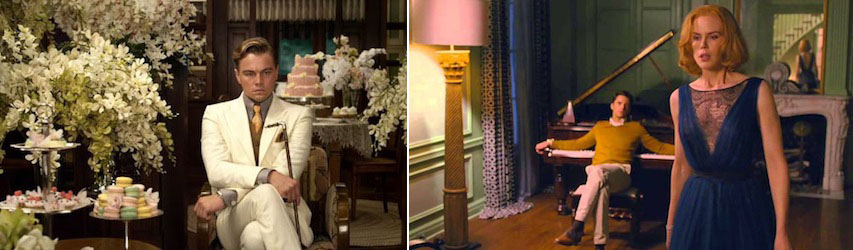
In December, the Makeup Artists and Hairstylists branch of the Academy announced the seven-film longlist from which the three nominees will be chosen. Focusing only on the quality of the work and not the quality of the film, their selections run the gamut from Best Picture contenders American Hustle and Dallas Buyers Club to box office hits The Hunger Games: Catching Fire, The Great Gatsby and Jackass Presents: Bad Grandpa (no, I’m not kidding) to a couple of movies that are most definitely not Best Picture contenders or box office hits: The Lone Ranger and Hansel and Gretel: Witch Hunters (still not kidding). Like I said, the branch evaluates the work, not the film, and both Bad Grandpa and The Lone Ranger feature excellent makeup work. I haven’t seen Hansel & Gretel, but now that I’m Googling some of its makeup images, I gotta say: pretty cool. Nice to see that The Hunger Games got some attention, after the first movie didn’t even make it to the longlist last year. All in all, the seven options represent a nice cross section of hair-centric work, aging makeup and creature prosthetics.
Among the surprising omissions are The Hobbit: The Desolation of Smaug (which may have been considered “been there, done that”), Rush, World War Z, Lone Survivor and Lee Daniels’ The Butler, which not only aged Forest Whitaker, Oprah Winfrey and other actors over several years, but also did a pretty nice job transforming Professor Snape Hans Gruber Alan Rickman into Ronald Reagan.
Predictions:
American Hustle
The Hunger Games: Catching Fire
The Lone Ranger
Personal Picks:
American Hustle
The Hunger Games: Catching Fire
Hansel and Gretel: Witch Hunters (What can I say? The stuff looks great.)
BEST VISUAL EFFECTS
Always one of my favorite categories, as visual effects and music scores were the two movie components that got me interested in the Oscars in the first place. Like the Makeup and Hairstyling branch, the Visual Effects branch narrows the year’s options down to a longlist, and chooses the nominees from there. The VFX longlist consists of 10 films, and that number will be cut in half for five nominees. This royal rumble features Elysium, Gravity, The Hobbit: The Desolation of Smaug, Iron Man 3, The Lone Ranger, Oblivion, Pacific Rim, Star Trek Into Darkness, Thor: The Dark World and World War Z. While there are certainly other movies that might have made it, like Man of Steel or Ender’s Game, there isn’t anything missing that I would consider a glaring omission.
Besides, we all know what’s winning this award anyway.
Predictions:
Gravity
The Hobbit: The Desolation of Smaug
Iron Man 3
Pacific Rim
Star Trek Into Darkness
Personal Picks:
Same

BEST SOUND EDITING/BEST SOUND MIXING
By now, I have figured out what each of these things mean, and I understand the difference between them. Yay for me. In simplest terms, the sound editors record or create sounds that could not be captured during filming, either because dragons are not real (so I’m told) or maybe because the location was too noisy to get a usable recording of a particular real-world sound. Sound mixers then take all the sound effects and the music and the dialogue, and blend it all together in proper relation to each other.
Unfortunately, that does nothing to help me understand or predict what the best achievements in these fields are.
But I can make some educated guesses, and the first is that Gravity will be nominated in both categories. Captain Phillips has a pretty good shot at both too. Inside Llewyn Davis recorded its many song performances live during filming, just as Les Misérables did last year, so that gives it a good shot in the Mixing category. Beyond that, we can look to almost any big action movie as a possibility for one or both of these, meaning we could see The Hobbit: The Desolation of Smaug, Iron Man 3, Star Trek Into Darkness, Pacific Rim, Man of Steel, World War Z, Lone Survivor, Oblivion, The Lone Ranger or Elysium. Animated films sometimes pop up here, especially those from Pixar, which makes Monsters University a possibility, or by association, Frozen. 12 Years a Slave might slide in if voters fill it in down the line; Rush could find some traction here with its many car races; The Great Gatsby, with all of that music and party noise and excess feels like a contender; and All is Lost relies heavily on the soundscape to tell its story.
That broad array of options is about as specific as I can get, so here are the rest of those educated guesses.
Sound Editing Predictions:
All is Lost
Captain Phillips
Gravity
The Hobbit: The Desolation of Smaug
Pacific Rim
Sound Mixing Predictions:
Captain Phillips
Gravity
The Great Gatsby
Inside Llewyn Davis
Star Trek Into Darkness
As for my personal picks, my limited understanding of these categories means I never have strong opinions, but I say each year that I think there should simply be one category, Best Sound Design, honoring a movie’s entire scope of sonic achievement. My picks for that imaginary category would be All is Lost, Gravity, Inside Llewyn Davis, Stoker and World War Z. I imagine if I had seen The Conjuring, that might find a place here too. But I didn’t, so it doesn’t.
With that, I think we’re done here. In keeping with tradition, I’m afraid I have no insight to offer for Best Documentary, Best Foreign Language Film or any of the short film categories. But since I’m sure I lost you somewhere around the sixth paragraph of Best Actor anyway, if not before, it’s just as well. The nominees will be announced tomorrow at 5:38am PT by Chris Hemsworth and Academy president Cheryl Boone Isaacs. And then tomorrow night, all the people who didn’t get nominated will try to put on a happy face when they attend the Broadcast Film Critics Association ceremony. The awards train stops for no one.
 A couple of months ago I wrote about
  ALL OF ME (1984, Director: Carl Reiner)
 BEN-HUR (1959, Director: William Wyler)
 THE BLACK HOLE (1979, Director: Gary Nelson)
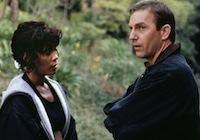 THE BODYGUARD (1992, Director: Mick Jackson)
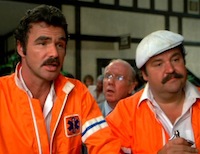 THE CANNONBALL RUN (1981, Director: Hal Needham)
 THE CROW (1994, Director: Alex Proyas)

 DIRTY DANCING (1987, Director: Emile Ardolino)
 ESCAPE FROM NEW YORK (1981, Director: John Carpenter)
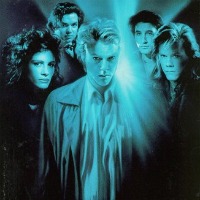 FLATLINERS (1990, Director: Joel Schumacher)
 FLIGHT OF THE NAVIGATOR (1986, Director: Randal Kleiser)
 GREMLINS (1984, Director: Joe Dante)
 HEAT (1986, Director: Dick Richards)
 HIGHLANDER (1986, Director: Russell Mulcahy)
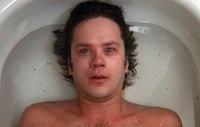 JACOB’S LADDER (1990, Director: Adrian Lyne)
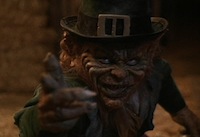 LEPRECHAUN (1993, Director: Mark Jones)
 THE MUMMY (1932, Director: Karl Freund; 1959, Director: Terence Fisher; 1999, Director: Stephen Sommers)
 POINT BREAK (1991, Director: Kathryn Bigelow)
 POLICE ACADEMY (1984, Director: Hugh Wilson)
 REBECCA (1940, Director: Alfred Hitchcock)
 THE ROCKETEER (1991, Director: Joe Johnston)
 SCARFACE (1932, Director: Howard Hawks; 1983, Director: Brian De Palma)
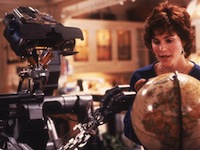 SHORT CIRCUIT (1985, Director: John Badham)
 SOAPDISH (1991, Director: Michael Hoffman)
 STARSHIP TROOPERS (1997, Director: Paul Verhoeven)
 THE TOXIC AVENGER (1984, Directors: Michael Herz, Lloyd Kaufman)
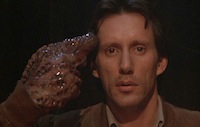 VIDEODROME (1983, Director: David Cronenberg)
 WARGAMES (1983, Director: John Badham)
 WEIRD SCIENCE (1985, Director: John Hughes)
 WHAT EVER HAPPENED TO BABY JANE? (1962, Director: Robert Aldrich)
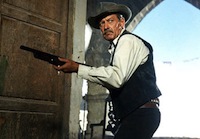 THE WILD BUNCH (1969, Director: Sam Peckinpah)

 This judging a book by its cover thing was working out pretty well for me. And so it happened again that, while walking through the fiction section in a bookstore that I can’t remember now, I saw out of the corner of my eye an illustrated cover that reminded me of a poster that was hanging in my bedroom. The poster was for the Todd Solondz film Happiness…and if you’ve ever seen that movie, you might consider it disturbing that anyone would want a 27″ x 41″ reminder of it on their wall. I liked the movie — as much as one can “like” a movie as uncomfortable to watch as Happiness — but having the poster up wasn’t about the film (which deals pretty explicitly with such happy-fun-time subjects as pedophilia, masturbation, deep loneliness, emotional isolation, rejection, adultery and decapitated heads in freezers) so much as the poster itself. I just really liked the poster, which was illustrated by Daniel Clowes, the graphic novelist behind Ghost World.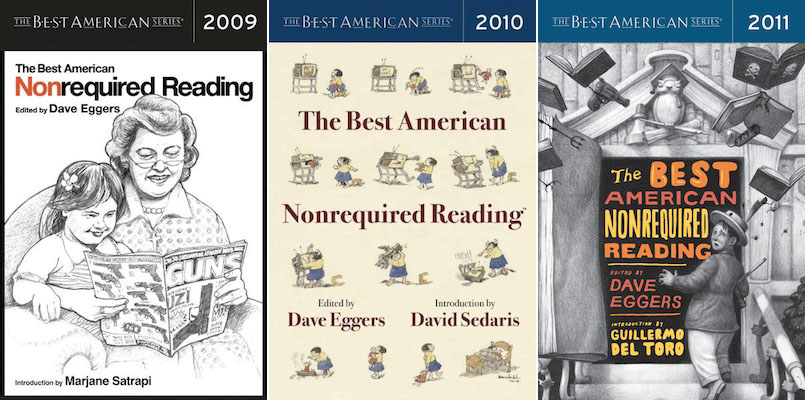



 This interview
 A few months ago, I

 I Am DB