
The making of a great compilation tape, like breaking up, is hard to do and takes ages longer than it might seem. You gotta kick it off with a killer to grab attention. Then you gotta take it up a notch, but you don’t want to blow your wad, so then you gotta cool it off a notch. There are a lot of rules.
– Rob Gordon (John Cusack), High Fidelity (2000)
What about a movie mixtape? A playlist of ten films that aren’t directly related, but have a certain thematic flow when viewed in order? The web is filled with audio mixes, a carry-over of the cassette, but we at I Am DB (David Burnce) and I See Frants (Brantley Aufill) thought it was high time to introduce the world to the first Movie Mixtape. Brantley came to me with the idea, and I got us started…
DB: Okay, so how to kick off this intriguing project? Making the first choice, I have the entire breadth of existing movies at my disposal. Where to start? What genre? Mainstream or obscure? Do I need to make a statement? Does it need to be deep, thought-provoking? Or can it just be good fun? How to begin? Movies started popping into my head, and who knows how or why those that came to mind did. But when this one came up, it seemed right.
On a superficial level, I like the choice because it takes place in your hometown of Dallas, Texas, while the star and co-writer is from my hometown of Woburn, Massachusetts. Furthermore, it’s based on a play and therefore represents a collision of theater and film, which also seemed appropriate given our histories. And having studied both mediums, perhaps you’ll have some thoughts about how successfully or not it’s brought to life cinematically.
Although it’s the work of a famous, Oscar-winning director, it is one of his lesser-known movies, and probably one of his best. I first saw it on the young end of my teenage years, late on a Friday night with my brother, who had rented it. I remember being really freaked out by it, in the way that The Shining freaked me out, even though it isn’t a horror movie. But it really got to me, especially the ending, which I found utterly chilling.
If I had any reservations about kicking things off with this, they were erased when I turned on the TV last night just before putting in a DVD, and while curiously scanning the cable channels to see what was on, saw that this very movie would be playing in a half hour. It must have been a sign. So here we go.
Talk Radio
Dir. Oliver Stone
1988

BA: Oliver Stone’s films always have this fever dream freneticism, the pace of a boulder dangerously bounding down a cliff face, picking up speed, its awkward shape making its path unpredictable (a term I only recently learned is called ‘trundling’, illegal in many mountain areas). I remember literally feeling high as a kite after seeing his 1991 biopic The Doors. Bogosian’s Talk Radio was one of the first non-Shakespeare stage plays I’d ever seen (at the Arts Magnet High School in Dallas, mere blocks from where this film takes place), and there’s a lot of it that’s still relevant today. Shock jocks aren’t nearly as shocking, but the topics are still out there: racism, homophobia, gun control. I remember the play had certain moments where you could breathe, extended scenes with callers that focused more on what they were saying. But in Stone’s version, it’s all one big cynical blitz, as gasbag Barry Champlain just keeps mining the worst that the public had to offer. The callers and what they have to say are merely a springboard for Barry to laugh at them, mock them, and cut them off to the delight of other listeners who probably all think they’d be smart and quick enough to react the same way. Bill O’Reilly probably loves this movie.
Rewatching it today, for the first time in about 20 years, it’s definitely an 80s Oliver Stone film. Feels very dated (complete with Alec Baldwin mullet!), but then again, the 80s were Stone’s prime era. Even his more recent films (like the Wall Street sequel in 2010) still employ the familiar tricks that were innovative in 1988… but feel tired today. Bogosian’s energy carries well when he’s ‘in character’ and on mike, and likely played very well on stage at the Public Theater in 1987. But the constant in-your-face camera shows some holes in the facade; it’s a tough final monologue here, and he doesn’t carry it completely. Then again, it may be enough that he’s yelling and has clearly had enough. It achieves the same fever dream finale that Stone was no doubt aiming for (note: the music over the final credits is “Telephone & Rubber Band” by the Penguin Cafe Orchestra, and it may sound familiar because it was sampled in Spacehog’s 1995 song “In The Meantime“).
Two films immediately came to mind as an obvious follow-up to this one: Billy Wilder’s Ace in the Hole (’51) and Elia Kazan’s A Face in the Crowd (’57). Both have an outgoing and persuasive lead character manipulating the mass media of the day to their own ends. But it occurred to me that’s just more of the same, and I found myself landing on a lesser-known (or at least lesser-talked about) Capra film from 1941. Starring Gary Cooper and my Old Hollywood girlfriend Barbara Stanwyck, this film also features a central figure riding a media wave to dizzying heights, but here the participant is somewhat unwilling, ignorant of what’s going on. He’s the one being used by the machine, not the other way around. Barry Champlain would never stand for this.
And so, I give you Movie #2 in our mixtape, a film that strikes a surprisingly relevant political note in these Tea Party Patriot days.
Meet John Doe
Dir. Frank Capra
1941

DB: Like many stars of yesteryear, Gary Cooper is an actor who I’m more familiar with by name than by having explored much of his filmography, so it was a pleasure to watch him, and your Hollywood girlfriend – for whom the same holds true – in this Depression-era drama.
Like Talk Radio, and the other two follow-up films that you mentioned having considered, there is plenty in Meet John Doe that still applies today. Not just in the idea of powerful figures attempting to manipulate, control and dominate the world around them, but in the lack of civility that we express toward our fellow man. Have times ever been more divisive than they are now? It seems to me that over the last 10 or 15 years, we’ve come to define ourselves with increasing rigidity along political lines, and are less and less capable of sympathizing, empathizing or relating in any way to someone who holds different views than we do. The current debate over gun control is a perfect example. Feelings on the subject are naturally strong, but too many people aren’t even the slightest bit open to hearing what the other side has to say. So this movie’s idea of overcoming prejudices we might hold about our neighbor and extending the hand of friendship is one that today’s society could surely benefit from.
It’s also interesting to look at the Barbara Stanwyck character and consider how often we do things because we have to look out for ourselves and our own interests, without realizing the greater consequences our actions have. This is applicable in all kinds of ways. I think of someone who might work for a corporation that engages in corrupt practices and is doing great harm, even though the people actually driving the company in that direction are a few executives at the highest level. The majority of employees are just average people trying to make ends meet, support their families, etc. They’re just cogs in a greater machine that is inflicting injuries they might not even be aware of. Or maybe in some sense they are aware, but they’re just doing their job and trying to protect their own modest interests. We rage against banks and insurance companies, but most bank and insurance company employees are regular middle class people doing the 9 to 5 grind.
Maybe I’m trying to extrapolate too much from the movie. In any case, there were more than a half dozen options that popped into my head as potential follow-ups to this, picking up on one strand of the story or another. I wanted to choose one that’s relevant, but not just another exploration of the same main theme, as well as something that would shift gears a bit after the first two “tracks” being relatively serious. What I settled on shares a couple of things with Meet John Doe. It features a protagonist who goes from having a relatively meager lifestyle to suddenly having more wealth and influence than he’s ever known or even wanted. And like John Doe, there is a secret behind his newfound status that he must protect at all costs. (The outcome of that secret is a little different, in that here it would shed light on his mysterious behavior, whereas John Doe’s fear is that the secret would be a letdown to his admirers and followers.) And as an added bonus, this pick carries forward the baseball connection from Meet John Doe.
I’ve always had a soft spot for this comedy, even if it’s not loaded with huge laughs.
Brewster’s Millions
Dir. Walter Hill
1985

BA: What is the deal with Jerry Orbach? Monty Brewster spends his own money putting on a 3-inning exhibition game against the NY Yankees – a game with absolutely nothing on the line – and Orbach still pulls Brewster after 2+ innings?!?! Harsh (and of course, he put Baby in a corner).
I, too, enjoyed this movie many times over back in my youth. Excellent connection to Meet John Doe with an almost identical pitch-and-catch-in-hotel-room scene. The story is incredibly accessible to just about every audience you could imagine. How would YOU attempt to spend $30 million in a month? It’s so accessible, it’s no surprise it’s been made into 10 different films (including a lost silent version starring Fatty Arbuckle). The original 1902 novel required Monty to spend $1 million in a year to inherit $7 million. The 1945 Brewster has to spend $1 million in 60 days to earn the $7 million (and that Monty does it the way I would: he rents a yacht and travels). And of course, here we have the shocking $30 million in a month to earn $300 million. INFLATION!!!!
You’re right, it’s never been heavy on laughs. At most, it’s simply enjoyable to see how one particular man would navigate this unlikely scenario, and wonder how we might do the same. It’s Powerball dreaming. Fun little cameos here and there (Rick Moranis, Hume Cronyn). Two things always stood out to me with this film. First, I’ve always enjoyed the through-line the screenwriters employ with the ever-present Chuck Fleming of Action News. He divides up the story’s different plot points quite well, with on-camera reporting and on-screen quotations. Smart to use him in multiple formats. Fleming’s familiar face gives the hullaballoo around Brewster an excitement and immediacy that you can’t just get with a bunch of extras screaming. This thing is news, important and sensational; Brewster’s character and integrity are being judged by an entire city, not just his buddies. The other thing was that this is one of the films that shaped my then-limited understanding of the great New York City. I grew up in Dallas, and had never even visited NYC until 1995 when I entered college (I went on to live in that fantastic place for 12 years), but I was highly aware of it from movies. Unlike so many other locations, NYC always seemed like its own character when a movie was set there. The stakes were instantly upped just by the location. Wall Street, Splash, The Secret of My Success (special connection to that one, as the lead character’s name is Brantley!), and Brewster’s Millions filled in the blanks of this magical city for this young film nerd. SIDENOTE: Notice I didn’t mention Ghostbusters! Weird, but it doesn’t feel as NYC to me.
So I choose to segue along that line, to a movie that really makes me love the greatest city in the world. At first, I was going to recommend Jules Dassin’s The Naked City (1948), one of the first docu-style police procedurals with no lack of glorious late-40s New York locations. But let’s not jump back to the 40s quite so quickly. Instead, I’ll keep it light, and give you a film that I was surprised to adore. It captures the fun and crazy nature of a single night in New York, combined with a fun cast, a tight script that doesn’t condescend (also based on a novel), and a quirky soundtrack. And every time I watch it (even back when I still lived in NYC), it made me love – and now miss – that lovely, lovely town. Enjoy it, you hipster.
Nick & Norah’s Infinite Playlist
Dir. Peter Sollett
2008

DB: I hear people gripe that Michael Cera is the same in everything he does. I’ll concede that he usually plays the same general type, but I think the characters are different enough to allow him to bring a variety of shadings to each portrayal. And even if I’m wrong, I dig his shtick, so I’m okay with it. He’s nicely paired here with Kat Dennings, who I knew from her small part in The 40 Year-Old Virgin and an arc on ER before she showed up in this. Kudos to Peter Sollett for casting her in the lead role. She wasn’t as big a star as Cera, and her looks are unconventional, so she might not have been an obvious choice, but the two have great chemistry.
The movie is a charmer, and I can see why it appeals to you as a love letter to New York, though it doesn’t conjure the city as vividly for me as some of those 80’s movies you mentioned, Ghostbusters included. (For what it’s worth, The Devil Wears Prada is an example from around the same time as this movie that, for me, captured New York City as a character the way you described.)
I especially like the way that music brings the two characters together, and that Norah already has a crush on Nick sight unseen, just based on his mix tapes (a powerful art form, responsible for this very project). When Norah brings Nick to Electric Ladyland Studios, that felt special, like a glimpse into a place we haven’t seen a dozen times before. In fact, it was that aspect of the movie that triggered what I wanted my next pick to be. I thought it would be interesting to look at a documentary that went inside a recording studio with a major artist/band, and there was only movie I was interested in choosing: Let It Be.
Unfortunately, I discovered that Let It Be is not readily available; it’s never been out on DVD and doesn’t seem easy to come by online either. Maybe it can be found out there somewhere, but rather than dealing with the hassle of digging for it and maybe finding only a copy of subpar quality, I moved on. But I’ve had a really hard time coming up with a satisfying alternative, which is why it’s taken me so long to lob the ball back to you. Honestly, I’m not all that enthused about my pick, but continuing to think about it has become annoying, so I’m just choosing something so we can move on. I’m sticking with the idea of music creating a connection between people, though in this case it’s a musical instrument, and it connects people across time and continents. I saw it once, a long time ago, and don’t remember it well; I can’t even recall if I liked it. But other than Let It Be, it’s the one movie that keeps coming back to mind even as I try to think of something else. So let the music play…
The Red Violin
Dir. Francois Girard
1998

BA: Maybe it was my teenaged perception, but were most foreign films that found US distribution in the 90s filled with stuffy pretention? Tous Le Matins Du Monde, Indochine, and this Canadian bore? This one suffers on another level, a self-inflicted wound that I now refer to as the War Horse Syndrome (the film, not the play). “Let’s link together a bunch of unrelated people across time and space with a single object!” Unless that single object is undeniably awesome (like the horse in the War Horse PLAY was), you’re kinda stuck trying to find some theme with a bunch of characters you don’t have time enough to know or care about. Even more working against it here, as the object is inanimate. The idea of a red violin – that elusive perfect instrument marked with the blood of its creator’s true love – is a good one. But what’s the unifying theme here? It’s cursed? Does it symbolize our desire for beauty? For art? Each of the stories linked to this violin seem to exist in their own world, but a world I didn’t care much about. The only truly interesting story was the present day one, wherein Samuel L. Jackson plays a restorer who does the CSI work on this found violin: can this be the famed “red violin”? I enjoyed the forensics on it, discovering why people treasure such instruments. It was only then that I truly understood what made it unique. Up to that point, it was only unique because people said it was, and why am I to believe people I don’t know or care about?
These War Horse Syndrome tales have always been around. Remember 1993’s Twenty Bucks? Or the short-lived ABC drama Gun? That show was exec-produced by Robert Altman, which is telling, because these types of stories feel like a poor man’s Altman. He was always good at spinning many characters’ stories around, and seemingly effortlessly (not at all effortlessly in reality) linking them all together in an organic way that tells an overall single tale. Maybe it’s that the 90s were simply filled with these intertwining storyline films. 1995’s Smoke and its sequel Blue In The Face come to mind. Are they not just a poor man’s Altman, but a poor man’s Pulp Fiction? That film changed movies, no doubt, and not always for the better. These stories are still tried today (witness Cloud Atlas).
How to follow this up? I first latched on to another film that attempts to capture the story of life’s great span, and does so beautifully, literally without a single word: Frammartino’s Le Quattro Volte (2010). However, since The Red Violin was such a pretentious downer, I think we need a pick-me-up. So I’m choosing yet another foreign film that involves music, but it’s so delightfully eccentric it smacks of a smart Wes Anderson homage. I’ll note, too, that it’s fitting that we’ve found ourselves in the middle of Movie Mixtape (the format itself inspired by music) with films that revolve around music. Those who know you know you LOVE film scores; you know composers and movie leitmotifs better than anyone I know. Even silent films had live musical accompaniment. Films may be moving pictures, but music has always been part of the viewing experience.
So then, I hope you enjoy this quirky Israeli comedy. I sure did.
The Band’s Visit
Dir. Eran Kolirin
2007

DB: War Horse Syndrome, I like that. I tend to enjoy films with large ensembles that crosscut between different characters, though what you’ve described – the ensemble that is built around an object – is maybe a sub-genre of that. I’m thinking more of the Altman films, which you of course mentioned, like Short Cuts or Nashville, as well as things like Magnolia, Traffic, and even Love Actually…conceptually, at least. (At least I know enough to stay away from things like Valentine’s Day, New Year’s Day and He’s Just Not That Into You.) But you’re right, there’s also that Pulp Fiction influence as well, which definitely permeated the late 90’s cinemascape. (I don’t know that I’d lump Smoke or Blue in the Face into a bucket of poor man’s Altman, but I know what you’re getting at.)
The Band’s Visit was definitely a charmer. I liked that it focused on just a few of the band members. I expected it to be more of a story about them as individuals and a group, but instead it hones in on the uptight bandleader, the brash young romantic and the patient “second-in-command”, two of whom are, like most people, more than what they initially appear to be.
What I really enjoyed about it was the “kindness of strangers” aspect. I always find myself moved by characters who demonstrate decency and openhearted kindness, and that certainly applies here, mainly in the character of Dina, but also the other Israeli hosts.
That was the aspect that I seized on when trying to think of a follow-up. At this point, I’ve abandoned the hope of finding more obscure movies that you might not have seen; my exposure to the classics is just too narrow. So I’m selecting an 80’s Hollywood hit that also involves a character who finds herself in the wrong part of a foreign country and must rely on the kindness of a stranger – or at least the assistance of one, since kindness may be too tall an order initially – to get where she needs to go.
Romancing the Stone
Dir. Robert Zemeckis
1984

BA: First off, I can’t remember the last time I’ve watched this film straight through, unedited and commercial-free. It’s one of those that you catch on TBS during the mudslide scene and watch for a while until it’s time to switch over to the game.
Secondly, how did I not know that Zemeckis directed this?!?! And get this: the studio thought it was gonna be such a flop that they preemptively fired him from Cocoon, and the surprise success of it allowed him to make his personal project known as Back to the Future. So thank goodness for that. Front to back, it’s definitely aged a bit, but it’s still interesting in that while it’s a typical mid-80s rom-com on either end (complete with cheesy saxophone score), the middle becomes an action/adventure movie. One might think they were riding on the coattails of Raiders‘ success, but this feels more like a rom-com that went off on an adventure, rather than a straight-up Raiders rip-off (for an authentic Raiders rip-off, see the Richard Chamberlin/Sharon Stone disastrous Allan Quatermain films; admittedly a guilty pleasure for this film kid when he was young, because they were so obviously bad). Kathleen Turner sure was a looker (which so much hair, man it’s out of control in some scenes), Michael Douglas grins and charms up there with the best of them. And Danny DeVito is almost an after-thought, such a small part for him that allows him to do next to nothing. I guess it was my hazy memory of this film’s sequel The Jewel of the Nile, which showcases him much more prominently.
Don’t put yourself down, dear Burnce, for a lack of the classics. Your embrace of the defining films/filmmakers of our formative years is unparalleled. You’re steeped in nostalgia, and talking movies with you always makes me feel like a kid again, like we just saw Poltergeist for the first time and we’re raving over it. I admit I’ve become very much a film history nerd: I just want to keep walking backwards to see what influenced this/that influenced that/that influences blah blah blah. There is room for both, and this Movie Mixtape is all the stronger because of it.
Allow me, then, to take us way way back again. I’m zeroing in on Romancing the Stone‘s unique mix of romance, comedy, and action. But here the structure is flipped: a thriller on either end, with a surprising bit of screwball situational comedy in the middle. It even inspired a rather hilarious piece of satirical theatre, which I saw in NYC and laughed my arse off. And note, too, that it’s an early work of a true master (one you wouldn’t first think of for comedy), and this has all the hallmarks that this filmmaker would make a phenomenal career on. Based on a 1915 novel, it is widely considered to be one of the best British films of all time.
The 39 Steps
Dir. Alfred Hitchcock
1935

DB: This was a well-timed choice, as I had just finished re-reading a book called The Genius of the System, which I first read for one of my film classes during our year as roommates at Ithaca. It’s all about the rise and fall of the Hollywood studio system, and a significant portion of the book is dedicated to David O. Selznick, who brought Hitchcock to Hollywood on the strength of his British movies like The 39 Steps. Their fruitful but tension-fraught relationship is given considerable attention in the book, and even though this film predates Hitch in Hollywood, it felt appropriate to visit a film from that era.
As you suggested, The 39 Steps offers a nice example of both the playfulness and the suspense that Hitchcock loved to toil in, a combination that’s still in rough form here, but that he would perfect over the next few decades. The tonal shifts are a bit abrupt, but Robert Donat’s performance helps to smooth the transitions, since he maintains a consistent air of determination to clear his name and exasperation that no one believes his story. Even in the more dramatic scenes, his looseness and bemusement keeps things light.
The idea of no one believing what you’re trying to tell them, especially when it pertains to your well-being, is another theme Hitchcock would play with in the years to come, and it was a twist on that idea that led to my next pick. In this case, it’s not that no one believes the protagonist, but rather that people make assumptions and/or think they understand something about him that, in fact, they don’t. Their view of the central character – even their nicknames for him – are derived from this mistake, which he stops trying to correct.
There’s another reason behind this pick. To me, it represents the idea that while many movies follow a predictable formula, they can still be highly satisfying if they are done with care. This contemporary comedy re-writes no rules and doesn’t have any lofty ambitions. But it’s written with warm humor and cast with strong performers all the way down the line to create a colorful and memorable gallery of characters. A good mixtape should offer up surprises, but also the familiar. Not just familiar selections, but comforting ones. I’ve always found this to be a comforting movie.
Doc Hollywood
Dir. Michael Caton-Jones
1991

BA: This comedy resonated with 15-year old me on a few levels, the main one being my extensive experience as an “outsider” in a small town. I grew up in Dallas, Texas (the BIG CITY!), but my father was born and raised in Hillsboro, a tiny town about an hour south. When I was four years old, he bought some land down there, and just about every single weekend (and full weeks during the summer), we’d go to the farm to mow the pastures and feed the cows. It was that stereotypical small town: courthouse in the town square, raised sidewalks guiding you to storefronts with large front windows. When you wanted to call someone up, you just needed to dial the last four digits (as everyone had the same prefix). There was a weather line where some nice recording read you the forecast. And everyone knew everyone. (NOTE: This film also resonated because it’s a PG-13 film with full-on boobs and two instances of the word ‘fuck’.)
I still love this movie. It’s one of my favorite portrayals of ‘small town America’ on film, despite the fact that it glosses over quite a bit of negativity and isolation. Two main reasons this film works so well. One, the cast, specifically the supporting players. David Ogden Stiers’ mayor is delightful, Frances Sternhagen’s cynical widow (she has my favorite line: “Doc Hogue does the complete Walt Whitman if you don’t monitor his drinkin’.”), Barnard Hughes as the grumpy town doctor, Woody, Bridget. They all take what reads on paper as a fairly average comedy and inject each of their characters with personality. Take those personalities into the second reason it works: ………………………. timing. Director Caton-Jones finds the town of Grady’s pulse from the very beginning. There’s a rhythm to the way the townsfolk speak not just to Ben Stone but to each other, a shorthand that exists only because they’ve all been together in this machine for decades. Back and forth, knowing what the other one’s going to say before they say it.
That rhythm is what really sells a small town for me. The way that each person plays a role in the bigger picture; it’s the world boiled down to its simplest form. Here’s the doctor, the mayor, the butcher, the mechanic. They support each other, bartering and trading. And they all get by together. The Last Picture Show gets it, though that’s not as positive a portrayal (not that it’s negative, really, either. That film stands out for its almost complete lack of judgment either way; in this way it feels the most authentic, if not the most ‘feel good’). Doc Hollywood does it simply, and leaves a lovely taste in your mouth.
With the 10th and final film in our inaugural Movie Mixtape, I want to leave the participants with the same charming satisfaction that I get from Doc Hollywood, but with a tad more ‘pedigree’, let’s call it. This film also finds the pulse of a small town, deals with issues of people ‘stuck’ in their place, happily or unhappily, of everyone playing their part. It, too, has a stellar supporting cast: Bruce Willis, Philip Seymour Hoffman, Pruitt Taylor Vince, and the late Jessica Tandy (in her final film role). It, too, has an infectiously simple score that just nails it (by Howard Shore; Doc Hollywood‘s six-note theme by Carter Burwell does lovely work). And it gave Paul Newman his final Best Actor nomination. Here is the other film I cite as a favorite portrayal of ‘small town America’.
Nobody’s Fool
Dir. Robert Benton
1994

DB: We’re clearly in agreement about how much the casting contributes to the success of Doc Hollywood. I have to single out Eyde Byrde, who played the humorless, no-nonsense Nurse Packer. Near the end of the movie, Julie Warner’s character says she’s going out for coffee, and asks Nurse Packer if she wants anything. Without looking up from her reading, Nurse Packer replies, “Mmmmhmmmm, how ’bout Bob Barker?”
I write that down and it’s like, “Ooookay, so what?” But the way she delivers the line….the tone, the inflection…it kills me. The actress’ name means nothing to me (and you know I’m good with names of actors), and I don’t recall ever seeing her in anything else. But for that one line alone, she will forever be in my head. Such is the power of movies.
Your follow-up could not be more pleasing. Nobody’s Fool is a personal favorite of mine. We’ve talked before about that beautiful, simple score by Howard Shore (glad you brought that up, and Doc Hollywood‘s too; another great bit of film music), and of course I have boundless affection for Paul Newman’s performance as Sully, which I included in my blog post of 100 greats last summer.
And yes, like Doc Hollywood, much of pleasure the movie offers is derived from its supporting cast, some of whom you rightly mentioned. Let me add Melanie Griffith, who gives one of her best performances; the great Margo Martindale, who I first took note of in this movie; and Gene Saks as Sully’s one-legged lawyer. He has what might be my favorite line in the movie, when he tells Sully’s son Peter, “Right: you run into problems, drop your old man’s name, watch the doors fly open.”
But as wonderful as the cast is, Nobody’s Fool is all about Newman. It’s the ultimate “slice of life” movie, and so it relies almost completely on the character whose life we’re watching. And Newman is such a joy here. So comfortable. So funny. So easy he hardly appears to be doing anything. And you can’t help but feel that it’s largely because he’s so good that everyone around him is too.
It felt refreshing to me when I first saw it in the theater that there’s no plot to speak of; we just follow Sully from one little episode to the next. When the movie ends, perfect as it is, it could just as easily have transitioned to the next scene, the next encounter, the next joyful moment. It’s a great case study in a movie not having to beat the drums in order to stand out. Strong writing, great acting, colorful characters, an authentic sense of place and emotion…these things can be accomplished on a small scale, and any movie that hits those notes has done its job.
An excellent note to end on.
 My heart plunged Wednesday afternoon when I read that James Gandolfini
 And that will be all. I occasionally wonder what John Lennon would be doing today, or what Phil Hartman would be up to. What would Heath Ledger’s latest project be? There might be others about whom you ask the same questions. I will be asking it about Gandolfini for years to come.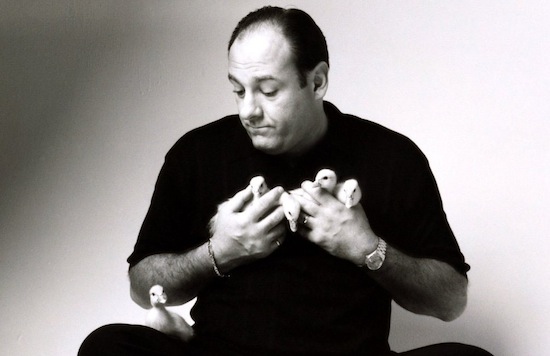

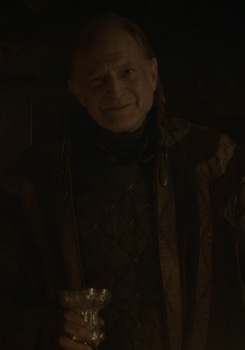 On a purely emotional level, I’m infuriated by the indignity of Joffrey continuing to draw breath while House Stark has just been decimated. (Yeah, the younger kids are still alive, but how long before any of them are able to take the reins in any meaningful way?) And Arya…God, poor Arya. SO close. Wallowing in my post-episode funk, my dream was for Arya to turn in her Braavosi coin (“Valar morghulis”), find Jaqen H’ghar and paraphrase Luke Skywalker: “I want to come with you to Braavos. There’s nothing for me here now. I

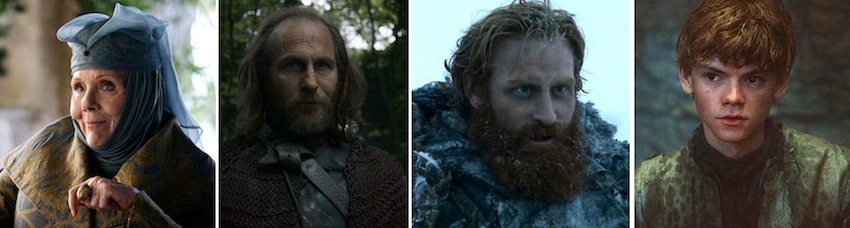
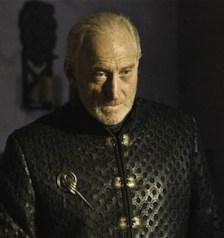 This season’s end leaves me with plenty of questions. Will Arya indeed reconnect with Jaqen H’ghar for Stealthy Assassinations 101? Will Jon recover from the three arrow hits he took from Ygritte? Will we see more from the Brotherhood Without Banners? How will Littlefinger react to the death of his beloved Catelyn? Will Joffrey’s marriage to Margaery reveal the perversions or sexual hang-ups that have been strongly hinted at but not yet made clear? Will Dany get it on with her chiseled new warrior, Dario Naharis? And how in the seven hells is she ever going to get to Westeros if she keeps liberating the slave populations of huge cities along the way? How will a newly humbled Jaime be welcomed back to King’s Landing? He only shared a brief moment with Cersei in the season finale, and it was tough to read her reaction to seeing his stump. Will Tywin think less of him now? What will happen to Brienne? And what of Cersei’s marriage to Loras Tyrell? In the finale, during an excellent scene with Tyrion, she said with curious certainty that she would not be marrying Loras. What does she have up her sleeve that makes her so sure? How will Tyrion’s marriage to Sansa progress, and where will Shae fit it? Will Stannis put his quest for the Iron Throne completely on hold to deal with the looming threat of the White Walkers? Will the concern over that danger extend as far south as King’s Landing? Could Tywin and Stannis have to temporarily unite in the face of it? What about Mance Rayder’s army of wildlings, the other force amassing north of the Wall? Will we find out what happens to Rickon and Osha after they split from Bran, or is Rickon’s story irrelevant? Will someone please, please, pretty please slap Joffrey across the face again? (I’d love to see Tywin do it, but he’s probably too buttoned-down, even if there’s no way he’d be punished for it. Then again, I’m not sure how much longer Joffrey will submit to Tywin’s authority before he tries to assert himself…and I am dying for a moment where the tension between those two runneth over.
 Answers to these questions and more are ten months away. I wonder if, in the meantime, the attention earned this year will translate into awards and accolades. If the series ever has a shot at winning the Emmy for Best Drama Series, this year might be the one. Plenty of shows have had major watercooler moments before; that doesn’t guarantee an award. But the show has been good enough to win from day one; if the violence, sex and general “fantasy” factor isn’t a put-off to voters, the sheer audacity of the Red Wedding and the way it permeated the cultural conversation could push it over the top. I would hope for some writing and directing nominations, and there are certainly actors worthy of attention. With Emmy nominations for acting being based on single episodes rather than entire seasons, a show like Thrones—lacking a lead character and doling out its story in small pieces—can be at a disadvantage. Peter Dinklage did earn a win after the first season, and a nomination for the second. Can he make the cut again? Others are deserving too. Charles Dance would be a welcome addition, and Jaime’s arc this season—bolstered by his aforementioned confessional monologue—could put Nikolaj Coster-Waldau in the conversation (he was

 Mel Brooks is having a moment. A few weeks ago, he was the subject of a profile on the esteemed PBS series (“esteemed PBS” – is that redundant?),
 Often when it comes to these lifetime achievement awards, I think, “If this person doesn’t get it soon, they won’t be around anymore.” But rarely have I considered the need to honor someone before all of their closest or most frequent collaborators are gone (and Brooks is someone who worked with the same people over and over again, to legendary results, which will accentuate their absence). I don’t know how the AFI makes the decision each year about who to recognize with their Life Achievement Award. The


 Whatever had worked so well about Ghostbusters, the sequel failed to recapture it. Even with Ivan Reitman directing again, Dan Aykroyd and Harold Ramis back on script duty and the entire principal cast onboard, Ghostbusters 2 didn’t have the ease of its predecessor. It wasn’t entirely devoid of laughs; Bill Murray was still pretty great and had some choice moments, while new cast member Peter MacNicol stole the show as Sigourney Weaver’s heavily accented boss who becomes possessed by an evil spirit. And it should be noted: the movie wasn’t a flop. It earned over $100 million and was the

 One thing I learned while writing this, which I had not known about and which saddened me to hear, is that Murray and Harold Ramis don’t really talk anymore, having apparently fallen out during the making of their classic Groundhog Day. In 2004, The New Yorker profiled Ramis while he was in production on his film The Ice Harvest, and a few pages of that article (
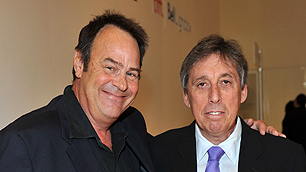 Take it as a sign, boys. The delays, the Murray refusal, the tight timeline…the universe is trying to tell you not to make this movie. Some things should just be left alone. The popularity of Ghostbusters endures thanks to its original fans passing on their enthusiasm to new generations, but that doesn’t equal demand for a new chapter. I’m sure that for Aykroyd, reasons to revisit the phenomenon range from the sentimental to the financial, but this is a recipe for disaster (not necessarily of the biblical, human sacrifice, dogs and cats living together ilk, but still). If you couldn’t recapture the magic five years after the original, when you were all still in your glory days, what makes you think you can do it 25 years later, without Murray and Moranis around to contribute their unique brands of funny? Looking through the articles linked here and seeing comments not just from Murray, but even from Ramis and Reitman, it seems clear that nobody other than Aykroyd is all that enthusiastic about doing another movie. (Add Sigourney Weaver to that list. She


 I Am DB