At the risk of throwing my readers into a state of confusion, I’d like to take a brief detour from my usual subjects of movies and TV to talk about books. Yeah, I read books too. Sometimes. So what if they’re mostly by Dr. Seuss or have titles that end with “for Dummies”?
We’re always told not to judge a book by its cover, and though the phrase is usually used as a metaphor, I assume it did originate as advice about bound reading material. Yet some of my best reading discoveries have come from ignoring that nugget of age-old wisdom. Once, while browsing the Used section of San Francisco’s Green Apple bookstore, my eye was drawn to a red spine with a picture of a white owl. Upon picking up the paperback book, my first impression was that I liked the cover. The book was The Manikin, by Joanna Scott. It was a finalist for the 1997 Pulitzer Prize for Fiction. I read the following summary:
The Manikin is not a mannequin, but the curious estate of Henry Craxton, Sr. in a rural western New York State. Dubbed the “Henry Ford of Natural History,” by 1917 Craxton has become America’s preeminent taxidermist. Into this magic box of a world—filled with eerily inanimate gibbons and bats, owls and peacocks, quetzals and crocodiles—wanders young Peg Griswood, daughter of Craxton’s newest housekeeper. Part coming-of-age story, part gothic mystery, and part exploration of the intimate embrace between art and life, The Manikin is compulsively readable and beautifully written.
The book was in good shape, so I bought it, read it, and dug it. I think what I liked most about it — and this may drive book lovers crazy, but here it is — was that I saw such great cinematic potential for it. I still have a dream of seeing this book made into a movie, albeit with some alterations. (Much as I liked it, there were a couple of plot developments I didn’t buy.) I tried to adapt it myself once, just as a personal project, but I didn’t get very far.
It happened again not long afterwards. While drifting about the books department at the city’s now-defunct Virgin Megastore, I noticed a book cover depicting a gothic-looking structure against a blue and pink sky. I went in for a closer look. The building on the cover reminded me of something Terry Gilliam might have drawn in his Monty Python days. I grabbed Everything and More by Geoff Nicholson off the shelf. The description went like this:
The first novel to combine shopping and terrorism, Everything and More is the story of what happens day and night in Haden Brothers, a vast London department store designed as a replica of the Tower of Babel. It caters to all known human wants, as well as several more mysterious needs. Into this shopper’s Eden comes young Vita Carlisle, captivated by Haden’s wares since her youth. Her childhood dream is realized when she is hired to work in the legendary emporium. Then one evening Miss Carlisle shows up in the mysterious penthouse office of Arnold Haden, the reclusive scion of the founders.
Three pieces of dynamite are taped to her perfect waist.
She’s angry.
She’s about to explode.
It sounded good, but I wasn’t in a buying mood that day. I replaced the book on the shelf and left, but I kept thinking about it. I liked the plot summary, yes, but really it was the cover that I couldn’t shake. I kinda wanted that cover. So soon after, I bought the book. Read it, loved it, started reading more Geoff Nicholson.
This judging a book by its cover thing was working out pretty well for me. And so it happened again that, while walking through the fiction section in a bookstore that I can’t remember now, I saw out of the corner of my eye an illustrated cover that reminded me of a poster that was hanging in my bedroom. The poster was for the Todd Solondz film Happiness…and if you’ve ever seen that movie, you might consider it disturbing that anyone would want a 27″ x 41″ reminder of it on their wall. I liked the movie — as much as one can “like” a movie as uncomfortable to watch as Happiness — but having the poster up wasn’t about the film (which deals pretty explicitly with such happy-fun-time subjects as pedophilia, masturbation, deep loneliness, emotional isolation, rejection, adultery and decapitated heads in freezers) so much as the poster itself. I just really liked the poster, which was illustrated by Daniel Clowes, the graphic novelist behind Ghost World.
So anyway, I saw this book cover and thought, “Is that cover art by Daniel Clowes?” I picked up the book, The Best American Nonrequired Reading of 2003, and confirmed that Clowes was indeed the featured artist. Then I took a look at the book itself. I was aware of Houghton Mifflin’s “Best American” series, but while I had come across editions for such groupings as Short Stories, Mysteries and Essays, I’d never heard of the Nonrequired Reading line. A look at the back explained that this collection, edited by Dave Eggers, contained a potpourri of works including short stories, nonfiction, comics, essays and more, culled from a spectrum that included national magazines like Time and The New Yorker as well as online zines. This edition included work by Sherman Alexie, David Sedaris and Mark Bowden. Intrigued, I decided to buy it.
Shortly after the purchase, I was flying from San Francisco to Boston, and thought this would be the perfect book to take on the plane. I like reading short pieces when I’m flying. With all the distractions that accompany air travel, I frequently look up from my reading to see what’s happening around me. (Is that cute girl going to sit in the seat next to me? Is that overweight man going to sit in the seat next to me? Is that couple with the already-crying baby going to sit in the seats next to me?) I started to pick through the book looking for the pieces that seemed most interesting, but then I considered that the point of a volume like this was to read things that I might ignore or not come across otherwise. Cherry-picking my selections would defeat the purpose, so I started at the beginning and read it straight through. From Eggers’ foreword, I learned that the pieces for the collection were chosen by a group of San Francisco Bay Area high school students, who met weekly with Eggers at his SF-based writing center, 826 Valencia. I read it all, cover to cover. I enjoyed some of the pieces, while others didn’t do much for me, but I loved the concept. From that point on, The Best American Nonrequired Reading has been my flying companion. I don’t fly all that often, so I’m usually a couple of years behind with the series, but I buy each new edition (released every October, the newest hits shelves today) and work my way through, no matter how long it takes. I only read it when I travel.
My experience is always the same: some pieces I like, some stay with me, others do little for me and are quickly forgotten, but each new selection is a mini-mystery. Among the standouts over the years are a New York Times Magazine article by Chuck Klosterman, called “The Pretenders”, about a Guns N’ Roses cover band (included in the 2003 edition); a Pulitzer Prize winning story from The Washington Post, titled “Pearls Before Breakfast”, about a social experiment in which world-renowned violinist Joshua Bell performed, to little notice, in a Washington D.C. subway station for 45 minutes during a weekday morning rush hour (it appeared in the 2008 volume); and “What Killed Aiyana Stanley-Jones?”, an article by Charlie Leduff that paints a powerful, painful depiction of Detroit’s ills. Broad enough to give a sense of the entire city’s hopelessness and intimate enough to capture individual citizens’ devastating realities, the article could serve as the blueprint for a new version of The Wire. Originally published in Mother Jones, it was featured in the 2011 Nonrequired Reading. In 2004, the collection included a short story titled “The Minor Wars”, which was later expanded into a novel called The Descendants, gaining wider exposure when it was adapted into the Oscar-winning 2011 film starring George Clooney.
The impressive roster of authors that have been represented over the years includes David Mamet, Miranda July, Michael Lewis, Joyce Carol Oates, Rick Moody, Kurt Vonnegut, Conan O’Brien, Alison Bechdel, Stephen King, Neil Gaiman and Jhumpa Lahiri, while artists like Viggo Mortensen, Beck, Matt Groening, Judy Blume and Ray Bradbury have contributed the foreword. And unlike most entries in the Best American series, which enlist a new guest editor every year, this one is the permanent domain of Dave Eggers and his student committee. In recent years, they introduced a front section full of random amusing lists such as Best American Fake Headlines (collected from The Onion), Best American New Band Names, Best American Things to Know About Chuck Norris (from ChuckNorrisFacts.com), Best American Fictional Character Names, and so on. The combination of eclectic literature, entertaining lists, thoughtful forewords and an always amusing introduction by Eggers himself, as well as short bios of the students, makes The Best American Nonrequired Reading series a perennial favorite. Whenever I read it, my enthusiasm for writing is sparked and I find myself inspired toward journalistic intentions that inevitably go unfulfilled. My pointless little blog remains my meager venue for exorcising that demon. Still, those brief moments of inspiration feel nice. I always look forward to a new volume of The Best American Nonrequired Reading, which I never would have discovered if I hadn’t judged a book by its cover. And the best way to have that experience is to undertake the declining pleasure of browsing aimlessly through a bookstore and allowing your eye to wander until something catches it.
This post is intended for those who are up-to-date on Game of Thrones. If you have yet to start watching the series or are not caught up, fly from here like a raven, fast as you can.
I’m not a doctor, but I might be able to diagnose that emptiness you’re feeling. It’s the absence of Game of Thrones from this weekend’s HBO schedule. In what seems the blink of an eye, another season of the best show currently on TV has come and gone. Maybe that’s not a fair thing to say, since I don’t watch every show on TV…and we are clearly living through a fantastic period for dramatic television. But at the moment, what’s better? Breaking Bad, maybe. Perhaps Mad Men. Beyond that, I doubt anything else can compete, because I’m not aware of anything else that breaks the rules and takes the dramatic chances that this show does. It’s the most ambitious production on television, yet the narrative remains nimble even under the weight of the show’s scale, with an ability to surprise that is second to none. In fact, as I see ads in magazines and online touting the return of shows like Falling Skies and True Blood, I feel a little sad for them. Cause it must kinda suck to be any show other than Game of Thrones right now and know that no matter what you do, it just won’t be as good.
Game of Thrones‘ latest run consisted of ten terrific hours of television, but it was about ten minutes during the ninth hour that defined the season. Showrunners David Benioff and D.B. Weiss have been talking about this scene since season one, referring to it only by its initials, RW. The event looms so large in the Song of Ice and Fire universe that HBO.com, in addition to providing their usual weekly Inside the Episode featurette, created a special behind the scenes piece dedicated specifically to the Red Wedding.
In the episode’s aftermath, Game of Thrones was all over the web, as fans expressed their shock and sadness. It was a predictably hot topic on Twitter; io9 compiled their 100 favorite tweets about what went down. Other outlets collected online reactions as well. Many fans took to Facebook to share their devastation. My contribution:
When I logged back in the next day—after a notably poor night of sleep—the top several posts in my feed were about what had unspooled the previous evening. Many people who had read the books and knew what was coming had the foresight to film the reactions of their unsuspecting friends, resulting in a lot of hilarious and relatable YouTube posts, some of which were compiled here.
EW.com was at the ready, posting interviews with the key players involved, starting with George R.R. Martin on why he wrote such an unexpected plot twist in the first place. A few days after the episode aired, Martin was a guest on Conan, and I loved how he talked about meeting certain cast members at the premiere party for the third season, knowing that eventually their counterparts would be killed.
But let’s not get ahead of ourselves by worrying which of our favorite characters will be offered up to the Red God next. We’re still in mourning, both for the recently departed characters and for another completed season that leaves us wanting until April 2014 rolls around. Even though I knew heading into this season that a large-scale tragedy was in store, and went into the fateful episode having deduced what was likely to happen, watching it unfold was no less upsetting or stunning. Sure, I wish I had gone into it totally unprepared, but still my reaction looked pretty much like the ones in that video above. It was heartbreaking, but also exhilarating. Not because it was violent, but because it was so against the rules of what we’ve been conditioned to expect from stories of good and evil, heroes and villains, right and wrong. Martin talks in those interviews about wanting to keep his audience in suspense, and with this event, he’s doubled down on that commitment. And that’s exciting. The boldness of the Red Wedding is something to be admired. Like many of the show’s diehard fans, I’m amused by the people who say they’re walking away from it permanently because of what happened, as if they’ve been personally betrayed. Maybe some of them really will, but if anything, the attention that Thrones garnered online as a result of the Red Wedding is likely to bring new viewers to the show. People said they were giving up on it after Ned Stark was beheaded (hell, some said they were giving up on it after the second episode concluded with Ned reluctantly killing Sansa’s direwolf, Lady). But the ratings have shown that Thrones is thriving, and the audience keeps growing. The show’s increasing popularity can be partly attributed to the kind of narrative boldness encapsulated by the Red Wedding. It’s thrilling storytelling, pure and simple. I both hate and love that it happened.
On a purely emotional level, I’m infuriated by the indignity of Joffrey continuing to draw breath while House Stark has just been decimated. (Yeah, the younger kids are still alive, but how long before any of them are able to take the reins in any meaningful way?) And Arya…God, poor Arya. SO close. Wallowing in my post-episode funk, my dream was for Arya to turn in her Braavosi coin (“Valar morghulis”), find Jaqen H’ghar and paraphrase Luke Skywalker: “I want to come with you to Braavos. There’s nothing for me here now. I want to learn the ways of the Faceless Men and become a badass assassin like you.” Then she disappears. She’s totally off the show for a season or two. Then she comes back, older, steeled, and just finds them one by one and brings the fucking pain. Joffrey, Cersei, Tywin, Walder Frey, Roose Bolton (if they’re still alive), even those deserting Karstark fuckers. If they hadn’t ditched, Robb never would have had to approach Walder Frey in the first place. (Based on what happened in the final episode, some version of this Arya fantasy may be just what happens.)
Of course, it’s pointless to play “what if” games. A reckoning with Walder Frey was inevitable, and in hindsight, the groundwork for the Red Wedding was being laid long before the knives were drawn and crossbows loaded. Before Robb beheaded him, Rickard Karstark told him that he’d lost the war the moment he married Talisa. And at Sansa and Tyrion’s wedding, Cersei recounted to Margaery the story behind the song “The Rains of Castamere,” foreshadowing the performance of the song that so unnerved Catelyn in Walder Frey’s hall. Observant fans recognized the song from season two’s battle episode Blackwater, when it was sung by Bronn and the Lannister soldiers, and then played again over the end credits (performed by The National). The most blatant (and chilling) foreshadowing of the Red Wedding never made it to the screen. As my friend Ryan reminded me earlier this week, it came in the second book, when Daenerys visits the House of the Undying to retrieve her dragons. On the show, Dany’s wanderings in the strange tower of the warlocks revealed the ruined throne room in the Red Keep, and a tent where Khal Drogo and her son await her. In the book, Dany’s experience in the House of the Undying is more elaborate, and includes this haunting image:
Farther on she came upon a feast of corpses. Savagely slaughtered, the feasters lay strewn across overturned chairs and hacked trestle tables, asprawl in pools of congealing blood. Some had lost limbs, even heads. Savaged limbs clutched bloody cups, wooden spoons, roast fowl, heels of bread. On a throne above them sat a dead man with the head of a wolf. He wore an iron crown and held a leg of lamb in one hand as a king might hold a sceptre, and his eyes followed Dany with mute appeal. (A Clash of Kings, Page 700)
A dead man with the head of a wolf. And indeed, the sting of the Red Wedding lingered as the final hour of the season began with the continuing slaughter of the Stark army and Arya bearing witness to Robb’s body being paraded around with Grey Wolf’s decapitated head in place of his own. Oh, and for what it’s worth, Dany’s trip through the House of the Undying in Martin’s original text includes other intriguing visions, suggesting battles, betrayals and other happenings that have not yet come to pass…and one that has, it seems:
Ten thousand slaves lifted bloodstained hands as she raced by on her silver, riding like the wind. “Mother!” they cried. “Mother, mother!” They were touching her, tugging at her cloak, the hem of her skirt, her foot her leg, her breast. They wanted her, needed her, the fire, the life, and Dany gasped and opened her arms to give herself to them… (A Clash of Kings, Page 707)
Did we not see a version of that in the final moment of the season?
While we’re talking about the books, it’s nice to know that readers who have been anticipating the Red Wedding ever since reading about it as far back as 13 years ago seem to be satisfied with how it was depicted on film. Vulture assembled a panel of Westerosi experts—a.k.a. the webmasters from four Ice and Fire fan sites—to discuss the sequence (beware of book spoilers – there are some differences in what happened), and the consensus seems to be that while the book more successfully captured the building sense of dread (something a friend also told me), the show’s depiction was not a disappointment to the readership that had so long been anticipating it. They even conceded that the scene held some shock value for readers too, given the changes made to the story around Robb’s wife. (Talisa is a creation of the show; in the books, Robb’s wife is another woman altogether, and she is not present at Edmure’s wedding.) Her particularly brutal and cruel death gave readers a jolt during an otherwise familiar event. Without having read book three or beyond, but knowing a little about who Robb’s wife is on the page, my guess is that changing her to the new character of Talisa was a way for Benioff and Weiss to streamline a story thread that would have taken on additional complications had they left it alone. With so many characters and stories to juggle, the need to abridge for the TV show is understandable. Had the show followed the books more closely regarding Robb’s wife, the character and story would probably have endured for a few seasons to come, at least. Now the showrunners can lay the Red Wedding to rest and move on more efficiently. But again, I’m just speculating.
As I said at the start, the Red Wedding may be the defining event of season three, but let’s not forget everything that preceded it. The shocking fall of the House of Stark should not render Jaime’s behanding or the Night’s Watch revolt at Craster’s—resulting in Lord Commander Mormont’s death—any less significant. How about the cowardly Samwell Tarly stepping up to successfully protect Gilly (so far) and do the seemingly impossible: take down a friggin’ White Walker!! There was Jon and the wildlings’ harrowing climb up the Wall. Tyrion and Bronn learning that Tyrion’s squire Podrick is apparently the most impressive lover in King’s Landing, perhaps even the whole of the kingdoms. And of course, the ass-kicking finale of the fourth episode, in which Dany unleashed her mad tactical skills on the chump slavers of Astapor, was one of the series’ most brilliantly executed sequences to date. Some of the season’s highlights came in quieter scenes as well, most notably Jaime’s monologue to Brienne about the day he killed the Mad King Aerys. It was backstory I’d been craving from day one, without ever knowing if it would come.
The show had a lot of weight to carry this season, with dozens of characters and many splintered storylines. Moments of extremity like the Red Wedding would be meaningless if the show failed to engage us with the more mundane goings on. Game of Thrones consistently offers scenes of simple character interactions that are as charged, powerful and memorable as any action scene or unexpected plot twist. Think of Varys recounting the story of his castration to Tyrion, culminating with the reveal that the man who cut him is trapped in a crate in Varys’ chambers; Joffrey gleefully showing Margaery around the Sept of Baelor, telling stories of torture and death, while she in turn learns how to manipulate him; Stannis visiting Davos in the dungeons, playing out the struggle between his ambition and his conscience; or almost any scene with Arya, who continues to demonstrate strength in the face of adults who repeatedly let her down one action at a time as the world kills her innocence.
Another example: the season was bookended by two thrilling, loaded exchanges between Tywin and Tyrion, with the Lannister patriarch making it painfully clear what little regard he has for the “ill-made, spiteful little creature” he is forced to call his son. Like Peter Dinklage’s Tyrion, Charles Dance’s Tywin has become one of those characters who rocks it every time he appears onscreen. I can’t get enough of him. Ditto to new addition Diana Rigg as Lady Olenna Tyrell, who also anchored some of the season’s best dialogue-driven scenes, whether sizing up Sansa, trading barbs with Varys or bartering with Tywin. I hope there’s more of her next season. Other new characters to whom I took a shine were Thoros of Myr, the Brotherhood Without Banners’ kindly priest; badass wildling Tormund Giantsbane; and Jojen Reed, Bran’s eerily calm ally and guide in the mysterious art of warging. One of my few issues with the season was that Bran’s storyline was so scarcely visited. The Reed siblings showed up out of nowhere, and beyond learning that their father was fiercely loyal to Ned Stark, we didn’t learn much else about them. I suspect this bothers readers even more, since the Reed’s introduction into the show was delayed to begin with. They were initially introduced in the second novel, when they arrive at Winterfell to attend a feast and stay on afterwards, befriending Bran and sharing stories of Jojen’s prophetic visions in exchange for Bran talking about his own unusual dreams. I thought we could have spent a little less time on Theon this season, since his storyline is somewhat stagnant, in exchange for more time with Bran and company. (Interestingly, Theon’s post-Winterfell fate isn’t revealed until the fifth book, but Benioff and Weiss moved it into this season because they wanted to continue working with actor Alfie Allen, who did such great work during season two. I think it was the right decision to keep his story going, but since it’s kind of stuck in one place for the foreseeable future—both in terms of location and momentum—I would have preferred some of that time been devoted to Bran’s path. (Based on where things are after the season finale, I’d guess that both stories will be a big part of season four.)
And what does the next season hold in store? It will continue the adaptation of book three, A Storm of Swords (while likely drawing from other books as well, as it did with Theon), so I’m curious if we’ll have the usual influx of fresh characters that a new season of any show typically brings. Not that Thrones doesn’t have a full slate of characters to serve. Even with the departures of Robb, Catelyn, Talisa and Mormont, as well as supporting characters Craster, Orell the wildling and Ros—whose spying on Littlefinger for Varys earned her an unfortunate end at the hands of Joffrey and his crossbow (too bad — she was a great character, worthy of further development)—the show is still dealing with a huge number of people to serve. Considering that, I think the writers do a stellar job of moving between stories and serving the full roster. Some, like Bran and his entourage, may get the short end of the stick from one season to the next, but given the challenges of this adaptation, Benioff, Weiss and their writing team are performing admirably. It was nice to see expanded roles for Roose Bolton (even if he revealed himself to be a treacherous asshole) and Gendry, and I hope their parts will continue to grow in the season to come (I’d hate to think we’re done with Gendry now that he has escaped from Dragonstone). I also have to say that I was thrilled by the return of Ser Barristan Selmy, one of my favorite supporting characters from the first season.
So where will season four take us? For those interested in teases and possible directions, articles from Vulture and The Atlantic Wire offer some speculation (I haven’t read them, hoping to avoid spoilers). One thing I did hear is that we may soon be paying our first visit to Dorne, one of the southernmost regions in Westeros. The non-readers among us may recall that Dorne is where Tyrion sent Princess Myrcella last season, brokering a marriage with that kingdom’s prince and, in the process, incurring Cersei’s wrath for sending away her daughter.
This season’s end leaves me with plenty of questions. Will Arya indeed reconnect with Jaqen H’ghar for Stealthy Assassinations 101? Will Jon recover from the three arrow hits he took from Ygritte? Will we see more from the Brotherhood Without Banners? How will Littlefinger react to the death of his beloved Catelyn? Will Joffrey’s marriage to Margaery reveal the perversions or sexual hang-ups that have been strongly hinted at but not yet made clear? Will Dany get it on with her chiseled new warrior, Dario Naharis? And how in the seven hells is she ever going to get to Westeros if she keeps liberating the slave populations of huge cities along the way? How will a newly humbled Jaime be welcomed back to King’s Landing? He only shared a brief moment with Cersei in the season finale, and it was tough to read her reaction to seeing his stump. Will Tywin think less of him now? What will happen to Brienne? And what of Cersei’s marriage to Loras Tyrell? In the finale, during an excellent scene with Tyrion, she said with curious certainty that she would not be marrying Loras. What does she have up her sleeve that makes her so sure? How will Tyrion’s marriage to Sansa progress, and where will Shae fit it? Will Stannis put his quest for the Iron Throne completely on hold to deal with the looming threat of the White Walkers? Will the concern over that danger extend as far south as King’s Landing? Could Tywin and Stannis have to temporarily unite in the face of it? What about Mance Rayder’s army of wildlings, the other force amassing north of the Wall? Will we find out what happens to Rickon and Osha after they split from Bran, or is Rickon’s story irrelevant? Will someone please, please, pretty please slap Joffrey across the face again? (I’d love to see Tywin do it, but he’s probably too buttoned-down, even if there’s no way he’d be punished for it. Then again, I’m not sure how much longer Joffrey will submit to Tywin’s authority before he tries to assert himself…and I am dying for a moment where the tension between those two runneth over.
Answers to these questions and more are ten months away. I wonder if, in the meantime, the attention earned this year will translate into awards and accolades. If the series ever has a shot at winning the Emmy for Best Drama Series, this year might be the one. Plenty of shows have had major watercooler moments before; that doesn’t guarantee an award. But the show has been good enough to win from day one; if the violence, sex and general “fantasy” factor isn’t a put-off to voters, the sheer audacity of the Red Wedding and the way it permeated the cultural conversation could push it over the top. I would hope for some writing and directing nominations, and there are certainly actors worthy of attention. With Emmy nominations for acting being based on single episodes rather than entire seasons, a show like Thrones—lacking a lead character and doling out its story in small pieces—can be at a disadvantage. Peter Dinklage did earn a win after the first season, and a nomination for the second. Can he make the cut again? Others are deserving too. Charles Dance would be a welcome addition, and Jaime’s arc this season—bolstered by his aforementioned confessional monologue—could put Nikolaj Coster-Waldau in the conversation (he was recently nominated for a Critics Choice Award by the Broadcast Television Journalist’s Association, and the show itself tied with Breaking Bad for the Best Drama Series win. It’s also been nominated by the Television Critics Association). Diana Rigg could be among the Emmy nominees for Best Guest Actress in a Drama, and Michelle Fairley is a possible Supporting Actress nominee on the strength of her devastating moments during the Red Wedding (Catelyn’s role was small this season overall, but she did have some meaty moments throughout, from her story about Jon Snow to the scene with her uncle Brynden when she mourns her father’s death and breaks down over the presumed death of Bran and Rickon). I’m not betting it will happen, but a nomination for Fairley would be a nice, earned surprise. When the Screen Actor’s Guild awards come around next winter, it would be nice to see a Best Ensemble nomination as well. The show inexplicably missed out on that recognition after season two, which was kinda preposterous. The talent pool on Thrones runs deep. Large roles and small, I can’t think of a weak link in the chain. An exceptional ensemble of actors that demands to be recognized.
Okay, winding down….I’ve gotten used to including some random “Fun with Game of Thrones” links and embeds in these pre and post season write-ups, so here are a few more. This site displays the work of an artist who makes small, polymer clay caricatures based on Thrones. Cool stuff. And then there’s this fake demo for an old school Game of Thrones video game, courtesy of College Humor. I love this.
Here are some menus from a Brooklyn pizzeria that is obviously run by some serious Thrones fans, resulting in such offerings as the Lanni-Stir-Fry and the Cheddard Stark. For any music fans out there who are as impressed with the show’s score as I am, here’s an interview from The Hollywood Reporter with the composer, Ramin Djawadi. And as a known devotee of the Harry Potter series, I enjoyed this picture of Sansa Stark and Neville Longbottom (a.k.a. Sophie Turner and Matthew Lewis) that was making the rounds on Twitter recently.
I also liked these post-Red Wedding selections from Someecards, the latest additions to their line of Thrones-themed cards.
And finally, here’s the song that played in the first trailer for this season of the show. As I mentioned in my pre-season piece, it’s called “Bones” and is performed by MS MR. It has a haunting quality that really does capture this season for me. Dark twisted fantasy indeed…
The game is again afoot. After a 10 month gap gap—standard practice for a TV series these days, but torturous even though we’ve grown accustomed to it—Game of Thrones returns for its third season on HBO tonight. Game is my favorite current show, and as there has been a lot on my mind about what this season will bring, I thought I’d share a few of my curiosities with others who are also traveling the Kingsroad. Those who haven’t read the books may have some of the same questions I do, while those who have are most likely laughing at us because they know what’s about to happen. For those totally uninitiated into the books or the show, you should stop reading now, because things are about to get spoiled.
When we last left the Seven Kingdoms (and beyond), Stannis Baratheon’s invasion of King’s Landing had been thwarted by the well-timed arrival of reinforcements led by Tywin Lannister and Loras Tyrell. Stannis somehow (I’m not sure how) made it back to Dragonstone and the swirling red cape of Melisandre, who assured him that his victory was still destined. The alliance between the Lannisters and Tyrells, brokered by Littlefinger, was set to grow even stronger as Joffrey agreed to cast aside Sansa and marry Margaery Tyrell. Tyrion was left with a massive scar along his face after nearly being murdered during the battle by one of his own men, on instructions from Cersei. Shae urged him to run away with her, leaving the kingdoms and his god awful family behind, but he couldn’t bring himself to go. She remained with him, and is still serving as a maiden to Sansa. Bronn was removed as head of the Gold Cloaks, but we don’t know much more than that about his status. Varys reached out to Ros with a vague proposition that seems to involve informing on Littlefinger…but to what end?
Elsewhere in Westeros, Robb secretly married Talisa, while Arya, Gendry and Hot Pie escaped servitude at Harrenhal thanks to help from supercool mystery man Jaqen H’ghar. Winterfell was left burned and deserted after an ill-advised invasion by Theon, who betrayed Robb after being shamed by his asshole father and sister. He was knocked unconscious by his own men after the castle was surrounded by loyal northmen, but that was the last we saw of him. Bran, Rickon, Osha and Hodor left the ruined Winterfell to head north toward The Wall, on the instructions of the dying Maester Luwin. Beyond the Wall, Jon Snow and Qhorin Halfhand were taken prisoner by wildlings after Jon couldn’t bring himself to kill the captive redhead Ygritte. Quorin sacrificed himself by loudly accusing Jon of being a traitor and dueling with him until Jon killed him—a ploy to gain the trust of wildling leader Mance Rayder and infiltrate his camp. Samwell had the bad luck of coming across a massive army of White Walkers, though they seemed unconcerned with him as he hid in terror behind a rock. And across the Narrow Sea, Daenerys ventured into the House of the Undying and reclaimed her kidnapped dragons from the über-creepy warlock Pyat Pree.
Let’s see, what else…Catelyn released Jaime and entrusted Brienne with escorting him back to King’s Landing in the hopes of trading him for Sansa and Arya, after Littlefinger lied and told her that both girls were there. For going behind Robb’s back, Catelyn is being held under guard. Stannis’ advisor Davos Seaworth was blown off his ship and into the waters of Blackwater Bay when the wildfire attack was unleashed by Tyrion. Whether he lived or died, we don’t know. The Hound walked away from the battle and told Joffrey he could go fuck himself. He then suggested to Sansa that he was headed north, though she declined his offer to take her back to Winterfell.
That covers most of the main characters, I think. And since the second season ended last June, there had been little buzz or activity to whet our appetite for what’s next. Casting additions for the third season were announced last summer as they came in, and a video introduction with most of the new actors was presented in July at Comic-Con. It didn’t offer a lot, and meant less to people like me who haven’t read the books ahead of the show than it likely did to those who have, but hey, it was something.
Most of those actors are unfamiliar to me, but there are a few I recognize. Mackenzie Crook (Orell) appeared in the Pirates of the Caribbean trilogy, and of course starred as Gareth on the British version of The Office (Gareth = Dwight). Thomas Brodie-Sangster (Jojen Reed) was the lovesick little drummer boy from Love Actually who suggested that he and his stepdad (Liam Neeson) go “get the shit kicked out of us by love.” And there’s Dame Diana Rigg, best known to some as Emma Peel, heroine of 1960’s British spy series The Avengers, or perhaps as Tracy, the woman who wins James Bond’s love (as opposed to the normal Bond girl romp in the sack) in On Her Majesty’s Secret Service. To me, though, Rigg will always be Lady Holiday from The Great Muppet Caper.
One character who had not yet been cast at the time of that video was Mance Rayder, but soon enough we learned the part would be played by the great Ciarán Hinds, who comes with the solid HBO experience of having played Julius Caesar on Rome. Another alumni of that underseen HBO series also joined the cast: Tobias Menzies, who played Brutus to Hinds’ Caesar, will be on hand as Catelyn’s brother Edmure Tully. Rigg and Hinds, in particular, are impressive additions to an ensemble of actors that’s as strong as it is large, and Benioff and Weiss shared their thoughts on landing the veteran performers with EW.com
Other than these casting announcements, we didn’t have much to quench our thirst during the hiatus. All’s been quiet on the Westeros front, save for a couple of brief behind the scenes glimpses and teaser spots on HBO with voiceover but no new footage. The first true teaser—with actual scenes!—didn’t premiere until last month on Jimmy Kimmel Live. (This is actually an extended version of the one that first appeared.)
The featured song got immediately stuck in my head, and I mistook it for another Florence + The Machine track, as their song “Seven Devils” was used for one of season two’s previews. Turns out it’s by a group called MS MR, and is called “Bones.”
Anyway, the late February premiere of that preview marked the end of an unusually long wait to see any new material. Usually HBO begins hyping new seasons of its shows with actual trailers a couple of months before they premiere, but this time they dragged their feet like Dany’s khalasar dragged that poor wine vendor behind her horse. Ever since then, however, the hype machine has gone into overdrive. It seemed there was a new spot every day. I was especially partial to this one…
Lions and dragons and bears, oh my…
As evidenced by those trailers, there’s been a lot of tantalizing footage. The word is that this season is going to be pretty amazing…and devastating. Apparently there are some particularly shocking events ahead. In their cover story, Entertainment Weekly described A Storm of Swords—the third book in George R.R. Martin’s series—as GoT‘s Empire Strikes Back…a promising comparison in that Empire is the best of the Star Wars movies, and a worrisome one in that the good guys kinda get their asses kicked in Empire. The series proved early on that it wasn’t afraid to eliminate major characters, dispatching Ned, Robert, Viserys and Drogo all in the first season. Last year’s run was lighter on major character deaths, with Renly and Maester Luwin being the only substantial characters to meet their maker. And some might say Ser Rodrik Cassel. I don’t think Davos is dead, so I’m not including him. But as season two began, I expected fewer major characters to survive. I thought that between Joffrey, Robb, Jaime and Cersei, at least one would die. I now feel like Cersei is safe for a while, but the other three remain vulnerable…along with nearly every other character. And if I’m correctly interpreting the pre-season vibe, this year’s run of episodes will claim a few more significant figures.
Showrunners David Benioff and D.B. Weiss have said from the beginning that their goal was to reach season three. If the show lasted long enough that they could get to events that will occur this season, they would be happy. No problem there. The show’s huge ratings left little doubt that they would make it to this point, and over the next 10 weeks, we’ll see what they’ve been so excited about. They referred early on to an event which they called only the RW scene, saying that to use the actual words instead of just the initials would constitute a spoiler. I accidentally found out what RW stands for, but I’m not sure how much of a spoiler it is, since at this point I still have no idea what it means or suggests. In my naive eyes, the words could be interpreted in a variety of ways. But given how eager Benioff and Weiss have been to depict it on the show, it’s gotta be major. They’ve also hinted about at least one upcoming scene so hard to take that even the crew choked up during filming. Is it this RW scene they’re referring to? In the aforementioned Entertainment Weeky cover story, they won’t even use the initials anymore to describe it. (They must have forgotten that they already used them in past interviews…unless there’s another infamous scene coming up that can be abbreviated for non-spoiler conversations). Whatever this mystery event is, if everyone is being so protective of it and the crew is getting teary-eyed while filming, it probably forebodes death for at least one favorite character.
A Storm of Swords is so densely plotted that this season of the show will only cover roughly half of the book. Benioff and Weiss have said before that they see the show as an adaptation of Martin’s entire A Song of Ice and Fire series rather than a book-by-book take, so the seasons do not perfectly match the books. They do sync up pretty well, but for example, the scenes late in season two involving Brienne transporting Jaime to King’s Landing don’t occur in the second book. When we last see Jaime in the novel, he’s still in his cell, and Catelyn is standing over him and asking Brienne for a sword. Tackling the third book over the course of two seasons will not only allow Benioff and Weiss to take their time and give the rich plot the attention it deserves, but it increases the chances that the show won’t catch up to the books before Martin finishes them. He has two more entries in the series to deliver, and just this week he expressed confidence that he’ll finish the books before the show gets ahead of him. And he’s right that if the timing doesn’t quite pan out, the show can always take a longer-than-usual hiatus. The Sopranos, Mad Men and Breaking Bad have all done it. Sure, fans will be pulling their hair out in anticipation, but we’ve survived such droughts before. Of course, Martin does have to buckle down and stay focused on finishing the series. When HBO announced in February that they had signed a deal with him to develop additional programming, I know I wasn’t the only fan who thought, “Well that’s nice and all….but George, you need to keep your priorities straight and finish these damn books.” One rumored possibility is that Martin and HBO will adapt a series of prequel novellas he’s written. We’ll see if anything comes of it. Deals like this are signed all the time, but they don’t necessarily yield anything, and HBO orders plenty of promising pilots that they then decide not to produce further.
I’m running a bit wild here, so let me bring it back around to the season at hand and what we can expect. I’m of course wondering what will become of Theon. He seems primed to be one of the first casualties, but how will it happen, if it does? The previews above show a quick glimpse of his sister Yara, but there’s been no sign of Theon in any of the commercials. Will he be brought back to Robb, and will Robb be able to go through with killing him?
What about Davos? Where and how will he resurface? I’m also excited to see what unfolds for The Hound. Walking out on Joffrey was an unexpected move, and I’ve noticed that for a minor-major character, he’s been a prominent part of season three’s marketing campaign. His appearance in this teaser, and the fact that he got his own character poster—the kind of privileged exposure usually reserved for the major characters—suggests to me that his story will be an important one this season.
What lies in store for Tyrion? When his father sent him to King’s Landing to fill in as Hand of the King, it seemed to mark a possible new appreciation for the dwarf’s intelligence and skill for strategy. Will that appreciation continue to blossom, or will Tywin resume treating him like the “lowest of the Lannisters”? Halfman or not, Tyrion stood tall during the Battle of Blackwater, and he deserves credit for keeping the fight against Stannis going as long as it did. What are the chances Tywin will recognize that? And speaking of Tywin, why is he assuming his duties as Hand instead of continuing the fight against Robb? Who will be leading the Lannister forces now, with Jaime still captive and Tywin in King’s Landing?
The previews have shown that Daenerys finally gets hold of an army, and a ship. Will she actually get to Westeros this season and begin integrating into those storylines, or is that still a ways off? And here’s something I’ve been wondering about, though I doubt we’ll get an answer (and it probably isn’t even important): remember that masked woman in Qarth who knew Jorah by name and warned him to protect Daenerys from those who would want her dragons? Yeah…who was that chick, and what’s her story? She seems to correspond to a character from the book name Quaithe, but who is she? How does she know Jorah? Will she eventually play a more important role, or is she a minor character who, like others in Qarth, just seems to know shit?
And what of Robb’s vow to marry one of Walder Frey’s daughters? I can’t blame the guy for choosing Talisa over any of the Frey girls, but it’s been stressed that the promise is not to be thrown off lightly. The Stark/Frey marriage wasn’t supposed to take place until the war was over, but will the repercussions of Robb’s union with Talisa be seen this season?
There was also a scene last year in which Samwell, Grenn and Edd discovered a care package buried in the snow: rare arrowheads made of obsidian, wrapped in a Knight’s Watch cloak beneath a shield. There’s got to be something up with that, yeah?
Soon I’ll know the answers to most of these questions, and I’m sure that this season will fly by as fast as the previous two have. There are only 10 episodes per season, which Benioff and Weiss say is the most they can handle per year for a series that has such demanding scope, with its feature film-quality production design, costumes, visual effects and complicated shooting schedule that spans multiple countries and features such an enormous cast. The episodes will each run a few minutes longer this year than in the past, so by the end of the season we’ll have had almost an extra episode’s worth of material. It ain’t much, but I’ll take it.
In these final hours before the premiere, you can amuse yourself with this Game of Thronesdeath generator (completely random—it doesn’t require your middle name or the street you grew up on to determine your doom—but still worth a chuckle). Then there’s this video that dares to replace the show’s excellent opening credits sequence with the version that might have been used if it were on network TV in the mid 80’s. (The clip says 1995, but I think this is more 80’s than 90’s).
X
And it was only a matter of time: a Game of Thrones/Princess Bride mash-up.
X
Last but not least, there’s this. Because lightsabers make everything cooler.
With that, please join me in praying to the old gods and the new, and even to the Lord of Light, that Joffrey will soon die a slow, excruciatingly painful death, and that Tyrion will bitchslap him at least one more time before it happens.
Inconceivable as it may seem, today marks the 25th anniversary of The Princess Bride‘s theatrical release.
Twenty. Five. Years.
This little movie, which grossed only about $30 million at the box office, ranking 41st on the list of 1987’s highest grossers, has built up a following that bursts beyond the parameters of cult to become one of the most beloved movies of all time.
Yes, I’m saying of all time.
No, I don’t think this is hyperbole. People’s affection for The Princess Bride transcends mere love to achieve true love, which doesn’t happen every day. Not only is it exceedingly rare, but with the exception of a nice, perky M.L.T., where the mutton is nice and lean and the tomatoes are ripe, it’s the greatest thing in the world.
Now, stay with me here: I do want to take issue with one small aspect of The Princess Bride that I’ve thought about many times over the years that I’ve been enjoying and revisiting the movie. But first I must make it crystal, face-shining-in-polished-horse-saddle clear that this is one of my all-time favorites, a movie that came to me at that time in my life – as I’ve pointed out in various posts this year – when movies were overcoming my imagination. I remember seeing a short behind-the-scenes piece on HBO and being immediately interested. In fact, I can pinpoint the exact scene that made me want to see the movie. It was that moment during the sword fight between Inigo and the Man in Black, when the former asks the latter his identity, the Man in Black declines to reveal himself, and Inigo – having pressed the issue – just shrugs and gets on with the duel. I loved that. I loved the timing, the rhythm, the delivery. I knew I had to see this movie. It didn’t hurt that the cast included Andre the Giant, seeing as I was a huge World Wrestling Federation fan. I probably hadn’t quite accepted yet that wrestling was fake, so the premise of WWF bad guy Andre the Giant playing a good guy in a comedic fairy tale intrigued me. Only the second movie I ever went to see with just a friend – no parental accompaniment, which was a big deal – The Princess Bride didn’t disappoint. I don’t know how many times I’ve seen it since, but there are scenes – like the Man in Black’s showdown with Vizzini, or the encounter with Miracle Max – that I know by heart. Not just the words, but the pauses, the inflections…I sometimes run through the scenes out loud, the way you sing a song in the shower or while making dinner.
I highly doubt I’m unique in either my ability to accurately quote whole passages, or the frequent act of actually doing so.
I read William Goldman’s source novel a year or two after the movie came out, and was surprised to see the humor came straight off the page, right down to the Impressive Clergyman’s speech impediment and Miracle Max’s personality, both of which I assumed at the time came directly from Peter Cook and Billy Crystal, respectively. Goldman’s book is interesting, in that he writes it as though he has abridged it from a longer version by the original author, S. Morgenstern. He frequently interrupts the narrative to add comments about things he deleted from the complete text, and why he made his decisions. It was a device that he and director Rob Reiner adapted to film by having The Grandfather read the book to The Grandson, which is also part of Goldman’s own story contained within the book – that his love for Morgenstern’s novel came from his own father reading it to him when he was a child, and that the first time he heard it, he kept interrupting his father with questions and comments. (The line in the movie when The Grandson says of Prince Humperdinck, “You mean he wins? Jesus, Grandpa, what did you read me this thing for?!?” is taken almost verbatim from the book.) Many of the film’s best lines, in fact, come right from the book…no surprise, since Goldman adapted his own novel for the screen. If you call yourself a Princess Bride fan but have never read the novel, stop reading this meandering post right now and go to a bookstore or a library, or log onto Amazon. The movie is a faithful adaptation of the book, but as always, the book offers more than the film can squeeze in, including detailed backstories for Fezzik and Inigo, and a much more elaborate alternative to the Pit of Despair – a five-level descent known as the Zoo of Death.
Not to get too far off track, but for several years – up until just a couple of months ago – I was under the impression that Goldman had written a sequel, called Buttercup’s Baby. It turns out this isn’t exactly true. In 1998, the year the book turned 25, a new hardcover edition was published, which included the first chapter of a sequel, once again abridged by Goldman from Morgenstern’s original text. I thought this was done as a legitimate teaser for a full sequel, but it was just part of Goldman’s game. He never wrote – as of yet, anyway – the full Buttercup’s Baby. Instead, that first chapter which came in the anniversary edition of the book was preceded by a lengthy story from Goldman about how, after years of lawsuits from Morgenstern’s estate concerning his original abridgement, the rights to the sequel were given to Stephen King. Having a cordial relationship with King stemming from writing the screenplay for Misery, Goldman approached him and requested that King pass and allow him to do the project. King, for reasons Goldman explains, refused…but did allow Goldman to adapt the first chapter. (Keep in mind…none of this actually happened. It’s all part of Goldman’s elaborate fiction.) So what we get is 50 pages that include the immediate aftermath of the escape from Prince Humperdinck, a backstory detailing a romance for Inigo and a fragmented tease involving Fezzik’s attempt to rescue Buttercup and Westley’s daughter from a devious kidnapper. Again, any Princess Bride fan owes it a read just for the sake of being a completest, if nothing else. But no, don’t expect a full sequel…to the book or the movie.
Really though, who needs a sequel? The book, and especially the movie, are just about perfect as they are.
So here we are, 25 years after the release of this modest little movie which is just as popular and relevant as ever. Last December, director Jason Reitman staged a one-night only, unrecorded, live-reading of the script as part of a benefit series he’s been doing for the Los Angeles County Museum of Art. (Reitman’s amazing, It’s-Times-Like-These-I-Wish-I-Lived-In-Los Angeles LACMA series has also included readings of The Apartment, Reservoir Dogs, The Big Lebowski, Shampoo, The Breakfast Club and just a couple of weeks ago at the Toronto Film Festival, American Beauty).
In February, the Alamo Drafthouse in Austin held a Valentine’s Day screening and dinner with a Princess Bride-inspired menu.
There have already been a few special edition DVDs of the movie, and yet another version – with new special features – will be released on October 2 to commemorate the 25th anniversary.
The same day, Reiner and cast members will attend a screening of the film as part of the prestigious New York Film Festival.
Around this time last year, Entertainment Weekly reconvened most of the cast for a photo shoot and oral history as part of their annual Reunions issue. (Here are some video interviews from the shoot. It’s so great to see in this, and in the DVD extras that have come along, how much the cast still love the movie and how proud they are to be a part of something that has affected so many people so profoundly.)
And who could count the ways that individual fans around the world choose to honor the movie in their own lives. Surely The Princess Bride has been incorporated into many a wedding these last 25 years. Several years back, a friend of mine hosted a screening of the movie at her house that included a game of Princess Bride bingo. She made these great bingo cards (I still have mine) with quotes from the movie, and as we watched, we marked off when a quote came up. ‘Twas good fun.
In the oral history, Goldman and the Princess Bride herself, Robin Wright, talk briefly about the long casting process that was required to find the perfect Buttercup, but their comments barely scratch the surface. The search for Buttercup was a trying ordeal for casting directors Jane Jenkins and Janet Hirshenson, which they recount in their terrific book, A Star Is Found. I wish I could reprint the entire tale here, because it’s so well-told, but the short version is that Jenkins, who was handling casting for the film, saw dozens of beautiful young actresses who, for one reason or another, could not convey the right mix of qualities necessary for Buttercup. It was only out of desperation that she agreed to see Wright, who she remembered from a not-great audition a few years earlier. Yet when Wright arrived, Jenkins saw a more mature young woman than the one she’d met last time around. Now she saw someone who had come into her own, and who proceeded to give the reading that every previous auditioner had been unable to deliver. The exuberance Jenkins describes upon realizing she’d found her girl, and then conveying the news to Reiner over the phone, is palpable. She really makes you appreciate the difficulty of the search, and the rewarding feeling of finding the right match between actor and role. Jenkins and Hirshenson’s book is a great read for anyone interested in how casting works and how stars have been discovered, but the 14 page section about finding Buttercup alone merits picking it up.
Alright, I can’t put it off any longer…I was supposed to get to that one thing…the dark element of The Princess Bride that no one ever seems to talk about: that Westley is…I’m afraid it has to be said…kind of a dick.
Has this occurred to anyone else? Consider. When his dogged pursuit of Buttercup and her kidnappers pays off with Vizzini’s death, leaving them alone together and safe at last, what does he do? Does he rip off the mask to reveal himself and take her in his arms? No. He keeps his identity a secret, and treats her roughly, with condescension. As they flee across the rocky landscape, tracked by Prince Humperdinck, his contemptuous treatment only intensifies. At one point, he nearly slaps her across the face. (In the corresponding scene from the novel, he does strike her. He’s a little meaner, a little more insulting in the book.) While taking a breather, he admits to being the Dread Pirate Roberts, which leads to this exchange.
Having already sorrowfully described Westley as “poor and perfect, with eyes like the sea after a storm”, and after plainly admitting that she does not love Humperdinck, Buttercup’s feelings for Westley should be quite clear. Her sadness is evident. Yet still in that scene above, he attacks her, calling her faithfulness into question and accusing her of quickly and callously forgetting her love and moving on to Humperdinck. And he means it. He’s not putting on an act. He seems to regard her as a woman who discarded her love for him and went on with her life, just like that. So…where is he headed with his ruse? What if she hadn’t pushed him down that hill? What if they had continued running, gone around the Fire Swamp, made it back to Roberts’ ship Revenge and sailed away from Florin? How long would he have played his game? When would he have unmasked himself? And what would he expect when he did? Obviously when he falls down the hill and cries out “As you wish”, the game is up; she follows him down, lands nearby and at last they have their romantic reunion. His anger is forgotten, his behavior forgiven. But would it have gone so smoothly if he waited until he had her on his ship as a prisoner? Somehow I doubt it. What are his intentions? To punish her for as long as possible? To go on humiliating her until he feels like she’s suffered enough, then unmask himself and say, “Haha, just kidding. It’s me. I’m alive. Yay, true love! Kiss?” Is this how you treat the woman you love? It’s the uncomfortable truth tucked into Westley and Buttercup’s true romance that no one wants to acknowledge, but it’s right there, plain as day.
Perhaps we forgive this because we know that when it comes down to it, Westley really does love Buttercup and he really will always come for her. He will die for her. He does die for her. But so too does he come for her. That, along with knowing that she would kill herself rather than live life without him (and with that rotten Humperdinck), allows us to focus on their true love and, you know, forget that he treats her with extreme misogynistic hostility on the way to their happily ever after, and might have gone on doing so for a while had she not shoved his ass down a steep hill. But Westley is a charmer – so skilled and so smart that we overlook he can also be a bit smug and perhaps more than a little bit cruel. (Not to mention that he’s sailing around the seas in the guise of the most feared pirate there is, murdering people and stealing from them. But fine, I’ll let it go…)
So there’s that.
Now back to loving it anyway. Which its legions of fans do, as much as ever. Just as The Grandfather explains to The Grandson of S. Morgenstern’s book – that his father used to read it to him when he was boy and he used to read it to his son – those of us who grew up with the movie pass it on to the next generation. This is true of any movie people love, of course. They want to share it with their kids, nephews, nieces, etc. But there are a few that people seem particularly eager to bequeath, and I have to think that The Princess Bride is pretty damn close to Star Wars at the top of that list. Its timeless quality helps; other than the outdated video game The Grandson is playing in the first scene (which I remember had me thinking I must be in the wrong movie, even though it immediately followed the title card), there’s nothing whatsoever to date it or attach it to a specific period. In making a movie that satirizes fairy tales, Reiner succeeded completely in making one…and one that would live on with the best of them. So here’s to another 25 years of enjoying The Princess Bride. The humor still kills, the performances remain indelible and even Westley’s questionable behavior can’t stop the sweep of the love story. It’s a movie that is deservedly adored by everyone who’s seen it.
A few months ago, I wrote about this year marking my 25th anniversary as a tragic movie fan, and I cited the unexpected dramedy Nothing in Common as a movie that might have played a key role in my becoming such a fan…or at least in the timing of when it happened. The movie I write about here is one that most definitely affected my growing passion for movies, though it would be a few years after 1987 that its impact fully hit me. The movie was Jaws, and today it makes its debut on Blu-Ray disc.
I was probably 12 or 13 when I first took note of Jaws as more than just that shark movie I’d watch part of on TV with my dad. By then, my fascination with movies was all-consuming, and Steven Spielberg was more real a god to me than the one I was supposed to pray to in temple each week. From Close Encounters of the Third Kind through Raiders of the Lost Ark,Poltergeist, E.T.,Gremlins, Indiana Jones and the Temple of Doom, The Goonies, Back to the Future, An American Tail,Innerspace,Who Framed Roger Rabbit and Indiana Jones and the Last Crusade, Spielberg was the name attached to some of my favorite movies. It was my curiosity about him that led me to understand what a director does, and what an executive producer is. And Jaws was the movie where I first realized there was a technique behind movies. If Nothing in Common first showed me the emotional impact movies could have, Jaws first showed me that what I was watching was the result of a camera being placed in a certain position and zooming in, panning across, etc. The picture was being deliberately framed in a certain way to convey information or to help tell the story somehow. I probably couldn’t have articulated it as such at the time, but I understood that there was a method at work. And I don’t think I’m overstating it to say that realization changed my life. From that point on, I watched movies through a new pair of eyes.
It’s not that I hadn’t been struck by shot composition at that point. I noticed when something looked “cool”, even in movies I hadn’t yet seen. I remember watching clips of The Untouchables on Siskel & Ebert and other movie shows, and noticing interesting shots such as the low angle view of Kevin Costner, towering in the frame with an ornate domed ceiling above him. But Jaws made me aware not just of how shots could look good, but how they could work for the movie. When the Orca departs the harbor to head for sea, the scene is photographed from inside Quint’s workshop, the camera slowly pushing in on a window which itself is framed by a pair of gaping shark jaws, suggesting that our three heroes are heading into the belly of the beast. The first of the film’s major beach scenes, which climaxes in the death of Alex Kintner, also made me aware of filmmaking tools. The way Spielberg focused on a sitting Chief Brody and his view of the activity in the water, using passersby to serve as camera wipes from one shot to the next, or the famous dolly zoom shot depicting Brody’s reaction to the fountain of blood that erupts upon the shark’s seizure of Alex. The Fourth of July beach scene, which also climaxes with a shark attack – this one on a man attempting to assist a group of boys that includes Brody’s son – ends with a shot as simple but effective as Brody looking up in the direction of the now departed shark, and the camera pushing in to suggest the inevitable showdown that will occur in those waters.
The things I learned from the movie didn’t stop there. Long before any English teacher introduced the concept of foreshadowing in literature, I learned about it as it related to Jaws. It wasn’t the movie itself, but a book about Steven Spielberg that I found in the library which illustrated how the director employed this technique. There was the dog playing fetch with his owner during the first beach sequence. Before the shark surfaces for Alex, we see the owner calling out the dog’s name, answered only by the stick floating on the water. Later, toward the beginning of the Orca’s expedition, Brody has a close encounter with one of Hooper’s compressed air tanks, eliciting a warning from Hooper that if he’s not careful the tank could explode. Spielberg then reminds us of the tanks later on, when the shark rams the boat, knocking Hooper and Brody off their feet and causing Brody to lunge toward the tank to keep it from falling over. The shark’s eventual fate is actually telegraphed much earlier, when Brody is at home looking through books about sharks. Among the many pictures he stops to ponder is one in which a shark has some kind of cylindrical device – it almost looks like a small missile – in its mouth.
I realize that I’m not illuminating these things for anybody now; just pointing out that at the time I came to understand them, they had quite an impact on me.
The most significant example of foreshadowing, as I learned from this Spielberg book, was how Quint’s Indianapolis story makes his demise inevitable. His tale of surviving the shark onslaught that killed so many who had been on the U.S.S. Indianapolis after it was torpedoed by the Japanese establishes his history with these creatures, reveals his true motives and seals his fate. It also happens to be one of those legendary scenes in movie history, not only for Robert Shaw’s riveting delivery, but for how it came about in the first place. In fact, Jaws is one of those movies whose behind the scenes tales are as famous and engrossing as the finished film. It’s a movie for which the public’s fascination never abates, and I had fun digging into some of the lore as I prepared this piece. So beware: this post is about to spin out of control into a rambling potpourri of thoughts, observations, trivia, etc. about Jaws. Feel free to abandon ship.
Quint has always been a point of fascination for me. In fact, Robert Shaw as Quint might be my favorite movie performance ever, though I don’t know if I could ever really commit to so bold a claim. Forget the fact that Quint is just a great character to begin with, but what Shaw does with him always struck me as wholly unique. Quint is so authentically bizarre that I could never imagine that he existed on paper in any way close to how Shaw played him. The little songs he sings (“Farewell and adieu to you fair Spanish ladies…”) and poems he recites (“Here lies the body of Mary Lee, died at the age of a hundred and three…”), not to mention his many other random mumblings…basically everything about him. It always felt to me like there was no acting going on there. No writer had come up with this guy. He just showed up on set, fully formed.
I finally decided – as I was preparing to write this – that I would see how exactly Quint did exist prior to the movie. So for the first time, I read Peter Benchley’s novel on which Jaws is based. I didn’t know much about it, or how it might differ from the movie, other than being aware that the movie omitted a sexual tryst between Hooper and Ellen Brody. Thinking of the characters as played by Richard Dreyfuss and Lorraine Gary, it seems unlikely that they would ever get together. But the Hooper of the book is a much different character than the scruffy, bearded, genial guy portrayed by Dreyfuss. In the book, he’s clean-shaven and clean-cut, more WASPy and more openly flirtatious with Ellen, whom he knows from years earlier (she had dated his older brother when he was 10). The book puts a great deal of emphasis on Amity’s class differences, detailing a tense dynamic between the island’s blue-collar, year-round residents and the rich vacationers who come for the summer. It establishes that Ellen was once part of the latter, but her marriage to Martin Brody has removed her from that world, which she’s beginning to long for. Hooper represents a connection, and she pursues an affair with him. While Brody never becomes aware of the infidelity, he suspects it, and even before that he resents Hooper and his privileged status. They are not the fast friends in the book that they are in the film; their relationship is antagonistic throughout the novel.
The book also includes an organized crime subplot, in which Amity mayor Larry Vaughn is in trouble with some shady business partners, giving him an even more personal financial motivation to keep the beaches open and the summer money rolling in. The last significant difference between book and film constitutes a pretty big spoiler for people who may actually want to read the book, so I’ll hide the text and you can highlight it if you want to know. In the book, Brody is the only survivor of the final battle at sea. Hooper doesn’t escape the shark cage, as he does in the film. The shark busts through it and takes him before he can escape. When it surfaces, the lifeless Hooper is still clasped in its teeth. The deaths of both Quint and the shark play out differently as well. How the shark dies is actually unclear to me, but I think it’s the effect of multiple harpoon and stab wounds. Quint, meanwhile, isn’t eaten, but rather drowns when his foot gets caught in a rope attached to one of the barrels they fire at the shark. As the struggling fish swims wildly away, it takes Quint with it.
There are lots of other differences as well, but more in keeping with the normal types of changes that occur in the adaptation process. The role of the local newspaper man, Harry Meadows, is much larger in the book, while Mrs. Kintner’s encounter with Brody after her son dies is longer and angrier than the movie version. Something the book captures nicely which the movie doesn’t quite manage is how dire the effect on Amity will be if the summer tourist season fails. In the film, Mayor Vaughn is made out to be a bit of a villain, driven by greed to keep the beaches open despite the threat of the shark. “Amity is a summer town,” he tells Brody. “We need summer dollars.” But the movie doesn’t go much further than that, whereas the book lays plain that if Amity doesn’t make enough money in the summer, the town may literally not survive the lean winter. Businesses will fail, residents will have to move…Amity will become a year-round ghost town, and will never be able to recover.
Getting back to Quint, well, he’s certainly tough, terse and salty on the pages of Benchley’s novel, but lacks the distinctive personality he has in the film. Still curious as to how much of the performance sprung from Shaw’s own instinct vs. the screenplay, I fished around for that too. Benchley’s contract gave him first crack at the script, and the version he turned in was fairly different from both his novel and the eventual film. Producers Richard Zanuck and David Brown had already decreed that the sex subplot be removed so that the story could focus on the adventure of the shark hunt, so Hooper and Ellen’s fling was eliminated early. Quint’s role also had to be expanded. He features much more prominently in Benchley’s script than he did in the book, and he is painted as a pretty eccentric guy. Many of the specifics are different from what would ultimately be featured in the movie, but I give credit where credit is due: Quint was as colorful in Benchley’s script as he was in the finished film.
It was determined that more work was needed on the screenplay, so the next draft was written by Howard Sackler, who had written Stanley Kubrick’s first two features Fear and Desire and Killer’s Kiss, as well as The Great White Hope. Sackler had only a short time to work on the project, and apparently asked not to receive credit. From there, Spielberg hired a friend named Carl Gottlieb, casting him in the reduced-from-novel role of news reporter Harry Meadows as well. Gottlieb and Benchley received final credit for the screenplay. But as fans of the movie know, there were yet other writers involved. Stories have always swirled around the true author of the aforementioned U.S.S. Indianapolis monologue, and there still seems to be a lack of clarity. Spielberg has said, as recently as last year in an epic interview aboutJaws that he gave to writer Eric Vespe (aka Quint) from Ain’t It Cool News, that Sackler was the first writer to introduce the Indianapolis story into the Jaws script. Yet the draft by Benchley that I referenced earlier – supposedly the first draft to be turned in – features a short version of the tale. Who knows, maybe that script is a fraud, but the Indianapolis seeds are there. Check it out, and scroll way down to Scene 191. Either way, various versions of the story seem to agree that from there, Spielberg’s filmmaker friend John Milius took the speech and turned it into an epic, ten page stunner of a monologue. Then Robert Shaw, who was not just an actor but also an acclaimed novelist and playwright, took Milius’ speech and pared it down himself. Shaw’s version is what appears in the film. Supposedly. The full and complete genesis of the scene may never be known, but the end result speaks for itself.
Of course, I don’t know if any of the Jaws scripts floating around online can accurately reflect the finished product (unless they’re transcribed directly from that), since the film’s notoriously difficult shoot resulted in so much revision and improvisation. For anyone who might be interested, here’s another draft, credited to Benchley and Gottlieb. Although it’s much closer to the finished film, it’s still not exact, but it could be the actual draft that was turned in. Given how much new writing was done during production, there probably isn’t an official script that matches the final film. With shooting frequently delayed or impossible due to technical problems with the shark, evenings often found Spielberg, Scheider, Dreyfuss, Shaw, Gottlieb and editor Verna Fields working together to delve deeper into the characters and relationships. They would come up with new ideas and Gottlieb would generate new script pages, so the film was constantly evolving. It’s generally agreed that the problems with filming the shark are a huge part of the reason that the movie is so good. Had the mechanical behemoth worked perfectly, Spielberg probably would have featured it more prominently, which would have lessened the impact it had. By being forced to show the shark less often, Spielberg was able to make count the moments when it was onscreen.
Some of my favorite elements of Jaws have nothing to do with the shark. The movie basically consists of two parts. Part One takes place in Amity as the town deals with its unwanted offshore guest, while Part Two follows Brody, Hooper and Quint at sea. And although most people probably think of the movie for the scenes on the water – from the opening sequence with the attack on Chrissie to everything in Part Two – I’ve always loved Spielberg’s depiction of Amity throughout Part One. He captures the community so vividly, presenting such a natural and authentic portrait of the townsfolk and their chatter. A lot of the smaller parts were cast with local actors, many of whom stand out so clearly. Though she is uncredited in the movie and never mentioned by name, one of the more prominent townspeople is Mrs. Taft, a hotel owner, played by the perfectly named Fritzi Jane Courtney. Tell me that this lady doesn’t exist in every single town in America, serving on the City Council or the school committee for like, 50 years. There’s also the big guy with the checkered hunter’s cap and the camouflage jacket who greets Hooper when he arrives at the dock. (“Hello back…young fella, how are ya?”) I’ve seen this character referred to online and in writings as Ben Gardner, but I don’t know when that is ever established in the movie. Gardner is mentioned a few times, but never in connection with this figure. And of course, who could forget another of Jaws‘ great minor characters, the heavy fisherman who has a comic reaction to learning what kind of shark he and his buddies have just caught.
The presence of people like this, backing up the naturalistic performances of Scheider, Dreyfuss, Shaw, Gary and Murray Hamilton as Mayor Vaughn, helps make the first half of Jaws as memorable and rich as any of the scenes at sea. Of course, the cast might have looked a bit different from how it ended up. Though it’s hard to imagine anyone else playing Brody, Hooper or Quint, other names were in play. Spielberg is said to have wanted Robert Duvall to play Brody, but the actor wasn’t interested, preferring Quint. Spielberg didn’t think he was right for the part, so they parted ways, though apparently the director later admitted that he was wrong not to have seen Duvall could have been great as the Orca’s captain. As it was, he first offered Quint to Lee Marvin, who turned it down. Then he went to Sterling Hayden, who was unavailable. Producers Zanuck and Brown had just worked with Robert Shaw on The Sting, and thought he would make a great Quint. Shaw turned it down at first, reportedly calling the novel “a piece of shit”, but his wife convinced him to take the part.
Richard Dreyfuss was Spielberg’s first choice for Hooper, but the actor turned him down at least twice, saying that he would much rather watch Jaws than shoot it. But then he watched a pre-release screening of his most recent film, The Apprenticeship of Duddy Kravitz, and felt he was so terrible in it that if he didn’t have another job lined up before the movie came out, he might never be hired again. He begged Spielberg for the role, and the director was happy to comply. As for the part of Brody, Spielberg was having trouble finding the right actor, until he met Roy Scheider at a party. In author Nigel Andrews’ book about Jaws for the Bloomsbury Movie Guide series, Scheider recalls hearing Spielberg talking to someone about a project in which a shark would jump out of the water and land on the deck of a boat, cracking it in half. He thought they were crazy. A couple of months later, he says, Spielberg called him and asked him if he was interested in the part. Spielberg’s recollection is slightly different. In the Ain’t It Cool News interview linked above, he affirms that they met at a party, but says he was sitting on a couch and feeling a bit glum about his inability to cast Brody, when Scheider approached, introduced himself and asked why he looked so down. He says Scheider then suggested himself for the part, and Spielberg loved the idea, having enjoyed his performance in The French Connection. The actor did have concerns during filming that Brody came off as too weak and clumsy opposite Quint and Hooper, but he needn’t have worried. Brody is the audience’s surrogate, and as such we relate to him most easily. The film doesn’t disrespect him, but does derive humor from his aversion to the water and his lack of experience on boats. And he gets some of the best moments in the movie, from the shark’s first full-on appearance just beyond the chum bucket to the classic line that follows to the climactic showdown as the Orca sinks. Brody’s the fucking man.
Jaws became the highest grossing film in history during its initial run, and was the first movie to make over $100 million at the box office, ushering in – alongside The Exorcist and previous box office champ The Godfather – the blockbuster era. It has sometimes been denigrated for this, but in the 70’s more so than the decades that followed, great movies and box office hits were often one and the same. Like those two earlier movies, Jaws was based on a popular novel, and just like The Godfather, it is widely agreed that the movie improved upon and deepened an entertaining but soap opera-ish book. It went on to success at the Academy Awards, though it didn’t earn nearly as many nominations as either The Exorcist or The Godfather. Spielberg was actually being filmed by a TV crew on the morning the Oscar nominations were announced, and his reactions display good humor despite not being nominated himself and the movie not being recognized in more categories. (C’mon, how was Robert Shaw not nominated?!?)
It eventually went three for four, winning Best Sound, Best Film Editing and Best Score for John Williams’ classic music. It lost only Best Picture. In the wake of the movie’s success, obligatory and inferior sequels followed. Scheider was apparently under contract to return, but neither Dreyfuss, Shaw or Spielberg were involved. According to Nigel Andrews’ book, Spielberg toyed with the idea of doing Jaws 2 as a prequel, telling the story of the Indianapolis, but the idea never went anywhere. I don’t even know if it’s true. Andrews cites no sources for any of the information in his book, and Spielberg says in the Ain’t It Cool News interview that he had no ideas about what he might have done with Jaws 2, and that he couldn’t face the prospect of another ocean shoot anyway. However as this article from Den of Geek! neatly summarizes, several attempts have been made to film the saga of the Indianapolis, with J.J. Abrams and Robert Downey, Jr. among the more recent names attached.
There’s so much more to say about Jaws, but it’s already been said in books, magazines, documentaries, etc. For the truly obsessive, I came across this amazingly in-depth blog called A Mouth Full of Butcher Knives, whose author delves exhaustively into the film, first by comparing it to the novel in detail, and then by analyzing it scene by scene. It’s an ongoing project that he’s still in the middle of, but his knowledge and ability to explore the film in various contexts is seriously impressive. Any Jaws lover should give it a look. So really, what can I add? This post has already gone off the rails. The main points are: Jaws was a formative movie for me; it’s a classic that never loses its power; the Blu-Ray is getting rave reviews and you should check it out not only to enjoy the film itself, but to dig into the extras and learn about all the stories I’ve been recounting (plus more) from the people who actually experienced them. I don’t know how one DVD could contain it all. They’re gonna need a bigger disc.

 This judging a book by its cover thing was working out pretty well for me. And so it happened again that, while walking through the fiction section in a bookstore that I can’t remember now, I saw out of the corner of my eye an illustrated cover that reminded me of a poster that was hanging in my bedroom. The poster was for the Todd Solondz film Happiness…and if you’ve ever seen that movie, you might consider it disturbing that anyone would want a 27″ x 41″ reminder of it on their wall. I liked the movie — as much as one can “like” a movie as uncomfortable to watch as Happiness — but having the poster up wasn’t about the film (which deals pretty explicitly with such happy-fun-time subjects as pedophilia, masturbation, deep loneliness, emotional isolation, rejection, adultery and decapitated heads in freezers) so much as the poster itself. I just really liked the poster, which was illustrated by Daniel Clowes, the graphic novelist behind Ghost World.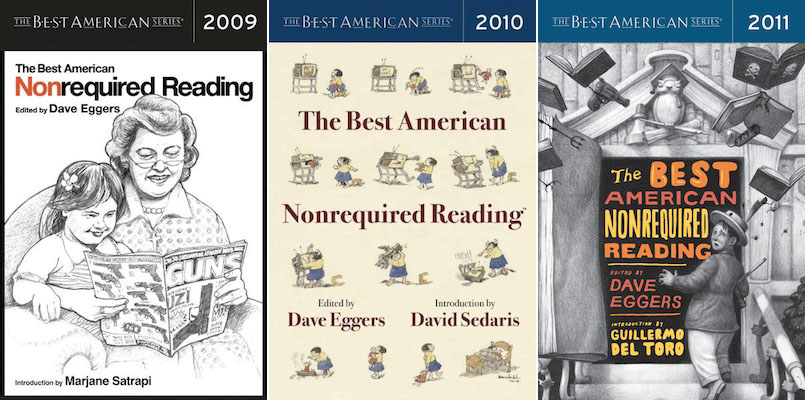

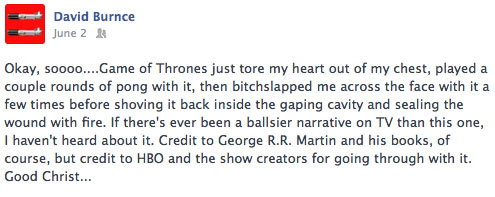
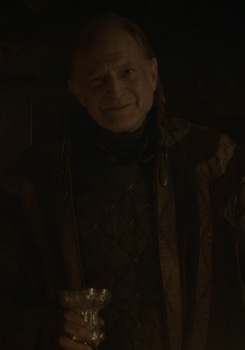 On a purely emotional level, I’m infuriated by the indignity of Joffrey continuing to draw breath while House Stark has just been decimated. (Yeah, the younger kids are still alive, but how long before any of them are able to take the reins in any meaningful way?) And Arya…God, poor Arya. SO close. Wallowing in my post-episode funk, my dream was for Arya to turn in her Braavosi coin (“Valar morghulis”), find Jaqen H’ghar and paraphrase Luke Skywalker: “I want to come with you to Braavos. There’s nothing for me here now. I

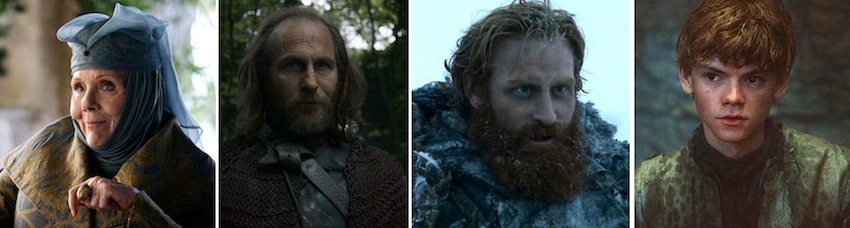
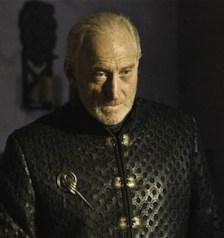 This season’s end leaves me with plenty of questions. Will Arya indeed reconnect with Jaqen H’ghar for Stealthy Assassinations 101? Will Jon recover from the three arrow hits he took from Ygritte? Will we see more from the Brotherhood Without Banners? How will Littlefinger react to the death of his beloved Catelyn? Will Joffrey’s marriage to Margaery reveal the perversions or sexual hang-ups that have been strongly hinted at but not yet made clear? Will Dany get it on with her chiseled new warrior, Dario Naharis? And how in the seven hells is she ever going to get to Westeros if she keeps liberating the slave populations of huge cities along the way? How will a newly humbled Jaime be welcomed back to King’s Landing? He only shared a brief moment with Cersei in the season finale, and it was tough to read her reaction to seeing his stump. Will Tywin think less of him now? What will happen to Brienne? And what of Cersei’s marriage to Loras Tyrell? In the finale, during an excellent scene with Tyrion, she said with curious certainty that she would not be marrying Loras. What does she have up her sleeve that makes her so sure? How will Tyrion’s marriage to Sansa progress, and where will Shae fit it? Will Stannis put his quest for the Iron Throne completely on hold to deal with the looming threat of the White Walkers? Will the concern over that danger extend as far south as King’s Landing? Could Tywin and Stannis have to temporarily unite in the face of it? What about Mance Rayder’s army of wildlings, the other force amassing north of the Wall? Will we find out what happens to Rickon and Osha after they split from Bran, or is Rickon’s story irrelevant? Will someone please, please, pretty please slap Joffrey across the face again? (I’d love to see Tywin do it, but he’s probably too buttoned-down, even if there’s no way he’d be punished for it. Then again, I’m not sure how much longer Joffrey will submit to Tywin’s authority before he tries to assert himself…and I am dying for a moment where the tension between those two runneth over.
 Answers to these questions and more are ten months away. I wonder if, in the meantime, the attention earned this year will translate into awards and accolades. If the series ever has a shot at winning the Emmy for Best Drama Series, this year might be the one. Plenty of shows have had major watercooler moments before; that doesn’t guarantee an award. But the show has been good enough to win from day one; if the violence, sex and general “fantasy” factor isn’t a put-off to voters, the sheer audacity of the Red Wedding and the way it permeated the cultural conversation could push it over the top. I would hope for some writing and directing nominations, and there are certainly actors worthy of attention. With Emmy nominations for acting being based on single episodes rather than entire seasons, a show like Thrones—lacking a lead character and doling out its story in small pieces—can be at a disadvantage. Peter Dinklage did earn a win after the first season, and a nomination for the second. Can he make the cut again? Others are deserving too. Charles Dance would be a welcome addition, and Jaime’s arc this season—bolstered by his aforementioned confessional monologue—could put Nikolaj Coster-Waldau in the conversation (he was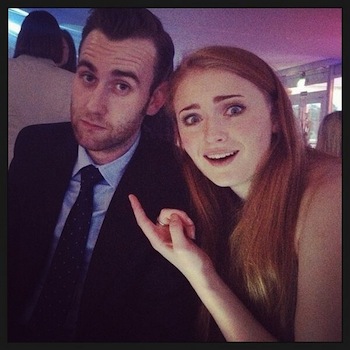

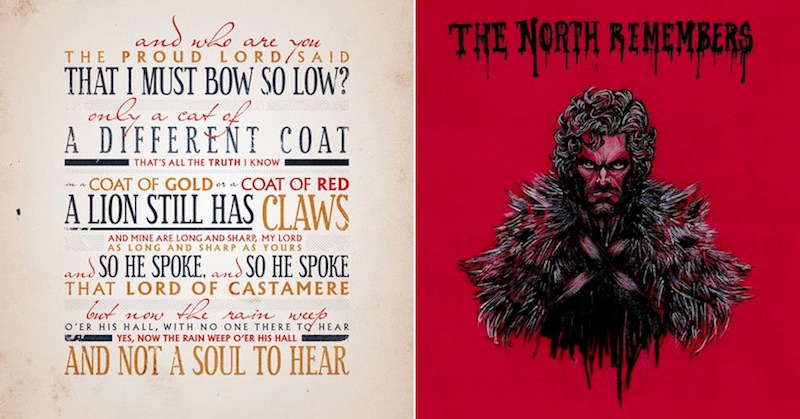
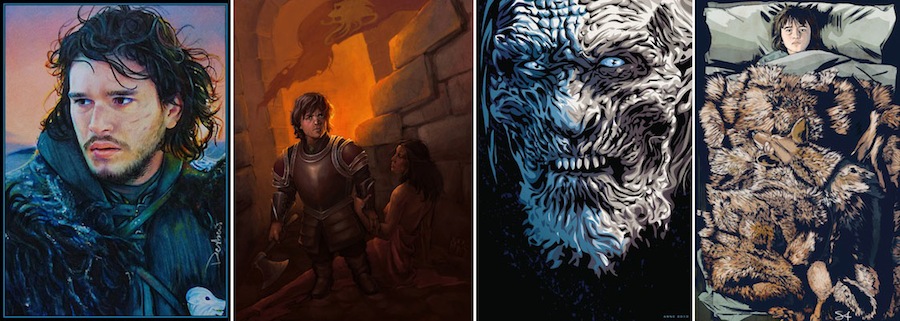
 Elsewhere in Westeros, Robb secretly married Talisa, while Arya, Gendry and Hot Pie escaped servitude at Harrenhal thanks to help from supercool mystery man Jaqen H’ghar. Winterfell was left burned and deserted after an ill-advised invasion by Theon, who betrayed Robb after being shamed by his asshole father and sister. He was knocked unconscious by his own men after the castle was surrounded by loyal northmen, but that was the last we saw of him. Bran, Rickon, Osha and Hodor left the ruined Winterfell to head north toward The Wall, on the instructions of the dying Maester Luwin. Beyond the Wall, Jon Snow and Qhorin Halfhand were taken prisoner by wildlings after Jon couldn’t bring himself to kill the captive redhead Ygritte. Quorin sacrificed himself by loudly accusing Jon of being a traitor and dueling with him until Jon killed him—a ploy to gain the trust of wildling leader Mance Rayder and infiltrate his camp. Samwell had the bad luck of coming across a massive army of White Walkers, though they seemed unconcerned with him as he hid in terror behind a rock. And across the Narrow Sea, Daenerys ventured into the House of the Undying and reclaimed her kidnapped dragons from the über-creepy warlock Pyat Pree.
 Showrunners David Benioff and D.B. Weiss have said from the beginning that their goal was to reach season three. If the show lasted long enough that they could get to events that will occur this season, they would be happy. No problem there. The show’s huge ratings left little doubt that they would make it to this point, and over the next 10 weeks, we’ll see what they’ve been so excited about. They referred early on to an event which they called only the RW scene, saying that to use the actual words instead of just the initials would constitute a spoiler. I accidentally found out what RW stands for, but I’m not sure how much of a spoiler it is, since at this point I still have no idea what it means or suggests. In my naive eyes, the words could be interpreted in a variety of ways. But given how eager Benioff and Weiss have been to depict it on the show, it’s gotta be major. They’ve also hinted about at least one upcoming scene so hard to take that even the crew choked up during filming. Is it this RW scene they’re referring to? In the aforementioned Entertainment Weeky cover story, they won’t even use the initials anymore to describe it. (They must have forgotten that they already used them in past interviews…unless there’s another infamous scene coming up that can be abbreviated for non-spoiler conversations). Whatever this mystery event is, if everyone is being so protective of it and the crew is getting teary-eyed while filming, it probably forebodes death for at least one favorite character.
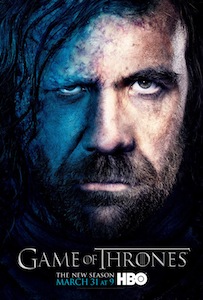 I’m running a bit wild here, so let me bring it back around to the season at hand and what we can expect. I’m of course wondering what will become of Theon. He seems primed to be one of the first casualties, but how will it happen, if it does? The previews above show a quick glimpse of his sister Yara, but there’s been no sign of Theon in any of the commercials. Will he be brought back to Robb, and will Robb be able to go through with killing him?
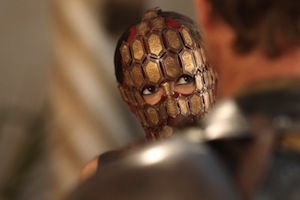 And what of Robb’s vow to marry one of Walder Frey’s daughters? I can’t blame the guy for choosing Talisa over any of the Frey girls, but it’s been stressed that the promise is not to be thrown off lightly. The Stark/Frey marriage wasn’t supposed to take place until the war was over, but will the repercussions of Robb’s union with Talisa be seen this season?
 Inconceivable as it may seem, today marks the 25th anniversary of The Princess Bride‘s theatrical release.

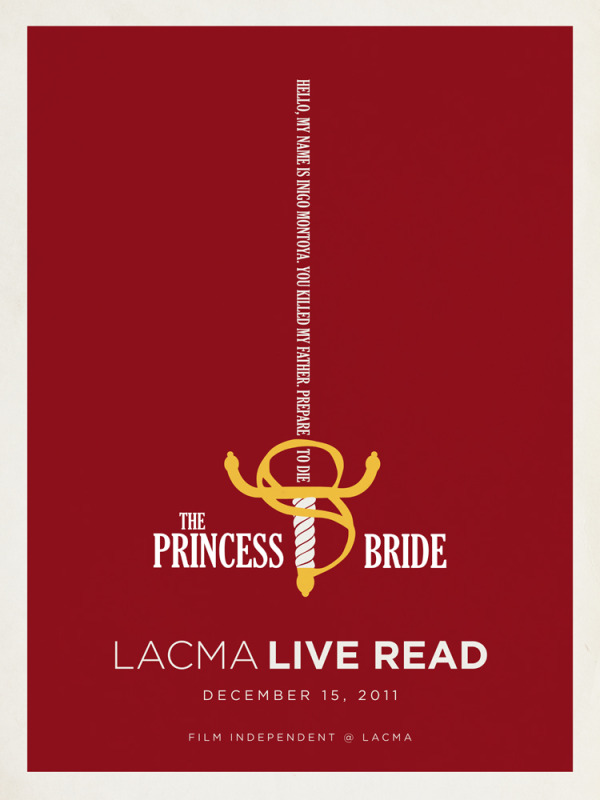

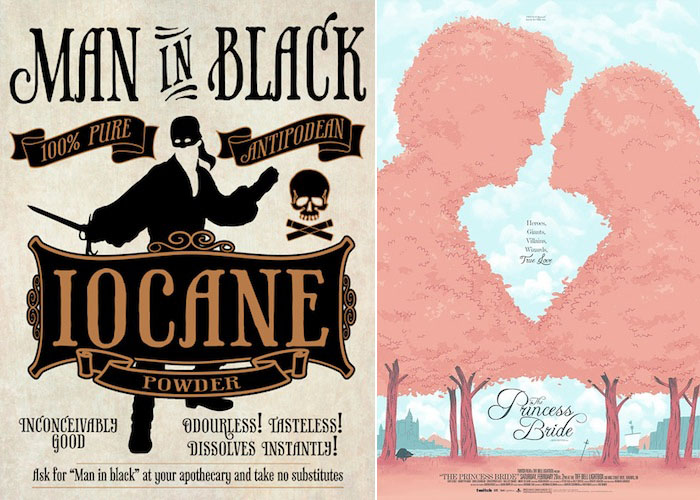

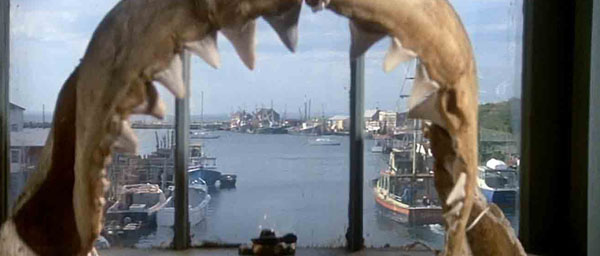


 I Am DB