I Am DB

November 28, 2012

Geek World Continues to Ponder Possibilites After Tattooine Drifts into Orbit of Pluto

Filed under: Movies — DB @ 12:15 am
Tags: , , , , ,

“The long term contract I had to sign says I’ll be making these movies ’til the end of time…”
                                                       -Weird Al Yankovic, “Yoda” (1985)

If you follow entertainment news (to which, if we weren’t in the aftermath of a devastating hurricane and a presidential election, I would ask, “Is there any other kind?”), you are probably aware that about a month ago, George Lucas and The Walt Disney Company’s Chairman and CEO Bob Iger announced that Disney is acquiring Lucasfilm in a deal worth $4.03 billion, and that the studio would be making a new trilogy of movies set in the aftermath of Return of the Jedi, not to mention many more future movies within other corners of the massive Star Wars galaxy. And if you only casually follow such news, it might seem that the level of attention garnered by this announcement was a bit over the top. For pretty much three weeks afterwards, barely a day went by without new articles on the topic popping up on the pages of entertainment websites, many of the pieces purely speculation about who should direct the new movies, or commentary on what the movies should and should not do, etc. It’s been a bit much. But then again, to those of us who care about things like this, it is pretty huge news. And even though it’s taken me this long to get all my thoughts down and, like most of my posts, this one arrives too late and too long for anyone to actually care, I’m going to proceed anyway, for my own sake. Hell, South Park managed to build an episode around the news weeks before before I could finish this post.

Where to begin? I guess earlier this year, when it was announced that A-list producer Kathleen Kennedy was joining Lucasfilm, serving as Co-Chairman alongside founder George Lucas as he transitioned away from running the company. That was huge news on its own. Yes, I’d be happy to explain why. For those unfamiliar with Kathleen Kennedy’s CV, she is one of Hollywood’s most successful and prolific movie producers. She and husband Frank Marshall have a long history with George Lucas, going back to Raiders of the Lost Ark, on which she was credited as “Associate to Steven Spielberg.” Just a couple of years later, she was a full-fledged producer on E.T., earning her first Oscar nomination. For most of the 1980s, Kennedy and Marshall were Spielberg’s right hands, serving as in-house producers at the director’s production company Amblin Entertainment. Spielberg and Amblin’s involvement with the next two Indiana Jones movies, not to mention the close friendship between Lucas and Spielberg, naturally put Kennedy in Lucas’ inner circle too.

In the 90s, the husband-and-wife team left Amblin and struck out on their own, forming The Kennedy/Marshall Company. Well…”struck out” may be the wrong phrase to use, since they continued to hit home runs. And they remained in close partnership with Spielberg, with Kennedy producing most of his movies, including War of the Worlds, Munich, War Horse and Lincoln. She’s also produced such films as The Sixth Sense, Seabiscuit, The Curious Case of Benjamin Button (earning Oscar nominations for all), The Bridges of Madison County and The Diving Bell and the Butterfly (the latter giving her some art film cred amidst a mostly Hollywood-based career).

Clearly, Kennedy is an active producer. Which made her such a surprising choice to take over Lucasfilm. Kathleen Kennedy makes movies. That’s what she does. And that’s not what Lucasfilm does. Not historically, at least. Since 1990, Lucasfilm has put out seven films. Three of those were the Star Wars prequels. One of them was Star Wars: The Clone Wars, which was just the first four episodes of The Clone Wars TV series cobbled together. One of them was the fourth Indiana Jones movie. The other two were Radioland Murders, which most people have never heard of, and Red Tails, Lucas’ long-gestating passion project about the Tuskegee Airmen, which came out earlier this year. In the same time period, Kennedy produced 22 features, served as Executive Producer on 18 more and also had a hand in numerous short films and TV projects. If Kennedy was coming to take over Lucasfilm, then Lucasfilm was going to start making a lot more movies.

Publicly, it had been a quiet period of transition since Kennedy came onboard. And then…that out of the blue announcement, which exploded across the entertainment news landscape.

There are a lot of elements to this deal, so it might be easiest to examine them one at a time.

THE DETAILS
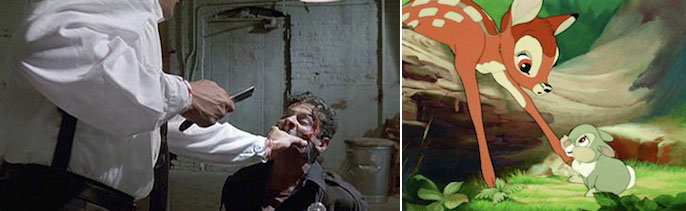
Although Disney has experience acquiring successful companies with a popular brand, the partnerships haven’t always been smooth. Their 1993 purchase of Miramax Films ended sadly, with the 2005 departure of Harvey and Bob Weinstein from the company – named for their parents Miriam and Max – that they had made synonymous with prestige independent film. It never made much sense for the studio behind Bambi, Dumbo and Cinderella to go into business with the studio behind Reservoir Dogs, Clerks and sex, lies and videotape. Bambi’s mother may have been shot, but we didn’t see the hunter carve her up for venison while dancing to “Stuck in the Middle With You.”
Prior to purchasing Pixar in 2006, Disney had a marketing and distribution deal with the animation studio, but it turned ugly when the two sides couldn’t agree on terms. After Michael Eisner left Disney in 2005, Bob Iger took over and seemed to bring peace to the Magic Kingdom. Relations with Pixar were smoothed, leading to the 2006 deal with Disney. Then in 2009, Disney bought Marvel Entertainment, and now the Lucasfilm deal continues the company’s acquisition of family-friendly brands with all manner of franchise possibilities. (And let’s not forget The Muppets, who have been part of the Disney family since 2004, and whose profile rose with last year’s hit movie. A sequel is currently in pre-production.) Under Iger’s management, relations with Pixar, Marvel and The Jim Henson Company seem to be going well, and with a seasoned pro like Kennedy in charge at Lucasfilm, there’s no reason to think that Disney will try to meddle in the business. Iger was quite clear with Disney’s investors: this purchase is all about Star Wars, and the doors that will open should be enough to keep Disney’s leadership and shareholders plenty happy.

The purchase includes all of the Lucasfilm companies – Industrial Light & Magic (ILM), Skywalker Sound and LucasArts. In the case of ILM, Iger stated that the plan is to leave it alone to do business as usual. Hopefully that will prove to be the case – for Skywalker Sound and LucasArts as well – allowing Disney to reap whatever revenue they bring in while also taking advantage of them for their own needs. ILM and Skywalker Sound have been used by many Disney films in the past (as well as Marvel’s Iron Man franchise and The Avengers), and it seems highly probable that Disney will now utilize the companies for all of their films. The article above does point out that, with the exception of Sony Imageworks, movie studios have not had the best luck running visual effects companies, and Disney in particular struggled with Dream Quest Images (which became The Secret Lab) and Robert Zemeckis’ ImageMovers. The article also mentions that ILM made $100 million in revenue last year, which I seriously doubt. The nightmarish fiscal realities of the visual effects industry are a whole other issue, but I can tell you that VFX studios don’t make that kind of profit. They don’t make much profit at all. Anyway, my hope is that Iger is true to his word and allows ILM, Skywalker Sound and LucasArts to keep doing what they’re doing, and that the piles of cash they’ll make from Star Wars and its merchandising will more than cover the cost of ILM and Skywalker Sound going about business as usual. As for LucasArts, hopefully Disney’s intention to pursue more Star Wars video game opportunities will provide lots of work to keep them going strong.

Lucas’ previous relationships with other studios make the future of his properties murky at this point. According to this piece in The Hollywood Reporter, 20th Century Fox owns the distribution rights to the first Star Wars movie (Episode IV) for all time, while their ownership of the five subsequent films reverts back to Lucasfilm in 2020. That means the ongoing 3D re-releases of the movies (Episodes II and III are due in 2013) will remain Fox releases, and any more home video releases in the immediate future will also come from Fox. If Disney ever hopes to release a major box set with the entire nine-part saga, it will have to work out a deal with Fox for Episode IV. (Dare we dream that under Kennedy and Disney, we’ll eventually see a remastered home video release of the first trilogy’s original versions? If we do, I doubt it will be before home video goes away and everything is online or beamed directly into our brains and projected through our eyeballs on whatever surface is in front of us.) The article quotes a Lucas associate as saying that the director didn’t like the idea of splitting up the movies amongst different rights holders, but that turning the future of Star Wars over to Fox instead of Disney made no sense. Anyone taken a family vacation to Foxland lately?

Distribution rights to the Indiana Jones films remain with Paramount, meaning any future Indy movies would require some kind of deal between Paramount and Disney. And despite ongoing rumblings, nobody seems really committed to another Indy film anyway. Meanwhile, the popular animated series The Clone Wars airs on Cartoon Network, which is owned by Warner Bros. Iger’s plans for the future of Star Wars definitely seem to include TV series (perhaps the long-awaited live action series will finally see the light of day?), but where The Clone Wars will land after its current season ends – and how series box sets will be packaged in the years ahead – remains unconfirmed.

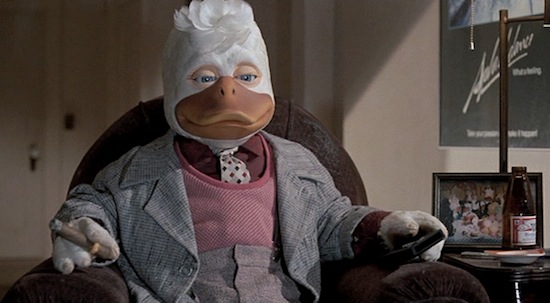
One Lucasfilm property that shouldn’t have rights hurdles to clear is Howard the Duck. The 1986 film was based on a Marvel Comics series, and now Lucasfilm and Marvel are united under one roof. Your move, Disney.
OF MICE AND BEN…KENOBI
So now that Disney owns every star, moon and planet in George Lucas’  galaxy far, far away, what will they do with it all? Well, we know they will make Episodes VII, VIII and IX, which I’ll talk more about later. But that’s just the tip of the iceberg for a property as rich as Star Wars.

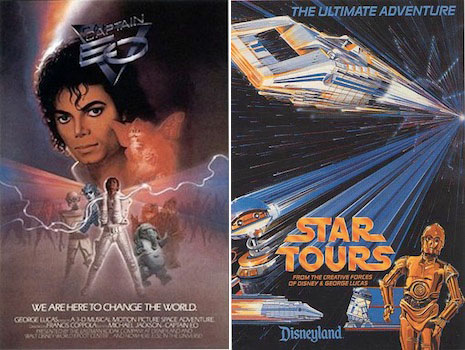
Disney has been in business with George Lucas going back to 1986, when ILM created visual effects for the Michael Jackson 3D short, Captain EO. The next year, the Star Wars-themed motion simulation ride Star Tours opened in Disneyland, eventually hitting the other Disney parks as well. The development of future theme park attractions based on Star Wars is inevitable. A park the size of all of DisneyWorld could easily be created from the vast expanses of the Star Wars galaxy, and if it happened to Harry Potter, you can bet the Millennium Falcon it will happen to Star Wars.

How awesome is that gonna be?

The possibilities are pretty much endless, but for starters, here’s some fun artwork created by artist Tom Hodges for Star Wars Celebration V a couple of years ago.

If there’s one thing that Disney and Lucasfilm have in common beyond visionary creators whose imaginations birthed timeless, beloved characters and stories, it’s that they both know how to sell the shit out of Stuff. So beyond the new movies and the obvious theme park development, expect Disney to churn out endless streams of Star Wars Stuff. The only question is what that will actually look like, since Lucasfilm has already been doing it for years. TV shows, toys, novels, comic books, clothes, toothbrushes, coffee mugs, keychains, posters, calendars, Christmas tree ornaments…just think of all the Stuff that Star Wars can – and has – been slapped on. Can Disney up the ante, or will they just keep the machine going?
THE BIG SCREEN
In practical terms for movie fans, the biggest shocker of the Lucasfilm/Disney announcement was probably not the acquisition so much as the reveal that Episodes VII, VIII and IX were in the works, with 2015 set as the release date for the first. And not only would there be a post-Jedi trilogy, but Lucas would not be directly involved in making them.

Wow.

Now the Kathleen Kennedy move started to make sense. While Lucas has helped develop story treatments and will serve as Creative Consultant, he is leaving the future of Star Wars on film in the capable hands of Kennedy and a new group of filmmakers. Those of us who were disappointed in what Lucas did with the prequels dared to imagine new Star Wars movies that could actually recapture the tone of A New Hope and The Empire Strikes Back. The possibilities are thrilling. Speculation immediately began about who would or should direct the new movies. That question hasn’t been answered yet, but another one has been. The task of writing Episode VII has landed on the desk of Michael Arndt, who won an Oscar for Little Miss Sunshine and earned another nomination for Toy Story 3. His outstanding work on the latter is what makes me feel comfortable and encouraged by the choice. Granted, it’s still not much to go by. Those are his only two films to date, though several more are on the way: another Pixar film (due in 2015), the next installment of The Hunger Games franchise (on which he will share credit with Slumdog Millionaire writer Simon Beaufoy), the Tom Cruise sci-fi film Oblivion, directed by Tron: Legacy‘s Joseph Kosinski and also featuring contributions from Departed writer William Monahan, and Phineas and Ferb, based on the hit cartoon series. At least two of those will be out before Star Wars hits, so we’ll have a better sense of Arndt’s skills, but so far he seems to be a guy who can combine humor, strong characters and authentic emotional weight. Seriously, do we need to talk about the amazing final third of Toy Story 3?

Directors will likely be approaching the invitation from Kennedy with as much trepidation as passion. While we all know the vitriol directed at Lucas because of the prequels (among other things, to be fair), at least he could fall back on the fact that everything we love about Star Wars still sprung from his brain. But who wants to be the outsider who comes in and potentially screws up the chance to relaunch the brand?

It needs to be someone who has established an ability to make smart, commercial movies, and in my perfect world, a little more weight will be given to filmmaking skill than how profitable or financially successful their previous films have been. One friend of mine suggested Rian Johnson, director of Brick and Looper, and that’s just the kind of person I’d like to see take the job. In that vein, Duncan Jones – director of Moon and Source Code – could be a great choice as well. Jon Favreau would probably do a good job too. I’d love to see it directed by somebody who isn’t necessarily proven in sci-fi or fantasy, but who has shown skills handling mainstream content with good performances, editing and storytelling. Ben Affleck, perhaps? (He says no.) Will Disney look to its Pirates of the Caribbean helmer Gore Verbinski? That could go either way, though with a good script I think he’d do a fine job. David Yates handled the last four Harry Potter films quite nicely, showing a skill for balancing action and effects with quiet and even powerful moments of performance and character. I don’t know; I’m not interested in wasting much time speculating on these things. I just want Kennedy and whoever else is involved in the process to be smart about it, and not hand the reins over to someone who makes bland, cookie-cutter studio movies that might make money, but who has no personality as a filmmaker. On the other hand, it shouldn’t be someone who has such a singular style or point of view that they overshadow the movie. People have tossed around big names like Peter Jackson and Christopher Nolan, but I can’t imagine either being interested or…right for the gig.  Apparently, Lucasfilm sent Arndt’s treatment to three directors in recent weeks, and all have declined…either because of other projects they have lined up, or maybe because they only see the pitfalls. Whatever their real reasons,  J.J. Abrams, Brad Bird and Steven Spielberg all passed. (Oddly, Spielberg talks about not being a sci-fi guy or being interested in action movies anymore, even though his next project is Robopocalypse…a sci-fi action movie.) One name that keeps popping up as a likely director? Matthew Vaughan, who directed the Daniel Craig caper Layer Cake, the comedic fantasy Stardust, the action-comedy Kick-Ass and X-Men: First Class. (He was set to direct an X-Men follow-up, but abruptly dropped out right around the time the Lucasfilm/Star Wars news broke, fueling speculation that he’d been offered Episode VII. I’ve seen all his films except for Stardust, and I’ve enjoyed them, but I don’t know if he’s got the right stuff for Star Wars.

Then again, I’m admittedly being far too precious about this whole thing…as evidenced by the fact that I’m still writing about it.

What I really want to see is a Funny or Die short or SNL sketch or something where we see what a Star Wars movie would be like directed by eccentric filmmakers like Terrence Malick (Luke wandering the desert of Tattooine to whispered voiceover about the spiritual essence of the planet’s twin suns), David Lynch (Han and Lando have an oblique, circular conversation in a room with dim, flickering lights and a loud, unsettling buzzing noise coming from nowhere in particular) and Quentin Tarantino (Luke, clad in a yellow jumpsuit, once again finds trouble in a cantina, this time expertly wielding his lightsaber to maim an onslaught of aliens).

The fact that we’re even getting Episodes VII, VIII and IX is perplexing. While the rumors back in the days of the first trilogy were that Lucas had nine stories altogether, he often said during the prequel era that the completion of the second trilogy would make clear that together, the Star Wars movies were really the story of Anakin Skywalker; his rise, his fall and his redemption at the hands of his son. Despite what most of us think of the prequels, the six movies together do tell that story, forming a symmetrical arc that ends with Return of the Jedi. The post Jedi-years have been explored in numerous novels, but none of those stories stemmed from Lucas’ own ideas. In fact, I remember when the first Star Wars novel, Timothy Zahn’s Heir to the Empire, came out – I was in my early teens – and I took a stand against reading it because it was not based on George Lucas’ own story. I wasn’t interested in a Star Wars that didn’t come from Lucas. (Little did I know what I would get for my loyalty.) Still, Zahn claims that Lucas once briefed him on his own intentions for the later years of the saga, saying that the idea would be to follow the next generation of the Skywalker family.

Actors Mark Hamill, Carrie Fisher and Harrison Ford have all expressed willingness to return for new movies, and they would have to be willing, because c’mon… you can’t recast those parts. And yet, if the stories skip so far ahead in time that Luke, Leia and Han have become one with The Force, then you’re no longer talking about Episodes VII, VIII and IX; you’re just talking about new movies in the Star Wars universe. In truth, I don’t know how I feel about seeing Hamill, Fisher and Ford back in these roles. It’s not that I want to see someone else playing the iconic parts, but it’s been a long time since Return of the Jedi. It’s not always so easy to slip back into characters years later. Whatever else you might think about Indiana Jones and the Kingdom of the Crystal Skull, the Indy that Ford played in that movie just wasn’t the same Indy we knew in the 80’s. If he’d been playing the part every few years in a new adventure, the aging would have been less apparent. But to pick up the character 18 years later…it was a bit jarring. True, Luke, Leia and Han would probably play more supporting roles in the sequels, but still…there’s no doubt that this is dangerous territory.

Ooooh, but if they could pull it off….could be really cool. And could we make sure Billy Dee Williams gets in on this too?

The next three films will need to fit tonally with the six before it, but once Disney can turn its attention to telling other stories on film from within the Star Wars universe, there could be more potential for going in unexpected directions. The Kennedy/Marshall Company produced all the Jason Bourne movies, which makes me think of how cool it would be to see Paul Greengrass bring his gritty realism to a story of spies or smugglers in some of the galaxy’s seedier corners. Don’t think Disney would go for that? I’m not so sure. All four Pirates movies were PG-13. As long as Kennedy keeps things from going too dark, I think she’ll be given a fair amount of leeway. And if the plan is really to put out a new Star Wars movie every 2-3 years – as Iger said in his announcement – they’ll need to be varied in tone and style to keep interest sustained. Frankly, that seems like too many movies, even with an expansive galaxy to draw inspiration from. Given the extent to which it has been marketed over 35 years, you can’t really be concerned at this point with the idea of Star Wars cannibalizing itself, but the Major Event mindset that comes with a big movie release could get old if really attempted with such regularity. Perhaps a live action TV series is the better way to explore the worlds of Star Wars for the long haul.

About a week ago, news broke that Lawrence Kasden and Simon Kinberg have been approached for the sequels, though it’s not fully clear yet in what capacity. Their involvement is not official yet, but sounds likely. They may each be writing an installment of the sequel trilogy, and/or coming aboard one or all of the sequels as producers. Kasden’s involvement is surprising and exciting; surprising because he works only occasionally these days (or at least, only gets films made occasionally), and exciting because he of course co-wrote both The Empire Strikes Back and Return of the Jedi (and Raiders of the Lost Ark; damn, that dude was on fire!) On the other hand, those were the days of Kasden’s own classics Body Heat and The Big Chill. His work lately has been much less celebrated and memorable. Prior to writing and directing this year’s little-seen, little discussed Darling Companion, his last film was nine years earlier: a messy adaptation of Stephen King’s Dreamcatcher. Kasden’s glory days seem far behind him. But maybe a return to the world of Star Wars will revive his creative juices. I’m hopeful. The hiring of Simon Kinberg leaves me less encouraged. Kinberg’s had some popular hits, but his movies have been pretty shallow. I enjoyed the Brad Pitt/Angelina Jolie comedy Mr. and Mrs. Smith well enough, and I’m more a fan of  X-Men: The Last Stand than most people, but neither of them demonstrate what I’d want in a writer for a Star Wars movie. His credits also include Sherlock Holmes, which always looked dumb to me (I still haven’t seen it), the forgetful Hayden Christensen sci-fi flick Jumper and the horribly received Reese Witherspoon/Chris Pine/Tom Hardy romantic comedy This Means War. When it comes to Star Wars, Kinberg comes with a bit too much Hollywood studio gloss for my preference, and he’s definitely outclassed by Arndt and Kasden. But time will tell.

GOODBYE GEORGE
It’s bittersweet to see Lucas step away from the company he built, even if so many of us have been disheartened by the direction he’s taken in these later years. It probably is the best thing for the future of the franchise to place it into someone else’s hands, and it’s comforting to know that the first pair of hands to guide it will be Kathleen Kennedy’s. And I have to imagine that Lucas is largely relieved by the decision. Since 1977, he has been trapped by this crushing machine that became more massive and all-consuming than he ever could have imagined when he set out to make a Flash Gordon-esque space fantasy that told a simple story of good vs. evil. He had no idea that Star Wars would become his life, and when you add to that the excessive amount of flack he’s taken over the last 15 years for the special editions and the prequels, I imagine there must have been a moment when he committed to this decision, or after he signed the contract with Disney…a moment to himself where he just sat down, closed his eyes and exhaled a long breath of freedom. In 2008, the super-smart, super-funny Simon Pegg was a guest on Elvis Mitchell’s outstanding podcast The Treatment, and he said that when he met George Lucas at the premiere of Revenge of the Sith, Lucas told him, “Don’t be making the film you made 30 years ago 30 years from now.”
A sad, almost confessional comment. And now, at last, Lucas can unburden himself from the shackles of Star Wars that, while I’m sure have provided him with rewarding creative experiences over the years, have also undoubtedly sapped much of his energy and derailed other pursuits. Will he make the small, obscure, non-mainstream artsy films he’s been talking about for so long? Who knows. Philanthropy is a huge part of his life, and most of the money he makes from selling his company to Disney is expected to go into his charitable endeavors. He does still have that Creative Consultant role, and will probably continue to keep his eyes on the franchise and offer his advice from time to time, but by and large, Lucas is done with the series. He leaves his company to Kennedy and Disney. Talk about the end of an era.

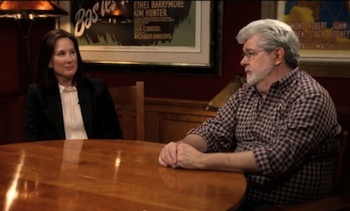
A series of video discussions between Lucas and Kennedy have been filmed are being released once a week at starwars.com. The first two are here, the third here. Two more will follow in the weeks ahead.

FINAL THOUGHTS
The two people reading this know that I’ve said more than enough at this point. There will be plenty more to talk about when a director is announced, when casting is announced, when the movie itself arrives and when Disney’s plans to steward the franchise have had time to take hold. In the end, I think the sale of Lucasfilm to Disney could be a great thing, and I’m excited to see what happens in the years ahead. I’m of two minds about the sequels, but I have no doubt that when they hit, my inner child will bust out.

If I have two final, random hopes for the future of Star Wars under this deal, here they are: that the new movies be shot with a lot less greenscreen and digital set decoration, instead favoring physical sets that look tactile; and that Disney can somehow work out a deal with 20th Century Fox to remaster and release the unaltered versions of the original trilogy on Blu-Ray. It’s not exactly a new hope…but it is a renewed one.

May the Force be with us…

October 21, 2012

Music to Tease By

Showtime’s series Homeland returned for its highly anticipated second season a few weeks ago, freshly anointed with six Emmys including a fully expected and fully deserved Best Actress win for Claire Danes, a more surprising but also worthy Best Actor win for Damien Lewis, and the top prize for Best Drama Series, thwarting Mad Men‘s hopes for a five-peat. The season has kicked off with no loss of quality, and I’m confident it will progress just as thrillingly as last year’s.

None of which matters, because this post isn’t about Homeland.

It’s about the trailer for Homeland.

Sort of.

And before I can explain that, I need to jump back two years. So…bear with me here.

One of 2010’s best movies (many people would say 2010’s single best movie; it was #2 for me) was The Social Network. Not only is it a fantastic movie, it was backed by a fantastic marketing campaign with a standout trailer featuring a haunting cover version of the early Radiohead hit, “Creep.”

The musical assemblage of angels and demons responsible for that version of the song is Scala & Kolacny Brothers, a Belgium-based group consisting of siblings Steven and Stijn Kolacny and a choir of 30-40 women ranging in age from 16-26. As detailed on their website, the brothers formed the choir back in 1996 and soon built up a following in Belgium performing  traditional classical music by the likes of Beethoven. It’s fitting that their version of “Creep” is what launched them to international fame, since the song was also what prompted Steven to consider adapting pop and rock songs in the first place. After what may have been a shaky start with this new, unconventional direction, the band’s vision quickly earned them a following around Europe, and additional fans across oceans, including Social Network director David Fincher. The prominent use of “Creep” in his film’s trailer led to a whole new level of curiosity about Scala & Kolacny Brothers. Their popularity expanded, and soon their music was being sought by other directors and producers. The BBC’s trailer for Season Two of Downton Abbey used their cover of U2’s “With or Without You”…

…and to bring it back to the beginning of the post, their version of The Police hit “Every Breath You Take” was used in the Season Two trailer for Homeland this summer. (Those who have yet to start on this show, don’t worry – nothing you see here will spoil things for you.)

While doing some research for this post, I learned that Scala & Kolacny Brothers’ “Every Breath You Take” was also used in the BBC’s trailer for the first season of Downton Abbey, which aired a few months after The Social Network trailer hit. A look at these makes it easy to understand why their music is so desirable. I don’t know about you, but I get chills up and down my spine at the marriage of their recordings and the compelling imagery and dialogue teasing us with the promise of what we hope will be great movies and series.

And that is, after all, the job of a good trailer: to tease viewers and create in them a desire to experience the full course meal. It’s not easy. How many times have you seen a trailer that gave away too much of the movie? It’s a frequent and valid complaint that trailers too often spell out exactly what will happen or at least spoil key plot developments. Still, they have always been one of my favorite part of the moviegoing experience, and when I think about some of my favorite movie trailers ever – and yes, I’m the kind of person who has favorite movie trailers, which probably tells you a lot about me – it is almost always the music that cements their status. Music may be the most vital ingredient of a great trailer. Consider Michael Bay’s Pearl Harbor. Those aren’t words I say very often, as I tend to feel that the less time spent considering Michael Bay’s work, the better off we all are. But I have to admit, I love the Pearl Harbor trailer.

That movie looks fucking awesome!! Unfortunately, it turned out that there’s more heart, emotion, power and filmmaking skill on display in that nearly three-minute trailer than there is in the entirety of the actual three-hour movie. And it’s all about the music. Don’t believe me? Here’s the exact same cut of the trailer, scored differently.

Oh, the music swells and it tries to stir, but it just doesn’t get there. Certainly not when compared to the first version, which is so compellingly tied together by an exceptional piece of music called “Journey to the Line,” from composer Hans Zimmer’s Oscar nominated score for The Thin Red Line. An issue over the rights meant that “Journey to the Line” couldn’t be featured in the trailer that appears on the Pearl Harbor DVD, hence the alternate – and vastly inferior – version.

It’s common for music from one movie to be used in a trailer for another movie. You’re not going to hear something famous and instantly identifiable like Star Wars, James Bond or The Pink Panther used to promote a movie outside of those franchises, but anything else is fair game, and there are some tracks that have been used over and over again. You may never have heard of a 1989 movie called Come See the Paradise, starring Dennis Quaid, but if you attended even one movie in the 90’s, you probably saw a trailer featuring a piece of music from its soundtrack by Randy Edelman, titled “Fire in a Brooklyn Theater.” Here it is, put to great use for A Few Good Men.

Did that ring any bells? According to Soundtrack.Net (an indispensable resource for all things soundtrack-related, and the place to go if you ever hear music in a trailer and want to know where it came from), music from Come See the Paradise was used in 27 theatrical or TV trailers (for 24 films) between 1990 and 2003, including Clear and Present Danger, The Chamber and Rob Roy (all 27 may not have used “Fire in a Brooklyn Theater” specifically, though I’d guess most did).

Among the other soundtrack cuts that have been used most frequently in trailers are James Horner’s “Bishop’s Countdown” from Aliens, Wojciech Kilar’s “Vampire Hunters” from Bram Stoker’s Dracula and David Arnold’s score to Stargate; I can’t pin down exactly which track(s), though Independence Day is among the trailers to feature it.

Sometimes a trailer will utilize an alternate version of a different movie’s music, as when Clint Mansell’s score from Requiem for a Dream was reinterpreted for The Lord of the Rings: The Two Towers trailer. The preview begins with music from the series itself, but around the 1:38 mark, the Requiem variation kicks in, to magnificent effect.

This is actually my favorite version of the Requiem theme, though I do love the original pieces as composed by Mansell. The theme recurs throughout the movie, in various forms, through cuts on the soundtrack such as “Summer Overture,” “Hope Overture,” and the title under which the piece is most frequently identified, “Lux Aeterna.” It was rearranged and performed anew specifically for use in The Two Towers trailer, becoming so popular and inciting such demand from fans that it was eventually released commercially under the name “Requiem for a Tower” …a fact I was unaware of until writing this post. I’ve always wanted to get my hands on it, and I’m pleased to say it now lives in my iTunes library…and if you’re a fellow film score geek/film geek/generic geek, it can reside in yours to, courtesy of iTunes or Amazon. (Oddly, the initial release of “Requiem for a Tower” was done in three, less-than-a-minute movements on an album alongside original music by the composers who revamped it. The continuous piece of music, as it appears in the trailer, became available later.)

The trailer for the next movie in the franchise, The Lord of the Rings: The Return of the King, went a step further, raiding its own music by concluding with a stirring version of the film’s Gondor theme that was never actually featured in the movie. After using some different selections from The Two Towers, the trailer introduces a melding of composer Howard Shore’s Gondor theme with an original piece commissioned just for this, written by Simone Benyacar (who had a hand in “Requiem for a Tower”) and Craig Stuart Garfinkle. Yup…Simone and Garfinkle.

Simone and Garfinkle’s piece, titled “Epicalypse,” can be heard here, sans Shore’s Gondor theme, while the trailer excerpt can be heard in isolation here. It’s not clear to me whether this piece is available commercially, though one ray of hope for us geeks is a rarities CD from the Lord of the Rings recording sessions, which accompanies the book The Music of the Lord of the Rings Films by Doug Adams. The CD track list includes a piece called “The Return of the King Trailer.” Hopefully that means this piece.

Trailers are usually produced so far in advance of a movie’s release date, that the movie’s own score is not recorded yet, and may not even be written. Rare is the trailer that features music written for the movie it’s advertising. But one exception was the first teaser for Harry Potter and the Sorcerer’s Stone. For a world besieged in Harry Potter mania, the first glimpse of the first movie adaptation was massively anticipated, and I remember watching the trailer upon its release and thinking afterward, “What is that music from?!?” I was surprised when I learned that it was actually the movie’s theme. John Williams had done it again. I can’t even tell you how many times I watched that teaser online over the next few weeks, but I know that it soon became less about my excitement for the movie and more about just hearing that music again.

Of course, there’s no rule that trailers have to use music from other movies. There are companies that produce original music specifically to be licensed out for use in movie trailers, one of the most well-known within Hollywood being Immediate Music. Their work has been used in countless trailers over the last 20 years, with two tracks in particular – “Redrum” and “Code Red” – ranking with “Fire in a Brooklyn Theater” as among the most popular for trailer use.

Established classical music has proven great trailer accompaniment as well. Another of the most oft used pieces of music in trailers has been “O Fortuna,” composed by Carl Orff as part of his Carmina Burana cantata. The instantly recognizable composition has been used in such trailers as Glory, Cliffhanger and…

One early 90’s trailer that stood out for me at the time was the Stephen King adaptation Needful Things, and what made it pop was a piece of classical music I hadn’t encountered before that I came to love: Edvard Grieg’s “In the Hall of the Mountain King,” from his Peer Gynt Suite No. 1, Op. 46.

Nothing special as a trailer, and I’ve still never seen the movie, but I couldn’t get enough of that music.

Lest we think effective trailers rely on instrumental music, or choral pieces like the work from Scala & Kolacny Brothers, rock and pop songs can make an equally strong impact. The trailer for Martin Scorsese’s Casino has always lingered in my mind, for its use of the Rolling Stones’ “Gimme Shelter.” The trailer tries to convey Casino‘s rise-and-fall structure, with “Gimme Shelter” accompanying “the fall.”

The song is a Scorsese signature, having been featured in GoodFellas, The Departed and Casino itself. He described it in Entertainment Weekly at the time of The Departed‘s release as “dangerous,” saying that when you hear that song, “you know something’s going to happen.” The Casino trailer definitely sells that, especially in the great shot with the camera gliding across Joe Pesci’s menacing face, full-frame. You really can’t go wrong with “Gimme Shelter.” It’s currently featured in the trailer for the Denzel Washington drama Flight, and its use there, combined with how the trailer is edited to cast mystery around the events of the story, makes for another solid coming attraction. Note that just as in the Casino trailer, the song kicks in after a more lighthearted opening. Danger indeed, Marty.

Another favorite trailer of mine is for 2002’s Spike Jonze/Charlie Kaufman collaboration, Adaptation. It employs Queen and David Bowie’s “Under Pressure,” which is an upbeat pop song befitting a comedy such as this. But the trailer also hints at the movie’s sadder themes, and to my surprise, the song seemed to fit those just as snugly, forever changing how I hear it. Now I always think of this trailer when it comes on, and its generally buoyant sound is tinged with a sense of longing and regret.

But that’s probably just me.

I’m not alone, however, in proclaiming that last year’s best trailer was for David Fincher’s follow-up to The Social Network. The dynamic teaser for The Girl with the Dragon Tattoo consisted of a pulsing, dialogue-free montage cut to Karen O’s cover of Led Zeppelin’s “Immigrant Song.” It set the tone brilliantly.

There’s really only two words to say after watching that: Fuck. Me.

What the pieces in all these trailers have in common is not only that they’re melodic and memorable or just great songs, but that they contribute so effectively to the sensation the trailer attempts to present. When matched well, music is often a trailer’s best tool for creating mood, suggesting suspense, getting your blood pumping or tugging the heartstrings. The performances by Scala & Kolacny Brothers are ideal for having that effect. The combination of vocals and instrumentation are haunting and powerful on their own, and when laid over images of characters crying, howling in pain or anger, running across a battlefield amid explosions or seeking a connection across cyberspace, they can take on entirely new depth or be seen in a different light. Last year, NPR ran a piece about the making of movie trailers, illustrating that trailer and TV commercial production is most definitely its own industry within the movie industry. And while hearing trailer producers refer to their work as an art form may make you snicker, every now and then a trailer like The Social Network or The Girl with the Dragon Tattoo comes along and shows that even these two-minute advertisements can indeed be artistic achievements in their own way. And in almost every case, the music is essential in the difference between a great trailer and an average one.

Then again, a little self-awareness can be all it takes to do the job well.

September 25, 2012

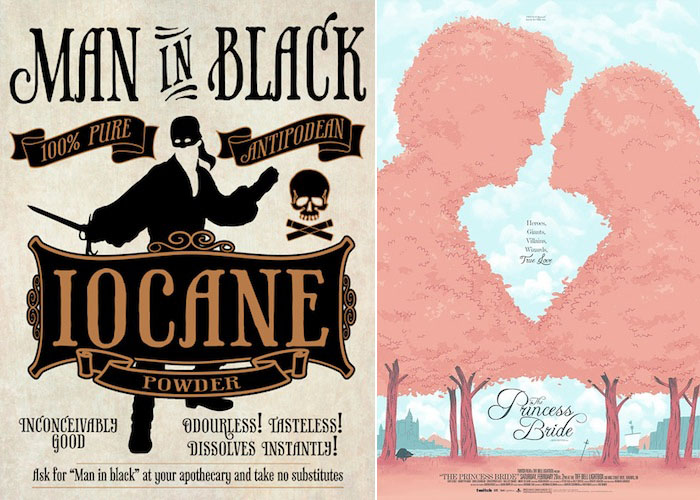
Westley: Lover, Fighter aaand…Kind of a Dick

Filed under: Movies — DB @ 9:00 am
Tags: , , , ,

Inconceivable as it may seem, today marks the 25th anniversary of The Princess Bride‘s theatrical release.

Twenty. Five. Years.

This little movie, which grossed only about $30 million at the box office, ranking 41st on the list of 1987’s highest grossers, has built up a following that bursts beyond the parameters of cult to become one of the most beloved movies of all time.

Yes, I’m saying of all time.

No, I don’t think this is hyperbole. People’s affection for The Princess Bride transcends mere love to achieve true love, which doesn’t happen every day. Not only is it exceedingly rare, but with the exception of a nice, perky M.L.T., where the mutton is nice and lean and the tomatoes are ripe, it’s the greatest thing in the world.

Now, stay with me here: I do want to take issue with one small aspect of The Princess Bride that I’ve thought about many times over the years that I’ve been enjoying and revisiting the movie. But first I must make it crystal, face-shining-in-polished-horse-saddle clear that this is one of my all-time favorites, a movie that came to me at that time in my life – as I’ve pointed out in various posts this year – when movies were overcoming my imagination. I remember seeing a short behind-the-scenes piece on HBO and being immediately interested. In fact, I can pinpoint the exact scene that made me want to see the movie. It was that moment during the sword fight between Inigo and the Man in Black, when the former asks the latter his identity, the Man in Black declines to reveal himself, and Inigo – having pressed the issue – just shrugs and gets on with the duel. I loved that. I loved the timing, the rhythm, the delivery. I knew I had to see this movie. It didn’t hurt that the cast included Andre the Giant, seeing as I was a huge World Wrestling Federation fan. I probably hadn’t quite accepted yet that wrestling was fake, so the premise of WWF bad guy Andre the Giant playing a good guy in a comedic fairy tale intrigued me. Only the second movie I ever went to see with just a friend – no parental accompaniment, which was a big deal – The Princess Bride didn’t disappoint. I don’t know how many times I’ve seen it since, but there are scenes – like the Man in Black’s showdown with Vizzini, or the encounter with Miracle Max – that I know by heart. Not just the words, but the pauses, the inflections…I sometimes run through the scenes out loud, the way you sing a song in the shower or while making dinner.

I highly doubt I’m unique in either my ability to accurately quote whole passages, or the frequent act of actually doing so.

I read William Goldman’s source novel a year or two after the movie came out, and was surprised to see the humor came straight off the page, right down to the Impressive Clergyman’s speech impediment and Miracle Max’s personality, both of which I assumed at the time came directly from Peter Cook and Billy Crystal, respectively. Goldman’s book is interesting, in that he writes it as though he has abridged it from a longer version by the original author, S. Morgenstern. He frequently interrupts the narrative to add comments about things he deleted from the complete text, and why he made his decisions. It was a device that he and director Rob Reiner adapted to film by having The Grandfather read the book to The Grandson, which is also part of Goldman’s own story contained within the book – that his love for Morgenstern’s novel came from his own father reading it to him when he was a child, and that the first time he heard it, he kept interrupting his father with questions and comments. (The line in the movie when The Grandson says of Prince Humperdinck, “You mean he wins? Jesus, Grandpa, what did you read me this thing for?!?” is taken almost verbatim from the book.) Many of the film’s best lines, in fact, come right from the book…no surprise, since Goldman adapted his own novel for the screen. If you call yourself a Princess Bride fan but have never read the novel, stop reading this meandering post right now and go to a bookstore or a library, or log onto Amazon. The movie is a faithful adaptation of the book, but as always, the book offers more than the film can squeeze in, including detailed backstories for Fezzik and Inigo, and a much more elaborate alternative to the Pit of Despair – a five-level descent known as the Zoo of Death.

Not to get too far off track, but for several years – up until just a couple of months ago – I was under the impression that Goldman had written a sequel, called Buttercup’s Baby. It turns out this isn’t exactly true. In 1998, the year the book turned 25, a new hardcover edition was published, which included the first chapter of a sequel, once again abridged by Goldman from Morgenstern’s original text. I thought this was done as a legitimate teaser for a full sequel, but it was just part of Goldman’s game. He never wrote – as of yet, anyway – the full Buttercup’s Baby. Instead, that first chapter which came in the anniversary edition of the book was preceded by a lengthy story from Goldman about how, after years of lawsuits from Morgenstern’s estate concerning his original abridgement, the rights to the sequel were given to Stephen King. Having a cordial relationship with King stemming from writing the screenplay for Misery, Goldman approached him and requested that King pass and allow him to do the project. King, for reasons Goldman explains, refused…but did allow Goldman to adapt the first chapter. (Keep in mind…none of this actually happened. It’s all part of Goldman’s elaborate fiction.) So what we get is 50 pages that include the immediate aftermath of the escape from Prince Humperdinck, a backstory detailing a romance for Inigo and a fragmented tease involving Fezzik’s attempt to rescue Buttercup and Westley’s daughter from a devious kidnapper. Again, any Princess Bride fan owes it a read just for the sake of being a completest, if nothing else. But no, don’t expect a full sequel…to the book or the movie.

Really though, who needs a sequel? The book, and especially the movie, are just about perfect as they are.

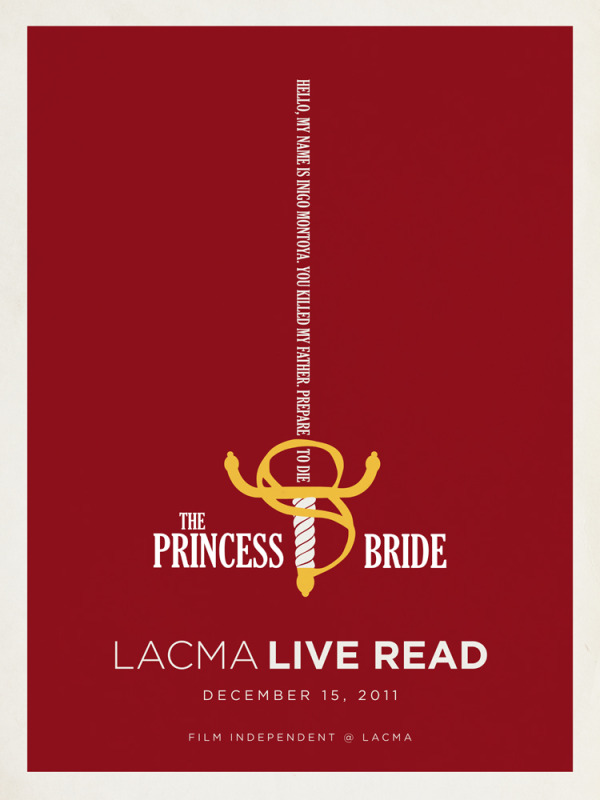
So here we are, 25 years after the release of this modest little movie which is just as popular and relevant as ever. Last December, director Jason Reitman staged a one-night only, unrecorded, live-reading of the script as part of a benefit series he’s been doing for the Los Angeles County Museum of Art. (Reitman’s amazing, It’s-Times-Like-These-I-Wish-I-Lived-In-Los Angeles LACMA series has also included readings of The Apartment, Reservoir Dogs, The Big Lebowski, Shampoo, The Breakfast Club and just a couple of weeks ago at the Toronto Film Festival, American Beauty).

In February, the Alamo Drafthouse in Austin held a Valentine’s Day screening and dinner with a Princess Bride-inspired menu.

There have already been a few special edition DVDs of the movie, and yet another version – with new special features – will be released on October 2 to commemorate the 25th anniversary.

The same day, Reiner and cast members will attend a screening of the film as part of the prestigious New York Film Festival.

Around this time last year, Entertainment Weekly reconvened most of the cast for a photo shoot and oral history as part of their annual Reunions issue. (Here are some video interviews from the shoot. It’s so great to see in this, and in the DVD extras that have come along, how much the cast still love the movie and how proud they are to be a part of something that has affected so many people so profoundly.)

And who could count the ways that individual fans around the world choose to honor the movie in their own lives. Surely The Princess Bride has been incorporated into many a wedding these last 25 years. Several years back, a friend of mine hosted a screening of the movie at her house that included a game of Princess Bride bingo. She made these great bingo cards (I still have mine) with quotes from the movie, and as we watched, we marked off when a quote came up. ‘Twas good fun.

In the oral history, Goldman and the Princess Bride herself, Robin Wright, talk briefly about the long casting process that was required to find the perfect Buttercup, but their comments barely scratch the surface. The search for Buttercup was a trying ordeal for casting directors Jane Jenkins and Janet Hirshenson, which they recount in their terrific book, A Star Is Found. I wish I could reprint the entire tale here, because it’s so well-told, but the short version is that Jenkins, who was handling casting for the film, saw dozens of beautiful young actresses who, for one reason or another, could not convey the right mix of qualities necessary for Buttercup. It was only out of desperation that she agreed to see Wright, who she remembered from a not-great audition a few years earlier. Yet when Wright arrived, Jenkins saw a more mature young woman than the one she’d met last time around. Now she saw someone who had come into her own, and who proceeded to give the reading that every previous auditioner had been unable to deliver. The exuberance Jenkins describes upon realizing she’d found her girl, and then conveying the news to Reiner over the phone, is palpable. She really makes you appreciate the difficulty of the search, and the rewarding feeling of finding the right match between actor and role. Jenkins and Hirshenson’s book is a great read for anyone interested in how casting works and how stars have been discovered, but the 14 page section about finding Buttercup alone merits picking it up.

Alright, I can’t put it off any longer…I was supposed to get to that one thing…the dark element of The Princess Bride that no one ever seems to talk about: that Westley is…I’m afraid it has to be said…kind of a dick.

Has this occurred to anyone else? Consider. When his dogged pursuit of Buttercup and her kidnappers pays off with Vizzini’s death, leaving them alone together and safe at last, what does he do? Does he rip off the mask to reveal himself and take her in his arms? No. He keeps his identity a secret, and treats her roughly, with condescension. As they flee across the rocky landscape, tracked by Prince Humperdinck, his contemptuous treatment only intensifies. At one point, he nearly slaps her across the face. (In the corresponding scene from the novel, he does strike her. He’s a little meaner, a little more insulting in the book.) While taking a breather, he admits to being the Dread Pirate Roberts, which leads to this exchange.

Having already sorrowfully described Westley as “poor and perfect, with eyes like the sea after a storm”, and after plainly admitting that she does not love Humperdinck, Buttercup’s feelings for Westley should be quite clear. Her sadness is evident. Yet still in that scene above, he attacks her, calling her faithfulness into question and accusing her of quickly and callously forgetting her love and moving on to Humperdinck. And he means it. He’s not putting on an act. He seems to regard her as a woman who discarded her love for him and went on with her life, just like that. So…where is he headed with his ruse? What if she hadn’t pushed him down that hill? What if they had continued running, gone around the Fire Swamp, made it back to Roberts’ ship Revenge and sailed away from Florin? How long would he have played his game? When would he have unmasked himself? And what would he expect when he did? Obviously when he falls down the hill and cries out “As you wish”, the game is up; she follows him down, lands nearby and at last they have their romantic reunion. His anger is forgotten, his behavior forgiven. But would it have gone so smoothly if he waited until he had her on his ship as a prisoner? Somehow I doubt it. What are his intentions? To punish her for as long as possible? To go on humiliating her until he feels like she’s suffered enough, then unmask himself and say, “Haha, just kidding. It’s me. I’m alive. Yay, true love! Kiss?” Is this how you treat the woman you love? It’s the uncomfortable truth tucked into Westley and Buttercup’s true romance that no one wants to acknowledge, but it’s right there, plain as day.

Perhaps we forgive this because we know that when it comes down to it, Westley really does love Buttercup and he really will always come for her. He will die for her. He does die for her. But so too does he come for her. That, along with knowing that she would kill herself rather than live life without him (and with that rotten Humperdinck), allows us to focus on their true love and, you know, forget that he treats her with extreme misogynistic hostility on the way to their happily ever after, and might have gone on doing so for a while had she not shoved his ass down a steep hill. But Westley is a charmer – so skilled and so smart that we overlook he can also be a bit smug and perhaps more than a little bit cruel. (Not to mention that he’s sailing around the seas in the guise of the most feared pirate there is, murdering people and stealing from them. But fine, I’ll let it go…)

So there’s that.

Now back to loving it anyway. Which its legions of fans do, as much as ever. Just as The Grandfather explains to The Grandson of S. Morgenstern’s book – that his father used to read it to him when he was boy and he used to read it to his son – those of us who grew up with the movie pass it on to the next generation. This is true of any movie people love, of course. They want to share it with their kids, nephews, nieces, etc. But there are a few that people seem particularly eager to bequeath, and I have to think that The Princess Bride is pretty damn close to Star Wars at the top of that list. Its timeless quality helps; other than the outdated video game The Grandson is playing in the first scene (which I remember had me thinking I must be in the wrong movie, even though it immediately followed the title card), there’s nothing whatsoever to date it or attach it to a specific period. In making a movie that satirizes fairy tales, Reiner succeeded completely in making one…and one that would live on with the best of them. So here’s to another 25 years of enjoying The Princess Bride. The humor still kills, the performances remain indelible and even Westley’s questionable behavior can’t stop the sweep of the love story. It’s a movie that is deservedly adored by everyone who’s seen it.

Whether or not they want a peanut.

Art By: Adam Juresko, Chad Trutt, Purple Cactus Design, Phantom City Creative, Mark Welser, Tom

August 14, 2012

It Was a Shark

Filed under: Movies — DB @ 12:19 pm
Tags: , , , , , ,

A few months ago, I wrote about this year marking my 25th anniversary as a tragic movie fan, and I cited the unexpected dramedy Nothing in Common as a movie that might have played a key role in my becoming such a fan…or at least in the timing of when it happened. The movie I write about here is one that most definitely affected my growing passion for movies, though it would be a few years after 1987 that its impact fully hit me. The movie was Jaws, and today it makes its debut on Blu-Ray disc.

I was probably 12 or 13 when I first took note of Jaws as more than just that shark movie I’d watch part of on TV with my dad. By then, my fascination with movies was all-consuming, and Steven Spielberg was more real a god to me than the one I was supposed to pray to in temple each week. From Close Encounters of the Third Kind through Raiders of the Lost Ark, Poltergeist, E.T., Gremlins, Indiana Jones and the Temple of Doom, The Goonies, Back to the Future, An American Tail, Innerspace, Who Framed Roger Rabbit and Indiana Jones and the Last Crusade, Spielberg was the name attached to some of my favorite movies. It was my curiosity about him that led me to understand what a director does, and what an executive producer is. And Jaws was the movie where I first realized there was a technique behind movies. If Nothing in Common first showed me the emotional impact movies could have, Jaws first showed me that what I was watching was the result of a camera being placed in a certain position and zooming in, panning across, etc. The picture was being deliberately framed in a certain way to convey information or to help tell the story somehow. I probably couldn’t have articulated it as such at the time, but I understood that there was a method at work. And I don’t think I’m overstating it to say that realization changed my life. From that point on, I watched movies through a new pair of eyes.

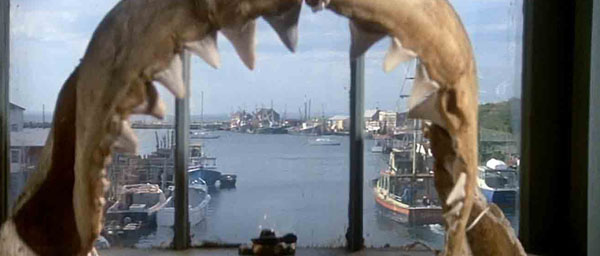
It’s not that I hadn’t been struck by shot composition at that point. I noticed when something looked “cool”, even in movies I hadn’t yet seen. I remember watching clips of The Untouchables on Siskel & Ebert and other movie shows, and noticing  interesting shots such as the low angle view of Kevin Costner, towering in the frame with an ornate domed ceiling above him. But Jaws made me aware not just of how shots could look good, but how they could work for the movie. When the Orca departs the harbor to head for sea, the scene is photographed from inside Quint’s workshop, the camera slowly pushing in on a window which itself is framed by a pair of gaping shark jaws, suggesting that our three heroes are heading into the belly of the beast. The first of the film’s major beach scenes, which climaxes in the death of Alex Kintner, also made me aware of filmmaking tools. The way Spielberg focused on a sitting Chief Brody and his view of the activity in the water, using passersby to serve as camera wipes from one shot to the next, or the famous dolly zoom shot depicting Brody’s reaction to the fountain of blood that erupts upon the shark’s seizure of Alex. The Fourth of July beach scene, which also climaxes with a shark attack – this one on a man attempting to assist a group of boys that includes Brody’s son – ends with a shot as simple but effective as Brody looking up in the direction of the now departed shark, and the camera pushing in to suggest the inevitable showdown that will occur in those waters.

The things I learned from the movie didn’t stop there. Long before any English teacher introduced the concept of foreshadowing in literature, I learned about it as it related to Jaws. It wasn’t the movie itself, but a book about Steven Spielberg that I found in the library which illustrated how the director employed this technique. There was the dog playing fetch with his owner during the first beach sequence. Before the shark surfaces for Alex, we see the owner calling out the dog’s name, answered only by the stick floating on the water. Later, toward the beginning of the Orca’s expedition, Brody has a close encounter with one of Hooper’s compressed air tanks, eliciting a warning from Hooper that if he’s not careful the tank could explode. Spielberg then reminds us of the tanks later on, when the shark rams the boat, knocking Hooper and Brody off their feet and causing Brody to lunge toward the tank to keep it from falling over. The shark’s eventual fate is actually telegraphed much earlier, when Brody is at home looking through books about sharks. Among the many pictures he stops to ponder is one in which a shark has some kind of cylindrical device – it almost looks like a small missile – in its mouth.

I realize that I’m not illuminating these things for anybody now; just pointing out that at the time I came to understand them, they had quite an impact on me.

The most significant example of foreshadowing, as I learned from this Spielberg book, was how Quint’s Indianapolis story makes his demise inevitable. His tale of surviving the shark onslaught that killed so many who had been on the U.S.S. Indianapolis after it was torpedoed by the Japanese establishes his history with these creatures, reveals his true motives and seals his fate. It also happens to be one of those legendary scenes in movie history, not only for Robert Shaw’s riveting delivery, but for how it came about in the first place. In fact, Jaws is one of those movies whose behind the scenes tales are as famous and engrossing as the finished film. It’s a movie for which the public’s fascination never abates, and I had fun digging into some of the lore as I prepared this piece. So beware: this post is about to spin out of control into a rambling potpourri of thoughts, observations, trivia, etc. about Jaws. Feel free to abandon ship.

Quint has always been a point of fascination for me. In fact, Robert Shaw as Quint might be my favorite movie performance ever, though I don’t know if I could ever really commit to so bold a claim. Forget the fact that Quint is just a great character to begin with, but what Shaw does with him always struck me as wholly unique. Quint is so authentically bizarre that I could never imagine that he existed on paper in any way close to how Shaw played him. The little songs he sings (“Farewell and adieu to you fair Spanish ladies…”) and poems he recites (“Here lies the body of Mary Lee, died at the age of a hundred and three…”), not to mention his many other random mumblings…basically everything about him. It always felt to me like there was no acting going on there. No writer had come up with this guy. He just showed up on set, fully formed.

I finally decided – as I was preparing to write this – that I would see how exactly Quint did exist prior to the movie. So for the first time, I read Peter Benchley’s novel on which Jaws is based. I didn’t know much about it, or how it might differ from the movie, other than being aware that the movie omitted a sexual tryst between Hooper and Ellen Brody. Thinking of the characters as played by Richard Dreyfuss and Lorraine Gary, it seems unlikely that they would ever get together. But the Hooper of the book is a much different character than the scruffy, bearded, genial guy portrayed by Dreyfuss. In the book, he’s clean-shaven and clean-cut, more WASPy and more openly flirtatious with Ellen, whom he knows from years earlier (she had dated his older brother when he was 10). The book puts a great deal of emphasis on Amity’s class differences, detailing a tense dynamic between the island’s blue-collar, year-round residents and the rich vacationers who come for the summer. It establishes that Ellen was once part of the latter, but her marriage to Martin Brody has removed her from that world, which she’s beginning to long for. Hooper represents a connection, and she pursues an affair with him. While Brody never becomes aware of the infidelity, he suspects it, and even before that he resents Hooper and his privileged status. They are not the fast friends in the book that they are in the film; their relationship is antagonistic throughout the novel.

The book also includes an organized crime subplot, in which Amity mayor Larry Vaughn is in trouble with some shady business partners, giving him an even more personal financial motivation to keep the beaches open and the summer money rolling in. The last significant difference between book and film constitutes a pretty big spoiler for people who may actually want to read the book, so I’ll hide the text and you can highlight it if you want to know. In the book, Brody is the only survivor of the final battle at sea. Hooper doesn’t escape the shark cage, as he does in the film. The shark busts through it and takes him before he can escape. When it surfaces, the lifeless Hooper is still clasped in its teeth. The deaths of both Quint and the shark play out differently as well. How the shark dies is actually unclear to me, but I think it’s the effect of multiple harpoon and stab wounds. Quint, meanwhile, isn’t eaten, but rather drowns when his foot gets caught in a rope attached to one of the barrels they fire at the shark. As the struggling fish swims wildly away, it takes Quint with it.

There are lots of other differences as well, but more in keeping with the normal types of changes that occur in the adaptation process. The role of the local newspaper man, Harry Meadows, is much larger in the book, while Mrs. Kintner’s encounter with Brody after her son dies is longer and angrier than the movie version. Something the book captures nicely which the movie doesn’t quite manage is how dire the effect on Amity will be if the summer tourist season fails. In the film, Mayor Vaughn is made out to be a bit of a villain, driven by greed to keep the beaches open despite the threat of the shark. “Amity is a summer town,” he tells Brody. “We need summer dollars.” But the movie doesn’t go much further than that, whereas the book lays plain that if Amity doesn’t make enough money in the summer, the town may literally not survive the lean winter. Businesses will fail, residents will have to move…Amity will become a year-round ghost town, and will never be able to recover.

Getting back to Quint, well, he’s certainly tough, terse and salty on the pages of Benchley’s novel, but lacks the distinctive personality he has in the film. Still curious as to how much of the performance sprung from Shaw’s own instinct vs. the screenplay, I fished around for that too. Benchley’s contract gave him first crack at the script, and the version he turned in was fairly different from both his novel and the eventual film. Producers Richard Zanuck and David Brown had already decreed that the sex subplot be removed so that the story could focus on the adventure of the shark hunt, so Hooper and Ellen’s fling was eliminated early. Quint’s role also had to be expanded. He features much more prominently in Benchley’s script than he did in the book, and he is painted as a pretty eccentric guy. Many of the specifics are different from what would ultimately be featured in the movie, but I give credit where credit is due: Quint was as colorful in Benchley’s script as he was in the finished film.

It was determined that more work was needed on the screenplay, so the next draft was written by Howard Sackler, who had written Stanley Kubrick’s first two features Fear and Desire and Killer’s Kiss, as well as The Great White Hope. Sackler had only a short time to work on the project, and apparently asked not to receive credit. From there, Spielberg hired a friend named Carl Gottlieb, casting him in the reduced-from-novel role of news reporter Harry Meadows as well. Gottlieb and Benchley received final credit for the screenplay. But as fans of the movie know, there were yet other writers involved. Stories have always swirled around the true author of the aforementioned U.S.S. Indianapolis monologue, and there still seems to be a lack of clarity. Spielberg has said, as recently as last year in an epic interview about Jaws that he gave to writer Eric Vespe (aka Quint) from Ain’t It Cool News, that Sackler was the first writer to introduce the Indianapolis story into the Jaws script. Yet the draft by Benchley that I referenced earlier  – supposedly the first draft to be turned in – features a short version of the tale. Who knows, maybe that script is a fraud, but the Indianapolis seeds are there. Check it out, and scroll way down to Scene 191. Either way, various versions of the story seem to agree that from there, Spielberg’s filmmaker friend John Milius took the speech and turned it into an epic, ten page stunner of a monologue. Then Robert Shaw, who was not just an actor but also an acclaimed novelist and playwright, took Milius’ speech and pared it down himself. Shaw’s version is what appears in the film. Supposedly. The full and complete genesis of the scene may never be known, but the end result speaks for itself.

Of course, I don’t know if any of the Jaws scripts floating around online can accurately reflect the finished product (unless they’re transcribed directly from that), since the film’s notoriously difficult shoot resulted in so much revision and improvisation. For anyone who might be interested, here’s another draft, credited to Benchley and Gottlieb. Although it’s much closer to the finished film, it’s still not exact, but it could be the actual draft that was turned in. Given how much new writing was done during production, there probably isn’t an official script that matches the final film. With shooting frequently delayed or impossible due to technical problems with the shark, evenings often found Spielberg, Scheider, Dreyfuss, Shaw, Gottlieb and editor Verna Fields working together to delve deeper into the characters and relationships. They would come up with new ideas and Gottlieb would generate new script pages, so the film was constantly evolving. It’s generally agreed that the problems with filming the shark are a huge part of the reason that the movie is so good. Had the mechanical behemoth worked perfectly, Spielberg probably would have featured it more prominently, which would have lessened the impact it had. By being forced to show the shark less often, Spielberg was able to make count the moments when it was onscreen.

Some of my favorite elements of Jaws have nothing to do with the shark. The movie basically consists of two parts. Part One takes place in Amity as the town deals with its unwanted offshore guest, while Part Two follows Brody, Hooper and Quint at sea. And although most people probably think of the movie for the scenes on the water – from the opening sequence with the attack on Chrissie to everything in Part Two – I’ve always loved Spielberg’s depiction of Amity throughout Part One. He captures the community so vividly, presenting such a natural and authentic portrait of the townsfolk and their chatter. A lot of the smaller parts were cast with local actors, many of whom stand out so clearly. Though she is uncredited in the movie and never mentioned by name, one of the more prominent townspeople is Mrs. Taft, a hotel owner, played by the perfectly named Fritzi Jane Courtney. Tell me that this lady doesn’t exist in every single town in America, serving on the City Council or the school committee for like, 50 years. There’s also the big guy with the checkered hunter’s cap and the camouflage jacket who greets Hooper when he arrives at the dock. (“Hello back…young fella, how are ya?”) I’ve seen this character referred to online and in writings as Ben Gardner, but I don’t know when that is ever established in the movie. Gardner is mentioned a few times, but never in connection with this figure. And of course, who could forget another of Jaws‘ great minor characters, the heavy fisherman who has a comic reaction to learning what kind of shark he and his buddies have just caught.

The presence of people like this, backing up the naturalistic performances of Scheider, Dreyfuss, Shaw, Gary and Murray Hamilton as Mayor Vaughn, helps make the first half of Jaws as memorable and rich as any of the scenes at sea. Of course, the cast might have looked a bit different from how it ended up. Though it’s hard to imagine anyone else playing Brody, Hooper or Quint, other names were in play. Spielberg is said to have wanted Robert Duvall to play Brody, but the actor wasn’t interested, preferring Quint. Spielberg didn’t think he was right for the part, so they parted ways, though apparently the director later admitted that he was wrong not to have seen Duvall could have been great as the Orca’s captain. As it was, he first offered Quint to Lee Marvin, who turned it down. Then he went to Sterling Hayden, who was unavailable. Producers Zanuck and Brown had just worked with Robert Shaw on The Sting, and thought he would make a great Quint. Shaw turned it down at first, reportedly calling the novel “a piece of shit”, but his wife convinced him to take the part.

Richard Dreyfuss was Spielberg’s first choice for Hooper, but the actor turned him down at least twice, saying that he would much rather watch Jaws than shoot it. But then he watched a pre-release screening of his most recent film, The Apprenticeship of Duddy Kravitz, and felt he was so terrible in it that if he didn’t have another job lined up before the movie came out, he might never be hired again. He begged Spielberg for the role, and the director was happy to comply. As for the part of Brody, Spielberg was having trouble finding the right actor, until he met Roy Scheider at a party. In author Nigel Andrews’ book about Jaws for the Bloomsbury Movie Guide series, Scheider recalls hearing Spielberg talking to someone about a project in which a shark would jump out of the water and land on the deck of a boat, cracking it in half. He thought they were crazy. A couple of months later, he says, Spielberg called him and asked him if he was interested in the part. Spielberg’s recollection is slightly different. In the Ain’t It Cool News interview linked above, he affirms that they met at a party, but says he was sitting on a couch and feeling a bit glum about his inability to cast Brody, when Scheider approached, introduced himself and asked why he looked so down. He says Scheider then suggested himself for the part, and Spielberg loved the idea, having enjoyed his performance in The French Connection. The actor did have concerns during filming that Brody came off as too weak and clumsy opposite Quint and Hooper, but he needn’t have worried. Brody is the audience’s surrogate, and as such we relate to him most easily. The film doesn’t disrespect him, but does derive humor from his aversion to the water and his lack of experience on boats. And he gets some of the best moments in the movie, from the shark’s first full-on appearance just beyond the chum bucket to the classic line that follows to the climactic showdown as the Orca sinks. Brody’s the fucking man.

Jaws became the highest grossing film in history during its initial run, and was the first movie to make over $100 million at the box office, ushering in – alongside The Exorcist and previous box office champ The Godfather – the blockbuster era. It has sometimes been denigrated for this, but in the 70’s more so than the decades that followed, great movies and box office hits were often one and the same. Like those two earlier movies, Jaws was based on a popular novel, and just like The Godfather, it is widely agreed that the movie improved upon and deepened an entertaining but soap opera-ish book. It went on to success at the Academy Awards, though it didn’t earn nearly as many nominations as either The Exorcist or The Godfather. Spielberg was actually being filmed by a TV crew on the morning the Oscar nominations were announced, and his reactions display good humor despite not being nominated himself and the movie not being recognized in more categories. (C’mon, how was Robert Shaw not nominated?!?)

It eventually went three for four, winning Best Sound, Best Film Editing and Best Score for John Williams’ classic music. It lost only Best Picture. In the wake of the movie’s success, obligatory and inferior sequels followed. Scheider was apparently under contract to return, but neither Dreyfuss, Shaw or Spielberg were involved. According to Nigel Andrews’ book, Spielberg toyed with the idea of doing Jaws 2 as a prequel, telling the story of the Indianapolis, but the idea never went anywhere. I don’t even know if it’s true. Andrews cites no sources for any of the information in his book, and Spielberg says in the Ain’t It Cool News interview that he had no ideas about what he might have done with Jaws 2, and that he couldn’t face the prospect of another ocean shoot anyway. However as this article from Den of Geek! neatly summarizes, several attempts have been made to film the saga of the Indianapolis, with J.J. Abrams and Robert Downey, Jr. among the more recent names attached.

There’s so much more to say about Jaws, but it’s already been said in books, magazines, documentaries, etc. For the truly obsessive, I came across this amazingly in-depth blog called A Mouth Full of Butcher Knives, whose author delves exhaustively into the film, first by comparing it to the novel in detail, and then by analyzing it scene by scene. It’s an ongoing project that he’s still in the middle of, but his knowledge and ability to explore the film in various contexts is seriously impressive. Any Jaws lover should give it a look. So really, what can I add? This post has already gone off the rails. The main points are: Jaws was a formative movie for me; it’s a classic that never loses its power; the Blu-Ray is getting rave reviews and you should check it out not only to enjoy the film itself, but to dig into the extras and learn about all the stories I’ve been recounting (plus more) from the people who actually experienced them. I don’t know how one DVD could contain it all. They’re gonna need a bigger disc.

August 9, 2012

Pixar: The Trap of Great Expectations

Filed under: Movies — DB @ 12:17 pm
Tags: , , , , ,

Two weeks ago, after too long a delay, I finally made it to see Brave, the latest from Pixar. I was unsurprised to find that it was a beautifully animated, engaging movie, and if it ranks somewhat low on my list of favorite Pixar flicks, that’s not because I had complaints about it but merely because there are others that I like even more. Pixar sets the bar pretty high, after all, which not only challenges other animated films to meet its standards, but also puts the studio in competition with its own reputation. Case in point: after opening on June 22 to a robust, first place weekend gross of $66 million, this article appeared in The Hollywood Reporter, stating that some financial analysts and Disney investors expressed concerns about the movie’s performance.

The piece quotes Doug Creutz, an entertainment and media analyst at the financial services firm Cowen & Company, saying, “While this was a fine performance in our view and assures Pixar of releasing another profitable film, we remain concerned that the creative direction of Pixar may be wobbling as Brave is now the second consecutive film to receive less-than-rave reviews.”

Upon reading that sentence, my thought was that this guy needs to pull his head out of his ass.

First off, take a minute to appreciate the amazing  – I have to think unprecedented – run Pixar has had, both creatively and financially. 13 films that so far have grossed a total of over $3 billion dollars. The lowest grossing of them, 1998’s A Bug’s Life, made nearly $163 million. Not too shabby. The most poorly reviewed of them, Cars 2, may have received only 38% on Rotten Tomatoes and a 57 on Metacritic, but still grossed $191 million (and frankly, wasn’t nearly as bad as its detractors would have you believe). Brave‘s Rotten Tomatoes score is 77%, its Metacritic score is 69 and so far it has taken in about $224 million at the domestic box office and has yet to fall out of the top ten highest grossing movies currently playing. (That will probably happen this weekend.)

True, these box office numbers and aggregate review scores may be on the low-end for Pixar, but what that should really illustrate is how superhuman a studio it is. The run of success they’ve enjoyed from the start is something to marvel at, not use as fodder for unwarranted concerns the minute numbers dip slightly. With the exception of maybe The Beatles, nobody can sustain so impressive a streak. Creutz is concerned because Brave received “less-than-rave reviews”? For a guy who’s supposed to be an expert at analyzing the field of entertainment, he doesn’t seem too aware of the industry’s realities. The rapturous reactions to previous Pixar movies have spoiled people like Creutz to the norms of the movie business, and the studio’s good fortune deceives people into thinking that Pixar’s creative team has some kind of crystal ball and that they just know what’s going to work. Such assumptions make snappy lines for movie critics who begin their reviews by saying, “The wizards at Pixar have done it again”, but I’ll let you in on a little secret. Come, lean in close, I don’t want to say it too loud.

They’re not actually wizards.

They’re only human. Extremely talented and gifted humans, but still prone to the same ups and downs as the rest of us normal schmucks. And that means that their efforts to tell the best stories they can in the best way they can are not always going to yield unanimously glorious reviews, record-breaking box office and a stash of awards. It means they might have to settle for mostly positive reviews, perfectly respectable box office and maybe just some award nominations. Perish the thought. Pixar being called into question by number crunching putzes like Doug Creutz is more offensive than the stench of Brave‘s pitiable 77% positive Rotten Tomatoes rating. Considering that the only creativity Creutz and his ilk probably ever practiced involves coming up with new ways to make money, they should keep their mouths shut when it comes to criticizing filmmakers who have displayed, time and time and time again, a gift for telling stories that resonate with audiences of all ages and across cultures. Though I don’t think Creutz and the other concerned investors and analysts were discussing Brave‘s performance together in the conference room at some Wall Street skyscraper, I’m reminded nevertheless of that superb, cutting quote from The Social Network, where Mark Zuckerberg is in a deposition responding to the opposing attorney. “The rest of my attention is back at the offices of Facebook, where my colleagues and I are doing things that no one in this room, including and especially your clients, are intellectually or creatively capable of doing.” It’s that part about “doing things that nobody in this room is intellectually or creatively capable of doing.” That’s what I’d say to Creutz and his skeptical colleagues; that they have no clue what it takes to make a movie, let alone make one that works. At the end of the day, it’s a lot of luck, and even The Wizards at Pixar can only try their best and hope the end result connects with audiences.

Pixar was bound to stumble eventually, and with Cars 2, it finally happened. Brave may not be their biggest hit or their best reviewed movie, but it’s a fine piece of work that its crew can be proud of. Their upcoming slate – which includes a prequel to Monsters, Inc., three original projects and a follow-up to Finding Nemo – will likely perform perfectly well in terms of box office success, and will probably do okay critically too. And if not all of them hit the heights of Toy Story 3, Finding Nemo, or Up – their current top three grossers, as well as Oscar winners with A+ Rotten Tomatoes scores – well maybe that doesn’t mean that the studio has fallen on hard times. If their next three movies all underperform commercially and critically, then we can talk. Until then, dipshits like Creutz should get back to their spreadsheets and leave the creative work to the people who have proven they know how to do it.

(All references to box office receipts are taken from Box Office Mojo.)

« Previous PageNext Page »

Blog at WordPress.com.