 A couple of months ago I wrote about Hollywood’s bad habit of making unnecessary sequels. Not long after, I wrote about another bad Hollywood habit: its obsession with remakes. Now I’m writing a Part II to the remake piece, and perhaps some of you, after reading/skimming/skipping the initial post, will deem this an unnecessary sequel. But with all the remakes in the works, I thought it worthwhile to take a closer look at some of them, and it seemed like that would be better suited to its own post. So here is my sequel to my post about remakes. I might have officially become the thing I loathe. Oh, the humanity.
First, I want to mention last week’s release of Carrie, a remake I discussed in Part I. Despite a robust marketing campaign that included heavy promotion during thematically appropriate shows like The Walking Dead, and despite the proximity to Halloween, the new version of Brian De Palma’s horror classic (based on Stephen King’s novel) didn’t make much of an impression. Reviews were mostly negative and the box office was disappointing. I suspect that will be the case with many of these if they see the light of day, as it has been with so many before. But Hollywood doesn’t seem to get the message. So what follows is a rundown of several remakes currently in development. More than a mere list of projects though, you also get my thoughts on whether the remake is a good idea or a bad. That’s the sort of thoughtful, expert analysis you’re paying for as a subscriber to this blog.
What do you mean you’re not paying for this?
To properly rate the “remakability” of these movies, I’ve created a system of measurement. In another recent post, Movie Mixtape #1, the 1985 Richard Pryor movie Brewster’s Millions was discussed, and my friend Brantley pointed out that it had been made seven times prior to Pryor. With that in mind, the following remakes in development are rated on The Brewster Scale, with one Brewster indicating that the remake is a terrible idea, and five Brewsters meaning the movie is a prime candidate for another try.
Let’s see what we’ve got…
 ALL OF ME (1984, Director: Carl Reiner)
Steve Martin’s work as a lawyer who loses control of the right side of his body to the consciousness of a wealthy, dying woman (Lily Tomlin) is often referenced as one of the greatest performances of physical comedy ever. The proposed twist for the remake is to switch the genders, with a woman becoming partly overtaken by a man’s soul. Enough reason for a re-do? Not really. It might provide a nice showcase for a comedic actress, but how refreshing it would be if Hollywood studios and screenwriters took up the challenge of writing an original piece that offers such a showcase, instead of lazily adapting an existing property that stars two comedy icons.
Remakability:

X
 BEN-HUR (1959, Director: William Wyler)
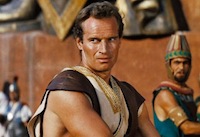
One of the greatest cinematic epics of all time. Winner of 11 Academy Awards. An undisputed Hollywood classic. So let’s take another crack at it, shall we? I mentioned in Part I that the Charlton Heston film was not the first adaptation of the 1880 novel about the Christ figure Judah Ben-Hur; it was previously filmed in 1925 and 1907 (the latter being a 15 minute short focusing mainly on the chariot race). But Wyler’s version is certainly the definitive take, and I’m not sure why anybody would try to out-do it. Remember the 2010 TV miniseries adaptation that aired on ABC? No, of course you don’t. A similar fate likely awaits whatever new version attempts to top Wyler’s. But plans are moving forward. Just yesterday, it was announced that John Ridley, who wrote the script for the rapturously reviewed new movie 12 Years a Slave, will handle scripting duties on Ben-Hur, which will be more faithful to the original book than Wyler’s movie. Yeah…we hear that justification all the time. Rarely does it prove true. To really put the absurdity of this remake in perspective though, look at who’s been hired to direct it. Timur Bekmambetov, whose hyperkinetic classics include the Angelina Jolie action flick Wanted, and last year’s Oscar winning biopic Abraham Lincoln: Vampire Hunter. Do yourself a favor: read the first paragraph of New Yorker critic Anthony Lane’s review of Wanted. In one short paragraph, he brilliantly encapsulates Bekmambetov’s bombastic style. This is the guy that MGM has chosen to take on William Wyler. Facepalm.
Remakability:

X
 THE BLACK HOLE (1979, Director: Gary Nelson)
After Star Wars exploded, every producer and studio in Hollywood wanted a slice of the sci-fi pie, and Disney’s contribution was this cheesy but effectively creepy tale about a scientist aboard a vessel thought to be missing, who plans to conduct an experiment by taking the ship into a black hole. The cast included Maximilian Schell, Anthony Perkins, Robert Forster and Ernest Borgnine, but what I remember most from seeing the movie as a kid are the robots: the R2-D2-esque V.I.N.CENT and the foreboding Maximilian. The Black Hole was an interesting venture for Walt Disney Pictures. No other film they’d produced had depicted human deaths or any sort of profanity, and because this featured both, it became the studio’s first PG movie. Yet it was still a Disney film, so it couldn’t push the darker elements of the story as far as they might have gone. Joseph Kosinski, the director of Tron: Legacy and Oblivion, is attached to the remake, which is being written by Prometheus co-writer Jon Spaihts. Kosinski’s impressive visual sensibility, combined with the freedom to explore and indulge the sinister side of the original, makes The Black Hole a rare specimen that could benefit from a new version.
Remakability:
X
 THE BODYGUARD (1992, Director: Mick Jackson)
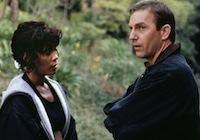
The original film has a firm place in popular culture, though probably due more to Whitney Houston’s soundtrack — powered by the chart-topping phenomenon “I Will Always Love You” — than to the movie itself, which was poorly reviewed. It was a big hit, earning $121 million in the U.S., but much of that was likely due to timing. Kevin Costner was still such a huge star at the time that even the haircut everyone hated couldn’t trim their enthusiasm, and Houston hadn’t yet begun her decline into drugs and bad behavior. The movie surely has a lot of fans who remember it fondly from their teenage years, but a remake could potentially improve on the story. Apparently the protector in this version will be an Iraq war veteran, and the plot will involve internet stalking. Put Channing Tatum in this thing and you might just have something.
Remakability:

X
 THE CANNONBALL RUN (1981, Director: Hal Needham)
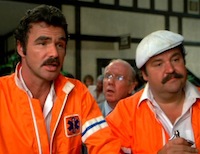
While it absolutely holds a special place in my memories of childhood, this comedy about a cross-country car race isn’t exactly hallowed ground. However I’m fervently opposed to this remake as it was originally conceived back in 2011 because it was essentially intended as a feature-length commercial for General Motors. There hasn’t been any news about the project since then, and if it is still in development, it’s possible that the parameters of the deal have evolved and that GM is no longer financing it. Still, the original film has such a great, fun cast — Burt Reynolds, Dom DeLuise, Sammy Davis Jr., Dean Martin, Jackie Chan, Roger Moore, Farrah Fawcett, Jack Elam…can the movie’s charm be reproduced? It’s been a long time since we’ve had a star-packed, Mad, Mad, Mad, Mad World type of film. It would be nice to see a new one that does its job well, but it better be more than a prolonged advertisement.
Remakability:

X
CLUE (1985, Director: Jonathan Lynn)
A cult comedy classic based on the Parker Brothers board game (my personal favorite of all the boarded games, sorry Sorry!), the original is a dumb comedy, but a hilarious dumb comedy. Its sensational cast remains impressive, with Christopher Lloyd, Tim Curry, Martin Mull, Lesley Ann Warren, Michael McKean and the dear departed Eileen Brennan and Madeline Kahn all clicking superbly. C’mon, do you really think you can compete with this?
Efforts to develop this remake are headed up by Gore Verbinski, the director of Pirates of the Caribbean, Rango and The Lone Ranger. And despite the whole premise of Clue involving a murder mystery in a large mansion, one of Verbinski’s producing partners seems to envision it as “a global thriller and transmedia event that uses deductive reasoning as its storytelling engine.” I don’t even know what that means, but I know it’s not Clue. File this one under the Battleship Syndrome: exploiting a familiar property for name recognition but doing something that in fact has nothing to do with that property or what people enjoy about it. If someone wants to bring Clue back to the screen, they should try adapting the Steven Millhauser short story “A Game of Clue”, which moves between a family playing the game and the characters inside the game, with each group experiencing tension and conflict (including Col. Mustard’s attempted seduction of Miss Scarlet). I didn’t actually love the details of that story, but I like the idea. Why not use that as a loose springboard for a new movie that is a little more unconventional, but at least original? Well…original aside from the whole “based on a short story” part. I’d enjoy seeing that. But anyone attempting a straight-up remake deserves to be killed with the lead pipe in the billiard room by me.
Remakability:
X
 THE CROW (1994, Director: Alex Proyas)
James McAvoy has been connected to this remake of the supernatural thriller that gained notoriety when star Brandon Lee — son of Bruce — died in an accident on set. It’s got a pretty cool, dark fantasy/thriller premise, but the original was generally well received and has retained some cult classic status. The tragic death of its star lends it some additional weight as an object of modern movie lore. What’s the point of going back to the well?
Remakability:
X
 DEATH WISH (1974, Director: Michael Winner)
Charles Bronson starred in this movie (and its four sequels) about a man who turns vigilante, hunting down the criminals who attacked his family. The premise is pretty straightforward, and we’ve seen it many times, including such recent films as The Brave One, with Jodie Foster in the Bronson role, and Liam Neeson’s Taken. There is a certain satisfaction audiences seem to take in watching a good person who has been wronged exact violent revenge, so the idea has ongoing merit. But it’s for exactly that reason that a remake is unnecessary. What value does the Death Wish title hold for anyone? If we have to see yet another story like this one, there’s no need to invoke an old title. This one ranks low on the Brewster Scale not because the original is sacred, but because a remake feels moot. And if there’s any truth to the report that producers want Bruce Willis to star, that’s all the more reason for me to wish death on this whole idea. Willis would sleepwalk his way through a by-the-numbers movie like this.
Remakability:

X
 DIRTY DANCING (1987, Director: Emile Ardolino)
The original was a huge sleeper hit whose popularity endures to this day. Which is why remaking it is a fool’s errand. The movie clicked with audiences at the time and has become something that one generation of fans hands down to the next. It captured something magical, and that’s not going to happen again. It was already remade once, and failed to connect. Okay, Dirty Dancing: Havana Nights was technically a sequel, with Patrick Swayze cameoing, but it was basically the same plot in a different location with new characters. If it didn’t work then, why does anyone think it will work now? People’s love for the original is all about the music and the chemistry between Swayze and Jennifer Grey. Even with the original film’s choreographer Kenny Ortega now in the director’s chair, this is a bad idea. Let’s keep this one in the corner.
Remakability:

X
 ESCAPE FROM NEW YORK (1981, Director: John Carpenter)
I led off Part I with news that the longtime effort to reboot this cult classic was given new life earlier this year. Producer Joel Silver wants to do a reboot trilogy, with at least the first chapter taking place before the events of the original, perhaps depicting how New York fell in the first place. This article likens the approach to Rise of the Planet of the Apes, which was a surprisingly impressive addition to that long-running series. It’s not necessarily a bad idea, and let’s be honest: Escape from New York is not as good as its cult status might have you believe. On the other hand, Kurt Russell is rightfully iconic as Snake Plissken, and I have no interest in seeing another actor play that part…especially when we don’t see enough of Russell himself these days. Here’s a crazy idea: instead of remaking yet another John Carpenter movie, why not give that money to Carpenter himself and let him make something new?
Remakability:
X
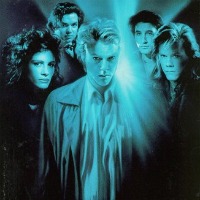 FLATLINERS (1990, Director: Joel Schumacher)
This thriller had a decent premise, but despite that and an impressive cast — Julia Roberts (fresh off Pretty Woman), Kiefer Sutherland, Kevin Bacon, Oliver Platt and William Baldwin — the movie hasn’t retained a strong pulse. The five stars play medical students who attempt to bring each other to the brink of death in order to glimpse the great beyond, then revive each other before they actually cross over. Turns out there are some pretty intense side effects. Director Niels Aren Oplev, who helmed the Swedish version of The Girl with the Dragon Tattoo, might be directing. Is there a better movie to be made from this concept? Possibly. Can I see audiences caring? Not really.
Remakability:

X
 FLIGHT OF THE NAVIGATOR (1986, Director: Randal Kleiser)
This somewhat forgotten sci-fi adventure from Walt Disney Pictures had a pretty cool story. The short version: a 12 year-old boy falls down a ravine in the woods near his house and is knocked unconscious. When he wakes up a few hours later and goes home, he discovers that it’s not a few hours later at all. Eight years have passed, and he hasn’t aged a day. Meanwhile, NASA scientists are attempting to investigate a crashed spaceship, and it soon becomes apparent that the boy’s fate is tied to that of the mysterious ship. Soon, he finds his way to the craft and must team up with its robot pilot so they can both get home. I liked the movie, but even as a kid I thought there were some hokey things about it. While I have friends who remember it fondly, it doesn’t appear to have retained the wider nostalgia factor of similar 80’s movies like The Last Starfighter, Young Sherlock Holmes or Explorers. But the story is intriguing enough to deserve a second shot. As of last fall, the team of director Colin Trevorrow and writer Derek Connolly, who made the indie hit Safety Not Guaranteed starring Aubrey Plaza, Mark Duplass and Jake Johnson, were set to provide the script, with Trevorrow possibly directing. I don’t know if the project is still on their plate now that they are working on the new Jurassic Park movie, but based on Safety Not Guaranteed, they seem like a good fit for an updated Navigator.
Remakability:

X
 GREMLINS (1984, Director: Joe Dante)
Now someone is pissing me off. This is early enough in development that it might never come to pass, so I’m crossing my fingers that it fails to come together. The Steven Spielberg-produced original requires no updating or fresh approach, and the fact that somebody would waste money on a remake that no one wants or needs while the great Joe Dante, director of the original, can’t seem to get funding to make a new movie of his own, is maddening. The potential remake is currently in the hands of producers Seth Grahame-Smith and David Katzenberg (son of Jeffrey), though Frank Marshall, who co-produced the original, says the project could most likely not move forward without Spielberg’s approval. So far, there’s no indication that Spielberg has given his blessing, (or that he’s even been asked for it). I can only hope he has the good sense to put the kibosh on any such requests.
Remakability:
X
 HEAT (1986, Director: Dick Richards)
I knew almost nothing about the original film when this news came up, and all I know now is that it starred Burt Reynolds and was written by the great William Goldman (Butch Cassidy and the Sundance Kid, All the President’s Men, The Princess Bride), based on his novel. Brian De Palma was initially set to direct the update, in which Jason Statham will play a recovering gambling addict who works as a bodyguard. Now De Palma is out and Simon West (Con Air, Lara Croft: Tomb Raider) is in. The original film doesn’t seem to be all that well-known, which maybe makes it a respectable candidate for remaking. Then again, the plot description doesn’t sound unique or compelling, and to emphasize the pointlessness of it all, Goldman is once again writing the screenplay. A remake could make sense given the low profile of the original, but the formulaic set-up leaves me cold.
Remakability:
X
 HIGHLANDER (1986, Director: Russell Mulcahy)
Why are people still trying to squeeze life out of this franchise? The first film has respectable cult classic standing, but only diehards were interested in the four subsequent films, the last of which went straight to a TV premiere. The syndicated TV series that aired from 1992-1998 occupies a place of honor in that world of Xena and Hercules fans, but why the insistence on trying to revive something that time has treated with indifference? Already, this remake has had a troubled history. Two directors have dropped out (Justin Lin and Juan Carlos Fresnadillo), and Ryan Reynolds — attached to play Connor MacLeod — has departed as well. Of the immortal highlanders, it is famously said, “there can be only one.” That should have gone for the series too.
Remakability:
X
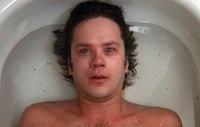 JACOB’S LADDER (1990, Director: Adrian Lyne)
Why do we need a new version of this? The original, in which Tim Robbins plays a Vietnam veteran suffering hallucinations that threaten to consume him in 1970’s New York, has a respectable reputation as a psychological horror film. It wasn’t a huge hit, so the desire to remake it can’t be attributed to exploiting a brand name property, but neither was it poorly reviewed enough to suggest that a new version could improve upon a promising but poorly executed concept. It may not have lit up the box office, but it developed a following on home video. So…why? According to this article, the remake would “examine the themes of the original against a contemporary backdrop” Translation: 1990 was a really long time ago, so we’re going to make this movie again and even though it will be pretty much the same, it will be more relatable because we’ll set it in the present day. It will feel really different because this time Jacob will be a veteran from Iraq or Afghanistan! What a crazy twist!!
Remakability:
X
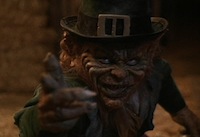 LEPRECHAUN (1993, Director: Mark Jones)
Yes, you’re reading this right. The low budget horror-comedy about a leprechaun leaving a trail of bodies in his wake as he searches for his stolen pot of gold, has been targeted for a remake. It’s planned as a co-production between the movie studio Lionsgate and World Wrestling Entertainment, who plan to cast WWE star Dylan “Hornswoggle” Postl in the title role, originated by Warwick Davis (best known as the star of George Lucas’ Willow, and for playing Return of the Jedi‘s Wicket the Ewok and Professor Flitwick in the Harry Potter films). It could be argued that B-movies like Leprechaun are exactly the kind that should be remade, since they can almost certainly be improved upon. But how much better can a movie about a homicidal Irish fairie be? The existing film is exactly what it should be, and anyone aspiring to do something more legitimate with it is chasing a pot of fool’s gold. Think they’ll be able to convince Jennifer Aniston, who starred in the original, to do a cameo?
Remakability:
X
LITTLE SHOP OF HORRORS (1986, Director: Frank Oz)
This would seem like a one-Brewster no-brainer, but it’s a little trickier than that. I love this adaptation of the 1982 off-Broadway production written by Howard Ashman and Alan Menken, the brilliant duo who would go on to success and multiple Oscars with Disney’s The Little Mermaid, Beauty and the Beast and Aladdin before Ashman’s untimely death. The idea of a remake — especially by a smart, talented guy like Joseph Gordon-Levitt — initially made me as bloodthirsty as the plant at the story’s center. But there are two reasons why it might be acceptable. First, the movie omitted several songs from the play, making it a somewhat incomplete version. Second, the original ending was famously rejected by test audiences, prompting an entirely new finale which made dumbass viewers happy but which completely removed the Faustian element from the story…which kinda defeats the purpose. The movie was released on Blu-Ray last year with the original ending included among the special features. It’s nice to finally have that officially available. There was a rough, black and white version floating around for a while on an earlier DVD that was recalled by producer David Geffen because the inclusion of the original ending had not been authorized.
So…if a remake included the songs that never made it to the screen, and if the movie retained the play’s darker ending, then there might be good enough reason to give it a shot. I don’t know if it could be better in the end (I mean, how are they gonna top Steve Martin’s version of “Dentist!”), but it would have enough new material to justify the endeavor.
My Brewster Scale rating is based on these two changes. But without both of them, the new filmmakers are just trampling on a classic for no reason. Oh, and one other deal breaker: if they use CGI to create Audrey II instead of going with a puppet, all bets are off.
Remakability:
X
 THE MUMMY (1932, Director: Karl Freund; 1959, Director: Terence Fisher; 1999, Director: Stephen Sommers)
That’s right. A fourth reboot of The Mummy. The first was an Old Hollywood classic starring Boris Karloff. The second, from Britain’s famed horror film factory Hammer Studios, starred house stalwarts Christopher Lee and Peter Cushing. The third was a tongue-in-cheek, CGI-fueled adventure starring Brendan Fraser and Rachel Weisz. There have been sequels, spinoffs…can we give it a rest already? Universal Pictures announced last fall that the latest version would be directed by Len Wiseman, whose utterly mediocre directing career — in addition to being practically interchangeable with Sommers’ — boasts two Underworld movies, Live Free or Die Hard and the instantly forgettable Total Recall remake mentioned in Part I. His only impressive accomplishment in show business has been marrying Kate Beckinsale. The new Mummy he has been placed in charge of will attempt to distinguish itself from earlier versions by being set in the present day. Well, I’m sold. (Maybe they can combine it with Jacob’s Ladder. ) A new location or time period is not going to prevent this from being just another hollow exercise doused in numbing visual effects. Oh, but here’s the best part: Universal is apparently so impatient to get this thing going that they have hired two writers to work simultaneously on their own versions of the script, with an eye toward taking the best of both and mashing them together. Isn’t that how The Wizard of Oz was written? No no, it was Jaws. Wait, no, it was no decent movie, ever.
Remakability:
X
 POINT BREAK (1991, Director: Kathryn Bigelow)
Yes, before she became the Oscar-winning director of prestige films like The Hurt Locker and Zero Dark Thirty, Bigelow worked on genre flicks and actioners like Near Dark, Strange Days and this cult classic about surfing, skydiving bank robbers and the FBI agents trying to catch them. You could argue that this is a good candidate for remaking, since the original is kind of cheesy. Thing is though, it’s because Point Break is cheesy that anyone still remembers it affectionately. The movie’s entire cultural relevancy lies in the fact that it’s so silly it’s awesome. If the remake’s producers are aiming to legitimize it a bit, then they’re missing the point. But maybe their problem is that they don’t see the movie for the half-joke that it is. “Point Break wasn’t just a film,” enthuses producer Michael DeLuca. “It was a Zen meditation on testosterone fueled action and manhood in the late 20th century and we hope to create the same for the young 21st!” Good grief. Meanwhile, producer Andrew Kosove wants to be clear that the new movie will not be a mere carbon copy of Bigelow’s. “This is the thing — surfing is a part of it, but I will tell you that we believe firmly, in terms of remaking a film like this, we’ve got to make it fresh. [Our Point Break] has got elements of the original and it’s not just surfing, it’s other kinds of extreme sports, but surfing is very, very prominent in the story.” Ohhhhh, it’s not just surfing! They’re incorporating other extreme sports! Well, with such a wildly original take on the material, I’m sure this will be money well spent.
Remakability:
X
 POLICE ACADEMY (1984, Director: Hugh Wilson)
Like a lot of these movies, it can be hard to make a call. On one hand, my own nostalgic feeling for the movie (and Police Academy 2: Their First Assignment, the first of six sequels) prompts me to reject any notions of a remake. On the other hand, it’s not like we’re talking about a revered classic that couldn’t possibly be undertaken. But also like a lot of these movies, there doesn’t seem to be much point. Directing reins have been handed to a guy named Scott Zabielski, a producer and director on Comedy Central’s popular Tosh 2.0. I have no reason to think he’ll make a movie that is notably better than the still funny original with Steve Guttenberg. The only way I can see a remake having strong commercial prospects is if the ensemble were headed by a star with a strong following. If Adam Sandler or Zach Galifianakis came onboard, a remake might generate interest. Without the presence of a star who can pop, I’d say commercial prospects are iffy. And even with the right star, it still strikes me as a waste of money. I mean, Jesus…there were seven of these movies already. Does the world really need more Police Academy?
Remakability:
X
 REBECCA (1940, Director: Alfred Hitchcock)
Steven Knight, the writer of such terrific films as Dirty Pretty Things and Eastern Promises, would probably do a bang-up job adapting Daphne du Maurier’s novel about a young woman who moves to Manderley, her new husband’s estate, where she finds herself haunted by the memory of his deceased first wife. But remaking an old movie just to attract a new audience can’t be automatically permissible. The movie itself has to be considered. If it’s little known or almost entirely forgotten, then a remake might be understandable. On the other hand, if it’s one of the best films by one of the all-time best directors (and a Best Picture winner at the Oscars to boot), then not so much. The Hitchcockiness of Rebecca outweighs the old-timey, black-and-whiteness of Rebecca, making it a sacred text that should be left alone. If you’ve never seen the original, starring Laurence Olivier, Joan Fontaine, George Sanders and Judith Anderson as Manderley’s formidable housekeeper Mrs. Danvers, it’s well worth your time just as it is.
Remakability:
X
 THE ROCKETEER (1991, Director: Joe Johnston)
Sure, this old-fashioned adventure didn’t become the hit Disney hoped it would be, but it’s terrific fun with style to spare and a spot-on cast that includes Timothy Dalton, Jennifer Connelly, Alan Arkin and Terry O’Quinn. It has plenty of devoted fans, and I can’t imagine it being done much better than it already was. This article points out its similarities to Iron Man, which I would wager are more likely to hurt a new version than help it (there’s also a valid Captain America comparison to be made). Sometimes, good movies fail to connect with a broad audience. That doesn’t mean you should pour millions of dollars into remaking them. If anybody can sell a product, it’s Disney. How about a re-release backed by an aggressive marketing campaign?
Remakability:
X
 SCARFACE (1932, Director: Howard Hawks; 1983, Director: Brian De Palma)
Really, Universal? You’re planning a third version of the classic story about a gangster’s rise to power? Talk about a pointless endeavor. De Palma’s version with Al Pacino as Tony “Say Hello to My Little Friend” Montana has lost none of its swagger, and remains enthusiastically celebrated to this day. In what world does anyone shepherding this project think they’re going to replace or even duplicate the cultural significance and popularity of the De Palma/Pacino collaboration? The undertaking itself is stupid enough, but it was recently announced that soft-spoken British director David Yates is likely to direct. Yates is a fine filmmaker who, for the most part, impressively handled the last four Harry Potter films, but he could not be more wrong for material like Scarface. Nothing he’s done has displayed evidence of the revved-up energy a movie about an ascending drug kingpin calls for; on the contrary, his style has been known to sap the energy out of scenes that really needed it. The script is in better hands, having been initially written by David Ayer (Training Day, End of Watch) and re-written by Paul Attanasio (Donnie Brasco, Quiz Show, TV’s Homicide: Life on the Street), but with all due respect to David Yates, he’s not the guy to tackle this material…which shouldn’t be tackled in the first place.
Remakability:
X
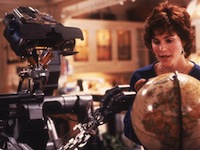 SHORT CIRCUIT (1985, Director: John Badham)
This one has been in development for a while, and the intention is to make the new Johnny 5 (if that’s what they even call him) more threatening than the kindly original that befriended Ally Sheedy. But if they stick with their plan to redraw Sheedy’s character as a teen or younger child, there’s only so much threat the robot can pose. No surprise, they also want to root the movie in a more contemporary view of warfare technology, where drones are employed to do our dirty work for us. If they can strike the right balance between commentary and fantasy, it might be okay. But as with many of these remakes, the question is not just whether or not the original merits a new approach, but also whether audiences can be expected to show up. I have a hard time imagining that a new Short Circuit would do much business.
Remakability:
X
 SOAPDISH (1991, Director: Michael Hoffman)
Paramount execs should have their mouths washed out for even discussing something as offensive as remaking this superb, underrated comedy. Even with a funny guy like actor/writer Ben Schwartz (Parks and Recreation‘s Jean-Ralphio) given the script assignment, there’s no way they’ll come up with a funnier movie than what Hoffman and writer Robert Harling achieved with this little nugget of hilarity, featuring great work from Sally Field, Kevin Kline, Robert Downey Jr., Whoopi Goldberg, Elisabeth Shue, Cathy Moriarty, and Teri Hatcher. Sure, there might be additional jokes to mine from the story, which goes behind the scenes of a daytime soap opera and reveals the lives of the cast and crew to be more melodramatic than anything on the show. But this will just wind up being a watered down retread at worst, and at best a funny but derivative waste of millions of dollars. Do yourself a favor and just watch the still sparkling original.
Remakability:
X
 STARSHIP TROOPERS (1997, Director: Paul Verhoeven)
C’mon people, the movie isn’t even 20 years old! It stars Neil Patrick Harris, for God’s sake! This one is another brilliant idea from fucking Neal Moritz, who I discussed in Part I (and even further back than that) and who also gifted us with that lousy remake of Verhoeven’s Total Recall last year. There have been no updates about Troopers since that Recall tanked last summer, so we can only hope that maybe the project has been shelved. If it’s still in development, the intention, according to co-producer Toby Jaffe, is to make the movie a more faithful adaptation of the Robert A. Heinlein novel on which the original was based. Again, this is a common refrain among people who remake movies that were based on books in the first place. I find it rare, however, that initial adaptations deviate so drastically from their source material that a new film interpretation feels fresh or different. Basically, everything Jaffe says suggests all that was fun in Verhoeven’s film will be removed from the remake. Sounds like a blast. I’d love to drop Neal Moritz and Toby Jaffe into the middle of the planet inhabited by Troopers‘ giant killer bugs, so they could meet horrible, slimy deaths.
Remakability:
X
SUMMER SCHOOL (1987, Director: Carl Reiner)
Mark Harmon starred in this breezy comedy as a high school gym teacher whose vacation plans go up in smoke when he gets roped into teaching remedial English over the summer to a group of generally sweet but failing students. The original is still an enjoyable lark, so I don’t see the point in a new version. Surely all the complex themes found in this movie can be explored via a new, original story. Maybe there’s a reason the remake has been stuck in development hell for eight years. Besides, the premise would now be completely implausible; what public school in the country could afford to keep its doors open in the summer these days? As it is, the movie was ahead of its time: it got a PG-13 even with Chainsaw and Dave’s staged classroom massacre.
Any effort to top that would surely land the movie an R, making it off-limits to all those teenagers who can’t wait to see a remake of the movie with that guy their dad watches on NCIS. So much lost revenue…
Remakability:
X
 THE TOXIC AVENGER (1984, Directors: Michael Herz, Lloyd Kaufman)
Leprechaun isn’t the only B-movie title being prepped for a remake. This cult classic about a weak, nerdy janitor who falls into a vat of toxic waste while fleeing tormenters, only to transform into a grotesque but powerful creature who protects the innocent against criminals, is also coming back around. The remake of this over-the-top comedy has some surprisingly A-list talent attached. Steve Pink, director of Hot Tub Time Machine and co-writer (with John Cusack) of Grosse Point Blank and High Fidelity is writing and directing. Akiva Goldsman, the Oscar-winning screenwriter of A Beautiful Mind and Razzie nominated screenwriter of Batman and Robin, is listed among the producers. And Arnold Schwarzenegger may come aboard to play The Exterminator (get it?!?), who helps the title character harness his newfound powers for good. I’ve never seen the original, so I can’t really say much, but I have to think that the Leprechaun logic applies here too: this is campy, B-movie stuff. Trying to bring actual, respectable resources to it defeats the purpose. Plus, the detailed plot synopsis on Wikipedia describes a lot of giddily extreme violence that the remake would likely eschew, removing yet more of what probably lends the original its cult appeal.
Remakability:
X
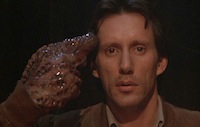 VIDEODROME (1983, Director: David Cronenberg)
Let me explain something to the execs at Universal: there are certain directors who have a unique style and cinematic voice. You might have heard them described as “auteurs.” When they make a movie, that movie bears their stamp, and becomes an extension of their own personality and concerns. In other words, there are certain directors whose work you don’t remake. David Cronenberg is one of those directors. Jesus, do you really think some unknown commercials director and the writer of Scream 3 and the last two Transformers movies are going to make a better movie than David Cronenberg? What the fuck is wrong with you?
Remakability:
X
 WARGAMES (1983, Director: John Badham)
With a title like WarGames, you can imagine a couple of junior studio executives drooling over the possibilities to remake the movie with the protagonist using modern computers. Thing is though, the only way in which the original version from 1983 doesn’t hold up is in the technology. Dramatically, WarGames holds up remarkably well. Giving the technology a facelift is not a good enough reason to justify a remake. Of course, the entire way warfare is conducted these days is a long way from the missile tracking tension of the Cold War era that the original film depicts. It’s possible that a remake could find an entirely new way to frame the general premise of a skilled, computer hacking teen who unwittingly breaks into a government computer program and triggers a potentially catastrophic international incident. In that case, the remake would, like many, really be in name only, trading on the title while delivering a relatively new plot. I’m wary, but I can’t deny there’s some potential there, depending on how the filmmakers approach it. Still, the original is so good. Just let it be. Seth Gordon, director of the Donkey Kong documentary King of Kong and Horrible Bosses, is the latest name attached.
Remakability:
X
 WEIRD SCIENCE (1985, Director: John Hughes)
Umm…no. Don’t even go there. This sci-fi comedy is pure 80’s magic that can not be recaptured. Anthony Michael Hall at his smart-alecky best; Bill Paxton in his breakthrough as Chet, the most obnoxious older brother ever; Kelly LeBrock as the sexy, exotic dream girl created by two nerds on their computer; Robert Downey, Jr. in one of his earliest roles…this John Hughes comedy is as enjoyable today as ever. Universal and Joel Silver (who produced the original) want screenwriter Michael Bacall, who scored with Scott Pilgrim vs. the World, 21 Jump Street and sleeper hit Project X (high school party Project X, not test pilot chimps Project X), to draft an “edgier” take on the material, going for an R rather than the original’s PG-13. While I support making more R-rated comedies, Weird Science doesn’t need to be edgy, and the promise of a little gratuitous nudity — a staple of R-rated 80’s comedy — is hardly reason to mess with a good thing.
Remakability:
X
 WHAT EVER HAPPENED TO BABY JANE? (1962, Director: Robert Aldrich)
Walter Hill, the director whose credits include The Warriors, 48 Hrs. and — what do you know? — Brewster’s Millions, is onboard to write and direct this remake of the classic psychological drama that paired divas Bette Davis and Joan Crawford as sisters who had been movie stars in their youth, now aging and confined to their mansion, one serving as poisonous caretaker to her wheelchair-bound sibling. Davis and Crawford had a contentious relationship off-screen that informed their relationship in the movie, and both had fallen out of popularity in Hollywood by the time this project came around. It was a huge hit that boosted their careers, and their pairing remains one for the ages. Maybe a remake could be well handled (there was a TV movie in 1991 starring Redgrave sisters Vanessa and Lynn), but like so many other on this list, there doesn’t seem to be much point. The original is well worth seeing, and is bolstered by the combination of its two feuding stars.
Remakability:
X
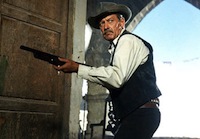 THE WILD BUNCH (1969, Director: Sam Peckinpah)
Seriously? You’re gonna remake Peckinpah’s landmark western about a bunch of badasses in the dying days of the Wild West? Yeah, good luck with that. Will Smith is developing this as a vehicle for himself, with a modern-day setting that involves the drug war in Mexico. I like Will Smith and all, but he’s not a straight-up tough guy. The Wild Bunch is about straight-up tough guys. Absolute hardcore motherfuckers. That’s kinda the whole point. They’re the wild bunch. The movie was a product of its time, arriving when Hollywood was in the midst of a sea change and a new style of grit and violence was taking over. It was two years after Bonnie & Clyde and three years before The Godfather. If Will Smith wants to make a movie about some tough guys engaged in the Mexico-U.S. drug trade, fine. But don’t call it The Wild Bunch. Critics, film historians and fans will massacre you…which might be an ironic tribute to the original’s finale, but won’t do your reputations any good.
Remakability:
X
There we have it. And in case you weren’t keeping track, there were a lot of lone Brewsters on that list.
There are a couple of others that I mentioned in enough detail in Part I that I didn’t include them here. One is Poltergeist, which is unfortunately going ahead. The other is the 1970’s James Caan movie The Gambler, which Paramount Pictures was developing without even bothering to tell the writer of the original, James Toback. As I said, the movie was initially set up with The Departed trio of screenwriter William Monahan, director Martin Scorsese and star Leonardo DiCaprio. That version fell apart, but a remake is still going forward, with Rise of the Planet of the Apes director Rupert Wyatt tackling Monahan’s script, Mark Wahlberg in the Caan role and Brie Larson as the female lead. Jessica Lange is also being sought.
I have no doubt there are plenty of other remakes in development as you read this, and plenty more will come along as time goes on. I’ve heard rumors over the past few years about new versions of Three Men and a Baby, Honey, I Shrunk the Kids, The Neverending Story, Romancing the Stone, Overboard, Logan’s Run, Commando, American Psycho, Porky’s, Timecop, Cliffhanger, The Butterfly Effect and more. Whether or not any of these are still happening, I don’t know. Among those we’ll definitely be seeing next year are new versions of Robocop (sans Edward Norton, thankfully) and Endless Love, as well as two remakes that feature African-American casts in place of previously white ones: About Last Night… and Annie. I’m sure there will be others too. Few will be good ideas, and just as few will be hits, but Hollywood will keep shoving them down our throats anyway. Yet maybe, if audiences have the good sense to seek out original films when they go to the movies (and seek out older films when they’re staying in), studios and producers like Neal fucking Moritz will eventually get the message and stop the madness. In an appearance at Comic-Con this past summer, Joss Whedon said the following when asked what franchise he’d like to work on after The Avengers:
The reason I don’t really have an answer to that question is — and I realize the hilarious irony of the man who’s making a sequel to The Avengers and just made a Much Ado movie saying this — but I do feel like we’re in desperate need of new content. Pop Culture is eating itself at a rate that is going to become very dangerous. I’m seeing too many narratives built on the resonance of recognition. It’s not even nostalgia. It’s: ‘I remember that from yesterday.’ That’s gonna become really problematic. Although it’s enormous fun to work on something I enjoyed as a child, I think it’s really important for all of us to step back from that. Create new universes, new messages, new icons. So that ten years from now, we can reboot those!
Well said, Mr. Whedon. In the meantime, we’ll keep grappling.
Now do me a favor, so I don’t feel like I’m raging against the machine all by myself here. I know some of you more avid movie watchers have some thoughts of your own on this, whether about specific remakes that you like/don’t like, or think should be made or shouldn’t be made, or about the whole remake machine in general. Chime in below and grapple with me.


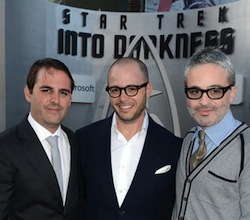 This interview

 LET THE RIGHT ONES IN
 The Carrie remake is a tougher call. On one hand, Brian De Palma’s 1976 original is a classic, and with its chilling third act, Oscar-nominated performances by Sissy Spacek and Piper Laurie, and rich subtext that has provided film theory classes with fodder for over three decades, many probably consider it untouchable. On the other hand, I watched it recently for the first time in years, and it does feel dated in some ways. Much of it is shot through a sort of soft-lens, dreamy haze – a deliberate aesthetic that De Palma was going for to serve his vision for the material, but one that runs the risk of feeling cheesy to newcomers looking at the movie for pure entertainment value. The style might not be an issue for budding film enthusiasts who are open-minded enough to appreciate films as artifacts of the time in which they were made (in other words, the kind of people who might first see Carrie in a college film class). But new generations of viewers who just want the pleasure of a good horror movie might have a hard time connecting with it, even though there is still plenty about it that holds up (Laurie’s performance as Carrie’s fanatical mother, for example, remains potent.) With Chloe Grace Moretz and Julianne Moore, the remake has two strong actresses to fill Spacek and Laurie’s shoes, plus Boys Don’t Cry director Kimberly Pierce could potentially bring an interesting new gender perspective to this female-centric story. So while my early thoughts were, “How dare they remake Carrie!,” the truth is that as remakes go, this one is arguably ripe for a new approach.
 PASSION AND PAYCHECKS
 Not all filmmakers share Raimi’s attitude toward their material being rebooted, but few have any power to prevent it, as the rights belong with the studios. (Though I’d bet that if Steven Spielberg wanted to stop Poltergeist from being remade, one phone call is all it would take.) Two years ago, there was an announcement that Martin Scorsese, Leonardo DiCaprio and their Departed screenwriter William Monahan were remaking a 1974 James Caan movie called The Gambler. The original was written by James Toback, who learned about the new version along with the rest of the world, when the news was published on Deadline. He had not been approached by any of the principal filmmakers or by anyone at Paramount, and though legally none of them had any reason to discuss the remake with Toback, he was surprised and offended that no one had bothered to ask for his blessing. In a
  Why not ask Disney, Pixar, Warner Brothers, and other animation companies to produce new shorts that could also be shown in advance of the feature presentation? Or acquire existing shorts from independent animators whose work is never seen by wide audiences? (Those Oscar nominated Best Animated Shorts that no one has ever heard of are coming from somewhere.) The studios could re-release deserving movies surrounded by all of this new content that, taken together, would create a fresh experience (not to mention providing more bang for your buck, considering how expensive it has become to have a night out at the movies). The returns would be smaller, but the investment would be too, and there will still be plenty of money to make from other tent-pole movies that have become the studios’ bread and butter.
 Well, wrong suit, but close enough.
 Me, I’m just surprised. I can’t figure out why Affleck would be interested in such a move at this moment in his career. To understand why it puzzles me, let’s jump back in time again. After Good Will Hunting, Affleck and Matt Damon were Hollywood’s new golden boys. The following year, they each played supporting roles in prestige projects that competed for the Best Picture Oscar (Damon in Saving Private Ryan, Affleck in Shakespeare in Love). They also reunited on-screen in 1999 for pal Kevin Smith’s Dogma. But by and large, those next several years after Good Will Hunting were marked by forgettable movies from Affleck. Boiler Room struck a chord, and Changing Lanes was pretty good, but these were bright spots amidst a spate of bland studio fare and would-be blockbusters that included Pearl Harbor, Reindeer Games, Daredevil (another comic book character, this one from Marvel’s stable), Paycheck, Jersey Girl, The Sum of All Fears, Surviving Christmas and the dreaded Gigli. High profile romances with Jennifer Lopez and Gwyneth Paltrow didn’t help his falling public persona, and by 2004 Affleck was both punchline and punching bag (

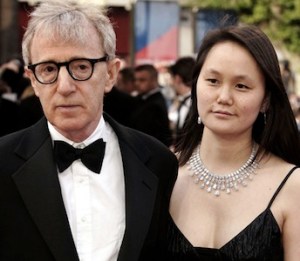 While scrolling through my Facebook wall on Saturday, I came across a post in which a friend — to protect the innocent, let’s call this person Hermione — explained that she had once stated her refusal to see a certain artist’s films in the theater because she did not agree with the person’s life choices. Upon hearing that remark, a colleague responded, “Hate the artist, not the art.” To which Hermione asked her Facebook community, isn’t an artist inextricably linked to his or her art? She added that the artist in question is Woody Allen, and that with Allen’s new movie Blue Jasmine currently earning strong reviews, big box office (“big” for an independent film) and major Oscar buzz for Cate Blanchett, the debate was once again on her mind. It’s a valid question, which elicited about 60 responses from her friends. I read through them all with great interest, and decided that since I’ve given the topic some thought myself in the past, I would raise it here where I could expound on it more than I could on Facebook.
 I fall into the latter category. I don’t let an artist’s real life circumstances interfere with my desire to see their work. “Don’t let” may not be the best way to phrase it, actually, since I never made a conscious decision about it. I simply don’t have trouble appreciating this movie or that because of what its star, director, location manager, etc. has done. I’m a Woody Allen fan, so however sketchy some of his off-screen behavior may be, I’m not going to stop watching his movies. If Roman Polanski has a movie out that interests me, I’m going to see it regardless of his past inappropriate conduct. Ditto for Mel Gibson. Yes, I’m troubled by many of the things he’s said and done in recent years. But I can’t bring myself to reject Lethal Weapon or Braveheart because of it, nor am I going to boycott future works of his that look appealing. I’m sure there are some people who don’t understand how I could continue to support the career of such a person. All I can say is that for me, the work is the work. By avoiding it, I’m only punishing myself. Those that think they’re impacting the artist’s financial rewards by withholding patronage are kidding themselves, but if it makes them feel better, I won’t argue it. I’ll just say that if that’s their sole reason for avoiding something that they would otherwise choose to experience, the loss is theirs, not the artist’s. (And for these people, I’m curious: does your opinion change once the artist has passed away?) If the reason is not monetary, but instead an inability to watch that person’s work without thinking about who they truly are and experiencing some degree of disgust, then they should stand by that, as long as that feeling outweighs their interest in the movie, album, book, etc. I’m not sure what it says about me, if anything, but I have no problem separating my opinions. I can still happily watch The Naked Gun without dwelling on O.J. Simpson’s crimes, or see David Lynch’s Lost Highway and be creeped out by Robert Blake’s character, but not by the man himself and the murder for which he was convicted. When I listen to “Unchained Melody”, “Be My Baby”, “Imagine” or “My Sweet Lord”, I don’t think about Phil Spector serving time for murder (though in truth, I don’t think I knew Spector was involved in any of those songs before watching the recent HBO movie with Al Pacino).
 Simpson, Blake and Spector may be extreme cases, but there are many famous people who have engaged in behavior that some might find troubling. Where do we draw the line about what we’ll tolerate? I ask that not as a defiant challenge intended to trip anyone up on their own morals, but as a legitimate query. In 1965, at the height of his James Bond fame, Sean Connery gave
 But of course, these achievements are not all that he’s known for. Kazan is also infamous for his 1952 testimony before the House Un-American Activities Committee, during which he named names of fellow artists who had been connected to the Communist party. All of the names he provided were already known to the committee, but his appearance as a friendly witness was nevertheless seen by many as a betrayal. His testimony may not have directly led to any blacklisting, but his cooperation upheld Joe McCarthy’s institutional witch-hunt that ended countless careers in Hollywood and beyond. If Kazan had refused to testify or name names, his ability to make films might have ended, but his thriving career in New York theater would likely have continued unaffected. He also had enough clout that if he had challenged HUAC, he might have helped put an end to its despicable activities. Instead, he played ball and saw his good fortune continue to flourish while others saw theirs evaporate. And yet, a mere two years later, Kazan was given the Academy Award for Best Director (his second) for On the Waterfront, a movie that deals with the consequences of informing and which has been interpreted by many as Kazan’s attempt to justify his actions regarding HUAC. When you think about how political the Oscars are known to be, and how many factors other than the movie itself make their way into people’s voting process, Kazan’s 1954 win is stunning. But here was a case where even in the wake of his controversial action, the film community still saw fit to recognize his artistic achievement. And although he went on to continued success and many accolades, including a Kennedy Center Honor in 1982, some organizations, such as the American Film Institute, refused to celebrate him later in his life. His appearance before HUAC — and his refusal over the years to apologize or admit that it was a mistake — were stains that many could not forgive or forget. So when it was announced that Kazan would be presented with an Honorary Oscar for lifetime achievement in 1999, the reaction was unsurprisingly divisive. The Academy’s decision stirred up long-dormant feelings about the McCarthy and blacklist years, with those critical of the selection pointing out that (among other things), Kazan had already won two Oscars, making this an unnecessary tribute. The Academy’s position was that Kazan was being honored for his work, not his politics or his personal behavior, although many other Honorary Oscar recipients over the years were cited for their offscreen morality and good deeds as well as their contributions to cinema. (That includes Kirk Douglas, who received a similar award three years earlier, and whose accomplishments as mentioned by presenter Steven Spielberg included helping to “hammer the blacklist to pieces.”) When Kazan’s Oscar night moment came and he took the stage, many in the room gave him a standing ovation, while others remained defiantly in their seats, arms folded. Some stayed seated but still clapped.
 I Am DB