
On Sunday evening, the envelopes will be opened and one of the most unpredictable Oscar seasons in recent memory will come to a close. I can’t recall a year where so few categories had clear frontrunners…though I have a feeling that if I were to go back through the corresponding posts for years past, I would find that I made similar proclamations. But this time it’s really true. Really!
BEST PICTURE
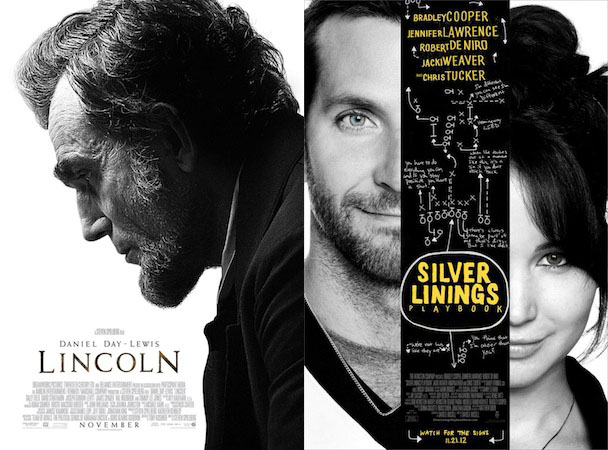
Nine nominees grace the field this year, and right off the bat I’m eliminating Amour, Beasts of the Southern Wild, and Django Unchained as movies that never had a prayer; the nominations were the prize. Next I’m scratching off Les Misérables and Zero Dark Thirty, which coulda been contenders had they proven less divisive. That leaves Silver Linings Playbook, Life of Pi, Lincoln and Argo. And really, it’s the latter two that are seen as the last pics standing. Life of Pi is more admired than it is loved (though oddly, will probably end the night with the most awards), and Silver Linings Playbook, as much as people adore it, will probably be considered too lightweight for the top prize. (I disagree, but to date the Academy has not consented to my repeated, unfounded requests for membership, so my opinion means jack.)
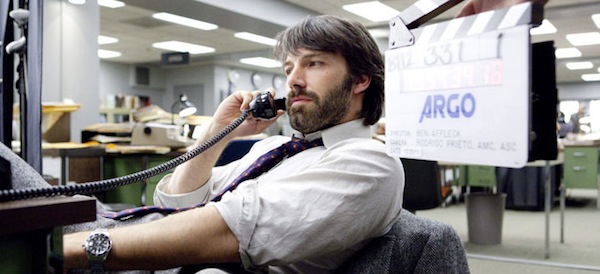
When Ben Affleck was overlooked for a Best Director nomination, Argo‘s chances seemed dead. But the night of the nominations, the movie took Best Picture and Best Director at the Broadcast Film Critics Awards. That weekend, it repeated those wins at the Golden Globes (in the Drama category for Best Picture). It looked as though Argo was only mostly dead…which as we all know courtesy of Miracle Max, means slightly alive. Argo soon went on to win Best Picture from the Producer’s Guild of America, and has basically been unstoppable ever since, with the Best Cast in a Motion Picture prize from the Screen Actor’s Guild being the strongest indication of the industry’s wide support. That award goes one of two ways: either it really is a celebration of the actors, or it’s a celebration of the movie itself. Argo‘s win fell into the latter group. Not to take anything away from its excellent ensemble, but when put up against the casts of Silver Linings Playbook, Lincoln and Les Misérables it’s not the most deserving. A vote for the cast of Argo was a vote for the movie, and solidified its standing as Hollywood’s favorite of the year. If Silver Linings or Lincoln really had a shot at Best Picture, the SAG award would have been the clue. As it is, Argo is likely to overcome the handicap of Affleck’s absence from the Best Director race to take home the night’s top award…which will make it only the fourth movie ever to do so.
Personal: Lincoln. I’m happy for Argo‘s success and have no problem with it winning, but as I posted earlier this week, Lincoln was tops of the year in my eyes, followed closely by Silver Linings Playbook.
X
By the way, that Oscar poster at the top is just one piece of a larger, incredibly cool design by artist Olly Moss, who tweaked each statuette to represent that year’s Best Picture winner. To see the whole thing, click here and then enlarge to see the details. Click here to see them even larger, along with the name of each movie. The poster was done in partnership between the Academy and the awesome, pop culture-centric Gallery1988. In addition to Moss’ official poster for this year’s Oscars, the Academy also commissioned a series of posters for each Best Picture nominee. Check those out here.
And now, back to the show…
BEST DIRECTOR
Argo‘s march to the top prize leaves the Best Director category in a rare, unsettled state. Two things usually hold true: the movie that wins Best Picture also wins Best Director, and the winner of the Director’s Guild of America award takes home the directing Oscar as well. This year, Ben Affleck took the DGA honor, meaning an automatic divergence between the DGA and the Academy. Since Argo‘s momentum for Best Picture practically guarantees a Picture/Director split, where does that leave us?
Benh Zeitlin, the young filmmaker behind Beasts of the Southern Wild, was the category’s surprise nominee, and he’ll have to settle for that. Despite admiration for Amour, I think Michael Haneke is unlikely to triumph here. So we’re down to Steven Spielberg for Lincoln, Ang Lee for Life of Pi and David O. Russell for Silver Linings Playbook. When people watch Lincoln, do they think of it as a director’s movie? The writing and the performances are what stand out, and Spielberg himself has stated that the movie features his quietest direction ever. Not that such a thing makes it unworthy, but voters might not see the movie as a director’s showcase. Life of Pi, on the other hand, is a more obvious achievement in direction. Lee had a book that was considered impossible to bring to the screen; his star was an inexperienced young actor; his second main character was a CGI tiger; the bulk of the movie was shot in a tank, leaving much to be created outside of the practical shoot; and he was filming in 3D. Dude sure didn’t make it easy on himself. Working against his chances, Pi has felt like a somewhat lifeless contender all season. Even with 11 nominations, second only to Lincoln, it doesn’t seem to have generated much conversation. Does Lee have the momentum to go the distance?
That leaves David O. Russell, clearly admired by his fellow directors, who also nominated him two years ago for The Fighter. Furthermore, the fact that Silver Linings scored the rare feat of landing a nominee in each of the four acting categories speaks to the admiration that actors, who make up the largest voting block within the Academy, have for Russell. The Fighter had three Oscar nominated performances, and garnered wins for Christian Bale and Melissa Leo (who beat co-star Amy Adams). He’s probably the guy right now, more than anyone else, that actors are dying to work with. Comedies don’t fare well with the Academy, which hinders Silver Linings’ chances for a Best Picture win. But for all those Argo supporters who can’t vote for Picture and Director in lockstep, here is an seldom-seen chance to honor a comedy (which is really more than a comedy, let’s be honest) and still feel, with the Picture vote, that they’re backing something more substantial. (A stupid argument, really, but Academy history bears out that they like to give Best Picture to movies they consider substantial.)
In the end, I think voters will go with Lee, but with no precedent this year and no nominee whose movie is way out in front, this prize is up for grabs. Interesting Trivia, Part I: If Lee wins, he will have the bizarre distinction of being the only person to experience both the DGA/Oscar split and the Picture/Director split….twice: he won for directing Brokeback Mountain even as Best Picture went to Crash, and he took home the DGA prize for Crouching Tiger, Hidden Dragon but lost the Oscar to Traffic director Steven Soderbergh. Interesting Trivia, Part II: If Spielberg wins but Lincoln loses Best Picture, it will be the second time he’s won for directing a movie that doesn’t capture the top honor (the other being in 1998, when Saving Private Ryan fell to Shakespeare in Love).
Personal: David O. Russell. Silver Linings Playbook could have been an entertaining but average rom-com. It’s Russell’s personal investment in the material, intense directing style and ability to bring out exceptional work from his actors that elevates it to something more.

X
BEST ACTOR
Not every statuette is up for grabs. This one is all-but-engraved for Daniel Day-Lewis, who is poised to carve himself a little piece of Oscar history as the first person to win Best Actor three times. He has steamrolled the competition all season long, and charmed crowds with warm and funny speeches at the Brittania Awards, Golden Globes, SAG and British Academy of Film and Television Arts ceremonies. In fact, it wouldn’t surprise me if he gets voted Pope when the bishops emerge from their conclave in the months ahead.
His performance as Abraham Lincoln is absolutely deserving, but it disappoints me that his win is such a given, because in a more just Oscarsphere, he would be engaged in a tight race with Joaquin Phoenix, who is equally mesmerizing in The Master. Denzel Washington, Hugh Jackman and Bradley Cooper (whose nomination makes me really happy) are all truly excellent, but Day-Lewis and Phoenix are in another league with their performances. It’s a shame Phoenix hasn’t been given the momentum during awards season to make this the neck-and-neck race it should be. As you may have seen via the link above, Day-Lewis even acknowledged Phoenix’s work in his SAG acceptance speech, remarking on his talent and wishing he were there with the rest of the Best Actor nominees. (Phoenix was passed over by SAG; his Oscar nod replaces SAG nominee John Hawkes, from The Sessions.) Some might argue that Phoenix hurt his chances with those comments last year about his discomfort with the whole awards machine, but I don’t believe the remarks made any impression on the many critics organizations who bestow awards, and if more of them had honored Phoenix, he might have emerged as a threat to Day-Lewis. (And for what it’s worth, Phoenix has attended all the major ceremonies at which he’s been nominated, including the Golden Globes and BAFTA awards.) Alas, it wasn’t to be. Phoenix is riding the bench with Washington, Jackman and Cooper. In the end though, they can all take consolation in the fact that if you’re not going to win an Oscar, losing to Daniel Day-Lewis is the next highest honor.
Personal: I’d have to call it a tie.

X
BEST ACTRESS
Like the rest of the contingent for Beasts of the Southern Wild, 9 year-old Quvenzhané Wallis (once again, that’s pronounced Kwah-VENN-Jah-Nay) will have to be content with her nomination. Naomi Watts is moving in The Impossible, but this isn’t her year (though I have to say, it surprises me that this is only her second nomination, after 21 Grams in 2003. Seems like she should have more than that).
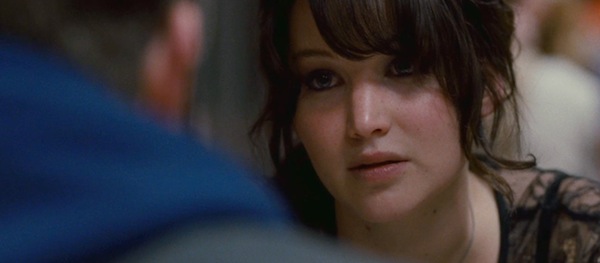
As far back as late November, this category was shaping up as a race between Jennifer Lawrence for Silver Linings Playbook and Jessica Chastain for Zero Dark Thirty, who started to generate buzz even before the movie had been widely seen within the industry. When you factor in the many regional critics awards, Lawrence and Chastain have virtually split the precursor field, with both earning key wins along the way – Chastain took prizes from the National Board of Review, the Broadcast Film Critics Association and the Golden Globe for Drama; Lawrence won the Los Angeles Film Critics award, the SAG award and the Golden Globe for Musical/Comedy. Silver Linings and Zero Dark Thirty have helped establish Lawrence and Chastain as two of the brightest, most exciting new talents in movies. A win for either will cement their status; at the same time, voters know that both actresses will undoubtedly be back here again….which could pave the way for Amour‘s Emmanuelle Riva, who has been gaining ground in recent weeks. Riva is the oldest Best Actress nominee ever, and will be celebrating her 86th birthday on Oscar night. She’s picked up a few awards along the way, most notably and recently the BAFTA award (she also tied with Lawrence at the Los Angeles Film Critics awards). The BAFTA win gives pause, as it has occasionally marked a turn of the tide away from a frontrunner toward a less expected winner. However the BAFTA award has also been known at times to favor European actresses, and Riva’s strong performance in Amour may have been boosted by that continental pride.
Chastain’s hopes seem to have faded of late, along with the general fortunes of Zero Dark Thirty, and it’s now Riva who poses the greatest threat to Lawrence. She definitely has major spoiler potential, and Chastain could still pull it off, but I think Jennifer Lawrence will take it. She has the most well-rounded part, and she totally kills it. She’s young, yes – only 22 (Chastain is 35, for what it’s worth) – but this is already her second Best Actress nomination, and the Academy loves an ingénue.
Personal: Jennifer Lawrence. It’s such a dynamic, movie star role, allowing her to be funny, strong, vulnerable, angry, sad…she gets to do more than any other actress in the category, and she does it all perfectly. Plus, she’s generally awesome. Have you seen this girl do interviews? She’s offbeat, down to earth, poised, funny, she speaks her mind…she’s kind of a breath of fresh air. And her speeches at the Golden Globes and SAG awards have nicely balanced playful wit and genuine gratitude. That stuff matters to voters. (Then again, her Saturday Night Live monologue, in which she jokingly mocked her competition, was seen by some voters who have no sense of humor as being in poor taste. She could lose a few votes for that. Oh, and if you don’t get the Tommy Lee Jones joke from that monologue, or if you want to know why everyone was laughing at Will Ferrell and Kristen Wiig when they read the nominee names in that Golden Globes clip, you should watch this. It’s worth it.)
X
BEST SUPPORTING ACTOR
One of the widest open, toughest-to-call categories of the night. If we want to look for patterns and signs, recent history might favor Django Unchained‘s Christoph Waltz, since the last three winners of this award all have names beginning with “Chris” (Christopher Plummer, Christian Bale and Christoph himself, for Inglourious Basterds). Then again, I’d rather base my prediction on something more solid…not that there’s much terra firma to be found in this category. All five nominees are past winners, and a legitimate case for why they could (if not why they should) win can be made for all. Still, the weakest of those cases is for Alan Arkin, whose role in Argo is too brief, albeit quite enjoyable.
Of the precursor awards I’ve counted, The Master‘s Philip Seymour Hoffman has collected the most wins, though only one – from the BFCA – is among the major bellwethers. Tommy Lee Jones has done well too, with a key victory under his belt in the form of a SAG award. Waltz emerged as a surprise winner at both the Golden Globes and the BAFTA awards, giving him unexpected momentum. And then there’s Robert De Niro, doing his most acclaimed work in ages in Silver Linings Playbook. He hasn’t won any major awards so far, but he’s been out there championing the film and doing a lot of publicity…something else that voters apparently like to see.
Against each of them? The Master doesn’t seem to have enough traction with Academy members to land Hoffman a win. He’s widely admired, but the movie’s status as a critics’ darling accounts for his success on the precursor circuit. With Jones, some people just find him too damn ornery and don’t want to honor him, which is stupid reasoning, but it happens nonetheless. (Not that they’re necessarily wrong about him being too damn ornery; seriously, did you see his face in that Golden Globes clip linked above?). He’s undeniably entertaining in Lincoln, but will people see it as kind of playing himself? Waltz is a hoot in Django Unchained, but having won so recently, and for a role that is arguably quite similar to this one, are voters ready to make him a two-time winner? And De Niro may be great in Silver Linings, but does the performance stack up with the best work of his career? It’s great to see him on his game again, but the fact remains that the movie is, for now, an anomaly in an otherwise unimpressive slate of films and performances over the last several years. An Oscar win might seem like an overreaction to seeing him do strong work again.
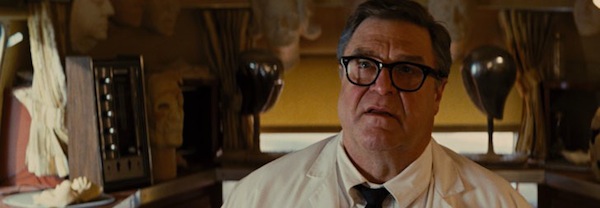
Waltz or Jones are probably the safe bets, based on the awards they’ve already won, but I don’t get the sense that those wins are necessarily as telling in this race as they might normally be. Things really could go any way, and I’m guessing – with no evidence to support me – that voters may use this as something of a career achievement award for De Niro, who hasn’t won since Raging Bull in 1980 and hasn’t been nominated since Cape Fear in 1991. Many of the Academy’s younger members have never had a chance to cast a vote for him, and however disappointing his output has been over the last decade or so, they might want to personally honor one of the all-time greats. (Point of interest: if he does win, he’ll join presumed Best Actor winner Day-Lewis in the three-timers club; prior to Raging Bull, he took home Best Supporting Actor for The Godfather Part II.)
Personal: It really is a tough choice; all the performances are so damn good…though I say again that Arkin’s part is too small; he doesn’t really belong here. I’ll be happy to see any of the other four get it, but if pressed, I guess I would choose Hoffman. His character is a great counterpoint to Joaquin Phoenix’s, and just as provocative. Then again, De Niro…the nice thing about that role is that he gets to do a lot of different things. Funny De Niro, angry De Niro, emotional De Niro, loving De Niro…in some ways it’s a different kind of character for him.

X
BEST SUPPORTING ACTRESS
Anne Hathaway has this race pretty much in the bag. Like Daniel Day-Lewis, she has dominated the field up to this point, collecting awards from BAFTA, SAG, the BFCA, nearly every regional critics group, and taking the Golden Globe as well. Jacki Weaver’s surprise nomination speaks loudly of the actors’ branch support for Silver Linings Playbook, but while she’s essential to the movie’s success, it’s not enough of a standout role to win. Sally Field, another nominee going for her third Oscar, is a respected industry veteran whose fight to be cast in Lincoln has probably won her admirers, but the performance has received mixed reactions. With her fourth nomination, The Master‘s Amy Adams continues to be a favorite of Academy members, but she hasn’t yet found herself in that magical role that can take her all the way. As for Helen Hunt, The Sessions may not have been seen by enough people, and the performance probably isn’t deemed flashy enough for her to win. None of the nominees get the kind of for-the-record-books scene that Hathaway gets in Les Misérables, singing “I Dreamed a Dream” in one shattering, close-up take. She should face smooth sailing to a win, unless she’s capsized by a wave of sentiment for Sally Field. It’s not out of the question that Field could pull an upset, but it’s unlikely.
Personal: Helen Hunt. I’m taking nothing away from how good Hathaway is, but as powerful a showcase as she has with her solo, her time on-screen is too brief for me to say it deserves the win. I’d go with Hunt, who gave a low-key but deeply felt, moving performance as a sex surrogate in The Sessions. She’s so open-hearted, and beautifully details the character’s complicated feelings about her work with crippled poet Mark O’Brien. Given the size of the part and the role her character plays in the story, she should really be in the Best Actress category, but the studio likely thought she stood a better chance here.

X
That’s the end of the acting categories, and I would be remiss not to include these latest episodes of Between Two Ferns, featuring Zach Galifianakis interviewing nominated actors on the day of the Academy’s Nominees Luncheon earlier this month.
X
BEST ORIGINAL SCREENPLAY
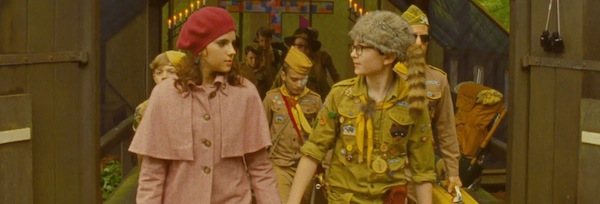
John Gatins’ script for Flight is a smart and compelling piece of work that goes in some unexpected directions, but it was on the fringe to begin with, so the nomination is the win. I’d like to think Wes Anderson and Roman Coppola stand a chance for Moonrise Kingdom, as this category sometimes favors smart, touching and idiosyncratic comedies, but there isn’t a lot of chatter about the movie, and the fact that this is its sole nomination doesn’t bode well.
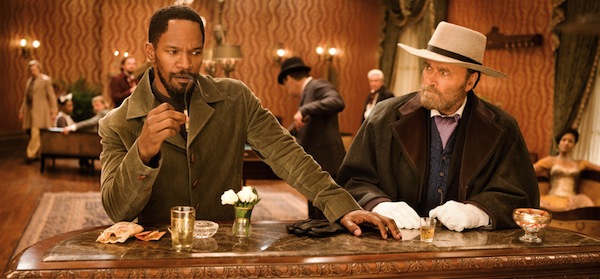
That makes it a three-way race between Mark Boal for Zero Dark Thirty, Michael Haneke for Amour and Quentin Tarantino for Django Unchained. And like so many categories this year, it’s genuinely up in the air. Boal took the prize from the Writer’s Guild of America, but neither Django nor Amour were nominated, having been deemed ineligible. A win for Boal would be a nice gesture of support in the wake of all the controversy that has unfairly dogged Zero Dark Thirty, and by extension it would acknowledge Kathryn Bigelow, whose surprising omission from the Best Director category has been overshadowed by Ben Affleck’s absence and the Argo momentum. Plus, the tide started to shift back toward more positive buzz for the movie right as the voting period was about to open, with endorsements from Leon Panetta and a coalition of 9/11 families. On the other hand, Boal won this award for The Hurt Locker just a few years ago, and voters might not be so quick to anoint him a two-time winner. Tarantino, meanwhile, seems due for a second screenwriting Oscar to join the one he already has for Pulp Fiction. He was expected to win for Inglourious Basterds (a better script) in 2009, but lost to Boal. He took home this year’s Golden Globe and BAFTA awards, neither of which were widely expected to go his way, so those help his case. But is the movie too controversial to amass enough support? In addition to its frequent use of the N word – era-appropriate but still troubling to many – the movie is incredibly violent. Voters were first exposed to it right around the time of the Newtown shooting, and it’s hard not to think about that and the subsequent debate over gun control, violence in movies, etc. when watching some of the movie’s excessively bloody moments. I have no idea if that will matter to voters, but I can see it being a factor for some.
Finally, there’s Amour, the unflinching depiction of an elderly couple dealing with the wife’s slowly fading mental and physical faculties. The movie was certainly powerful, but frankly it could have worked as a 40 minute short instead of a 127 minute feature. And I just don’t see it as much of a screenwriting achievement. But maybe that’s just me. Clearly it was admired within the Academy, in order to break out beyond the Best Foreign Language Film category and earn nods for Picture, Director, Actress and Screenplay. True, those are all branch-specific nominations, except for Best Picture, where the entire Academy votes for nominees, so it’s possible that the support isn’t as broad as it seems. Then again, a vote for Amour does allow those who loved the film but don’t get to chime in for Best Foreign Language Film (you have to see all five nominees in order to vote in that race) to have their shot at honoring Haneke.
I just don’t know. The pundits are split here. Some are calling it for Amour, others for Django, and a few still think Zero Dark Thirty is in play (I do too). The arguments for and against each make sense. I really have no idea which way this will fall, but I’m timidly going with Django.
Personal: Moonrise Kingdom. The detail and intricacy of Zero Dark Thirty is impressive, but I’m more drawn to the imaginative than the procedural. As I’ve said many times, Wes Anderson is one the most original filmmakers working today, and Moonrise Kingdom hit so many beautiful notes.
 X
X
BEST ADAPTED SCREENPLAY
Once again, Beasts of the Southern Wild is first to go, although I’m sure it will collect its fair share of votes from those who admired its originality. David Magee’s script for Life of Pi provided the blueprint for making the unfilmable filmable, but the criticisms people have with the final product tend to focus on its structure and thematic content. The movie is ultimately seen as more an achievement of direction and technical artistry, even if it all began with finding a way to translate the novel to the screen.
As with the Original Screenplay category, three nominees look to have a reasonable shot: Chris Terrio for Argo, David O. Russell for Silver Linings Playbook and Tony Kushner for Lincoln. Silver Linings Playbook is clearly beloved by the Academy, and they are more likely to honor Russell here than in Best Director. His BAFTA win was probably that show’s biggest surprise, seeing as the movie was not nominated for Best Picture or Best Director. There is crossover membership between this Academy and the British Academy, so is Russell’s victory a sign?
Not necessarily. There’s also crossover between the Writer’s Guild and the Academy, and the WGA gave their award to Argo. I would have thought voters – especially a body of writers exclusively – would be hard-pressed to pass over Tony Kushner’s exquisite script for Lincoln, but their choice of Argo is yet another demonstration of the industry’s unwavering admiration for that movie. Chris Terrio’s sharp script has (and deserves) legions of admirers, absolutely, but I’ll be a little disappointed if it triumphs here, just as I was at its WGA win. I agree that it’s a terrific script, but Lincoln strikes me as the more challenging feat of adaptation, and the more impressive accomplishment. Faced with innumerable ways to approach a figure as dynamic as our 16th president, Kushner carved off a slice of Doris Kearns Goodwin’s massive book Team of Rivals and shaped it into a full course meal all its own. Not only does his script make the legislative process exciting and even funny, but the language alone is a feast for the ears. Plus, if Director goes to Ang Lee, this is really the best shot Lincoln has to win anything other than Best Actor. With a field-leading 12 nominations, it would be nice for Lincoln to take home more than one trophy. A vote for Argo here feels a bit like falling in line with the presumptive Best Picture favorite instead of analyzing the category individually and honoring the best example of adaptation and writing.
Still, I suspect that’s what will happen. Kushner and Russell are definitely in the running, but I think Chris Terrio will claim the prize for Argo.
Personal: At this point, it’s probably clear – Lincoln.
XBEST ANIMATED FEATUREAnother tough category to call. There tends to be an obvious front-runner in this race, but not this year. It doesn’t help that all the nominees are well-made, genuinely enjoyable and each deserving. That said, I think the most easily eliminatable (not a real word, I know) is The Pirates! Band of Misfits, though it’s a pretty funny movie that’s well worth a watch. ParaNorman and Frankenweenie (which would make a great double feature) would each be an absolutely worthy winner. Although ParaNoman has collected the most critics awards to date, I give Frankenweenie better odds due to the Tim Burton factor. I think there are a lot of people in the Academy who would love to see Burton win an Oscar. Actors adore him, and when you think of how much his movies rely on elaborate sets, costumes, makeup and visual effects, he surely has a lot of support from members of the below-the-line branches. Plus there’s a nice personal narrative to Frankenweenie, a successful expansion of one of Burton’s early short films which helped to launch his career. His live action movies of late have been less original and personal than his best work, but this labor of love was a reminder of Burton at his best.
Pixar’s Brave, while not as acclaimed as many of their other films, still managed to nab the Golden Globe and the BAFTA award, proving that the studio can never be discounted at awards time unless their movie centers around talking cars. Rounding out the competition is Wreck-It Ralph, which took the PGA award. Brave and Ralph are probably the ones duking it out for the win, and I’m giving Brave the edge due to wholly unfounded speculation that it will appeal to a wider array of voters than Wreck-It Ralph. But really, I have no idea who’s winning.
Personal: Honestly, I’d be happy with any of these; we really have an abundance of riches in this category. But I guess I’d be especially happy for ParaNorman or Frankenweenie…the former because it would be a nice boost to fledgling studio Laika, and the latter because I too would love to see Tim Burton win an Oscar. And hell, a Wreck-It Ralph win would also be nice, as Disney has yet to win this category for a homegrown movie.

X
BEST CINEMATOGRAPHY
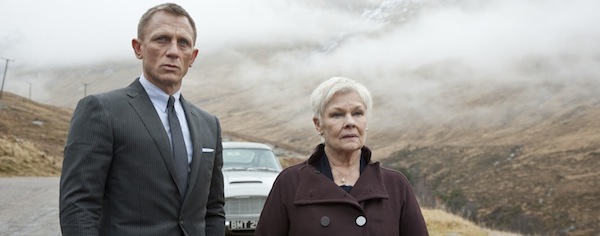
Robert Richardson did great work on Django Unchained, but he won’t win this time. Neither will Janusz Kaminski, who lit Lincoln with only the kind of light sources that would have been available in 1865. A cool approach, but the results have received mixed reactions. The staging and choreography of Anna Karenina, which largely unfolds in just one space, set the scene for some creative work from Seamus McGarvey, but voters may have been paying more attention to the costumes and sets than the camerawork. That leaves Claudio Miranda’s work on Life of Pi, which took home the American Society of Cinematography’s award, and greatest-living-DP Roger Deakins – who somehow still has not won an Academy Award – for Skyfall. He has a fighting chance, but my guess is that he’ll once again miss out, with Life of Pi taking the award for what many voters will consider the more striking visual achievement.
Personal: I really, really want to see Roger Deakins win an Oscar. While I don’t think Skyfall is up there with his absolute best, it still boasts superb work that is certainly worthy of the Academy’s recognition. Check out this cool piece from Vulture in which Deakins comments on classic images from 10 of his movies. He’s shot every Coen Brothers film since Barton Fink, so lots of their stuff is here, but the list criminally omits his work in Martin Scorsese’s Kundun. I’d have asked him about that extraordinary shot that rises above the teenage Dalai Lama to reveal him standing amidst an unending mass of slaughtered bodies.

X
BEST FILM EDITING
Comedies don’t often get nominated for this award, so Silver Linings Playbook showing up here speaks to its Academy-wide appeal and the fact that it probably had heavy support in the Best Picture race during the nomination balloting. (Again, the movie is more than just a comedy, so maybe it’s not such a surprise after all if seen in a vacuum. But the fact that it was nominated over something like Skyfall surprised many…though I called it. Booyah!) Anyway, it won’t win, but it’s nice to see it here. Also out of the running is Lincoln, which likely got swept in on a tide of support for the movie over more deserving candidates like Cloud Atlas and, again, Skyfall. There’s a slim chance that it could go to Life of Pi, but the race is more likely down to Argo and Zero Dark Thirty. Either way, William Goldenberg will win an Oscar; he edited Argo on his own, and worked with Dylan Tichenor on ZDT. Conventional wisdom is that this award tends to align with Best Picture, though a look at the winners over the last 30 years, to pick a round and arbitrary number, reveals that in 16 cases, Editing and Picture did not match up. Still, in this case I think Best Picture-favorite Argo will take it.
Personal: Argo‘s editing really brings out the tension, smoothly blends the movie’s comedic and serious elements, and moves the story along at a brisk clip. Zero Dark Thirty moves more slowly, but I get the sense that there was much more footage and that the movie could have cut together in a lot of different ways. It feels like a movie that was made in the editing room more so than its competition, which gives it an edge for me. But I’m more than cool with Argo.

X
BEST PRODUCTION DESIGN
A tough category to call, less because it’s a tight race and more because none of the nominees scream “Winner” to me, at least not when you look beyond quality of the work and factor in how voters might feel about the movies in general. The work itself is all that should matter, but it’s rarely that simple.
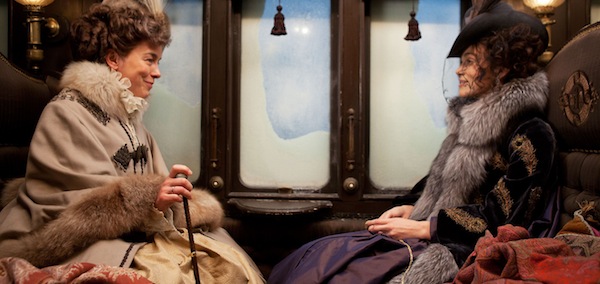
The Hobbit: An Unexpected Journey might stand a better chance if the Lord of the Rings films hadn’t been here before (all three were nominated; Return of the King took the prize). The recreation of the 1860’s White House and House of Representatives chambers for Lincoln is impressive work, but probably too unassuming to win. Anna Karenina could take the prize for featuring a variety of gorgeous environments yet making most of them work within a single theatrical space. Les Misérables could also score a win here, but most pundits who aren’t calling it for Anna Karenina are favoring Life of Pi. At first, Pi might not seem a logical choice since so much of the movie takes place in a single location without much variety. Then again, the production design works nicely in conjunction with the cinematography to create a storybook appearance throughout the film. There’s a really lovely, pastel color palette employed, which especially pops during early part of the film that takes place in Pondicherry. I’m guessing it will nab the prize here, but Anna Karenina and Les Misérables are not easily dismissed.
Personal: Anna Karenina. Aside from being visually sumptuous, it employs such a creative use of space. But I’d be okay with Life of Pi, too; its colors have really stayed with me.
 X
X
BEST COSTUME DESIGN
Lincoln, while again impressive, is probably too drab overall to win a category that almost always goes for garb that is colorful and elaborate. Both of the year’s Snow White films – Mirror Mirror and Snow White and the Huntsman – made the cut, and while they both show off some fantastic wardrobes, it could be that neither was seen widely enough to pull off a win. Then again, Mirror Mirror‘s designer Eiko Ishioka, who won this category in 1992 for Bram Stoker’s Dracula, died of cancer shortly before the movie was released, and that may have grabbed voters’ attention along the way. If it did, and if they observed her sensational, creative work on the film, she might be hard to deny. If not Mirror Mirror, then Anna Karenina most closely fits the mold of the typical winner in this category, though it’s possible that not enough voters have seen that movie either. That could open the door to Les Misérables…but if little-seen movies like The Duchess and The Young Victoria could succeed here in recent years, so can Anna Karenina. That’s my guess…but the quality of Mirror Mirror gives me pause.
Personal: Mirror Mirror. There’s really nice work throughout the category, and there were many more that deserved to be here, including Cloud Atlas, Moonrise Kingdom and Django Unchained. But none of them are as visionary as Ishioka’s creations.
X
BEST ORIGINAL SONG
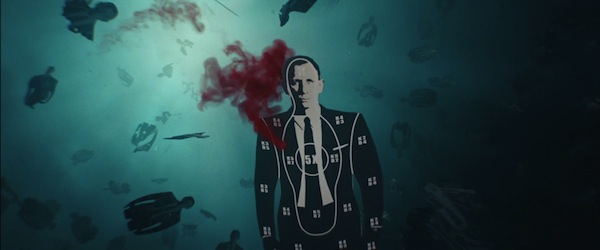
The one good thing about the omission of so many worthy selections from the list of nominees is that nothing here can challenge Adele’s title track from the latest James Bond film. It’s easily the best song in the category. And even if some of those deserving songs from the likes of The Hobbit, Brave and Django Unchained had made it and created a much stronger group, Adele would still win. Because she’s Adele and everyone loves her. And because “Skyfall” is a great song in a great movie. And because no song from a James Bond movie has ever won, and this is the 50th anniversary of the franchise and the stars are aligned. I think the sky really will fall if Adele doesn’t win. But she will. This one’s a slam dunk. I can’t wait to hear her sing it on the show.
Personal: “Skyfall”
X
BEST ORIGINAL SCORE
Alexandre Desplat, the hardest working composer in movies, (dude scored eight features in 2012) is here with Argo, but I doubt the Best Picture frontrunner’s reach will extend here. It’s a nice score, but likely too understated to get noticed. The same could be argued of John Williams’ music for Lincoln, though as subtle as it is, it does have a distinct and more memorable theme, which boosts its chances. Still, Williams has lost the award for scores much more famous and impressive than Lincoln, so it’s hard to imagine a victory this time. Then there’s Thomas Newman for Skyfall. Like cinematographer Roger Deakins, also nominated for the Bond adventure, Newman is one of his field’s most impressive talents. Yet he remains Oscarless after 10 nominations. He makes a great contribution to Skyfall, and if voters are checking the movie off in the song category, perhaps they’ll do so here as well?
Probably not. Dario Marianelli’s lush score for Anna Karenina will put up a fight. But the favorite seems to be Mychael Danna for Life of Pi. Danna’s been around for a while and is enjoying his first nomination here, so I’m happy to see him earn the recognition; he should have been nominated in 1997 for The Sweet Hereafter. But honestly, the score for Life of Pi didn’t register for me at all, despite the acclaim. I saw the movie twice, and don’t remember noting the music either time. I definitely can’t recall any of it after the fact, while unnominated scores such as Cloud Atlas and The Hobbit are lodged in my head. I want to go with a prediction for Skyfall (which won the BAFTA, by the way; Life of Pi took the Golden Globe), but the majority of pundits who actually talk to Academy members think the award will go to Pi, so I’ll follow suit. And actually, I’m not counting out Anna Karenina or Lincoln.
Personal: Skyfall. Similar to my feelings about Deakins this year, I consider Skyfall a notch below the very best of Newman’s work, but it’s still excellent, and I’m so eager to see him win. How happy would it make me if Deakins and Newman win their first, long overdue awards in the same year, for the same film? Extremely happy. Both should have won as far back as 1994 for The Shawshank Redemption.

X
BEST MAKEUP AND HAIRSTYLING
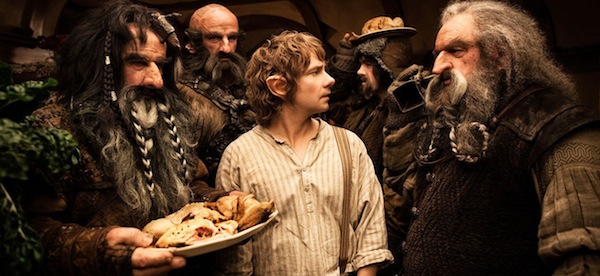
Let’s knock out Hitchcock right away; it shouldn’t even be here. That just leaves The Hobbit: An Unexpected Journey and Les Misérables. The Hobbit is the showier choice, with its 13 hirsute dwarves, plus long-bearded wizards, pointy-eared elves and curly-haired, hairy-footed hobbits. Les Misérables is more about wigs and hair, as well as making the poor and suffering of revolutionary France look appropriately haggard and sickly. There are strong cases to be made for both. As the Best Picture nominee, Les Misérables might have an edge. On the other hand, fantasy usually triumphs over realism in this category. But on yet another hand, voters may feel like The Hobbit is just treading familiar ground; two of the Lord of the Rings films won this award, and those were both Best Picture nominees. On a fourth hand, those earlier wins could bode well for The Hobbit. Grrrr….I don’t know. Pundits seem to be siding with Les Misérables, but I have a feeling the more obvious work in The Hobbit will win out. You should probably just toss a coin.
Personal: The Hobbit. Yes, this is a return trip to Middle Earth, but we have over a dozen new characters front and center, all of whom have elaborate facial hair, and all of whom had to look distinct from one another.
X
BEST VISUAL EFFECTS
Great accomplishments all around in this category. ILM had to do a wide variety of work on The Avengers, and it all looks superb and blends perfectly. WETA’s work on The Hobbit demonstrates the continuing evolution of motion capture, with Gollum looking even better now than he did a decade ago (and not just because he’s 60 years younger); Prometheus employs elegant effects to sell its futuristic setting; and Snow White and the Huntsman deserves credit for pulling off CGI-heavy bits without giving them the over-the-top, super-obvious CGI look that comes off as cheesy-fake. But one of the few sure bets of the night is that this award will go to Life of Pi. All of its creature work is excellent, but it boils down to the Bengal tiger Richard Parker, who is more than a special effect; he’s the co-star of the movie.
It will be a bittersweet victory; Rhythm & Hues, the visual effects studio that did the work, just filed for Chapter 11 bankruptcy. They had to lay off hundreds of employees, some of whom are now suing them, and they are trying to get an influx of cash in order to complete the projects they’re currently working on. Another casualty of the sadly screwed up visual effects industry.
Personal: Life of Pi. There wasn’t a single second when it occurred to me that the tiger wasn’t really there, interacting with actor Suraj Sharma’s Pi. I left the movie wondering how they got the tiger to behave appropriately, and even when it dawned on me, “Oh yeah…the tiger wasn’t really there,” I still didn’t see how that could be true. Fantastic work.

X
BEST SOUND MIXING
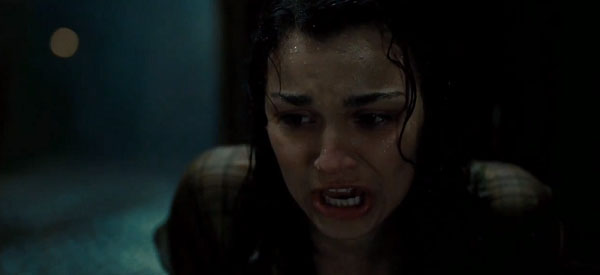
I always talk about how my understanding of the sound awards is too unsophisticated to ever really make an informed guess of my own, so I usually look for consensus among the pundits and go with that. But this year, I actually feel like I can make a confident prediction in this category, and the fact that the pundits all agree just boosts my confidence. The Sound Mixing award usually goes to smart action movies or prestige dramas that have some action-y elements, like Apollo 13 and The English Patient. Unless, that is, there’s a musical or music-themed movie in the running. Victories in the last 25 years for Dreamgirls, Ray, Chicago and Bird provide the evidence. Of course, nothing is guaranteed; Walk the Line and Evita didn’t win the award. Still, the live singing factor that is so much a part of the behind-the-scenes narrative for Les Misérables should clinch it. Of the other nominees, Skyfall or Life of Pi seem the most capable of pulling an upset, while Argo and Lincoln are likely just along for the ride.
Personal: I remain too ignorant of how to judge sound work to really make an informed personal pick, but from what I understand of the task, I have to go along with Les Misérables.
X
BEST SOUND EDITING
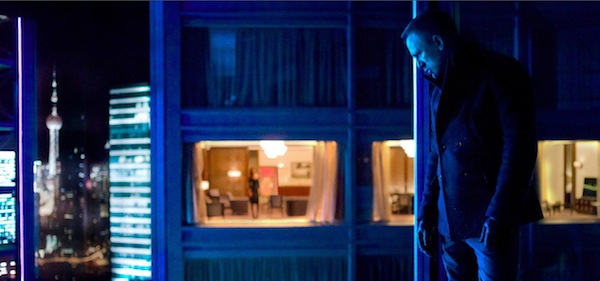
I’m on less solid footing here, as the nominees all seem like plausible victors. We again have Argo, Skyfall and Life of Pi, along with Django Unchained and Zero Dark Thirty. The first problem with judging Sound Editing and Sound Mixing – and I say this every year – is that no one really understands what they mean…and that includes most Academy members. Last year, I linked to this article that helped explain the two disciplines, and this year I’ll add this video from an Entertainment Weekly series called “Behind the Ballot,” where sound mixers and editors weigh in on their craft and how they judge the work. The second problem – and I said this last year too – is that even understanding what the two mean doesn’t really help the layman evaluate what’s good, bad or best. So with that said, I’m guessing that Skyfall will be the victor here, while I fully acknowledge that any of the others could easily prove me wrong. (Pundits are split between Skyfall and Life of Pi.)
Personal: Django Unchained. After reading this article about Tarantino’s approach to the soundscape for Django, I took note of the movie’s sounds in a way I never would have otherwise. The whip cracks did sound different somehow. So while I have no real investment in the category, I’ll root for Django and be happy with whatever wins.
X
BEST FOREIGN LANGUAGE FILM
Now we get into the categories that, as usual, I’ve been unable to keep up with personally and know precious little about. In this race, Amour is the only nominee I’ve seen…and it’s the only one expected to win. But let me just say this: as I often point out in these annual write-ups, only Academy members who have seen all five nominated films can vote in this category, and the only people who likely have the time to do that are older, retired Academy members. And Amour…dear lord, it’s a brutal movie that’s all about getting old and dying. I mean…okay, that’s a bit glib. It’s a powerful film, moving, expertly made, wonderfully acted, and as the title suggests, it’s about love…what love looks like between two people who have built a life together and now have to face the end of that life. But it’s also a painfully up-close and extended look at the end of a life. So…it could hit awfully close to home for the people most likely to vote in this category. I still think it will win – apparently no foreign language film that was also nominated for Best Picture has ever lost in this category – but heavily favored films with multiple nominations have been overtaken here before. If Amour loses, it could well be because voters found it like looking into the world’s most truthful mirror and didn’t want to face what they saw.

X
BEST DOCUMENTARY FEATURE
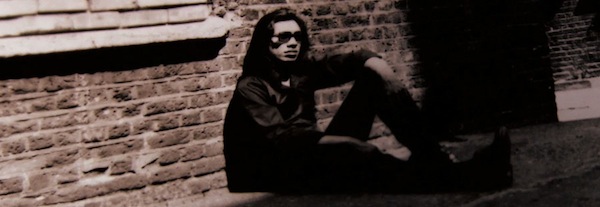
All five nominated films are excellent, from what I’ve heard, but the buzz strongly indicates that Searching for Sugar Man will take home the gold. One of the nominees is 5 Broken Cameras, co-directed by Emad Burnat (a Palestinian) and Guy Davidi (an Israeli), about non-violent protests in a West Bank village that is being absorbed by spreading Israeli settlements. Earlier this week, Burnat and his family arrived at LAX, where they were held by immigration officials and threatened with being sent back if they could not produce papers explaining their business in America…even after such documents, including their invitation to the Oscars, were shown. With a little help from Michael Moore, they were finally released. It would be pretty awesome if Burnat won the Oscar and could then pull it out next time he gets detained. “You want to see my invitation? Here’s my invitation, motherfucker. Suck on that. PEACE!”
 X
X
BEST DOCUMENTARY/ANIMATED/LIVE ACTION SHORT FILM
I’m not seeing consensus around a single winner in any of these three categories, but I am seeing pundits narrow each of them down to about two or three. For Documentary Short, Inocente, Mondays at Racine and Open Heart keep popping up. For Live Action Short, people expect it to go to Death of a Shadow, Buzkashi Boys or Curfew.
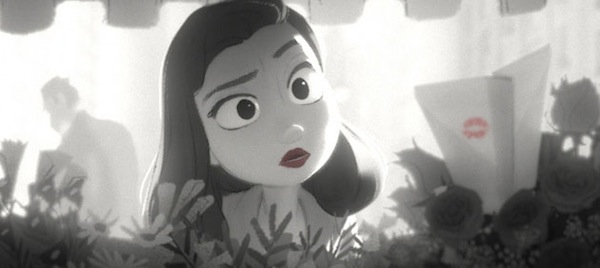
I’ve seen two of the Best Animated Short contenders – Disney’s charming black-and-white Paperman, and Maggie Simpson in The Longest Daycare. As the two higher-profile, studio-produced nominees, they’ve received more mainstream attention than their competition (Paperman played in theaters with Wreck-It Ralph, and The Longest Daycare with Ice Age: Continental Drift), but that doesn’t mean much when it comes to winning an Oscar. Since 2000, nearly every time a short from places like Disney or Pixar has been nominated, it has lost to something independent. However…for the first time this year, voting in this category (and in Live Action Short and Best Documentary Feature) has been opened up to the entire Academy. Before, as with Best Foreign Language Film, members had to attend special screenings and sign in, verifying they had seen all the nominees if they wanted to vote. With a much larger group able to cast a ballot this time, do the more recognizable titles stand a better chance? Some pundits are already liking Paperman‘s chances, and the expanded voting pool could make it happen. If you want to let history be your guide and choose a lower-profile pick, Adam and Dog and Head Over Heels are the ones popping up among the pundits. I’m going with Paperman.
X
Interested in making more informed decisions in these always tricky categories? Click on the links to learn more about the nominees for Best Documentary Short, Best Animated Short and Best Live Action Short, courtesy of Entertainment Weekly.
PREVIEWING THE SHOW
Okay, for better or worse, those are my predictions, and I’m not confident about many of them. But that makes it an especially exciting Oscar year, and I’m even more pumped than usual for Sunday’s ceremony, to see how these many unpredictable races play out. It also promises to be an interesting show. Producers Neil Meron and Craig Zadan have said that the theme of the night is music and the movies. There will be a tribute to movie musicals of the past decade, with performances by Jennifer Hudson, Catherine Zeta-Jones, and several cast members from Les Misérables. There will also be a tribute to 50 Years of James Bond, featuring Dame Shirley Bassey, who famously crooned the title tracks for Goldfinger, Diamonds Are Forever and Moonraker. Fans have been speculating and hoping that all six actors to have played Bond would appear on stage together, but Meron and Zadan recently said that was never in the game plan. Barbra Streisand will sing on the show, for only the second time, and after the Best Picture award is handed out, the show will have a proper close with some kind of musical number performed by host Seth MacFarlane and Kristen Chenoweth. (Yes, Seth MacFarlane can legitimately sing. He even put out an album of 1940’s and 1950’s standards.)
 That’s a lot of production numbers…and it doesn’t even include performances of the nominated songs. Adele will treat us to “Skyfall” – her first time singing live since her baby was born in October, and her first time singing on TV since last year’s Grammys. Norah Jones will sing, “Everybody Needs a Best Friend” from Ted, (co-written by MacFarlane), and I assume that Hugh Jackman will perform “Suddenly” from Les Misérables. There’s been no word on who will perform the other two songs; only that they will indeed be represented. Scarlett Johansson sang “Before My Time” for the documentary “Chasing Ice,” but she can’t attend, as she’ll be in New York performing on Broadway in Cat on a Hot Tin Roof. And what about the fifth song nominee, “Pi’s Lullaby” from Life of Pi? It isn’t really your typical, performance-friendly song, so I’m not sure what they’ll do with it.
With the Skyfall and Les Misérables songs possibly being incorporated into broader tributes, will the other song nominees be given the same treatment? Maybe A Tribute to Climate Change for the song from Chasing Ice? How about A Tribute to Talking Bears for the song from Ted? They can work in “Bare Necessities” from The Jungle Book, “Movin’ Right Along” from The Muppet Movie, some Winnie the Pooh, those polar bears from The Golden Compass…I don’t know what to do with that Life of Pi song, though. Ugh, why did they nominate that?
I’m also excited to see what MacFarlane does as host. I’m not really a Family Guy guy (nothing against it, I just don’t watch it), but I enjoyed the hell out of Ted, and find him to be funny in general. I hope he doesn’t rely too much on character voices (I don’t think he will), but that he brings a streak of irreverence to the show. He has a take-no-prisoners sense of humor, but his love of old timey music also demonstrates a more traditional side. So in a way, he could be the perfect guy to host, especially under producers who are trying to modernize the show (as other producers have in recent years, with varying degrees of success) at the same time that they look to its past by incorporating lots of musical numbers, which can really be hit or miss. Plus, MacFarlane has his work cut out for him after Tina Fey and Amy Poehler threw down the gauntlet with their kick-ass stint at last month’s Golden Globes.
With all these tributes and production numbers, plus performances of the nominated songs, this could be one of the longest Oscars we’ve had in a while. Meron and Zadan have pretty much acknowledged that this ship ain’t coming in at three hours, though of course they hope to keep it close. I may be setting my DVR to go 20 or 30 minutes beyond the listed stop time. But this could also be one of the higher rated Oscars in a while. Not only is it possible that performers like Adele, Streisand and MacFarlane will draw in viewers, but the Best Picture nominees are actually a successful crop. The years with the biggest ratings are always the years with the biggest hits in the Best Picture race. 1997 – Titanic. 2003 – The Lord of the Rings: The Return of the King. 2009 – Avatar. Nothing this year is that massive, but six of the nine nominees (Argo, Django, Les Mis, Lincoln, Pi, Silver Linings) have grossed over $100 million domestically; some of them well over that. (Amazing to me that Lincoln, a 2.5 hour movie about passing an amendment, has made $177 million dollars…and without 3D jacking up the prices. How awesome is that? Only Spielberg, I swear…) A seventh Best Picture nominee – Zero Dark Thirty – is likely to cross the $100 million mark soon. (The Wrap.com’s Steve Pond, ultimate Oscars number cruncher, takes a closer look at how the ratings have related to the Best Picture grosses in recent years.) It all bodes well for a successful telecast.
One thing I’m not looking forward to? Don Mischer is returning to direct the show. So expect a few cutaways to the movie stars in the front rows and a shitload of cutaways to the middle of the auditorium with people who nobody recognizes. Just like you want from the Oscars. (Yes, I realize that the Oscar show director even being on my radar is a sign of how sad my life is, but if you remember how weirdly directed the last two shows were, you too would have wanted to know who was responsible). We’ll see if Mischer gets it together this year.
Alright, one last thing, and then I swear I will bring this excruciating write-up to an end. This is my 150th blog post. Now, that’s a bit misleading, because the blog has only existed for a little over a year and I’m nowhere near that prolific. Most of the content on this site existed in e-mail form prior to my putting it on the blog as I was getting it ready to launch. But it’s fitting that I should hit a milestone number while writing about the Oscars, since they were the subject of my earliest bloggish scribbles. I’ve been writing Oscar predictions in one form or another since at least 2000, possibly earlier. The earliest such e-mail I could find was the one with my 2004 picks, and that’s now the oldest post on the site. Not sure what my point here was…I guess maybe to say thanks to anyone who actually reads the blog…especially these painfully long Oscar write-ups, which I really do for myself, without any expectation that anyone else could possibly be interested enough to read it all. If you try and succeed, you deserve a medal.
That about wraps it up. Enjoy the show, and good luck with your Oscar pools. If you go with my predictions, I hope I don’t steer you too far off course. Just remember: it’s all a guessing game. Hopefully you win big, and/or see your personal picks take home the gold…unless they conflict with my personal picks, in which case you can go to hell. Cheers!








 The effort on the part of Hollywood’s major studios to convince us that our moviegoing experience has been incomplete without the addition of a third dimension marches on, and today brings its most curious example yet: the 3D-converted re-release of Tom Cruise’s 1986 blockbuster Top Gun. In IMAX, no less! It’s not the first older film to be transferred to 3D and brought back to theaters, but there is something different about this one. The previous efforts have been animated or family movies like The Lion King, Finding Nemo and Star Wars Episode I: The Phantom Menace, part of a massively popular franchise. Then there was Titanic, the second most successful movie of all time…from the same director as the movie that displaced it while also ushering in this new age of tri-dimensional madness.
 Prior to his shocking and untimely death last year, director Tony Scott was

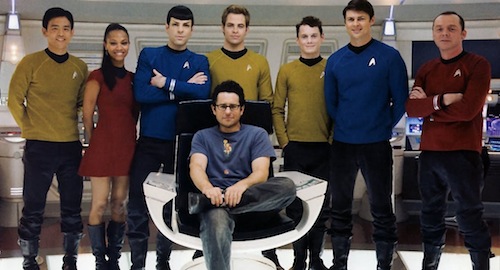
 Okay, that may be an overreaching attempt at a metaphor, but you get the idea. Star Wars needs to be placed in capable directorial hands, and Abrams fits the bill. In an email thread discussing the selection on Friday, a friend of mine said he had hoped for more of an “actor’s director;” someone who could handle the action and special effects but whose most obvious gift was for coaxing performances. I wanted essentially the same,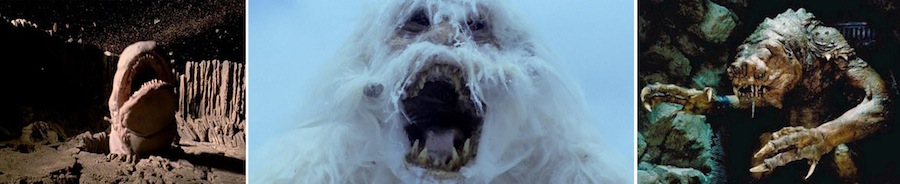

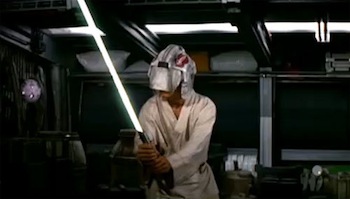 His second challenge may be the thing that caused him, and probably others, to turn down the movie in the first place: reverence for the first three movies. Abrams has said on several occasions that one of the reasons taking on the Star Trek reboot appealed to him was that he was never much of a Trekkie/Trekker, and so he didn’t feel beholden to its legacy when relaunching it. That won’t be the case here. Abrams has often spoke about what an influence Star Wars was and how avid a fan he is. He cited that as one of the reasons he initially passed when Emperor Kennedy came calling with the keys to the Millennium Falcon. The burden of hopes and expectations that fans will place on his shoulders will be second only to those he places on himself. But you don’t get to be where Abrams is without a lot of confidence. So switch off the targeting computer, J.J. Lower the blast shield. Feel the Force flowing through you, and let it guide your instincts. And go ahead and read some of the articles that have popped up all over the web about what fans are looking for from the new movies. There’s plenty of good advice to be gleaned. Here’s one, from


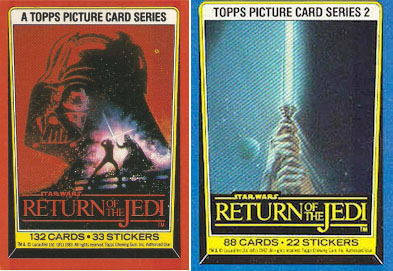 With most of these cards, there were usually at least two series, distinguished by different colored borders. With Return of he Jedi, for example, there was a 132-card set with red borders, and an 88-card set with blue borders. While I had both, it was the red-bordered set that I came nearest to completing. Problem is, when you would have most of the cards in a series, continuing to buy new packs was a maddening endeavor since you were all but guaranteed a bunch of doubles. With each pack bought and each plastic wrapper peeled back, it was like hoping to find one of Wonka’s Golden Tickets. If you flipped through the eight or ten cards and actually found one of the few you still needed, the elation would nearly match what Charlie Bucket experienced when he finally found his slip of gold, and there was no “Mr. Slugworth” on hand to spoil the triumph.
 I hadn’t really done anything wrong. So I opened a pack of cards without buying it. It’s not like it was a carton of food that was going to spoil. It’s not like I licked that thin, rock-hard stick of gum those packs of cards always included. But I still left the store in a panic, feeling guilty and stressing about what would have happened if he had banned me from the store. How would I have explained to my parents why I could never return there? Card collecting had driven me to the fringes of the criminal life. Even now, I sometimes awake suddenly in the night, broken out in cold sweat over the haunting memory of being briefly suspected of pilfering a pack of Dick Tracy cards.


 I Am DB