Okay, we’re off and running. Let’s continue…
KATHY BATES – MISERY (1990)
Annie Wilkes
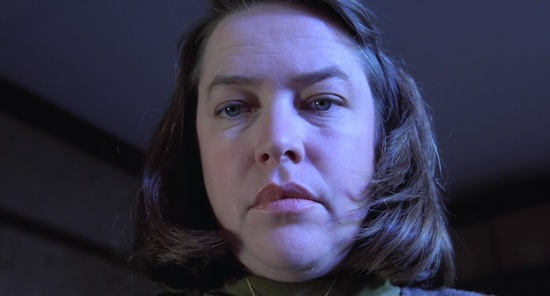
Bates was mostly known for theatre work when director Rob Reiner smartly cast her in the starring role of this taut Stephen King adaptation. She’s dynamite as the frumpy, possibly bipolar, definitely psychotic “number one fan” of author Paul Sheldon (James Caan), whom she rescues from near-death when his car goes off an icy road in the remotes of Colorado. Pleasant enough at first, Annie’s dark side emerges when Paul’s newest book comes out and she learns that he has killed off the main character of her favorite series. As she holds Paul prisoner, forcing him to write the character’s resurrection, Bates slowly reveals Annie’s layers of insanity. She transitions from affable to frightening with slippery ease, and presents a chilling portrait of obsession.
X
SEAN CONNERY – THE UNTOUCHABLES (1987)
Jimmy Malone
As a veteran Chicago cop who joins FBI agent Eliot Ness on a crusade to bring down Al Capone, Sean Connery kicked off a career revival – winning an Oscar, becoming an A-list star all over again and proving there was life long after James Bond. Connery’s Malone brings the calming voice of experience to Ness’ small crew, and the actor fills the role in much the same way with his younger co-stars, his looseness and humor playing strongly off Kevin Costner’s straight-arrow Fed and Andy Garcia’s novice cop. Like many mentors of film and literature, this one has to take his leave in order for the hero to fulfill his destiny, and Connery makes the most of Malone’s final moments with an unforgettable farewell.

X
JACK BLACK – SCHOOL OF ROCK (2003)
Dewey Finn
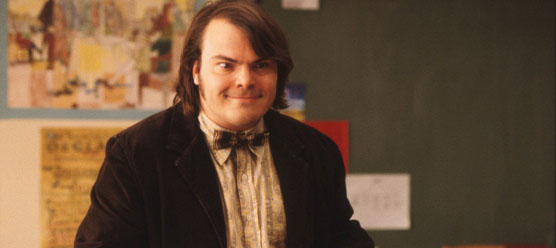
School of Rock is an absolute perfect marriage of star and vehicle. The movie could not exist without Jack Black, and it’s the movie he was born to make. As a wannabe rock star who poses as a substitute teacher at an elite private elementary school and uses his musically talented students to fulfill his dreams of rocking, Black’s trademark goofball energy serves a story that couldn’t be more apt for the Tenacious D frontman. His interaction with his young co-stars, all great in their own right, is terrific fun to watch. This movie makes me smile beginning to end, thanks largely to Black hitting every note.
X
TILDA SWINTON – MICHAEL CLAYTON (2007)
Karen Crowder
Tilda Swinton is one of our most unique and original actresses, yet in Michael Clayton, it is her ordinariness that becomes so captivating. She plays a corporate attorney so desperate to save her case, her firm and her career that she sells her soul to do it…but like everything in Michael Clayton, this scenario plays out in a stripped down, un-heightened manner. Swinton digs deep as an average person who surprises and frightens herself upon discovering the evil she is capable of when backed into a corner. Whether sitting in a bathroom stall or standing on a New York street, Swinton’s Karen Crowder always looks trapped, and her attempts at humor or appearing relaxed are mere masks under which her anxiety stews. Her Oscar winning performance is mundanely chilling.

X
EDWARD NORTON – PRIMAL FEAR (1996)
Aaron Stampler
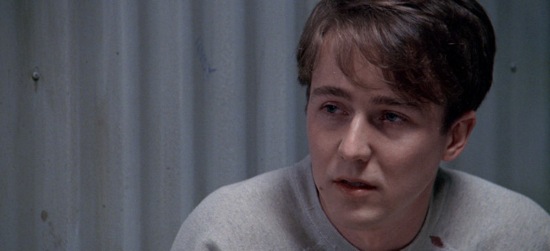
Norton’s Oscar-nominated debut performance was so impressive that his audition tape alone became Hollywood legend, landing him major roles in films by Woody Allen and Milos Forman before Primal Fear even arrived in theaters. As a shy alter boy accused of savagely murdering a powerful and respected Chicago Archbishop, Norton is mesmerizing from the moment he opens his mouth. His agile performance – with that particularly killer mid-film scene in the interrogation room with Richard Gere – left no doubt upon Primal Fear‘s release that a huge new talent had arrived.
X
PAUL NEWMAN – NOBODY’S FOOL (1994)
Donald “Sully” Sullivan
To watch Paul Newman’s sublime performance in Nobody’s Fool is to see one of the finest actors of all time at his assured best. Warm, witty and wry, Newman’s beautifully nuanced work seems entirely effortless. Though he had a few more stellar turns to give, Nobody’s Fool felt like the culmination of a career brimming with charming rogues. His command of the screen brings out the best in his co-stars, and his comfort with the material makes the film feel like a glimpse into the life of a real man in a real town with a real history. It’s a simple film offering simple pleasures, and for any movie fan, few things are more pleasurable than watching Paul Newman at the top of his game.

X
BILLY BOB THORNTON – SLING BLADE (1996)
Karl Childers
Though he had an extensive background as a TV supporting actor and motion picture bit player, Billy Bob Thornton seemed to appear out of nowhere with one of the most stunning performances I’ve ever seen. Working from his own script and under his own direction, Thornton is nothing short of hypnotic as the gentle but deadly ex-convict who befriends a lonely, fatherless boy after being “turned loose” from a state mental hospital. With his guttural voice, nervous hand rubbing and scrunched neck, Thornton wholly disappeared into one of the most original characters in film history. That few people were familiar enough with him at the time to realize the extent of that disappearance didn’t matter. We would not soon forget Billy Bob Thornton.

X
DENZEL WASHINGTON – GLORY (1989)
Trip
Playing a freed slave who enlists in the first regiment of black soldiers in the Civil War, Washington created a searing portrait of a man whose pride and anger run deep. Though Trip is initially confrontational with his fellow soldiers, Washington takes him further, eventually peeling back the front of bravado to reveal the insecurity and fear of a man coming to terms with the freedom he has so long craved, as well as the anger he can’t let go of. Washington steals every scene he’s in, and the look on his face during the whipping – a scene that on its own would have merited the Oscar he won – is eternally burned in my mind.

X
FELICITY HUFFMAN – TRANSAMERICA (2005)
Bree
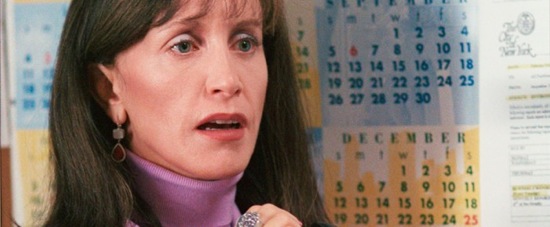
A well-respected actress on stage and television, Felicity Huffman proved with Transamerica that she could carry a film. In the days leading up to a long awaited gender reassignment operation that will complete her transformation from man to woman, Huffman’s Bree discovers that she has a 17 year-old son who is in serious need of some positive guidance. What follows is a lovely road movie charting both the development of their relationship on a cross country drive, and a journey of self-discovery for Bree. Neither the movie nor Huffman’s performance dwell on the transgender issue, and Huffman’s work is no stunt. The script provides a rich and original character, whom Huffman brings to life with affection and authenticity. Makeup helps to sell the illusion of a woman in physical transit, but cosmetics are only skin-deep. True transformation comes from within, and Huffman’s dry humor and big heart make Bree an immensely appealing protagonist.
X
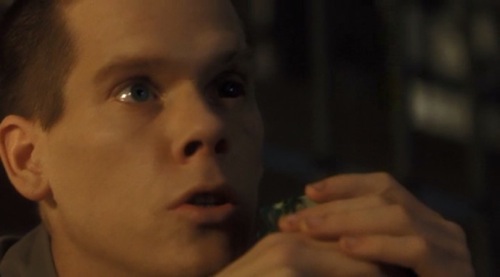
KEVIN BACON – MURDER IN THE FIRST (1994)
Henri Young
Kevin Bacon has been around for a long time and done consistently fine work in countless films, but he does his finest in this underseen courtroom drama. In a performance unlike any he’s given before or since, Bacon is sensational as an Alcatraz prisoner subjected to excessive torture by the institution’s cruel associate warden. Terrified, skittish and darting to and fro like a cornered animal, Henri has a deeply tragic story to which Bacon does great justice (even if the film may be less than historically accurate). Having been in jail since boyhood, Henri is a virgin, so at one point his lawyer arranges a visit from a prostitute. In Bacon’s hands, the scene becomes one of such aching sadness that it could move you to tears. He makes that sexual experience of Henri’s into a lament for every instance of joy, pleasure and hope that his incarceration has denied him. Bacon received a Screen Actor’s Guild nomination, but how was this great piece of acting overlooked by the Academy?
X
PHILIP SEYMOUR HOFFMAN – CAPOTE (2005)
Truman Capote
A quarter of this list could easily be filled with performances by Hoffman, in roles both large (Before the Devil Knows You’re Dead, The Savages), small (Almost Famous, Boogie Nights, The Big Lebowski) and really small (Nobody’s Fool, Punch-Drunk Love). But his Oscar winning portrayal of Truman Capote’s self-destruction while writing In Cold Blood is a master class. Hoffman is fascinating in his delicacy as he shows Capote exploiting others to achieve his own ends, recognizing the cost of his manipulation but too exhilarated by the artistic possibilities to stop himself.

X
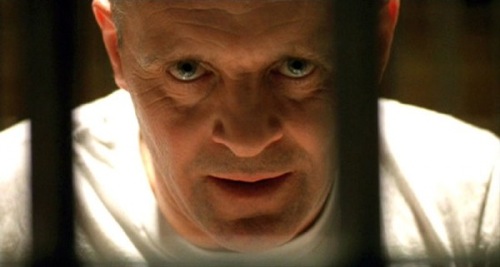
ANTHONY HOPKINS – THE SILENCE OF THE LAMBS (1991)
Dr. Hannibal Lecter
There could be any number of ways to approach the role of the wickedly intelligent cannibal psychiatrist, and one can look at Brian Cox’s take on the character in Manhunter to see a much different approach. But Anthony Hopkins came up with an unforgettable interpretation, making Lecter somehow otherworldly – too human to be a monster, yet too alien to seem quite human. How does one come up with all the seemingly perfect ingredients to concoct such an eerie, original persona? With his approach to Lecter, Hopkins is a showcase in the mystery of great acting.
X
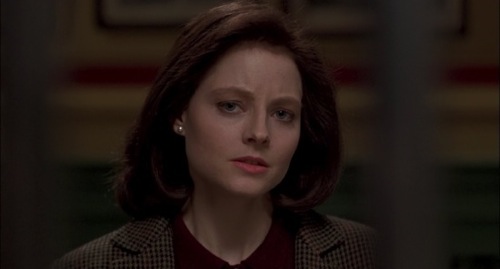
JODIE FOSTER – THE SILENCE OF THE LAMBS (1991)
Clarice Starling
Hopkins’ eccentric character is more pop-culture friendly, but as far as craft of acting goes, Foster matches him move-for-move and then some as the bright, ambitious FBI trainee whose supposedly innocent interview with Lecter sets her on a path to finding serial killer Buffalo Bill. Starling is the center of the movie, and Foster imbues her with the perfect combination of strength, intelligence and openness, as well as an intriguing asexuality and an awkwardness as she tries to make her mark in a field dominated by men. The scene in which she tells Lecter of her childhood attempt to save a lamb from slaughter cuts to the bone.
X
EMILE HIRSCH – INTO THE WILD (2007)
Christopher McCandless
The role of Christopher McCandless is tremendously demanding – physically and emotionally – but Emile Hirsch rises to the challenge in a revelatory performance, throwing himself body and soul into the part of the real-life adventurer. However you feel about the choices McCandless made, Hirsch makes sure you are deeply invested in his journey. In his interactions with the various people he meets along the way (embodied by an ensemble of actors giving terrific performances of their own), he projects an intelligence, mystery and magnetism that makes you understand why people were so drawn to him. The film finds beauty in many places, but perhaps nowhere more so than in Hirsch’s soulful performance.

X
TOM HANKS – FORREST GUMP (1994)
Forrest Gump
As the simpleton hero of an odyssey through latter 20th century American history and culture, Hanks created an iconic character that goes further and deeper than the “stupid is as stupid does” or “life is like a box of chocolates” catchphrases that permeated the zeitgeist. The film’s Forrest-stumbles-through-famous-incidents gimmick is amusing but less interesting as the years pass. What endures is Hanks’ beautiful performance, always grounded and heartfelt even when the film tips toward sentimentality. He does particularly wondrous work with co-stars Robin Wright and Gary Sinise, as well as in Forrest’s moments of solitude and stillness.

X
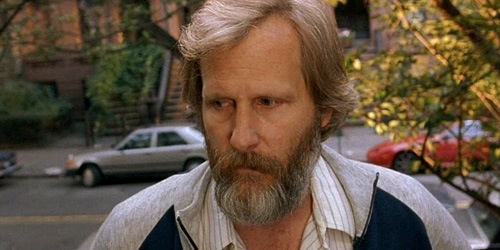
JEFF DANIELS – THE SQUID AND THE WHALE (2005)
Bernard Berkman
Writer/director Noah Baumbach’s observant story about a Brooklyn couple’s divorce and its impact on their teenage sons gives Jeff Daniels perhaps the richest role of his long, diverse career; it’s the fillet of his filmography, as his character might say. Bernard is insufferably haughty, vainglorious and emotionally stunted, and it is to Daniels’ credit that we still feel for him and find him engaging despite his numerous flaws and questionable parenting skills. The character may possess some ugly qualities, but Daniels’ willingness to embrace them results in a performance of comic beauty and raw vulnerability.
X
NICOLE KIDMAN – MARGOT AT THE WEDDING (2007)
Margot
In Baumbach’s follow-up to The Squid and The Whale, Kidman seizes the titular role and delivers a vivid performance that ranks among her best. Margot is a variation on Squid’s Bernard, just as narcissistic as her forebear but even gloomier and more petulant. And perhaps even more so than Bernard, she has some misguided and inappropriate ways of expressing love for her child. Kidman brews all the elements together and makes Margot seem like the authentic result of a life that has been steeped in complicated experiences and relationships. It may be the most natural work she’s ever done. You may not want to know Margot in person, but Kidman makes her fascinating to observe.

X
DENNIS HOPPER – BLUE VELVET (1986)
Frank Booth
Newly sober from years of drug and alcohol addiction, 1986 saw Hopper in top form. He earned an Oscar nomination for his supporting role in Hoosiers, but made an even more lasting impression playing Frank Booth, a truly sick twist of the kind that only David Lynch could conceive. Hopper’s oxygen-sucking, psychosexual freakshow holds the key to a mystery that intoxicates an amateur sleuth, and the actor’s portrayal of homicidal lunacy is scarily unsettling.

X
ROBIN WILLIAMS – ALADDIN (1992)
Genie
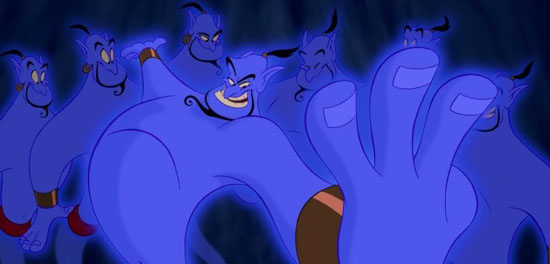
One could go to any number of Robin Williams performances on a list like this – Good Morning Vietnam, The Fisher King, Dead Poet’s Society, Good Will Hunting…but they all have one common drawback: they’re live action. Animation proved the only visual medium capable of keeping pace with Williams’ speed-of-light mind, and the Genie is the ideal vessel for his brilliance, as the character can shapeshift into whatever Williams can imagine, from a buzzing bee to William F. Buckley. Williams meets his match in the ink and paint of Disney’s animators, and gives the performance of his life without ever appearing onscreen.
X
DANIEL DAY-LEWIS – THERE WILL BE BLOOD (2007)
Daniel Plainview
Ladies and gentlemen, if I say Daniel Day-Lewis belongs on this list, you will agree. And how could you not? The actor is monumental as the power-hungry oil baron around whom Paul Thomas Anderson constructs his singularly visionary epic. The film begins with Daniel Plainview as a simple man working for his keep; by the time it ends, his complexities are strewn violently across the screen as he seethes with rage, a dark soul cocooned in his misanthropy and megalomania. It’s a remarkable journey that finds Day-Lewis plunging into the psyche of a deeply flawed, larger-than-life, self-destructive figure in the great cinematic tradition of Welles’ Charles Foster Kane and DeNiro’s Jake LaMotta.

X
Come back tomorrow for the next 20, including an English monarch, an intense Vietnam veteran and a colorful comic book villain.
Updated with Full Series Links:
Preamble
Part I
Part III
Part IV
Part V





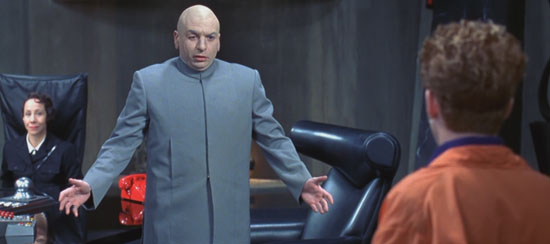
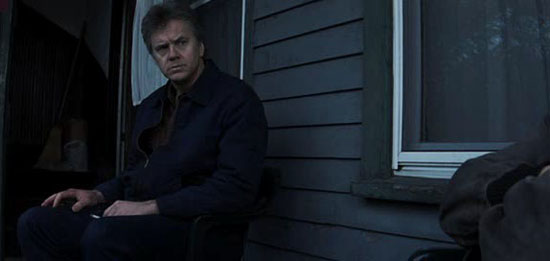


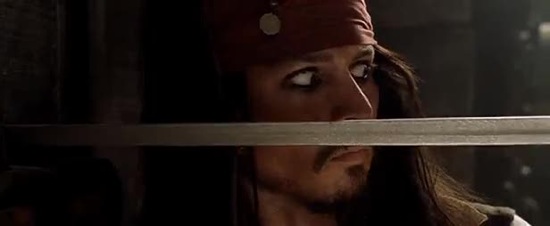
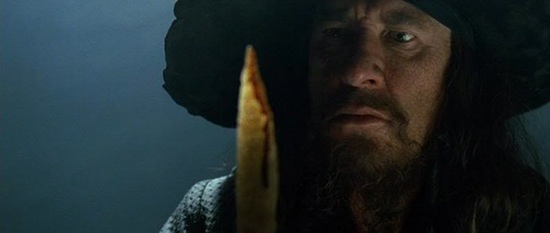

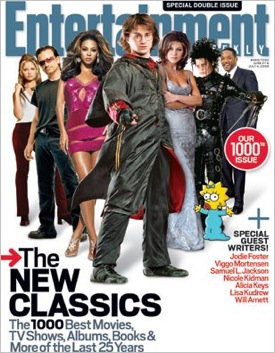 This little project has been a long time in the making, and because I’m always over-explaining things, I’ll begin at the beginning. Four years ago, in late June 2008, Entertainment Weekly published its 1,000th issue. The theme they chose was “The New Classics”: the 1,000 greatest pieces of pop culture from the preceding 25 years. They named their picks for the 100 best movies since 1983, the 100 best TV shows, albums, books and so on. Anyone who reads Entertainment Weekly, or looks at EW.com, knows that they love their lists. We can debate the point of such lists ad nauseam, but let’s face it: they’re fun. From Rolling Stone counting down the 500 greatest albums of all time to the American Film Institute naming the 100 best films ever to Roger Ebert naming his ten best films of the year, we who consume pop culture like these lists. They provoke debate and discussion amongst fans, and they point the unaware toward work they might have overlooked. Even those who decry them probably have a few of their own they’d like to share.
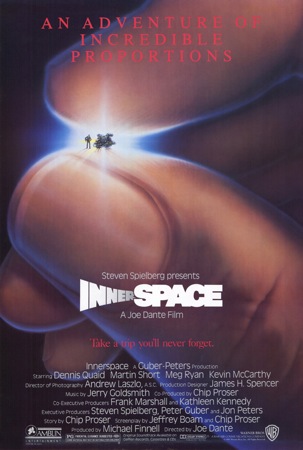 “Nuclear weapons, Jack. They mean nothing. Everybody’s got ’em, nobody has the balls to use ’em. Am I right? Space, you say. Space is a flop. Didn’t you know that? An endless junkyard of orbiting debris. Ahhh…..but….miniaturization, Jack. That’s the ticket. That’s the edge that everybody’s been looking for. Who will have that edge, Jack? What country will control miniaturization? Frankly, I don’t give a shit. I’m only in this for the money.”
 I wrote in my summer of ’87 piece that Innerspace was the first movie my friends and I went to see without any parental accompaniment, which lends it special significance for me. Being old enough to go the movies ourselves was a key rite of passage. Innerspace is one of those movies that I will always associate with a certain place and time. I even remember seeing commercials on HBO heralding its impending pay cable premiere; to this day, certain shots will pop as I watch the movie because I remember them being in those commercials. But I promise, my enduring love for the movie is no mere byproduct of nostalgia. And the movie isn’t one of those that I loved as a kid only to discover as an adult that it doesn’t hold up. Innerspace totally holds up. I have such affection for this movie, which I don’t deny is expressly tied to being 10 years old when I first saw it. This particular blend of sci-fi and comedy was perfect for me at a time when I was really getting into movies, I loved special effects and my sense of humor was taking shape. Dante is a huge Looney Tunes fan, and the comedic influence of those classic cartoons is often reflected in his work. It certainly was here, and as a Looney Tunes lover myself, it surely helped explain my appreciation for the movie. (Legendary Looney Tunes director Chuck Jones has a cameo in the film, as he did in Gremlins.) I was also getting familiar with Saturday Night Live‘s legacy at that time – watching classic sketches in rerun, and marveling that Chevy Chase, Bill Murray, Eddie Murphy, Dan Aykroyd, John Belushi, Billy Crystal and Martin Short all had that show in common…though of course for Short, the legacy really dates back to SCTV. (My family’s traditional Christmas Day movie in ’86 was Three Amigos, which also helped me understand the influence and importance of SNL.)
 If you’re unfamiliar with the movie, I should probably give you the lowdown. Set in and around San Francisco, it’s a sci-fi comedy starring Dennis Quaid as a military test pilot with the improbably macho name Tuck Pendleton, who agrees to participate in a top-secret experiment in which, manning a tightly confined flying capsule, he will be miniaturized and injected into a laboratory rabbit to run a series of experiments. Unfortunately, a case of poorly timed international espionage disrupts the procedure, and Pendleton winds up injected into a somewhat nerdy grocery clerk named Jack Putter (Martin Short), who also happens to be the world’s biggest hypochondriac. He’s a stressed out Nervous Nellie, and according to his doctor, the last thing he needs is excitement or danger. Wanna guess how that’s gonna work out? Once Pendleton establishes contact with his host, the duo have no choice but to work together and try to get the shrunken man out before his oxygen expires or other nefarious forces interfere. It’s essentially a buddy movie…in which one buddy is flying around inside the other buddy’s body. (The movie’s stellar visual effects were created by Industrial Light & Magic, and went on to win an Oscar the following year. In fact, the first Oscar prediction I ever made was that Innerspace would beat Predator for Best Visual Effects. Little did I know how deep that rabbit hole would go.) Meg Ryan, in one of her earliest film performances, also stars as Pendleton’s estranged girlfriend Lydia, a journalist who Tuck and Jack enlist for help. Without spoiling how it all turns out, I’ll say that as a kid, I always hoped there would be a sequel, as the final scene totally sets up the story to continue. But there was never any real intent to make a follow-up; it’s just meant to be a fun finale. I suppose it’s better that no sequel was made. I’m sure it wouldn’t have been as good. (Though maybe Dante could have pulled it off; he certainly did with Gremlins 2: The New Batch.)
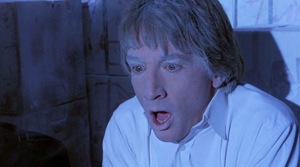 The role of Pendleton was originally intended for an older actor, maybe in his forties. But the filmmakers met with Quaid, who was only 32 at the time (I can’t believe that!), and felt that he was a great fit for the part. Although he and Short wouldn’t share any substantial screentime together, the buddy dynamic still had to work just as well as it does in, say, Lethal Weapon, so the part of Jack Putter was cast with that in mind. They hadn’t really thought about someone as out-and-out comedic as Martin Short, but when they met with him, and then put him together with Quaid, the chemistry was clear. I don’t know what they had in mind for Putter initially, but Short seems like ideal casting when you consider that co-writer Jeffrey Boam (who also penned Lethal Weapon 2 and Indiana Jones and the Last Crusade) envisioned the movie as a Dean Martin/Jerry Lewis comedy; what would happen if Dean was trapped inside Jerry’s body? It’s a pretty interesting relationship to create from a technical standpoint, because Tuck can see Jack’s point of view on his capsule monitor, and they can talk to each other. In order to preserve the spontaneity and improvisation that comes out of two actors working together in the moment, Quaid and Short were always on set during the filming of each other’s scenes, feeding lines to the other through a microphone. In addition, many of Short’s scenes had to be filmed twice: once with the camera on him, and once with him wearing a helmet-cam in order to capture his POV for Tuck’s monitor. Both actors are so great in the movie, and Quaid especially deserves credit for making his character so engaging when he’s stuck sitting in a tiny cockpit for nearly the full two-hour duration.
 The rest of the cast is great too. Ryan was excellent, and clearly bound for stardom. Many of the smaller parts, meanwhile, were populated by actors frequently featured in Dante’s work. Wendy Schall plays a co-worker of Jack’s, and has a moment in her first scene that spun me into a fit of uncontrollable giddy laughter when I first noticed it (it took me a few viewings of the movie before I caught what she did). She only has a few scenes, and while they’re all intended to be funny, she actually manages to add an unexpected bit of depth to the character that makes her kind of sad. Another actor worth mentioning wasn’t really an actor at all. The scientist at the lab in charge of the experiment, Ozzie, is played by John Hora, who was the cinematographer for all of Dante’s previous films. When describing the slightly absent-minded professor quality they wanted for the character, Hora was named as an inspiration, so Spielberg suggested they cast the man himself. Again, it’s a small part, but he plays it really well – funny, and like Schall, a little sad. Dante’s gallery of recurring actors are all so great I could spend time talking about each one – Robert Picardo as the bizarre stolen goods trafficker The Cowboy, Kevin McCarthy as refined villain Victor Scrimshaw – but I’ll resist the urge to mention them all. I suspect that at this point I’ve already alienated the few people who might have cared about this post to begin with. Just trust me when I say it’s a colorful gallery of characters.



 I Am DB