I Am DB

August 30, 2013

Grappling with the Remake

Back in 2007, when this blog wasn’t yet a blog, but just a small mailing list of friends I would occasionally pester with movie-themed rants or punishingly detailed Oscar commentary, I vented a frustration about Hollywood’s unending parade of remakes. It’s a common enough complaint among movie geeks, to the point that ranting about it has grown a tad boring. Well…get ready to be bored.

That 2007 piece, which was eventually transferred to this blog for the reading pleasure of future generations, was inspired by news that John Carpenter’s Escape from New York was about to go under the remake knife. I had little good to say about the man sloppily wielding the blade: producer Neal Moritz, a stain on the landscape of contemporary cinema. Six years later, the remake train rolls ever on, and although Moritz’s planned Escape from New York hackjob never came to pass, the 1981 cult classic was on Hollywood’s lips again earlier this year, newly targeted for remaking…or to use a term that has gained credence since my initial piece, rebooting. Well, I’ve wanted to reboot this topic for a while, and recently there was a piece of news that prompted me to get on with it. But I’ll come back to that.

CONFESSIONS
I concede that I have a knee-jerk reaction every time I hear about the latest remake plan, regardless of whether I’ve even seen the original film or have any affection for it. My immediate response is to get annoyed and defensive, bemoan Hollywood’s lack of originality, blah blah blah. But if I move past that initial irritation, I would admit a few truths. First, remakes — like sequels, comic books, popular novels, TV shows, etc. — enable studios to traffic in recognizable properties that have built-in fan bases. Hollywood is increasingly wary of rolling the dice on original ideas, especially big budget original ideas like Pacific Rim or Elysium, so with each passing year the studios cling more desperately to known quantities that feel safe and seem more likely to pay off. I’m not saying I like it, but that’s the reality of the business, and it’s a reality that is entirely indifferent to how people like me feel about it. Second, each project should be considered on its own merits. Hating the idea on principle doesn’t change the fact that some movies are good candidates for remaking. Third — and admitting this makes me feel dirty because of that whole principle thing — there are obviously a lot of remakes that are pretty goddamn great. The more exceptions you can make for an argument, the weaker that argument becomes, so it’s hard to completely rail against remakes when they include some of the great movies of all time. The Wizard of Oz was originally made as a silent movie in 1925. Charlton Heston’s Ben-Hur was also remade from a 1925 original. The Maltese Falcon was made as a low-budget picture ten years before the Humphrey Bogart version came along. And I only learned about a year ago that Some Like it Hot was a remake of a 1935 French film called Fanfare of Love. Contemporary classics like The Thing, Scarface, The Fly and Cape Fear are all worthy remakes. So the trend can’t be dismissed outright.

At the risk of descending too deep down the rabbit hole, a few of the movies I just named raise additional points that should be mentioned, and the first requires dialing the discussion back a century. In two recent posts — Movie Mixtape #1 and A New Breed of Sequel — I referenced a book called The Genius of the System, by UT Austin film professor Thomas Schatz. This is a book about the rise and fall of the Hollywood Studio System, which I read for a film class in college. I read it again recently because I knew I wanted to write some posts about sequels, remakes and other Hollywood habits that we tend to treat as current or recent developments, but are in fact practices that have been a part of Hollywood from the beginning. So drawing on Schatz’s book, here are a few facts. Even during the silent film era, studios remade their earlier films. And once sound was introduced, there was yet another opportunity to cash in on familiar titles by making versions with sound. Not only were such 1930’s classics as The Prisoner of Zenda and Gold Diggers of 1933 examples of talkies that were remade from silent films, but they were remakes of silent films that had already been remade at least once before the 30’s versions that are considered definitive. In fact, Gold Diggers was based on a play to begin with, making it not only a third remake, but an adaptation of previously existing material. The version preceding the 1933 release came out four years earlier. Anyone who rolled their eyes about last year’s The Amazing Spider-Man rebooting that franchise a mere five years after Spider-Man 3 (and that includes me) might be strangely comforted to know that this has been going on for nearly 100 years. Remember Gus Van Sant’s head-scratching 1998 remake of Psycho, in which he recreated Hitchcock’s original classic shot for shot? Also not a first. When David O. Selznick put Swedish actress Ingrid Bergman under contract, he introduced her to American audiences with the film Intermezzo, a remake of her Swedish film from a few years earlier. But not just a remake. Selznick’s Intermezzo retained the original film’s lighting, camera angles, framing, blocking…everything. It was as close to an exact reproduction as director Gregory Ratoff could manage.

Whoever said lack of originality was exclusive to today’s studio executives?

The other point to mention, stemming from my examples of good remakes, is my personal allowance that I’m generally okay with American (or perhaps it would be more accurate to say “English language”) remakes of foreign language films. Yes, I would prefer that more Americans would see movies in their native language, but we know that’s not happening anytime soon. Even I could do much better on that front. Most American audiences appear to live in mortal fear of subtitles, and will not expose themselves to foreign films. Given that reality, a well-mounted English-language remake seems like fair game to me in order to get a good story across. If the translation doesn’t work, then yes, you wind up with something that is not only a bad or mediocre movie on its own, but a bastardization of a more successful original (for example, the Nicolas Cage-Meg Ryan romantic drama City of Angels, adapted from Wim Wenders’ Wings of Desire…although that film is partially in English). But you might wind up with a second classic, like The Magnificent Seven (based on Akira Kurosawa’s The Seven Samurai), or if not a classic exactly, then a respectable interpretation, like Steven Soderbergh’s Solaris, Mike Nichols’ The Birdcage or Christopher Nolan’s Insomnia.

(Full disclosure: my American-remake-of-foreign-film exception could well be nothing more than a way to justify my deep and intense love for The Departed — based on the Hong Kong film Infernal Affairs — which absolutely goes in the contemporary classic category.)

LET THE RIGHT ONES IN
So whether I like it or not, I need to adjust my attitude somewhat about the whole remake machine. Like with sequels, the solution is not to abandon remakes altogether, but for the studios to consider more carefully what movies to remake and what movies to leave the hell alone. Which brings me to the recent news that prompted me to return to this topic. A long-in-development remake of Poltergeist is moving forward, likely shooting this fall, and actors Rosemarie DeWitt and Sam Rockwell have signed on to play the lead roles originated by JoBeth Williams and Craig T. Nelson. It’s salt on the wound when actors I love agree to take part in these examples of cinematic sacrilege. I know, I know; actors gotta eat too. DeWitt is an in-demand working actress, but she probably lacks the clout to pick and choose any project she wants. I’m sure that sometimes she has to take what fits her schedule at any given time in order to keep working. On the other hand, I’d be surprised if Rockwell doesn’t have the freedom to be more choosy, so his involvement is especially bothersome. In my perfect world, good actors would refuse to participate in remakes that are bad ideas, and so the projects would flame out.

And remaking Poltergeist is a bad idea. The 1982 original, produced and co-written by Steven Spielberg, remains perfectly effective – scary, creepy, exciting and emotionally rich. Even the visual effects still look great. The remake is being produced by Sam Raimi, written by Pulitzer Prize winning playwright David Lindsay-Abaire and directed by Gil Kenan, an Oscar nominee for the 2006 animated feature Monster House. Do any of them actually think they can make a better movie than the original? Lindsay-Abaire says he loves the film and hopes to pay it tribute. That’s nice and all, but movies aren’t cheap. Millions of dollars will be spent to make this movie that has already been made and doesn’t stand to gain from being made again. So why bother? Among the many reasons to let the original stand is that it featured actors who had a specific presence that can’t be duplicated. Heather O’Rourke’s Carol Anne isn’t just a generic movie kid; she is the vocal and physical embodiment of some of modern cinema’s most iconic imagery and dialogue. And then there’s Zelda Rubenstein, the diminutive actress who played the psychic Tangina. Rubenstein was a one-of-a-kind personality who added immeasurably to the tone and mood of the film. Who’s going to compete with her? No attempt at a new version of Poltergeist can be anything more than a nostalgia grab and perhaps an excuse to push the envelope of frightening imagery. Even if I’m wrong, and they can make a good movie that has some value, can they make a better one than the 1982 version? I seriously doubt it. And that should be the launching point for any attempt at a remake. Can we do this better than it was done before?

My previous write-up included a list of 70’s and 80’s movies that I feared were in danger of being remade, and Poltergeist was one of them. In the six years since writing that piece, several of those titles have indeed been revisited, or at least targeted. The Karate Kid and Footloose have made it to the screen so far, while Carrie is due out in October. Police Academy, WarGames, and The Cannonball Run are in various stages of development. A Vacation remake/reboot was all set to go earlier this year, with Ed Helms as a grown Rusty Griswold, taking his own brood on a trip. (Because who wouldn’t want to expose their family to the kind of disastrous misadventures that forever scarred their childhood?) Christina Applegate was set to play Rusty’s wife, but the movie was put on hold due to creative differences between the studio and the filmmakers over whether to maintain the R-rated tone of the original or aim for a more inclusive PG-13. But again, here’s a case where the original should be left alone. Vacation remains a classic comedy that is no less funny for anyone watching today than it was for audiences in 1983. A new version would probably be a little more PC and, depending on which way the rating goes, a little more tame in the language and nudity departments. But I’ll bet it won’t be funnier.

The Carrie remake is a tougher call. On one hand, Brian De Palma’s 1976 original is a classic, and with its chilling third act, Oscar-nominated performances by Sissy Spacek and Piper Laurie, and rich subtext that has provided film theory classes with fodder for over three decades, many probably consider it untouchable. On the other hand, I watched it recently for the first time in years, and it does feel dated in some ways. Much of it is shot through a sort of soft-lens, dreamy haze – a deliberate aesthetic that De Palma was going for to serve his vision for the material, but one that runs the risk of feeling cheesy to newcomers looking at the movie for pure entertainment value. The style might not be an issue for budding film enthusiasts who are open-minded enough to appreciate films as artifacts of the time in which they were made (in other words, the kind of people who might first see Carrie in a college film class). But new generations of viewers who just want the pleasure of a good horror movie might have a hard time connecting with it, even though there is still plenty about it that holds up (Laurie’s performance as Carrie’s fanatical mother, for example, remains potent.) With Chloe Grace Moretz and Julianne Moore, the remake has two strong actresses to fill Spacek and Laurie’s shoes, plus Boys Don’t Cry director Kimberly Pierce could potentially bring an interesting new gender perspective to this female-centric story. So while my early thoughts were, “How dare they remake Carrie!,” the truth is that as remakes go, this one is arguably ripe for a new approach.

Still, if the new Carrie works, it will be among a minority of remakes that do. Other movies that weren’t on my 2007 list but have been remade in recent years include Fright Night, A Nightmare on Elm Street, Clash of the Titans, Red Dawn, Arthur and Conan the Barbarian – none of which needed to be remade. We’ve even entered the era of 90’s reboots with last year’s Total Recall (another Neal Moritz prize, another unnecessary revisitation). Of these movies, Clash of the Titans is the only one that did decent box office, but how many people really loved it? Or even liked it enough to keep it in their personal home viewing rotation? How many of these have taken root in the soil of pop culture? Nothing in the CGI-heavy Titans remake is as memorable or affecting as Ray Harryhausen’s frightening Medusa from the cheesy but charming original. When people talk about Arthur, they’ll be talking about the Dudley Moore version, not Russell Brand’s. When they think of Conan, they think of Arnold Schwarzenegger, not Jason Momoa. When they think of A Nightmare on Elm Street and Freddy Krueger, they think of Robert Englund, not Jackie Earle Haley (another actor who, like Rosemarie DeWitt and Sam Rockwell, should know better). When they think of Fright Night…well, I’m not sure anybody really ever thinks of Fright Night, but I bet those who do are children of the 80’s, and therefore think of the original.

WHAT’S IN A NAME?
In fact, Fright Night represents another problem with the remake machine. If the idea is that studios remake older movies from their back catalogs because there is built-in recognition, why do they remake so many movies that have so little relevance to contemporary audiences? A title like Fright Night probably meant nothing to most young viewers who would be the typical audience for that kind of movie. As for older audiences who remember the original with affection, are there enough of them to justify the investment of time and money in doing a remake that offers few differences from the original other than better production values? It’s a bit of a Catch-22. Studios target remakes to exploit recognizable properties, yet if the property remains recognizable, it’s likely because the original stands the test of time, thereby making the remake a pointless corruption. If the title isn’t recognizable to newer audiences, then where is the value in remaking it to begin with?

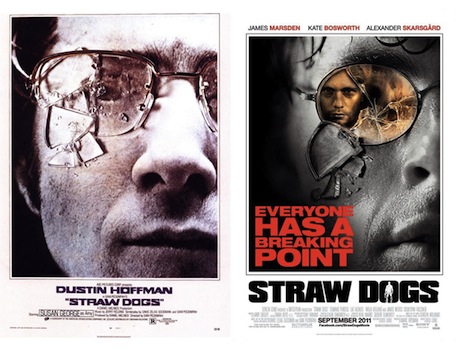
We see this over and over again. Sam Peckinpah’s 1971 thriller Straw Dogs, starring Dustin Hoffman, is considered an important work within the director’s oeuvre, but it was not particularly successful at the box office. So who exactly was the target audience for the 2011 remake starring James Marsden, Kate Bosworth and Alexander Skarsgard? What was to be gained by remaking that movie? It had no resonance with today’s audience, and apparently made little effort to distinguish itself or bring something new to the concept. Gavin Polone, producer of such fare as Gilmore Girls and Zombieland, penned an anti-remake article for Vulture in which he pointed out that the 2011 Straw Dogs did not credit the novel on which Peckinpah’s film was based, but instead credited the original film as the basis for the new screenplay, suggesting there were minimal differences between the two. He also cites the 2006 remake of the classic horror film The Omen, which gave screenplay credit to the original’s writer, David Seltzer…even though he didn’t work on the new film at all. When the 2011 remake of Arthur opened to lousy box office, Entertainment Weekly‘s critic Owen Gleiberman wrote a piece questioning the attempt to make a movie star out of Russell Brand. Near the beginning of that essay, he says, “It’s not just that the $12.5 million it made was significantly below the $18 million that had been predicted. It’s that the $18 million ‘expectation’ was itself a rather pathetic lowball figure, at least for a project that had the nostalgic pedigree, the built-in audience affection, and the ’80s-update curiosity factor that Arthur did.”
The whole idea of Hollywood’s obsession with remakes is that they are an easy and reliable source of income. But Gleiberman is right. If the best a studio could expect for an opening weekend gross was $18 million, then the obsession needs to be seriously reconsidered. Surely the projection was based on how the finished film was tracking; perhaps the studio had higher expectations when they greenlit the project months earlier. Still…how high could their expectations for a remake of Arthur (or of Fright Night or Straw Dogs) really have been? If the hopes are that the title will appeal more to fans of the original than to a new audience, then the insistence on remakes seems even more misguided. Columbia Pictures president Doug Belgrad told The Hollywood Reporter last year in regards to remakes that “…young people don’t know the original, older people have a nostalgia for it….” Yes. Young people don’t know the original, so where is the value in the title? And older people’s nostalgia is for the original, so why would they want to see a remake?  Maybe if a piece of material has truly outstanding potential to both connect with modern audiences and be superior to the original, it would make sense to proceed. But it doesn’t seem like the executives making these decisions are lending any serious thought to why a given movie should be revisited. They just see an old title and say, “Hey, it’s been 20 years since that came out. Let’s make it again!

PASSION AND PAYCHECKS
Not that the entire remake machine is driven by the studios. Plenty of remakes come to pass because a producer, director or actor has an attachment to an older film and wants to bring it to a new audience (and has the clout to do it). I’m generally leery of this argument, as I think that anyone who has that much affection for a certain piece of work should respect it enough to leave it be. When Peter Jackson remade King Kong, I let it slide because he was coming off Lord of the Rings; if he wanted to make a snuff film, I probably would have been cool with it. Plus, I agreed with his argument that contemporary audiences and young viewers don’t want to watch old black and white movies – another fact that I’m not saying I like; just that it’s largely true. It’s kind of the same exception as the one for foreign films, though I’m less inclined to support remaking great old movies just because they’re old. The original King Kong still packs a punch today. I watched it for the first time on the big screen a couple of years before Jackson’s remake, and I was shocked, for example, at how violent the fights between Kong and the dinosaurs were. At one point, the giant ape kills an attacking beast by gruesomely prying back its jaws. And while the creature effects are primitive by today’s standards, there’s still something magical about them. Part of the joy of watching the movie was imagining how shocking and exciting it must have been to audiences in 1933.

Still, Jackson’s drive to remake King Kong was motivated by genuine passion and love, as opposed to cashing in on a title. I wish the same could be said for Neal Moritz, who I mentioned at the beginning…and at length in my previous post on this topic. Fucking Neal Moritz. When he renewed his production company’s deal with Columbia Pictures in 2011, Sony Pictures co-chairman Amy Pascal said, “He has a terrific taste for stories that excite the imagination of audiences everywhere,” while Columbia’s Belgrad said, “He knows what audiences want.” That must explain the complete lack of interest audiences everywhere had in his 2013 films Jack the Giant Slayer and R.I.P.D., as well as last year’s Total Recall remake that nobody gave a shit about (and which lacked all the fun and personality of the Schwarzenegger original). Luckily for him, his commitment to churning out Fast and the Furious sequels keeps his bank account full and his industry standing intact. But really, the only respectable projects he’s been connected to in the last couple of years are the surprisingly enjoyable Jonah Hill/Channing Tatum TV adaptation 21 Jump Street (which is getting a sequel, of course) and the recently wrapped Showtime series The Big C, with Laura Linney. Those titles go on a short list of quality pieces Moritz has delivered over the years…a list that should be much longer when you take into account how much work he’s put out. (His company is called Original Film, which I would assume has to be a deliberate use of irony considering that nearly everything he does is a shitty, bland interpretation of existing material, except that I don’t think Moritz is clever enough to name his company ironically.)

While Moritz may be one of Hollywood’s most egregious examples of creative bankruptcy, he’s far from alone. Michael Bay has a production company called Platinum Dunes which is dedicated to making low-budget horror movies, but which prefers to remake existing ones rather than exert the effort to develop new ideas. Of the ten films Platinum Dunes has released since its first in 2003, seven have been based on previous movies, including genre classics Friday the 13th, A Nightmare on Elm Street, The Amityville Horror and The Texas Chainsaw Massacre. Only three have managed to gross over $100 million worldwide, and just barely at that. But because they were made so inexpensively, they all turned a tidy profit, so I guess there’s no incentive to create something new. At one point, they were developing a remake of Rosemary’s Baby, about which company partner Brad Fuller said, “We certainly come to [the project] with trepidation because of how important [the original] film is. But we’re going to see if there’s a great way to tell that story.” At the time, I suspected the quote continued, “Once we realize there isn’t, we’re going to go ahead and do it anyway.” But for whatever reason, it doesn’t appear to be on their development slate any longer. Don’t worry, though…NBC recently announced they’re going to remake it as a primetime miniseries. I’m sure that will manage to erase all memories of Roman Polanski’s 1968 classic. Platinum Dunes, meanwhile, seems to be branching out to produce non-horror projects, but not necessarily more original ones. Their relaunch of Teenage Mutant Ninja Turtles is coming next year.

It’s easy to dump on Michael Bay and Neal Moritz, but even great filmmakers aren’t immune to the forgettable or inferior remake. The Coen Brothers struck gold with True Grit, but they struck out when they tried to redo The Ladykillers. Among the less heralded work on Steven Spielberg’s filmography is 1989’s Always, a remake of the Spencer Tracy drama A Guy Named Joe. Sydney Pollack dared to mess with Billy Wilder’s Sabrina (sorry, but Julia Ormand is no Audrey Hepburn), while Sidney Lumet had a late career misfire with his take on John Cassavetes’ Gloria. I recall being outraged when Jonathan Demme remade The Manchurian Candidate in 2004, but I’m not sure what was worse: the offense of remaking such a brilliant movie, or the fact that the remake was apparently pretty good, earning favorable reviews and even BAFTA and Golden Globe nominations for Meryl Streep. Despite the positive reaction and presence of actors like Streep, Denzel Washington and Liev Schrieber, I still refuse to watch it. However the results turn out, I’m not quite sure why smart and talented directors like these would choose to spend their time mucking with someone else’s movie. Demme’s Manchurian Candidate seems to be the only one that actually tried to adapt its predecessor in an interesting way, yet with such a sensational original, it may also be the most blasphemous of these examples. So if it sounds like I’m saying that a filmmaker’s passion justifies a remake, I’m not. I don’t know whether the movies mentioned here were initiated by the directors or by the studios, but just because a good director loves an older film and wants to remake it for a new audience doesn’t mean it’s a good idea. Even excellent filmmakers can easily get lost in their own nostalgic notions of paying tribute, too blinded by their reverence to see that they are suffocating the thing they purport to love.

NO RESPECT, I TELL YA
Another problem with the culture of remakes, especially when the original movies are fairly recent, is the lack of respect to the filmmakers — usually still alive, and often still actively working — who made the movie in the first place. Maybe they find it flattering that someone would want to take their movie and try it again, and indeed, some even actively encourage it. Sam Raimi and Bruce Campbell, for example, produced this year’s remake of their influential cult classic Evil Dead. Go ahead and argue that Raimi’s barely budgeted original stood to benefit from better makeup and special effects. I counter that the whole reason Evil Dead remains popular is because it was marked by Raimi’s ingenuity as a director. He used the lack of funds to his advantage, and that prowling, trampling camera and the cheesy effects are exactly what lifted the movie above its simple premise and lent it a sense of fun and even charm, of which the remake seems entirely bereft. In fact, last year’s The Cabin in the Woods was almost an Evil Dead remake in spirit, following the same basic premise but then doing something incredibly fun and original with it. The new Evil Dead had no such creativity up its sleeve, serving no purpose other than delivering its scares in a slicker package and increasing the gore factor tenfold.

But who cares about a creative purpose when there’s money to be made.

Not all filmmakers share Raimi’s attitude toward their material being rebooted, but few have any power to prevent it, as the rights belong with the studios. (Though I’d bet that if Steven Spielberg wanted to stop Poltergeist from being remade, one phone call is all it would take.) Two years ago, there was an announcement that Martin Scorsese, Leonardo DiCaprio and their Departed screenwriter William Monahan were remaking a 1974 James Caan movie called The Gambler. The original was written by James Toback, who learned about the new version along with the rest of the world, when the news was published on Deadline. He had not been approached by any of the principal filmmakers or by anyone at Paramount, and though legally none of them had any reason to discuss the remake with Toback, he was surprised and offended that no one had bothered to ask for his blessing. In a lengthy reaction piece which Deadline published a couple of days after the announcement, Toback — an old school Hollywood Man’s Man — recounted how the original movie came together, explaining that it was a highly personal and autobiographical story. He writes that although the movie was widely acclaimed, it is largely forgotten, having been released with little attention during a period of leadership transition at the studio. Who knows if this remake will even happen. Movies gets announced all the time and then never materialize. There hasn’t been any news on the project in a year, and those latest reports stated that Scorsese was no longer involved and that Todd Phillips might direct. (That sounds smart. The guy who directed Raging Bull, Taxi Driver and GoodFellas has moved on, so let’s get the guy who directed The Hangover, Road Trip and Due Date.) I wonder how Toback would have felt about his movie being remade even if the players had courted his blessing. In the end he would have no say one way or other, but considering how personal the movie is for him, and how mishandled it was in the first place, I can’t imagine he’d have been pleased with the idea.

But who cares about respecting artists when there’s money to be made.

SUGGESTION BOX
I’m not remotely foolish enough to think Hollywood’s reliance on existing titles is going to change, but a little wishful thinking can be the spoonful of sugar that helps the medicine go down. My wish is that studios could find a way of getting audiences to see older movies instead of spending millions of dollars remaking them, less successfully in most cases. What if popular directors or actors — people like Christopher Nolan or Robert Downey Jr. — could be enticed to make a short film, which would be shown in front of an older movie, along with a brief interview in which they discuss the movie and why they love it? If the movie is old enough that it feels too far removed in tone, mood or style from what today’s audiences are used to, then someone like Nolan (or Scorsese or Fincher or Spielberg or Paul Thomas Anderson or so many others) could help illuminate its place in film history, its significance, and how it paved the way for contemporary movies that are more in an audience’s comfort zone.

Why not ask Disney, Pixar, Warner Brothers, and other animation companies to produce new shorts that could also be shown in advance of the feature presentation? Or acquire existing shorts from independent animators whose work is never seen by wide audiences? (Those Oscar nominated Best Animated Shorts that no one has ever heard of are coming from somewhere.) The studios could re-release deserving movies surrounded by all of this new content that, taken together, would create a fresh experience (not to mention providing more bang for your buck, considering how expensive it has become to have a night out at the movies). The returns would be smaller, but the investment would be too, and there will still be plenty of money to make from other tent-pole movies that have become the studios’ bread and butter.

Even if older movies could actually get this kind of lavish treatment, it wouldn’t mean the end of remakes, but it might mean that studios could start being more selective with the targeted titles. I said earlier that the guiding question when considering a remake should be, “Can we do this better than it was done before?” But maybe I should amend that to say that it’s not a matter of better, but of whether a new version can genuinely offer something interesting that the original didn’t have. The problem is that in most cases, the filmmakers convince themselves — and then try to convince audiences — that they can. But rarely is that the case. One reason that Scorsese’s Cape Fear stands out as a success is that he gave the victimized family a more fractured and complex dynamic than societal norms allowed in 1962, the year of the original film. By placing flawed, complicated characters into the situation which the original film presented, Scorsese added a moral ambiguity to the story that justified revisting it, and distinguished itself successfully. If more remakes were approached with the same thoughtfulness, perhaps there would be a weeding out process resulting in fewer of them, and those that we got would be better. Remakes shouldn’t be made because studios see dollar signs in an older title, or merely because an old title is sitting around. They should be made because a filmmaker with a vision sees a genuinely creative opportunity to deliver a fresh take on a familiar story. And even then it should be done sparingly. Remakes, like sequels, have always been part of the Hollywood tradition, and that’s not going to change. What needs to change is the lack of thought, care and artistic integrity that results in an ever-growing pile of rotten reboots, reimaginings, and revamps.

Coming Soon: A look at some remakes currently in development, with an assessment of how bad an idea each one is.

August 24, 2013

Holy Questionable Career Decision, Batman!

Filed under: Movies — DB @ 7:00 pm
Tags: , , , , , ,

Well, wrong suit, but close enough.

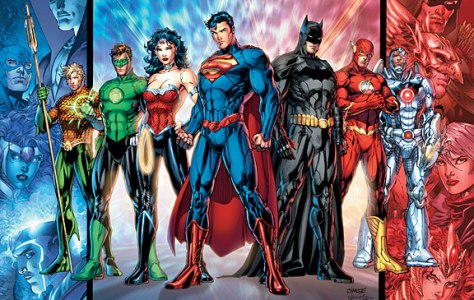
Since Thursday evening, the internet — nay, the whole of Planet Earth, and possibly galaxies beyond — have been abuzz with the news that Batman’s cape and cowl, last donned by Christian Bale, will be taken up by Ben Affleck when the Dark Knight returns to the big screen in 2015’s sequel to this summer’s Superman reboot, Man of Steel. A sequel to a reboot of another character’s series? Those of you who don’t follow these things might find all of this too confusing. So let me take you back about a month.

It’s Saturday, July 20th, day three of Comic-Con 2013, and the San Diego Convention Center’s famed Hall H is awash in the stale, pungent stench that can only result when 6,000+ geeks pack into a large, windowless room, surging with adrenaline and not daring to exit for food or bathroom breaks during or even between panels, for fear that they might lose their seat or miss a major reveal. A reveal, for example, like the one made during that day’s Warner Bros. panel by Man of Steel director Zack Snyder, who teased the crowd with news that in the next Superman film, the hero would square off against the Caped Crusader.

I know that fanboys were creaming themselves at this news — an ejaculation of collective excitement that surely wasn’t helping the air quality in Hall H — but I have to say as someone who was never a comic book reader, I don’t really get the appeal of Superman vs. Batman. I know there is a long history of these two meeting up in the pages of DC Comics — sometimes as friends, sometimes as enemies — and I can see the attraction of having them fight side by side. But why do I want to see them fight each other? They’re both heroes, even if far apart ideologically. From what I understand, the source of conflict between the two — when it exists — is that Batman sees Superman as a boy scout whose vision (aside from being laser) is black and white in a word of grey, while Superman rejects Batman’s M.O. of revenge-fueled, vigilante justice. Maybe the past stories of antagonism between the two always give eventual way to a coming together against a common enemy. I don’t know. Like I said, I haven’t read the comics. But it does seem clear that pitting the two against each other in the upcoming movie is meant to be more than just a brief skirmish before they eventually join up (think Iron Man, Thor and Captain America pummeling each other in a scene from The Avengers). I’ll tell you one thing: if this clash of the titans is anything like the never-ending battles between Superman and Zod in Man of Steel, you can wake me when it’s over.

The Comic-Con announcement was made using a passage of dialogue from Frank Miller’s seminal 1986 graphic novel, The Dark Knight Returns. Snyder introduced Man of Steel actor Harry Lennix to read a brief snippet of dialogue from that book, and those familiar with Miller’s story knew what it meant. Those who didn’t got the picture a moment later when the Superman logo appeared on the screen, encased after a few seconds by the Batman logo. Snyder added that the currently untitled follow-up to Man of Steel would not necessarily be adapted from The Dark Knight Returns, but that the dialogue Lennix read represented the gist of what the filmmakers intended for the next installment. The decision to bring Batman into the Man of Steel sequel seemed to me like Warner Bros. and Snyder lacked confidence that their new Superman could support his own franchise. Before even giving him a chance to thrive on his own, he’s being paired with another iconic protagonist. But maybe the studio and DC are just in a rush to compete with Marvel’s Avengers success by building toward an already announced Justice League movie.

So that’s the background, which returns us to Thursday evening and the announcement that Ben Affleck will be playing Batman in the new movie. Even the Comic-Con bombshell caused less of a shockwave than word of Affleck’s casting. I’m not sure last November’s news that Disney had purchased Lucasfilm and would be making new Star Wars movies generated as much fevered chatter as this has. Some are fine with the choice. More appear to be indifferent. Most are outraged, and seem to think that this casting is a crime worthy of trial at Nuremberg.

Me, I’m just surprised. I can’t figure out why Affleck would be interested in such a move at this moment in his career. To understand why it puzzles me, let’s jump back in time again. After Good Will Hunting, Affleck and Matt Damon were Hollywood’s new golden boys. The following year, they each played supporting roles in prestige projects that competed for the Best Picture Oscar (Damon in Saving Private Ryan, Affleck in Shakespeare in Love). They also reunited on-screen in 1999 for pal Kevin Smith’s Dogma. But by and large, those next several years after Good Will Hunting were marked by forgettable movies from Affleck. Boiler Room struck a chord, and Changing Lanes was pretty good, but these were bright spots amidst a spate of bland studio fare and would-be blockbusters that included Pearl Harbor, Reindeer Games, Daredevil (another comic book character, this one from Marvel’s stable), Paycheck, Jersey Girl, The Sum of All Fears, Surviving Christmas and the dreaded Gigli. High profile romances with Jennifer Lopez and Gwyneth Paltrow didn’t help his falling public persona, and by 2004 Affleck was both punchline and punching bag (as this example shows).

So he smartly withdrew from the public eye for a couple of years. He married good girl Jennifer Garner, started a family, and re-emerged with a supporting role in the 2006 drama Hollywoodland, earning praise for his performance as George Reeves, star of TV’s Adventures of Superman. But it was the following year that Affleck really silenced the naysayers, impressing critics and audiences with his directorial debut, Gone Baby Gone. Anyone who dismissed his success behind the camera as a fluke was proven wrong by his follow-up, the extremely well-received heist drama The Town. And then came Argo, which swept through the 2012 award season with multiple wins for Best Director and Best Picture (including an Oscar for the latter). As Affleck’s directing career has ascended, he’s worked less frequently as an actor (outside of his own movies), being more selective about the movies he’s chosen to appear in, and balancing lead roles with supporting.

So here he is, director of the reigning Best Picture winner, reigning Best Director recipient from the Director’s Guild of America, back on top of the Hollywood food chain, no longer hunting for goodwill. He’s settled on his next directing gig — an adaptation of the Dennis Lehane novel Live By Night — and has accepted the male lead in David Fincher’s adaptation of the Gillian Flynn bestseller Gone Girl. With things going so well, I can’t see the upside for him in taking on the role of Bruce Wayne/Batman in a sequel to Man of Steel.

Accepting his Best Director award from the British Academy of Film and Television Arts earlier this year, Affleck poignantly spoke of being given a second act by the film industry. He echoed that sentiment when accepting Argo‘s Oscar for Best Picture. So why now, when his directing career is on fire, would he step back into the kind of commercial product that brought his career to a screeching halt in the first place? Man of Steel‘s reviews were pretty evenly split between positive and negative, and although audiences have turned it into a $200 million-plus hit, opinions seem just as divided. (I was disappointed, though the problems I had might not necessarily be an issue with the sequel.) I mention the critical and box office reception to point out that as blockbusters go, jumping onto the next Superman movie is hardly a career killer. It just isn’t something Affleck needs right now, and seems like a distraction from continuing on his post Argo trajectory.

Did he do it for money? Maybe, but come on…a guy like Affleck doesn’t have to make a move like this solely for financial reasons, and I would think that continuing to capitalize on his directing heat would be more appealing than donning spandex and cashing a many zeroed check. Did he do it to strengthen his business relationship with Warner Bros., possibly gaining the cache to direct a less commercial project down the line that might otherwise face an uphill battle to secure funding? It’s been done before. Whether it’s acting in a big studio movie and then a small indie, or acting in a big studio movie and then directing a small passion project, the one-for-them, one-for-me mentality goes back to John Cassavetes appearing in movies like The Dirty Dozen and Rosemary’s Baby, if not further. But Affleck’s movies as a director have been profitable for Warner, and well received by audiences and critics. While not blockbusters, his movies are solidly commercial, so unless he’s eyeing something particularly obscure, I can’t imagine he’d have trouble getting bankrolled any time soon.

It’s more understandable that Warner would want Affleck. His strongest relationship at the studio over these past few years has been with Jeff Robinov, who was president of Warner Bros. Picture Group until studio politics led to his recent departure. Robinov had a reputation as a filmmaker’s champion, enjoying close relationships with people like Affleck, Baz Luhrmann (both of whom commented on his situation as it was unfolding), Christopher Nolan, and Leonardo DiCaprio. Their loyalty to Robinov leaves future collaborations with Warner Bros. uncertain, so it’s no surprise that the studio courted Affleck to take on a cornerstone role like Batman. He’s already been given first shot at directing many of their projects in development, including — apropos of this new development — the eventual Justice League movie, a job which Affleck turned down. But he will make Live By Night for Warner, and he was apparently planning to write and direct the studio’s adaptation of Stephen King’s classic, The Stand. (Less than 24 hours after announcing Affleck would play Batman, Warner revealed that The Stand would shift to Scott Cooper, director of the Jeff Bridges Oscar winner Crazy Heart and this December’s highly anticipated Out of the Furnace. I hope any plans for The Stand involve more than one film, because even a three-and-a-half hour running time won’t do justice to that tome…but that’s another discussion.)

By securing Affleck for a prominent role in a major franchise, the Warner Bros. leadership can show Affleck that they are committed to the relationship. In the announcement, studio exec Greg Silverman said, “We knew we needed an extraordinary actor to take on one of DC Comics’ most enduringly popular Super Heroes, and Ben Affleck certainly fits that bill, and then some. His outstanding career is a testament to his talent and we know he and Zack will bring new dimension to the duality of this character.” Sue Kroll, Warner Bros. Pictures’ president of worldwide marketing and international distribution, added, “We are so thrilled that Ben is continuing Warner Bros.’ remarkable legacy with the character of Batman. He is a tremendously gifted actor who will make this role his own in this already much-anticipated pairing of these two beloved heroes.” Clearly, the studio wants to stay in the Ben Affleck business.

In addition, the studio will no doubt want to spin the Man of Steel sequel off into the next series of Batman films. The clock is ticking on rebooting that franchise now that the Nolan/Bale trilogy is done. After all, studios seem to think that audiences will lose all interest in a franchise if it isn’t relaunched within five years of the previous version – see Hulk, Spiderman, and Superman himself. Does that mean Affleck is committing to carrying on the Batman role in multiple movies, including Justice League? (Maybe they’re hoping he will change his mind about directing that DC answer to The Avengers.) Nothing has been officially announced beyond the Man of Steel sequel, but sources say that Affleck’s deal does include more than one time up at bat. I always take “sources” with a grain of salt, but in this case I’m inclined to believe it. Why would Warner cast Affleck as Batman if they didn’t intend for him to stick around?

That’s another reason that Affleck’s decision puzzles me. Let’s assume Warner Bros. will want him for at least three standalone Batman movies, plus Justice League. That means he’s looking at a long-term commitment that might prevent him from accepting more logical acting roles in between his directing gigs. By logical, I mean acting for great directors he could observe for his own developing method. The late, great Sydney Pollack used to say that even after years of directing, he would still take acting roles in films by the likes of Woody Allen and Stanley Kubrick in order to observe them in action. That’s exactly what Affleck should be doing. His decision to star for Fincher in Gone Girl makes sense, as did taking the lead in Terrence Malick’s To the Wonder. But what is he going to learn from Zack Snyder? How to fetishize tormented, provocatively attired girls?  (That’s not fair; I’ve never seen Sucker Punch. The trailer pummeled me into a brutal migraine, and I worried the full movie might kill me.)

After working so hard to rebuild his image, Affleck has put himself right back in moviegoers’ crosshairs by accepting the role of Batman. As I said earlier, the reaction amongst fans seems to be primarily vitriolic. If opinions are in fact more evenly split, it’s the dissenters that are making the most noise, as is usually the case. Petitions calling for Affleck’s removal from the project garnered thousands of signatures within a day of the news. Then again, these over-the-top reactions are nothing new when it comes to casting an iconic character, particularly in this franchise. When Christopher Nolan told the world that Heath Ledger would be playing The Joker, fans were skeptical at best, incensed at worst. Check out the graphic embedded here, showing various online responses to the news. I would love to see what all those people had to say once they finally saw Ledger take a wrecking ball to their concerns with his spectacular performance. And let’s not forget the response when Tim Burton cast Michael Keaton as Batman back in the 80’s. The internet didn’t exist yet to document the disbelief and disappointment, but word got around nonetheless. Then the movie came out, and Keaton’s performance was roundly applauded. So Affleck may yet have the angry mob eating its words. I hope so. I would love to see him prove them all wrong. I’m more interested in why he would play Batman than I am in whether he can. I don’t know if he has the right stuff for the character. I do know that statements like the ones made by Warner execs Silverman and Kroll, calling him an “extraordinary” and “tremendously gifted” actor, don’t quite hold up to scrutiny. Affleck has a twinkle in his eye and a charm that serves him well in roles with a comedic bent, as well as a penchant for quiet weariness that suited his self-directed work in The Town and Argo. But let’s not pretend his acting gifts are broad and varied. He doesn’t have the range or subtlety of his buddy Damon. That weariness I mention could absolutely work for Batman, while the playfulness could befit Bruce Wayne. I suppose it all depends on how Snyder and screenwriter David S. Goyer choose to present the character.

Even if Affleck is rejected in the role once people actually see it, I’m confident his credibility will survive thanks to his proven track record as a director. He’ll bounce back relatively unscathed in the long run. But why open himself up to the abuse in the first place? He’s been making the most of the second act that he spoke of in the BAFTA speech above, and this move just doesn’t seem in keeping with that revival. Just like after Good Will Hunting, Ben Affleck is once again a golden boy in Hollywood. I’m not sure why he wants to go down this road, but I’m rooting for him to stay golden.

August 6, 2013

Separating the Art from the Artist. Or Not.

Filed under: Movies,Real Life — DB @ 4:15 pm
Tags:

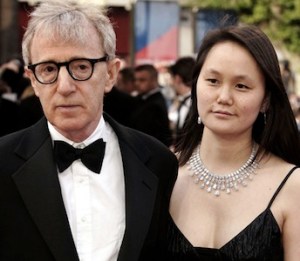
While scrolling through my Facebook wall on Saturday, I came across a post in which a friend — to protect the innocent, let’s call this person Hermione — explained that she had once stated her refusal to see a certain artist’s films in the theater because she did not agree with the person’s life choices. Upon hearing that remark, a colleague responded, “Hate the artist, not the art.” To which Hermione asked her Facebook community, isn’t an artist inextricably linked to his or her art? She added that the artist in question is Woody Allen, and that with Allen’s new movie Blue Jasmine currently earning strong reviews, big box office (“big” for an independent film) and major Oscar buzz for Cate Blanchett, the debate was once again on her mind. It’s a valid question, which elicited about 60 responses from her friends. I read through them all with great interest, and decided that since I’ve given the topic some thought myself in the past, I would raise it here where I could expound on it more than I could on Facebook.

An artist is inextricably linked to their art simply by having created it, but I don’t think the art necessarily speaks to the opinions of the artist. The creation may be a story that reflects an entirely different set of values than those of the artist. In fact, I think this is a mistake we make too often when we consume a story, whether in a book, a song, or a film. We assume that it correlates to the author’s own morality or viewpoint. But sometimes, an artist wants to tell a story of vile people doing vile things that they themselves would never do in reality. Eminem may not have lived the purest life as a young man, but he sings about an awful lot of unsettling things that I think it’s safe to say he never actually did. Colin Meloy, lead singer of my beloved Decemberists, might have been in a dark place when he wrote “The Rake’s Song” — in which a selfish widower who despises his three young children murders them all and feels totally fine about it — but I don’t think Meloy is promoting or condoning filicide. (He’s written some perfectly sweet and lovely songs too; don’t judge him by “The Rake’s Song”, which is about as dark as he gets.)

The Woody Allen situation is different, of course. The problem people have with Allen — the problem relevant to this discussion, at least — is not that his movies contain themes or ideas that make them uncomfortable, but rather that Allen himself has done things that trouble them. They don’t want to spend their money supporting someone whose actions they find so offensive, for doing so would be tantamount to excusing these things. Or the money is irrelevant, and they just can’t enjoy the work because their personal feelings are too strong. It’s an absolutely reasonable stance to take, and the point of this post is not to argue for or against it, since there is no right or wrong answer. It’s a decision every consumer has to make based on their own feelings. Many of Hermione’s Facebook friends agreed with her and said they do not go to see Allen’s movies. Others said they are able to separate their feelings about Allen from their enjoyment of his films. Some brought up Roman Polanski as another artist who poses the same conundrum.

I fall into the latter category. I don’t let an artist’s real life circumstances interfere with my desire to see their work. “Don’t let” may not be the best way to phrase it, actually, since I never made a conscious decision about it. I simply don’t have trouble appreciating this movie or that because of what its star, director, location manager, etc. has done. I’m a Woody Allen fan, so however sketchy some of his off-screen behavior may be, I’m not going to stop watching his movies. If Roman Polanski has a movie out that interests me, I’m going to see it regardless of his past inappropriate conduct. Ditto for Mel Gibson. Yes, I’m troubled by many of the things he’s said and done in recent years. But I can’t bring myself to reject Lethal Weapon or Braveheart because of it, nor am I going to boycott future works of his that look appealing. I’m sure there are some people who don’t understand how I could continue to support the career of such a person. All I can say is that for me, the work is the work. By avoiding it, I’m only punishing myself. Those that think they’re impacting the artist’s financial rewards by withholding patronage are kidding themselves, but if it makes them feel better, I won’t argue it. I’ll just say that if that’s their sole reason for avoiding something that they would otherwise choose to experience, the loss is theirs, not the artist’s. (And for these people, I’m curious: does your opinion change once the artist has passed away?) If the reason is not monetary, but instead an inability to watch that person’s work without thinking about who they truly are and experiencing some degree of disgust, then they should stand by that, as long as that feeling outweighs their interest in the movie, album, book, etc. I’m not sure what it says about me, if anything, but I have no problem separating my opinions. I can still happily watch The Naked Gun without dwelling on O.J. Simpson’s crimes, or see David Lynch’s Lost Highway and be creeped out by Robert Blake’s character, but not by the man himself and the murder for which he was convicted. When I listen to “Unchained Melody”, “Be My Baby”, “Imagine” or “My Sweet Lord”, I don’t think about Phil Spector serving time for murder (though in truth, I don’t think I knew Spector was involved in any of those songs before watching the recent HBO movie with Al Pacino).

Simpson, Blake and Spector may be extreme cases, but there are many famous people who have engaged in behavior that some might find troubling. Where do we draw the line about what we’ll tolerate? I ask that not as a defiant challenge intended to trip anyone up on their own morals, but as a legitimate query. In 1965, at the height of his James Bond fame, Sean Connery gave an interview to Playboy in which he said there was nothing wrong with slapping a woman in extreme circumstances. Christian Bale was involved in a highly publicized incident a few years back on the set of Terminator: Salvation, where he unleashed a profanity-filled tirade on the cinematographer, who was moving around during a scene and causing Bale to become distracted from his performance. Russell Crowe was known to exhibit bad behavior earlier in his career, including a 2005 incident in which he threw a phone at a hotel employee. In 2007, Alec Baldwin left his 11 year-old daughter an enraged voicemail complete with name calling. While directing Three Kings in the late 90’s, director David O. Russell was allegedly abusive to crew members, prompting star George Clooney to confront him about his inappropriate behavior and reportedly leading the two men to blows. A few years later, Russell and Lily Tomlin got into a heated feud while shooting I ♥ Huckabees that escalated to the point of Russell screaming and kicking equipment around the set. Another incident between the two showed that Tomlin was just as capable of bad behavior. Winona Ryder shoplifted. Eddie Murphy and Hugh Grant were caught with prostitutes. These are just a few examples of bad behavior gone public. Who knows how many other artists, from filmmakers to writers to musicians, have abused co-workers verbally or physically, or engaged in other actions that might be a turn-off to fans. I’m sure if we knew about all the cases of womanizing or infidelities among professional creative types, we would end up with a list many pages long.

Now for the record, Crowe and Russell have apologized for their actions, and seem to have mellowed out considerably. Clooney and Russell even made up after years of lingering animosity. As for Bale, his outburst seemed to be a one-time episode. More to the point, most of these offenses are certainly less serious than those attached to Polanski, and most are less questionable than the things Allen has done. (In her Facebook conversation, Hermione noted that it was not just Allen’s history with Soon Yi Previn that made her uncomfortable, but also other accusations leveled by Mia Farrow in her autobiography, which Hermione acknowledges is one-sided and strongly biased.) But my point in raising all of these examples is to illustrate that artists — like anyone else — display all manner of bad behavior and poor choices. Sometimes chronically, sometimes just once (as far as we know). So anyone who has such a problem with Allen, Polanski, Mel Gibson, etc. that they refuse to support that person’s work is completely entitled to do so. But it’s not unreasonable that if you’re going to make moral judgements on an artist for one thing, you have to ask yourself where you draw the line for other offenses, and be prepared to not necessarily like your answer.

Another consideration to keep in mind in nearly all these cases involving famous people’s crimes and misdemeanors (see what I did there?), is that we rarely know the whole story. We aren’t witnesses to these events, and have no idea what the full picture would reveal. The media can be biased, and the entertainment media in particular loves to bring down the very people they make such efforts to anoint. Equally important to consider is that people are not necessarily defined only by their uglier characteristics. Whatever Woody Allen has done privately, consider that as an artist, he has provided actresses and audiences with some of the most compelling and rich female characters on film in the last 30-plus years, if not of all time. In a movie landscape that is increasingly driven by action movies and comedies that put men front and center, isn’t Allen’s consistent ability and desire to write so well for women something worth celebrating? There might be other artists who have contributed to society in positive ways that don’t get the attention devoted to their more embarrassing or disturbing episodes and tendencies. Only in the fictional works created by the artists we hold to such high standards are the lines between good and bad so clear. In real life — and in the more complex and morally ambiguous movie worlds that filmmakers like Allen and Polanski occupy — we dwell in shades of grey. Think of Matt Dillon’s character in the movie Crash. (Yes, I realize I’m using a fictional character to make an actual point, but I’ve said many times that I’m incapable of connecting to reality without using movies.) Dillon plays a racist policeman who, early on, pulls over a black couple and then crosses a line when frisking the wife. Yeah, he’s that guy. But he’s also a son who watches with helpless, heartbroken frustration as his aging father deals with medical problems that go untreated due to insurance denials. And of course, he later risks his life to save the same woman he pulled over, rescuing her from a burning car before it explodes. The lesson, which that whole (often derided) movie puts forth, is that we’re quick to pass judgement on people without knowing their full story.

I’ll wind down the topic with what I’ve always considered one of the most challenging examples of this art vs. artist quandary. Elia Kazan is the pioneering theater and film director whose work in the latter medium includes A Streetcar Named Desire, On the Waterfront, East of Eden and A Face in the Crowd. He is a founder of the Actor’s Studio, and is widely regarded as the greatest director of actors in history. Dozens of outstanding performers who went on to long careers were first introduced, either in theater or on film, by Kazan. Marlon Brando, James Dean, Warren Beatty and Eva Marie Saint were among the most prominent, but his discoveries also included great character actors like Pat Hingle and Rip Torn. He also directed the original Broadway productions of Death of a Salesman, Cat on a Hot Tin Roof and Streetcar. Without a doubt, Kazan is one of the most significant and influential artists of the 20th century.

But of course, these achievements are not all that he’s known for. Kazan is also infamous for his 1952 testimony before the House Un-American Activities Committee, during which he named names of fellow artists who had been connected to the Communist party. All of the names he provided were already known to the committee, but his appearance as a friendly witness was nevertheless seen by many as a betrayal. His testimony may not have directly led to any blacklisting, but his cooperation upheld Joe McCarthy’s institutional witch-hunt that ended countless careers in Hollywood and beyond. If Kazan had refused to testify or name names, his ability to make films might have ended, but his thriving career in New York theater would likely have continued unaffected. He also had enough clout that if he had challenged HUAC, he might have helped put an end to its despicable activities. Instead, he played ball and saw his good fortune continue to flourish while others saw theirs evaporate. And yet, a mere two years later, Kazan was given the Academy Award for Best Director (his second) for On the Waterfront, a movie that deals with the consequences of informing and which has been interpreted by many as Kazan’s attempt to justify his actions regarding HUAC. When you think about how political the Oscars are known to be, and how many factors other than the movie itself make their way into people’s voting process, Kazan’s 1954 win is stunning. But here was a case where even in the wake of his controversial action, the film community still saw fit to recognize his artistic achievement. And although he went on to continued success and many accolades, including a Kennedy Center Honor in 1982, some organizations, such as the American Film Institute, refused to celebrate him later in his life. His appearance before HUAC — and his refusal over the years to apologize or admit that it was a mistake — were stains that many could not forgive or forget. So when it was announced that Kazan would be presented with an Honorary Oscar for lifetime achievement in 1999, the reaction was unsurprisingly divisive. The Academy’s decision stirred up long-dormant feelings about the McCarthy and blacklist years, with those critical of the selection pointing out that (among other things), Kazan had already won two Oscars, making this an unnecessary tribute. The Academy’s position was that Kazan was being honored for his work, not his politics or his personal behavior, although many other Honorary Oscar recipients over the years were cited for their offscreen morality and good deeds as well as their contributions to cinema. (That includes Kirk Douglas, who received a similar award three years earlier, and whose accomplishments as mentioned by presenter Steven Spielberg included helping to “hammer the blacklist to pieces.”) When Kazan’s Oscar night moment came and he took the stage, many in the room gave him a standing ovation, while others remained defiantly in their seats, arms folded. Some stayed seated but still clapped.

Would you have stood and applauded for the artist? Or would you have stayed in your seat and clasped your hands, protesting the man? Elia Kazan, Woody Allen, Roman Polanski, Mel Gibson…the circumstances around each one are different, but the question that we ask ourselves as fans of the art they all practice is essentially the same. I’m not blind to the real life factors that cloud these artists’ reputations, but my desire to experience their work ultimately trumps all. For others, it’s an understandable and recurring debate.

July 19, 2013

Emmy Nominations 2012-13: Reaction Mishmash

Filed under: Emmys,TV — DB @ 5:00 pm
Tags: , , , , , , ,

The Emmys do not occupy the same level of alarming obsession I have for the Oscars. For example, I didn’t wake up at the ass-crack of dawn yesterday to watch the live nominations announcement, as I do every year for the Oscar nominations. But that hardly makes me immune to Emmy fever. I’m as hopped up on TV as I am on movies, so the Emmys are firmly on my radar. You won’t find me engaging in the same series of prediction and reaction posts that I dive into during Oscar season (many of you are grateful for that, no doubt) but of course I have plenty of thoughts on the good, the bad and the ugly of today’s nominations.

Now, once again, I have to make the point that the Academy of Television Arts and Sciences—and nearly every other body that hands out awards for television—faces an impossible challenge. There is a staggering amount of TV programming out there, and now that outlets like Netflix, Hulu and Amazon are producing content, the arena is even more packed. How can every show and all their components—acting, writing, directing, production design, etc.—be fairly evaluated? I’ve elaborated before, both in last year’s version of this post and in an earlier, more detailed overview, on the flawed process for Emmy voting at the nomination stage. And once again, you should read the latter, because I was right when I wrote it and I’m even more right now. (This is also a succinct summary of what’s wrong with the Emmys.)

So with that said, I offer a small selection of artists whose work this past year deserved to be recognized. I won’t get into which nominations did happen and shouldn’t have, nor will I argue that any of my choices that didn’t make it are more deserving than certain ones that did. For I am not immune to the problem I describe in my 2009 post; I don’t watch every TV show, so I can’t fairly judge what does and doesn’t deserve an Emmy nomination. I’m simply saying that the offerings below—whether at another’s expense or not—were worthy of the recognition.

But before we get to that, here are the nominations in what I consider the major categories, with some brief thoughts along the way. I’m not a fan of reality TV around these parts, so I’ve omitted those categories. BUT, a huge congratulations to my friend Carl Hansen, who earned his first Emmy nomination yesterday. He was an Executive Producer on Outstanding Reality Program nominee Shark Tank. Way to go, Carl!

OUTSTANDING COMEDY SERIES
The Big Bang Theory
Girls
Louie
Modern Family
30 Rock
Veep

Thoughts: A fine list, but the omission of Parks and Recreation is criminal. That show, along with its ensemble cast—which has to be the best on any current comedy series—continues to kill it every week, without fail. I also would have liked to see Arrested Development here. I know many people were disappointed in the new season, but I thought that while it had some problems, its density and ambition were staggeringly impressive. And even flawed, there was still more than enough hilarity.

OUTSTANDING LEAD ACTRESS IN A COMEDY SERIES
Laura Dern – Enlightened
Lena Dunham – Girls
Edie Falco – Nurse Jackie
Tina Fey – 30 Rock
Julia Louis-Dreyfuss – Veep
Amy Poehler – Parks and Recreation

Thoughts: How great to see Laura Dern here. Enlightened was not renewed for a third season due to low viewership, but it was a beautiful show. This nomination for the always underrated Dern is a small but appreciated way to bid it a premature farewell.

OUTSTANDING LEAD ACTOR IN A COMEDY SERIES
Alec Baldwin – 30 Rock
Jason Bateman – Arrested Development
Louis C.K. – Louie
Don Cheadle – House of Lies
Matt LeBlanc – Episodes
Jim Parsons – The Big Bang Theory

OUTSTANDING SUPPORTING ACTRESS IN A COMEDY SERIES
Mayim Bialik – The Big Bang Theory
Julie Bowen – Modern Family
Anna Chlumsky – Veep
Jane Krakowski – 30 Rock
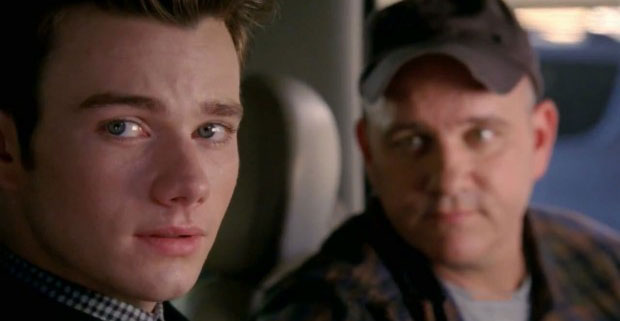
Jane Lynch – Glee
Sofia Vergara – Modern Family
Merritt Wever – Nurse Jackie

Thoughts: Seven nominees and they couldn’t find room for Arrested Development‘s Jessica Walter? Jane Lynch’s role on Glee is pretty much played out at this point. She’s great, but I would swap her for Walter in a heartbeat. Or how about some love for Parks and Rec‘s Rashida Jones and Aubrey Plaza?

OUTSTANDING SUPPORTING ACTOR IN A COMEDY SERIES
Ty Burrell – Modern Family
Adam Driver – Girls
Bill Hader – Saturday Night Live
Tony Hale – Veep
Ed O’Neill – Modern Family
Jesse Tyler Ferguson – Modern Family

Thoughts: Bit of a surprise to see Modern Family‘s Eric Stonestreet left off, though it does keep the category from becoming a Modern lovefest once again. Still, I’d always nominate Stonestreet before Jesse Tyler Ferguson, who I’ve always found to be a little too one-note. Great to see Bill Hader and Tony Hale here, but the real delight is Adam Driver’s nomination for Girls. I didn’t expect voters to come through for Driver, so I had included him among my write-ups below. Well, now I can delete that. Every moment of Driver’s performance feels authentic, electric and unscripted. Kudos to the Emmy voters for not overlooking his sensational work. As for disappointing oversights, how about every single male actor on Parks and Recreation? Seriously, line up Nick Offerman, Aziz Ansari, Chris Pratt, Adam Scott and Rob Lowe. Now put on a blindfold and throw a dart. Throw a few. Whoever you hit, they deserve to be here. If this category is going to be dominated by one show, Modern Family ain’t the one. And I say that as a big fan. But these Parks and Recreation guys…they crush it. And how stupendous were Will Arnett and David Cross on Arrested Development?

OUTSTANDING GUEST ACTRESS IN A COMEDY SERIES
Dot-Marie Jones – Glee
Melissa Leo – Louie
Melissa McCarthy – Saturday Night Live
Molly Shannon – Enlightened
Elaine Stritch – 30 Rock
Kristen Wiig – Saturday Night Live

OUTSTANDING GUEST ACTOR IN A COMEDY SERIES
Louis C.K. – Saturday Night Live
Bobby Cannavale – Nurse Jackie
Will Forte – 30 Rock
Nathan Lane – Modern Family
Bob Newhart – The Big Bang Theory
Justin Timberlake – Saturday Night Live

Thoughts: As long as we’re giving it up for SNL guest hosts, where’s the love for Martin Short? His Christmas episode was among the season’s strongest. At least they included Louis C.K., whose Abraham Lincoln sketch was the best of the year.

OUTSTANDING WRITING FOR A COMEDY SERIES
David Crane, Jeffrey Klarik – Episodes (Episode 209)
Louis C.K., Pamela Adlon – Louie (Daddy’s Girlfriend, Part 1)
Greg Daniels – The Office (Finale)
Jack Burditt, Robert Carlock – 30 Rock (Hogcock!)
Tina Fey, Tracey Wigfield – 30 Rock (Last Lunch)

Thoughts: The Office and 30 Rock each went out on a good note, but not good enough to exclude a single nomination for Arrested Development, whose writing was brilliantly ambitious on levels that I don’t think any other show ever has even aimed for.

OUTSTANDING DIRECTING FOR A COMEDY SERIES
Lena Dunham – Girls (On All Fours)
Paris Barclay – Glee (Diva)
Louis C.K. – Louie (New Year’s Eve)
Gail Mancuso – Modern Family (Arrested)
Beth McCarthy-Miller – 30 Rock (Hogcock!/Last Lunch)

OUTSTANDING DRAMA SERIES
Breaking Bad
Downton Abbey
Game of Thrones
Homeland
House of Cards
Mad Men

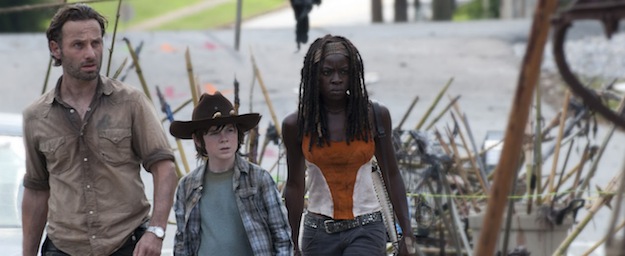
Thoughts: Yeah, that looks about right. Downton could have been left off. I love it, but the past two seasons have been uneven. I don’t watch them, but based on their reputations, it would have been cool if Justified or Sons of Anarchy had snuck in. There seemed to be a lot of love for The Americans, too. And why can’t The Walking Dead catch a break?

OUTSTANDING LEAD ACTRESS IN A DRAMA SERIES
Connie Britton – Nashville
Claire Danes – Homeland
Michelle Dockery – Downton Abbey
Vera Farmiga – Bates Motel
Elisabeth Moss – Mad Men
Kerry Washington – Scandal
Robin Wright – House of Cards

Thoughts: Not that I watch the show, but I’m surprised not to see Julianna Margulies here for The Good Wife. I thought she was a perennial in this category. I also didn’t watch Orphan Black, but heard Tatiana Maslany was off-the-charts amazing. I thought she might find a place among the more recognizable names. On the other hand, I love that Robin Wright made it. I consider Wright, like Laura Dern, to be one of the most undervalued actresses around. Any and every bit of attention she receives is deserved. Great to see Vera Farmiga make the cut too. She did some impressive tightrope walking as the complex mother to Norman Bates. And even though I don’t watch Scandal, I kinda love Kerry Washington, so good for her making it as well.

OUTSTANDING LEAD ACTOR IN A DRAMA SERIES
Hugh Bonneville – Downton Abbey
Bryan Cranston – Breaking Bad
Jeff Daniels – The Newsroom
Jon Hamm – Mad Men
Damien Lewis – Homeland
Kevin Spacey – House of Cards

OUTSTANDING SUPPORTING ACTRESS IN A DRAMA SERIES
Morena Baccarin – Homeland
Christine Baranski – The Good Wife
Emilia Clarke – Game of Thrones
Anna Gunn – Breaking Bad
Christina Hendricks – Mad Men
Maggie Smith – Downton Abbey

Thoughts: Emilia Clarke breaks in for Game of Thrones! Nice. Her character had a kick-ass season. She only stands to kick more ass as the show progresses, so I might have gone with her castmate Michelle Fairley instead. But hey, any love for Thrones is fine with me. Good to see Homeland‘s Morena Baccarin recognized too.

OUTSTANDING SUPPORTING ACTOR IN A DRAMA SERIES
Jonathan Banks – Breaking Bad
Bobby Cannavale – Boardwalk Empire
Jim Carter – Downton Abbey
Peter Dinklage – Game of Thrones
Mandy Patinkin – Homeland
Aaron Paul – Breaking Bad

Thoughts: The Station Agent‘s Dinklage and Cannavale, together again! Though frankly, I would sacrifice Cannavale in favor of House of Cards‘ Corey Stoll, who had a terrific, heartbreaking arc as a troubled congressman. I also think Sam Waterston was a worthy contender for The Newsroom. And while I didn’t see The Americans, I heard Noah Emmerich was outstanding. I’m thrilled to see Mandy Patinkin here after he was overlooked last year. Perhaps one of these days, another member of the amazing Game of Thrones cast will join the always deserving Dinklage. A little love for Charles Dance, please?

OUTSTANDING GUEST ACTRESS IN A DRAMA SERIES
Linda Cardellini – Mad Men
Joan Cusack – Shameless
Jane Fonda – The Newsroom
Margo Martindale – The Americans
Carrie Preston – The Good Wife
Diana Rigg – Game of Thrones

Thoughts: Diana Rigg = Awesome. And Jane Fonda was a blast on The Newsroom.

OUTSTANDING GUEST ACTOR IN A DRAMA SERIES
Dan Bucatinsky – Scandal
Michael J. Fox – The Good Wife
Rupert Friend – Homeland
Harry Hamlin – Mad Men
Nathan Lane – The Good Wife
Robert Morse – Mad Men

OUTSTANDING WRITING FOR A DRAMA SERIES
George Mastras – Breaking Bad (Dead Freight)
Thomas Schnauz – Breaking Bad (Say My Name)
Julian Fellowes – Downton Abbey (Episode 4)
David Benioff, D.B. Weiss – Game of Thrones (The Rains of Castamere)
Henry Bromell – Homeland (Q&A)

Thoughts: I figured that Homeland would receive at least one writing nomination, but I wasn’t sure which episode it would go to. I’m glad to see it went where it belonged; that’s another write-up I did that I can now discard. “Q&A” was the stellar episode in which Carrie interrogates Brody after finally confronting him with evidence of his treachery and taking him into custody. Writer Henry Bromell used to write for NBC’s great police series Homicide: Life on the Streets, and penned many of that show’s most intense sequences: Det. Pembleton questioning suspects in an interrogation room known as The Box. He proved with “Q&A” that he still knows his way around that intimate setting. The session between Carrie and Brody is the episode’s lengthy centerpiece, and the writing—from the broad scope of Carrie’s approach to the carefully chosen words and brutal honesty with which she reaches him—is masterful (as are the performances by Claire Danes and Damien Lewis). On top of recognizing this excellent achievement, the nomination doubles as a tribute to Bromell, who died of a heart attack in March. Like James Gandolfini, he was a great contributor to dramatic television who left us too soon.

OUTSTANDING DIRECTING FOR A DRAMA SERIES
Tim Van Patten – Boardwalk Empire (Margate Sands)
Michelle MacLaren – Breaking Bad (Gliding Over All)
Jeremy Webb – Downton Abbey (Episode 4)
Lesli Linka Glatter – Homeland (Q&A)
David Fincher – House of Cards (Chapter 1)

Thoughts: Fincher!

OUTSTANDING MINISERIES OR MOVIE
American Horror Story: Asylum
Behind the Candelabra
The Bible
Phil Spector
Political Animals
Top of the Lake

OUTSTANDING LEAD ACTRESS IN A MINISERIES OR MOVIE
Jessica Lange – American Horror Story: Asylum
Laura Linney – The Big C: Hereafter
Helen Mirren – Phil Spector
Elisabeth Moss – Top of the Lake
Sigourney Weaver – Political Animals

OUTSTANDING LEAD ACTOR IN A MINISERIES OR MOVIE
Benedict Cumberbatch – Parade’s End
Matt Damon – Behind the Candelabra
Michael Douglas – Behind the Candelabra
Toby Jones – The Girl
Al Pacino – Phil Spector

OUTSTANDING SUPPORTING ACTRESS IN A MINISERIES OR MOVIE
Ellen Burstyn – Political Animals
Sarah Paulson – American Horror Story: Asylum
Charlotte Rampling – Restless
Imelda Staunton – The Girl
Alfre Woodard – Steel Magnolias

OUTSTANDING SUPPORTING ACTOR IN A MINISERIES OR MOVIE
Scott Bakula – Behind the Candelabra
James Cromwell – American Horror Story: Asylum
John Benjamin Hickey – The Big C: Hereafter
Peter Mullan – Top of the Lake
Zachary Quinto – American Horror Story: Asylum

OUTSTANDING WRITING FOR A MINISERIES, MOVIE OR DRAMATIC SPECIAL
Richard LaGravenese – Behind the Candelabra
Abi Morgan – The Hour
Tom Stoppard – Parade’s End
David Mamet – Phil Spector
Jane Campion, Gerard Lee – Top of the Lake

OUTSTANDING DIRECTING FOR A MINISERIES, MOVIE OR DRAMATIC SPECIAL
Steven Soderbergh – Behind the Candelabra
Julian Jarrold – The Girl
David Mamet – Phil Spector
Allison Anders – Ring of Fire
Jane Campion, Garth Davis – Top of the Lake

Thoughts: Soderbergh!

OUTSTANDING VARIETY SERIES
The Colbert Report
The Daily Show with Jon Stewart
Jimmy Kimmel Live
Late Night with Jimmy Fallon
Real Time with Bill Maher
Saturday Night Live

OUTSTANDING WRITING FOR A VARIETY SERIES
The Colbert Report
The Daily Show with Jon Stewart
Jimmy Kimmel Live
Portlandia
Real Time with Bill Maher
Saturday Night Live

Thoughts: Wow, Saturday Night Live still hanging on here. I would have thought Conan or Late Night with Jimmy Fallon would earn a place.

OUTSTANDING ANIMATED PROGRAM
Bob’s Burgers (O.T.: The Outside Toilet)
Kung Fu Panda: Legends of Awesomeness (Enter the Dragon)
Regular Show (The Christmas Special)
The Simpsons (Treehouse of Horror XXIII)
South Park (Raising the Bar)

For what it’s worth, some stats: HBO was—to nobody’s surprise, I’m sure—once again the most nominated network, but I couldn’t believe how far ahead they were. With 108 nominations, they had just over twice as many as the second most honored network, CBS. (Really? CBS?) The most nominated program was American Horror Story: Asylum, with 17 nominations, followed by Game of Thrones with 16. And while I haven’t seen this factoid called out, I think Louis C.K. may have been the most nominated individual. Between his Saturday Night Live hosting gig and the multiple hats he wore on both his series and his HBO standup special, he received nine nominations. I would think that’s gotta be tops for the year.

Some people actually get paid to watch and write about TV, and are therefore likely to have seen all the eligible shows, so here’s a sampling of their reactions: Vulture‘s Matt Zoller Seitz, The Hollywood Reporter‘s Tim Goodman, and Entertainment Weekly‘s Jeff Jensen and James Hibberd. Goodman had a lot to say (he usually does), and actually wrote three different pieces reacting to (mostly railing against) the nominations. The initial two can be accessed through the one linked here. He talks about what I wrote of back in 2009: the impossible task of fairly evaluating all the choices out there. Then he goes on to damn the voters for too frequently eschewing bolder options in favor of the same old thing. He does have a point. I mean, I love 30 Rock, but it was past its prime. Did the final season really deserve an Outstanding Series nomination over Arrested Development or Parks and Recreation? He also suggests that it’s time for the Emmys to expand the major categories to ten nominees each, in order to better represent the overwhelming number of shows and performances vying for recognition. I think that’s a great idea; some of the categories already have seven nominees. But let’s face it: expanding the categories doesn’t mean that more critically favored but Emmy-retardant shows like Justified, Sons of Anarchy, The Americans or Hannibal would suddenly find a seat at the table. More likely, given Emmy voters’ tendencies, we’d just see more middle of the road choices. This year, the Outstanding Comedy category might have made room for Parks and Recreation, but it would probably have also included shows like Two and a Half Men, The Middle and Mike & Molly over Community, The Mindy Project or Arrested Development. Still, I agree with Goodman; it’s time for an expansion.

As usual many of the nominees released statements of gratitude. Best Reaction Statement: Don Cheadle, House of Lies (Outstanding Lead Actor in a Comedy) – “Given all the hilarious film work I’ve done, from Traffic to Crash to Flight, it’s nice to finally be recognized as the comic genius I am. Thank you, Academy members.” Second Best Reaction Statement goes to Emilia Clarke, Game of Thrones (Outstanding Supporting Actress in a Drama) -“Yer chomoe anhaan. Jin ha Khalaan, shekh ma shieraki anni. For those not fluent in Dothraki, it translates to: You do honor to me. This is for the Khal — my sun and stars.”

Now then, for your belated consideration…

These write-ups make no attempt to avoid spoilers, so if you come across one for a show you haven’t seen yet but intend to watch someday, I advise you to skip it.

Outstanding Supporting Actor in a Drama Series: Denis O’Hare – True Blood
Although it’s past its prime and I watch it more now out of habit, there was a time when True Blood was really killing it (the current season has actually been pretty strong). But the Emmys have never had much use for it. A shame; its terrific second season earned it a nomination for Best Drama Series, and it has garnered some below-the-line nominations over the years – sound editing, makeup, casting, that sort of thing. But probably because it’s an out-there, gothic fantasy soap opera, it has often been unfairly overlooked, especially in the acting department. In five seasons, only a single acting nomination has been bestowed: Alfre Woodard for Outstanding Guest Actress in a Drama Series, from the third season. I like Woodard, but hers was hardly the most deserving or memorable performance True Blood has given us. Nelsan Ellis should have been cited in the first year or two for his great performance as Lafayette, and Michelle Forbes was robbed of recognition for her luscious turn as the second season’s antagonist, Maryann Forrester. And where was the Guest Star nomination after Season Three for James Frain as the sicko vampire Franklin Mott?

Also robbed after season three, was Denis O’Hare for his hilarious, whacked-out performance as extremist vampire king Russell Edgington. After being absent from season four, Edgington returned last year, colorful and crazy as ever, giving voters a chance to rectify their mistake. They failed to do so. O’Hare was nominated last year in the TV Movie or Miniseries group for his role on season one of American Horror Story. If he could get nominated for that, he surely deserves a nod for his far more memorable work as Edgington. (Come to think of it, why has American Horror Story been embraced so enthusiastically by Emmy voters while True Blood has been repeatedly stiffed? If anything, AHS is even more lurid and over-the-top.)

X

Outstanding Guest Actor in a Comedy Series: David Lynch – Louie
In a three episode arc last season, Louie was under consideration to replace a retiring David Letterman as host of CBS’ Late Show. In order to see if he has the right stuff, the chairman of CBS sends Louie to an old school TV producer named Jack Dall to help whip him into shape. As I watched the episode, I was stunned and delighted to discover filmmaker David Lynch playing Dall. Like his films, Lynch is a little…odd. He’s pleasant and mild-mannered, but always seems just slightly out of sync with the world around him. As C.K. explains in this story about how he got Lynch to do the show, he wasn’t looking for the director to show up and be someone else; he wanted Lynch to be Lynch. Layering his own unique, deadpan persona on top of the cryptic, impatient Dall, Lynch was bone-dry hilarious, fitting right at home with the often surreal tone of C.K.’s show. Lynch the director would be proud of Lynch the actor, and Emmy should have taken note.

X

Outstanding Supporting Actor in a Comedy Series: Chris Colfer – Glee
An Emmy darling after its first season, Glee has largely disappeared from the awards landscape after subsequent seasons have proven uneven. It picked up some nominations here and there yesterday, but it has mostly dropped off the radar when it comes to awards. I can’t really argue with that. But one aspect of the show that was great from the start and hasn’t faltered is Chris Colfer, who plays Kurt Hummel, a character destined to be remembered as one of the most important in television history. The series may have jumped a number of sharks by now, but it tends to be at its best when Kurt is around, because Colfer is too genuine to let it get away with its more absurd tendencies. He’s a performer who exudes authenticity, and so it seems that the writers—by the very nature of having to serve him—are forced to come up with stronger material. And he never lets us down. His vocal range continues to astound, and across the entire television landscape he’s probably second only to Maggie Smith on Downton Abbey in his ability to deliver a line (especially a cutting one) with brilliant timing and precision. Colfer’s work on Glee has already earned him two Emmy nominations, plus a Golden Globe win, but his fortunes have faded along with the show’s. Too bad; he still deserves the accolades.

X

Outstanding Directing for a Drama Series: David Nutter – Game of Thrones (The Rains of Castamere)
For the second year in a row, I’m bewildered by the absence of a single directing nomination for the impeccably produced and impossibly scaled epic series that deserves mention in this category for both its narrative accomplishments and its production quality. Seriously, how in the seven kingdoms does this series not get cited for Directing? While almost any episode of the season would actually be a worthy contender here, the obvious choice would be the now infamous ninth episode “The Rains of Castamere,” which climaxes with the shock and awe of the Red Wedding. (At least the episode scored a writing nomination.) The tension builds during the initial scenes at The Twins, and then when we get to those last ten minutes, in which the trauma is parsed out with thrilling dexterity. The closing of the hall door. The change in the music. The looks exchanged between Catelyn and Bolton. The stabbing of Talisa. The rain of arrows. Then we’re outside with Arya, her excitement disintegrating when she sees the Stark men being killed, followed by Grey Wind. Back in the hall, Catelyn’s desperate plea to Walder Frey. Bolton’s final betrayal and Robb’s death. And then Catelyn after she cuts her hostage’s throat, after she lets out a final wail for her murdered first-born, the camera slowly pushing in as she stands there utterly spent, her husband killed, her daughters captive and all her sons dead (as far as she knows). She stands there and we wonder, “Is it done?” And then just when maybe we think the worst is over, in steps one of Frey’s men to end her too. She falls out of frame. The camera holds for another moment before the credits roll in silence. C’mon, Emmy voters. This was a no-brainer.

X

Outstanding Writing for a Comedy Series: Mike White – Enlightened (The Ghost is Seen)
In just a single half hour of this little seen HBO gem, writer/actor Mike White delivers one of the most honest, heartwrenching, haunting portraits of loneliness I’ve ever encountered. He doesn’t just expose it from an objective, bird’s-eye view; he takes you inside it, right into its beating, yearning heart and shows what it feels like to live with it everyday, enveloped in it, trapped by it, resigned to it. The episode focuses on White’s own introverted character Tyler and the connection he makes with Eileen (nominated guest star Molly Shannon), the executive assistant to the head of the company, and therefore the unwitting foil in Amy’s mission to expose the illegal activities of the corporation and its CEO. The scenes between Tyler and Eileen are as awkward as they are sweet, and if this doesn’t sound like it belongs in a comedy category alongside shows like Modern Family or Parks and Recreation, well, Enlightened is indeed a different ilk, walking that fine line between comedy and drama, and probably leaning slightly toward the other side if we’re being honest. But whether it’s labeled a comedy or drama for awards purposes shouldn’t ultimately matter. The quality of the writing speaks for itself, and this exquisite episode should not have been passed over.

X

Outstanding Supporting Actor in a Drama Series: Jack Huston – Boardwalk Empire
From the moment he was introduced about halfway through the first season, Huston’s Richard Harrow was one of television’s most interesting characters, and one of my favorites. A WWI veteran who wears a specially designed mask over half of his face to conceal a disfiguring battle wound, Harrow is soft-spoken and alone when he meets Jimmy Darmody in an army hospital. After joining up with Jimmy in the bootlegging business, the former sharpshooter discovered a sense of renewed purpose. Upon his promotion to series regular in the second season, Harrow’s role expanded and deepened. This past season, in the aftermath of Jimmy’s death, he became a caretaker to Jimmy’s little boy Tommy (a duty he shares with Jimmy’s mother, who provides him a room in her brothel). He also falls in love with a kind, pretty woman who loves him back, only to reach the conclusion that his hope for a normal life may not be in the cards.

Harrow is a man divided not just physically, but psychologically. He is gentle and sensitive with those he loves, but brutal with those who threaten him or the people he cares about. Both sides battled it out this season, and Huston’s consistent ability to underplay the character winds up making him one of the show’s strongest performers. It may be Harrow’s face that is damaged, but really his wound informs the way his whole body moves. Huston plays him with deliberate physicality – usually hesitant, but quick and determined when he becomes deadly. He still speaks softly—and nervously—but he also carries a big stick (in the shape of a shotgun). Huston—a member of the showbiz dynasty that includes aunt Anjelica and grandfather John—makes the dichotomy between Harrow’s halves into fascinating, essential, Emmy-worthy viewing.

X

Outstanding Writing for a Drama Series: Scott A. Gimple – The Walking Dead (Clear)
This quiet, thoughtful episode, which provided a respite from the escalating tension between Team Prison and Team Woodbury, finds Rick, Carl and Michonne taking a drive to Rick’s old town in the hopes of securing weapons from the police station. What they find is the main street rigged with elaborate zombie traps, and the man responsible for it: Morgan, Rick’s former neighbor who saved his life after he woke up in the hospital and wandered home unaware of what had happened to the world. Morgan chose to remain behind when Rick went in search of his family, and this episode finally brought him back, as a broken, half-crazed shell so far gone that he initially doesn’t even recognize Rick, and tries to kill him. As Rick attempts to bring Morgan around, he sees him as a warning sign. He has been dangerously close to the same line that Morgan has crossed, and their encounter becomes an important step in his efforts to reclaim himself. Carl, meanwhile, reveals his own agenda for coming along: the recovery of a family photo that will offer the only picture of his mother that his baby sister will ever have. His determination to get it partners him with Micchone, still seen as an outsider by the group.

The episode offers a stark look at how the new world our characters populate can get the best of those who are incapable of retaining hope, and that survival—not just existence, but real survival—takes more than guns and ammo. Gimple provided an unexpected and creative way to bring Morgan back to the show that didn’t merely satisfy fans, but also furthered the overall story. He also did a nice job balancing Rick and Morgan’s reunion with the side journey that provided some badly needed development for an underserved Michonne.

X

Outstanding Guest Actor in a Comedy Series: Patton Oswalt – Parks and Recreation
Having made memorable appearances on seven shows during the past year, Patton Oswalt was recently named TV’s Most Valuable Guest Star by Vulture. The most memorable of those appearances may have been on Parks and Recreation, as Pawnee history enthusiast Garth Blundin, whose opposition to Leslie’s planned repeal of numerous outdated town laws leads him to deliver the greatest filibuster in the history of filibustering. Star Wars and Marvel Comics fans should take note. (If Republicans filibustered like this in our actual Congress, we all might be less critical of them flagrantly overusing it.) Leslie and Garth eventually make a wager that finds them living in a Pawnee Historical Cabin with only 19th century tools and methods at their disposal. Oswalt is, of course, the perfect guy to play a part like this, lovably inhabiting a smug, know-it-all nerd and making sure we like him enough not to turn against him when he outdoes our beloved Leslie. Oswalt tapped into his own irrepressible enthusiasm for pop culture when he delivered the entirely improvised filibuster, which lasted for about eight minutes. Of course, only a short piece could be used on the show, but the full speech was released on YouTube and became a viral sensation. If nothing else, Oswalt deserved an Emmy nomination for going so imaginatively above and beyond the call of duty.

X

Outstanding Lead Actor in a Drama Series: Hugh Dancy – Hannibal
Not that I’ve been following reactions too closely, but the sense I’ve gotten is that the lion’s share of attention for Hannibal‘s acting has gone to Mads Mikkelsen for his quiet, controlled work as Hannibal Lecter. But it’s co-lead Hugh Dancy who delivers the show’s more gripping performance and who deserved recognition from Emmy voters. His Will Graham has such an acute, overdeveloped sense of empathy that he is able to imagine himself as the killers he hunts, executing their crimes himself and therefore gaining unique understanding into their methods and motivations. But this takes an increasingly dire toll on his state of mind, as he begins to identify so deeply with one serial killer in particular that he worries about crossing the line and becoming a killer himself. Hannibal takes us visually into Graham’s point of view to show us what he sees, but Dancy takes us much further and reveals things only an actor can. He wears the oppressive weight of Will’s visions in every fiber of his physical being. He cloaks himself in Will’s fatigue, isolation, and anxiety, drawing us so close that we can practically smell the fevered sweat that accompanies his sleepless nights and haunted dreams. There’s an obvious sadness and loneliness to Will, but while it is directly acknowledged, Dancy never plays it for sympathy. He earns the audience’s identification through the wholeness of his performance, not through cheap emotional manipulation. It’s a truly fascinating portrayal, understated and underrated. Dancy will likely be at the Emmys anyway, accompanying his nominated wife Claire Danes. But he should be there as a nominee himself.

This is off-topic, but I feel compelled to say that I have mixed feelings about Hannibal in general. On one hand, it may be the most gorgeously art directed and photographed TV show I’ve ever seen. The entire visual design is extraordinary. On the other hand, I don’t know if I’ve ever seen anything so relentlessly, overbearingly bleak. This show is daaaark. Not just its highly disturbing imagery (made all the more unsettling because the crime scenes, like everything on the show, are staged so artfully), but the entire sensibility. There is precious little humor or levity to break the tension. It’s not so much a suspenseful tone as it is a severe one. It’s all so Serious and Heavy. In a way, the show has a hypnotic feel that distinguishes it from anything else I watch. But rarely did an episode go by that didn’t have me thinking at least once, “Jesus, this is too much!” (At least they seem to be having fun on the set.) It doesn’t help that some of the violence really bothers me…and I’m not someone who usually has an aversion to on-screen violence. All told, I’m debating whether or not to stick with it when the next season begins. I admire and appreciate so many things about it, but I can’t exactly say that I enjoy it.

X

Outstanding Directing for a Drama Series: Jeremy Webb – Downton Abbey (Episode 5)
Jeremy Webb did earn a nomination in the Directing category, but I would argue that it was for the wrong episode. The nomination should have come for the subsequent installment, which delivered the shocking death of Lady Sybil. News of actor Dan Stevens’ departure from the show was all over the internet a few months before Downton‘s third season had its U.S. premiere, so we had a pretty good idea of what was coming down the road for his Matthew Crawley. But the departure of actress Jessica Brown Findlay was preceded by no such commotion, allowing the excellent work done by Webb, writer Julian Fellowes and the cast to take us by complete surprise. Sybil’s demise, which comes in the middle of the night, hours after delivering a healthy baby girl, seemed more shocking than so many other TV deaths because it felt so random. Downton Abbey may be classy, but it’s still a soap opera, with all the melodramatic ups and downs that go with such territory. But Webb directed the scene with such plain, stark realism that it transcended the melodrama. The veil between the audience and the screen dropped, and we were brought into the room along with the family, experiencing the terror, confusion and helplessness as palpably as they did while Sybil writhed in her bed, struggled to breathe, turned ghostly pale and finally expired. We shared in the stunned silence when Dr. Clarkson pronounced her dead, and then shared the pang of heartbreak when her newborn daughter began crying offscreen.

I realize that, as with the Game of Thrones example above, I’m focusing on one scene from an hour-long show. But sometimes that’s all it takes to make an episode. And to be clear, many moments that follow were handled just as effectively by Webb: the servants learning the news in the middle of the night, the Dowager Countess’ arrival the following morning, and the final shot of Sybil’s widowed husband Tom, holding his baby as he stands alone at a window of the house in which he has never felt entirely welcome.

X

So there’s that. Finally, a few other odds and ends from further down the list of nominations:

-The nominees for Outstanding Directing for a Variety Special included Don Mischer for The Oscars. Sorry, but no. At the risk of beating a dead horse (and one that nobody other than me cares about), Mischer’s direction of the Oscars was, as I said at the time, incompetent, and has been for the past few years.

-There are a couple of categories that I hadn’t heard of before, one called Outstanding Special Class – Short-Format Live-Action Entertainment Programs, the other called Outstanding Special Class – Short-Format Nonfiction Programs. I noticed them this time because they included some nominees from the internet that made me smile: Zach Galifianakis’ hilarious faux-interview show Between Two Ferns was cited in the former, along with the brilliant web series Burning Love, while Jerry Seinfeld’s excellent Comedians in Cars Getting Coffee was nominated in the latter. Great to see these three programs recognized.

-There’s an award for Outstanding Music Composition for a Series, and this year’s nominees are Arrested Development, The Borgias, Downton Abbey, House of Cards, Last Resort and Mr. Selfridge. I find it hard to believe that all of those shows offered better dramatic scoring than Game of Thrones, on which composer Ramin Djawadi does better work on a weekly basis than most theatrical movies have done in the past few years. Since each show is cited for a specific episode, I’ll submit this past season’s fourth installment of Thrones. The music accompanying the climactic sequence (Daenarys taking ownership of the Unsullied) and end credits was worth a nomination on its own. Also missing here: composer Mark Mothersbaugh, the former Devo member whose scoring for Enlightened was the most original and effective I can recall for any show in a long while.

-The Emmys give awards for Art Direction, Cinematography, Lighting Design, and other such technical achievements. This year, an obvious nominee in all three of those categories would have been Hannibal, which as I mentioned above, is one of the most visually arresting shows I’ve ever seen. Amazingly, it was passed over in all of these categories. In fact, the show didn’t score a single nomination. If you’ve seen it, you’d agree: that’s unfathomable. (Anyone as geeky as me who might be interested in seeing the full list of nominations that includes these below-the-line categories like Art Direction, Makeup, Special Effects, Music, etc. can have at it here.)

Okay, that about does it. If you’re inclined to share any thoughts of your own, I’d love to hear them.

This year’s Emmy Awards will air Sunday, September 22 on CBS. Until then, I’ll close out with another favorite moment from Emmy past, as I did last year. This one doubles as a tribute to Glee‘s Cory Monteith, who died this week at age 31. The words “too soon” are too small. Here’s the clever, rousing opening to the 2010 ceremony, featuring host Jimmy Fallon, Monteith and some of his Glee comrades, and more.

July 15, 2013

A New Breed of Sequel

Filed under: Movies — DB @ 6:00 pm
Tags: , , ,

When I was in eighth grade, I wrote an article for the school paper about what seemed like an oversaturation of sequels. I don’t remember the specifics all that well, but my memory is that it may have been less an article than a list of all the sequels that had recently come out or were in the works. Given the era, that list would have included movies like Caddyshack II, Big Top Pee-Wee, Cocoon: The Return, Ghostbusters II, Indiana Jones and the Last Crusade, Back to the Future Part II and Lethal Weapon 2. These were the early days of my single-minded movie fandom, so I might have thought that what felt like an increase in the number of follow-ups was something new. But I soon learned that sequels have been a part of the movie landscape nearly as long as there have been movies.

Those of us who criticize Hollywood’s incurable case of Sequelitis tend to talk about it as though it’s a symptom of the blockbuster era that began in the early 1970’s. Au contraire, cinephiles. In 1916, Thomas Dixon Jr. wrote and directed what is acknowledged as the first sequel, The Fall of a Nation. It was a follow-up to D.W. Griffith’s 1915 hit “The Birth of a Nation,” which was adapted from a novel by Dixon. Though the sequel was a commercial failure, the early studio moguls learned that there was easy money to be made by satisfying the public’s craving for beloved characters. Warner Brothers put out 19 Rin Tin Tin pictures in a seven-year span during the 1920’s. In 1937, MGM released A Family Affair, which was originally conceived as a courtroom drama about a small town judge named Hardy. His family life was a minor part of the story, but studio head Louis B. Meyer was seeking a showcase for child star Mickey Rooney, so the story was retooled to focus more on the judge’s home life, allowing for Rooney’s role as son Andy Hardy to be expanded. When A Family Affair—particularly Rooney’s Andy—struck a chord with audiences, MGM quickly built a series around the character, dedicating a complete production unit to making Andy Hardy pictures. According to The Genius of the System, a book by film professor Thomas Schatz about the early years of the Hollywood studio system, when the second movie started to shoot, the writers set to work on the third, and the Seitz Unit (named for the films’ director George B. Seitz) “turned out Hardy pictures virtually nonstop for two years, averaging about one every three months.” Other popular characters also had series built around them, with rapidly produced sequels flooding theaters. During the 30’s and 40’s, MGM made six Tarzan movies and six Thin Man installments. In the 1950s, Universal Pictures made nine movies starring the characters Ma and Pa Kettle.

Looks like Disney’s plan to release a new Star Wars movie every two years has some precedence.

So this sequel thing is not a phenomenon unique to post 1960’s Hollywood. And I’m not here to knock it. From The Godfather Part II to The Empire Strikes Back to Aliens to Toy Story 3, and many in between, some of my favorite movies are sequels…and I’m hardly alone. But I’ve noticed a mutation in the Sequelitis virus over the last year or so. It’s no surprise when massive financial hits like Pirates of the Caribbean or Transformers continue to spawn follow-ups. They made gobsmacking amounts of money, so sequels remain inevitable. But now we’re starting to see sequels to movies that are only modest financial hits, and that didn’t particularly grab hold of the pop culture consciousness. Just this weekend, we had Grown Ups 2. The original film, released in 2010, cost $80 million to make and grossed about $162 million domestic, and another $109 million in foreign markets. So it performed well and turned a nice profit. But by today’s standards, neither that gross nor the profit are all that noteworthy, and it’s not like the movie or the characters took root in the hearts and minds of the world’s moviegoers. I’m sure the movie has many fans, but it didn’t introduce us to the next Jack Sparrow, Austin Powers or Ron Burgundy. Adam Sandler is pretty much always Adam Sandler, and you don’t hear people talk about Grown Ups the way they talk about Billy Madison or The Wedding Singer. Yet Grown Ups 2 is the actor’s first sequel.

This coming weekend, Bruce Willis, Helen Mirren, John Malkovich and Mary-Lousie Parker return in the action comedy RED 2. I really enjoyed the 2010 original, which cost $58 million to make and earned $90 million in the U.S. and $108 million in other countries. Perhaps I’ll enjoy this one too. But was it necessary? Again, we’re not talking about staggering grosses, stunning profits or unforgettable characters. Why does this movie merit a sequel? Grown Ups 2 and RED 2 are just the beginning of what appears to be a new trend of making sequels to movies that, even more so than usual, don’t really need sequels. Here are six others in development:

Title Budget Domestic Gross Foreign Gross Total Gross
Safe House (2012) $85 million $126 million $81 million $208 million
Salt (2010) $110 million $118 million $175 million $293 million
Hot Tub Time Machine (2010) $36 million $50 million $14 million $64 million
Bad Teacher (2011) $20 million $100 million $118 million $218 million
Dolphin Tale (2011) $37 million $72 million $23 million $95 million
The Best Exotic Marigold Hotel (2012) $10 million $46 million $90 million $136 million

Hot Tub Time Machine 2 and Dolphin Tale 2 appear to be the only ones that are definitely happening as of now, but even if the others never make it into production, the fact that they are being developed at all remains somewhat puzzling. Some of these movies were huge hits on DVD, which can sometimes justify investing in a follow-up. I mentioned Austin Powers and Ron Burgundy earlier, and both of those characters’ initial films were bigger hits on video than they were in theaters. But once viewers caught on and discovered Austin Powers: International Man of Mystery and Anchorman: The Legend of Ron Burgundy, both movies gained strong footholds in pop culture. None of the movies on this chart, nor Grown Ups or RED, have taken on any such traction as pop culture currency.

The success of Grown Ups 2 this weekend could be seen as a sign that, yes, the sequel was justified and that people had a legitimate interest in these characters. I’m inclined to think that the movie’s $42.5 million weekend speaks more to the general idea of people wanting to see Adam Sandler, Chris Rock, David Spade and Kevin James together…something that could have been accomplished with an entirely new premise. Using a modestly successful, forgettable comedy as the springboard to reunite a group of actors who play well together is a hallmark of Hollywood laziness. And in a typically competitive summer movie season like this one, I suspect Grown Ups 2—while still ending up a respectable success for Sandler and company—will see its fortunes sink fairly quickly. So in a posh office somewhere at Columbia Pictures, I’m sure Grown Ups 3 is being seriously discussed today.

I’ll be curious to see if this trend continues. Hopefully it isn’t paving the way for the next step: sequels to movies that weren’t hits and that nobody liked. Case in point: Hansel & Gretel: Witch Hunters, which opened earlier this year to lousy reviews and lousy U.S. box office, but which did decent business overseas. Decent enough to make Paramount Pictures think that a sequel is worth pursuing. I can’t imagine the studio would be able to get Jeremy Renner back on board (he couldn’t have been less enthused when he was forced to promote the original, as Vulture points out). I’m not sure they could get Gemma Arterton back either, and she has less clout than Renner. More importantly though, I don’t think they could get much of an audience. Hopefully that hard truth will dawn on somebody at Paramount before this punchline-in-waiting gets greenlit. I’m not enthused that we’re getting yet another Pirates of the Caribbean movie or another Transformers, but seeing as both series’ most recent installment grossed over $1 billion worldwide, I understand why we are (even if I don’t quite understand how those gigantic grosses were achieved, seeing as nobody seems to have liked the movies). I even understand why we’re getting a sequel to 21 Jump Street, which had a comparable budget-to-gross figure as the movies discussed here, yet with much more pop culture viability. What I don’t understand is why studios are getting into the business of making sequels to any ol’ medium-sized hit with no particular resonance in the zeitgeist. Most sequels that get made probably shouldn’t get made for one reason or another, whether it’s the lack of story logic for a follow-up, a tendency to just be a remake in a different setting or because most sequels usually just suck. Yes, I said at the beginning that there are many I love, so I’m not saying, “Don’t make sequels.” I’m just saying, “Be more selective about the sequels you make.” Because the odds are that we’re far more likely to get Major League II, Son of the Mask, Look Who’s Talking Too or An American Werewolf in Paris than we are to get The Dark Knight, Terminator 2, The Bourne Ultimatum or Before Sunset.

But there are lots of things about the way this crazy industry operates that I don’t understand. I should have learned by now to stop asking questions. I guess I just love movies too much not to question Hollywood’s unerring penchant for making baffling decisions.

« Previous PageNext Page »

Create a free website or blog at WordPress.com.