As usual, and despite all efforts to do better, I’m once again down to the wire with this post, so there’s no time to waste with lengthy introductions. Let me waste your time with the lengthy play-by-play instead. Away we go…
X
BEST SOUND MIXING AND BEST SOUND EDITING
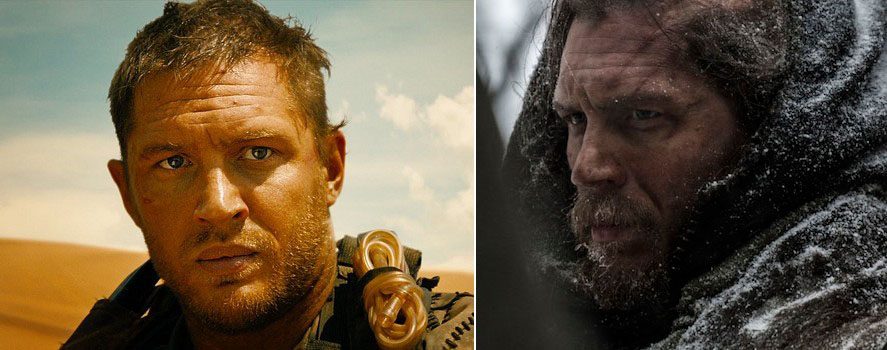
One of Oscar night’s big battles starts in these two categories (well…for our purposes, anyway; it’s not like these will necessarily be the first two awards presented). Mad Max: Fury Road and The Revenant face each other in 10 categories, and while Phase One of the season suggested that Fury Road would dominate below-the-line, The Revenant‘s emergence as a top-category frontrunner during Phase Two could easily trickle down to these races and shake things up. Poor Tom Hardy isn’t going to know who to root for half the night.
The big question as to whether Fury Road would get those Best Picture and Best Director nominations was partly a question of whether the film was more than just a critic’s darling. Would the industry show it enough love for the conservative-leaning Academy to take the hint? Well…they did. But how far will that extend? As Fury Road faces industry favorite The Revenant in category after category, will it have a chance, or get clobbered by the new kid in town?
As for these two categories, we’re not even talking about a one-on-one bout, as Star Wars: The Force Awakens and The Martian could totally take one or both of these. I think Sound Mixing nominee Sicario and Sound Editing nominee Bridge of Spies are out of the running, but everything else is in play, and where you can sometimes make a pretty strong guess as to which film has the edge when it comes to sound, there is no such clarity here. So for no reason other than having 17 more categories to get through, I’m guessing they’ll split this year: Sound Mixing will go to The Revenant and Sound Editing will go to Fury Road.
Which probably means they’ll both go to Star Wars.
Personal: As usual, I have no real investment in these categories. To the extent that I notice sound work, the only nominee that didn’t make an impression on me in that area is Bridge of Spies. I was probably most affected by the soundscape of Sicario, so I suppose I’d throw my Mixing vote in that direction. For Editing, any of them would make me happy except Spies…and it’s not like that would make me angry.

X
BEST VISUAL EFFECTS
This category poses a conundrum. When there’s no obvious VFX game-changer, this award tends to go to a Best Picture nominee, or the closest thing in the category to a prestige film, even if there’s clearly better work elsewhere. See Gladiator‘s victory over The Perfect Storm, Hugo‘s over Rise of the Planet of the Apes, and Interstellar‘s over Dawn of the Planet of the Apes. There’s no major breakthrough work in this year’s nonetheless admirable slate, so we should look to The Revenant and Mad Max: Fury Road. But Star Wars: The Force Awakens is a wild card. A Star Wars movie isn’t a guaranteed winner; neither The Phantom Menace nor Attack of the Clones triumphed here, and Revenge of the Sith wasn’t even nominated. But those movies weren’t particularly well-liked outside the realm of fandom (and not always so well-liked within either). The Force Awakens, on the other hand, reignited everyone’s love of Star Wars, and the legacy of the franchise could be enough to make this return-to-form victorious.
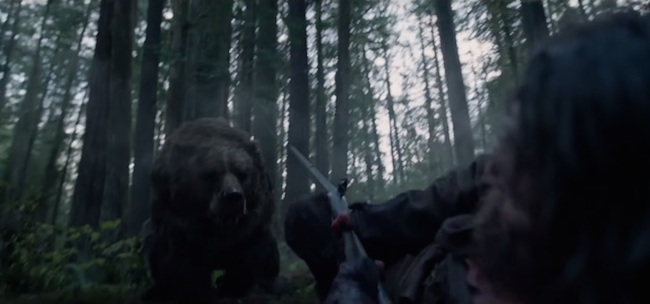
All three films can make a strong case. The Revenant‘s bear attack is one of the most talked-about movie scenes of the year, and it looks incredible. On the other hand, it’s just one brief scene, and the movie’s other visual effects are more invisible. Fury Road is the rare nominee these days to feature a huge number of practical special effects, which makes the work seem that much more tactile and impressive. Star Wars can make that claim too, offering a balance of practical and digital work that also boosted its reputation after the overly CGI’d prequels. But still, Star Wars is a more traditional VFX movie; Fury Road has the charm of being something a little different. Once again, I have absolutely no idea what will happen, as each of these three is a viable winner. My shot in the dark is that it will go to Star Wars, the movie that’s synonymous with modern-day visual effects and is finally worth celebrating again.
Personal: Difficult choice, but I think I’d have to go with Fury Road. Like I said, it’s something a little different. That bear attack in The Revenant was mighty impressive, but I don’t like the idea of a movie that’s two hours and 36 minutes winning an Oscar for basically five minutes of its runtime. As for Star Wars, excellent work…but nothing we haven’t seen before. And since there are going to be new Star Wars movies every year until the oceans rise and cover the planet’s surface, it has plenty of other chances.

X
BEST MAKEUP AND HAIRSTYLING
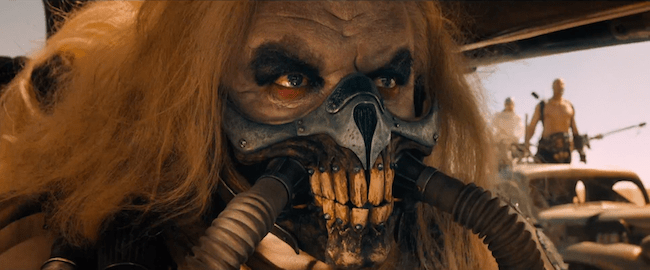
Apologies to The 100-Year-Old Man Who Climbed Out a Window and Disappeared. Nobody outside of the Makeup and Hairstyling branch that nominated you has any idea what you are. Which leaves…wait for it…wait for iiiiiiiiiit…Mad Max: Fury Road and The Revenant! And once again, they both have an excellent chance at the gold. Most pundits appear to be predicting Fury Road for the win. But I’m thinking that more voters, when sitting in front of their ballots and trying to recall the movies, will remember the beards and grime and dirt and blood and gashes and scalps and bad teeth and all around horrible, horrible hygiene of The Revenant before Fury Road‘s work, which is more inventive but perhaps less obvious. Then again, if voters mistake that crazy, instantly iconic face mask worn by Fury Road villain Immorten Joe to be a piece of makeup rather than a piece of costume design, all bets are off.
Personal: Mad Max: Fury Road, because I tend to be more impressed by the imaginative than the realistic.

X
BEST ORIGINAL SCORE
Will it be Fury Road or The Revenant this time around? Trick question! Neither are nominated for Original Score! Among the films that are competing is The Hateful Eight, featuring music from the prolific Italian maestro Ennio Morricone. In 2006, Morricone was awarded an Honorary Oscar for career achievement, having been nominated five times previously. His first nomination was for 1978’s Days of Heaven, meaning he was never cited for any of his beloved Spaghetti western scores, such as Once Upon a Time in the West or The Good, the Bad and the Ugly. Now he stands to win his first competitive award for his terrific compositions from The Hateful Eight, which recall the work of those famous movies that have been such an inspiration to Hateful writer/director Quentin Tarantino. I wouldn’t call Morricone a lock, though; he faces another prolific titan in John Williams, who returned to his most famous and popular series with Star Wars: The Force Awakens. Enthusiasm for that movie — which has been seen more widely than The Hateful Eight — could earn Williams his sixth trophy. Carter Burwell’s score for Carol is a dark horse, but I think it will come down to Hateful Eight and Force Awakens, with Morricone pulling off the win.
Personal: The Hateful Eight. Williams’ work on Star Wars was solid, and there were a couple of good new themes, but there was nothing in the score that matched the music of original three films. That won’t necessarily stop people from voting for Williams, but Morricone’s Hateful Eight score made a bigger impact on me than the overall score for The Force Awakens. Jóhann Jóhannsson’s Sicario score is supremely effective in the movie, but I always gravitate toward scores that stand alone as a listening experience apart from the film.

X
BEST ORIGINAL SONG
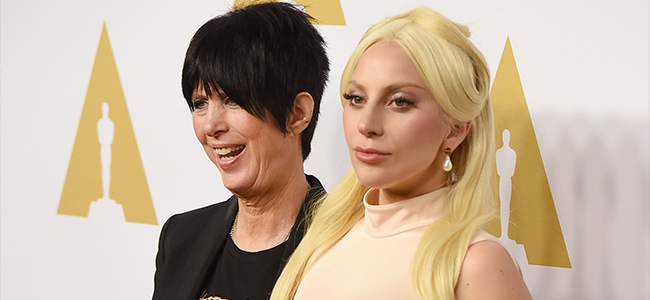
While trying to guess what might be nominated in this category, I expressed a lack of enthusiasm at the field of contenders. The final five (hear them all for yourself) haven’t done much to change my mind. Nice, fine, okay….these are some of the words that might describe them. Nothing too memorable or fun or beautiful or really worth getting excited about at all. But someone’s gotta win, and it will probably be Lady Gaga and Diane Warren for “‘Til it Happens to You.” It’s from a documentary called The Hunting Ground, about rape on college campuses. The importance of the issue, the star factor of Lady Gaga and the lack of a compelling choice among the competition should all combine to bring this tune a win.
If that happens, it will end one of Oscar’s notable losing streaks. This is Diane Warren’s eighth nomination, and she’s never won. Probably because most the songs she’s been nominated for are bland, forgettable ballads. Remember “How Do I Live,” from Con Air? Or “There You’ll Be,” from Pearl Harbor? Of course you don’t. How about “Because You Loved Me,” from Up Close and Personal? Do you even remember Up Close and Personal? (I do…but I’m a freak of nature.) To be fair, Warren does have one great nominated song to her credit: the epic, just-the-right-side of-cheesy-to-still-be-good-in-the-way-that-80’s-songs-could-be-cheesy-and-good-at-the-same-time “Nothing’s Gonna Stop Us Now,” from Mannequin.
Anyway…I’m not trying to be a Warren hater. I’ve got nothing against her, and she is a renowned songwriter who’s worked with a long list of great artists. It’s always nice to see somebody finally win an award like this after so many times coming up short. And since she’s not going to beat someone who I’m rooting for, it’s all the same to me.
Personal: I’d vote for “Simple Song #3” from Youth, just because it’s something different from the norm.
X
BEST COSTUME DESIGN
After a brief interruption in their nominations domination, please welcome back Mad Max: Fury Road and The Revenant. But to keep things interesting, let’s dismiss one of them right off the bat. I don’t think The Revenant will factor in here. And while The Danish Girl won the prize in the Period film category at the Costume Designers Guild Awards just a few nights ago, I think Academy voters will make this a three-way contest between Carol, Cinderella and Mad Max: Fury Road. And as with most of these below-the-line categories this year, there’s no obvious frontrunner. Cinderella‘s outfits are grand and colorful, which is the most common winning recipe, while Carol‘s are also strikingly colored, yet more conservative in style. Exquisite as both film’s sartorial selections are, however, I think the rugged and gritty outfits of Fury Road could win here, following triumphs with the British Academy of Film and Television Arts (BAFTA) and the Costume Designer Guild’s Fantasy category. It’s no sure thing; Carol and Cinderella are more in line with the traditional winners of this award (and of those, I’d give the edge to Cinderella), so we’ll see if enough voters are up for a change of pace.
Personal: I love the work on display in Carol and Cinderella, but I think I’d have to go with Mad Max: Fury Road, for that aforementioned Immorten Joe mask, if nothing else. I mean…look at that thing!
X
BEST PRODUCTION DESIGN
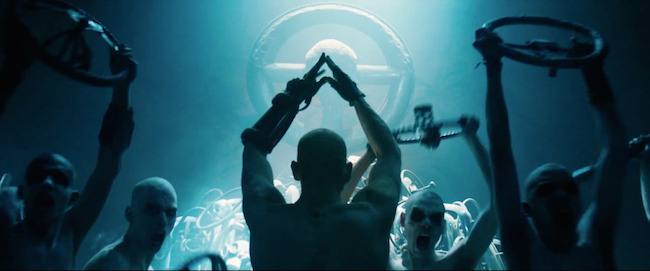
I think most people — myself included — tend to think of this category as just sets and locations, but it also takes into account all the stuff in the movie. Keeping that in mind, Mad Max: Fury Road — with its tricked-out vehicles and wild, creative props — may have the edge here. The setting itself is mainly a vast, open desert landscape. But pretty much everything moving through that landscape is ingeniously conceived.
If voters remain stuck on the idea of location and backdrops, the path to victory becomes more hazy. The Danish Girl and Bridge of Spies faithfully recreate their period settings — 1920’s and 1950’s, respectively — but the visuals aren’t particularly eye-catching. The Martian‘s interiors have a standard spaceship look, and the beautiful exteriors, while impressive, are just natural settings that don’t seem to require much work from a design standpoint. The Revenant, like Fury Road, primarily takes place outdoors in vast, untouched locales. This award usually goes to movies with lots of interior work, and as with Costume Design, voters tend to favor flashy over muted. Or not; Lincoln was a surprise winner here in 2012, and Bridge of Spies — despite being set nearly 100 years later — has a similar palette. So really, this year’s line-up — in its own vacuum and compared to past nominees — is a study in contradictions.
It really depends on how broadly voters are thinking when they consider what makes up Production Design. I could see almost anything except The Danish Girl picking up the prize, and even though it’s outside the box, I think they’ll go with Fury Road.
Personal: Mad Max: Fury Road. All of the Mad Max movies exemplify brilliant world-building, with endlessly fascinating details in the sets, costumes, vehicles, accoutrements, etc. Sometimes they are just seen quickly, in passing, helping in their small way to tell the story of this brutal post-apocalyptic world. These flourishes might not be explained, but they speak volumes. This is one of the most impressive elements of the series for me, and it makes Fury Road a no-brainer in this category.
X
BEST FILM EDITING
Here’s another contest where we can probably eliminate The Revenant right off the bat, unless voters really go deep for it. Star Wars: The Force Awakens, a bit of a surprise in this category, is also out. I doubt Spotlight can pull this off, but it’s not out of the question. It mainly comes down to Mad Max: Fury Road and The Big Short. This award often goes to a Best Picture frontrunner, unless there’s another film where the editing work truly stands out. That can apply to action movies like past winners The Matrix and The Bourne Ultimatum, or movies that are longshot Best Picture nominees like last year’s victor, Whiplash. In this case, we have one of each. The Big Short has a big shot at the big prize, while Fury Road has less of a shot, but showcases masterfully assembled action. Both movies are highly admired within the Academy, and I have no idea which side the majority of voters will come down on. Every year has one particularly difficult-to-predict, coin toss category, and this year’s is right here. I’m going with Fury Road, but this is a nailbiter…and if The Big Short takes it, watch out when Best Picture rolls around.
Personal: Mad Max: Fury Road. I thought the editing of The Big Short was a little annoying, truth be told. It wasn’t so much an example of best editing to me as it was most editing. There’s a difference.

X
BEST CINEMATOGRAPHY
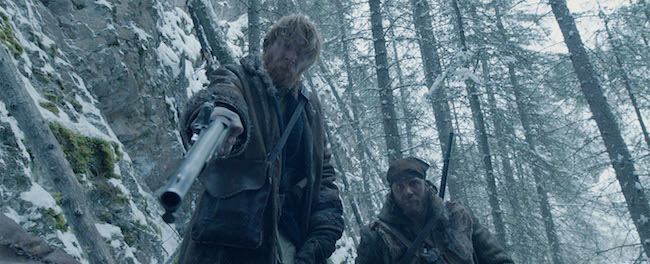
There’s not a weak contender in this lineup, and there are several more films that could easily have been here, but it will boil down to the two most obviously difficult movies to shoot: Mad Max: Fury Road, with its mind-boggling mayhem of practical effects and stunt work; and The Revenant, with its remote locations, long takes and natural light. This time, look for The Revenant to take the gold, making Emmanuel “Chivo” Lubezki the first person to win this award three years in a row, following Gravity and Birdman.
Personal: It would be fun to see 70 year-old John Seale win for coming out of retirement to shoot Fury Road, but The Revenant is hard to deny. And as much as it pains me to think of Sicario‘s criminally Oscarless Roger Deakins losing for the 13th time while Lubezki wins his third, there’s a reason Lubezki keeps on winning. The guy is a magician, and these last three films have been unusually complex tricks.
X
BEST ANIMATED FEATURE
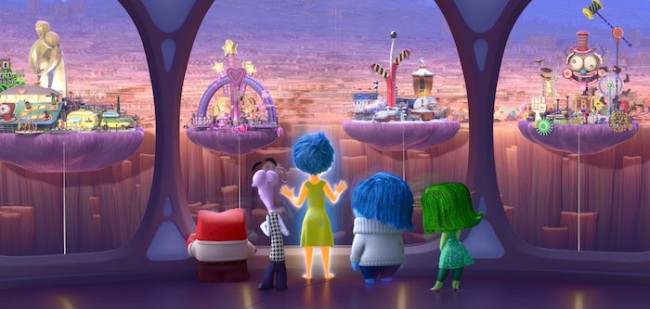
I don’t know which of Inside Out‘s five emotions — Joy, Sadness, Fear, Anger or Sarcasm — covers jealousy and disappointment, but those feelings will be working overtime in the heads of everyone not nominated for Inside Out. In one of the night’s few slam dunks, Pixar will celebrate its eighth win since this category’s inception 15 years ago. I wonder if Roger Deakins is interested in directing a Pixar movie…
Personal: Anomalisa and Inside Out were both funny, sad and beautiful. Either would be fine with me, but the creativity on display in Inside Out is tremendous.
X
BEST ADAPTED SCREENPLAY
Not a lot to say for the two writing categories this year, as each one has a pretty clear frontrunner. The Big Short has been far out in front of this race from the start, with more wins from regional critics groups than any of its competition, as well as wins from the Broadcast Film Critics Association (BFCA), Writer’s Guild of America (WGA) and BAFTA. The movie has been a big hit with Academy voters, and all signs point to an Oscar win. Room has potential to surprise, but that potential is low. The Big Short will take it.
Personal: I like Room, The Martian and Brooklyn better than The Big Short, but I’d still give this award to the latter because I have no doubt that it was the most challenging book to adapt. The other three stories — as well as the remaining nominee, Carol — tell straightforward narratives, but The Big Short is not a traditional A to B to C tale. It’s a fragmented story following multiple, unrelated groups of characters and dealing with incredibly complicated, dense concepts, which the script illuminates with humor and clarity. Like I said in the previous post, I haven’t read any of these books (and I’m sure most voters haven’t either), but finding a compelling movie in the pages of The Big Short was probably no easy task.

X
BEST ORIGINAL SCREENPLAY
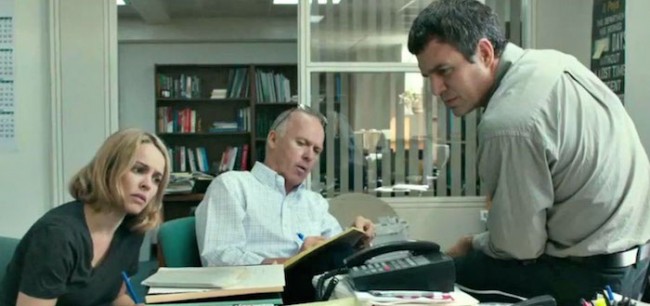
Like The Big Short, Spotlight took home prizes from the BFCA, WGA and BAFTA, and nearly swept the critics awards, capturing even more than its adapted counterpart. While its Best Picture hopes may have faded, it’s still held in extremely high regard, and for good reason. It’s one of those films where everything just clicks, and that begins with the impeccably researched, unfailingly truthful script. It’s hard to imagine any of the other nominees coming up from behind.
Personal: I’ll be happy to see Spotlight take this, especially since co-writer and director Tom McCarthy is long overdue for this kind of recognition after being ignored for past work like The Station Agent, The Visitor and Win Win. Still, I’d probably go with Inside Out. I loved how it handled such abstract concepts as, well, abstract thought, short-term and long-term memory, and the subconscious. The imagination behind every detail of how the mind functions is just wonderful.
X
BEST SUPPORTING ACTOR
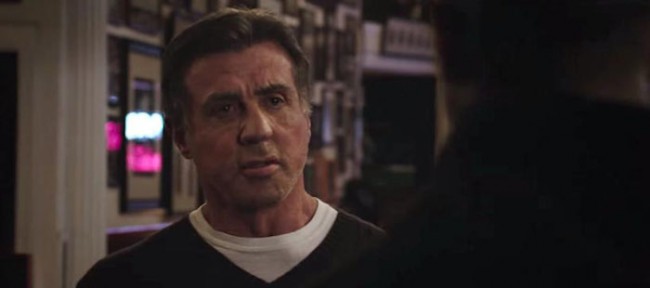
I never thought that the phrase “Oscar frontrunner” would be used to describe Sylvester Stallone, but his moving and grounded performance in Creed has put him in that position. Stallone dominated the critics awards, and took home the Golden Globe and the BFCA prize. So with all that momentum, he remains the man to beat. But consider this…Stallone was not even nominated by SAG or BAFTA, which are the only two organizations that actually share membership with the Academy. Perhaps that shows some vulnerability.
Or perhaps not. Consider this: the SAG voting opened so early that Creed had barely been identified or positioned as an awards player. SAG voters had a brief window in which to view the unexpectedly acclaimed movie before ballots were due. As for the BAFTA awards, Creed didn’t open in the U.K. until mid-January, too late for 2015 awards consideration. (Oddly, it opened in countries like Kuwait and Pakistan much earlier. Go figure.) In addition, Stallone’s wins at the Globe and BFCA ceremonies were accompanied by long and enthusiastic standing ovations, which suggests big support from the industry. People seem genuinely moved by the narrative of a guy who created a character (let’s not forget that) 40 years ago, was nominated at the time, and now comes full circle to give what many have called the performance of his career in an acclaimed spin-off of his brainchild, conceived by a young filmmaker who was deeply impacted by that original film. That story could almost be a movie itself. So momentum remains with Sly, and betting against him would be unwise if you’re in this thing for money or even just bragging rights. Still…a surprise is not out of the question here.
Personal: Stallone’s journey is touching, no doubt, but the focus should be on the performance. His is great, but for me, it’s all about Ruffalo. Sure, he’s the one who gets the big emotional outburst scene that will almost certainly be the clip played during the telecast, but it’s not about that. It’s because he’s the one principal actor in the movie who is called on to transform, and he does it completely. His voice, his speech pattern, his walk, his entire physicality…he inhabits this guy so fully, and because it’s a guy who’s so intense and committed, it allows him to really get under the skin. It’s enough of a makeover that it could have been a showy performance, but it’s not, because the writing and directing are so grounded. I enjoyed Tom Hardy in The Revenant a helluva lot, but Ruffalo would get my vote.
X
BEST SUPPORTING ACTRESS
Alicia Vikander has been leader of this pack, collecting the BFCA and SAG trophies, plus far and away the most critics awards (though for what it’s worth, most of those critics awards were for Ex Machina, while her nomination here is for The Danish Girl, as they were at the BFCA and SAG awards). The only major prize she lost was the Golden Globe, which went to Kate Winslet. That could have been dismissed as a fluke…until Winslet won the BAFTA prize as well. Now we have to stop and wonder if Vikander is on less solid ground than it initially seemed. I think she’s still the frontrunner, as the SAG award is generally a more reliable indicator of Oscar success than the BAFTA or Golden Globe. But the two taken together suggest that Winslet is closing in. Then again, Vikander was nominated for Ex Machina — not The Danish Girl — the two times she lost to Winslet. So…there’s that…whatever that is.
Winslet is an Academy darling, of course, with this being her seventh nomination, and she’s excellent in Steve Jobs, but as a co-lead in The Danish Girl, and by virtue of the story and her character, Vikander gets to go deeper in her role than Winslet does in hers. Not that Winslet’s work is shallow; it just isn’t as chewy a role as Vikander’s. The Swedish actress is young and still not widely known, and will surely have many more shots. But I think that on the strength of her work not just in The Danish Girl but also in Ex Machina, Testament of Youth (in which she gave another award-worthy performance), The Man from U.N.C.L.E. (a fun, breezy summer movie that showcased her playful side) and Burnt (not much to do in her brief appearance opposite Bradley Cooper, but she looked great, for whatever that’s worth), voters will reward her for an incredible year full of shining performances.
Personal: I’d vote Vikander too. Although I’d have nominated her in this category for Ex Machina, she’s been fantastic in everything she’s been in this year. Any way you slice it, her work speaks for itself.

X
BEST ACTOR
There’s not much to say here, as this award is one of night’s easy bets. Leonardo DiCaprio has reigned supreme all awards season long for the all-in, go-for-broke dedication he displayed in The Revenant. After years atop the Hollywood food chain, he will finally take home his first Academy Award.
Personal: Here’s the thing about DiCaprio. He gives an excellent performance in The Revenant, no argument, and his nomination is deserved. But he has given stronger performances, and he will again. Leo winning this Oscar is about two things: finally rewarding him for a career full of outstanding and committed work, and rewarding him for the physical extremes to which he pushed himself in order to make this movie. For his willingness to go to those extremes, I applaud him. But an Oscar win should be recognition of the performance, not the personal struggles. Leonardo DiCaprio, the Actor, buried himself in the experience of making The Revenant, but he doesn’t bury himself in the character of Hugh Glass the way he did with The Departed‘s William Costigan or The Wolf of Wall Street‘s Jordan Belfort or What’s Eating Gilbert Grape‘s Arnie or J.Edgar‘s title character or so many others. He doesn’t bury himself in Hugh Glass to the same extent because Glass, as depicted here, doesn’t require the same level of immersion. The story of The Revenant is primal and powerful, but it isn’t deep. That’s not a criticism; it’s just a fact. It doesn’t have to be deep to be great. It’s a story of survival and revenge, plain and simple. At the end of the day, what went into the performance is more impressive than the performance itself.
With that in mind, my pick would be Michael Fassbender for Steve Jobs. He had a much more challenging character to play, requiring him to hit notes grand and intimate, and to capture so many subtle and contradictory facets of the pioneering tech giant. He’s in nearly every moment of the movie, deftly maneuvering the acrobatics of Aaron Sorkin’s rapid-fire dialogue, and not trying to guide how the audience feels about his mercurial character. His performance is completely magnetic. He really is quite something.

X
BEST ACTRESS
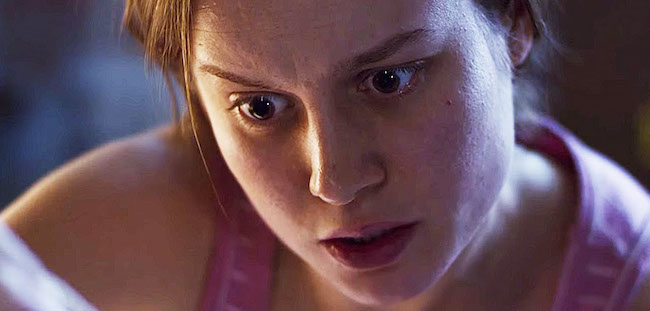
There’s little commentary or analysis required here either. Very early in Phase One, it seemed that this award might be a neck-in-neck race between Room‘s Brie Larson and Brooklyn‘s Saoirse Ronan, but Larson soon pulled ahead and built up a considerable lead that she hasn’t relinquished. With BFCA, SAG and BAFTA awards now on her shelf, as well as a Golden Globe, she’s got the Oscar all locked up.
Personal: This is an absolute heartbreaker of a choice between Larson and Ronan. Putting aside that I have major celebrity crushes on them both, their performances are so, so good. I’d have to give the tiniest, tiniest edge to Ronan, just because her role calls on her to play what appeared to me as a wider range of emotions. There’s no question that both actresses nail every beat. Ronan just got a more varied array of beats to hit, and when the choice is this difficult, you look for whatever you can to guide your decision.
X
BEST DIRECTOR
The stars seem aligned for Alejandro G. Iñárritu, who took home this Oscar last year for Birdman, to become the first back-to-back winner of Best Director since 1950, when Joseph L. Mankiewicz won for All About Eve a year after taking the prize for A Letter to Three Wives. Prior to that, the only back-to-back winner was John Ford, for 1940’s The Grapes of Wrath and 1941’s How Green Was My Valley. A few weeks ago, Iñárritu became the first person to ever win the Director’s Guild of America (DGA) award two years in a row. Given that award’s success rate at predicting the Oscar — only seven times since the DGA award was first presented in 1948 have the two not been in sync — a win for Iñárritu is extremely likely, especially when you add in Golden Globe and BAFTA victories. In what has been another tough-to-call year in the top categories, it’s always possible that this will turn out differently, but the momentum is definitely with Iñárritu.
Personal: George Miller, by a mile. I kinda don’t get why Miller isn’t the frontrunner here, or at least considered a major threat. I understand why people are impressed by Iñárritu’s achievement, but since so much of the admiration derives from his insistence on pushing the limits under such extreme conditions, how are people not in even greater awe of what Miller accomplished? I look at The Revenant and I see the beauty and the skill, and I admire Iñárritu’s drive for authenticity. But as hard as the movie surely was to shoot, it doesn’t feel impossible. Mad Max: Fury Road feels impossible. I look at that movie and I am completely blown away by the directorial skill on display. I look at that movie and I have absolutely no idea how Miller even begin to film it. How to even conceive of the specific beats of the action choreography, let alone actually capture it all on camera. It’s a towering achievement. With all respect to Iñárritu and The Revenant, as well as to nominated directors like Tom McCarthy (Spotlight) and Lenny Abrahamson (Room), whose talents are absolutely evident even if showcased differently by the nature of their movies’ smaller scales, what Miller did with Mad Max: Fury Road was singular and stunning.

X
BEST PICTURE
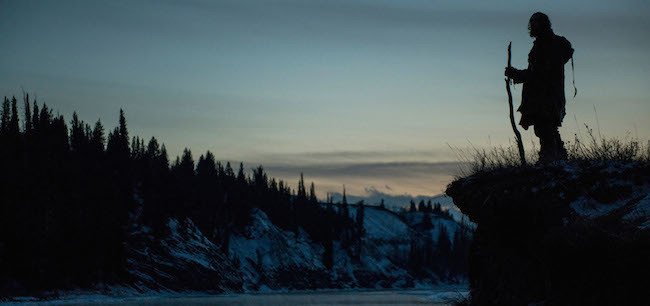
As Alejandro G. Iñárritu looks primed to win the directing prize, so too is his film The Revenant poised to capture the night’s top honor. But it’s not a sure thing. The only sure thing is that whichever movie does win, the victory will have been hard-won. This was an unpredictable awards season in many ways. (Do I say that every year? I probably say that every year. It must feel that way every year.) The precursor awards, which are supposed to help narrow the field — and ultimately take any and all suspense out of Oscar night — proved to be mostly unhelpful this year. It was one of the rare times when the Producer’s Guild of America (PGA), the DGA and SAG each went with a different movie. The producers chose The Big Short; directors rewarded The Revenant; SAG went for Spotlight. SAG’s Best Ensemble winner has the least impact on the Oscars, and Spotlight — an early frontrunner thanks to its dominance in Phase One — has seen its odds decrease.
With The Revenant‘s recent successes, The Big Short no longer feels like the movie of the moment, but here’s why it could win. Of all the other movie award-distributing bodies, the PGA is the only one to use the same voting system as the Academy uses for Best Picture. That would be the preferential ballot, and as I’ve included each of the past two years, here’s a video from The Wrap‘s Oscar expert Steve Pond explaining how it works.
The PGA and the Academy both moved to the preferential system in 2009, and every year since, the PGA winner has gone on to win the Oscar (with the only hiccup being when 12 Years a Slave and Gravity tied). That doesn’t really mean anything — these streaks are made to be broken — but it doesn’t mean nothing either. Then again, the PGA award has only been around since 1989. The DGA award has been around since 1948, and there have only been 14 occasions in the ensuing 66 years when the DGA winner’s film has not gone on to win Best Picture. But again, what do any of these facts ultimately mean? Some people doubted Birdman‘s chances last year because no movie had won Best Picture without a Best Film Editing nomination since Ordinary People in 1980. The Lord of the Rings: The Return of the King had its naysayers because the Academy had never awarded a fantasy film the Best Picture prize. Could the song Skyfall win an Oscar when no James Bond theme had ever managed the feat? Yes it could, and it did. These factoids are interesting to bring up, but eventually they all get defied. Other trivia, records and statistics that pundits have brought into the discussion for this category:
- Only three films — Laurence Olivier’s Hamlet, The Sound of Music and Titanic — have won Best Picture without a screenplay nomination, which The Revenant does not have. And no film has ever won Best Picture without either a screenplay nomination or a WGA nomination, which The Revenant also did not have.
- There have never been back-to-back Best Picture winners from the same director, even though there have been back-to-back director winners. With Iñárritu’s Birdman the reigning champ, a victory for The Revenant would be a first.
- Seldom does a movie win Best Picture without also winning at least two other awards. In the last 62 years, only one film — The Greatest Show on Earth — has managed it. So by that statistic, The Big Short — only considered a lock for Best Adapted Screenplay — would have to win one more to be a viable Best Picture winner. It’s a strong threat to take Best Film Editing, but can Christian Bale or director Adam McKay pull off upsets? (Spotlight faces the same challenge.)
We’ll see which of these talking points are altered come Sunday night. Other things to consider in the meantime? The preferential ballot favors consensus, so the movie that wins probably isn’t the one with the most first-place votes, but the one with lots of second and third place votes as well. The Revenant seems like more of a love-it-or-hate-it movie than The Big Short, which could have a better shot at placing higher on more ballots. Could that be why it lost with the PGA? Or has it just been more widely seen since the PGA – one of the earlier voting groups in Phase Two – presented their award? And who knows if I’m even right in that love-it-or-hate-it estimation? This is just intuition on my part. Really at this point, I’m just spinning my wheels, so enough is enough. In a tumultuous award season like this one, few things are certain. Something could come along and knock down The Revenant — most likely being The Big Short — but the odds seem stacked in its favor.
Personal: I’m a big fan of most of the nominees, so almost any of them would be fine with me. Only The Big Short or Bridge of Spies would disappoint me, though I definitely liked both. Still, once again I’d choose Mad Max: Fury Road, because the fact that it even got here is such a triumph, and I’d love to see it go all the way. And because, as I said in the Best Director commentary, the movie sorta blows my mind. I’m left to wonder again why The Revenant became The One to Beat. I think its Phase Two surge had more to do with the narrative behind the movie than the one in the movie — an effective bit of strategic campaigning on the part of the filmmakers and 20th Century Fox. What surprises me is that given how taken the industry at large seems to be with the movie’s behind-the-scenes lore, they aren’t showing more of that love to Fury Road. My conjecture is that they think The Revenant is somehow “important” and that Fury Road, at the end of the day, is still just an action movie and ultimately too frivolous to win the top awards. The irony is that The Revenant may have the appearance of depth, but is actually quite superficial (again, not meant as a criticism), while Fury Road, which appears to be just explosions and car chases, has much more substance brewing beneath the surface. Oh well. At least it made it this far. That’s worth appreciating on its own.
As usual, I’m sorry to say that I have nothing to really offer in the remaining categories. Son of Saul is the favorite to win Best Foreign Language Film, with Mustang being called the most likely spoiler. Amy is said to have the inside track on Best Documentary, though I don’t know; I’m not sure the subject matter of Amy Winehouse has wide enough appeal across the Academy. I might go for Cartel Land. As for the live-action, animated and documentary shorts…you’re on your own.
Hopefully it will be an exciting show, given some of these up-in-the-air categories, and it might be a bit of an uncomfortable show too, with Chris Rock and others commenting on the lack of diversity among the nominees. I still haven’t been able to write-up all my thoughts on that issue, so perhaps I’ll do a separate post. The issue isn’t going away, unfortunately.
To close, here’s a great bit from Chris Rock’s 2005 hosting gig.

 The most surprising omission from this year’s nominees came in this category, with The Martian director Ridley Scott being left out. He was supposed to be one of the day’s absolute sure things, with many at that point already dubbing him the sentimental favorite to win. Whether his omission was a matter of too many voters deliberately choosing elsewhere, or a matter of them thinking he was a lock and therefore giving their vote to someone else — something I suspect happened to Ben Affleck and Kathryn Bigelow in 2012 — we’ll never know. I didn’t think Scott deserved a nomination for The Martian, so I’m okay with his absence. I loved the movie and he did a great job with it, but it didn’t strike me as such a strong directorial achievement as to be singled out among the year’s five best.
 After Ridley Scott, the second most shocking omission this year came in this category, with Aaron Sorkin’s Steve Jobs script failing to make the cut. This one astounds me. It should be the winner here, as far as I’m concerned. I haven’t read the source material for any of these contenders, but who are we kidding: neither have the voters. No one is ever really evaluating this category by how successfully the source material is translated to the screen. They’re going off the movie itself. Even without reading the source material, I doubt that any of the nominees — all of whom did excellent work — crafted anything as creative, unique, or just plain smart as what Sorkin did with Steve Jobs. Very disappointing.
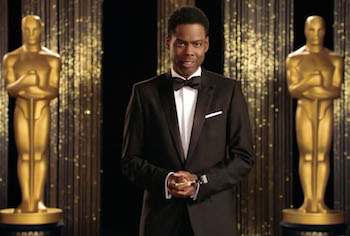 That’s really all I have to say about the nominees at this stage. The big show is two weeks away, so we’ll see each other before then. Chris Rock is hosting, and in this year of racial controversy, who better to comment on the drama? I have a great idea for the opening of the show. The announcer says, “Ladies and gentlemen, please welcome your host for the evening, Chris Rock!” And out walks Louis C.K., nodding and doing his understated, I’m-kind-of-uncomfortable-right-now Louis C.K. thing. “I…I know you were expecting Chris. You were probably expecting Idris Elba or Will Smith too, but you know…anyway the Academy quietly decided that in keeping with the theme this year…” and then he’d just kinda point to his face with a telling look. And it would go on for a minute until they figured a way to get Rock out there. I imagine maybe Louis calling Chris and tracking him down to Jerry Seinfeld’s house. They put Jerry on screen, Chris is over his place just hanging out in a tux, Louis and Jerry convince Chris that the show needs him, he agrees to come, and then Jerry drives him over, the ride becoming a riff on Seinfeld’s web series, this time called Comedians in Cars Getting Oscars. I dunno — it’s a work in progress. I’ve got two weeks to figure out the second part, but the opener is gold.

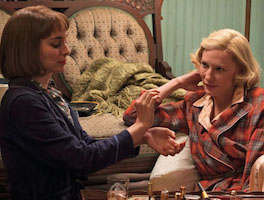 Once again, we don’t know how many nominees there will be. Last year there were eight, while the three previous years each had nine. I’m guessing nine again, based purely on the few years of evidence we have to work from. Ultimately, it has nothing to do with how many worthy films there are, or whether it’s been a strong or weak year for movies. It’s all about how many votes each movie gets. The way the numbers are crunched, a movie with a few hundred first place votes will be nominated over a movie with many more second or third place votes. (There are approximately 6,000 members of the Academy.) The passion vote is the key when it comes to the Best Picture nominations, and that’s tough to get a handle on. I’ve read, for example, that Carol and Room – while performing quite well with critics – have been less embraced by Academy members; the former for being perceived as too cold, and the latter for portraying difficult subject matter that has discouraged voters from watching it. Even if those rumors are true, there could still be enough devoted admirers who choose one of those films as their first choice, helping land it a coveted spot. (I’m counting on that passion vote to carry Fury Road over the finish line.)
 What does it all mean for the Oscars? Well, as is the case with most of the guilds, the nominees rarely line up exactly. Scott and Iñárritu seem safe, as does McCarthy, having directed the presumed Best Picture frontrunner. Despite dominating the critics circuit, however, I’m not prepared to say that Spotlight will go all the way. And good as it is, it doesn’t jump out as a directing showcase…although the fact that it isn’t a flashy epic shouldn’t deceive anyone into thinking it’s not a superbly helmed film. So McCarthy could be the omission that will shock the pundits. I’m hearing that The Big Short is playing like gangbusters with Academy members, and that its popularity was hitting its stride smack in the middle of the voting period, so McKay could definitely benefit if people are loving the movie. On the other hand, might some voters be reluctant to hand a Best Director nomination to the guy behind Anchorman and Talledega Nights? You never know. I mentioned that the Director’s branch often goes for a less mainstream, more outsider candidate, and that can translate to “arty,” so I wouldn’t count Todd Haynes out.
 Last year’s winner Eddie Redmayne has good odds of being back again, for The Danish Girl, but that movie’s reception seems just muted enough to make what might seem on paper like a surefire nomination be less of a guarantee. (He plays a real-life artist who was one of the first people to ever undergo gender-reassignment surgery.) Heading into the fall season, everyone assumed – and even hoped – that Johnny Depp’s work in Black Mass would be a return to form for the actor, and a surefire awards magnet. Unfortunately the movie was underwhelming, and Depp – while very good – was stuck with a script that gave him a two-dimensional character to play. There was nothing below the surface to dig into. He’s been largely absent from the awards conversation, but did score nominations from SAG and the BFCA, so he’s not completely sidelined.
 Two actresses that needn’t worry about the stiff competition are Brie Larson and Saoirse Ronan, who are comfortably positioned to be recognized for Room and Brooklyn, respectively. Whatever issues Room might have in cracking the Best Picture race, they shouldn’t impact actors’ desire to recognize Larson’s extraordinary work. Jennifer Lawrence is an Academy darling, and even though Joy hasn’t resonated as strongly as American Hustle and Silver Linings Playbook – Lawrence’s last two collaborations with David O. Russell – her work in the film is admired enough to make her a likely nominee. She missed out on a SAG nomination, but ballots for those awards went out in mid-to-late November, well before the movie was completed and screening for guild members.
 A number of veterans have been in the conversation this year, from character actress Blythe Danner, playing her first lead film role in I’ll See You in My Dreams to Lily Tomlin for her acerbic turn in Grandma to Maggie Smith in The Lady in the Van. But the only one from this over-65 club who seems to have a real shot is Charlotte Rampling, who has earned raves for 45 Years. The movie is a small one, but she’s received enough praise that if voters get a chance to see the film, she could land a spot. It’s a definite “if,” however, especially since her performance is so quiet and internalized. Voters prefer fireworks. She missed out on a BAFTA nomination (her assumed spot went to Maggie Smith), and that could be a bad sign for her Oscar prospects. If she couldn’t break through with a home field advantage, she may not have the votes to get nominated on this side of the pond.
 If we consider Stallone a lock, the only other person who enjoys similar status at the moment is Mark Rylance as the accused Soviet agent at the center of Bridge of Spies. Rylance isn’t well-known by film audiences, but he’s a Broadway fixture with three Tony awards, and has been a highlight of Steven Spielberg’s drama for those who’ve seen it. (I enjoyed the performance, but felt it needed to be more substantial in size to deserve an Oscar nod.)
 Michael Shannon has garnered a fair amount of critical accolades for the searing housing crisis drama 99 Homes, and even landed SAG, BFCA and Golden Globe nods. But have enough Academy members seen that movie? Enough to go for Shannon over Keaton and Ruffalo in Spotlight, a movie many of them will definitely have seen? Only Shannon and Rylance have scored nominations from all three of those groups. Idris Elba was recognized by SAG and the Globes for Beasts of No Nation; Christian Bale by SAG and the BFCA for The Big Short; and Paul Dano by the BFCA and the Globes for Love & Mercy. Bale, Elba and Rylance have also added BAFTA nods to their tally. Tom Hardy picked up a BFCA nomination for The Revenant, while Jacob Tremblay scored a SAG nod for Room. SAG often goes to bat for child actors, but I’m unsure about Tremblay’s Oscar chances. People who’ve seen the film – actors who’ve seen the film, importantly – are definitely moved by his performance, but with someone so young, there’s often the question of the line between acting – making conscious choices about a performance – and playing a sort of make-believe guided by natural behavior. There’s also the category fraud issue again, seeing as Tremblay is unquestionably a lead in Room. As with Rooney Mara and Alicia Vikander, Tremblay’s placement as Lead vs. Supporting has varied among critics groups.
 Mara and Vikander and their category confusion aside, the safest bet here is Kate Winslet, who has earned consistent accolades for her work in Steve Jobs, and just picked up an unexpected Golden Globe win. Jennifer Jason Leigh, one of the finest actresses to never be nominated for an Oscar, could finally have her chance with a live-wire role in The Hateful Eight, and Helen Mirren is in play for a small role in Trumbo…much too small, in my opinion. She earned the SAG/BFCA/Golden Globe trifecta, but enjoyable as she is playing gossip columnist Hedda Hopper, this is a spot that should go to someone who contributed more to their film. Like Elizabeth Banks, for instance, in Love & Mercy. The prolific actress gives one of her best performances, and although she has picked up some recognition in the precursor phase, she’s a dark horse for an Oscar nomination.




 Kasdan said something similar in a
  In the article, the paragraph preceding the one you just read says that Lucas’ stories apparently focused on teenage characters, and we all know that didn’t work out so well in the prequels. Disney knew it too, as the article suggests. Whether the discomfort Handy alludes to around the situation actually exists or not is hard to discern based on things we’ve heard from Lucas. On one hand, he has expressed that he’s happy to be out of the loop and excited to see the movie along with the rest of the world. This past January, he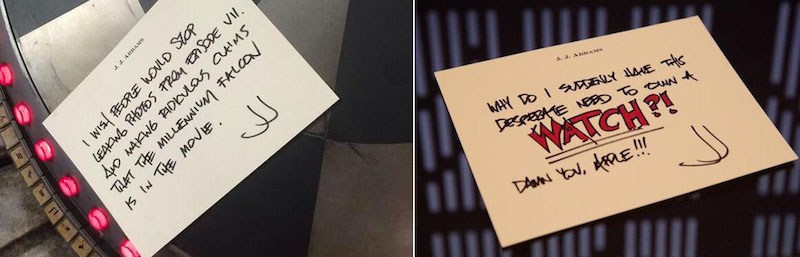
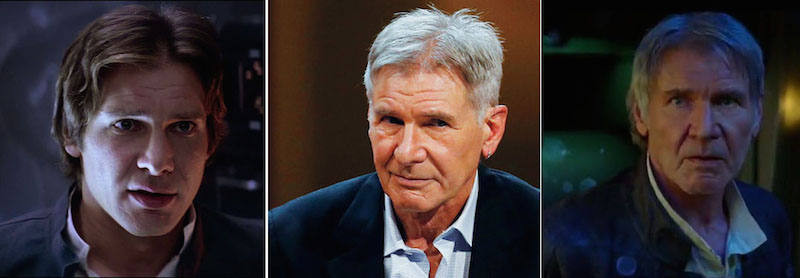
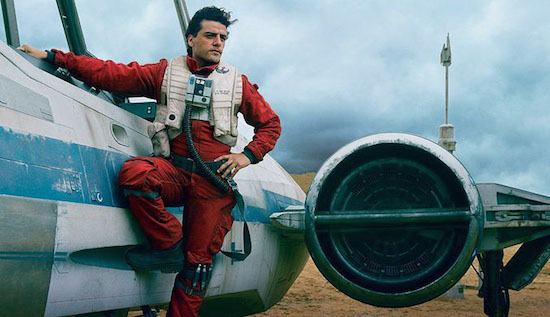


 If we take his word for it, then they acclimated to their characters with ease and comfort. Like he says, however, they’re 30+ years older, and have surely accumulated experiences which have shaped and changed them into people who are the same but different. Will we accept those changes? Much of the Star Wars fiction that has extended the life of these characters over the last three decades has concerned offspring of Han and Leia, because of course the assumption is that the fiery princess and the charming scoundrel would stay together and have a family. But isn’t it kind of weird to think of Han Solo as a dad? The prominence of Daisy Ridley’s Rey in the marketing of The Force Awakens, and various clues gleaned from trailers and interviews, suggest that she might be the child of Han and Leia. If she is, in what kind of light will that recast Han? His relationship with Leia already had him softening a bit in Return of the Jedi. How will fatherhood have affected him?
 That might explain why Lucas often said that his favorite moment in the classic trilogy was when Luke, hiding in the Emperor’s Throne Room from Darth Vader, gave into his anger and suddenly, furiously attacked his father at the suggestion that Leia could be turned to the dark side. The Emperor applauded Luke’s crippling assault that left Vader on his back with his hand chopped off. This was the moment when Luke would give into the dark side. But he didn’t, as we well know. He was a Jedi, like his father before him. Last month, a 10 year old episode of the Independent Film Channel show Dinner for Five resurfaced, featuring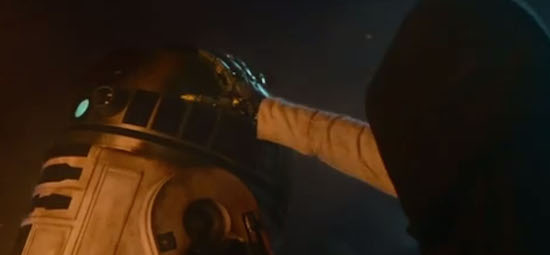
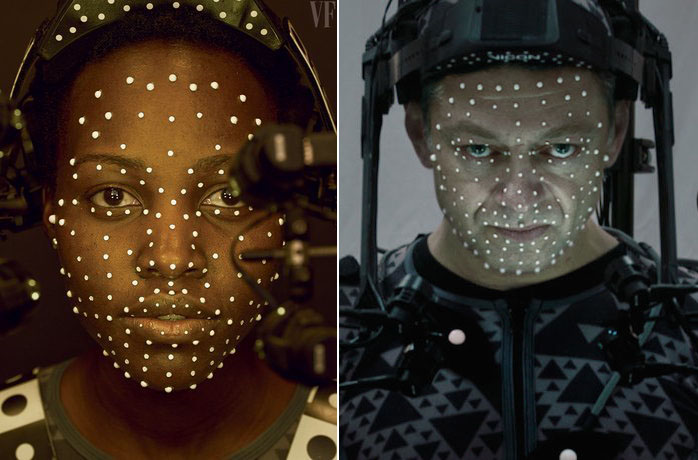
 Casting news always excites me, but I hope each new movie isn’t overloaded with major character additions. The original trilogy, and even the prequels, didn’t bring in too many new significant figures from film to film. The Empire Strikes Back obviously had a couple of key additions, but by and large the cast that we met in A New Hope stayed intact through Return of the Jedi. Abrams has assembled such an impressive line-up for The Force Awakens (the jury’s still out on Ridley, but she looks poised to nail it), and I hope that the movie doesn’t pull a Darth Maul and get rid of promising characters before they’ve had a chance to be developed. While the articles linked above mention that some of those actresses might have been screen testing with John Boyega, we really have no idea who will be back for Episodes VIII and/or IX. So far, the only actor I’m aware of to
  So Rian Johnson’s taking on Episode VIII. For Episode IX, Lucasfilm and Disney made a less exciting choice,
  Trevorrow might have a strong voice of his own too, but if so, it’s still emerging, and Lucasfilm and Disney’s decision to hire him seems more concerned with playing it safe, whereas hiring Johnson was inspired. Obviously I want the movies to be great, so I’m rooting for Trevorrow all the way. He’ll have one more chance to show us what he’s got before tackling Episode IX, as he returns to the smaller scale of Safety Not Guaranteed with a drama called The Book of Henry, starring Naomi Watts, Sarah Silverman, Lee Pace, Dean Norris and excellent young actors Jaeden Lieberher (St. Vincent) and Jacob Tremblay (Room). Here’s hoping that film let’s him show us something promising and sends him into Star Wars with strong buzz that justifies the choice to hire him.
 Even for today’s kids, it will be different. The world has changed. When I was a kid, there was nothing else that had the scope and scale of Star Wars. There was no competition. Today’s kids may love it, but the popularity of Batman, Superman, Spiderman and The Avengers is boundless. Kids have Harry Potter, they have Transformers, they have movies and TV shows that are rife with technical wizardry the likes of which, in my childhood, couldn’t be found anywhere except in Star Wars. With all of these influences (and more) competing for kids’ imaginations, Star Wars is just one piece of the pie. They may love it, they may go back for repeat viewings, but they’ll also move onto the next thing with relative ease. They won’t swim, soak and steep in it the way my generation and those just before and after mine did, because there are too many other exciting things vying for their attention. But the fact that a nearly 40 year old creation still holds such a powerful sway is a triumph in itself, and we need to keep all of this in mind as The Force Awakens takes its place in the world.




 I Am DB