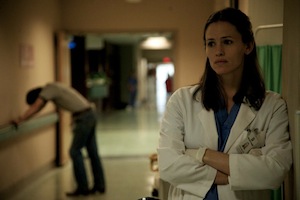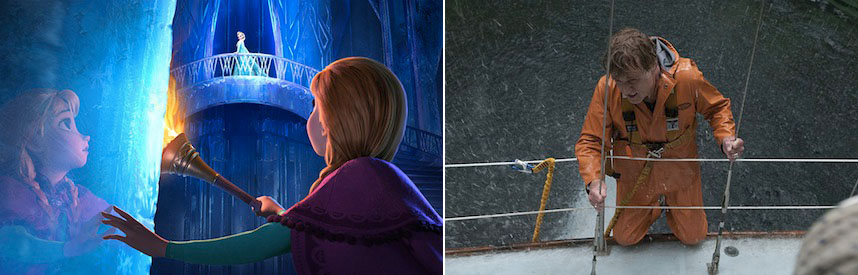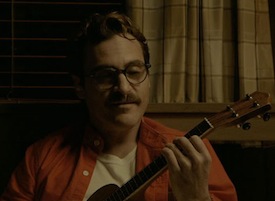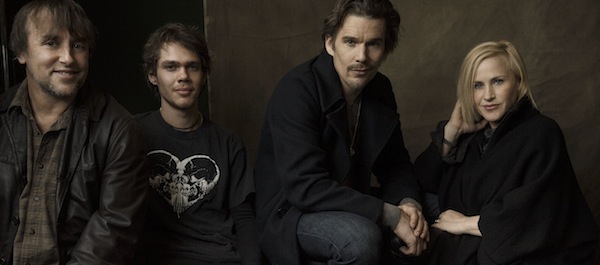
I Am DB

March 14, 2014

30 Movies I’m Looking Forward to in 2014

Filed under: Movies — DB @ 12:00 pm
Tags: , ,

I know that I keep raising the number of movies on this list each year, but I suppose that given the point I made in my best of 2013 post about how many movies are released every year and how many I see, 30 isn’t such a big number. The list below doesn’t even include the two holdovers from last year’s list that ended up getting pushed: Sin City: A Dame to Kill For (out August 22), and Foxcatcher (release TBA), a true life drama from Capote and Moneyball director Bennett Miller in which Steve Carell goes against type as the paranoid schizophrenic millionaire who sponsored the training of U.S. Olympic wrestlers Dave and Mark Schultz, with tragic results. The list also excludes Knight of Cups, the next movie from Terrence Malick that seems likely to show up this year, though you never really know with Malick. Its large cast is supposed to include Natalie Portman, Christian Bale and Cate Blanchett, but by the time he finishes editing it, it might feature just a bunch of trees and rocks and fields of tall grass. Hopefully it will show up at Cannes or one of the fall film festivals and get picked up for distribution in 2015.

Anyway, enough about what isn’t on the list. Let’s get to what is. I wanted to have this posted a few weeks ago, since by now one of the movies included has already opened. But I couldn’t get to it in time, and since I haven’t yet seen the movie in question, it still qualifies as one I’m looking forward to.

30.
THE HOMESMAN
Director: Tommy Lee Jones
Writers: Tommy Lee Jones, Kieran Fitzgerald, Wesley A. Oliver
Cast: Tommy Lee Jones, Hilary Swank, Meryl Streep, Barry Corbin, David Dencik, William Fichtner, Grace Gummer, Evan Jones, John Lithgow, Tim Blake Nelson, Miranda Otto, Jesse Plemons, James Spader, Hailee Steinfeld
Release Date: TBA

Jones, a Texas native with a natural affinity for and understanding of the American West, pulls triple duty as director, co-writer and star of this story about Mary Bee Cuddy (Swank), a strong-willed woman in the 1850’s who teams up with a claim jumper (Jones) to escort a group of supposedly insane women across the plains from Nebraska to a sanitarium in Iowa. It seems like an intriguing premise, offering some rewarding roles for a range of talented actresses.

29.
A MOST WANTED MAN
Director: Anton Corbijn
Writer: Andrew Bovell
Cast: Philip Seymour Hoffman, Daniel Brühl, Willem Dafoe, Rachel McAdams, Robin Wright, Martin Wuttke
Release Date: TBA

One of the final leading roles we’ll get to see the gifted Philip Seymour Hoffman play will be in this adaptation of the John le Carré novel about a half-Chechen, half-Russian immigrant who arrives illegally in Germany and arouses the interest of both the American and German governments when he lays claim to a fortune held in a private bank. I’m sure it will be more interesting than it sounds. Corbijn, best known as a photographer whose work includes the album art for U2’s The Joshua Tree and R.E.M.’s Automatic for the People, is quietly building a strong reputation as a director; I enjoyed his gripping 2010 thriller The American, which starred George Clooney as an assassin on assignment in Italy. Like most of le Carré’s work, this one deals with international espionage, and will hopefully offer a meaty story to be chewed on by this fine cast…and by the audience; I’m still trying to puzzle out what the hell happened in the recent Gary Oldman-starring adaptation of le Carré’s Tinker Tailor Soldier Spy. If nothing else, this will be a chance to savor new work from Hoffman…a prize that is sadly more valuable than ever.

X
28.

WILD
Director: Jean-Marc Vallée
Writer: Nick Hornby
Cast: Reese Witherspoon, W. Earl Brown, Laura Dern, Brian Van Holt, Gaby Hoffman, Kevin Rankin, Thomas Sadoski
Release Date: TBA

Reese Witherspoon seems to be taking a cue from her Mud co-star and attempting a McConaissance of her own. Since the critical and box office failure of her last romantic comedy, This Means War, she’s been choosing more interesting projects that, when taken together, may be a reminder of what a fine actress she is. In addition to Mud, she’s completed filming Devil’s Knot, a fictionalized account of the Robin Hood Hills murders that have been so exhaustively explored in the Paradise Lost documentaries; and The Good Lie, in which she plays a woman who takes in four young Sudanese refugees. She’s also in the #2 movie on this list, which could offer a chance to keep her comedic skills sharp while still working with high quality material (as opposed to, let’s say, Four Christmases). Wild, however, could be the one that brings the Oscar-winning actress back to the awards circuit. Adapted from the memoir by Cheryl Strayed and directed by (fittingly, perhaps) Dallas Buyers Club helmer Jean-Marc Vallée, Witherspoon will play a woman who impulsively decides to hike the Pacific Crest Trail on her own, without any wilderness or hiking experience. With The Young Victoria and Dallas Buyers Club under his belt, Vallée is fast becoming a director to watch, and I’m excited to see Witherspoon front and center in a role that stands to demonstrate her range.

27.
CHEF
Director/Writer: Jon Favreau
Cast: Jon Favreau, Bobby Cannavale, Robert Downey Jr., Dustin Hoffman, Scarlett Johansson, John Leguizamo, Oliver Platt, Amy Sedaris, Garry Shandling, Sofia Vergara
Release Date: May 9

Jon Favreau has become so well-known for directing big movies like Iron Man and Cowboys & Aliens that it would be easy to forget his roots are in small independent films, as the writer and star of Swingers. He returns to lower budget, more character driven filmmaking with his newest project, in which he plays a chef who gains fame at a Los Angeles restaurant, only to have his success evaporate after a string of personal and professional disappointments. He ends up restoring an old food truck and getting back to his roots, while also reconnecting with his family. I’ve always enjoyed Favreau as both a director (yes, I even liked Cowboys & Aliens) and an actor, though his on-camera appearances have mostly been brief as his directing career has flourished. Seeing him take on a leading role once again, in a smaller scale movie with a tasty cast, should be fun.

26.
EXODUS
Director: Ridley Scott
Writers: Bill Collage, Adam Cooper, Steven Zaillian
Cast: Christian Bale, Hiam Abbass, Joel Edgerton, Emun Elliott, Ben Kingsley, Ben Mendelsohn, Aaron Paul, John Turturro, Indira Varma, Sigourney Weaver
Release Date: December 12

Spoiler Alert: So there are these people in Egypt called the Israelites, and the Pharoah Ramses enslaves them and makes them build his pyramids and shit. But there’s this guy Moses, see, and he’s an Israelite too, but he’s been secretly raised as an Egyptian. One day, he sees an Egyptian beating a Jew. He kills the guy, flees the country, and eventually sees a bush on fire, but the bush is actually God, who tells Moses to go back to Egypt and free the Israelites, which he does, but not before God unleashes ten plagues on Egypt. Moses leads his people out of Egypt to the Promised Land, and along the way the Red Sea is parted and God delivers Ten Commandments to the Israelites. Because of all this, every year there’s a week in April when your Jewish friends can’t go get pizza with you because they’re not allowed to eat anything except matzoh and macaroons. This movie, from the director of Alien, Blade Runner, Thelma & Louise and Kingdom of Heaven, will cover at least some of this. Starring Batman, Gandhi, Ripley and Jesse Pinkman. It’s biblical, bitch!

25.
THE JUDGE
Director: David Dobkin
Writers: Bill Dubuque, Nick Schenck, David Seidler
Cast: Robert Downey Jr., Robert Duvall, Vera Farmiga, Vincent D’Onofrio, Balthazar Getty, Ken Howard, David Krumholtz, Melissa Leo, Leighton Meester, Dax Shepard, Jeremy Strong, Billy Bob Thornton, Grace Zabriske
Release Date: October 10

I recall reading somewhere that after the box office disappointment of the 2009 drama The Soloist, Robert Downey Jr.’s wife and business partner, producer Susan Downey, insisted that he stick to high concept material and franchises. I don’t know if this was true or just Hollywood gossip, but as much as I love Downey Jr. as Tony Stark, I’ve wished he would balance such roles with more grounded material. Since then, the only movie he’s made outside of the Iron Man and Sherlock Holmes series was the bad, lazy comedy Due Date. So because it promises a more down to earth Downey, I’m looking forward to The Judge, in which he plays a lawyer who returns to his small hometown for his mother’s funeral and finds out that his father (Duvall), the local judge, is suspected of killing her.

The director, David Dobkin, is known for comedies like Wedding Crashers, Fred Claus and The Change-Up, and when a director primarily known for broad comedies or action tries to stretch into more dramatic material, it doesn’t usually go well. The Judge has been described as a dramedy, so there should be some comedic elements, but still…with Dobkin at the helm, my expectations are tempered. I really like the cast though, and I’m hoping that this is a showcase role for Downey that reminds us how much he’s capable of outside the franchise machine. I’m especially excited about the promise of him and Farmiga working together; that seems like a great pairing.

24.
NOAH
Director: Darren Aronofsky
Writers: Darren Aronofsky, Ari Handel
Cast: Russell Crowe, Douglas Booth, Jennifer Connelly, Marton Csokas, Kevin Durand, Anthony Hopkins, Frank Langella, Logan Lerman, Mark Margolis, Nick Nolte, Emma Watson, Ray Winstone
Release Date: March 28

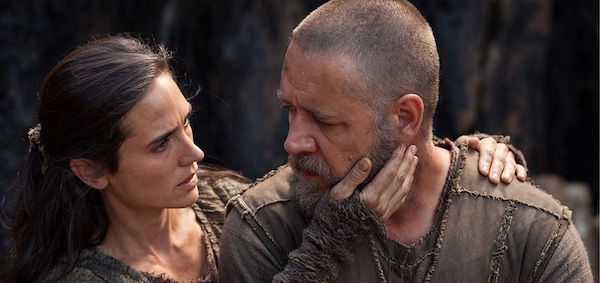
When this project first came to my attention, I was skeptical: a Noah movie without Bill Cosby? That didn’t sit right. But I felt Darren Aronofsky deserved the benefit of the doubt, so I went with it. I imagined the director’s take on the biblical story would involve Noah slowly going mad from cabin fever as the flood waters rage, causing him to question what’s real and what isn’t as he and the animals onboard the ark form alliances and animosities. Meanwhile, his wife starves herself in an effort to fit into an old tunic, and is eventually reduced to providing entertainment for the animals by sitting back-to-back with a female chimp as they both endure anal penetration from opposing ends of a sex toy, the raging lightning outside the ark creating a strobe effect through the slats of wood to give the whole scene an even more sickening effect. I could see the arrival of the trailer, which would open with a booming voice declaring, “The imagination of Darren Aronofsky meets the word of GOD” and close with “From the Divine Creator of the Universe….and the director of Black Swan.” Then just a few months ago, I saw the actual first trailer as well as the teaser poster, which presented the movie as if Noah was the newest member of The Avengers. I would probably have been laughing derisively at both, but once again I choose to remain open-minded. As Noah put his faith in the Lord, so shall I put mine in Darren Aronofsky.

As the movie approaches, so does the controversy, with Paramount twisting itself in knots trying to make sure the movie — which is said to feature countless creative flourishes and embellishments — doesn’t offend religious audiences who expect to see the story of Noah told faithfully and respectfully. I wonder if they’ve seen Requiem for a Dream.

Sidenote: the film marks a whole bunch of reunions. Aronofsky and Connelly are together again after Requiem, and Connelly and Crowe are back as husband and wife after A Beautiful Mind. Crowe, Lerman and Durand appeared together in 3:10 to Yuma, and Durand worked with Crowe again in Robin Hood. Lerman and Watson were together in The Perks of Being a Wallflower, and while Nick Nolte is only providing a voice here, he and Connelly previously crossed paths in Hulk. Hopkins and Winstone got their motion capture on with Beowulf, and Winstone appeared with Lerman in Percy Jackson & the Olympians: The Lighting Thief, as well as with Douglas Booth in a recent Masterpiece Theatre production of Great Expectations. I guess when God is about to destroy the world, it’s good to be among friends.

So let’s see…we’ve got Russell Crowe in Noah and Christian Bale in Exodus…maybe these two movies should have been combined into one dusty epic called 3:10 to Jerusalem.
X
23.

THIS IS WHERE I LEAVE YOU
Director: Shawn Levy
Writer: Jonathan Tropper
Cast: Jason Bateman, Connie Britton, Rose Byrne, Adam Driver, Tina Fey, Jane Fonda, Kathryn Hahn, Timothy Olyphant, Ben Schwartz, Dax Shepard, Abigail Spencer, Corey Stoll
Release Date: September 12

Jonathan Tropper adapts his own best-selling novel about the Foxman family, a (surprise!) dysfunctional clan (is there any other kind?) who must spend a week together sitting shivah after the death of the family patriarch. For you gentiles out there, sitting shivah is the Jewish custom in which the immediate family of the deceased gather at home for the week following the burial to receive visitors. Bateman’s character is the novel’s central figure and narrator, with Fey, Stoll and Driver as his siblings and Fonda as their mother. (Stoll is the only Jew among those actors, interestingly.) Dysfunctional family stories are always great fodder for drama, and I expect this terrific cast will expertly deliver on the humor of the family’s dynamic.

My reservation about the movie is similar to the one I mentioned above about The Judge. Shawn Levy is a capable but unexciting director whose movies include the Night at the Museum series, Date Night, The Internship, Real Steel and The Pink Panther remake. Some of those are entertaining enough and some are certainly box office hits, but they’re all safe, mass-appeal studio fare that could have been made by a dozen other directors with the exact same results. Although I haven’t read Tropper’s book, I gather that it has some bite to it, and I worry that Levy will push it to the middle of the road. But I can’t help being excited to see it; I love a good messed-up family story, and the cast is first-rate.

22.
JANE GOT A GUN

Director: Gavin O’Connor
Writer: Brian Duffield
Cast: Natalie Portman, Joel Edgerton, Noah Emmerich, Ewan McGregor, Rodrigo Santoro
Release Date: August 29

This is one of those movies which stands to be overshadowed by the drama that unfolded behind the scenes. Portman plays a woman forced to enlist the help of an ex-lover to protect her gravely injured outlaw husband from a gang trying to kill him. Her former paramour was originally to be played by Michael Fassbender, but he had to drop out a week before production due to scheduling conflicts with X-Men: Days of Future Past. Joel Edgerton, who was set to play the villainous gang leader, was recast as the ex-lover, and Jude Law came onboard to play the bad guy. Then on the Monday that was to be the first day of shooting, director Lynne Ramsay didn’t show up. The acclaimed indie director whose last film, We Need to Talk About Kevin, garnered strong reviews and several award nominations for Tilda Swinton, had abandoned the project over the weekend, apparently due to last-minute negotiation disagreements. Determined to keep the cast and crew together and forge ahead, the producers (who include Portman) managed within two days to hire Gavin O’Connor, director of Miracle and the underrated Warrior, to replace Ramsay. Then Jude Law left the project, supposedly because working with Ramsay was what drew him to it in the first place. Bradley Cooper was hired to replace Law, but he too left within days, also citing a scheduling conflict. Ewan McGregor came onboard to fill the gap, and shooting finally began. Some of the producers — Portman not among them — sued Ramsay in November, at which time she made her only public comments about the fiasco: that the allegations against her, which included showing up to work under the influence of alcohol and being abusive to crew members, were untrue, and that she would respond in court rather than in the press. Just this week, the lawsuit was settled.

So that all happened. It’s a dramatic saga that itself might form the basis for a movie. But in the end, all that will matter is whether Jane Got a Gun is any good or not. I have high hopes for it. Despite the revolving door of actors, the cast remains strong, suggesting that the script (which was on the 2011 Black List) was compelling enough to attract A-list performers. (The involvement of Portman, McGregor and Edgerton also makes it a Star Wars prequel reunion…for whatever that’s worth.) Independently financed films are never easy to package, and can be especially difficult to hold together in the face of adversity, so the fact that these producers managed to keep the project going is impressive. It’s too bad that Portman, a champion of women in the film industry, has now had two films in a row on which female directors have ended up replaced by men for reasons that remain a mystery. (Patty Jenkins was supposed to direct Thor: The Dark World.) Jane Got a Gun will surely be a different movie under the direction of O’Connor than it would have been under Ramsay, but hopefully it will all come together and work out for everyone, including the audience.

21.
A MOST VIOLENT YEAR

Director/Writer: J.C. Chandor
Cast: Jessica Chastain, Oscar Isaac, Christopher Abbott, Jerry Adler, Albert Brooks, Glenn Fleshler, Peter Gerety, David Margulies, Catalina Sandino Moreno, Alessandro Nivola, David Oyelowo
Release Date: November 12

Margin Call and All is Lost have established J.C. Chandor as an exciting writer/director, so I await his third feature with great interest. Set in New York City in 1981, which was one of the most violent years in the city’s history (hence the title, not to be confused with Philip Seymour Hoffman’s A Most Wanted Man), the movie follows an immigrant couple who start an oil company, then must protect their business and their family from competitors who try to ruin them through a variety of corrupt and violent means. Javier Bardem was originally set to play the husband, but left the project due to that generic Hollywood factor called “creative differences.” He was replaced by Isaac, whose profile has risen thanks his superb lead performance in Inside Llewyn Davis. Isaac and Chastain are old friends and classmates from Julliard, so they should generate good chemistry. And no movie was ever hurt by having Albert Brooks onboard.

20.
TRANSCENDENCE

Director: Wally Pfister
Writer: Jack Peglam
Cast: Johnny Depp, Paul Bettany, Clifton Collins Jr., Morgan Freeman, Rebecca Hall, Cole Hauser, Kate Mara, Cillian Murphy
Release Date: April 18

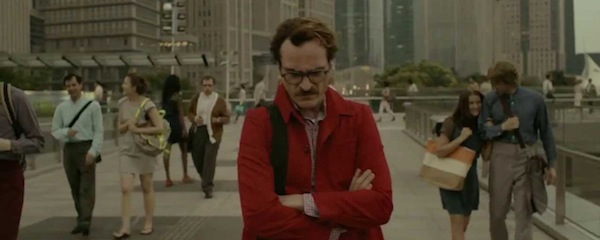
These days, any movie with Johnny Depp that doesn’t involve him hiding behind wigs, contact lenses and a thick layer if makeup or jewelry is worth noting, because there’s a chance we might rediscover the Actor who was so compelling in movies like Donnie Brasco, Finding Neverland and What’s Eating Gilbert Grape. (Not that he can’t be enjoyable when disguised, but it’s starting to get old.) So I cast my eye toward this sci-fi drama, which looks like it might share some ideas with recent Academy Award winner Her, but with less romantic yearning and more paranoia. Depp plays a scientist working in artificial intelligence whose consciousness is uploaded into a computer, where it grows in power and begins to pose a threat.

In addition to an unfettered Depp, the movie is high on my radar for marking the directorial debut of Pfister, the cinematographer who has shot all of Christopher Nolan’s movies since Memento (earning an Oscar for Inception along the way). This could be an especially important movie for Depp. The Rum Diary, Dark Shadows and The Lone Ranger were critical and commercial failures, so the guy could use a hit…preferably (to me) one where he isn’t slathered in makeup. Here he’ll be playing a more normal character in an intriguing sci-fi project that should have no problem appealing to an intelligent fan base. I hope it delivers, and restores his box office credibility.

19.
BIG EYES
Director: Tim Burton
Writers: Scott Alexander, Larry Karazewski
Cast: Amy Adams, Christoph Waltz, Danny Huston, Jon Polito, Krysten Ritter, Jason Schwartzman, Terence Stamp
Release Date: TBA

Speaking of Johnny Depp (sort of), I’m not sure what to make of a movie that lists Tim Burton as its director yet doesn’t include his favorite actor among the cast, or appear to involve lead characters sporting heavy makeup. While I try to make sense of it, here’s what we know. Waltz plays Walter Keane, an artist who became known in the 1950’s and 60’s for paintings of children with large eyes, which he mass-produced and sold inexpensively. Adams plays his wife Margaret, who was actually creating the paintings herself only to watch her husband take the credit and become famous. The result of his deception was a divorce and a high-profile court case.

It’s encouraging to see Burton return to oddball material like this, and to re-team with the screenwriting duo behind one of his best films, Ed Wood. Alexander and Karazewski specialize in biopics of unusual figures (they also wrote The People vs. Larry Flynt and the Andy Kaufman film Man on the Moon), and the story of Margaret and Walter Keane sounds like perfect material for them, and pretty good for Burton too.

X
18.

JERSEY BOYS
Director: Clint Eastwood
Writers: Rick Elice, John Logan
Cast: Erich Bergen, Michael Lomenda, Vincent Piazza, Steve Schirripa, Christopher Walken, John Lloyd Young
Release Date: June 20

At 83 years old, Clint Eastwood continues to tackle new challenges as a director. He’s made films about music and musicians before, like Honkytonk Man and Bird, but now he’s flexing his muscles with his first actual musical, based on the 2006 Tony Award winner. Jersey Boys cleverly uses the rich song catalog of Frankie Valli and the Four Seasons to tell the story of how the band came together and rose to the top of the charts despite challenges posed by one of the member’s mounting debts to a loan shark, not to mention the usual strain that success and fame puts on personal relationships. The production makes use of all the band’s beloved songs, including “Big Girls Don’t Cry,” “Walk Like a Man,” “Sherry” and “December 1963 (Oh What a Night),” so prepare for annoying texters in the movie theater to be replaced by annoying people singing along with all the hits. Eastwood enlisted John Lloyd Young, who originated the role of Valli on Broadway (and won a Tony), to reprise the part here, and since the cast is primarily unknown, he drafted Walken to add some star power as a mob boss with ties to the band. The material seems like an odd fit for Eastwood, so I’m eager to see what he does with it.

17.
JUPITER ASCENDING

Directors/Writers: Andy and Lana Wachowski
Cast: Mila Kunis, Channing Tatum, Doona Bae, Sean Bean, Douglas Booth, James D’Arcy, Eddie Redmayne
Release Date: July 18

Mila Kunis as a janitor? Channing Tatum as a warrior who has been genetically engineered as half-wolf and half-albino? Welcome to the most improbable movie of 2014. But it’s all good; improbable is where the Wachowski’s live, eat and breathe. It’s nice to see the sibling creators of The Matrix back in action so soon after the underappreciated 2012 opus Cloud Atlas. Hopefully whatever creative juices served them so well on that project will be at work here too. I suspect that the less I know about the movie’s specifics, the more rewarding my viewing will be. All I know is that the sci-fi adventure casts Kunis as the target of an assassination plot by a galactic queen, and Tatum as her protector. Tale as old as time.

16.
WHILE WE’RE YOUNG
Director/Writer: Noah Baumbach
Cast: Ben Stiller, Naomi Watts, Amanda Seyfried, Adam Driver, Brady Corbet, Adam Horovitz, Charles Grodin
Release Date: TBA

Despite the glowing reviews it earned, I was not a fan of Baumbach’s last film, Frances Ha (though I love its star, Greta Gerwig). Nor was I crazy about his previous effort Greenberg, starring Ben Stiller and Gerwig. But I love The Squid and the Whale and think Nicole Kidman gives one of her best performances in Margot at the Wedding, so I’m hoping that his latest hews closer to those earlier films. I like the cast and the premise, which finds Stiller and Watts as an uptight couple who strike up an unlikely friendship with a younger, free-spirited couple (Seyfried and Driver). That’s all we have to go on right now, but there’s potential all over this. And how great will it be to see Charles Grodin again? Aside from one-shot guest starring roles on Law & Order: SVU and The Michael J. Fox Show, Grodin hasn’t been onscreen since 2006. I can’t believe he’s almost 80!

15.
GUARDIANS OF THE GALAXY
Director: James Gunn
Writers: James Gunn, Nicole Perlman
Cast: Chris Pratt, Dave Bautista, Glenn Close, Bradley Cooper (voice), Benicio del Toro, Vin Diesel (voice), Karen Gillen, Gregg Henry, Djimon Hounsou, Lee Pace, John C. Reilly, Michael Rooker, Zoe Saldana
Release Date: August 1

This new venture from Marvel Studios expands their universe beyond The Avengers by introducing a new gallery of characters based on a 2008 series of comics about a team of space-traveling misfits. That team includes a smart-ass human pilot named Peter Quill, who tries to pass himself off under the name Star Lord; a genetically engineered, talking raccoon with a mean streak; and a tree-person. Like…a person…who’s also kind of a tree. Or something. Sorry, did I label Jupiter Ascending “the most improbable movie of 2014?” I may have to reassign that label.

I’ve really enjoyed what Marvel has been doing on film, beginning with Iron Man. To varying degrees, the movies have been fun and engaging (if not always entirely logical) action-adventures with a lot of humor. Guardians of the Galaxy seems to be playing up the humor even more, with its tongue firmly in cheek concerning its bizarre array of characters. The presence of Chris Pratt in the lead role only reinforces that tone. (I’ve recently come to decide, by the way, that Chris Pratt should be in everything.) Part of the pleasure I’ve found in the Marvel films is the little ways they all connect to each other (and when it comes to The Avengers, the big ways). How much Guardians of the Galaxy will connect with the stories of Iron Man, Hulk, Captain America and the rest remains to be seen, but it seems entirely possible the two crews will meet up eventually, or at least that the stories will intersect. Several of the characters in the Guardians comics have ties to the villain Thanos, who made a teasing appearance during the end credits of The Avengers. And the end credits of Thor: The Dark World were similarly interrupted by a teaser that introduced Benicio del Toro’s character The Collector, described as “an outer-space Liberace.” (So perhaps Michael Douglas signed on for the wrong Marvel movie.) Whatever Marvel has in store down the line, for now I’m just really curious to see if Guardians of the Galaxy is as much fun as it looks like.

X
14.

MEN, WOMEN & CHILDREN
Director: Jason Reitman
Writers: Jason Reitman, Erin Cressida Wilson
Cast: Adam Sandler, RoseMarie DeWitt, Jennifer Garner, Judy Greer, Timothee Chalamet, David Denman, Kaitlyn Dever, Ansel Elgort, Dennis Haysbert, Dean Norris, J.K. Simmons, Emma Thompson
Release Date: TBA

Adam Sandler is an unusual case study of the modern movie star. His self-developed vehicles tend to be sophomoric, clichéd and simplistic. And often hilarious…though not so much lately. Yet he also continues to inspire more high-minded commercial filmmakers, and has been given more opportunities than most primarily comic actors to explore more serious roles. Paul Thomas Anderson, Mike Binder, James L. Brooks and Judd Apatow have all cast him in parts with more depth than the ones he creates for himself. The results are mixed, but it’s still cool to see filmmakers of that caliber continually seek out his talents. Given his recent output, he could use a few more of these opportunities. This year, he gets two.

The first is Jason Reitman’s latest, and offers hope of a return to form after the recent detour of Labor Day, which was better than it might have been…but still not so good. Men, Women & Children, adapted from the novel by Chad Kultgen, follows a group of teenagers and their parents, exploring how internet culture affects their relationships, communication abilities and sexual frustrations. That description suggests a tone in line with Reitman’s previous work like Thank You for Smoking and Juno. Let’s hope so.

13.
THE COBBLER
Director: Tom McCarthy
Writers: Tom McCathy, Paul Sado
Cast: Adam Sandler, Ellen Barkin, Steve Buscemi, Melonie Diaz, Glenn Fleshler, Dustin Hoffman, Method Man, Dan Stevens
Release Date: TBA

Here is Sandler again, this time under the direction of Tom McCarthy. This is the fourth movie he’s made, and I love the previous three: The Station Agent, The Visitor and Win Win. His movies are always simple, straightforward, relatable and rewarding, with excellent performances. I often compare him to Alexander Payne, and lament that he isn’t as appreciated. In his latest, Sandler plays a cobbler who owns a shop in New York City and comes to feel stuck in place while the shoes he repairs carry his customers off to more exciting horizons. Then he discovers a family heirloom that allows him to magically walk in other people’s shoes and get a taste of lives beyond his own. In the wrong hands, this set-up could disintegrate into maudlin dreck. Maybe even in the right hands it could disintegrate into maudlin dreck. But I’ll gladly give McCarthy the benefit of the doubt, and see if he can strike a good balance between realism and whimsy. It’s not completely foreign territory for him; although the previous films he’s directed lack any sort of fantasy element, he did co-write the story for Pixar’s Up. The cast includes Dan Stevens, so hopefully the movie will be a small piece of justification for him abandoning Downton Abbey. Damn your reckless driving, Matthew Crawley!

12.
UNTITLED CAMERON CROWE PROJECT
Director/Writer: Cameron Crowe
Cast: Bradley Cooper, Rachel McAdams, Emma Stone, Alec Baldwin, Jay Baruchel, Michael Chernus, John Krasinski, Danny McBride, Ivana Milicevic, Bill Murray
Release Date: December 25

Cameron Crowe is due for a comeback. His last few films — We Bought a Zoo, Elizabethtown and Vanilla Sky — all have good moments and enjoyable elements, but are either too sentimental, too precious or too senseless. So with his latest film, I’m hoping he can strike the tone that makes Almost Famous, Jerry Maguire and Say Anything work so well.

Cooper plays a military contractor assigned to a base in Hawaii where he has worked before, and where he now must oversee the launch of a weapons satellite. He falls for an air force pilot (Stone), reconnects with a now married former love (McAdams) and encounters “mystical island forces and a talking computer.” The script is apparently a revised version of an earlier Crowe project called Deep Tiki, which he tried to put together post-Elizabethtown with Ben Stiller and Reese Witherspoon. Whether that title will remain, or how much of that original script is still intact, remains to be seen. The little I’ve read about it suggests to me an L.A. Story vibe, and the article linked above references Joe Versus the Volcano. Those touchpoints are promising, if Crowe can handle the magical realism without over-reaching and indulging in sappiness. At its best, Crowe’s work reveals an open-heartedness and a smart sense of romance. But he can also take those qualities too far. Here’s hoping he can nail the right balance with this one. The cast sure looks promising, and he’s overdue for a win. I’m rooting for him.

11.
THE HOBBIT: THERE AND BACK AGAIN
Director: Peter Jackson
Writers: Peter Jackson, Philippa Boyens, Fran Walsh, Guillermo del Toro
Cast: Martin Freeman, Ian McKellan, Richard Armitage, Cate Blanchett, Orlando Bloom, Billy Connolly, Benedict Cumberbatch, Luke Evans, Stephen Fry, Ryan Gage, Ian Holm, Christopher Lee, Evangeline Lilly, Sylvester McCoy, James Nesbitt, Lee Pace, Ken Stott, Aidan Turner, Hugo Weaving, Elijah Wood
Release Date: December 17

The second chapter of Peter Jackson’s Hobbit trilogy ended on a huge cliffhanger, so his third (or sixth, really) and final installment should waste no time picking up the action, as the dragon Smaug threatens Laketown and other regions surrounding The Lonely Mountain. That situation will give way to the Battle of Five Armies, in which dwarves, men and elves (and one Hobbit) band together against goblins and orcs, all under the larger looming threat of Sauron’s return. Although The Hobbit films have not matched the brilliance of the Lord of the Rings trilogy, I have enjoyed both episodes quite a bit, and look forward to seeing how Jackson winds down his long and fruitful stay in Middle Earth.

10.
MUPPETS MOST WANTED

Director: James Bobin
Writers: James Bobin, Nicholas Stoller
Cast: Ty Burrell, Tina Fey, Ricky Gervais
Release Date: March 21

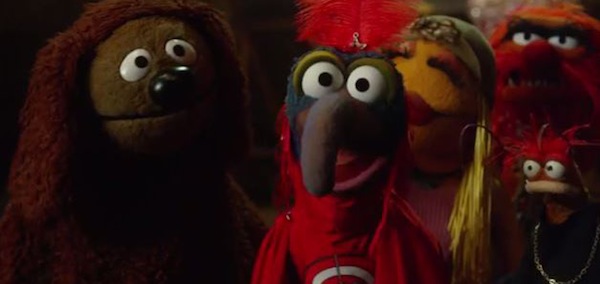
I will forever worship at the altar of The Muppets, so I’m thrilled to see them back again after their return to the movies in 2011. This time around, joined by the previous film’s newly introduced Walter, the gang is enjoying a European tour that goes astray when they encounter a criminal mastermind named Constantine, who happens to look nearly identical to Kermit. This is not the first time the Muppets have tangled with jewel thieves in Europe; that would be The Great Muppet Caper, my favorite of their big screen escapades. If this outing is anywhere near as good as that was, I’ll be in my own personal Happiness Hotel. Although Jason Segel co-wrote the 2011 film that re-introduced Kermit and Company, he decided not to return. But his co-writer Nicholas Stoller came back, writing the script with returning director James Bobin. And Bret McKenzie, the Flight of the Conchords star who won a Best Original Song Academy Award for the last film’s “Man or Muppet,” also returns. As usual, expect plenty of celebrity cameos in addition to the starring roles filled by Fey, Gervais and Burrell, the latter of whom replaced Christoph Waltz when his schedule conflicts couldn’t be worked out. From Christoph Waltz to Ty Burrell…that’s gotta be one of the unlikeliest instances of recasting I’ve ever heard of.
X
9.
INTO THE WOODS
Director: Rob Marshall
Writer: James Lapine
Cast: Christine Baranski, Tammy Blanchard, Emily Blunt, James Corden, Frances de la Tour, Johnny Depp, Daniel Huttlestone, Anna Kendrick, Billy Magnussen, Chris Pine, Lucy Punch, Meryl Streep, Tracey Ullman
Release Date: December 25

Rob Marshall deserves credit for bringing musicals back into vogue with his stylish, inventive direction of 2002’s Chicago. Since then, he’s moved between musicals (Nine) and “regular” movies (Memoirs of a Geisha, Pirates of the Caribbean: On Stranger Tides), and his latest musical is a modern classic, with lots of room for compelling production values amidst the great song score and A-list stars. Stephen Sondheim’s 1986 winner of several Tony Awards takes its inspiration from Grimm fairy tales, weaving characters from Cinderella, Jack and the Beanstalk, Rapunzel and Little Red Riding Hood into the original story of a childless baker, his wife and the witch who placed a curse on them. Marshall has assembled an impressive cast that includes Oscar and Tony nominees and winners. (Jake Gyllenhaal was cast at one point, but the sheer weight of star power crushed him, and he was replaced by up-and-comer Magnussen.) Together they should bring this terrific musical to vibrant life.

8.
BOYHOOD

Director/Writer: Richard Linklater
Cast: Patricia Arquette, Ethan Hawke, Ellar Coltrane, Lorelei Linklater
Release Date: TBA

Several years back, I read an article in Variety announcing that director Richard Linklater was embarking on a new film project that would trace the life of a young boy over a decade or so of growth. With Ethan Hawke and Patricia Arquette onboard to play the child’s parents, Linklater would film for just a few days every year from the time the boy was in kindergarten to the time he graduated high school. He identified a child named Ellar Coltrane, whose parents appreciated the idea of the project and agreed to their son’s participation, and off they all went. It sounded like a fascinating undertaking, and I looked forward to seeing the results. Yet as the years went by, I heard nothing more about it. Was it still happening? Certainly the Hollywood trades announce projects all the time that never go anywhere. Then maybe two years ago, in an interview with Linklater, the project was mentioned and I learned that it had indeed been continuing. It came up again last year when Linklater and Hawke were promoting Before Midnight, and then just like that, the movie was a last-minute addition to January’s Sundance Film Festival, where it was welcomed with strong reviews.

Described by Hawke as the “smallest epic ever made,” Linklater’s experiment is not completely unique. The 1964 documentary Seven Up! followed the lives of several British children, and every seven years since, director Michael Apted has reconnected with them and produced a new film chronicling their lives, the most recent being 2012’s 56 Up. And of course the Harry Potter series, with a new installment being filmed every year to year-and-a-half, showed a group of children growing up before our eyes. But Boyhood seems to offer the most distilled form of this idea yet. Coltrane (who may be credited as Ellar Salmon; Coltrane is his middle name, which he recently began using instead) was 7 years old when the film started shooting; he was 18 when it finished, and 19 by the time he went to Sundance. He’s been involved with this project for over half of his life, and I expect watching him age physically and psychologically over the course of the movie will offer an untraditionally exciting filmgoing experience.

7.
GONE GIRL
Director: David Fincher
Writer: Gillian Flynn
Cast: Ben Affleck, Rosamund Pike, David Clennon, Kim Dickens, Patrick Fugit, Neil Patrick Harris, Scoot McNairy, Tyler Perry, Missi Pyle, Emily Ratajkowski, Sela Ward, Casey Wilson
Release Date: October 3

Gillian Flynn earned rave reviews for her novel about Nick Dunne, a husband whose wife Amy disappears on their fifth wedding anniversary. Their marriage, which seemed so perfect from the outside, is revealed to be anything but once the media frenzy and police investigation intensifies. As the spotlight bears down on Nick, he begins to exhibit strange behavior, and soon people are wondering if this seemingly ideal husband has killed his wife.

I’ve heard that Flynn’s novel combines the page-turning intensity and twisty plotting of a great beach read with the depth of more sophisticated fiction. Either way, it seems like great material for Fincher to play with. From Seven to Zodiac to The Girl with the Dragon Tattoo, he has a masterful touch for creating gripping cinematic mysteries. Affleck has said that Fincher and Flynn collaborated closely on adapting the book, so hopefully the results will satisfy the needs of a movie as much as the fans of the source material. On the other hand, maybe not: Flynn apparently reconceived the entire third act of the story for the film, including a different ending. That’s bound to worry the book’s many fans, but I find it fascinating when a novelist adapts their own work for the screen and takes it in a radically different direction (see Scott Smith’s A Simple Plan).

Oh, and if you scanned the cast list and didn’t recognize the name Emily Ratajakowski, you may know her as the stunning brunette model from the video for Robin Thicke’s hit “Blurred Lines.” Yeah…that one. I quote Jackie Gleason from The Toy: “Ooof.”

6.
ST. VINCENT DE VAN NUYS

Director/Writer: Ted Melfi
Cast: Bill Murray, Melissa McCarthy, Scott Adsit, Nate Corddry, Terrence Howard, Chris O’Dowd, Naomi Watts
Release Date: April 11

Bill Murray, in what could potentially be a killer leading role, plays a degenerate retiree who is tapped by the divorced mom newly moved in next door to babysit for her 12 year old son while she tries to make ends meet working long hours. Melfi’s script landed on the 2011 Black List (along with Jane Got a Gun, and a number of other films due out this year), and Murray — a notoriously difficult get for filmmakers hoping to cast him — loved it so much that he approached Melfi himself to discuss playing the part. There was apparently a lot of competition to play the boy’s mother, with McCarthy eventually winning out. The role is said to be somewhat more grounded than the extreme comedic characters she played in Bridesmaids, Identity Thief and The Heat, so it only stands to increase her already soaring stock. I’m a little skeptical about the April release date; that’s a month away, and there hasn’t been a trailer, a poster or any promotion for the film yet at all. But the project has attracted a lot of buzz within the industry, so whenever it arrives, expectations will be high.

5.
ROSEWATER

Director/Writer: Jon Stewart
Cast: Gael Garcia Bernal, Shohreh Aghdashloo, Jason Jones, Dimitri Leonidas
Release Date: TBA

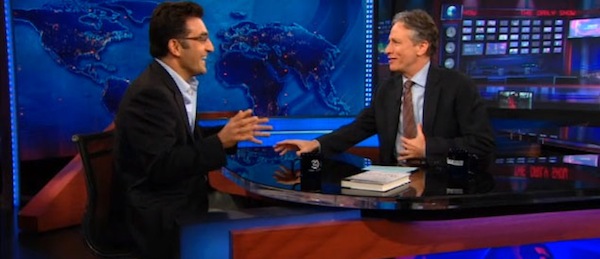
Yes, that Jon Stewart. You may recall that last summer, Stewart took a break from hosting The Daily Show — leaving it in the capable hands of John Oliver — and traveled to Jordan to direct a movie. And given that this is Jon Stewart, you might expect that movie to be a comedy. Uh-uh. Stewart’s directorial debut is a reality-based drama about Maziar Bahari, an Iranian-born journalist who was vocally critical of his native country’s regime even long after he’d been living in the west. While visiting Iran for a story in 2009, he was arrested and imprisoned for 118 days, during which time he was held in solitary confinement and tortured under charges of espionage. The evidence against him included an interview he gave to The Daily Show, in which correspondent Jason Jones pretended to be an American spy. Bahari, whose father and sister had also spent time in prison under previous regimes, wrote about his experience and his family’s in the book Then They Came for Me, which Stewart has adapted for this film.

My love and admiration for Jon Stewart knows no bounds, so naturally I can’t wait to see how this turns out. Not only is he taking on the entirely new challenge of writing and directing a film, but he’s doing it with a serious story to which he feels personally connected and beholden to get right. I can’t imagine he would enter this lightly. He could have produced the movie, even just written it and found a more established director to film it. The fact that he’s taking it on himself tells me he really believes he can bring something to it. Does his talent extend to filmmaking, or will this turn out to be a major miscalculation? The involvement of esteemed producer Scott Rudin encourages me, as does Stewart’s own humble persona. The script even has J.J. Abrams’ endorsement, so if this goes well, maybe Stewart will write and direct Star Wars Episode VIII.
X
4.
BIRDMAN

Director: Alejandro González Iñárritu
Writers: Alejandro González Iñárritu, Nicolás Giacobone, Alexander Dinelaris, Armando Bo
Cast: Michael Keaton, Edward Norton, Lindsay Duncan, Zach Galifianakis, Andrea Riseborough, Amy Ryan, Emma Stone, Naomi Watts
Release Date: TBA

It’s been a sad several years for fans of the great Michael Keaton. After his sharp supporting turn in Jackie Brown (and a great cameo as the same character in the next year’s Out of Sight), Keaton stumbled into some pretty bad movies, like Jack Frost, First Daughter and White Noise. Those were followed by some little-seen indie films, and even though there were occasional bright spots — TV projects like The Company and Live from Baghdad, and voice work in Pixar’s Cars and Toy Story 3 — it still felt like Keaton was MIA for a decade. Then in 2010, he started to become more visible. During the past few years, he played Will Ferrell and Mark Wahlberg’s boss in The Other Guys, guest starred on 30 Rock and turned up in Larry David’s HBO movie Clear History. Already this year he’s been featured in Robocop and Need for Speed…though his talents deserve better material than either of those movies. Fingers crossed, that material may finally be here. In Birdman, Keaton will take on his highest profile and most promising lead role in ages, perfectly cast as an actor famous for having once played a well-known superhero, who is now trying to launch a comeback by mounting a Broadway play based on a Raymond Carver short story. His efforts are challenged by a difficult leading man (Norton) and unresolved issues with his ex-wife and daughter.

Not only does the movie mark a comeback for Keaton, but also a surprising change of pace for its co-writer and director, Alejandro González Iñárritu. After making 21 Grams, Babel and Biutiful — three of the most profoundly depressing films you’re ever likely to see — the Mexican filmmaker is trying his hand at comedy. There’s nothing about this project that doesn’t sound great. I love the casting, the plot description, and the likelihood of juicy roles for Keaton and Norton, two enormous talents who deserve great material.

3.
THE GRAND BUDAPEST HOTEL
Director/Writer: Wes Anderson
Cast: Ralph Fiennes, F. Murray Abraham, Mathieu Almaric, Bob Balaban, Adrien Brody, Willem Dafoe, Jeff Goldblum, Harvey Keitel, Jude Law, Bill Murray, Edward Norton, Tony Revolori, Saoirse Ronan, Jason Schwartzman, Léa Seydoux, Tilda Swinton, Tom Wilkinson, Owen Wilson
Release Date: March 7

Of course this is the one I mentioned at the beginning that’s already been released, so no need to dwell on it. You’ve probably seen a trailer or commercial by now and gotten a taste of Wes Anderson’s latest confection. From a standpoint of art direction and costume design, this may be the director’s most elaborate and beautiful film to date, which would be no small feat. The cast is a killer mix of Anderson veterans and newcomers, with Ralph Fiennes looking to be a brilliant fit for Anderson’s unique comedic rhythms.

2.
INHERENT VICE

Director/Writer: Paul Thomas Anderson
Cast: Joaquin Phoenix, Jeannie Berlin, Josh Brolin, Benicio del Toro, Martin Donovan, Jena Malone, Peter McRobbie, Joanna Newsom, Kevin J. O’Connor, Eric Roberts, Maya Rudolph, Martin Short, Timothy Simons, Katherine Waterston, Owen Wilson, Michael Kenneth Williams, Reese Witherspoon
Release Date: December 12

A new film by Paul Thomas Anderson is always cause to get excited. This guy couldn’t make a boring movie if his life depended on it, but what makes this one particularly intriguing is that it looks like it might actually be fun! Magnolia, There Will Be Blood, The Master…they’re all pretty bleak. Even Punch Drunk Love, which is technically a comedy, is unnervingly weird and disturbing. You have to go back to 1997 and Boogie Nights for a PTA movie that isn’t just fascinating, but also a good time. That movie gets dark eventually too, but it has a hell of a lot of fun along the way. Now it looks like Anderson is ready to lighten up, as he adapts Thomas Pynchon’s 2009 novel about “Doc” Sportello, a pothead P.I. in Los Angeles circa 1969 who gets involved in a kidnapping investigation at the behest of his ex-girlfriend. Robert Downey Jr. was initially attached to play Sportello, but Anderson decided to re-team with his Master star Phoenix, then assembled an impressively colorful cast around him. The wait until December will be tough…but since we usually have to wait around four years between Anderson projects, at least we can be grateful that he got back to work so soon after The Master.

1.
INTERSTELLAR

Director: Christopher Nolan
Writers: Christopher Nolan, Jonathan Nolan
Cast: Matthew McConaughey, Casey Affleck, Wes Bentley, Ellen Burstyn, Michael Caine, Jessica Chastain, Timothee Chalamet, Matt Damon, William Devane, Mackenzie Foy, David Gyasi, Topher Grace, Anne Hathaway, Bill Irwin, John Lithgow, David Oyelowo
Release Date: November 7

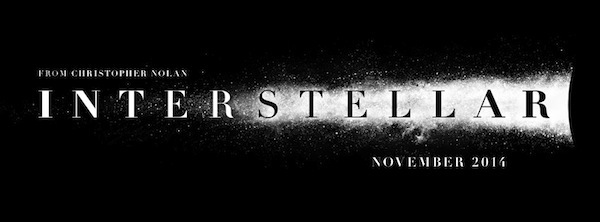
With his last few films, Christopher Nolan has owned the midsummer. The Dark Knight Rises, Inception and The Dark Knight were all released the third Friday of July in their respective years, giving the director the same kind of day/date ownership that Will Smith long held over July 4th weekend. With his latest, Nolan enters the highly competitive year-end fray, so perhaps Paramount and Warner Brothers see as much potential for awards glory as they do for box office returns. But that’s just speculation. What about the movie itself?

Well…there’s not much more than speculation on that front either, as the film is still cloaked in the kind of secrecy that always accompanies a new Nolan project. What we do know is that the script was originally written by Nolan’s brother and frequent collaborator Jonathan as a possible directing vehicle for Steven Spielberg. When Spielberg moved on, Chris got involved. Together the brothers reworked the script, creating something that combined Jonathan’s original story with new elements that were occupying Chris’ mind. A vague teaser trailer was released a few months ago, and I suspect that’s all we’ll get until a full trailer arrives, most likely this summer. The only other information we have at this point is that the movie is said to concern exploration of the furthest reaches of space, with a ship possibly discovering and entering a wormhole…evidence that would appear to be corroborated by the involvement of scientist Kip Thorne. Could Nolan be tackling time travel with this movie? I don’t know…but I wish I could time travel to November right now.
March 1, 2014

Oscars 2013: My Annual Absurdly Long Predictions Opus

Filed under: Movies,Oscars — DB @ 12:30 pm
Tags: , , , ,

Alright, now that we are finally done with all that Olympic nonsense (seriously couldn’t care less) we can get to the competition that matters. The Oscars are 29 hours away, so it’s time to lay my cards on the table. Normally I start with Best Picture and work my way down through the categories, but Best Picture has taken shape unconventionally this year, such that it might be better to start from the so-called “bottom” and work our way up. It will all make sense in the end, I promise. Let us begin, and remember: pace yourself and drink lots of water.

BEST DOCUMENTARY/ANIMATED/LIVE ACTION SHORT FILM
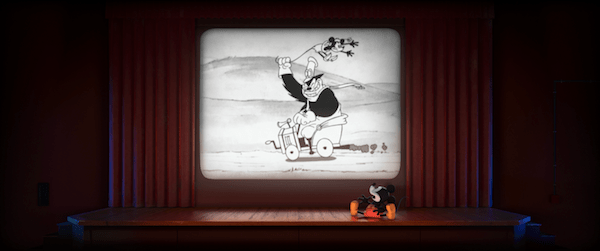
As usual, I haven’t gotten around to seeing most of the shorts. Or documentaries. Or foreign language films. But even if I had seen the shorts, there are no past awards to study or readily detectable buzz that would shed any light on what might be the winner. Even informed viewers are flying blind in these categories, trying to guess what might appeal to Academy members. So for what it’s worth, here’s what I’ve gleaned from some of the pundits I follow. For Best Animated Short, most seem to be predicting Get a Horse!, the old-school-meets-new-school Mickey Mouse cartoon that starts out looking like a vintage piece before breaking the fourth wall, going 3D and mixing black and white with color. The fact that it played in front of a huge hit like Frozen only increases its chances. There’s also Mr. Hublot, which is getting mentioned as an alternate.

Best Live Action Short has the least consensus of the three. I think I’ve seen four of the five nominees picked as winners, but Helium and The Voorman Problem had slightly more mentions. And for Best Documentary Short, everyone seems to agree on The Lady in Number 6: Music Saved My Life, which hits the sweet spot of focusing on a Holocaust survivor and the healing power of art. The subject of the movie, Alice Herz Sommers, passed away just last Sunday at age 110.

If you’d prefer to investigate these categories a little more thoroughly yourself, here’s some brief descriptions and analysis from In Contention for Animated Short, Live Action Short and Documentary Short.

X
BEST FOREIGN LANGUAGE FILM
I haven’t seen anyone predict a victory for Palestine’s Omar or Cambodia’s The Missing Picture. Most seem to think it will go to the Italian film The Great Beauty, while others are leaning toward The Hunt from Denmark or The Broken Circle Breakdown from Belgium. How’s that for helpful? Maybe this will be more useful.


BEST DOCUMENTARY FEATURE

The only one I’ve seen is 20 Feet from Stardom, which focuses on the role backup singers have played throughout the history of rock and roll. As it happens, this one appears to be the favorite, a feel-good introduction to the (mostly) ladies who took great songs and made them greater. I mean, what would The Rolling Stones’ “Gimme Shelter” be without that soaring backing track from Merry Clayton? The movie stands in contrast to more sobering fare, and although the serious stuff usually wins here, 20 Feet may be too toe-tappin’ to resist. If not, The Act of Killing has been a strong presence on the doc circuit. But I’d be watching out for The Square; it deals with the Arab Spring in Egypt, but I gather that there’s an unexpected feel-good component as it traces relationships between unlikely allies. Not sure if I’m correct about that or not, but if I am, it could bridge the gap for voters as sufficiently dramatic but not depressing. Once again, thoughts from In Contention if you’d like to know a little more.

X
BEST SOUND MIXING & BEST SOUND EDITING

This year, the two sound categories have four common nominees: Gravity, Lone Survivor, Captain Phillips and The Hobbit: The Desolation of Smaug. The lone wolf in the Mixing category is Inside Llewyn Davis, and of the two categories, Mixing is the one that more often nominates music-heavy movies. Indeed, last year’s winner was Les Misérables, which shares a key trait with Llewyn Davis: live singing. That may well have given it the edge in another year, but this year it faces the force of Gravity. On the Editing side, All is Lost stands as the unique nominee, and as a movie that features almost no dialogue, it relies ever more so on sound to transport the audience. It’s a strong slate of nominees across both categories, but as always, few people outside of the Sound branch have any real knowledge of the work that goes into sound design. So they will vote for the movie that they consider an all-around impressive technical achievement, or the one that is most prominent in the Best Picture race. This year those movies are one and the same. Chalk these two up for Gravity.

Personal: Not that I know any better than most of the voters, but I’d go with Gravity for both, with Inside Llewyn Davis and All is Lost as second choices.

X
BEST VISUAL EFFECTS

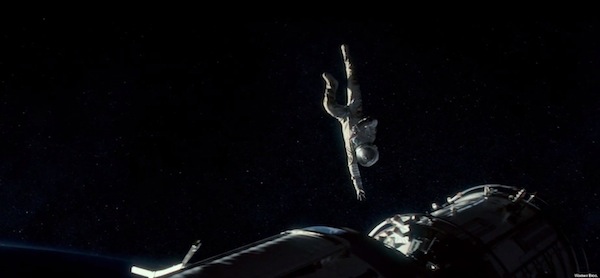
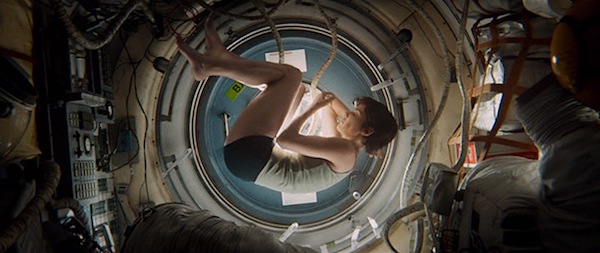
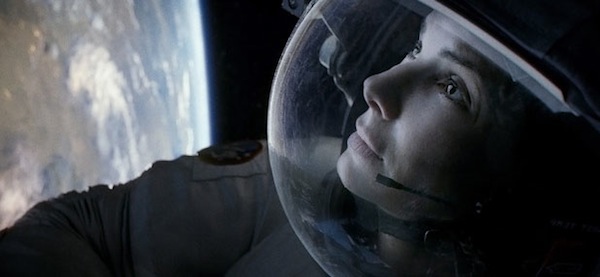
“Academy Announces 9 Films That ‘Gravity’ Will Beat for the VFX Oscar.” That was the headline The Wrap ran in early December when the 10 movies that would contend for the five Best Visual Effects nominations were announced. In many categories, a lot has changed since early December. Not in this one. This is the night’s surest bet. And if you want to know why, just check out the video below. Everything in this movie is CGI…and all of it immaculately created. The earth, the sun, the stars, the spaceships, the stations, the debris, the light, the reflections….even the damn spacesuits were created by the visual effects artists. The only real things onscreen are Sandra Bullock’s star power and George Clooney’s million dollar smile.

Personal: Gravity. I mean, come on! Even the spacesuits!!!

X
BEST MAKEUP AND HAIRSTYLING

I’ve said that this branch rightly judges the quality of the work and not the quality of the movie when it comes to choosing nominees, but once the decision moves to the full Academy, minds are less open. Jackass Presents: Bad Grandpa should be a real contender here, since the makeup that turned Johnny Knoxville into an old man had to fool real people in up close and personal interactions. But it’s hard to imagine enough members handing an Oscar to the Jackass franchise. Then there’s The Lone Ranger, which also seems like a choice most voters just won’t want to make, given the whipping the movie took. So the winner, perhaps by a degree of default, will probably be Dallas Buyers Club. And to be fair, the extent of the film’s makeup work is broader than I understood, and all accomplished on a shoestring budget of $250 for the entire film. That’s crazier than the idea of Jordan Catalano winning an Oscar. The work in Bad Grandpa is excellent, so perhaps voters will surprise us and put that ahead of all other considerations. But Dallas is the safer bet.

Personal: I don’t have a strong feeling one way or the other. I’d get a kick out of seeing Bad Grandpa rewarded, while the work on Dallas Buyers Club is much more involved than I thought. I’d be happy for either team.

X
BEST ORIGINAL SCORE

The Book Thief and Saving Mr. Banks are the outliers here, with this being the only nomination that either film earned. Her has wonderful music, but lacks the distinct theme that might put it over the edge. Alexandre Desplat has his sixth nomination with Philomena, and he has yet to win. The movie is apparently a big hit with Academy members, and Desplat’s lovely score will probably collect a lot of votes. But I’m calling this one for Gravity. Although it, like Her, doesn’t have a hummable theme that could stick with voters, it’s such a key component of the Gravity experience. Steven Price’s music is big and stirring without being overbearing or manipulative. It’s powerful enough to convey the mysteries, danger and beauty of space, yet intimate enough to underscore the emotional journey of the characters. And when it swells during the movie’s final scenes, you feel it throughout your body. Philomena could surprise, but I think Gravity‘s got it.

Personal: Gravity, for all the reasons stated above.

X
BEST ORIGINAL SONG

Oh boy. Strap in for this one, because before we even get to who the winner will be, there’s a hot mess to be explained. As discussed in my earlier piece after the nominations were announced, this category included an out-of-left-field nomination for the title song from a little-known Christian film called Alone Yet Not Alone. There was instant grumbling from other musicians behind eligible songs that didn’t get nominated, with some making bitter and disrespectful comments and calling into question the legitimacy of its eligibility. Some of the concerns focused on the fact that the song’s co-writer Bruce Broughton was a former Governor of the music branch who did minor campaigning on the song’s behalf by personally contacting some members of the branch and asking them to make sure they listened to the song and gave it a fair shot amidst some higher profile competition. I wrote in that piece that the Academy upheld the nomination, and that the song was here to stay.

Two days later, the Academy rescinded the nomination.

It was a bold and rare move. According to Entertainment Weekly, there have only been five cases prior to this one when a nomination has been stripped. The Hollywood Reporter cites some additional examples, though the Academy might not consider all of them to be accurate. (The EW list has been confirmed by the Academy.) Whichever list is correct, the situation is still uncommon, and may be unique in only one way: this appears to be the first case on record where a nomination has been withdrawn due to improper conduct on the part of the nominee.

The organization’s Board of Governors felt that Broughton’s personal communication to fellow members constituted a violation of the voting process. Broughton was vocal in his disappointment. In addition to the comment in the previous link, he posted a message on his Facebook page that night (as did his wife), and gave an interview the next day to a music site called Sibelius Blog, in which he discussed his involvement with the movie and his work on the song before talking about the revoked nomination. After a few days during which this bizarre turn of events dominated the entertainment news headlines, the Academy issued an additional statement explaining more specifically why it considered Broughton’s actions unethical, pointing out that the voting materials sent to members of the music branch deliberately refrain from mentioning the songwriters, so that voters are basing their decision purely on the song itself, without any personal relationship to the artists coming into play. Their position was that by pointing voters toward his own track, Broughton removed that veil of anonymity, providing an unfair advantage. Other songs may have been campaigned more expensively or aggressively, but such campaigns were also more general and didn’t include the inside knowledge to which Broughton had access as a member of the music branch. Broughton responded with a letter to the Academy that called into question the phrasing of the voting instructions given to members of the branch, as well as asking why his actions were deemed inappropriate even though Academy president Cheryl Boone Isaacs, while serving as an Academy governor, had been allowed to work on award campaigns for movies like The Artist and The King’s Speech (both of which won Best Picture). Many people inside the Academy and outside of it (mostly religious audience members to whom Alone Yet Not Alone was targeted) expressed anger at the decision and lobbied for the song’s nomination to be reinstated, but to no avail.

As if all of this wasn’t ugly enough, Oscar-winning producer Gerald Molen chimed in with an accusation that the Academy’s gesture was one of anti-Christian bigotry. Oh please. There’s some bullshit at play in this debacle, no doubt, but anti-religious sentiment is not part of it. Last year, Molen accused the Academy of a liberal bias because a documentary he produced — the largely derided propaganda piece 2016: Obama’s America, which was a big hit with the Fox News crowd — failed to land a nomination for Best Documentary Feature. I guess he couldn’t imagine that maybe the voters just didn’t think his movie was one of the five best the field had to offer. He was the sore loser in that case, and now he’s on the other side of the fence, defending a nomination that was criticized by those who failed to make the cut.

This whole episode was unfortunate, and it’s the Academy that came out looking bad. The Music branch has taken a lot of heat over the past few years for poor policies and bad decisions, but this is one situation that shouldn’t be attributed to them, since the Board of Governors made the call. It’s not like this was the first time an Oscar nomination was awarded to a little-known film that had observers saying, “Huh?” In 2009, an obscure animated film out of Ireland called The Secret of Kells cracked the Best Animated Feature category, where it competed against better known films like Up, Fantastic Mr. Fox, The Princess and the Frog and Coraline.  One of the three Makeup nominees the same year was an Italian biopic called Il Divo that was on exactly nobody’s radar. And still in ’09, right here in the Song category, a tune from a French film called Paris 36 — not one of the year’s big crossover foreign language films — was among the nominees. Last year’s song nominee “Before My Time” from the documentary Chasing Ice wasn’t exactly hot on the Billboard charts, and not many people were familiar with the 2004 French film The Chorus when it spawned a nominated song in that year’s race. So the recognition for “Alone Yet Not Alone” is not unprecedented.

Broughton probably should not have reached out directly to members of his own branch to advocate a song he had worked on, nor provided the track’s number on the list of songs so that members could identify it when the Academy’s procedure is clearly designed to withhold that kind of information. But given the widespread, aggressive and varied maneuvers so often used to net an Oscar nomination (or win), Broughton’s actions seem minor. It’s not like we’re talking intimidation tactics here! The only reasonable point made by Gerald Molen in his criticism of the revoked nomination is that personal campaigning happens all the time, and has for years. As one Academy member said to In Contention‘s Kris Tapley, “They should start coming after all of us. They should look at everyone and not just wait for someone to forward them an email from a guy who said ‘listen to my song.’ It seems really punitive and over the top.” Agreed. Penalizing Broughton and his little song from his little movie without applying the same standards across the board is a disingenuous move. By ironic coincidence, earlier in the day that the song’s nomination was stripped, Vulture ran a story detailing Harvey Weinstein’s history of zealously campaigning his movies for Oscar glory. In a system where his approach is permissible, does Broughton really deserve to be the poster boy for this issue?

What comes across much more clearly than wrongdoing on Broughton’s part is that a bunch of anonymous people whose songs didn’t get nominated decided to raise a stink, and the Academy caved. All of the suspicion around the nomination was about how a song from such an outside-the-mainstream movie could crack the final five, as if the fact that it wasn’t sung by a Grammy winning pop star for a big-budget studio movie should be held against it. There may well be a need to reform the eligibility rules for the Best Song category, but in the meantime all songs that are deemed eligible deserve equal consideration, and that’s what the category’s voting process attempts to offer. The Academy may say that the nomination was revoked because Broughton abused his position, but what I see is the Academy giving credence to those who whine and complain when they don’t get nominated instead of accepting it and moving on like adults.
The day the Academy released their second statement about the repealed nomination, Isaacs also spoke to The Hollywood Reporter, dismissing Molen’s claims and detailing why Broughton’s actions were different from other forms of campaigning that have been allowed in the past. There’s been no response from her or the Academy about Broughton’s point that Isaacs worked on Oscar campaigns while serving as an Academy governor, which strikes me as a fair question. In fact, all has been quiet since the beginning of February. Fair or not, the Academy’s decision stands and the Best Original Song category is down to four nominees, as a replacement selection was not named. I don’t even think the song should have been nominated in the first place…but because I thought there were  a number of worthier options, not because I suspected malfeasance. All in all, this is an embarrassing episode, and a regrettable one to befall Isaacs, the Academy’s first female president, in her freshman term. Perhaps the debacle will be a learning moment for the Academy to make some policy and structural changes, as suggested by Variety. But I doubt it.
X
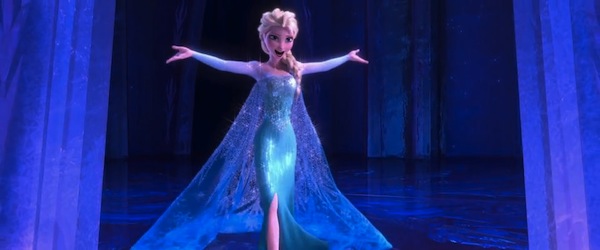
So…what were we talking about? Oh right…who is going to win the Oscar for Best Original Song. While “The Moon Song” from Her and “Happy” from Despicable Me 2 will both have their fans, and even though the latter just hit #1 on the Billboard Hot 100 chart, this one comes down to U2’s “Ordinary Love” from Mandela: Long Walk to Freedom and “Let it Go” from Frozen. The former may seem like standard U2 fare, and maybe it is, but it’s also well-known to be particularly meaningful and personal to Bono and the boys, who had a close relationship with Nelson Mandela and were speaking out against Apartheid even in the band’s early days. A vote for them would in a small way honor the incredible work they’ve done over the years for human rights, and also in a small way pay tribute to Mandela himself, who died in December shortly after the movie opened. U2’s last nomination was in 2002 for “The Hands That Built America” from Gangs of New York. They were widely expected to win, but the voters shocked us all by making the bolder decision to honor Eminem’s “Lose Yourself.” That was the right thing to do, but I would still like to see U2 win an Oscar.
X
Still, despite the many factors that would make this the right song for which to honor U2, they are likely to be defeated by the juggernaut that is “Let it Go.” The song is a certifiable, unstoppable monster of a smash hit, the joy and delight of singing children everywhere. Like…everywhere, as demonstrated in this video depicting it in 25 different languages. Every voter probably has a child, grandchild, niece, nephew, sibling or somebody in their life that is keeping this song ringing in their ears. It is inescapable, and even if it’s not your thing, you can’t deny the power of Idina Menzel’s vocal.
X
So while there’s a chance that admiration and a sense of honoring Nelson Mandela’s legacy could lift “Ordinary Love” to victory, the cultural permeation of Frozen and “Let it Go” makes it the likely winner.

Personal: “The Moon Song.” This delicate gem has been stuck in my head for a while now, and it beautifully captures the mood of the film. Both the performances by Scarlett Johansson and Karen O are fragile, their voices cracking in a way that nails the emotional simplicity of this lovely love song. I’d be happy to see U2 win, but this is my favorite song of the group.

Also, I have to say — at the risk of alienating the sizable 3-to-9 year old segment of my readership — I thought the songs in Frozen were unremarkable. And it’s not just because I’m not a little kid. I’m as down for a good Disney musical as anyone, and it’s not unheard of that I might be walking around my apartment singing Menken-Ashman showstoppers like “Under the Sea,” “Be Our Guest” or “Friend Like Me.” That’s right: I’m a 37 year-old childless, heterosexual male who likes Disney musicals. Deal with the paradox. But I found the songs in Frozen bland and forgettable. I had hoped for more from them, given that they were co-written by a lyricist behind Avenue Q and The Book of Mormon, but I guess that the subversive mind behind such tunes as “Everyone’s a Little Bit Racist” and “Super Mormon Hell Dream” would have to switch gears a bit for Disney. All that said, there’s a reason “Let it Go” is the nominee. It’s easily the movie’s best song, and the only one that deserves a place in the canon of classic Disney music. But I’d rather see the tune from Her win.

X
BEST COSTUME DESIGN

The intricate period garb of The Invisible Woman is probably most consistent with the Academy’s past choices in this category, but I suspect that the movie is too far down the radar for most voters. On the other hand, confinement to the art houses didn’t prevent 2008’s The Duchess or 2009’s The Young Victoria from winning this prize. Still, I think both of those movies had slightly higher profiles than this one, which was never able to break through the cluttered year-end field despite strong reviews and the presence of Ralph Fiennes as star and director.

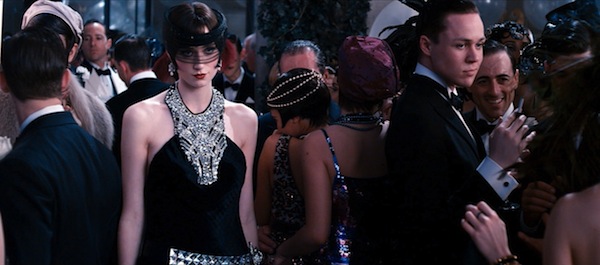
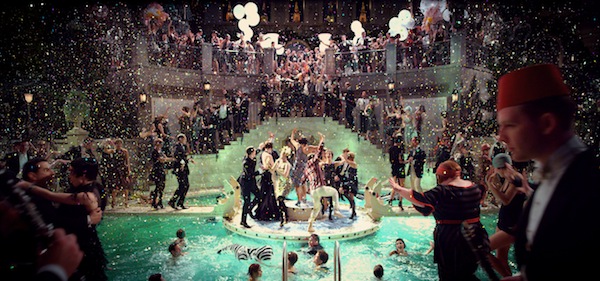
If we also rule out 12 Years a Slave and The Grandmaster, we’re left with The Great Gatsby and American Hustle. It’s a really tough call. Again, the voters tend to go for the more elaborate and pretty costumes, which is great for Gatsby. But that movie is far less popular than American Hustle, whose designers have been praised for capturing the film’s disco days with precise detail. With excellent reasons to justify either victory, I’m basing my guess on past behavior and giving the edge to The Great Gatsby. But Hustle‘s odds are just as good…and The Invisible Woman could still surprise.

Personal: The Great Gatsby. There are some nice items in American Hustle, mainly the outfits worn by Amy Adams. I won’t soon forget that white macramé bathing suit. But the lavish, exquisite styles of Gatsby are on a whole other level.

X
BEST PRODUCTION DESIGN

I understand the costumes for American Hustle getting nominated; I’m a little puzzled by the production design being singled out. Yes, the period is rendered exactingly, but the same could be said for a lot of movies. There were more interesting choices to be made here, and I’d be surprised if the Academy’s appreciation of the movie helps it here. 12 Years a Slave is probably too drab to win; the voters like more splendor and beauty in this category. Then again, Lincoln took the award last year, so there are always exceptions to the rule.

The remaining choices are The Great Gatsby, Her and Gravity. The latter also lacks the color and opulence that tends to stand out in this race, but if voters are just mechanically choosing the movie in all the so-called “technical” categories, then it has a chance. Gatsby and Her stand in a bit of opposition to one another. Gatsby‘s work is big, extravagant, showy. Her‘s is subdued, intimate, subtle. Voters traditionally prefer extravagant and showy, so I’m guessing Gatsby. But if people find it to be over the top, Her and even Gravity are waiting in the wings.

Personal: I have to go with Her. Gatsby looks great, but Her presents such a beautiful and unique near-future with a warm color scheme that so nicely compliments every other aspect of the movie from the visual to the emotional. Extra points for creation of the cityscape, incorporating footage shot in Shanghai to create an enhanced Los Angeles.

X
BEST FILM EDITING

Pundits always claim that this category usually goes hand in hand with Best Picture, but I’m not sure when or how that idea took root, since the two categories have aligned only 34 times in the 79 years that the Editing award has existed. In a year with a tight Best Picture race, many will be looking at this category to give an indication of which way the scales are tipped. I’m not so sure.

Dallas Buyers Club is the only nominee I can say with certainty is out of the running. I don’t think 12 Years a Slave will take it either. That leaves Captain Phillips, American Hustle and Gravity. The former two took the gold from the American Cinema Editors guild, where there were categories for drama and musical/comedy. In recent years, one of the guild’s winners has usually gone on to take the Oscar. But I think Gravity will be the Academy’s pick. It’s heavy use of long takes makes for less editing than any of the competition, which in a way might make the decisions around where to cut seem all the more crucial. The fact is that like most of us, the majority of Academy members don’t really understand what goes into this work. They’ll pick the movie that feels the most effectively edited. That could definitely be Captain Phillips, but I think it will be Gravity.

Personal: Gravity. I don’t know better than any layman, but it’s said that the best editing is invisible. Gravity embodies that more than any of this year’s nominees.

X
BEST CINEMATOGRAPHY

Like Best Visual Effects, this award seems to be one of the night’s easiest calls. With all respect to The Grandmaster, Prisoners, Inside Llewyn Davis and Nebraska — all gorgeously photographed — it’s gotta be Gravity. Though much of the movie’s photography had to be accomplished via VFX, Emmanuel Lubezki still designed the shots as he would for any film and worked closely with the VFX artists to implement his vision. The movie features some stunning long takes, including its already legendary opening shot which runs for…17 minutes? 13 minutes? I’ve read both, and since I was too enthralled even upon my second viewing of the movie to clock it myself, I’ll go with Kris Tapley’s 13; he’s a guy who really pays attention and respect to cinematography. (Check out his excellent annual feature spotlighting the Top 10 Shots of the Year. I stole a couple of pictures here from that post.) 13 or 17…either way, it’s a goddamn glorious shot. Just one of many.

Lubezki has been in this position before, going in as the favorite to win the Oscar in 2006 for Cuarón’s previous film Children of Men, and again in 2011 for The Tree of Life. He won the American Society of Cinematographers prize for both of those, and both times walked away from the Oscars empty-handed. He took the ASC prize this year as well, which is notable because the guild has been resistant to 3D. Gravity is the first 3D movie they’ve feted, which only adds to the likelihood that the stars — and the satellites — have finally aligned for Lubezki’s overdue Oscar win. The right movie, the right year. As for Roger Deakins, still awaiting his first win as Prisoners marks his 11th nomination, well, he’ll definitely be back sooner than later.
Interesting sidebar: assuming Gravity wins Best Cinematography and Best Visual Effects, it will be the fifth movie in a row to do so, after Life of Pi, Hugo, Inception and Avatar. Never mind that Pi, Hugo and Avatar should not have won for Cinematography (though I did support Avatar at the time), nor should Hugo have won for VFX. What’s done is done, and it signals a growing connection between the two crafts, as well as a dangerous endorsement of 3D, which was showcased by all but Inception. (I say dangerous because outside of IMAX nature documentaries and the like, 3D has proven to be an exploitative gimmick that as far as I’m concerned has been justified only twice since Avatar: Gravity and the opening credits sequence of Oz the Great and Powerful. Seeing it win Oscars is not helping put an end to its unwelcome invasion.)

As the lines blur more frequently between cinematography, visual effects and even production design, many people within the industry have suggested that the Academy divide the cinematography category into two, just as they once did to award films shot in black and white vs. those shot in color. Here, the idea would be one category for films with a heavy CGI component, and one for films shot more traditionally, in natural environments. It’s an issue the Academy is aware of, with former president Hawk Koch suggesting that such a potential category could be called Visual Imaging. This may be a change worth making somewhere down the line, but I don’t think we’re there yet, for the same reason there shouldn’t be a category for performance capture acting, as people have been suggesting in recent years. The fact is that these things still aren’t happening regularly enough and to such an extreme degree — like Gravity — that five worthy contenders could be identified each year. There might be one or two dominant films, but the rest of the nominees would be filler. Even the illustrious Mr. Deakins thinks a divided category would just result in a whole other set of complications. This year, the Visual Effects Society presented an award for Best Virtual Cinematography in a Live Action Feature, which was of course awarded to Gravity. Lubezki was a winner along with three members of the visual effects team, but none of the other four nominated films — Iron Man 3, Man of Steel, Pacific Rim and The Hobbit: The Desolation of Smaug — cited the cinematographer, because ultimately the line between camerawork and effects for the films as a whole was more traditionally divided. That may cease to be the case someday, and projects like Gravity may happen more often. In the meantime, maybe the Academy and the studios could figure out ways each year to make sure voters understand what constitutes cinematography and what constitutes visual effects in these “hybrid” films.

Anyway, that’s all just food for thought. Right now, whatever it signals for the future, Gravity has this in the bag.

Personal: Gravity all the way.

X
BEST ANIMATED FEATURE

A pretty weak category this year. The Croods and Despicable Me 2 have their admirers, but not enough of them, despite efforts on the part of DreamWorks Animation to give The Croods a push with some swanky events in late January. Ernest & Celestine, the sole nominee of the group I haven’t seen, is said to be wonderful and charming, but poses no threat. The Wind Rises won a decent number of critics awards, but even a thoughtful alternative such as that won’t be able to ice out the phenomenon that is Frozen. Disney kept their beloved hit on voters’ minds with some gatherings of their own, most notably an intimate concert with performances from the film’s cast. A nice event I’m sure, but they needn’t have bothered. Frozen is way ahead of the pack in this race.

Personal: The Wind Rises. It’s the most original and ambitious film of the bunch, and it is so refreshing to see an animation master like Hayao Miyazaki show that the medium can be used to tell mature stories. As great an age for animated films as this is, most of them still cater to kids and families. Miyazaki and The Wind Rises offer a reminder that animation can be targeted at adults. Oh well…Miyazaki may not win, but he was honored in January by The Simpsons, and really…isn’t that even better than an Oscar?

X
BEST ADAPTED SCREENPLAY

It’s too bad that Before Midnight doesn’t have more muscle in this race, but it’s basically sitting on the bench. The Wolf of Wall Street will prove too divisive, so it’s out as well. Captain Phillips took the prize from the Writers Guild, but didn’t have to contend with 12 Years a Slave or Philomena, both of which were ineligible. While it may not be able to overcome the momentum of the frontrunners in its other three categories, Philomena could have more luck here. Like last year’s winner Argo, it successfully weaves a lot of humor into a movie that depicts serious and even tragic events. Apparently it is loved by many Academy members, and this could be the place they show their admiration. It won the British Academy of Film and Television Arts (BAFTA) prize, which can sometimes be a barometer for the Oscars, but it’s hard to know. It might have had a hometown advantage of sorts. Harvey Weinstein has done plenty to keep the movie in the spotlight, sending co-writer/star Steve Coogan and the real Philomena Lee on a slew of publicity stops. The pair even met with Pope Francis to advocate for the release of 60,000 adoption files still being kept from families in situations like the one Philomena endured. This race could go either way, but I think the sheer power of 12 Years a Slave will be hard to ignore. Whether voters are going by the effectiveness of the storytelling, the weight of the real-life events depicted or some combination of both, 12 Years stands tallest.

Personal: Before Midnight or 12 Years a Slave. The former, like its predecessors, offers such an honest, intimate and unconventional portrait of a relationship, and it would be nice to see Richard Linklater, Julie Delpy and Ethan Hawke recognized for this special series of films. And John Ridley’s adaptation of Solomon Northrup’s memoir about his time in bondage is direct and raw, never going for manipulation.

X
BEST ORIGINAL SCREENPLAY

The nomination for Dallas Buyers Club demonstrates how much the movie resonated with Academy members, but it won’t win here. Neither will Nebraska or Blue Jasmine, both of which are liked, but neither of which have the special sauce it takes to win. So it boils down to Her and American Hustle. Her would appear to be the frontrunner, having dominated the critics awards, and taken home the Golden Globe and the Writers Guild Award. There’s no doubt that it’s the most original of the nominees, but of course as I often say, the category isn’t necessarily recognizing work that is original in that way. There are two obstacles in its path. First, there are a lot of Academy members — especially older ones — who just don’t get the movie. There were enough passionate supporters to secure it a Best Picture nomination, and it obviously had a decent amount of support within individual branches, but now with the whole Academy voting, those who think the movie is too weird could hold it back. Second, this may be the best chance that American Hustle‘s supporters have to give it a major win. There are two other categories we’ll get to where it stands a chance, but I don’t think it will triumph in either. Its odds are better here. Between Hustle, Silver Linings Playbook and The Fighter, voters are enamored with David O. Russell, so they may feel the time has come to recognize him. Hustle took the BAFTA, but Her wasn’t nominated.
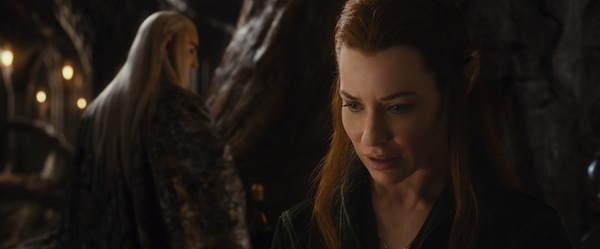
Either outcome seems 100% viable to me. My gut tells me that Hustle will pull it off, but my heart says that Her‘s originality can’t be denied. I may flip-flop when the moment of truth comes and I have to check my ballot, but I’m going with Her.

Personal: I too would love to see David O. Russell win an Oscar, but not for the American Hustle screenplay, which I found to be the source of the movie’s flaws. There is only one truly original work here that is original not just in the way the category is meant to be interpreted — that is, work that is not based on previously existing material — but also in its entire premise and execution. That would be Her.

X
BEST SUPPORTING ACTRESS

We can start by eliminating Julia Roberts and Blue Jasmine‘s Sally Hawkins. They did good work, but their journey ends with the nomination. June Squibb has minor spoiler potential for her laugh-out-loud work in Nebraska, but although she’s a comic force of nature in that film, she’s up against even stronger forces. Not that she doesn’t make a compelling case for herself…

Barring Squibb’s guilt trip, the winner is expected to be either Jennifer Lawrence or Lupita Nyong’o, whose name — in case this is an issue for anyone — sounds like neon-go. Academy members have been vocal in their adoration of Lawrence’s performance, and it could be said that hers is the more “entertaining” of the two. She’s also the only member of Hustle‘s nominated quartet that seems to have a chance. Lawrence won the Golden Globe and the BAFTA, while Nyong’o took the Screen Actors Guild (SAG) award and the Broadcast Film Critics Award (BFCA). The timing of the BAFTA — those awards were handed out February 16, two days after Oscar voting began — is often seen as an indication of where winds might be shifting, so some pundits are no doubt reading Lawrence’s victory as a sign that she’s pulling ahead. That may be, but consider that she was not awarded the BAFTA for Best Actress last year for Silver Linings Playbook. She lost to Amour‘s Emmanuel Riva before going on to pick up the Oscar. So BAFTA was a bit late to the Jennifer Lawrence bandwagon, and may have wanted to jump onboard. Her Oscar win last year is another big obstacle. As loved as she is — and she really, really is — are voters prepared to hand her a second consecutive Academy Award? Back-to-back wins certainly happen, but not often. She would be only the third actress to do it, and the youngest actress to ever win two Oscars.

In Nyong’o’s favor is not just that she gives a wrenching performance in a powerful film, but that her character is so horribly victimized. I assure you that many of the votes Nyong’o will receive will be given to her as much if not more so because of what the character goes through as for the skill of her portrayal. Among the outside factors that will help her case are the grace and eloquence she’s expressed throughout the many Q&A’s she has participated in and on stage when accepting prior awards. This is, after all, her first film. She’s fresh out of drama school, and being thrust into the blinding spotlight can be overwhelming and surreal. Yet she’s handled it with the poise of a pro and the overwhelming gratitude of one who’s been warmly welcomed to the club. Her personal narrative is an asset. On top of that, this category loves to recognize ingenues. It’s amusing that at 23, Lawrence is the old pro here, but she is.

So…while the virulent strain of Jennifer Lawrence Fever that has cloaked this country for the past two years remains strong enough to lift her to her second Oscar in a row, I think Lupita Nyong’o is, if not the antidote, than at least a temporary break in the state of delirium.

Personal: June Squibb. I’ll be thrilled for Nyong’o if she wins, but I thought she needed a little more screentime to justify an Oscar win. She is excellent, but I didn’t feel she had enough to do, and I’m not convinced she would be dominating the field as she has if not for the brutality suffered by Patsey. Squibb’s performance may not be the most challenging of the bunch, but hers was the definition of great supporting work, and I relished every moment she was onscreen.

X
BEST SUPPORTING ACTOR

This outcome has seemed pretty set in stone for a couple of months now. Jared Leto cleaned up with the national and regional critics associations, and took the Golden Globe, the BFCA and SAG awards. He missed out on the BAFTA, but wasn’t nominated, so winning would have been a feat. (It went to Barkhad Abdi.) Surprises could always happen, but I don’t imagine Bradley Cooper, Jonah Hill or Michael Fassbender would emerge victorious at this late stage. Abdi is the most likely threat, but at the end of the day, voters are too deeply moved by Leto’s inhabiting of Rayon.

Not that he needs any help at this point, but Leto might earn extra points for his tactful handling of a heckler at the Santa Barbara Film Festival, who interrupted a celebration of Leto’s work by shouting out that heterosexual actors shouldn’t play gay and transgender characters. Leto engaged with the audience member briefly, then invited her to come backstage after the event to continue the conversation. Between the performance and his admirable offscreen behavior, Leto should be sitting pretty.

Personal: Bradley Cooper’s was probably my favorite performance, and a win for Barkhad Abdi would be pretty sweet too. Leto was excellent, and I’ll have no problem with him getting it. But I feel the same way as I do about Nyong’o: the movie needed more of him to warrant an Oscar win.

On a side note, I’d like to throw a request into the ether and see if it makes its way to the show producers, regarding the clips that will be shown for each of the performers. Barkhad Abdi gives a wonderful performance throughout Captain Phillips; so good, he got an Oscar nomination! So when it comes time to show a small sample of his work, please distinguish yourself from every award show up to this point by choosing a clip other than the one where he says, “Look at me! I’m the captain now.” That’s not his only line. Thank you.

X
BEST ACTRESS

When Blue Jasmine hit theaters last July, Cate Blanchett was declared the one to beat for Best Actress. Little has changed. Meryl Streep, Judi Dench and Sandra Bullock are just along for the ride on this one. Amy Adams, celebrating her fifth nomination and her first in the lead actress category, is the only threat Blanchett faces, and the threat is minimal. Her performance has been lauded enthusiastically by voters, and she has definitely gained ground, but Blanchett, armed with the SAG, BFCA and BAFTA awards, a Golden Globe (she won in the Drama category, while Adams took the Musical/Comedy prize), and over 20 critics awards, will be nearly impossible to beat.

The one chink in her armor is the reignited scandal about Woody Allen, sparked when his estranged daughter Dylan published an op-ed in The New York Times detailing her claims of abuse, and mentioning actors from Allen’s films — including Blanchett — in her effort to question the ongoing devotion showered upon him by the film industry. It didn’t take long for people to wonder aloud what the situation would do to Blanchett’s chances. It may have been a crass question to ask, but it does mean something; all manner of outside factors like this one absolutely impact the race whether they should or not. As I followed the media storm over the next several days, I considered writing about it here, but decided that it’s a can of worms I’m better off not opening. When she was questioned about it, Blanchett gave a brief answer clarifying that it was a difficult matter for their family. (Figures it was entertainment/Oscar writer Jeffrey Wells who asked the question. That guy is such a douche.)

The one award she publicly accepted after the scandal reared its head again was the BAFTA, and Blanchett shrewdly avoided the controversy by not thanking anybody specifically, instead offering a general thanks to everyone who made the Blue Jasmine experience so special and memorable for her. She devoted the bulk of her speech to saluting Philip Seymour Hoffman. Heartfelt sentiments no doubt, but you can bet it was also a calculated effort to avoid invoking Allen while there’s so much heat on him, and unfairly on her. I’m sure she did lose some votes from people who can’t stomach honoring Allen’s work in any way, but most Academy members who have spoken about it say that none of it has anything to do with Blanchett. When she wins the Oscar, it will be hard to avoid his name, but we’ll see. Blanchett is a class act; I’m sure she’ll handle it gracefully.

Personal: Cate Blanchett. One of the best, at her exceptional best.

X
BEST ACTOR

Of the four acting nominations, this one is probably the least settled. Momentum is with Matthew McConaughey, but I wouldn’t call him a slam dunk. Leonardo DiCaprio has a lot of supporters declaring this the time to finally recognize him, and it is interesting that the “it’s his/her time” sentiment that so often factors into these awards (think recent examples like Jeff Bridges and Kate Winslet) is with McConaughey rather than DiCaprio, who has consistently been one of the finest actors out there, nailing his roles every time out of the gate. This nomination is only his fourth, but there are definitely a few other times he deserved to be in the running. McConaughey, meanwhile, is in the midst of a remarkable career turnaround that has seen him forsake the generic romantic comedies and bland studio dramas and adventures which were keeping him busy in favor of smaller, more exciting character driven pieces with notable directors. The McConaissance, as it has been brilliantly dubbed, is in full swing, and the only reason I can’t say that it peaks with Dallas Buyers Club is that he may still be on the climb. So it’s intriguing that the “it’s his time” narrative that might have benefitted DiCaprio sits instead with McConaughey on the sheer concentration of great work in such a short period.

It’s also not out of the question that Chiwetel Ejiofor could pull this out. The 12 Years a Slave star was the clear frontrunner during the first half of awards season, when the critics awards were the source of all the buzz. Then McConaughey won the Golden Globe for Drama, then the BFCA award, then the SAG trophy. (DiCaprio took the Golden Globe for Musical/Comedy.) Ejiofor rebounded with the BAFTA win, but McConaughey wasn’t nominated by the Brits. Ejiofor is a respected actor who has been doing sturdy work for years now (he made his big screen debut opposite McConaughey in Amistad), and has earned rapturous praise for his performance of Solomon Northrup. A win for him does not seem so impossible.

The buzz seems to be around these three, leaving Bruce Dern and Christian Bale on the sidelines. Dern has worked the campaign circuit like an animal and regaled Q&A audiences and various gatherings of voters with great stories of his many years in Hollywood. He has friends and admirers throughout the Academy, but the nomination and the part itself will have to be his reward.

So Ejiofor is still in the game, and DiCaprio is closing the gap, but McConaughey is still out in front. Dallas Buyers Club has bowled over voters, and his enthusiastic speeches at other award ceremonies have charmed. His SAG speech, in particular, was a gas. It might have seemed strange and rambling, but was actually a giddy and joyous expression of excitement about the adventures that actors get to go on, and those in the room seemed to know exactly what he was talking about. (The video quality in that link isn’t great, but for some reason SAG’s official video cuts off after about a minute.) And there’s one other important thing working in McConaughey’s favor: True Detective. The terrific series debuted a few days before the nominations were announced, providing Academy members who have HBO — which I’m sure is an awful lot of them — with a weekly reminder of his talent. The actor is simply killing it on that show, and will need additional shelf space for the awards he may start winning come this September’s Emmys. If voters are torn over who to vote for, a look at True Detective might tip the scales for McConaughey.

Personal: I have to go with McConaughey. These are all outstanding performances and I’d be happy to see any of them take the stage. There are all kinds of ways to judge these things, but in this case, McConaughey was the one who most successfully made me forget about the actor and see only the character…which especially impressed me since he still had his Texas twang and southern charm (as much as a homophobic profiteer can be charming, at least). I suppose Bale did that for me too, but I don’t know…there’s an electricity to McConaughey’s work that sets it apart. Ejiofor is a close second. It’s a restrained, internalized performance but he conveys so much intelligence and emotion. And when he finally breaks down, it’s just devastating.

X
BEST DIRECTOR

This one is pretty much decided. Gravity is a groundbreaking achievement that was dependent on non-existent technology to produce. So like George Lucas and James Cameron before him, Alfonso Cuarón invented the technology. Not single-handedly of course, but he brought together the right people, conveyed his vision, saw it through over four-and-a-half years and delivered an experience that demanded people get off the couch and go out to the theater. Even those who find the movie too thin and lacking substance are awed by the directorial accomplishment. He already has the Golden Globe and awards from the BFCA, BAFTA, and most telling, the Directors Guild of America. If anyone can beat him, it’s Steve McQueen for 12 Years a Slave, but that would be a shock at this juncture. David O. Russell, Alexander Payne and Martin Scorsese are earthbound this year. The night belongs to Alfonso Cuarón.

Personal: Alfonso Cuarón. His achievement is on a whole other level, even if — as he told the crowd at the DGA ceremony — “I barely understand how we made the film.”

X
BEST PICTURE

So why did I want to leave this category for last instead of kicking off with it as usual? Because I believe something fairly unique is about to happen. I’ve predicted Gravity to triumph in seven races so far, and even if it doesn’t get all of them, it will get most. I don’t think there’s any question it will emerge with the most wins of the night. And usually, the film that wins the most awards claims Best Picture among its tally. I don’t think that will happen this year.

We can eliminate most of the competition, as the category is seen as coming down to three movies: Gravity, 12 Years a Slave and American Hustle. Some might also think Philomena stands a chance, but they’re kidding themselves. Hustle is clearly loved by the Academy, co-leading the field alongside Gravity with 10 nominations including one in each acting category. When it took the SAG top prize for Best Performance by an Ensemble, pundits exclaimed that its Best Picture chances were suddenly elevated. Don’t be fooled. Time and again people try to equate SAG’s top award with the Academy’s, and the two simply don’t correlate. Yes, sometimes they go to the same movie, but for different reasons, judged on different criteria. While 12 Years a Slave features a line-up of terrific performances, Hustle‘s are a lot more fun, and pop off the screen with the kind of electricity that befits that movie. Hustle is seen as more of an acting showcase than 12 Years, and that’s why it won the Ensemble award from SAG.

Which brings us back to Gravity and 12 Years. The Producers Guild of America awards were expected to clarify the field, but the two movies tied…the odds of which are incredibly unlikely. The PGA awards use the same preferential system of voting that the Academy uses for Best Picture (though not for any of the other categories), hence the expectation that the Oscar win might be signaled by the PGA winner. No such luck this time around. In past years, I’ve linked to detailed write-ups by The Wrap‘s Steve Pond about how the preferential ballot works, but this year he recorded a succinct, helpful video.

Another tie is unlikely, so with Gravity‘s likelihood of winning 5 to 7 awards, including Best Director, it appears to have the edge. But I’m expecting Best Picture will go to 12 Years a Slave.

It’s not exactly crazy talk. We’ve watched throughout the awards season — at the Golden Globes and the BFCA and BAFTA awards — as 12 Years has lost in most or even all of its categories throughout the night, but still come out with the top prize. What 12 Years has going for it, as Best Picture winners so often do, is a sense of importance. At the very end of this piece from Vulture, published the day of the nominations, the writer points out that Academy members “don’t pick the film they think is best, they pick the film they think will best represent them.” I recall Siskel & Ebert talking about the Oscars years ago, and they said that the Academy tends to make the mistake that to vote for a movie is to endorse its message. Siskel pointed to Gandhi as an example. While he acknowledged that it was a very good film to which he gave a positive review, he said the movie with the enduring cultural impact, and in his mind the better movie, was Tootsie. I would add E.T. Still others would point to The Verdict. It’s not that Gandhi isn’t a good film, but by naming it Best Picture, voters got to celebrate what the movie, and the man himself, stood for.

I’m not calling this year’s race a repeat of 1982’s, because I do think 12 Years a Slave is a remarkable movie that would be a deserving Best Picture winner purely on its artistic merits. But it’s not easy to consider it purely for artistic merits, because right or wrong, its win would also make a statement. As one anonymous voter told Entertainment Weekly, they are voting for 12 Years not because it’s their favorite movie of the year, but because “these stories shouldn’t be marginalized, and it’s a triumph it got made. The film needs to be in the world, and for all the years that it hasn’t been, this is the best picture of the year.” That’s just one voter’s opinion, and as EW’s piece shows, other members are voting differently. But I do think that many people will go with 12 Years, even if they like Gravity or another film better, because naming it Best Picture sends a message. Even if they don’t rank it #1 on their ballot, they may go with #2 or #3, and as the video above demonstrates (as does this older article by Steve Pond), a movie needs a lot of second, third and fourth place rankings to come out the winner.

And you know that if it loses, cultural and media critics will be all over the Academy in the following days. They might not necessarily level charges of overt racism, but they will definitely suggest that the organization’s refusal to honor the movie that boldly confronts such a traumatizing chapter in American history, which turns a necessary eye onto a shame that continues to affect society today, is an insult and a travesty. You thought the backlash was vocal when Brokeback Mountain lost Best Picture? If 12 Years loses, just wait….

On the other hand, Gravity is probably more widely respected than Crash, the movie that felled Brokeback. For months now, pundits who are out there talking to Academy members hear Gravity named most often as their favorite movie of the bunch. With Cuarón’s Best Director win nearly assured, tradition is on Gravity‘s side to get Best Picture as well, as is the fact that Gravity will win more awards than any other movie. The Picture/Director split is still a rarity (it’s happened 22 times at this point), but the way everything has fallen this year, it seems like a strong possibility. As always, we can go all around the bend pointing out things that have never happened before, or stats that are rare, all to justify either outcome (like the point I made in the previous Oscar post about movies without a Screenplay nomination almost never winning Best Picture. That would indicate that Gravity is out). But in the end, each year is unique, and this year I think that Gravity will win the night’s biggest haul, but lose the top prize to 12 Years a Slave.

Personal: I suppose Gravity and Her were my favorite of the nominees, but I’m just as emotionally tuned into the messages these awards can send as anyone, and if I weigh all the factors, I land on 12 Years a Slave.

X
PREVIEWING THE SHOW

With Ellen DeGeneres onboard as host, I think the easiest prediction to make is that this year’s ceremony will prove far less controversial than last year’s Seth MacFarlane show. As long as she doesn’t try to make any 12 Years a Slave jokes. (I don’t recall exactly how Whoopi Goldberg handled Schindler’s List; only that she referenced how Billy Crystal usually came out and sang a medley that poked good-natured fun at the Best Picture nominees and then remarked, “He got The Crying Game; I got Schindler’s List.” That may have been the extent of jokes about the night’s eventual winner.) I’m sure Ellen will do well. She’s all about making people comfortable, and especially after all the disapproval that MacFarlane’s gig incited, it was no surprise that returning show producers Neil Meron and Craig Zadan went with someone as good-natured and well-liked as Ellen. One thing is for sure: just like last year, the bar was set high at the Golden Globes by Tina Fey and Amy Poehler…who, come to think of it, managed to find the right tone for a 12 Years a Slave joke.

What else can we expect? The show’s theme is a celebration of movie heroes, from the Avengers to Atticus Finch, and there will also be a tribute to The Wizard of Oz, which celebrates its 75th anniversary this year. U2, Pharrell Williams, Karen O and Idina Menzel will be on hand to perform the nominated songs, and there will also be performances by Pink and Bette Midler. As usual, the producers promise surprises, so we’ll see what they have in store.

Reading this has probably taken you right up to the start of the show, but if you still have a few spare minutes, here are a couple of Oscar quizzes you can try your luck at. I aced the first one, and got 60% on the more difficult second one. And with that, I think I’ve done enough damage here. Enjoy the show!

February 22, 2014

The Year in Movies: 2013

Filed under: Movies — DB @ 5:00 pm
Tags: , ,

2013 might go down as a great year for movies, but that wouldn’t be an entirely fair or accurate statement. Yes, there were a lot of excellent films, but most of them were released in the last third of the year. Before that, the bright spots were few. So can we really call it a great year for movies if most of the year offered little in the way of greatness? I suppose I’m arguing semantics. That, or scholars will debate this for eons to come.

I saw 100 movies that were released in 2013. In November, there was an eight day stretch during which, I kid you not, I saw 10 movies (two of those being earlier-in-the-year releases I was catching up with on DVD). Sure, that would never have been possible if I weren’t unemployed, and I would gladly relinquish that claim for a steady paycheck. But lemonade from lemons and all that, right? My friend Ryan said to me during that week, “You’re crazy. You’re a crazy person.” Yeah, well…four of those screenings were possible because Ryan is in the Writers Guild and brought me as his guest, so he’s totally an enabler in this situation; the guy who gives you a drink while driving you to rehab.

I mention the number because I know from past experience that some of you wonder how I see as many movies per year as I do. But while those among you will think seeing 100 movies during the year is unbelievable (and a sign of multiple social problems), it barely scratches the surface of what’s out there. As New York Times critic A.O. Scott pointed out when covering his favorites of the year, his newspaper reviewed 900 movies in 2013. Granted, he and his colleagues watch and write about movies for a living. But those of you who can’t imagine how I got around to 100 should realize what a small percentage that really is. There were some that I wanted to see but missed. There were many, many more that I had zero interest in seeing. And there were countless more that I probably had no awareness of whatsoever. Many movies only open in a few cities or less, and/or only play briefly. They aren’t accompanied by weeks of commercials, trailers and print publicity. They quietly arrive on DVD with the same lack of fanfare that accompanied their theatrical release. Or they go straight to DVD altogether (which is not necessarily the stigma it once was).

I’m not sure what any of this matters, but it was on my mind. Since I lack the assistance of an editor, this is what happens. I ramble. The point of this post is to cover my favorite movies from the year gone by. As always, I rank the top few, then run down the rest alphabetically. Strangely, despite there being a number of movies on my list this year, there wasn’t one that clearly rose to the top for me as a single favorite. A few came close, but none gave me that obvious “this is the one” feeling I got in past years for movies like The Departed, Precious and Inception. So instead, what follows are an alphabetical Top Five, followed by the rest as I’d usually do. And as always, there are many more that I would happily and enthusiastically recommend to people. Movies that I enjoyed, admired, that contained some of my favorite moments or scenes of the year, but that for one reason or another didn’t completely come together or linger in my mind as a whole. Inevitably, there will be movies I later regret not putting on my list. Or I’ll see something again down the line, and find it makes more of an impact on me than it did initially. And there may even be some that, with a little distance, I wouldn’t have included. These things happen every year. But at this moment in time, reflecting on the year that was, these are the movies that stuck.

Top Five

GRAVITY
From Gone With the Wind to Titanic, Lawrence of Arabia to The Lord of the Rings, there will always be movies that are best when seen on the big screen, but we accept that in order to enjoy them beyond their initial release, we’ll have to settle for a TV and hope that we have a set big enough to still do the movie some sort of justice. Unfortunately, I’m not sure any screen small enough to fit in a house can do justice to the astonishing experience of Gravity. Alfonso Cuarón’s stunning film, over four years in the making, follows Dr. Ryan Stone (Sandra Bullock), a scientist whose first mission in space is compromised when her shuttle is destroyed and she is stranded above Earth with veteran astronaut Mike Kowalski (George Clooney).

There may not be a lot of plot at work here, but that doesn’t mean this should be mistaken for a hollow spectacle that indulges in breathtaking visuals but skimps on any sort of substance. Gravity doesn’t need to go deep to carry weight. The story is simple but primal, and the motivation is clear: survival. Such elemental stakes are enough to propel the drama, and Cuarón goes further than anyone before him in placing the audience in the vastness of space. Over a riveting 90 minutes, we’re right there in the void with Stone and Kowalski, held spellbound as our hearts pound and pray that the duo can somehow survive their seemingly impossible circumstances. Emmanuel Lubezki’s immaculately choreographed cinematography blends seamlessly with the groundbreaking visual effects, while Bullock’s understated, quietly powerful performance renders palpable Stone’s accelerated evolution from terror to resignation to determination. She provides the emotional anchor that makes the movie more than just a thrill ride. Firing on all cylinders, Gravity is dazzling cinema, and all the more special because its like just doesn’t come around very often.

X
HER

Spike Jonze’s fourth film is easily the year’s most original, and perhaps its most beautiful as well. Set in a near-future Los Angeles, it casts Joaquin Phoenix as the acutely sensitive, gentle-hearted Theodore Twombly, a writer so emotionally reeling from his divorce that he can’t bring himself to sign the papers finalizing it a year after the separation. On a whim, he purchases an operating system to help organize his life. The omniscient artificial intelligence calls herself Samantha, and quickly bonds with Theodore, helping him overcome his hurt, becoming a friend…and then becoming something more.

When I first heard this premise, I wasn’t sure how it could sustain a feature length film, let alone maintain any dramatic credibility. Quite sufficiently on both counts, as it turns out. The relationship between Theodore and Samantha (voiced by Scarlett Johansson in a radiant performance) is as lovely and complex as any the movies have given us. This is the first film Jonze has written, but like all of his previous work as a director — Being John Malkovich, Adaptation and Where the Wild Things Are — it explores the rocky terrains of love and loneliness with aching, penetrating honesty. If that sounds like a bit of a downer, make no mistake, the movie is also full of joy and laugh-out-loud moments. Jonze’s fertile imagination presents a vision of the future that seems a completely logical extension for many of our current technologies, from Apple’s Siri to Nintendo’s Wii, as well as our technology’s influence on our growing disconnect from real human interaction. The entire visual fabric of the film, from sets to costumes to camerawork, form a cohesive vision that is colorful, sun-dappled and sharp as crystal. It’s a nice deviation from the more common depictions of a future — distant or not — that is cold and antiseptic. Jonze augments the world we’re familiar with to create one in which the existence of a character like Samantha and a relationship like the one she and Theodore share don’t seem so strange. With the groundwork laid, it takes actors of considerable skill and emotional openness for us to buy into the premise, so credit Phoenix and Johansson for transcending quirkiness or gimmickry and instead making the movie take flight as a rich and worthy love story. Their bond is so real and intimate that some moments are almost uncomfortable to watch; they feel too personal and private. Both actors are out on a limb in Her; Phoenix risking whether audiences will buy him running through the streets and laughing with a lover who exists in a handheld device, and Johansson trusting that people will connect with and be moved by a lead character who exists solely as a voice. But they’re in safe hands with Spike Jonze. And yet again, so are we.

X
MUD
The term “coming-of-age” gets used a lot; there are some other movies on this list that fit the bill. But there are few films that, for me, have embodied that description as quintessentially as Mud, the third feature from writer/director Jeff Nichols (whose sophomore movie Take Shelter I cited in 2011). Matthew McConaughey is terrific as the title character, but the movie belongs to its teenage star Tye Sheridan. He plays Ellis, an outwardly tough, inwardly sensitive Arkansas kid living on a river and making daily trips out to an abandoned island with his best friend Neckbone (Jacob Lofland, also impressive), where they’ve located a washed-up boat to restore. That plan is complicated when they meet Mud, a fugitive hiding out on the island until he can reconnect with his girlfriend Juniper (Reese Witherspoon). Ellis takes an immediate liking to Mud — particularly his devotion to his girl — and soon the boys are helping him execute his escape, which includes getting messages to Juniper, who’s staying at a hotel in town. There is a thriller component to the film, as some unsavory figures descend on the area in search of Mud, but first and foremost the movie is a beautifully etched story of Ellis, a good kid with naïve notions of romance, whose experience not only with Mud but with his parents’ faltering marriage, exposes him to the world’s hard truths.

Yet the movie is far from bleak or hopeless. Through Ellis, it explores decency, kindness and notions of love where similar films might bury such sentiments beneath a “cruel world” pessimism. It also values characters that other movies might condescend to or paint as caricatures. The inhabitants of this lower-income, Southern milieu are not rednecks. They’re rich and complicated, and are matched by performers who embody them with respect and nuance. It’s great to see Witherspoon doing this kind of character work again instead of paint-by-numbers studio comedies, and McConaughey continues to captivate as his career turnaround unfolds. Mud is a charming but enigmatic character, who is seen differently by Ellis than he is by Juniper, and differently still by an older man from his past (Sam Shepard) whose help Ellis seeks. That makes for a variety of conflicting viewpoints, but McConaughey’s portrayal captures them all. There’s nice supporting work from Ray McKinnon and Sarah Paulson as Ellis’ parents, Michael Shannon as Neckbone’s uncle, and Paul Sparks as a dangerous man on Mud’s trail. (Boardwalk Empire fans will recognize Sparks as goofball bootlegger Mickey Doyle, and will likely be impressed by this very un-Doyle-like performance.) But it all boils down to the outstanding Sheridan. So natural, so honest, so relatable, he pulls off the complexity of Ellis’ story with heartpiercing authenticity. It’s rare to see a teenage character this full, and even rarer to see an actor who can capture the necessary depth and subtlety to do it justice. But Sheridan has the goods. He gives one of the year’s best performances and establishes himself as an actor to follow.

X
PRISONERS

Hugh Jackman and Jake Gyllenhaal lead a strong ensemble in this dark, intense story about the disappearance of two girls in suburban Pennsylvania. Jackman is the father of one of the missing kids, who becomes fixated on the guilt of a suspect (Paul Dano) who the police ultimately rule out. Gyllenhaal is the committed detective leading the case, backed by a perfect record but flustered as the days pass and the girls’ whereabouts continue to elude him. At two and a half hours, the movie is long, and as it goes on, you’re aware that it’s long. But it never feels overlong, never becomes boring or feels unnecessarily stretched. The circumstances continue to grip as the investigation grows more puzzling and the excellent script by Aaron Guzikowski takes some daring turns. I don’t want to even hint at what revelations do or do not ultimately come, but I’ll try to tiptoe around it by saying that even at moments when the plot drifts into what we recognize as conventional territory for a mystery like this one, the thematic continuity justifies and elevates what might seem like Perry Mason moments in a movie with less on its mind. Prisoners is the kind of story that poses moral questions about how we would handle ourselves in the same situation, and asks us whether or not we can condone behavior that troubles us at the same time that we might find it justifiable. There are no easy outs, and even if you’re feeling optimistic when the bold ending arrives, you can’t deny that whatever happens to these characters after the credits roll, their challenges are not resolved.

X
SHORT TERM 12

Most people have probably never heard of this movie, which is a shame, because it deserves a Transformers-size audience. It takes place at a foster care facility for at-risk youth, and focuses on Grace (Brie Larson), the facility’s supervisor who must tend to the varied emotional needs of a range of kids, delicately balancing her role of disciplinarian with being a friend who is sympathetic to their troubles. She’s aided by an equally committed staff that includes her boyfriend Mason (John Gallagher, Jr.), and as the couple deal with the daily ups and downs that go with such a challenging job, they contend with personal developments that unfold over the course of roughly one week. Among their charges are Marcus (Keith Stanfield) a fragile, budding musician about to turn 18 and age out of the program, and Jayden (Kaitlyn Dever), an aloof new arrival to whom Grace feels a connection.

The premise might not seem inviting to people who want their movies to be pure escapism, but the result is so accessible that it’s hard to imagine anyone not falling in love with it. Much of the credit for that goes to Larson and Gallagher, who create such a genuine bond together that they feel not like characters you’re just meeting, but like your friends. In fact, perhaps not since The Station Agent have I seen a movie that I so badly didn’t want to end because I just wanted to spend as much more time as possible with the characters.

That’s not to say that they, or the movie, are all happy-go-lucky. With subject matter like this, there are some hard moments. Even just the implication of what some of these people have gone through will make your heart hurt. There’s a scene in which Marcus sits with Mason and performs a rap he’s written that addresses his mother, and although it is brief and fairly quiet, it’s as much of a showstopper as a more traditional centerpiece number that a character in a musical might sing (I mentioned it last month in both my Oscar nomination predictions and reactions as a song that should have been nominated by the Academy). But the movie doesn’t wallow in the ugly circumstances of the characters’ pasts. It’s more interested in the hope for their futures. And over the course of the film, we learn how for Grace and Mason, this is not just a job, but a highly personal mission. Grace, in fact, may not be much more functional than many of the kids she’s supervising, but her commitment to them is passionate.

Short Term 12 was written and directed by Destin Daniel Cretton, expanded from his short film of the same name, and inspired by his experiences working at a similar facility. As such, it is steeped in the authenticity that confirms you’re in the hands of a storyteller who knows and understands the world he’s depicting. I can’t recommend this movie highly enough. There is hardship, but there is also such warmth, humor, love and kindness on display that I don’t know how anybody could watch and not be touched by the purity of it. Everyone in the cast is superb, but Larson has the most complex role, and she is outstanding at shifting between the multitude of emotional microclimates that Grace experiences from moment to moment. I’m offering a rare money-back guarantee on Short Term 12. If you don’t like it, I really don’t know what to do with you.

x
The Rest:

12 YEARS A SLAVE
Steve McQueen, the uncompromising director of Hunger and Shame, depicts the horrors of slavery culture in a film that is all the more powerful and engaging for being based on a true, first-hand account. 12 Years a Slave is adapted from the memoir of Solomon Northrup (Chiwetel Ejiofor), a free man in New York, married with two young children. An accomplished violinist, Solomon’s nightmare begins when he accepts an offer from two artists to perform in Washington D.C. After a night of friendly drinking, he wakes up in chains, having been drugged and sold by his companions. He is transported to Louisiana and purchased by a man who is as kind a master as can be hoped for under the circumstances. But eventually he is sold to Edwin Epps (Michael Fassbender), a brutal owner as devoted to alcohol as he is to the word of God. Most of Solomon’s time in bondage is spent on the Epps cotton plantation, where his fellow slaves include a young woman named Patsey (Lupita Nyong’o), on whom Epps has a warped fixation that results in her brutal victimization not only by him, but his viciously resentful wife (Sarah Paulson).

I haven’t seen every movie about slavery, so I can’t make any claims as to this being the most accurate or searing depiction of its evils, but surely 12 Years a Slave is among the most immersive and accurate ever presented in mainstream film. McQueen often holds his camera in unflinching long takes that you may feel the need to turn away from, but you won’t be able to avert your eyes for long. The events compel you to watch, and the filmmaking commands your attention. This could not have been comfortable material for any of the actors, but they acquit themselves fully. In Solomon, Ejiofor finally has the high-profile leading role that he has long deserved, and he makes the most of the opportunity. He has always been an actor whose intelligence burns through the screen, and that quality serves him here as Solomon quickly learns how to navigate captivity…and learns that his intellect isn’t always an asset. Ejiofor’s natural grace allows him to believably wear Solomon’s stoicism as protective armor, and when that armor cracks, the actor will have you weeping right along with the character. Epps, meanwhile, is a truly wretched figure whom Fassbender makes just as frightening when he’s in a fiery rage as when he’s quietly threatening. Paulson’s screentime is limited, but she makes every second count with a finely-calibrated performance that is chilling in its matter-of-fact force. And Nyong’o plays Patsey with a child’s penchant for escapism, but of course there is no escaping the brutality to which she is subjected by both Master and Mistress Epps, which makes her moments of despair all the more poignant and crushing. Patsey endures horror after horror, and yet Nyong’o glows in the darkness.

This is one of those movies that many people feel they need to work up the nerve to see, or won’t see until they’re in the right mood. Or won’t see at all. Don’t be one of those people. You’ll never be “in the mood” to watch a movie that stares slavery in the eye. Instead, believe the hype and just know that after you’ve seen it, you’ll be glad that you did. Not because its subject matter is important, but because like any great movie, it will stay with you. And if you find it upsetting at times, well….good. It’s strong stuff, in every way.

X
ALL IS LOST

Robert Redford is a man alone at sea, with no volleyball or Bengal tiger to keep him company when his sailboat is damaged in a crash and he has to fight for survival. Writer/director J.C. Chandor’s unexpected follow-up to the talky, ensemble film Margin Call features no one but Redford, and the actor barely speaks. Instead, he must hold our attention through his silent actions and increasingly desperate efforts to overcome the adversity of the vast, solitary ocean. The movie makes for an interesting companion piece with Gravity. Its setting is less wondrous, but the isolation of the sea offers its own beauty and its own challenges, and Redford’s unnamed protagonist endures a series of intense, gripping events over several days as he battles not only the elements, but the ticking of time. It’s refreshing to see a filmmaker like Chandor undertake such a narratively risky project, and to see a veteran actor like Redford rise to the varied and uncommon demands the film asks of its leading man. This kind of daring filmmaking deserves to be seen and rewarded.

X
AMERICAN HUSTLE

If not quite the barnstorming work of brilliance that so many critics would have you believe, the latest from David O. Russell is still a damn fun movie with hugely entertaining performances. At the center of the story is Christian Bale’s Irving Rosenfeld, a married con man who takes a mistress and a business partner in Sydney Prosser (Amy Adams), bilking desperate investors out of their money. The buck stops when they’re caught in an FBI sting by wildly ambitious agent Richie DiMaso (Bradley Cooper), who offers them the chance to get off the hook by assisting him in a larger sting operation to take down corrupt politicians, beginning with Carmine Polito (Jeremy Renner), the beloved mayor of Camden, New Jersey. Polito is an ironic target since he is actually a decent, straightshooting guy with genuine motives of helping his constituents, a fact which weighs heavily on Irving as DiMaso’s operation continues to grow more complex. Irving’s role in the con, as well as his relationship with Sydney, is complicated by his wife Rosalyn (Jennifer Lawrence), a loose cannon and complete mess who plows ahead in everything she does with little thought or concern for consequences.

Without taking away from anybody in the excellent cast, which also includes Louis C.K., Alessandro Nivola and Elisabeth Röhm, the standouts for me were Bale and Cooper. Always an enormously committed actor, it’s a treat to see Bale apply that level of dedication to a more comedic performance. Not that he plays Irving for comedy, but the situation is often so absurd, and Irving himself is such a vivid character, that Bale is just a thrill to watch. In a lesser actor’s hands, Irving could have been overplayed. Not so with Bale. And Cooper, who really came into his own under Russell’s direction with last year’s Silver Linings Playbook, brings a manic energy to Richie that differs from his work in that previous film, replacing that character’s craziness with a burning lust for glory and, as he sees it, justice. Renner does good work too, but if he makes less of an impression than his co-stars, it’s not a mark against him, but the result of his character being one of the few who is largely straightforward and devoid of eccentricities.

Comparisons have been made to GoodFellas, and that may true in tone (to a degree), but not in quality. So despite what so many critics seem to be hyping, don’t expect a masterpiece of that caliber. American Hustle certainly does owe a debt to GoodFellas and Casino, but the movie would be more accurately described as Scorsese-lite. That’s not intended as a knock, but just as a resetting of expectations. Among the shortcomings are occasionally wobbly script issues (particularly around the sequence involving an FBI agent posing as a sheik), and final payoffs that don’t quite meet the expectations promised by the increasingly twisty plot. But the movie’s many pleasures win the day, and David O. Russell once again demonstrates a thrilling directorial energy and a gift for helping actors shine.

X
AUGUST: OSAGE COUNTY

Stories of dysfunctional families are a gift that keep on giving, and August: Osage County arrives with the most impressive pedigree the sub-genre has seen recently. Based on a play that won the Pulitzer Prize for Drama, five Tony awards (including Best Play) and several other honors in 2008, and boasting one of the year’s strongest gathering of actors, the film version lives up to its potential. I suppose the material can be classified as dark comedy, but it’s not all laughs…and sometimes what’s humorous and what’s heavy are barely distinguishable. The troubled family at the center of this hurricane is the Weston clan of Oklahoma, presided over by Beverly (Sam Shepard), an alcoholic, once-famous poet, and Violet (Meryl Streep), who pops all manner of pills and continues to smoke despite suffering from cancer. Violet’s blunt “truth-telling” and vicious jabs at her loved ones set the tone for the reunion that occurs when Beverly goes missing, prompting the family to gather from near and far. Julia Roberts, Juliette Lewis and Julianne Nicholson play the couple’s children, while Ewan McGregor and Abigail Breslin are Roberts’ husband and daughter, and Dermot Mulroney is Lewis’ fiancée. Margo Martindale plays Streep’s sister, with Chris Cooper as her laid back husband and Benedict Cumberbatch as their son. It’s hard not to shower praise on every member of this glimmering cast (which also includes Frozen River‘s Misty Upham), though my personal Best in Show would have to go to Cooper, who gets a handful of standout moments, both funny and touching.

The play was adapted for the screen by its writer Tracy Letts, and his material is packed with excellent, virulent dialogue as well as plot turns that will elicit gasps. If I have a disappointment with the film, it’s that the two hour running time is at least an hour shorter than the play, meaning we’re losing out on material that would enrich the drama that much more. While every character gets their moments to shine, you’re still left with the sense that some of them are not explored as fully as in the play, and I wish that Letts and director John Wells felt they could indulge the story instead of truncating it. I came away suspecting that the play offered more material for the characters played by Breslin and Lewis, and maybe Cumberbatch and Upham. I certainly wanted more of those characters. I wanted more of them all, really. These are not all pleasant people, but there is pleasure in watching them.

X
BEFORE MIDNIGHT

Most sequels are unnecessary rehashes of their predecessor, attempting to cash in on its success and replicate its formula. But every now and again, a logical sequel born out of character exploration comes along. Such was the case with 2004’s Before Sunset, in which Ethan Hawke and Julie Delpy reprised their roles as Jesse and Celine from 1995’s Before Sunrise, answering the question of what happened after the two strangers on a train fell in love over the course of a day in Vienna and then parted ways. Like the first film, Before Sunset ended on an ambiguous note. Did Jesse leave Paris and catch his plane back to America, or did he stay with Celine? Another nine years have passed, and Hawke, Delpy and their director/co-screenwriter Richard Linklater have reunited again to give us a glimpse into the lives of these once young, now middle-aged lovers.

Jesse and Celine are now living in Paris with twin daughters. But the reality of being together leaves no room for romanticizing what might be, so Midnight strikes a more bittersweet tone than its romantic, wistful predecessors by depicting the honest complications of staying together and raising a family. Jesse struggles with his absence from the life of his now-teenage son back in the United States who he rarely gets to see. Celine contends with career frustration and how motherhood has changed her. Taking place at the end of a summer vacation in Greece, this new chapter is a natural evolution for the characters, who prove they can still hold our attention in long, dialogue-driven scenes that find them voicing concerns that are even more universal than in the prior movies. Unlike before, their flaws are magnified, to each other and to us, and because their interactions are now prone to turning contentious, we find ourselves choosing sides at many points, and those sides are likely to flip back and forth. As with the two earlier installments, this one ends with a hint of what’s next, but no concrete answers. Will we pick up with Jesse and Celine in another nine years? Before Midnight leaves me hoping so.

X
CAPTAIN PHILLIPS

Hmm…Tom Hanks in a true story about a guy in an enclosed vehicle far away from the rest of the world, unexpectedly confronted with a life or death situation that unfolds with extreme tension despite the fact that we know the  outcome. Sound familiar? The vessel in this case — a cargo ship called the Maersk Alabama, traveling in the Indian Ocean — isn’t quite as isolated as the shuttle of the Apollo program, but the ordeal is just as harrowing, and the execution of the film just as skillful. Hanks plays the ship’s captain Richard Phillips, who attempts to protect the crew when four Somali pirates seeking a big payday manage to board the vessel. Phillips is eventually taken hostage in one of the Alabama’s lifeboats, and over the next few days, as the U.S. Navy closes in, the situation on the claustrophobic boat unravels.

With The Bourne Supremacy, The Bourne Ultimatum and United 93 under his belt, director Paul Greengrass is an expert at depicting high-stakes drama from multiple points of view with a realistic approach. He puts us with the people in the thick of the danger, as well as with the people working to resolve it, often in military or government control rooms where radars are monitored, detailed information is gathered and risky decisions are made. Once again, Greengrass orchestrates it all with deft command, delivering an experience that is both clinical and, especially toward the end, highly emotional. Hanks does sturdy work as the prickly, regular-guy Phillips, and the four Somali actors playing his captors, none of whom had ever acted before, are excellent. That’s especially true of Barkhad Abdi as the group’s leader Muse, the smartest and most level-headed among them, increasingly aware that he and his companions are doomed, but too desperate and too proud to relent. The movie has the empathy not to treat the Somalis as alien villains, but as young men from an economically depressed region who are pressured by their elders to seize these cargo ships from the west and demand cash ransoms that will improve life for their communities. Even before they board the Maersk, there is friction among the quartet, and their prolonged episode with Phillips only causes more. This attention to the Somalis’ circumstances is an important component of the script by Billy Ray, which might have been neglected in a more action-minded approach to the story. Instead, we get a three-dimensional experience and a captivating central relationship between Muse and Phillips.

X
DALLAS BUYERS CLUB

Matthew McConaughey plays Ron Woodroof, a good ol’ boy electrician who likes to drink, screw, snort cocaine and gamble. When an accident on the job sends him to the hospital, doctors discover that he’s HIV positive. The year is 1985, and AIDS is still largely thought to be a gay disease, leaving the homophobic Woodroof to dismiss the diagnosis and the doctors’ warning that he has 30 days to live. But he is quickly forced to accept the news, and begins taking AZT, which seems to hasten the decline of his health. Upon visiting an American doctor working in Mexico, he learns that AZT does more harm than good, but a regimen of drugs not available in the U.S. improves his health significantly, extending his life well beyond the 30 day prognosis. Thus begins a new business venture to bring these non-FDA approved medications into the States and make a buck selling them to fellow HIV patients. Enter Rayon (Jared Leto), a transgender drug addict who Ron reluctantly takes on as a partner in order to establish the largely gay client base he needs. Waging battle with the government and local doctors — initially including Eve Saks (Jennifer Garner) — Ron devotes himself to importing and providing drugs that allow himself and others to live with AIDS.

Prior to the film’s arrival, it was known as the movie for which McConaughey dropped nearly 40 pounds. That might have been the most it was ever known for if it didn’t deliver. But there’s more to Dallas Buyers Club than the headline-friendly story of McConauhgey’s (and Leto’s) weight loss. The performances delivered by the actors go way beyond just their physical commitment, as they breathe vivid life into characters who never fail to captivate. They are backed by understated work from a strong supporting cast that, in addition to Garner, includes Denis O’Hare, Michael O’Neill, Steve Zahn, Griffin Dunne, Dallas Roberts and Kevin Rankin. The movie’s smart, unsentimental direction by Jean-Marc Vallée lets the underdog story and the devoted performers shine, avoiding easy sentiment. One of the things I appreciated about the movie is its avoidance of any heavy-handed softening of Ron’s homophobia. Instead of having a telegraphed epiphany constructed to provide the audience with a manipulative, emotional beat, Ron’s move toward tolerance happens quietly and naturally through his business partnership with Rayon and exposure to his clients. In addition, he doesn’t necessarily become a better person due to being humbled by disease. He wasn’t such a great guy before his diagnosis, and although he can be charming — mostly illustrated in his developing friendship with Eve — he can also be acerbic and biting, and those qualities don’t suddenly melt away because he’s facing death. He does grow, but the growth is believable. Dallas Buyers Club is one of those movies — and there are many of them — that manages to be crowd-pleasing and uplifting even when dealing with downbeat subjects. There’s a great story here, and it could have been mishandled. Fortunately, it was done just right.

X
DON JON

Joseph Gordon-Levitt’s debut as a writer and director was one of the year’s most pleasant surprises, an original take on the most formulaic of genres: the romantic comedy. Gordon-Levitt’s movie is sort of an anti-romantic comedy, in which he appealingly plays the title character, a church-going, family-loving, weight-lifting lothario who can get women into his bed with near-magical ease. His problem is that none of the sex fulfills him as much as watching porn, which allows him to escape in a way that nothing in the real world can. Then he meets Barbara Sugerman (an excellent Scarlett Johansson), who has no intention of being bedded without making Jon put in the time and apply the full court press. She wants their friends to meet, she wants their families to meet, and she definitely does not want him getting off in front of the laptop. Yet she has her escape too. Just as Jon’s proclivity for porn has established unrealistic expectations for his relationships, she has an unhealthy fixation on romantic comedies, and her outlook is governed by the rom-com rulebook. Meanwhile, Barbara isn’t the only person that causes Jon to rethink his lifestyle. While attending a night class, he meets the awkwardly direct Esther (a lovely turn by Julianne Moore). Initially put off by her frank approach, he eventually warms to her and finds her friendship to be eye-opening.

Gordon-Levitt has been acting since childhood, and his years of experience on the set (as well as the opportunities, surely, to work with filmmakers like Steven Spielberg, Christopher Nolan, Rian Johnson and Spike Lee) has taught him well. He exhibits command as a director, and has written a smart, original script that slyly examines the conventions by which the media conditions each gender’s expectations of the other. His own likability and earnestness as an actor help keep the somewhat douchey Jon from becoming too much of a pinhead, and he draws terrific performances from his cast, which includes Glenne Headley and Tony Danza as his parents.

X
THE HOBBIT: THE DESOLATION OF SMAUG
The second installment of Peter Jackson’s Lord of the Rings prequel trilogy unfolds with an urgency that wasn’t found in the first chapter, which saw hobbit Bilbo Baggins, wizard Gandalf and a company of 13 dwarfs beginning their quest to retake a dwarf kingdom inside the distant Lonely Mountain, which has long been occupied by the fearsome dragon Smaug. As this film begins, the mountain is no longer so distant, and time is of the essence, supplying the narrative momentum that the first film lacked (though I was less bothered by its more meandering nature than so many others). This leg of the group’s journey brings them into contact with a new group of elves, ruled by the haughty King Thranduil (Lee Pace), who turned his back on the dwarfs of the Lonely Mountain two generations earlier. They also encounter a weary river trader called Bard (Luke Evans), who lives in the ruined town not far from the mountain, and fears that their quest will incur the wrath of Smaug. If Bilbo takes more of a backseat during the adventure than seems to befit a movie called The Hobbit, he is not without his moments in the spotlight. That is particularly true of the movie’s final third, which finds him entering Smaug’s lair alone in the hopes of going undetected by the beast as he tries to recover a precious jewel that will help the dwarfs reclaim their kingdom.

While still not matching the gravitas of the first trilogy, The Desolation of Smaug more often feels evocative of its predecessors than last year’s An Unexpected Journey, perhaps because the stakes feel higher now that the dwarfs’ goal is within reach. The subplot involving Gandalf’s solo trip to a decrepit, supposedly abandoned castle furthers this connection, and continues the last movie’s similar effort to weave in the encroaching return to power of Sauron. Ian McKellan, Martin Freeman and Richard Armitage are once again terrific as, respectively, Gandalf, Bilbo and dwarf leader Thorin Oakenshield. Standout performances also come from Lee Pace as Thranduil, who has a darker streak than any elf we’ve previously met; Evangeline Lilly as Tauriel, a decent and fierce elven warrior who serves Thranduil alongside his son, our old friend Legolas (Orlando Bloom); and Luke Evans as the conflicted Bard. The movie’s most anticipated new character is of course Smaug himself, wondrously realized by the visual effects artists of Weta Digital and the motion capture performance of Benedict Cumberbatch.

Jackson once again stages some rollicking fun action scenes, including one with the dwarfs escaping captivity by riding wine barrels down a raging river while orcs attack from all sides. Set pieces like this one stretch the limits of believability to their extreme (much more so than anything in the LOTR trilogy), but they’re so much fun, the choreography so delirious and inventive, and the evisceration of orcs so savagely satisfying that it’s easy to roll with. More so than any of Jackson’s previous Tolkien adaptations, this one ends with a true cliffhanger, leaving us with the familiar-by-now frustration of a year’s wait to happily continue the adventure.

X
INSIDE LLEWYN DAVIS

The Brothers Coen have always marched to the beat of their own drum. With Inside Llewyn Davis, that drum beat has been replaced by a guitar strum, but their singular voice remains vital as ever. Their latest is a thinly plotted, character driven story of a folk singer in 1960’s New York who just can’t catch a break. Llewyn is a gifted, soulful performer, and so must be the actor who plays him. Cue the outstanding Oscar Isaac, whose musical bona fides combine with the acting prowess that has made him a standout supporting player in movies like Drive and The Bourne Legacy. It was only a matter of time before he graduated to leading man, and this film provides a rich showcase for his talents. The picaresque story unfolds over the course of a week, as Llewyn scrapes by for money, a place to sleep, and a chance to make his mark on a music scene that can’t find a place for him. While his luck never seems to catch, he doesn’t do himself any favors either. He’s impatient, stubborn, rash, unfiltered…he could be an easy character to dislike. But prickly as he is, we root for him because he has genuine talent and believes in his art, and because Isaac taps into a sort of decency underneath the rough edges.

As he drifts to and fro like a rolling stone, we meet his musician friends Jim and Jean (Justin Timberlake and Carey Mulligan), who do what they can to help him despite Jean’s unbridled anger at his irresponsible behavior, which may have left her pregnant after a one-night fling. Mulligan is hilarious, glaring contemptuous daggers and cutting Llewyn down to size with every bitter word. We also accompany him on a lengthy interlude to Chicago, traveling in a car with a monosyllabic driver (Garrett Hedlund) and a pompous jazz musician (John Goodman, sensational) who, when he isn’t asleep with his mouth comically agape, won’t shut the hell up.

The Coens’ frequent collaborator T Bone Burnett has assembled an impressive soundtrack of folk tunes, and the Coens allow songs to be performed in full, which not only highlights the talents of the cast, but serves the story by immersing us in Llewyn’s world. The movie looks as good as it sounds, with cinematographer Bruno Delbonnel standing in for the brothers’ longtime cameraman Roger Deakins, who was tied up shooting Skyfall. Delbonnel brings a distinct palette to all of his films, which include Amelie and Harry Potter and the Half-Blood Prince. There’s a quality to his work — it’s not quite desaturated, but it’s a little blown out, just enough to lend a ghostly pallor befitting the story of an artist haunted by the encroaching reality of failure. His lighting enhances the movie’s wintery milieu, as well as working nicely in tandem with Mary Zophres’ costumes and Jess Gonchor’s production design.

X
NEBRASKA

The latest from director Alexander Payne finds him back in About Schmidt territory, telling a simple story with simple filmmaking about simple people. Not that Payne has ever made a fussy or complicated film, but Nebraska is his most stripped down effort yet, shot in stark black and white and trusting that plot can take a backseat to behavior and relationships. Veteran character actor Bruce Dern gets a rare and welcome moment as star playing Woody Grant, an elderly man who believes he’s won a million dollars through the Publisher’s Clearinghouse-like sweepstakes notification he receives in the mail. Determined to collect his winnings despite efforts by his wife and adult sons to convince him that he hasn’t really won anything, he repeatedly tries to walk from his home in Montana to the company’s office in Nebraska. His son David (Will Forte) finally decides to drive him so he can discover the truth, and on the way they stop in his hometown and reconnect with family members and an old business partner, all of whom think they have a piece of the money coming to them. It doesn’t sound like enough to sustain a nearly two hour movie, but expect to be surprised and delighted by the results.

Dern doesn’t necessarily say much during the movie — his lines tend to be brief and to the point — but his eyes say plenty, and there are occasions when those eyes suggest that he’s not entirely the doddering, absent-minded old man he appears. On the contrary, he shows us that Woody remembers quite a bit about the past; probably more than he’d care to. For him, this journey is fueled by regrets and by a life of goals unfulfilled. Forte, meanwhile, makes an impressive transition from the exaggerated comedic characters he’s best known for on Saturday Night Live to the more dramatic demands of a film like this. The movie doesn’t challenge him with an especially difficult role, but he does nice work as a man hoping for one last shot at connecting with a father who, like many men of Woody’s generation and Midwestern upbringing, was never particularly open. The movie’s highlight may be the hilarious, scene-stealing performance of June Squibb as Woody’s wife Kate, who in contrast to her husband, barely seems to have a thought that she doesn’t say aloud, no matter how insulting to the living or dead. Payne has worked with Squibb before; she had a small role as Jack Nicholson’s wife in About Schmidt. Here, she’s a much bigger presence, and Payne lets her fly. She’s a bawdy riot.

X
THE SPECTACULAR NOW

Last year, The Perks of Being A Wallflower attempted to recapture the spirit of the John Hughes teen classics, and here’s a movie that would make for a nice double-bill, though this one would more accurately be described (and has been by many) as a cousin to Say Anything. Miles Teller (who sounds uncannily like Jonah Hill, for what it’s worth), plays the chronically extroverted, chronically drinking high school senior Sutter Keely, who lives for the moment, with zero regard for his future. A chance encounter with Aimee Finecky (Shailene Woodley), a pretty, unassuming classmate not previously on his radar, leads to a relationship which opens doors Sutter is unprepared to walk through. His motives with Aimee are questionable, and complicated by lingering feelings for his ex (Brie Larson), from whom he recently split. But there’s no confusion for Aimee. She’s nervously excited by Sutter’s attention and falls hard for him, plunging into the relationship so quickly that she can’t see how he might not be good for her.

Avoiding contrivances, screenwriters Scott Neustadter and Michael H. Weber — the duo behind (500) Days of Summer — and director James Ponsoldt offer a compelling drama about two teens on the verge of a new phase in their lives, each coming to terms with how they feel about each other while also dealing with loving but damaged families. Woodley, who played George Clooney’s headstrong daughter in The Descendants, plays a different kind of girl here, but embodies her with just as much emotional honesty and appeal. Teller has the charisma of Vince Vaughn, but without the  hard edge, and he never overshoots the truth of Sutter’s surfacing insecurity and pain. The two actors, who won a U.S. Dramatic Special Jury Prize for Acting at the 2013 Sundance Film Festival, are excellent together, and they’re aided by a lovely supporting cast that, in addition to Larson, includes the always welcome Jennifer Jason Leigh, Bob Odenkirk, Kyle Chandler and Andre Royo (a.k.a. The Wire‘s Bubbles, whose appearance caused me to let loose an audible exclamation of joy).

X
SPRING BREAKERS

The latest from director Harmony Korine — his most mainstream project to date, yet still bearing his avant garde stamp — follows four coeds feeling bored and trapped in their normal lives, seeking something more, convinced that spring break in Florida holds the key to their happiness. Unable to afford the trip, Candy, Brit and Cotty (Vanessa Hudgens, Ashley Benson, Rachel Korine) rob a restaurant to come up with the cash. They collect their friend Faith (Selena Gomez) — whose strong sense of religion stands in contrast to their wilder tendencies — and the quartet head for St. Petersburg, where the party scene initially seems to offer all they were craving. Until they get arrested in a drug raid. At their arraignment, they catch the interest of a local rapper and self-described “hustler” calling himself Alien (James Franco), who bails them out. Faith is suspicious of Alien’s intentions, but the other three are easily seduced by his charm and money, both of which he has in spades.

Spring Breakers showcases plenty of the bacchanalian behavior you’d expect from a movie about hot college kids cutting loose. Kegs and bongs abound, as do tits and ass. But there’s more going on here. The movie is a rumination on consumerism, self-delusion and the shallow side of youth culture. Candy, Brit and Cotty talk themselves into committing a dangerous robbery by pretending its a video game. Brit has a black squirt gun that she’s constantly shooting into her mouth, as if enacting a small gesture of badass gangstadom. The girls are lost in the wildnerness, but they’re not in an out-of-control spiral. They’re aware that they’re lost, and especially for Candy and Brit, Alien’s hedonistic world of big guns and big money is where they want desperately to find themselves.

What really captures my attention about the movie is the style Korine brings to it. I have to steal a reference from a friend, because he perfectly encapsulated the movie’s sensibility: Spring Breakers feels like a Terrence Malick movie. It’s a tone poem in which plot and traditional narrative are emphasized much less than mood and atmosphere, and to which Korine then adds a fever dream beauty all his own. There’s a hallucinogenic quality that is achieved through the brilliant cinematography and editing by Benoît Debie and Douglas Crise, respectively. Debie and costume designer Heidi Bivens douse the movie in bright colors that pop off the screen like bubblegum and illuminate the night scenes like neon. Crise then enhances these dreamy visuals with elliptical editing, artfully slicing scenes into fragments and using the pieces to move us forward and backward through short spans of time, with voiceover often serving as the compass that keeps us going in the right direction. Indeed, it’s a distinctly Malickesque approach, applied here to the unlikeliest of subject matter.

The movie can’t be discussed without briefly mentioning Franco as Alien, an outstanding creation that ranks among the year’s best performances. The actor gets under Alien’s skin and somehow presents him as both a legitimate gangster and a parody of one, making completely believable a character that could so easily have been a caricature. Alien is no joke, but he’ll definitely have you laughing, especially in the memorable scene that finds him showing off his bedroom to Brit and Candy, constantly repeating the phrase, “Look at my shit!” as he points out individual items to be admired, from his nun-chucks to his dark tanning oil. Priceless.

Spring Breakers will not be to everyone’s taste, existing at a strange intersection of teen exploitation flick and art house abstraction. But those who give it a shot can expect an intoxicating movie that boasts one of the year’s most vibrant directorial visions.

X
THIS IS THE END

Put Seth Rogen, Jay Baruchel, Jonah Hill, Craig Robinson, James Franco and Danny McBride in a room together, and hilarity is a guarantee. So no surprise that one of the funniest movies of the year finds these six actors playing themselves, barricaded in Franco’s house while something that looks an awful lot like the biblical end of days (with the possible exception of dogs and cats living together) consumes the world outside. “Playing themselves” isn’t totally accurate, since really each actor is playing an exaggerated — and not always flattering — version of himself, with certain interpersonal dynamics that are not at all true to life. Franco, McBride, and Hill in particular all seem to relish playing with their public image, as does Michael Cera, who appears early on. The tension of waiting out the apocalypse in a contained space would be challenging enough, but throw in all the drama that exists within the group, and the stage is set for an endless series of comedic arguments and anxieties.

The movie marks the directorial debut for Rogan and his creative partner Evan Goldberg (they also wrote it, incorporating some great shout-outs to their earlier collaborations Superbad and Pineapple Express), and the duo ensure that each member of the company gets their chance to shine. And if not everybody makes it out alive by the end, well, they meet their maker in satisfyingly comic ways. In This is the End, celebrity is skewered (and some are actually skewered), but mass death and destruction has never been so funny.

X
THE WAY WAY BACK

Perhaps because I can relate to a kid who’s not cut from the mold, there was a lot for me to enjoy in this very funny movie about an awkward, gloomy 14 year-old named Duncan, played by Liam James. (Game of Thrones fans: is it me, or does this guy look like a young Theon Greyjoy?) Duncan’s divorced mother Pam (Toni Collette) is dating Trent (Steve Carell), but Duncan thinks Trent is a jerk, and could not be less enthused about spending the summer at his beach house. His misery abates when he finds an unexpected oasis in the local water park, and an adult he can actually respect in Owen (Sam Rockwell), an amiable slacker who supposedly runs the place, but spends most of his time fooling around, avoiding work and firing off rapid sarcasm so dry that Duncan can’t even recognize it for humor. Under Owen’s influence, he begins to come out of his shell and find his confidence, which he’ll need as things at home grow increasingly unpleasant. There are a lot of solid laughs throughout this well-cast movie, but it also achieves an underlying melancholy that comes not just from Duncan’s despair, but through Collette’s portrayal of a woman whose desire for companionship clouds her good sense. Allison Janney gets big laughs as Trent’s extroverted neighbor, and AnnaSophia Robb hits some nice notes as her daughter who befriends Duncan. But the heart of the movie is Duncan’s relationship with Owen, who Rockwell embodies with all the scene-stealing charm he always delivers so effortlessly. This one will leave you smiling.

X
WHAT MAISIE KNEW
Adapted from an 1897 novel by Henry James and updated to a contemporary setting, What Maisie Knew centers on a 6 year-old girl whose self-involved parents — rock musician Susanna (Julianne Moore) and art dealer Beale (Steve Coogan) — bitterly divorce and then fail to balance shared custody with their professional obligations. Her care often falls to her kind nanny Margo (Joanna Vanderham), who marries Beale after his split from Susanna, or to Lincoln (Alexander Skarsgard), a bartender friend of Susanna’s who she marries so that he can help with Maisie. As if the custody struggle between Susanna and Beale doesn’t create enough negativity for Maisie to experience, the addition of Margo and Lincoln into the equation often makes things even more complicated despite their good intentions. Lincoln initially seems ill equipped to handle a child, but quickly proves to be a loving and devoted caretaker, and it’s when Maisie is with him or Margo that she experiences childhood as she should. Her parents may love her, but have no idea how to engage with her. Even to the more affectionate Susanna, Maisie is more a prop, a vessel, than a child. It’s Margo and Lincoln who understand how to relate to her and seem most concerned for her welfare.

If you question how Margo could see the problems between Susanna and Beale and then marry him, you won’t get an answer. Nor will you get much insight into Susanna and Lincoln’s relationship prior to their marriage. The story puts the audience in Maisie’s shoes, and we are privy to events only to the extent that she is. The movie exists in fragments, little pieces of Maisie’s life that add up to show us how she is affected by the turmoil of the adult world around her. Maisie is played by Onata Aprile, an utterly enchanting little girl so adorable, natural and sweet that I’m pretty sure I felt my biological clock ticking. Just as Mud rests squarely on the shoulders of Tye Sheridan, so too does What Maisie Knew rely on the strength of its young star. The movie has stayed with me because Aprile is unforgettable, and because watching Maisie with Margot and Lincoln (Vanderham and Skarsgard are both wonderful) as they become better parents to her than her biological ones offers satisfaction that maybe there’s hope this girl won’t be screwed up by her circumstances. Maisie is surprisingly self-reliant and confident for her age, traits she surely developed out of necessity from living with her petty, inattentive parents. Aprile radiates authenticity, such that your heart will break for every time she becomes the casualty of adult failures. But it will also swell during pretty much every moment she’s onscreen.

X
THE WOLF OF WALL STREET
If you haven’t seen the trailers or paid much attention to the commercials, you might expect a Martin Scorsese/Leonardo DiCaprio collaboration about the rise and fall of a Wall Street hotshot to be a drama in the vein of previous collaborations like The Departed and The Aviator. But The Wolf of Wall Street is, by and large, a comedy. Not all comedies are the same of course, and this is not Judd Apatow territory (despite the excellent presence of Jonah Hill). Instead, DiCaprio, Scorsese and screenwriter Terence Winter (an Emmy-winning writer on The Sopranos and the creator of Boardwalk Empire) give the GoodFellas/Casino treatment to the financial industry, turning a sharply satirical eye to the story of Jordan Belfort, a stockbroker in 1980’s New York who figured out a way to get obscenely rich by selling stock in worthless, rinky-dink companies to high-rolling investors who took a dive while he collected huge commissions. Jordan and his cohorts, chief among them Hill’s putzy Donnie Azoff, are engaged in all manner of illegality, but as far as they’re concerned, the money they reap outweighs the risks they take. Jordan learns early, from a Wall Street mentor played by Matthew McConaughey, that cocaine is the key to survival in the high-pressure world of stockbrokers, and that white powder is just the gateway to so much drug abuse it’s a wonder Jordan lived to see 30. (There’s an extended sequence late in the movie that will forever keep company with the adrenaline needle scene from Pulp Fiction and the Rahad Jackson scene from Boogie Nights as an absolute classic of drug-related intensity, insanity and hilarity.)

DiCaprio gives a performance so fun and ferociously committed that he almost distracts you from what an enormous asshole Jordan is. He talks at one point about deserving his wealth more than “regular” people because he’s better at spending it, and you realize that his sense of entitlement, and this disdain for blue collar workers, let alone the poor, is truly how many of the super-rich “one-percenters” see the world. And yet here we are, laughing at his antics and enjoying the ride (well, not all of us; given the controversy the film has generated, there are obviously many people who aren’t amused). But those of us who enjoy the movie might feel a little guilty, which Winter has said is exactly the intention. Our entertainment comes at a price: complicity. Hopefully not too much, though; hopefully, we’re smart enough and decent enough to see the movie not as an endorsement of Jordan’s lifestyle, but as a cautionary tale. My smiles and laughter were expressions of disbelief at the brazen hedonism exhibited by the characters, and of appreciation for Winter’s words and Scorsese’s filmmaking. So I disagree with those who have criticized the movie for glorifying the behavior of Jordan and his colleagues, but I also think it could have spent a little less time on celebration and a little more on condemnation.

The movie is three hours long, and often so manic that it seems to be hopped up on the same drugs that its characters ingest by the ton. Along with orchestrating the craziness, Scorsese draws good performances from a large cast that includes Kyle Chandler, Margot Robbie, Jon Bernthal, Joanna Lumley, Jean Dujardin, Kenneth Choi and P.J. Byrne. It’s great to see that at age 71, Scorsese is still making movies that pulse with this much energy and humor, and that he can still connect with audiences viscerally enough for his work to become a cultural lightning rod.

X
As usual, I like to celebrate the best of the year in film by proposing nominations for some Oscar categories that don’t exist…give or take the number of nominees an actual Oscar category would have.

BEST POSTER


(Larger versions: Blackfish; Escape From Tomorrow; Gravity; Hell Baby; The Hunger Games: Catching Fire; Lee Daniels’ The Butler; Nebraska; The Wolverine; You’re Next)

BEST CASTING
Blue Jasmine – Juliet Taylor
Inside Llewyn Davis – Ellen Chenoweth
Mud – Francine Maisler
Nebraska – John Jackson
Spring Breakers – Laray Mayfield

BEST ENSEMBLE
12 Years a Slave; American Hustle; August: Osage County; Out of the Furnace; Prisoners; This is the End; The Way Way Back

BEST BODY OF WORK
Benedict Cumberbatch (12 Years a Slave, August: Osage County, The Fifth Estate, The Hobbit: The Desolation of Smaug, Star Trek into Darkness)
Ben Foster (Ain’t Them Bodies Saints, Kill Your Darlings, Lone Survivor)
Rooney Mara (Ain’t Them Bodies Saints, Her, Side Effects)
Matthew McConaughey (Dallas Buyers Club, Mud, The Wolf of Wall Street)
Sam Shepard (August: Osage County, Mud, Out of the Furnace)

BEST PERFORMANCE BY A NEWCOMER…THAT DIDN’T GET AN OSCAR NOMINATION
Chadwick Boseman – 42
Elizabeth Debicki – The Great Gatsby
Jacob Lofland – Mud
Tye Sheridan – Mud
Nat Wolff – Admission; Stuck in Love

BEST TRAILER
Gravity; Inside Llewyn Davis; Machete Kills; The Wolf of Wall Street

BEST SONG SOUNDTRACK
American Hustle; Inside Llewyn Davis; The Secret Life of Walter Mitty; The Wolf of Wall Street; The World’s End

BEST OPENING CREDITS
Crystal Fairy; The Fifth Estate; Monsters University; Oz the Great and Powerful; World War Z

BEST CLOSING CREDITS
A.C.O.D.; August: Osage County; Epic; Gangster Squad; Saving Mr. Banks; The Secret Life of Walter Mitty
X

At the end of every year, you can find a slew of videos on YouTube that pay tribute to the movies of the previous 12 months through an extended, comprehensive clip montage. I always enjoy them, and like to include some in this annual post. I usually use at least two, because inevitably one might not feature certain movies at all, or only for a split second. I like all the bases to be covered, and between these three, 2013 is pretty well represented.


(Click here for list of movies)
X
X

X

January 27, 2014

Oscars 2013: And the Nominees Are…

Filed under: Movies,Oscars — DB @ 10:00 am
Tags: , , , ,

Complete List of Nominees

Traditionally, the early, early, so incredibly early morning announcement of the Academy Award nominations is a straightforward affair in which the Academy president and a well known actor or actress read off the nominees in about half of the 24 categories. Last year, they decided to have a little more fun with it and get host Seth MacFarlane to make the announcement, joined by Emma Stone, in a looser, more freewheeling ceremony that found them adding some humorous commentary to the nominations. It was a nice change of pace, so this year…they went back to doing what they used to do. It might have been less fun, but it got the job done.

Before I proceed with my thoughts on how things panned out, I have to say something that risks becoming an annual rant. With each passing year, I get increasingly irritated with the rampant use of the word “snub.” Every actor, film, director, songwriter, etc. who was in the conversation but didn’t get nominated was “snubbed.” Except, no. They weren’t. The word snub implies that someone or something was ignored disdainfully. Disdainfully. Perhaps these people need to look up the word “disdain.” According to Merriam-Webster online, it means “a feeling of strong dislike or disapproval of someone or something you think does not deserve respect.” Few if any of the realistically potential nominees that failed to make the cut were on the receiving end of widespread disdain. They simply had the misfortune of falling short in categories where voters were presented with too many options. In other words, they were not fucking snubbed, and I’m tired of lazy efforts to inject a kernel of controversy into the Oscar narrative by using that word to imply that, for example, voters have some kind of problem with Tom Hanks, whose performance in Captain Phillips was overlooked. Believe me, there’s enough controversy in this whole annual season of awards shenanigans without manufacturing it because you can’t find a more accurate word than “snub.” I should have counted up how many times I saw it in the past week and half. Remind me to do that next year when I inevitably express my ire on the matter yet again.

Now then, to the topic at hand. I was only 100% correct in one category: Best Adapted Screenplay. In the past couple of years, I’ve correctly called three or four categories, so I didn’t fare as well this time. On the other hand, there were 12 categories in which I was only off by one. That’s double my tally from the past two years. So on average, I think I did okay. And when I compare myself against 10 other pundits whose sites I follow, I did just about as well as any of them. So I feel like I’m not out of my element playing this game in the first place.

Here are thoughts on some of the races…

BEST PICTURE
I suspected that we’d have another year with nine Best Picture nominees, and I was correct. I wasn’t totally correct about what those nine movies would be. I thought Saving Mr. Banks, despite an underwhelming reaction from the guild nominations, would rank high with enough Academy members to earn it a space here, but there was no saving Mr. Banks. It scored only one nomination…and not the one that it was most expected to get. I also thought that Lee Daniels’ The Butler was more likely to be a top choice for many voters than Philomena, which pushes similar emotional buttons but on a less epic scale. Turns out the warm charm of Philomena had the edge after all. The Butler didn’t earn a single nomination, while Philomena got four. The space I had alotted for Mr. Banks went to The Wolf of Wall Street, which was on the bubble for me. I wasn’t sure how well it was playing to Academy members. Pretty well, as it turns out: five nominations, all in top categories.
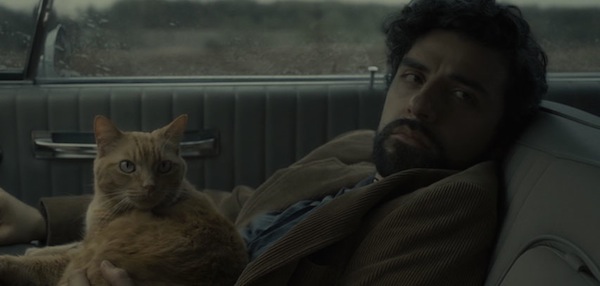
There were still some good movies left out, and some reactions I read questioned why the Academy would choose to nominate only nine movies when they could pick up to 10. But it doesn’t work like that. It’s not as if the Academy is a group of 25 people sitting around a table and making decisions about what to include and what to omit. The nominees are determined by a mathematical process that factors in the number of ballots submitted and how voters ranked their Best Picture choices. The Wrap‘s Steve Pond always offers some helpful explanations, but in the end it’s worth noting that when the current system of voting was applied to ballots from years past, going back a decade from when this rule of 5-10 possible nominees was instituted just to see what would have happened, the accountants determined that no year would have yielded 10 nominees. It would always have come in between five and nine.

One nice stat for this category is that with Her and American Hustle in the running, Megan Ellison becomes the first woman to be nominated for Best Picture twice in the same year. She also joins the illustrious company of Francis Ford Coppola, Fred Roos and Scott Rudin as only the fourth producer to hit that mark at all (Coppola and Roos in 1974 for The Conversation and The Godfather Part II, Rudin in 2010 for True Grit and The Social Network). Ellison and her production company Annapurna Pictures have only been on the scene for a few years, but she has established herself as an essential figure, funding the work and supporting the visions of some of the most prestigious filmmakers working today. In addition to Her and American Hustle, she produced Paul Thomas Anderson’s The Master, Kathryn Bigelow’s Zero Dark Thirty, and also had a hand in Spring Breakers, The Grandmaster and Killing Them Softly. If early buzz is any indication, she could be back here next year as a producer of Foxcatcher, the highly anticipated new film from Moneyball and Capote director Bennett Miller.

And speaking of Moneyball, Brad Pitt earned his first nomination as a producer, for 12 Years a Slave. Like Ellison, Pitt is turning out to be a champion for films that don’t have obvious commercial prospects. As the film’s director Steve McQueen has said many times, 12 Years a Slave would not exist without Brad Pitt. So it’s great to see producers who are committed to challenging and offbeat material, and to see the Academy embracing those films.

BEST DIRECTOR
Of the five directors nominated by the Director’s Guild of America — Alfonso Cuarón, Paul Greengrass, Steve McQueen, David O. Russell and Martin Scorsese — I was right that Greengrass, who steered Captain Phillips, would be the one left off the Academy’s list. I was wrong about who would replace him. The Director’s branch often embraces outside-the-box candidates, which had me hoping they would spring for Spike Jonze, who they nominated back in 1999 for Being John Malkovich. As it turns out, Jonze’s new movie Her was more inside-the-box than many expected it might be, earning five nominations, including Best Picture. That was never a sure thing, so I was thrilled. But I wish Jonze had received the directing nod.

Instead, the fifth slot went to Nebraska‘s Alexander Payne, and I have to say, that disappoints me. Nebraska was great, and Payne is a consistently excellent filmmaker whose movies I always enjoy a great deal, but in my eyes Best Director should be first and foremost a celebration of bold and unique directorial visions. That’s why I’d have gone with Jonze, or why I cited Spring Breakers director Harmony Korine as one of my personal choices. It’s why Gravity‘s Alfonso Cuarón is, at least for now, the category’s frontrunner. Nebraska is a small-scale movie, simple and straightforward. That’s not a slight or a criticism in any way; it just doesn’t stand up for me as a major achievement in directing. I tend to think the same thing when Woody Allen gets nominated for this award. I’m not saying these movies lack the guiding hand of a skilled director. Making good casting choices, getting great performances out of the actors, finding the proper tone, choosing the best takes during editing…these talents are hallmarks of good directing. But with only five slots available, there should be something more in the mix. Something…bigger. If the voters were going to stick with the most likely handful of directors, Greengrass would have been a more deserving choice than Payne. A movie like Captain Phillips has more complications and challenges, and pulling them all off is what I look for next, after boldness of vision, in a Best Director nominee. That’s why another of my personal picks was All is Lost director J.C. Chandor, who scores on both of those counts.

Whatever happens, we hope the players handle it with grace, but that’s not always the case. The day that began with the nominations announcement concluded with the Broadcast Film Critics Association’s Critics Choice Awards, where Captain Phillips‘ nominated screenwriter Billy Ray told Deadline‘s Pete Hammond, “It’s unacceptable that my guys [Hanks and Greengrass] did not get in. That’s the way I feel.” Now I’m a big fan of Ray, who also wrote and directed Shattered Glass and Breach, but who does he think he is and what does he think he’s talking about? Unacceptable is injured military veterans returning home and enduring substandard care at VA facilities. Unacceptable is an institution covering up a sexual abuse scandal. Are those examples too grand? Okay, I’ll take it down several notches. Unacceptable is making an appointment somewhere for 3:00 and not being seen until 4:30. Unacceptable is having the Unemployment Insurance department screw up your payments due to an internal computer glitch, then not processing your claim for weeks as a result, then sending you a letter telling you not to worry because they’re aware of their mistake and they will fix it without any action on your part, then after you’ve waited nearly a month and finally written to them through their website — because it is literally impossible to reach anyone at that fucking place by phone — they respond a week later with news that your claim has lapsed due to inactivity and that you have to re-file to open it again, even though the only reason it lapsed was because they fucked up and then told you not to do anything because they would take care of it, and this is all hypothetical of course but seriously how fucking incompetent are those people, and what was I talking about, oh right, things that are actually unacceptable. I would say to Billy Ray that no one owes him, or Tom Hanks, or Paul Greengrass, an Academy Award nomination. Just getting to make movies is a privilege that he should be grateful for every day, and awards recognition is icing on top of more icing on top of cake. Not getting an Oscar nomination is the first-worldiest of first-world problems, so instead of making a stupid remark like that, Ray should express gratitude for his own nomination and the five others that his movie received. Expressing disappointment for his forgotten comrades is fine, but tossing around words like “unacceptable” is awfully douchey. Not looking good, Billy Ray.

BEST ACTOR
Well, we knew it was going to be a bittersweet morning with this category, and so it was. There was that Tom Hanks omission, and Robert Redford was passed over as well. Tom Hanks, despite being Tom Hanks, was never a sure thing here. If there were an award for Best Five Minute Excerpt of a Performance, he would be both nominee and winner, cause those last few minutes of Captain Phillips…wow. For the rest of the movie though, Hanks’ performance, while excellent, was the kind of subdued, sturdy work that could go either way. In a less competitive year, he surely would have made it. This time, he got pushed out.

The morning of the nominations coincided with the first day of the Sundance Film Festival, which always begins with a press conference attended by Redford. Naturally he was asked about his Oscar miss, and he was as sanguine as you’d expect from someone who has been around Hollywood for decades. While acknowledging that a nomination would have been great, he said what matters most is that he is proud of the film and proud that it was made independently. He also said he was well aware of the business and the politics of the Oscars, and suggested that the film’s distributor might have done more to get the movie out there. That could be true, though Redford himself didn’t campaign too aggressively. Not that one should have to campaign to win an Oscar, but this whole thing is a game, and that’s how it’s played. Sometimes it might make the difference between an actor getting nominated and not.

This issue was front and center during the 2009 race when Mo’Nique was the Best Supporting Actress frontrunner for Precious and did not buy into the idea of campaigning, believing that the performance should speak for itself (and citing her young children and her day job as a talk show host as reasons she could not work the awards circuit for four months). She discussed it on her show with guests Terrence Howard and Taraji P. Henson, both previous nominees who tried to explain to her why campaigning was part of the process. In the end, she won the Oscar on merit, but she is probably in a minority of people who went the distance without doing the dance.

There are any number of reasons why Redford (and Hanks) may have been passed over, and as the nominations loomed, they were the most vulnerable of the perceived frontrunners. One person who campaigned with vigor was Bruce Dern, and it paid off for him. Perhaps the Academy only had room for one 77 year-old Hollywood veteran who starred in the 1974 version of The Great Gatsby and was seeking the second acting Oscar nomination of his career. The newest Great Gatsby, Leonardo DiCaprio, did make the cut for The Wolf of Wall Street. It’s still not the best work of his career, but it’s damn good, so congrats to you Leo. With Dern, Chiwetel Ejiofor and Matthew McConaughey getting the nominations they were expected to, the last slot went to Christian Bale, which makes me happy. Even though the category’s abundance of options forced me to exclude him from my list of personal picks, his performance is my favorite thing about American Hustle, and I’ve grown even more fond of it as the weeks have passed.

BEST ACTRESS
So that one Saving Mr. Banks nomination that felt pretty safe was for Emma Thompson, but it wasn’t to be. I thought Meryl Streep might be the one to get squeezed out if Amy Adams were to make it in, but instead it was Thompson who fell off the list of expected nominees. She took the news with her typical brand of practical humor, saying, “You just go ‘Oh!’— and then you (say) ‘Ooh, that means I can work in March instead of getting into another frock and heels.'” Some have even wondered if Thompson’s chances were hurt when her friend and Angels in America co-star Streep presented her with the Best Actress award at the National Board of Review ceremony and made comments in her introduction about Walt Disney’s sexist and racist tendencies. I read some reactions online after that suggesting that Streep had hurt Thompson’s chances. But the speech came on the night before nomination ballots were due to the Academy, at which point it was likely too late to have any effect…not that I think it would have been an issue anyway.

On a side note, Streep’s assessment of Disney got a lot of attention. Some in attendance at the NBR event felt the remarks were inappropriate, while others didn’t seem to mind. Her comments were debunked by writer Amid Amidi on the site Cartoon Brew, and upheld by Disney’s grandniece Abigail. Whatever the truth, I think it’s about time that Song of the South got a DVD release already. That’s my takeaway.

As for Streep, she might not have been singing “Zip-A-Dee-Doo-Dah” on nominations morning, but my oh my, for her it was a wonderful day. Her nomination for August: Osage County is her 18th. People love this woman, and clearly I was an idiot to think her peers would overlook her. As I wrote in the caption of her photo in my previous post, “Me, not get nominated? I’m Meryl Streep, bitch!” So she is, and even after all this time, as she tells Jimmy Kimmel, the accolades don’t get old.

As for Amy Adams, the Academy is pretty fond of her too. This is her fifth nomination since 2005, and her first as Best Actress.

BEST SUPPORTING ACTOR
I was never confident about Daniel Brühl’s chances, but I took my cue from his Screen Actors Guild (SAG), Critic’s Choice and Golden Globe nominations and rolled the dice. If I had a better read on The Wolf of Wall Street‘s prospects, I might have bumped him for Jonah Hill, who got the spot that I’d given to Brühl. As it turns out, Rush never made it out of the pit; it didn’t get a single nomination.

Great to see Bradley Cooper nominated again, his second in a row; along with Christian Bale, he was my favorite part of American Hustle. Michael Fassbender, Barkhad Abdi and Jared Leto all got in, and after all the talk above about campaigning, Fassbender managed his nomination without doing a lot of promotion. At least, not as much as he apparently did a few years ago for Shame, only to be passed over by the Academy. It’s good to see Abdi nominated for his debut performance. From driving a limo to starring opposite Tom Hanks to receiving an Oscar nomination…talk about a Hollywood story. He was excellent in Captain Phillips, and I hope the industry can find a place for him after this. Sadly, there aren’t a lot of obvious parts waiting for him. Is there a role in a future Game of Thrones season for this guy?

Unsurprisingly, the Academy did not nominate James Franco for Spring Breakers. But I would really love to see the ballots and find out how many votes he got, if any. He must have gotten some

BEST SUPPORTING ACTRESS
It’s a shame Oprah didn’t break in for Lee Daniels’ The Butler. She had maintained her buzz since the movie’s August release, and she really did melt into the role of Forest Whitaker’s boozy wife. Like Emma Thompson though, Winfrey stayed positive. Her assumed spot went to Sally Hawkins, who was championed by many critics for her role as Cate Blanchett’s sister in Blue Jasmine. Hawkins missed out on a Best Actress nomination in 2008 for Happy-Go-Lucky, so her many fans must be happy to see her land her first nomination.

I included Julia Roberts among my predictions but felt it could have gone either way for her. She ended up getting nominated, and while she wasn’t among my personal picks, I enjoyed her in August: Osage County and I’m glad to see her back at the table…just as long as it isn’t the same table from that movie’s dining room, because nothing good seemed to come to anyone sitting at that thing.

As the only member of American Hustle‘s cast who was essentially a sure thing, Jennifer Lawrence collected her second consecutive nomination after winning Best Actress last year for Silver Linings Playbook. At age 23, she also becomes the youngest actress to have earned three Oscar nominations. Even more impressive, American Hustle becomes only the 16th movie ever — and the second in a row! — to earn nominations in all four acting categories, following Silver Linings, also directed by David O. Russell. Prior to that film, the last movie to be nominated in all four categories was Reds in 1981. Now Russell has done it back-to-back. With the eight acting nominations collected by these two films, plus the three for The Fighter in 2010, he has now directed 11 Oscar nominated performances in four years, three of which have won. These achievements put Russell in the company of the great William Wyler. None of Hustle‘s nominees are considered frontrunners in their categories (well, maybe Lawrence, but we’ll save that for another post), but Russell has cemented his credentials as one of the best actor’s directors working right now, a point driven home in Bradley Cooper’s great speech on behalf of Hustle‘s ensemble when they won Best Cast in a Motion Picture at the SAG Awards.

BEST ORIGINAL SCREENPLAY
I hung onto the idea that Inside Llewyn Davis would at least get some major-category love from the writers, but no such luck. Dallas Buyers Club took the one spot that seemed up for grabs, but the biggest takeaway here is that Gravity did not get nominated. It was considered a stretch for this race anyway, but its absence may lead some to write off the movie’s chances for a Best Picture win. But that’s not necessarily true. While it is extremely rare for a movie to win Best Picture without its screenplay getting nominated, it has happened a few times over the years. Excluding the first few Oscars, for which records aren’t complete, five movies have managed it: Grand Hotel (1931/32), Cavalcade (1932/33), Hamlet (1948), The Sound of Music (1965) and Titanic (1997). (I was an intern at James Cameron’s production company Lightstorm Entertainment during Titanic‘s Oscar season, and although everyone there was celebrating the movie’s record-tying 14 nominations on the morning of the announcement, the Executive Producer was still griping that it didn’t get the screenplay nod, losing out to surprise nominee Woody Allen. She complained that he “phoned in” the script for Deconstructing Harry.)

Anyway, Gravity seems like the kind of movie that could win Best Picture without the screenplay nomination, but it certainly is against the odds. Interesting related note: not including those five movies just mentioned, there have only been 23 movies to win Best Picture without also winning one of the writing awards.

BEST ANIMATED FILM
The only big surprise here was that Monsters University missed the cut. Since the creation of this category in 2001, the only other Pixar film that has been eligible but not nominated was Cars 2. I’d take Monsters over The Croods or Despicable Me 2 any day, but the members of the animation branch felt differently. Sympathies to my friends at Pixar.

BEST CINEMATOGRAPHY
When one of the clear frontrunners of the entire awards season has excellent work in these below-the-line categories, it usually picks up the nominations, so the absence of 12 Years a Slave from this lineup is quite a surprise. Still, this was another category with too few slots and too much deserving work, so something had to give. But few thought it would be 12 Years.

BEST PRODUCTION DESIGN
American Hustle and 12 Years a Slave are pretty unimaginative choices for this category. I predicted them both to make it, but I would have been happy to be wrong if it meant the voters had looked beyond the obvious. At least they nominated the exquisite design work of Her. I hoped they would go for it, but didn’t expect them to.

BEST ORIGINAL SONG
Over the last few years, this category has offered a number of bewildering nominees, and this year the voters upheld that tendency by nominating the title track from a basically unknown Christian faith movie called Alone Yet Not Alone, which met the Academy’s qualifications with a week-long release in September. Skeptics keep asking how such an obscure song from an unknown film could be nominated over tracks from better known movies, sung by artists like Jay Z, Taylor Swift and Coldplay, but the question expresses ignorance of the process by which the branch votes. As I said in the previous post, summarizing an explanation by The Wrap‘s Steve Pond, the Academy assembles a DVD containing clips for each eligible song exactly as it appears in the movie, and sends that to all members of the branch. If the song plays over a montage, that’s the scene on the DVD. If the song is sung by a character in the movie, that’s the scene on the DVD. If the song plays over the end credits, then that portion of the end credits is what appears on the DVD. So really, it doesn’t — and shouldn’t — matter how famous or not the movie or the singer is. Voters are looking at each song, as it’s used in the movie. Which isn’t to say that higher profile songs that might be getting a lot of radio play or permeating the culture in other ways don’t have an advantage, but if voters are approaching their task with good intentions, they’re playing that DVD and giving every song a fair shot. It’s an imperfect system, most significantly because the DVD only includes three minutes of each song and because end credit tracks are at a disadvantage, but one thing it does seem to do is level the playing field a bit so that songs by famous musicians aren’t automatically handed nominations just because they have more exposure.

The fact that Bruce Broughton, the nominated co-writer of “Alone Yet Not Alone” is a former governor of the Academy’s music branch has led some to question the integrity of the nomination, but that’s nonsense. For one thing, branch governors usually are active members of the film community, and therefore could find themselves nominated at any time. Broughton acknowledges that he made some phone calls asking people to pay attention to the song amidst many higher profile contenders, but he says that was the extent of his campaigning. Even if he did hire a publicist to raise awareness of the song before reaching out to people himself, which he seems to deny, his campaigning efforts are still mild compared to what goes on with studios and production companies who have deep pockets. I love the Oscars, but I’m not blind to the bullshit. Beware of introducing the concept of integrity into the process, lest the entire house of cards collapse. Much of the politics involved is dispiriting, and could be fixed if the Academy had the desire to do so. But some of it is just the reality of any democratic process. Did some members of the branch vote for the song because of a friendship with Broughton? Probably. But does anyone think that’s the first time in the history of the Academy Awards that people have voted for their friends?
Suspicion grew into sour grapes for some artists whose songs were not selected. One anonymous contender who missed out on a nomination told The Hollywood Reporter, “It doesn’t really surprise me — I think it’s just the latest example of how true art sometimes is overlooked by those in a position to make decisions about what is paid attention to and what is not — but it’s disheartening to a lot of artists.” In a more extreme example, a publicity firm representing a non-nominee went so far as to hire a private detective to investigate whether Alone Yet Not Alone met the Academy’s qualifications for advertising during its week-long run. But the Academy upheld the nomination. I have to laugh that anybody would go to those lengths, but the comment about “true art” being overlooked is almost as obnoxious as the Billy Ray comment referenced earlier. The song’s writers are no less deserving of the title “artist” than anyone else. And while “Alone Yet Not Alone” would be way down my list of deserving nominees, it’s a gentle, solemn hymn that is pretty enough, and all the more impressive for being sung by a 64 year-old quadriplegic whose lungs are so weak “that her husband needed to push on her diaphragm while she recorded the…song to give her enough breath to hit the high notes.”

Even if some voters in the 240-member music branch supported the song out of friendship to Broughton, it still seems unlikely that such loyalty would extend far enough for this song to make the final cut from a field of 75 contenders, many of which are more dynamic and memorable. But here it is, and it’s here to stay. The music branch and its rules remain strange. As another potential nominee who didn’t make it said to The Hollywood Reporter (quoted in the same piece as the “true art” comment above), “I can’t figure any of this shit out with the music branch.” Although perhaps spoken out of sore loserdom, at least the comment seems reasonable.

As for some of the choices that didn’t make the cut, well…there are too many to mention, but I do need to bring up one, which I talked about briefly in the previous post, and which further demonstrates the music branch’s ineffectual processes. That would be “So You Know What It’s Like,” from Short Term 12. The song is a brief, stripped down expression of anger and grief sung (and largely written) by Keith Stanfield, an actor in the film who plays a young man about to turn 18 and exit a foster care facility. Accompanied only by a light drum beat provided by another character, Stanfield’s Marcus begins the song quietly, mumbly at first, becoming more intense as he goes along and ending louder, clearer, and with more forceful pronunciation.

In not nominating this song, the music branch highlights its hypocrisy. The system insists on judging songs in the context of their movies (even though watching just a three minute clip of a song often ends up robbing it of such context), and ends up favoring songs that serve a function in the story over songs that just play over end credits. Yet still, the nominees tend to be full-sounding, “produced” tracks. Nothing wrong with any of that, as long as songs like this one aren’t getting ignored. (I’m also thinking back a few years to “Marcy’s Song” from Martha Marcy May Marlene, which John Hawkes’ character sings in the movie.) “So You Know What It’s Like” is less than two minutes long, but it reveals character and furthers the story better than “Alone Yet Not Alone” or Despicable Me 2‘s “Happy.” Nominating it might have helped to justify a rule that seems pointlessly constricting.

At least “The Moon Song,” from Her, got nominated. It’s first heard during the film being sung by Scarlett Johansson with some help from Joaquin Phoenix, before appearing over the end credits in a version by Karen O. The music branch must have a thing for Johansson; she also sang last year’s nominated song “Before My Time” from the documentary Chasing Ice. I wasn’t familiar with Karen O until she did music for Spike Jonze’s previous film, Where the Wild Things Are. Since then, she’s really been doing some great work in the film world. I liked the song “Strange Love” that she performed for last year’s animated Tim Burton movie Frankenweenie, and of course she sang that razor-sharp, aggressive cover of Led Zeppelin’s “Immigrant Song” for the teaser trailer and opening credits sequence of The Girl with the Dragon Tattoo. Nice to see her get this nomination.

Will the chosen songs be performed during the show? There’s been some flip-flopping on this in recent years. Three of 2012’s nominated songs were performed live, two of them incorporated into larger tributes during the course of the show. The remaining two songs were spotlighted with clips from their movies. No word yet on how things will go this year, but regardless of what happens on the telecast, one new development is that the Academy is putting on a concert at UCLA a few days before Oscar night to celebrate all the nominated songs and scores. Their hope is that the original singers will be available to perform the songs, and the original composers on hand to conduct the selections from their scores. Then all the nominees, for Best Original Score at least, would appear on stage in conversation along with the directors of their movies.

If the concert is filmed, excerpts could be broadcast during the telecast in lieu of full performances, sort of the way the Oscar show features a highlight reel from the Governors Awards, at which honorary Oscars are presented earlier in the season. On the other hand, live performances on Oscar night could draw on some decent star power. U2 is nominated for “Ordinary Love” from Mandela: Long Walk to Freedom, and Frozen‘s nominated song “Let it Go” is performed by Idina Menzel in the movie and Demi Lovato in a pop version on the soundtrack album. If the song is performed at the show, they’ll hopefully go with Menzel, whose role in the movie gives her a more legitimate claim to the song. Although she’s in rehearsals for a new play, she told Entertainment Weekly she’s already got permission to attend the Oscars if they request her services. And Pharrell Williams might bring some fans to the show too. I would have gone for some other songs over “Happy,” but his track is light and bouncy, and he’s definitely coming off a big year thanks to his contributions to Robin Thicke’s “Blurred Lines” and Daft Punk’s “Get Lucky.” (He picked up a few Grammy awards just last night.) Having songs performed on the show may come down to whether the performing artists could be a ratings draw, so we’ll have to wait and see how this roster is valued, and how the concert affects the decision.

BEST ORIGINAL SCORE
These nominees are an odd mix of safe choices and unexpected ones. I wonder how many members of the music branch actually listened to The Book Thief score and really felt it was among the year’s five best, and how many simply chose it because it was composed by John Williams. Heaven knows I loves me some Williams, but even the best can just be “meh” sometimes. On a brighter note, the branch also nominated the score for Her, a pleasant surprise since I thought it would be too unconventional for them. I didn’t think they were hip enough to nominate a couple of rockers over more traditional film composers, but I’m happy to be proven wrong. Hopefully this will prompt Warner Brothers to put out a soundtrack album for the movie; there isn’t one currently.

Even more surprising than the inclusion of Her was the exclusion of 12 Years a Slave, easily one the year’s best scores and one that was widely considered a sure thing. I’m not sure what happened there. The only thing I can think of is that voters found it repetitive. The score is driven by one main theme which is used throughout, but it’s such a beautiful melody and there are plenty of variations. (I’m reminded of another film set in the days of slavery which also had a fantastic score consisting largely of one theme, which was also unnominated: James Horner’s score for Glory.) When there’s a frontrunner movie that even comes close to having a chance in a below-the-line category like this and Best Cinematography, it usually finds its way there, whether it really deserves to or not. So the fact that 12 Years a Slave was passed over in both those areas is a headscratcher, since each are areas in which the movie stands out. In fact, missing Cinematography and Score but landing nods for Costume Design and Production Design seems completely backwards to me. The latter two nominations are the kind that happened because of the movie’s overall stature and not so much because the work is among the year’s absolute best. Some pundits are wondering if the lack of assumed Cinematography and Score nominations signal an unliklihood that 12 Years can go all the way. I’m not reading the leaves that way at the moment, but we’ll see how I feel in a month once the race has settled.

BEST MAKEUP AND HAIRSTYLING
Everyone thought the elaborate hairdos of American Hustle would be a lock here, but the movie didn’t make the cut. Nor did The Hunger Games: Catching Fire, which I thought might find some love here, if nowhere else. Instead the branch went for Dallas Buyers Club, Jackass Presents: Bad Grandpa and The Lone Ranger, which tells me that despite the name change from Best Makeup to Best Makeup and Hairstyling, the branch’s voters still look at the skin more than than the hair. Still, I don’t recall much makeup or hair work in Dallas. There was some, but enough — and enough of a standout — to secure an Oscar nod? Not that quantity should trump quality, but surely there were other eligible films that featured both. As for Jackass, I should have known enough to predict that one. The aging makeup that turned Johnny Knoxville into an elderly man didn’t just have to hold up on camera; it had to hold up in real life, face to face, since the movie relies on Knoxville’s character interacting with real, unsuspecting people for a series of hidden-camera pranks. And the makeup branch is not a snobby one. It’s one of the few branches where a movie like Jackass, which is far from typical Academy fare, would be given serious consideration.

BEST VISUAL EFFECTS
The big news here was the absence of Pacific Rim, which most pundits expected to be among the final five. Fewer predicted that The Lone Ranger would make it in, but despite being one of the year’s biggest punching bags (and not really deserving the beating it has taken), members of the visual effects branch were impressed with the movie’s work, much of which centered around a complex action sequence involving a couple of trains. That sequence, and the movie overall, spotlighted the kind of invisible effects that the general Academy membership, now that the vote is in their hands, will have no idea what to do with. Not that the movie has a chance anyway; this category was settled long ago. Still, whatever you may think of The Lone Ranger as a movie, its effects are excellent and it’s nice to see recognition for work that is less obvious but incredibly intricate. Congrats to my friends at ILM for their stellar work on this, and on Star Trek Into Darkness.

With that, the final phase of the season begins. Due to the Winter Olympics, the Oscars are a week later than usual this year. March 2 is the big night, and for what it’s worth, the Dolby Auditorium will be far more welcoming to the LGBT community than the Olympic Village in Sochi. Final voting doesn’t even open until February 14, and between now and Oscar night, the many guilds will hand out their awards, some of which could give a strong indication of where things are headed with the Academy. In fact, some of those awards have already been given out, but I’ll get into all of that goodness when I post my annual absurdly long predictions opus in the last few days before the show. I know, I know…how will you deal with the anticipation? I suggest checking out some Oscar nominated movies.

And now, because I like to end these things with a video, and because I couldn’t find one relevant to this year’s ceremony, and because she didn’t get nominated, here’s Emma Thompson winning a screenwriting Oscar for Sense and Sensibility. I always liked her line about visiting Jane Austen’s grave.

January 15, 2014

Oscars 2013: Nominations Eve

Filed under: Movies,Oscars — DB @ 6:30 pm
Tags: , , , ,

Gather round, one and all, and stand witness as I once again engage in the mysterious, socially-questionable practice of Oscar prognostication. It’s a little bit science, a little bit art, and a whole lot of hours spent watching and reading about movies. If you ever wondered how I maintain my pallid skin tone, wonder no more. Read on if you dare, and then talk amongst yourselves about planning my intervention.

BEST PICTURE
2011 was the first year that the Academy adjusted the Best Picture category so that it would include somewhere between five and ten nominees. Being a weak year, it was generally assumed that there would be seven, maybe eight, nominees. It turned out there were nine. 2012 was a much stronger year, so a full slate of ten films was expected. Once again, the tally came in at nine. And I’m guessing that’s where things will land this time as well. It’s been another impressive year with lots of viable candidates, but nine might be the magic number.

Surely that nine will include 12 Years a Slave, Gravity and American Hustle, which have been the dominant three movies on the circuit of precursor awards from critics and industry guilds. Although the former two have been the pair, ever since October, deemed to battle it out through the season, Hustle came on strong when it began screening in late November, and its stock has only risen. Over the weekend, it took home the Golden Globe for Best Picture – Musical or Comedy, while 12 Years won for Best Picture – Drama (its only award of the night).

Her has been a big hit with the critics as well, and earned nominations from the Producer’s Guild of America (PGA) and the Writers Guild of America (WGA). I initially thought it would be too offbeat for the generally conservative Academy, but now I think it’s striking a broader cord; broad enough to put it over the edge. The way nomination math works, a movie only requires a few hundred passionate supporters who name it their number one film of the year. I think Her will manage that. Nebraska is a safe bet, as is Captain Phillips, but neither are sure things. From there, it gets fuzzier. The old fashioned, feel-good Hollywood craftsmanship of Saving Mr. Banks was expected to play like gangbusters within the industry, even more so for being a movie about movies. But it landed a bit softly with the Screen Actors Guild (SAG), missing out on expected nominations for Best Ensemble and Best Supporting Actor for Tom Hanks. It was also overlooked by the WGA, leading some to wonder if the Academy will find a place for it. Also missing out with all the top guilds is the Coen Brothers critically adored Inside Llewyn Davis. Academy members have been kind to the Coens in recent years, but is this one a little too hard to love? I don’t know…if they liked 2009’s A Serious Man enough to nominate for Best Picture and Best Original Screenplay, surely they like Inside Llewyn Davis enough. But this is a more competitive year than ’09, so maybe “enough” isn’t enough. The PGA nominated Blue Jasmine, but while Woody Allen’s latest is well-liked, I don’t know that it’s loved as much as his last Best Picture nominee, Midnight in Paris. It feels like a long shot to me. The Wolf of Wall Street is definitely in the running too, but I really have no grasp on where the consensus is falling.

The three remaining titles most likely to show up are Lee Daniels’ The Butler, Dallas Buyers Club and Philomena. Dallas, whose awards prospects initially seemed limited to the performances by Matthew McConaughey and Jared Leto, has proven unexpectedly popular, earning a SAG nomination for Best Ensemble, plus nods from the PGA and WGA. As for The Butler and Philomena, both are said to play extremely well to the Academy’s older contingent, which remains a large voting bloc. I don’t know though; I have a hard time imagining enough people naming Philomena as their favorite movie of the year to secure it a nomination. The Butler seems more likely to hit those numbers. Neither film was nominated by the PGA, which was notable because their exclusion — along with that of August: Osage County, which has not made the splash once expected for a star-studded adaptation of a Pulitzer Prize and Tony Award winning play — meant that Oscar junkie Harvey Weinstein was shut out. Rare is the Best Picture slate that doesn’t include a movie from Harvey Weinstein. As in any other category, the guild nominees do not tend to line up perfectly with the Academy, so the PGA’s Weinstein-free slate doesn’t necessarily bode ill. I feel like The Butler, which has Weinstein’s muscle behind it and which hits the “sentimental epic” notes that will appeal to voters who loved Forrest Gump and Extremely Loud and Incredibly Close, will make it in. If it doesn’t, and if Philomena misses too, then that violent shaking felt across Los Angeles on Thursday morning won’t be an earthquake. It will be the wrath of Weinstein.

Predictions:
American Hustle
Captain Phillips
Dallas Buyers Club
Gravity
Her
Lee Daniels’ The Butler
Nebraska
Saving Mr. Banks
12 Years a Slave

Personal Picks:
Before Midnight
Captain Phillips
Gravity
Her
Inside Llewyn Davis
Mud
Nebraska
Prisoners
12 Years a Slave

BEST DIRECTOR
Alfonso Cuarón pioneered new filmmaking techniques in an effort to realize his vision for Gravity, while Steve McQueen fearlessly plunged the depths of slavery in America for 12 Years a Slave. Both are almost guaranteed a nomination. I say “almost” because they occupy the same frontrunner status held last year by Argo‘s Ben Affleck and Zero Dark Thirty‘s Kathryn Bigelow. Need a reminder of how that turned out? Still, I think last year’s omissions were the unfortunate result of a collective honest mistake, with many voters choosing less obvious candidates because they figured Affleck and Bigelow would be covered by others. So those who truly want to ensure that Cuarón and McQueen are nominated might be more careful this year and cast their vote accordingly, rather than assuming that everyone else will vote for them.

David O. Russell, included last year for Silver Linings Playbook should find himself back again for American Hustle. All three of these gentlemen were cited by the Director’s Guild of America (DGA), along with Paul Greengrass for Captain Phillips and Martin Scorsese for The Wolf of Wall Street. The same quintet were nominated by the British Academy of Film and Television (BAFTA) as well, a body which, like the DGA (and other guilds) shares some membership with the Academy. But the Oscar nominations rarely align with the DGA’s selections, so where will the discrepancy lie? A few weeks ago, I probably would have said that Greengrass was in and Scorsese out. That could certainly be how it goes. But I also wonder if the controversy surrounding Wolf of Wall Street won’t rally those fellow directors who were impressed by the movie — and by Scorsese’s ability to still make vital, passionately-debated movies at the age of 71 — to throw their support his way. On the other hand, Greengrass doesn’t just impress for the skill and effectiveness of his usual intense and vérité approach, but also for drawing such impressive performances from the four Somali leads, none of whom had ever acted professionally before.

Still, if he or Scorsese miss (assuming it’s one of them, and that only one nominee is different between the Academy and the DGA), who gets the fifth slot? The Director’s branch often backs filmmakers with esoteric or unconventional visions, and I’m guessing that tendency will show up this year and boost Her‘s Spike Jonze, a remarkable and highly selective director, into the final five.

There are plenty of other worthy names in the mix. Some stand a strong chance of breaking in (Alexander Payne for Nebraska), others a less likely chance (the Coen Brothers for Inside Llewyn Davis, Woody Allen for Blue Jasmine, J.C. Chandor for All is Lost) and still others pretty much no chance, no matter how deserving they may be (Richard Linklater for Before Midnight, Jeff Nichols for Mud, Jean-Marc Vallee for Dallas Buyers Club).

I’m really unsure what to do about Greengrass and Scorsese. I don’t think Scorsese would be nominated if The Wolf of Wall Street isn’t also nominated for Best Picture, which I’m not predicting. Since the Best Picture race expanded beyond five films, all of the directing nominees have had their movie in the Picture race as well. But only directors nominate directors, whereas the entire Academy votes for Best Picture. So given the different voting contingents, it’s conceivable that a director could be nominated while his or her film is not. Right? Probably unlikely…but conceivable. Grrrrrr. I’m probably backing the wrong horse here, but I’ll stick with my initial sense that Wolf will miss Best Picture but Scorsese will make it for Director.

Predictions: 
David O. Russell – American Hustle
Alfonso Cuarón – Gravity
Spike Jonze – Her
Steve McQueen – 12 Years a Slave
Martin Scorsese – The Wolf of Wall Street

Personal Picks:
J.C. Chandor – All is Lost
Alfonso Cuarón – Gravity
Spike Jonze – Her
Harmony Korine – Spring Breakers
Steve McQueen – 12 Years a Slave

BEST ACTOR
Here’s where it starts to get bloody. Because while it has been a strong year for movies, it has been an extraordinary year for performances. All of the acting races are rich with contenders, and as usual, Best Actor is the most crowded. It’s going to be brutal.

Since as far back as October, most Oscar pundits — professional and amateur — have expected the lineup to consist of Chiewtel Ejiofor for 12 Years a Slave, Tom Hanks for Captain Phillips, Matthew McConaughey for Dallas Buyers Club, Bruce Dern for Nebraska and Robert Redford for All is Lost. That’s a goddamn beautiful list right there. But let’s pretend those five names are not in play. So maybe the category features Leonardo DiCaprio in The Wolf of Wall Street, Oscar Isaac in Inside Llewyn Davis, Michael B. Jordan in Fruitvale Station, Joaquin Phoenix in Her and Christian Bale in American Hustle (or Out of the Furnace, in which he is magnificent). Once again, a stellar line-up. Now let’s take those guys out of the picture too. How about Forest Whitaker for The Butler (nominated for a SAG award), Hugh Jackman for Prisoners (or Jake Gyllenhaal, just as good), Tye Sheridan for Mud (don’t discount him because of his youth; his performance is every bit as worthy of recognition as veterans like Redford, Dern and Hanks), Daniel Brühl for Rush (he’s being campaigned as a Supporting Actor, but that’s bullshit; he’s a lead), and Idris Elba for Mandela: Long Walk to Freedom.

In a normal year, there would be somewhere between five and ten performances that are truly deserving. This year, you could fill the category three times over and, with any configuration, have a dynamite slate. So…yeah. The voters in the acting branch face an impossible challenge, and no matter how it shakes out, some people who were good enough to win won’t even get nominated.

Looking again at the five who have longest been considered the likely nominees, Ejiofor and McConaughey feel secure, while Redford appears to be the most vulnerable. He is the only actor onscreen in All is Lost, and he has barely any dialogue. It’s acting at its purest, from a highly respected industry legend who has only been nominated as an actor once, back in 1973 for The Sting. But surprisingly, he was passed over by SAG voters, with Forest Whitaker taking the spot he was expected to occupy. The only prize he’s collected is a Best Actor win from the New York Film Critics Circle, though he has been nominated by a number of regional critics organizations, and made the list for the Golden Globes and Broadcast Film Critics Association. Redford hasn’t played the campaigning game that can often make the difference, but he’ll have the support of his fellow actors.

Hanks could miss out too. The most powerful moments of his performance in Captain Phillips come at the very end of the movie, and they’re shattering. Up until that point though, his work is more subtle and contained. Excellent, but the kind of unflashy turn that could conceivably be overlooked. Still, the movie seems to be generating across-the-board support, and it’s the first movie Hanks has done in a long time that has that awards-friendly glow to it. His last nomination was for Cast Away back in 2000. It would be nice to see him back in the hunt.

Earlier in the season, I was unsure about Bruce Dern’s likelihood of going all the way, but Nebraska is holding strong, and Dern has been campaigning like a machine, appearing at countless Q&A’s and events to promote the movie and mingle with voters. At 77 years-old, Dern has been in the business a long time, worked with a lot of great people and collected an endless supply of colorful stories that have charmed audiences during all this promotion. His performance in Nebraska is low-key, but beautifully affecting. In the wake of the movie’s warm reception at the Cannes Film Festival, where he was named Best Actor, it was unclear whether Paramount would campaign him for Best Supporting Actor or Best Actor. He definitely belongs in the latter, but his chances of winning would be much better in the former. The studio made the right call going with the lead actor category, and Dern agreed, telling The Hollywood Reporter, “If I go supporting, I’m a whore.” He made similar remarks, in his typical, entertainingly frank manner, to Deadline. Dern should have a lot of support from the acting branch’s older members, many of whom he has worked with and/or known for years.

The last movie of the year to be seen by voters and critics was The Wolf of Wall Street, and by then the category seemed impenetrable. Yet many think DiCaprio can’t miss. Pete Hammond of Deadline wrote after one of the film’s first industry screenings, “It would be unthinkable to imagine he won’t be in the top five.” I have to disagree. Given the competition, it’s easily thinkable. And while I’m not counting him out by any means, the Academy has not sparked to DiCaprio of late. His last nomination was in 2006 for Blood Diamond. Since then, he’s been overlooked for J. Edgar (a superb performance, whatever your thoughts on the movie) and Django Unchained. Maybe voters will feel his time has come around again. Though even if they do, that doesn’t mean he’ll make the cut in such a competitive year.

Oh, and on a side note, can people please stop calling Leo’s performance in Wolf the best of his career? Because it’s not. It’s really good, and surely one of his most energetic and fun. It’s certainly a highly committed performance; he does so much impassioned screaming that it’s a miracle he didn’t permanently blow his vocal chords. But career-best? No. It’s not better than What’s Eating Gilbert Grape (will anything be?), and it’s not better than The Departed. So let’s everyone just dial it back a bit.

I do think DiCaprio, along with Forest Whitaker and Christian Bale, are the guys with the best chance of breaking the Ejiofor-McConaughey-Hanks-Dern-Redford stronghold. Whitaker’s win in 2006 for The Last King of Scotland is the only time he’s been nominated, so it would be nice to see him in play once again. (Personally, I think there are several stronger and more worthy performances that deserve inclusion, but I can’t deny I’d be happy for him). The SAG nomination means he can’t be discounted, but I’m unconvinced he’ll make the cut in the end. If Bale makes it in, he’ll have the momentum of American Hustle to thank. Not to suggest he isn’t great, because he is, but in such a fiercely competitive year, his chances would be lower if he weren’t in such a beloved movie (probably part of the reason that his buzz is all about Hustle instead of Out of the Furnace.) David O. Russell’s last two movies racked up seven acting nominations and three wins (Bale and Melissa Leo for The Fighter, and Jennifer Lawrence for Silver Linings Playbook). Silver Linings earned nominations in each of the four acting categories, and it’s possible that Hustle could do that same. But of the four actors likely to make that happen, Bale faces the steepest uphill battle. In his favor, he was nominated for a Golden Globe, a BFCA award and a BAFTA award. Keep in mind though, that the Globes have categories for Drama and Comedy, while the BFCA nominate six actors, not just five.

I wish Oscar Isaac stood a stronger chance for Inside Llewyn Davis, but despite impressing many voters even beyond the film with his performances at a few concert events celebrating the soundtrack, there’s simply too much competition. And I really, really wish — though this isn’t even in the remotest realm of possibility — that teenager Tye Sheridan had a chance for his wonderful work in Mud. 17 years-old now but 14 when he shot it, Sheridan gives a nuanced, emotionally bare performance that deserves as serious consideration as any A-lister in the running.

A lot could happen in this race, but having to commit to predictions, I think the biggest surprise might be that it plays out exactly how it looked at the start.

Predictions:
Bruce Dern – Nebraska
Chiwetel Ejiofor – 12 Years a Slave
Tom Hanks – Captain Phillips
Matthew McConaughey – Dallas Buyers Club
Robert Redford – All is Lost

Personal Picks:
Chiwetel Ejiofor – 12 Years a Slave
Oscar Isaac – Inside Llewyn Davis
Matthew McConaughey – Dallas Buyers Club
Joaquin Phoenix – Her
Tye Sheridan – Mud

(Even for me, whose picks mean absolutely nothing to nobody, the choices are impossible. I can’t sacrifice any of these guys, but I so badly want to include Bale and Hanks. What a year…)

BEST ACTRESS
Like the Best Actor race, this one has seemed inflexible for quite a while. Cate Blanchett is so certain to win this award for Blue Jasmine that filling out the rest of the category is pretty much just ceremonial. Michael Barker, co-president of Jasmine‘s distributor Sony Pictures Classics, told Deadline back in June that no matter what else came along, Blanchett had the Oscar in the bag. Not the first time studio execs have made such bold claims, but this one will probably play out. Still, since she can’t stand alone quite yet, the conventional wisdom has been that she will keep company with Gravity‘s Sandra Bullock (considered her strongest competition), August: Osage County‘s Meryl Streep, Philomena‘s Judi Dench and from Saving Mr. Banks, Emma Thompson. And like Best Actor, there was enough great work to fill the category a second time, if not quite a third.

Of the next wave of contenders, the only one likely to break through is Amy Adams for her multifaceted work in American Hustle. The dark horse candidates are Brie Larson, playing a director at a foster care facility in the acclaimed indie Short Term 12; Julie Delpy, continuing to amaze as she deepens her now 19 year relationship with her character Celine in Before Midnight; and newcomer Adèle Exarchopoulos as a young woman in the throes of first love in the French film Blue is the Warmest Color, for which she and co-star Léa Seydoux shared the Cannes Film Festival’s Palme d’or prize with the director — a first in that award’s history. The chances that any of them could hear their name read are slim to none, but they’ve received a lot of love on the critics circuit. Adams and Delpy earned Golden Globe nominations in the Musical/Comedy category, as did Julia Louis-Dreyfus for her terrific performance in Enough Said, and Greta Gerwig for Frances Ha. (I really like her, but I didn’t care for the movie.) The BFCA, with six available slots, found room for Larson alongside Blanchett, Bullock, Dench, Streep and Thompson.

Bérénice Bejo, a Supporting Actress nominee two years ago for The Artist, garnered some early talk for her role in The Past, from Iranian director Asghar Farhadi. He took home the Best Foreign Language Film award the same year, for the outstanding domestic drama A Separation. Alas, even the critics awards haven’t found room for Bejo, so any dreams of Oscar will have to stay that way. (Unfortunately, I haven’t yet had a chance to see The Past, or Blue is the Warmest Color, so I can’t factor Bejo or Exarchopoulos into my own picks.) And lastly there’s Kate Winslet, who starred in Jason Reitman’s Labor Day. The movie didn’t earn the kind of acclaim that usually meets Reitman’s work, and while Winslet is quite good in the role, the movie is pretty low on the radar. She managed a Golden Globe nomination, but that’s as far as she’ll go.

The category could definitely play out as expected, which is also how the SAG nominations went. But I don’t know…I have a feeling Streep might sit this one out. August: Osage County, with its grand pedigree and powerhouse cast, came into the season with high expectations, but it was met with mixed reviews and has not generated a lot of buzz. It did play well with SAG, who awarded it two individual nominations and one for Best Ensemble, so that counts for something since actors nominate actors. And this is Meryl Streep we’re talking about. She’s been nominated for lesser work than this, and she is revered and beloved by all. But she’s also not hurting for recognition, having won her third Oscar two years ago on her 17th nomination. It’s not impossible that voters could decide to pass her over this time around. If so, her loss would be Amy Adams’ gain. I’ve bet against Adams before and been wrong each time. Dare I underestimate her popularity with the Academy yet again? She could also make it in at the expense of Dench or Thompson, both of whom are safe but not certain bets. But if I go with a gut feeling that’s been building for a while, I’d say Streep misses.

Predictions: 
Amy Adams – American Hustle
Cate Blanchett – Blue Jasmine
Sandra Bullock – Gravity
Judi Dench – Philomena
Emma Thompson – Saving Mr. Banks

Personal Picks:
Cate Blanchett – Blue Jasmine
Sandra Bullock – Gravity
Julie Delpy – Before Midnight
Brie Larson – Short Term 12
Meryl Streep – August: Osage County

BEST SUPPORTING ACTOR
All of the advance buzz for Dallas Buyers Club focused on Matthew McConaughey, but when the movie hit, Jared Leto received as much acclaim and attention as his co-star, playing a transgender AIDS patient who becomes McConaughey’s business partner. Leto’s performance — his first after a six year absence from acting — has nearly swept the critics awards, and made him the frontrunner for the win. Expect him to be joined by Michael Fassbender for 12 Year a Slave. After missing out on a nomination for Shame (for shame, Academy), his previous collaboration with Steve McQueen, the magnetic Fassbender should be a slam dunk nominee this time around as a drunken, brutish plantation owner.

SAG rounded out the category with newcomer Barkhad Abdi for Captain Phillips, Daniel Brühl for Rush, and James Gandolfini for Enough Said. Abdi is a good bet to make it in. He’s been a consistent presence on the landscape all season long, earning Golden Globe and BFCA nominations in addition to SAG, and his inexperience as an actor makes his performance that much more impressive. Brühl’s chances are less assured. He too was nominated for a Golden Globe and BFCA award, which were pleasant surprises considering that Rush had largely faded from the conversation since its September release. The movie is said to have a lot of admirers, and while that support may not carry it into the Best Picture race, which once seemed possible, it could be enough to get Brühl nominated. However I should say, for what it’s worth, that by no stretch of the imagination is this a supporting performance. Brühl is without question a co-lead alongside Chris Hemsworth, and Universal’s decision to campaign him as a supporting actor is just a way to give him a better chance at getting nominated, since he would never be able to break into such an overcrowded Best Actor field. Bruce Dern must think him a whore. As for James Gandolfini, he is absolutely deserving of a nomination for his change-of-pace role as a tender divorced man entering into a new relationship. The SAG nomination is welcome recognition, but had he not passed away this year, I think he would have been squeezed out. He’s received plenty of nominations from critics groups, but I don’t think he’s going to make it into the Oscar race. Respected as he is, he’s still most associated with his television work, and Oscar voters aren’t necessarily sentimental about these things. He could make it, but I’m not counting on it.

Who else is waiting in the wings? Bradley Cooper and Jonah Hill deliver colorful, incredibly entertaining performances in American Hustle and The Wolf of Wall Street, respectively. Neither managed a SAG nomination, but that is likely because their films weren’t ready in time to be seen by enough voters. Cooper has Globe and BFCA nominations, but Hill missed out on both of those. Cooper’s chances may be better, since voters are expected to go big with American Hustle, whereas Wolf of Wall Street‘s popularity within the Academy is more of a question mark. Hill, meanwhile, is known to have done a lot of improv that provides Wolf with some of its funniest moments, so that could work to his advantage with his fellow actors.
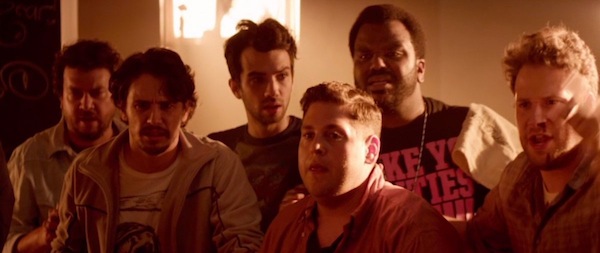
Tom Hanks was considered a strong contender for his role as Walt Disney in Saving Mr. Banks, but after missing out on SAG, Globe and BFCA nominations, he would now appear to be a long shot. Another Best Actor frontrunner who has a chance here, though not as much as it might have seemed earlier in the year, is Matthew McConaughey for his work as a charming fugitive in Mud. Will Forte has received some love from critics for Nebraska, but I don’t see it cutting through the competition. Among the actors relegated to long shot/near impossible status but who are nonetheless worthy of consideration: Harrison Ford for the Jackie Robinson biopic 42; Woody Harrelson and Casey Affleck, both quite powerful in Out of the Furnace; David Oyelowo for The Butler; John Goodman for a small but excellent turn in Inside Llewyn Davis; the perennially overlooked Sam Rockwell in The Way, Way Back; and Chris Cooper for a standout performance in August: Osage County.

And then there’s James Franco. His Spring Breakers is far outside the realm of movies that Oscar voters pay attention to, but it’s a textbook case to demonstrate that their narrow box often excludes work that absolutely deserves recognition. There are a number of categories where Spring Breakers deserves to be cited (you already saw me include its director Harmony Korine among my personal picks for Best Director), and if Academy voters took off their blinders, how could they not stand up for Franco’s sensational work as a hilariously materialistic DJ and drug dealer for whom spring break is a state of mind? The film’s indie distributor, A24, has mounted a campaign for Franco, but they only have so much money to spend, and none of it is likely to penetrate the Academy’s bubble. If Franco had a shot, he probably would have needed a SAG nomination, and that actually seemed like a possibility. SAG voters, after all, nominated Nicole Kidman’s somewhat gonzo turn in The Paperboy last year. Unfortunately, Franco was passed over, and a similar fate awaits him tomorrow morning. But if he somehow manages to get a surprise nomination, expect the gathered journalists in the room to let out an enthusiastic round of applause, hoots and hollers.

Predictions:
Barkhad Abdi – Captain Phillips
Daniel Brühl – Rush
Bradley Cooper – American Hustle
Michael Fassbender – 12 Years a Slave
Jared Leto – Dallas Buyers Club

Personal Picks:
Barkhad Abdi – Captain Phillips
Michael Fassbender – 12 Years a Slave
James Franco – Spring Breakers
Jonah Hill – The Wolf of Wall Street
Jared Leto – Dallas Buyers Club

(Again, I agonize over my meaningless picks. Kills me to leave off Coopers Bradley and Chris.)

BEST SUPPORTING ACTRESS
Lupita Nyong’o was in her final months at Yale Drama School when she auditioned for 12 Years a Slave, and at the moment she’s the frontrunner to win the Oscar for her debut film. Not a bad way to break into the biz. But first the nomination. She’ll be there. As will last year’s Best Actress winner Jennifer Lawrence, who tears it up in American Hustle. For many viewers, she’s been the standout. On the other end of the age and experience spectrum is 84 year-old June Squibb, the veteran character actress who steals the show as Bruce Dern’s outspoken wife in Nebraska. It’s hard to imagine she won’t make the cut. Another good bet, though not a lock, is Oprah Winfrey for The Butler. Winfrey doesn’t act too often, but when she does, she somehow pulls off the seemingly impossible challenge of embodying a character despite being one of the most ubiquitous figures in the world. No small task. She was nominated in this category nearly 30 years ago for The Color Purple, and I suspect she’ll be back.

That leaves one slot, and any number of people it could go to…all of whom could also land in the final five if Winfrey or Squibb should miss. 2011’s winner Octavia Spencer was touted as a likely nominee ever since Fruitvale Station came out in July, but her chances seem to have diminished in the season’s later days. She could still make it, but after missing out on SAG, the Golden Globes and even the BFCA, I’m not counting on it. All three of those groups did, however, nominate Julia Roberts for August: Osage County. Like Daniel Brühl, Roberts should be in the lead category, but The Weinstein Company didn’t want her and Streep to contend with each other. Can Roberts make it in? I’m not sure. But it would be nice to see her there again. Like Tom Hanks, her last nomination came in 2000, when she won for Erin Brockovich.

One nomination that almost certainly won’t happen, but should, is Scarlett Johansson for Her. Although she never appears on camera, make no mistake: she is the movie’s female lead, and creates a fully developed, three dimensional character with just her voice. Several critics groups have nominated her, including the BFCA, but that’s unlikely to make a difference. Although the performance is eligible for an Oscar nomination, I don’t see actors going there, no matter how much they admire the film and her work in it. Whether it’s Robin Williams voicing the Genie, or Andy Serkis being replaced by a creation of visual effects in The Lord of the Rings or Rise of the Planet of the Apes, if the performer doesn’t appear on camera, actors don’t seem to consider it an award-worthy performance. Too bad, since I would think actors would understand the challenges of this work, and should be all the more impressed when it connects so successfully. Maybe someday this barrier will fall, but I don’t think voters are ready yet. However, in this case, there is a way to get around it…sort of. Johansson’s work in Her was not her only great performance this year. She was also excellent as the jersey girl sexbomb with unrealistic notions of romance in Joseph Gordon-Levitt’s directorial debut Don Jon. That performance is worth consideration on its own, but could pull double-duty as proxy recognition for Her.
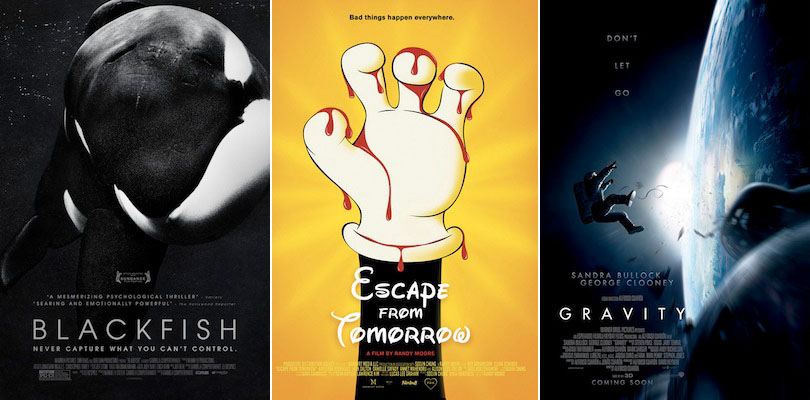
If there’s a surprise in this category that catches most people off guard, it may well be Jennifer Garner for Dallas Buyers Club. She is not considered a likely contender, and in fact hasn’t received a single nomination in all of the precursor awards except as a member of the movie’s SAG-cited ensemble. But that Best Ensemble recognition was itself a big surprise, and the movie has been faring well in general. Garner is good in it, but doesn’t get to do the kind of transformative work that benefits McConaughey and Leto. Still, The Hollywood Reporter‘s awards analyst Scott Feinberg thinks she has an excellent chance, and his logic makes good sense. He says that voters only have time to watch so many movies, and when they find something they really like, they tend to vote for it across the board. It was by that reasoning that he was one of the few pundits to predict Jacki Weaver’s nomination last year for Silver Linings Playbook. There is usually at least one big surprise on nomination morning that most people didn’t see coming, and given the popularity Dallas Buyers Club seems to have, Garner could be it. Plus, after all of the accolades her husband Ben Affleck collected for Argo last year — not to mention the strange comments he kept making in his attempts to thank her, which made it sound like their marriage was a daily struggle — maybe voters feel that Garner has earned some recognition of her own. I can’t bring myself to predict it; I think this is the one acting category that will match the SAG list five-for-five. But if Garner does score a nod, I’ll definitely be applying Feinberg’s logic to future races.
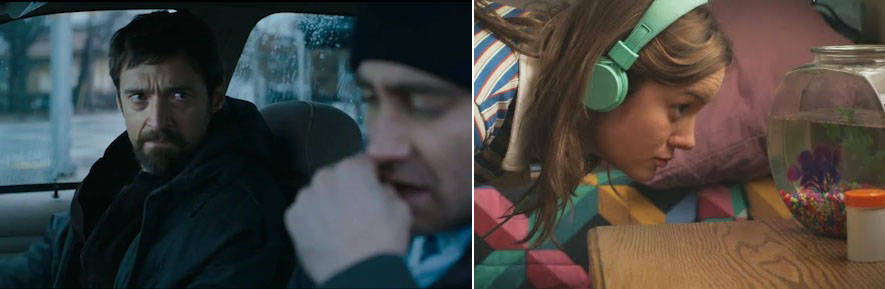
Another surprise could be Sally Hawkins, who played Cate Blanchett’s sister in Blue Jasmine. She’s received a smattering of mentions from critics, as well as Golden Globe and BAFTA nominations. Never discount an actress in a Woody Allen film. Other names that have popped up but would make for shocking nominations, however well deserved, are Sarah Paulson for her cruel plantation mistress in 12 Years a Slave; Julianne Nicholson and Margo Martindale as family members harboring secrets in August: Osage County; Melissa Leo as the caretaker of a young man suspected of abducting two little girls in Prisoners; and Léa Seydoux as a new couple’s more experienced lover in Blue is the Warmest Color.

Predictions:
Jennifer Lawrence – American Hustle
Lupita Nyong’o – 12 Years a Slave
Julia Roberts – August: Osage County
June Squibb – Nebraska
Oprah Winfrey – Lee Daniels’ The Butler

Personal Picks:
Scarlett Johansson – Her
Jennifer Lawrence – American Hustle
Lupita Nyong’o – 12 Years a Slave
June Squibb – Nebraska
Oprah Winfrey – Lee Daniels’ The Butler

BEST ORIGINAL SCREENPLAY
Expect to see American Hustle and Nebraska among this year’s crop. Her, whether or not it can manage recognition for Best Picture or Best Director, would seem like a given here as well. I would also have said that the Coen Brothers’ Inside Llewyn Davis was a sure bet, but its lack of a WGA nomination, or broad guild support in general, makes it a tougher call. But the biggest question mark is Gravity. While the movie is expected to be one of the most nominated of the year, its chances here are cloudier. Even many who love the film would say that the story is slight and that the movie’s screenplay is not where it stands out. Others would argue that it’s much weightier on the story and thematic front that it’s been given credit for. I suspect the writers will pass on it, but given its frontrunner status for other top awards, it could absolutely land here.

The indefatigable Woody Allen stands a good chance at his 16th writing nomination for Blue Jasmine. He got the WGA nod alongside Hustle, Her, Nebraska and Dallas Buyers Club, which is another strong but by no means certain contender. I’d say Dallas‘ chances depend on what happens with Gravity and Inside Llewyn Davis. Saving Mr. Banks could find some love here, but having not been the big player so far that it was initially expected to be, it’s hard to anticipate what the Academy will do with it. Enough Said and Fruitvale Station are also on the fringe, but I’m not expecting either to get this far. And if the writer’s branch decides to throw a curve ball or two, look out for Mud, All is Lost or Prisoners.

Predictions:
David O. Russell, Eric Warren Singer – American Hustle
Woody Allen – Blue Jasmine
Spike Jonze – Her
Ethan Coen, Joel Coen – Inside Llewyn Davis
Bob Nelson – Nebraska

Personal Picks:
Spike Jonze – Her
Ethan Coen, Joel Coen – Inside Llewyn Davis
Jeff Nichols – Mud
Bob Nelson – Nebraska
Aaron Guzikowski – Prisoners

[Update, January 26: My personal picks originally included Seth Rogen and Evan Goldberg’s script for This is the End, but last night I remembered that script doesn’t qualify as original because it’s based on a short film: Seth and Jay vs. the Apocalypse. I removed it from my list and replaced it with Bob Nelson for Nebraska.]

BEST ADAPTED SCREENPLAY
The Writers Guild nominations aren’t as much of a guideline in this category since, as always, some scripts were ruled ineligible for guild consideration. This was true for Best Original Screenplay too, but the only disqualified movie in that field which is expected to be a contender is Fruitvale Station, and that’s hardly a frontrunner. Not so on this side of the fence, where 12 Years a Slave, which could well be the winner come Oscar night, did not qualify with the WGA. But you can bet it will be on the Oscar shortlist, probably joined by Captain Phillips and Before Midnight. Richard Linklater, Julie Delpy and Ethan Hawke, the trio behind the latter, were nominated in this category back in 2004 for the previous film in the series, Before Sunset. They should repeat for this continuation which has been received just as enthusiastically, if not more.

Another strong possibility which didn’t meet the WGA’s standards is Philomena. With that and 12 Years out of play, the guild found room for August: Osage County and Lone Survivor. August still stands a chance with the Academy, but I wouldn’t bet on Lone Survivor. Not to take anything away from it; it’s a good movie. But a screenplay nomination seems like a stretch. The final WGA nominee, along with August, Survivor, Phillips and Midnight, is The Wolf of Wall Street, which I think will repeat here. Last summer’s beautifully spun teen romance The Spectacular Now collected a number of nominations from critics groups, but is a long shot to go the distance with the Oscars. Ditto the indie drama Short Term 12. These are the kind of wonderful small movies that, despite excessive praise from critics, never seem to attract the eyes necessary to lift them to Oscar-level awareness.

Predictions:
Richard Linklater, Julie Delpy, Ethan Hawke – Before Midnight
Billy Ray – Captain Phillips
Steve Coogan, Jeff Pope – Philomena
John Ridley – 12 Years a Slave
Terence Winter – The Wolf of Wall Street

Personal Picks:
Richard Linklater, Julie Delpy, Ethan Hawke – Before Midnight
Destin Daniel Cretton – Short Term 12
John Ridley – 12 Years a Slave
Carroll Cartwright, Nancy Doyne – What Maisie Knew
Terence Winter – The Wolf of Wall Street

BEST ANIMATED FEATURE
It has not been a strong year for animation. At least, not in the mainstream. Several of the 19 films submitted to the Academy for consideration are foreign entries that did not get wide release or promotion here in the states, so I can’t speak to those. But homegrown projects were not, as a group, the best we’ve seen. If at least 16 of the 19 submitted films are accepted by the Academy, the field will qualify for five nominees. Less than 16 will mean a field of four nominees, and less than 13 will result in three. A three nominee field could sport an impressive group. Five will be pushing it, at least based on what Hollywood turned out.

There’s also been a change this year to how the nominees will be selected. In the past, a committee of 100 Academy members had to attend special screenings of all the qualifying films in order to vote for which to nominate. Now the committee will be larger, and its members will be allowed to view screeners of the nominees at home. But according to The Wrap, it is unclear if the Academy would provide those screeners or if they expect the studios to do so. (I’m guessing the former.)

Disney’s Frozen, a huge hit and well-reviewed fairy tale, leads the way, while The Wind Rises, Japanese animation master Hayao Miyazaki’s final film as director (he says he’s retiring), is a good bet. If the category tops out at three nominees, I expect Monsters University will round it out. But there will probably be at least four, and knowing so little about the foreign contenders makes it hard to tell what might make the cut. Only the French film Ernest & Celestine, a hand-drawn tale of friendship between a bear and a mouse, has landed on my radar, and word is that it’s excellent. Despicable Me 2 was a massive hit, but can the sequel get nominated if the original couldn’t? I suppose so, but I just don’t get what the big deal is with those movies…not that my personal feelings have any place in the subtle art of Oscar predicting. I just have to imagine that some of the foreign offerings are better than Despicable Me 2, or The Croods or most of the other Hollywood options (though I’ll admit I did like most of Epic). Of course, better doesn’t always mean anything. Depending on how much larger the voting committee is, and how members see the movies, the final slate could favor bigger, well-known films, or instead offer some surprises from beyond our borders.

Predictions:
The Croods
Ernest & Celestine
Frozen
Monsters University
The Wind Rises

Personal Picks:
Epic
Frozen
Monsters University
The Wind Rises

BEST CINEMATOGRAPHY
Moving into the below-the-line categories, expect to see a lot of one word in particular: Gravity. It should come as no surprise that the astonishing outer space drama leads the way in this category, where it is likely to be joined by 12 Years a Slave and Inside Llewyn Davis. Those three movies were among the nominees for the American Society of Cinematographers award, where a three-way tie resulted in a seven-nominee race, rounded out by Captain Phillips, The Grandmaster, Nebraska and Prisoners. Usually there are one or two differences between the guild’s nominees and the Academy’s, but does the guild’s larger field mean the five Oscar nominees will come from this pool of seven? If so, that eliminates the gorgeous lensing of Her, which I had hoped would be a no-brainer.

If the branch looks beyond the ASC’s seven, and beyond the limits of traditional Academy fare, they would be wise to recognize the stunning work on display in Spring Breakers. Other films from earlier in the year that would make deserving nominees but that are probably too far removed from the Academy’s consciousness, whether by time or beause they aren’t sprinkled with whatever pixie dust deems them Oscar worthy: the Tom Cruise sci-fi film Oblivion, the creepy Mia Wasikowska thriller Stoker; and Sofia Coppola’s The Bling Ring, the last film shot by Harris Savides before his untimely death.

Based on no evidence whatsoever, I feel like the branch will take the opportunity to celebrate a striking black and white film whenever one is an option, so I’m guessing Nebraska will make the cut. As for that fifth slot, I could see it going to the beautiful imagery of The Grandmaster, the cold, dark compositions of Prisoners, the contrast of character intimacy and scenic vastness in All is Lost, and the simultaneously warm and cool clarity of Her. I’ll go with The Grandmaster. But man, what a tough call. Some really excellent work this year.

Predictions:
Phillippe Le Sourd – The Grandmaster
Emmanuel Lubezki – Gravity
Bruno Delbonnel – Inside Llewyn Davis
Phedon Papamichael – Nebraska
Sean Bobbitt – 12 Years a Slave

Personal Picks:
Emmanuel Lubezki – Gravity
Hoyte van Hoytema – Her
Bruno Delbonnel – Inside Llewyn Davis
Roger Deakins – Prisoners
Benoît Debie – Spring Breakers

BEST FILM EDITING
Best Picture frontrunners usually land a nomination for Editing, so expect Gravity and 12 Years a Slave to be here, and probably American Hustle and Captain Phillips as well. The fifth slot could go to another movie from the list of usual suspects, with The Wolf of Wall Street, Her, Nebraska, Dallas Buyers Club or Inside Llewyn Davis standing the best chance. Or it could go to a well-crafted, action-heavy movie like World War Z, Lone Survivor or The Hobbit: The Desolation of Smaug. But the best shot may be Ron Howard’s Formula 1 race car film Rush, once considered a strong possibility for contention in the top categories. Things didn’t work out that way, but if Rush can get some love anywhere, it might be here.

Predictions:
American Hustle
Captain Phillips
Gravity
Rush
12 Years a Slave

Personal Picks:
Captain Phillips
Gravity
Inside Llewyn Davis
Spring Breakers
World War Z

BEST PRODUCTION DESIGN
12 Years a Slave will probably find a home here due more to its place as one of the year’s major players than because it’s one of the five best art/set decorated films of the year. Gravity has a good shot too, though its limited locations make me wonder if it will be overlooked. American Hustle is a possibility, but I’m not convinced. It’s 1970’s setting does make it a period piece — and the design branches love their period pieces — but it isn’t as elaborate or obvious as the kind of period pieces that usually score here, which makes me doubt its chances. I hope that the subtle futurism and wonderful color scheme of Her will be recognized, but for some reason I don’t feel confident about it. Moving beyond the big dogs, the dazzling excess of The Great Gatsby should land a spot, and since all of Peter Jackson’s Middle Earth films have been nominated, it would stand to reason that The Hobbit: The Desolation of Smaug will follow suit. It’s possible that the voters could be tired of these, but with all the new locations on display, the films aren’t necessarily repeating themselves. Still, the familiarity of the world casts some doubt at this point. Meanwhile, the elegant scenery of Stoker and Oblivion deserve consideration, and Saving Mr. Banks is a possibility here too.

Predictions:
American Hustle
Gravity
The Great Gatsby
The Hobbit: The Desolation of Smaug
12 Years a Slave

Personal Picks:
The Great Gatsby
Her
The Hobbit: The Desolation of Smaug
Oblivion
Stoker

BEST COSTUME DESIGN
Again, chances are good that we’ll see 12 Years a Slave here even though, yes, again, there are more interesting and imaginative choices to be made. American Hustle is expected to score here too, although I’m a tad wary. While the 70’s always allow for some entertaining fashion selections, the Academy doesn’t always take notice. Then again, signature pieces like the white macramé swimsuit worn by Amy Adams should push Hustle to the final five. The members of this branch are always on the hunt for an 1800s or early 1900s period piece and the elaborate outfits that mark that era, and they will likely find their champion this year in The Invisible Woman, a film about Charles Dickens and his younger mistress that was directed by and stars Ralph Fiennes. The Great Gatsby will probably break through here too. As for other period films that might pop up, there’s Saving Mr. Banks, although I’m not sure there is enough variety to secure it a nod. Inside Llewyn Davis features nice work too. Amidst the desaturated camerawork, the colors worn by John Goodman, Carey Mulligan, Justin Timberlake and F. Murray Abraham stand out nicely.

On the less historical, more fantasy-based side of the closet, The Hobbit: The Desolation of Smaug is a possibility. The previous Hobbit film missed in this category, but not for lack of worthiness, so perhaps it will happen this year. There’s also The Hunger Games: Catching Fire, which features a wide variety of creative looks. I was a little surprised that the first Hunger Games film didn’t land a nomination here, and wondered if its chances would have been better had it come out at the end of the year rather than in March. Catching Fire was a November release, so we’ll see if that makes a difference.

While not exactly fantasy, the clothes in Her do a lot to sell the concept of a near-future that is logically grown out of the present day. It’s probably not flashy enough to do the trick for these voters, but it would be a nice surprise if it showed up. And since contemporary clothing almost never gets recognized, no matter how well or uniquely designed and suited to its film it is, we will almost certainly be denied nominations for Blue Jasmine and Stoker, both of which would be commendable surprises from the costume branch.

Predictions:
American Hustle
The Great Gatsby
The Hobbit: The Desolation of Smaug
The Invisible Woman
12 Years a Slave

Personal Picks:
The Great Gatsby
The Hobbit: The Desolation of Smaug
The Hunger Games: Catching Fire
Inside Llewyn Davis
Stoker

BEST ORIGINAL SONG
This continues to be a frustrating category, not only because it is governed by some stupid rules, but because the evaluation process is flawed. Steve Pond lamented these issues last week in The Wrap. For starters, a song can only qualify if it appears during the course of the movie itself or if it is the first song during the end credits. If it’s the second song in the credits, it’s ineligible. That might not happen often, but it happens. Also, members are asked to judge the contenders — and for the second year in a row there were 75 eligible songs — by watching a DVD that contains clips of each number as it appears in the movie. This puts end credit songs at a disadvantage, since voters have to watch them over scrolling names, with no context for how they actually fit into their movie or build on the final scenes. Worse than that, clips are limited to three minutes. If a song is longer, it simply cuts off. How can a song be judged fairly if it isn’t even offered in its entirety? Okay, I’ll concede it’s unrealistic to expect voters to sit through every full movie that has an eligible song just to see how that song fits into the whole, so context may always be a problem. But since that issue may exist no matter what, why not send a CD which contains each song in full, so that members have a second option for listening to the many contenders? It might be easier to listen to all the options if they can take it in the car with them, or elsewhere on the go. At the very least, whether delivered on a CD, a DVD or both, it’s offensive to the process not to include each complete song.

So with all that said, what are we looking at? So many possibilities means a 100% accurate prediction is unlikely, but there are a couple of selections that are probably locks, beginning with “Let it Go” from Disney’s Frozen. It’s a fairly standard empowerment number, but Idina Menzel belts it out something terrific. U2 picked up the Golden Globe for “Ordinary Love,” their contribution to Mandela: Long Walk to Freedom, and will probably be in the running here. In addition, there are five eligible songs from The Great Gatsby, including efforts by Jay-Z and Florence + the Machine. But the one with the most buzz is Lana Del Rey’s “Young and Beautiful.” Last month, there was an anonymous effort to mislead voters into thinking the song was disqualified, but there was no truth to it. Who knows if the trick was played by a rival studio, or one of the many Lana Del Rey haters out there, but the song is eligible, and in my opinion, deserving.

Unfortunately, my favorite song from a movie all year IS ineligible. “Fare Thee Well” from Inside Llewyn Davis, although new to me, is not new to the world. (If you’re a fan, check out some of its earlier incarnations courtesy of Vulture.) None of the wonderful songs from Llewyn Davis qualify, as they are all either older tunes being performed anew, or adaptations of previously existing ones. Several critics groups gave their Best Original Song award to the movie’s amusing track “Please Mr. Kennedy,” but the song borrows from a few similar pieces written during the era depicted in the movie, disqualifying it for Academy consideration.

One of the best songs of the year is not the typical studio-produced piece, but a bare bones rap clocking in at less than two minutes, performed by actor and musician Keith Stanfield, who plays a foster home resident in Short Term 12. It’s a song that would appear to perfectly encapsulate the intentions of the music branch, as it speaks directly to the character’s experiences and how he feels about his life. If the Academy’s goal is to recognize songs that are organic to their movies and have an impact on the story, than this isn’t just a nominee; it’s the winner.

Other songs that I really wanted to include among my personal picks were Ed Sheeran’s “I See Fire” from The Hobbit: The Desolation of Smaug, José González’s “Stay Alive” from The Secret Life of Walter Mitty, and Kings of Leon’s “Last Mile Home” from August: Osage County. If you’re interested in an assessment of the full field by someone who actually listened to all 75 contenders, here again is The Wrap‘s Steve Pond with his thoughts. In the end, anyone taking a shot at predicting this category is bound to miss at least one. But that won’t stop us trying. Having not heard anywhere near all of the options, here are my dart throws.

Predictions:
Let it Go – Frozen
Young and Beautiful – The Great Gatsby
The Moon Song – Her
Ordinary Love – Mandela: Long Walk to Freedom
We Ride – Spark: A Burning Man Story

Personal Picks:
Young and Beautiful – The Great Gatsby
The Moon Song – Her
Oblivion – Oblivion
So You Know What It’s Like – Short Term 12
Becomes the Color – Stoker

BEST ORIGINAL SCORE
Gravity and 12 Years a Slave will show up again here, but this is a case where the frontrunners will earn below-the-line nominations on true merit, not just because voters are selecting it lazily and without consideration. Or…I suppose maybe that is why they will select them, but at least they deserve to be here.

I’m sure I’ve said somewhere on this blog before (feel free to look around for it) that my favorite film scores are those that do their primary job of serving the movie, of course, but are also memorable enough in their themes and motifs to stand on their own as listening experiences. I find such scores are tragically rare these days. The only one from 2013 that stayed with me in that way was Hans Zimmer’s music for 12 Years a Slave. Mark Orton’s score for Nebraska has been growing on me too, but is ineligible for Oscar consideration because much if it was used in an earlier movie. Even The Hobbit: The Desolation of Smaug didn’t offer up any new themes that resonated with me after the movie.

And yet there were a great numbers of scores this year that made an impression on me in the context of their films, even if most of them were not distinctive enough on their own to become essential additions to my soundtrack collection…other than to serve as nice background music. Which is relevant here because…oh right, it isn’t. I’m just saying, there was a wealth of excellent music that provided atmosphere and emotional resonance to their films, if not exactly classic themes that will become part of the zeitgeist. Alex Ebert, frontman for the band Edward Sharpe and the Magnetic Zeros, just won a Golden Globe for his beautiful music from All is Lost, which plays an especially important role since the movie has barely any dialogue. Ebert was just one of many musicians who successfully dabbled in film composing this year. Skrillex worked with composer Cliff Martinez on Spring Breakers, and Muse contributed to the World War Z score composed by Marco Beltrami — though neither result appears on the list of 114 eligible scores). M83 created the music for Oblivion, and Spike Jonze enlisted his friends from Arcade Fire to provide original music for Her, either of which would be welcome nominees. Perhaps there were additional examples that I’m unaware of, but I thought this was interesting.
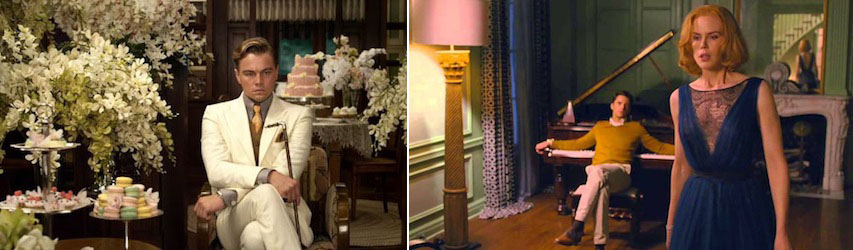
Among other scores that impressed me were Prisoners, Ain’t Them Bodies Saints, Mud, Stoker, Philomena, Labor Day, The Grandmaster and Out of the Furnace (the latter two are also missing from the eligibility list).

John Williams, who is basically retired at this point except for anything directed by Steven Spielberg, as well as his impending return to the Star Wars saga, was apparently such a fan of the novel The Book Thief that he approached the producers and offered his services. Nobody’s going to say no to that, and the results are of course being talked up for a nomination. Williams is always a good bet, but the score didn’t leave much of an impression on me. There has also been some buzz for Hans Zimmer’s Man of Steel score. It was decent (certainly not better than the Williams score we all know and love, not that it was trying to be…or needed to be), but I don’t see that nomination happening. Zimmer could also be a contender for Rush, and his protégé Henry Jackman is in the mix for Captain Phillips. Once upon a time, Disney musicals were a given for score nominations, so Frozen could crack the list, and Saving Mr. Banks — a movie about Disney — might earn another nomination for Thomas Newman (though frankly, the only parts of that score that stood out to me were the moments that incorporated music from Mary Poppins). I didn’t get a chance to see Mandela: Long Walk to Freedom, but the fact that its music was among the Golden Globe nominees means it stands a shot at an Oscar nomination too.

It’s clearly a packed field this year, with many possible outcomes. But here goes.

Predictions:
Alex Ebert – All is Lost
John Williams – The Book Thief
Steven Price – Gravity
Alexandre Desplat – Philomena
Hans Zimmer – 12 Years a Slave

Personal Picks:
Daniel Hart – Ain’t Them Bodies Saints
Steven Price – Gravity
William Butler, Owen Pallett – Her
Clint Mansell – Stoker
Hans Zimmer – 12 Years a Slave

BEST MAKEUP AND HAIRSTYLING
In December, the Makeup Artists and Hairstylists branch of the Academy announced the seven-film longlist from which the three nominees will be chosen. Focusing only on the quality of the work and not the quality of the film, their selections run the gamut from Best Picture contenders American Hustle and Dallas Buyers Club to box office hits The Hunger Games: Catching Fire, The Great Gatsby and Jackass Presents: Bad Grandpa (no, I’m not kidding) to a couple of movies that are most definitely not Best Picture contenders or box office hits: The Lone Ranger and Hansel and Gretel: Witch Hunters (still not kidding). Like I said, the branch evaluates the work, not the film, and both Bad Grandpa and The Lone Ranger feature excellent makeup work. I haven’t seen Hansel & Gretel, but now that I’m Googling some of its makeup images, I gotta say: pretty cool. Nice to see that The Hunger Games got some attention, after the first movie didn’t even make it to the longlist last year. All in all, the seven options represent a nice cross section of hair-centric work, aging makeup and creature prosthetics.

Among the surprising omissions are The Hobbit: The Desolation of Smaug (which may have been considered “been there, done that”), Rush, World War Z, Lone Survivor and Lee Daniels’ The Butler, which not only aged Forest Whitaker, Oprah Winfrey and other actors over several years, but also did a pretty nice job transforming Professor Snape Hans Gruber Alan Rickman into Ronald Reagan.

Predictions:
American Hustle
The Hunger Games: Catching Fire
The Lone Ranger

Personal Picks:
American Hustle
The Hunger Games: Catching Fire
Hansel and Gretel: Witch Hunters (What can I say? The stuff looks great.)

BEST VISUAL EFFECTS
Always one of my favorite categories, as visual effects and music scores were the two movie components that got me interested in the Oscars in the first place. Like the Makeup and Hairstyling branch, the Visual Effects branch narrows the year’s options down to a longlist, and chooses the nominees from there. The VFX longlist consists of 10 films, and that number will be cut in half for five nominees. This royal rumble features Elysium, Gravity, The Hobbit: The Desolation of Smaug, Iron Man 3, The Lone Ranger, Oblivion, Pacific Rim, Star Trek Into Darkness, Thor: The Dark World and World War Z. While there are certainly other movies that might have made it, like Man of Steel or Ender’s Game, there isn’t anything missing that I would consider a glaring omission.

Besides, we all know what’s winning this award anyway.

Predictions:
Gravity
The Hobbit: The Desolation of Smaug
Iron Man 3
Pacific Rim
Star Trek Into Darkness

Personal Picks:
Same

BEST SOUND EDITING/BEST SOUND MIXING
By now, I have figured out what each of these things mean, and I understand the difference between them. Yay for me. In simplest terms, the sound editors record or create sounds that could not be captured during filming, either because dragons are not real (so I’m told) or maybe because the location was too noisy to get a usable recording of a particular real-world sound. Sound mixers then take all the sound effects and the music and the dialogue, and blend it all together in proper relation to each other.

Unfortunately, that does nothing to help me understand or predict what the best achievements in these fields are.

But I can make some educated guesses, and the first is that Gravity will be nominated in both categories. Captain Phillips has a pretty good shot at both too. Inside Llewyn Davis recorded its many song performances live during filming, just as Les Misérables did last year, so that gives it a good shot in the Mixing category. Beyond that, we can look to almost any big action movie as a possibility for one or both of these, meaning we could see The Hobbit: The Desolation of Smaug, Iron Man 3, Star Trek Into Darkness, Pacific Rim, Man of Steel, World War Z, Lone Survivor, Oblivion, The Lone Ranger or Elysium. Animated films sometimes pop up here, especially those from Pixar, which makes Monsters University a possibility, or by association, Frozen. 12 Years a Slave might slide in if voters fill it in down the line; Rush could find some traction here with its many car races; The Great Gatsby, with all of that music and party noise and excess feels like a contender; and All is Lost relies heavily on the soundscape to tell its story.

That broad array of options is about as specific as I can get, so here are the rest of those educated guesses.

Sound Editing Predictions:
All is Lost
Captain Phillips
Gravity
The Hobbit: The Desolation of Smaug
Pacific Rim

Sound Mixing Predictions:
Captain Phillips
Gravity
The Great Gatsby
Inside Llewyn Davis
Star Trek Into Darkness

As for my personal picks, my limited understanding of these categories means I never have strong opinions, but I say each year that I think there should simply be one category, Best Sound Design, honoring a movie’s entire scope of sonic achievement. My picks for that imaginary category would be All is Lost, Gravity, Inside Llewyn Davis, Stoker and World War Z. I imagine if I had seen The Conjuring, that might find a place here too. But I didn’t, so it doesn’t.

With that, I think we’re done here. In keeping with tradition, I’m afraid I have no insight to offer for Best Documentary, Best Foreign Language Film or any of the short film categories. But since I’m sure I lost you somewhere around the sixth paragraph of Best Actor anyway, if not before, it’s just as well. The nominees will be announced tomorrow at 5:38am PT by Chris Hemsworth and Academy president Cheryl Boone Isaacs. And then tomorrow night, all the people who didn’t get nominated will try to put on a happy face when they attend the Broadcast Film Critics Association ceremony. The awards train stops for no one.

« Previous PageNext Page »

Create a free website or blog at WordPress.com.