I Am DB

March 14, 2013

Twenty-Five Films I’m Looking Forward to in 2013

Filed under: Movies — DB @ 12:00 pm
Tags: , ,

Now that the Oscars have officially closed the book on 2012 in movies, it’s time to look ahead to what we can expect this year. There are plenty of promising films on the horizon, enough that I bumped my usual 20 up to 25, and am still leaving out projects from directors like Terry Gilliam, Guillermo del Toro, Spike Lee, Ron Howard, Ben Stiller, Baz Luhrman, Bill Condon (Gods and Monsters, Dreamgirls), Atom Egoyan (The Sweet Hereafter) Nicolas Winding Refn (Drive), Paul Greengrass (The Bourne Supremacy, United 93), Jeff Nichols (Take Shelter), Nicole Holofcener (Friends With Money), David Gordon Green (Snow Angels, Pineapple Express) and Anton Corbijn (The American).

Although I’m publishing this list now, I pretty much locked it in at the beginning of the year and decided not to revise it based on all the great things I heard about during January’s Sundance Film Festival. So the list doesn’t reflect movies that were acquired in Park City for release sometime this year (presumably), though I can say I’m greatly looking forward to such titles as The Spectacular Now, Fruitvale, A.C.O.D. and most of all, the reunion of Ethan Hawke and Julie Delpy in Richard Linklater’s Before Midnight. As usual, the list is also short on big franchise movies, though I’m plenty excited to see things like Iron Man 3, Monster’s University, The Hunger Games: Catching Fire, Kick-Ass 2, The Wolverine, Man of Steel and Star Trek Into Darkness. There are certainly some sequels and expected blockbusters on the list, but in most cases it’s more about directors and casts that have me excited.

One change I did make was removing a film called The Place Beyond the Pines, writer/director Derek Cianfrance’s follow-up to his superb 2010 drama Blue Valentine. His new film, which stars Ryan Gosling and Bradley Cooper, comes out in just a couple of weeks, but I had a chance to see it already, so it no longer needs looking forward to. (For the record, I liked it, but had some issues with the third act.)

As always, I don’t know how any of these will turn out, but I have high hopes for all of them. One thing I am sure of: with roles in three films on this list, plus Star Trek Into Darkness and The Fifth Estate (in which he’ll play WikiLeaks founder Julian Assange), it’s going to be a big year for Benedict Cumberbatch. Which is fine with me, cause I love writing and saying “Benedict Cumberbatch.” It’s a name so supremely, singularly, sensationally British that if it didn’t already exist, J.K. Rowling surely would have created it for some minor bureaucrat deep within the Ministry of Magic.

Now then…

25.
TO THE WONDER

Director/Writer:
Terrence Malick
Cast:
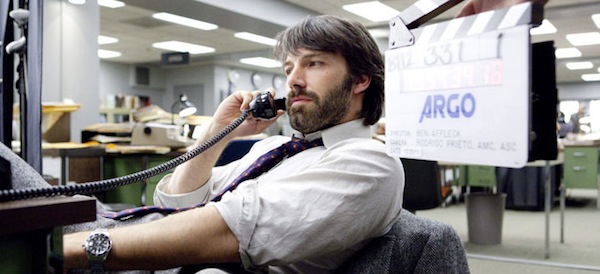
Ben Affleck, Javier Bardem, Olga Kurylenko, Rachel McAdams
Release Date:
April 12

A brief two years after The Tree of Life, Terrence Malick returns with a film that is said to be even more interior and abstract than that one, which I’m not convinced is cinematically possible. I count myself a Malick admirer, so I’m eager to see where he goes this time with the story of man and his relationship with two women – one a European beauty, the other a girl-next-door type from his hometown. That’s the surface story anyway, but Malick is probably exploring deeper themes and ideas. Will I understand any of them? Maybe. Will it matter to me if I don’t? If the movie is half as beautiful as The Tree of Life, then probably not. According to this short behind the scenes featurette, there was barely a script for the movie, and as always, Malick took his time in the editing room to shape the end result. In the process, he eliminated entire performances by Rachel Weisz, Barry Pepper, Amanda Peet and Michael Sheen.

24.
ALL IS LOST

Director/Writer: J.C. Chandor
Cast: Robert Redford
Release Date: TBA

Writer/director J.C. Chandor made an impressive debut (and earned a Best Original Screenplay Oscar nomination) for directing a shining ensemble of actors to uniformly excellent performances in the 2011 financial sector drama Margin Call. Now he’s dialing things back with a story featuring only one character. From what I’ve gathered, Robert Redford plays a man on a boat who encounters a storm and finds himself lost at sea. The movie depicts his struggles for survival against the elements, and apparently Redford, when asked about the movie during an unrelated press conference at Sundance this year, said the film has no dialogue. Margin Call was marked by its terrific, wordy script and its excellent cast. Chandor couldn’t have gone much further in the opposite direction for his follow-up, which makes it all the more exciting to see how he fares.

23.
THE BLING RING

Director/Writer: Sofia Coppola
Cast: Emma Watson, Israel Broussard, Katie Chang, Taissa Farmiga, Claire Julien, Leslie Mann, Gavin Rossdale
Release Date: June 14

I love Sofia Coppola’s Lost in Translation, but neither of the two films she’s made since have grabbed me. The most recent, Somewhere, was particularly disappointing…in that it went absolutely nowhere. Still, I keep hoping that each new project will mark a return to form, and so I await The Bling Ring, based on a Vanity Fair article about a group of privileged Los Angeles teenagers who engaged in a year-long robbery spree, targeting the homes of celebrities like Paris Hilton and Lindsay Lohan. It seems like fitting material for Coppola, who is personally immersed in the world of fashion and society where this story unfolds. Given the presence of Emma Watson, I’m anticipating a third act twist in which the motivation for stealing jewelry turns out to be the pursuit of horcruxes and the ultimate defeat of Voldemort.

On a more serious note, The Bling Ring is the last film to be completed by acclaimed cinematographer Harris Savides, who died too young last October at the age of 55. His credits included David Fincher’s Zodiac, Gus Van Sant’s Milk (and five other collaborations), and Noah Baumbach’s Margot at the Wedding, as well as such music videos as “Closer” by Nine Inch Nails and “Criminal” by Fiona Apple.

22.
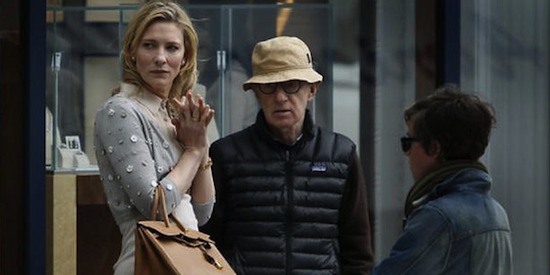
BLUE JASMINE

Director/Writer: Woody Allen
Cast: Cate Blanchett, Alec Baldwin, Louis C.K., Bobby Cannavale, Andrew Dice Clay, Michael Emerson, Sally Hawkins, Peter Sarsgaard, Michael Stuhlbarg
Release Date: July 26

Woody Allen is hit or miss these days, so if you’re a fan of his work, each new film – one a year, like clockwork – brings with it the curiosity of where in his canon it will fall. While Woody’s movies are like comfort food, rarely would I describe them as highly anticipated. But two things about his latest pique my curiosity enough to earn a place on the list. First, the film is partially set in my adopted home of San Francisco, marking the first time Woody has filmed in America’s most beautiful city. Second is the cast the director has wrangled. Woody’s movies always feature excellent line-ups, but this one really grabs me. I love Peter Sarsgaard, and I’m thrilled by the presence of Michael Emerson (aka Lost‘s Benjamin Linus)….but a movie that stars Cate Blanchett, Andrew Dice Clay and Louis C.K.?!? I think that pretty much says it all.
21.
OUT OF THE FURNACE
Director:
Scott Cooper
Writers:
Scott Cooper, Brad Ingelsby
Cast:
Casey Affleck, Christian Bale, Willem Dafoe, Woody Harrelson, Zoe Saldana, Sam Shepard, Forest Whitaker
Release Date:
TBA

Scott Cooper pulled together an intense and impressive cast for the follow-up to his feature directorial debut, Crazy Heart, which earned Jeff Bridges an Oscar. The crime thriller casts Bale and Affleck as brothers from a depressed mill town, one of whom gets involved in a crime spree after the other winds up in jail. I don’t know which actor plays which brother; in fact, I don’t know much of anything about the movie at this point. But I know this: that roster of actors is all I need to know.

20.
TWELVE YEARS A SLAVE
Director: Steve McQueen
Writers: Steve McQueen, John Ridley
Cast: Chiwetel Ejiofer, Benedict Cumberbatch, Paul Dano, Garrett Dillahunt, Michael Fassbender, Paul Giamatti, Dwight Henry, Taran Killam, Scoot McNairy, Sarah Paulson, Brad Pitt, Quvenzhané Wallis, Michael Kenneth Williams, Alfre Woodard
Release Date: TBA

Director Steve McQueen’s first film, the acclaimed drama Hunger, earned him respect from critics and brought Michael Fassbender to the attention of casting directors and filmmakers. I couldn’t get through the film, not just because I was too disturbed by the graphic depiction of the main character’s hunger strike and the toll it takes on his body, but also because I found it tediously boring. But his next film, Shame, was one of my favorites of 2011. Now comes his third, and with it new challenges: a period setting, a large cast of name actors, and because that cast includes someone like Brad Pitt, increased commercial expectations. But the film’s lead role belongs to the wonderful Chiwetel Ejiofer, who audiences will recognize from such movies as Amistad, Love Actually, Kinky Boots, Children of Men and American Gangster. This will be his highest profile lead role to date, and he has more than earned a chance to show off his stuff. Hopefully this movie, envisioned by an uncompromising artist like McQueen, will give it to him.

19.
TRANCE
Director: Danny Boyle
Writers: John Hodge, Joe Ahearne
Cast: Rosario Dawson, Vincent Cassel, James McAvoy
Release Date: April 5

With the opening ceremony for the London Olympics now behind him, Danny Boyle turns his attention back to film with this story of an art auctioneer who participates in a heist, then must work with a hypnotherapist to recall the location of the stolen painting after a knock to the head causes him to forget where it’s stashed. From what I’ve heard, this is a noirish tale with lots of twists and turns. Sounds like Boyle is revisiting the territory he explored so effectively in his 1995 debut film, Shallow Grave. That can’t be a bad thing.

18.
LABOR DAY

Director/Writer: Jason Reitman
Cast: Kate Winslet, Josh Brolin, Clark Gregg, Tobey Maguire, Brooke Smith, James Van Der Beek, Jacki Weaver
Release Date: TBA

Based on the novel by Joyce Maynard, Labor Day is the story of a 13 year-old boy and his agoraphobic mother, who come across a stranger in need of help and agree to take him in. The man turns out to be an escaped convict, and over the course of a few late summer days…well, I’m sure lessons will be learned and lives will be changed. Honestly, it sounds like a maudlin set-up. But a movie that brings together the talents of Jason Reitman, Kate Winslet and Josh Brolin has my attention, whatever the plot description. Reitman, the director behind Up in the Air, Juno, Young Adult and Thank You For Smoking, has demonstrated excellent taste in material and a talent for drawing out strong work from his actors. So I’ll give him the benefit of the doubt and tell myself that the story must be worthwhile to attract not only him, but Winslet and Brolin – a pairing which I have a feeling will yield superb chemistry.

17.
THE COUNSELOR
Director: Ridley Scott
Writer: Cormac McCarthy
Cast: Michael Fassbender, Javier Bardem, Penelope Cruz, Cameron Diaz, Natalie Dormer, John Leguizamo, Dean Norris, Rosie Perez, Brad Pitt, Goran Visnjic
Release Date: November 15

Although this thriller is written by Cormac McCarthy, it’s not adapted from one of his books. Rather, it marks the Pulitzer Prize-winning author’s first foray into screenwriting. It’s the story of a lawyer who gets involved in drug trafficking, an endeavor which doesn’t go so well. Sounds like there are echoes of the Coen Brothers’ McCarthy adaptation No Country for Old Men, which will only be emphasized by the presence of Javier Bardem. I have no problem with that. The movie reunites director Scott with Fassbender after last year’s Prometheus, and more interestingly, reunites him with Pitt 22 years after giving the actor what would be his breakthrough role in Thelma & Louise.

16.
FOXCATCHER

Director: Bennett Miller
Writers: Dan Futterman, E. Max Frye
Cast: Steve Carell, Mark Ruffalo, Sienna Miller, Channing Tatum, Anthony Michael Hall, Vanessa Redgrave
Release Date: TBA

With two narrative features under his belt – Capote and Moneyball – director Bennett Miller has shown an extraordinary capacity for telling dramatic stories with clarity and an effective understatement that brings out the humor and allows actors to shine. I am hopeful he’ll do it again with this true-life story of John du Pont, a wealthy corporate heir who supported the careers of numerous professional swimmers, pentathletes and wrestlers, only to succumb to paranoid schizophrenia and murder his close friend, Olympic gold medal wrestler Dave Schultz. Although du Pont was nearly 60 at the time of the murder, he’ll be played – in an exciting piece of against-the-grain casting – by Steve Carell. Even before he left The Office, Carell was showing his range in films like Dan in Real Life (a sweet, underrated movie) and Little Miss Sunshine. But Foxcatcher promises his furthest swing as an actor yet, and with a director like Miller to guide his performance, he could be on the verge of hitting a new high.

15.
NEBRASKA
Director: Alexander Payne
Writer: Bob Nelson
Cast: Bruce Dern, Will Forte, Stacy Keach, Bob Odenkirk
Release Date: TBA

As his follow-up to The Descendants, Alexander Payne is going even smaller scale, with a black-and-white road trip movie about an adult son escorting his father from Missouri to Nebraska because the old man thinks he’s won a million dollar sweepstakes. Payne initially courted Gene Hackman for the role of the father, but the retired actor declined to get back in the game. Instead, Bruce Dern takes on the role, and while I’m sad Hackman passed (come back to us, Gene!), I have little doubt that a colorful veteran like Dern will be superb in the part. Continuing his penchant for unexpected casting choices, Payne recruited Saturday Night Live alum Will Forte to play the son. Like most of the world, I’ve only seen Forte in his goofy comedic roles like MacGruber, 30 Rock‘s cross-dressing Jenna look-alike Paul, and his gallery of SNL characters. It will be a treat to see what he does for a filmmaker of Payne’s caliber.

14.
THE BUTLER
Director:
Lee Daniels
Writers:
Lee Daniels, Danny Strong
Cast:
Forest Whitaker, Oprah Winfrey, Mariah Carey, John Cusack, Nelsan Ellis, Jane Fonda, Cuba Gooding Jr., Terrence Howard, Minka Kelly, Lenny Kravitz, Melissa Leo, James Marsden, David Oyelowo, Alex Pettyfer, Vanessa Redgrave, Alan Rickman, Liev Schrieber, Clarence Williams III, Robin Williams
Release Date:
TBA

Lee Daniels’ most recent film, last year’s wild, sweaty thriller The Paperboy, divided critics, as well as the audiences who actually showed up to see it. Although it received a 16 minute standing ovation at the Cannes Film Festival, those who were there report that when attendees took to their feet, some were doing so to boo, not to cheer. (For what it’s worth, I enjoyed the film quite a bit, and thought it featured some terrific performances.) On paper, Daniels’ latest seems more likely to earn him the kind of universal praise that greeted his 2009 directing debut (and my favorite movie of that year), Precious. The Butler is based on the life of Eugene Allen, who served in the White House under eight presidents before retiring in 1986. Whitaker will play the title role (named Cecil Gaines in the film), with Winfrey as his wife. Many other members of the starry cast will likely turn up in small roles or even just extended cameos as the shuffling residents of the White House (including Rickman and Fonda as the Reagans, Marsden and Kelly as the Kennedys, and Williams and Leo as the Eisenhowers). It’s always nice to see Whitaker front and center, and Winfrey – who many forget is an Oscar nominated actress – hasn’t starred in a feature since 1998’s Beloved. The promise of strong roles for these two, plus the impressive ensemble and a great story hook, make this one of the most eagerly awaited dramas of the year. However it turns out, it will stand as a final testament to the successful career of Laura Ziskin, the Hollywood producer of such movies as Pretty Woman, To Die For and the Spider-Man trilogy, who fought to get this movie made right up until she passed away from breast cancer in 2011.

13.
THE MONUMENTS MEN

Director: George Clooney
Writers: George Clooney, Grant Heslov
Cast: Bob Balaban, Cate Blanchett, Hugh Bonneville, George Clooney, Daniel Craig, Matt Damon, Jean Dujardin, John Goodman, Bill Murray
Release Date: December 18

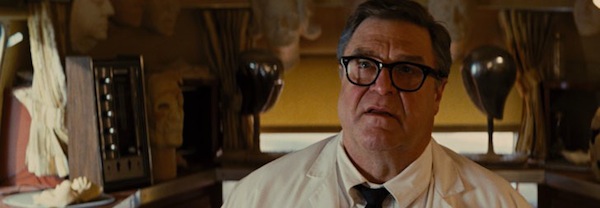
George Clooney is back behind the camera, and has once again convinced an amazing roster of actors to join him in front of it. His latest project tells the true story of a group of British and American art historians and museum curators who were tasked with searching throughout Europe for great works of art that had been stolen by the Nazis to be either destroyed by Hitler, or added to his private collection. Sounds kinda like an Indiana Jones movie…though probably with less face melting.

12.
THIS IS THE END

Directors/Writers: Seth Rogen, Evan Goldberg
Cast: Aziz Ansari, Jay Baruchel, Michael Cera, James Franco, Jonah Hill, Danny McBride, Craig Robinson, Seth Rogen
Release Date: June 14

In 2007, Seth Rogen, Jay Baruchel and a couple of their friends made a short film called Jay and Seth vs. the Apocalypse, in which the two friends were trapped in an apartment together after the world outside had been somehow destroyed. (The film was never available publicly, but there is a very NSFW trailer.) Now Rogen and his writing partner Evan Goldberg have expanded the idea to a feature length film, and recruited a few more of their friends from the Apatow universe to join them. This runs the risk of being the kind of sloppy vanity project that results when a bunch of friends get together, armed with a sizable budget, and do whatever they want, unchecked, concerned with nothing more than making each other laugh (see Ocean’s Twelve). Of course, given the comic prowess these guys have displayed, what makes them laugh is pretty well proven to work, meaning that even if the movie is a mess, it will probably be a hilarious mess.

11.
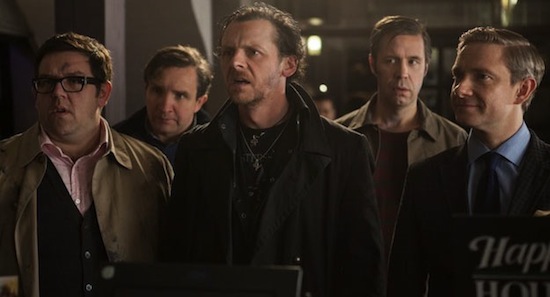
THE WORLD’S END

Director: Edgar Wright
Writers: Simon Pegg, Edgar Wright
Cast: Simon Pegg, Nick Frost, Paddy Considine, Martin Freeman, Eddie Marsan, Rosamund Pike
Release Date: October 25

Following the same general theme as Rogen and company’s movie, some of the funniest guys from the other side of the pond are also preparing for the apocalypse. Wright, Pegg and Frost – the director and co-stars of Shaun of the Dead and Hot Fuzz – team up again for this story of five childhood friends who reunite 20 years after an epic pub crawl and attempt to recreate it, only to find that this night of drinking may be their last. If this team’s past collaborations are any indication, we can expect another rock solid comedy with a non-sugary emotional undercurrent that goes down smooth.

10.
INSIDE LLEWYN DAVIS
Directors/Writers:
Joel Coen, Ethan Coen
Cast:
Oscar Isaac, F. Murray Abraham, Adam Driver, John Goodman, Garrett Hedlund, Alex Karpovsky, Carey Mulligan, Justin Timberlake
Release Date:
TBA

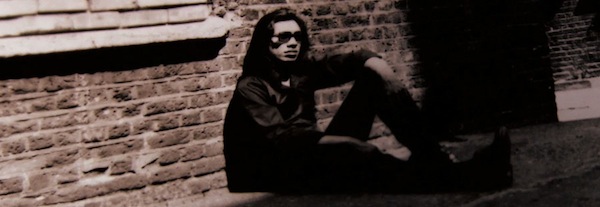
Oscar Issac came to my attention just a couple of years ago, but has built up an impressive array of supporting performances that I’ve really enjoyed in films like Robin Hood, Drive and The Bourne Legacy. Now he gets his biggest exposure yet, courtesy of the Coen Brothers, playing a 1960’s folk singer struggling to achieve success in both his personal and professional life. The movie marks a reunion between the Coens and music supervisor extraordinaire T-Bone Burnett, who oversaw the massively successful soundtrack for their 2000 film O Brother, Where Art Thou?. He’ll serve as Executive Music Producer here as well, with Mumford & Sons frontman (and Mr. Carey Mulligan) Marcus Mumford as Associate Music Producer. I don’t know what those titles mean exactly, other than the fact that the Coens are probably about to drop another kick-ass soundtrack. The movie looks pretty damn good too.

9.
ELYSIUM

Director/Writer: Neill Blomkamp
Cast: Matt Damon, Jodie Foster, Alice Braga, Sharlto Copley, William Fichtner, Diego Luna
Release Date: August 9

It’s been a long five years since Neill Blomkamp broke through with District 9. High hopes abound for his sophomore feature, another sci-fi tale with contemporary political relevance. In the year 2159, a space station called Elysium is home to the wealthiest members of society, while everyone else remains on a dying Earth that suffers from overpopulation. Foster plays a government bureaucrat tasked with maintaining the integrity of Elysium and keeping undesirables out, while Damon is a desperate man from the surface attempting to shatter the status quo. District 9 was a smart and topical debut, and I can’t wait to see what Blomkamp has come up with for his second time at bat.

8.
ANCHORMAN: THE LEGEND CONTINUES

Director: Adam McKay
Writers: Adam McKay, Will Ferrell
Cast: Will Ferrell, Paul Rudd, Steve Carell, David Koechner, Christina Applegate, Harrison Ford, Kristen Wiig, Dylan Baker, Meagan Good, James Marsden
Release Date: December 20

San Diego’s preeminent newscaster and jazz flutist is finally back. Ron Burgundy and the Channel 4 News Team, not to mention Ron’s delicious paramour and co-anchor Veronica Corningstone, will make their long awaited return this year. Few details have been made available to suggest what the gang will be up to, but the addition of Harrison Ford as a venerable, Brokaw-esque news anchor, and Kristin Wiig possibly playing a love interest for Carell’s IQ-challenged weatherman Brick Tamland, both bode well. I’m also hoping we’ll see Vince Vaughn’s Wes Mantooth once again, but there’s been no word on that yet. In the meantime, here’s a clip of Burgundy on Conan last year, announcing the project.

7.
AUGUST: OSAGE COUNTY

Director: John Wells
Writer: Tracy Letts
Cast: Meryl Streep, Julia Roberts, Abigail Breslin, Chris Cooper, Benedict Cumberbatch, Juliette Lewis, Margo Martindale, Ewan McGregor, Dermot Mulroney, Julianne Nicholson, Sam Shepard, Misty Upham
Release Date: November 8

Actor and playwright Tracy Letts won a 2008 Pulitzer Prize in Drama for his darkly comedic play, which debuted at Chicago’s Steppenwolf Theatre before moving to Broadway and London. Now it moves to the movies, adapted by Letts and directed by John Wells, the veteran TV producer of such shows as ER and The West Wing, who earned praise for his 2010 film directing debut, The Company Men. This story concerns the gathering of an Oklahoma family after the patriarch, Beverly Weston – an alcoholic and a once famous poet – goes missing and is presumed dead. The Broadway production earned five Tony  awards, including Best Play and Best Actress in a Play, for Deanna Dunagan. Her role – Beverly’s wife Violet Weston – goes to Streep in the movie, and those familiar with the play expect the legendary actress to be an Oscar frontrunner yet again. With this mighty cast, she might not be the only one.

6.
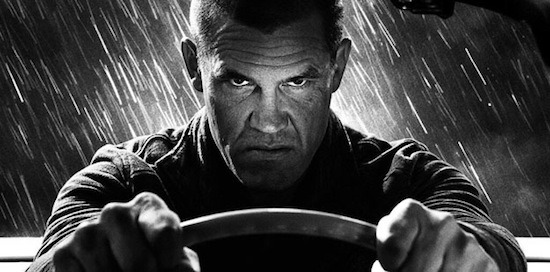
SIN CITY: A DAME TO KILL FOR

Directors: Robert Rodriguez, Frank Miller
Writers: Robert Rodriguez, Frank Miller, William Monahan
Cast: Jessica Alba, Powers Boothe, Josh Brolin, Rosario Dawson, Joseph Gordon-Levitt, Eva Green, Dennis Haysbert, Stacy Keach, Jaime King, Ray Liotta, Michael Madsen, Christopher Meloni, Jeremy Piven, Mickey Rourke, Juno Temple, Bruce Willis
Release Date: October 4

I’m a huge fan of Sin City, the 2006 collaboration between filmmaker Robert Rodriguez and graphic novelist Frank Miller, based on Miller’s book series set in the rotting, crime-ridden metropolis of Basin City. I loved the cast, the pulpy, rock-hard-boiled stories and the visual design drawn directly from the comics – monochrome, with limited splashes of color. In the ensuing years, there has been constant talk of a follow-up based on other books in the series, and after many vaguely explained delays (ongoing rumors persisted that Rodriguez was trying to hold out for Angelina Jolie to become available), it’s finally happening. Like its predecessor, the new film – at least part of which actually takes place before the events of the first – will be comprised of multiple stories: the previously published A Dame to Kill For and Just Another Saturday Night, as well as two original tales from Miller, including one called The Long Bad Night. Returning cast members include Rourke, Willis, Dawson and Alba. Dennis Haysbert inherits the role previously played by the late Michael Clarke Duncan, while Josh Brolin steps into the shoes of pre-plastic surgery Dwight, played by Clive Owen in the original. As for the dame to kill for herself, the role for which Rodriguez was supposedly targeting Jolie? She’ll be played by Eva Green, who I’m sure will make an entirely alluring femme fatale.
5.
HER

Director/Writer: Spike Jonze
Cast: Joaquin Phoenix, Amy Adams, Rooney Mara, Samantha Morton, Olivia Wilde
Release Date: TBA

Not a lot is known about this movie, so there’s not a lot I can say. The story is set in the near future and concerns a lonely man who falls in love with the female-voiced operating system he purchases to help run his life – essentially a version of the iPhone’s Siri. With such a delightfully gonzo premise, you might expect that this marks another collaboration between Jonze and screenwriter Charlie Kaufman, but in fact this will be the first time he has pulled solo screenwriting duty. I consider Jonze one of the best directors around, and one who works far too infrequently; this will be only his fourth film since 1999, following Being John Malkovich, Adaptation and Where the Wild Things Are. That too-small filmography is a lot to live up to, but I have little doubt Jonze will deliver something worthy of joining it.

4.
GRAVITY

Director: Alfonso Cuarón
Writers: Alfonso Cuarón, Jonas Cuarón
Cast: Sandra Bullock, George Clooney
Release Date: October 4

Alfonso Cuarón’s highly anticipated follow-up to Children of Men casts Bullock and Clooney as a scientist and astronaut, respectively, tethered to each other and adrift in the cosmos after an accident leaves their space station damaged. The film was on my list last year, originally intended for a November release, but the visual effects required substantially more time to complete. Word is that we can expect a powerful movie combining a gripping and emotional story with astounding visuals. Should be worth the wait.

3.
THE WOLF OF WALL STREET

Director: Martin Scorsese
Writer: Terence Winter
Cast: Leonardo DiCaprio, Jon Bernthal, Kyle Chandler, Jean Dujardin, Christine Ebersole, Jon Favreau, Jonah Hill, Jake Hoffman, Spike Jonze, Joanna Lumley, Matthew McConaughey, Rob Reiner, Ethan Suplee, Shea Whigam
Release Date: November 15

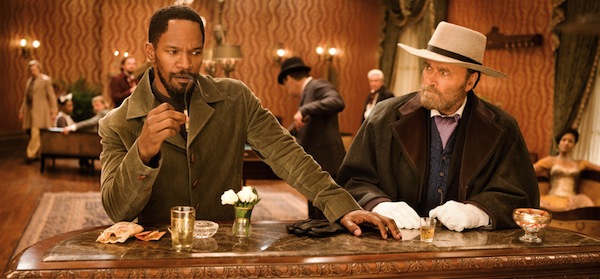
In his fifth collaboration with Martin Scorsese (one more and he’ll tie De Niro; two more and he wins Harvey Keitel), DiCaprio plays Jordan Belfort, a stockbroker who – surprise, surprise – engaged in criminal activity during the Wall Street heyday of the 1980’s. He lived large, partied hard and was worshipped by legions of young brokers. When his illegal activity was swept into a larger securities fraud investigation by the Federal government, it all came crashing down. Terence Winter, a Sopranos writer and creator of the Scorsese-produced HBO series Boardwalk Empire, adapts the true-life tale from Belfort’s memoir. DiCaprio has been trying to get this made for a long time (I’m almost certain that Michael Mann was attached to direct it at one point, though a brief search of the internets could not confirm that), and while doing promotion recently for Django Unchained, indicated that he has high hopes for the movie. He’s not alone.

2.
THE HOBBIT: THE DESOLATION OF SMAUG

Director: Peter Jackson
Writers: Philippa Boyens, Peter Jackson, Fran Walsh
Cast: Martin Freeman, Ian McKellan, Richard Armitage, Orlando Bloom, Billy Connolly, Benedict Cumberbatch, Luke Evans, Stephen Fry, Evangeline Lilly, James Nesbitt, Ken Stott
Release Date: December 13

Is three movies one movie too many to adequately adapt J.R.R. Tolkien’s slender novel The Hobbit? Many would say yes. And they may be right. Personally, I’ll wait until the trilogy is complete to decide if a trilogy was overkill or not. I’m still intrigued by the decision to encompass additional Middle Earth lore from Tolkien’s other writings in order to deepen and enrich the story, so I remain firmly on board with Peter Jackson’s grand adventure. In the next chapter, Bilbo, Gandalf and Thorin Oakenshield’s dozen-strong company of dwarves continue their march to reclaim their home city and stolen treasure from the dragon Smaug. Cumberbatch will play the mighty beast using the same motion capture technology that transformed Andy Serkis into Gollum. It should prove another showcase for the visual effects team at Jackson’s WETA Digital, and for Tolkien fans, it should prove a monumental onscreen match-up between a courageous halfling and arguably the most famous fire-breather in all of literature.

1.
UNTITLED DAVID O. RUSSELL ABSCAM MOVIE

Director: David O. Russell
Writer: Eric Warren Singer
Cast: Amy Adams, Christian Bale, Bradley Cooper, Jennifer Lawrence, Jeremy Renner, Louis C.K., Alesandro Nivola
Release Date: December 13

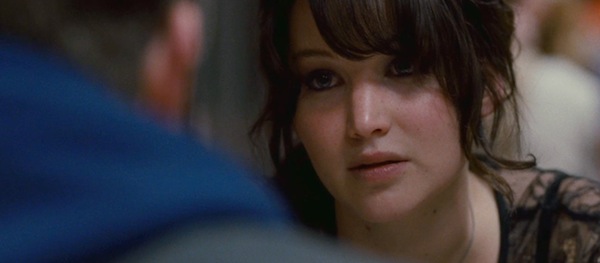
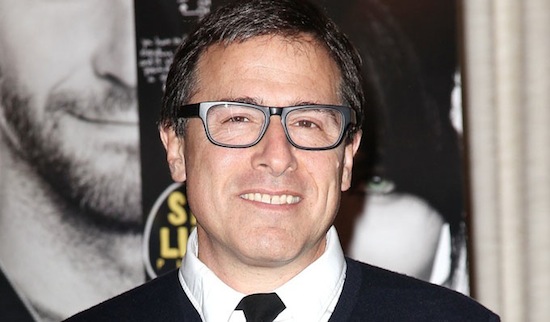
Coming off Silver Linings Playbook, David O. Russell couldn’t be any hotter right now, and his next project – currently without a title, but at one time called American Bullshit – is based on the real-life Abscam operation, an FBI sting in the late 70’s and early 80’s that targeted corruption in Congress. Russell was once notorious for his on-set outbursts and screaming fits directed at cast and crew (he and George Clooney came to blows while making Three Kings), and even then he still lined-up impressive ensembles. Now that he seems to have mellowed out considerably, and with his last two movies yielding an astonishing seven Oscar-nominated performances combined (three of which took the gold), actors would probably slit throats to work with him. Unfortunately for all those blade-wielding thespians, he’s so fond of repeat collaborations that it’s hard to break in. The movie re-teams him with his Fighter stars Bale and Adams, as well as Silver Linings duo Lawrence and Cooper. Renner managed to score the remaining lead role. More cast members might yet be announced, as the movie is just now going into production. I wasn’t sure it would be released this year, but a December date was announced this week, meaning we won’t have as long to wait for Russell to demonstrate yet again why he’s one of the best in the business right now.
March 7, 2013

Oscars 2012: What Went Down

Filed under: Movies,Oscars — DB @ 5:00 pm
Tags: , , , ,

As always, I like to take a little time before weighing in with my thoughts on the Oscars…partly so I can respond to all the knee-jerk reactions in the media. And this year, there’s been a lot of knee-jerking. The show has prompted quite an impassioned reaction, most of it directed at host Seth MacFarlane, and most of it negative. Even over a week later, people are still stating their objections to some of his material. So let’s start there.

For the record, this was not the worst Oscars ever, nor was MacFarlane the worst host ever. I’m confident that the people making one or both of those accusations have not seen every televised Oscar show, and are therefore in no position to say what shows back in the 50’s or 60’s, for example, might have been better or worse. Besides, you don’t even have to go that far back for a worse show. You need only rewind two years, to the ceremony honoring the best of 2010, hosted by Anne Hathaway and James Franco. I haven’t seen every Oscar show either, so I can’t say whether or not that was the worst ever. But it was the worst I could remember seeing, and not just because the hosts were not up to the task. In fact, I wrote at the time that I didn’t think Hathaway and Franco even deserved most of the blame. (Well…Franco may have deserved a good-sized chunk.)  As I said, it was “badly produced, badly directed, blandly written.” This year’s show wasn’t the best, but for the most part it was competently produced, so it’s already an improvement over two years ago.

THE HOST
From the moment he was announced last year, the chatter was that MacFarlane was an unusual and provocative choice, but an exciting one. Aside from the fact that he was largely unknown to the public and was not a major figure in the film community (though he was coming off the summer success of Ted, his first movie as director and voice actor), his humor was known for often being crass and edgy. But it was a good pick. It showed the Academy taking a chance, which is not something the esteemed old lady is known for doing, and MacFarlane’s combo of comedy and music skills seemed like they would serve him well at a gig like this.

Other than Team Francoway, who were simply the wrong people for the job, I don’t think I’ve seen a really bad hosting turn in my 25 years of Oscar watching (then again, I’m fairly easy to please). Billy Crystal was always great, though his schtick was a little warmed over by last year; Whoopi Goldberg and Steve Martin always did a good job; Hugh Jackman and Ellen DeGeneres both delivered in their years, as did Jon Stewart the two times he hosted. The hosts that are remembered less favorably are David Letterman and Chris Rock, but both were perfectly funny. They just weren’t the typical warm and fuzzy hosts who go down smooth. They pushed a few more buttons, and were true to their well-established personas instead of trying to become something else for Oscar night.

The same goes for MacFarlane. But the degree of vitriol in response has been high…and in several cases, a lot more mean-spirited than anything he dished out. The show, and its host, have been called sexist, misogynistic, anti-Semitic, racist and anti-gay during the last week and a half. Amy Davidson of The New Yorker was one of many who was not remotely amused by MacFarlane’s performance. Two female California state lawmakers sent a letter to the Academy expressing their concerns, as if they don’t have more pressing matters to attend to that involve actually governing. Perhaps I have no right to comment on any of this since I’m not a woman, but at the risk of being labeled a racist, homophobic misogynist for not rebuking everything MacFarlane did, I have to defend the guy. His humor is known for sometimes being offensive, but like South Park creators Trey Parker and Matt Stone, MacFarlane is an equal opportunity offender. I don’t think this is a man who has it in for women. I may not be so attuned to things that women would find offensive, and yes, a line like the one about Jessica Chastain’s Zero Dark Thirty character tracking Bin Laden for 12 years being evidence of women never letting anything go was pointless and bound to piss off every female viewer, rightfully so. But I hardly think it was a setback to feminism.

As for charges of anti-Semitism, I can attest from my years of Hebrew school that the Jewish people have survived an awful lot; I think they can endure a couple of cracks about their influence and numbers in the entertainment industry. In fact, I find it more interesting that MacFarlane’s Oscar night humor pushed the envelope as far as what is considered venue-appropriate, while at the same time being as staunchly old-fashioned as including jokes about Jews running Hollywood. Also, I don’t recall there being a backlash three years ago after Steve Martin (co-hosting with Alec Baldwin) described Inglourious Basterds nominee Christoph Waltz’s character as a Nazi hunting Jews, then spread his arms wide and declared, “Well, Christoph? The motherload!” On the contrary, it was one of the best lines of the night, and received the laughs to prove it.

The joke about actresses giving themselves the flu to fit into their dresses bothered some, but did anyone make a peep after the Golden Globes, when Tina Fey described The Hunger Games as what she called the six weeks it took her to fit into her dress? If there were complaints, they sure weren’t loud. I don’t need to tell anyone that Hollywood celebrates beautiful women and sets unrealistic expectations when it comes to the female body image. That’s a problem, but as long as the entire red carpet tradition at the Oscars and every other award show continues, creating pressure for women to pour so much energy into selecting gowns and jewelery and to look amazing or be torn apart in fashion magazines, the culture will persist. Suddenly Seth MacFarlane is a misogynist for cracking a joke about it?

Yes, he joked about Chris Brown and Rhianna. So has every late night comedian, over and over again. I don’t see them getting raked across the coals. Yes, there was a song called, “We Saw Your Boobs.” Yes, it was silly and a little crude. But no, it wasn’t a statement that actresses are only worth paying attention to when they take their clothes off, nor was it indicative of a night where every introduction or comment on an actress focused on her beauty or looks – another complaint I read somewhere after the show, which was untrue. He introduced plenty of women without referencing their looks, including presenters Jessica Chastain and Jennifer Garner, saying “both have played government agents and both have kicked ass onscreen in every sense.” Nothing about their beauty, just their talent. And since Charlize Theron, Naomi Watts and Jennifer Lawrence were all willing to participate in the boobs number, can’t everyone just lighten up? (No, I suppose if that argument worked there wouldn’t have been any controversy last year about The Help or this year about Django Unchained. Just because certain members of a group take part in something doesn’t mean other members of the same group won’t take offense.) MacFarlane was accused of insulting Adele’s weight when he joked that Rex Reed would be coming out to review her performance, but I saw that not as knock on Adele, but a joke about Rex Reed being an asshole. (For those who didn’t get it, film critic Rex Reed made some obnoxious comments about Melissa McCarthy’s weight in his review of Identity Thief a few weeks ago. He deserved the scorn that came his way. MacFarlane doesn’t.)

It wasn’t just journalists slamming MacFarlane. Actress and Oscar night presenter Jane Fonda, as well as Girls creator and star Lena Dunham weren’t impressed, and just within the last couple of days, Jamie Lee Curtis and Geena Davis have weighed in as well. It’s particularly disappointing to see fellow artists bash MacFarlane in the media. While they, along with anyone else, have the right to be offended by his routine, artists know what it is to take risks and put yourself out there, so I would think they would at least refrain from airing their grievances publicly. All but Dunham are Academy members, and if they felt the need to voice their concerns, they could have done so in private communication to the Academy’s president. Their opinions are certainly valid. But people have varying barometers of what is and isn’t offensive. Curtis starred in True Lies, which faced charges of misogyny and furthering stereotypes of Arabs as terrorists. Dunham has been accused (absurdly) of racism and nepotism. They’re bothered by MacFarlane’s jokes? Fair enough. But I’m bothered that fellow artists who have been in his position can’t muster a little empathy. They don’t have to like what he did, but they don’t have to attack him in public for it.

I was happy to see some writers come to his defense, and female writers at that, like Victoria A. Brownworth in The Advocate (though I think she might go a bit far in the other direction when she describes the ceremony as “a veritable paean to women.”) Even better was this letter to The Hollywood Reporter from an anonymous female development executive, who discusses some of the ways that sexism is rampant in Hollywood, and says that the problem needs to be addressed in more fundamental ways than tearing apart Seth MacFarlane for doing what a comedian does. A similar argument about women in Hollywood was made by Katherine Lampher in The Christian Science Monitor, though she is less forgiving of the host.

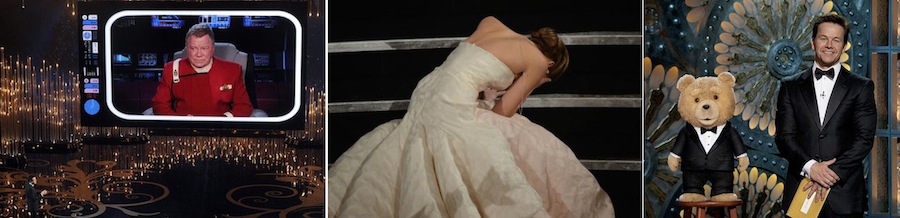
MacFarlane is not a traditional stand-up comic or performer by trade. He has hosted Comedy Central roasts and private ceremonies like the Writer’s Guild Awards, but the global exposure of the Oscar stage is new to him. Still, the Academy leadership and the show’s producers Craig Zadan and Neil Meron were willing to take a chance on him, and he took the chance too. Not only did he take it, but he jumped into the deep end. According to Zadan and Meron, MacFarlane was much more involved in all aspects of planning than most hosts. He attended every production meeting along the way, and threw himself into the process. Even at the show itself, he put himself out there more than the typical host just in the sheer amount of the proceedings that he participated in. I don’t remember another host being onstage as much as MacFarlane was. He introduced almost every presenter himself, a task that is usually more evenly split between the host and the anonymous, disembodied announcer. He also was there to throw to each commercial break with a tease of what was coming up. The guy was working it. Many critics described him as coming off smug, amateurish and self-involved. I disagree completely. I think he was comfortable, confident, and fulfilled a host’s duties admirably. He was enjoying himself, and wasn’t afraid to show it. Not every joke landed, but he was quick on his feet when something fell flat. After the off-color joke describing John Wilkes Booth as the actor who “really got inside Lincoln’s head” did little to impress the crowd, he swiftly recovered by expressing surprise that 150 years was still too soon, and that he had some Napoleon jokes coming up that would really make them mad. When his joke about the heavy use of the N word in the Django Unchained script being based on Mel Gibson’s voicemails elicited an uncomfortable reaction, he went with it by asking, “Oh, so you’re on his side?”

Critics were too busy sharpening their knives to notice many of his safer but still funny lines throughout the night, like introducing presenters Zoe Saldana and Chris Pine as “current Star Trek stars and future Priceline.com spokespeople,” or bringing out Daniel Radcliffe and Kristen Stewart with the line, “He’s a boy wizard and she’s a girl vampire. So together they’re pretty much everything the Christian right says is wrong with Hollywood.” He took aim at the Academy’s general failure to nominate blockbusters by describing The Avengers as “the most popular movie of the year, which is why it’s only nominated once.” And he had a great line about the cast of Prometheus coming out to explain “what the hell was going on there.” His bit about Daniel Day-Lewis’ immersive method being challenged by encountering signs of modernity like cell phones and a free-roaming Don Cheadle was terrific. And he got off to a great start with his opening line of the night, “The quest to make Tommy Lee Jones laugh beings now,” a reference to Jones’ stone-faced reaction to a hilarious Will Ferrell-Kristin Wiig bit at the Golden Globes. MacFarlane succeeded, as the side-by-side shows.

The fact is that much more of MacFarlane’s material worked than didn’t. Sure, there were some groans and a few examples of muted applause, but by and large the audience was with him. These critics who ripped his performance should try listening to the room. Perhaps the noises at their Oscar party, or the sound of indignation boiling in their own heads drowned out the consistent laughter of the crowd that followed most of his jokes. The same thing was true of Letterman’s hosting gig. People still talk about it as a failure, but if they actually go back and watch, they’ll find that Letterman was a hit with the audience. Hosting the Oscars is always described as a thankless job, and the reaction to MacFarlane’s performance goes a long way toward proving it. People complain when they think the host is too bland or safe, and they complain when the host pushes buttons and dares to slightly shake up an event which they describe, year after year, as dull and bloated. Make up your minds, assholes. Or better yet, shut up altogether. The Academy’s risk in hiring MacFarlane paid off with a show that accomplished two positive things: it got people talking, and scored the best ratings in four years, with a significant gain in the 18-49 demographic that is probably due, at least in some part, to MacFarlane. I’m happy to see they have defended him in the face of the negative onslaught.

For those who disliked MacFarlane’s performance and might see some victory in his post-ceremony tweet that he would never host the show again, they should know that he said the same thing before the show even happened, citing the amount of work and the time commitment. I hope that when it comes time to choose the next host later this year, the Academy leadership and show producers – whoever they may be – don’t play it safe as a reaction to this backlash, and instead once again choose someone interesting but still appropriate (i.e., a comedian). Last year, right after the Academy’s new president Hawk Koch was elected, there were rumors that he had reached out to Lorne Michaels to produce the show and Jimmy Fallon to host. ABC supposedly didn’t like the idea of Fallon, time-slot rival to their own Jimmy Kimmel, hosting a big program on their network, so it didn’t pan out. Or so the story goes. But Michaels and Fallon…now that’s an Oscar combo I’d love to see. As for Tina Fey’s insistence that she would never host? That’s kinda like what J.J. Abrams said about directing Star Wars. I’m sure she could be convinced.

THE AWARDS
Now with all of that out of the way, we can get to what the show is actually about. This year, the wealth was nicely spread around, with eight of the nine Best Picture nominees winning at least one award. Only Beasts of the Southern Wild went home empty-handed, but let’s be honest: for such an outside-the-mainstream, low-budget film from a 30 year-old first time director, just being at the Academy Awards with four major nominations was a huge victory. Life of Pi led the night with four awards, Argo and Les Misérables took home three, Lincoln and Django Unchained each won two, while Silver Linings Playbook, Amour and Zero Dark Thirty all claimed one. Non-Best Picture nominees Skyfall, Anna Karenina and Brave also emerged as winners.

-For my own part, out of 24 categories, I called 19 correctly, missed three (Supporting Actor, Makeup and Hairstyling, Production Design) and abstained from two (Live Action Short, Documentary Short). Better than I thought I would do in this unusually unpredictable year. Many of my personal picks missed out, but I was largely satisfied with the slate of nominations this year, so I felt good about how things unfolded. There were no travesties of Oscar justice or unexplainable headscratchers.

-Chief among the new records set and pieces of trivia inscribed was Daniel Day-Lewis becoming the first person to win three Best Actor awards. He also became the first actor to win for a Steven Spielberg movie. Argo became the fourth movie to win Best Picture without its director being nominated. At age 22, Jennifer Lawrence became the second youngest Best Actress winner ever, behind Marlee Matlin, who was 21 when she won for Children of a Lesser God. “Skyfall” became the first song from a James Bond movie to win, and George Clooney joined some elite clubs this year, as the person to receive nominations in more categories than anyone else, and only the sixth person to win in both acting and non-acting categories.

-Of all the awards, the one that surprised me most was Christoph Waltz’s Best Supporting Actor win for Django Unchained. Not because I didn’t see it coming at all (I predicted De Niro, but acknowledged that Waltz and Tommy Lee Jones both had a strong chance), but because it just seems strange that Waltz is now a two-time Oscar winner. He’s great, and I’ve enjoyed not just his winning performances, but those he gave in between in Carnage and Water for Elephants, but a two-time Oscar winner? After less than five years in Hollywood? It’s a neat, but slightly bewildering accomplishment, especially considering that his characters in Inglourious Basterds and Django aren’t that far apart. He joins an impressive roster of two-timers that includes Spencer Tracy, Bette Davis, Marlon Brando, Jack Lemmon, Elizabeth Taylor, Michael Caine, Jane Fonda, Gene Hackman, Jodie Foster, Anthony Quinn, Maggie Smith, Denzel Washington and Jessica Lange. Waltz’s win is a testament to how much voters obviously enjoyed his performance, and how expert he is at delivering Tarantino’s dialogue. It really is a match made in heaven with those two.
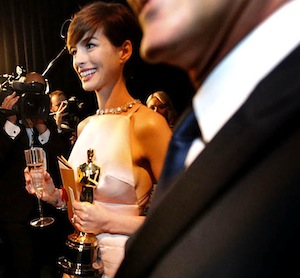
-The other big surprise of the night, though less high-profile, was the tie in the Best Sound Editing category. It was only the sixth tie in Academy history, and lent some unexpected drama to a category that doesn’t get its due from the average movie or Oscar viewer.

-The Best Animated Film win for Brave was a nice triumph for Brenda Chapman, who conceived the film based on personal experience and was Pixar’s first female director until she was replaced during production by Mark Andrews. It was a shocking development at the time, with almost no details given, though ultimately Chapman shared directing credit on the film with Andrews. Now she’s an Oscar winner, and whatever tension might exist between them, you would never know from the way they interacted on stage or in the press room, where they posed for some goofy pictures. (One thing, though: if I were Andrews, I’d probably have hung back so Chapman could speak first.)

-One of the other big stories that has emerged from Oscar night, though less visibly to the average viewer than the MacFarlane brouhaha, centers on the Best Visual Effects triumph for Life of Pi. As I had mentioned in my predictions post, this widely expected win occurred under a storm cloud: Rhythm & Hues, the primary visual effects house that worked on the movie, has been in financial trouble recently and filed for Chapter 11 bankruptcy a few weeks ago. When the quartet of winners took the stage, speaker Bill Westenhofer thanked Ang Lee, the talented crew and his family before bringing up the sad irony of winning the Oscar as the company – and the entire VFX industry – is in such dire straits.

As a former employee of a VFX company, with many friends still there, I hear about these issues often. In simplest terms, studios want to pay as little as possible for visual effects (and for everything else, no doubt). In order to secure business, facilities have to bid the work at numbers far below the actual cost. Compounding the problem, other countries offer tax incentives and cheaper labor to the studios in order to lure business (within the U.S., other states outside of California, where the industry was born and raised, also have tax incentives). The result is that VFX artists increasingly live migrant lifestyles, bouncing around from shop to shop, state to state, sometimes country to country in order to make a living, and even then they still have to put in impossible hours to complete the work on time as studios demand increasingly complex visuals at lower and lower prices on shorter and shorter delivery schedules.  The piece of the pie these companies and artists receive is small to nonexistent, and they are not represented by a union. Despite the fact that year after year, the highest grossing movies are driven by visual effects, the industry is being destroyed by the studios which are unsurprisingly fixated on their bottom line. Rhythm & Hues is just the latest company to go under, and everyone in the industry is feeling the squeeze. VFX artists organized a protest near the Dolby Theater on Oscar night to call attention to the problem, and newly minted Oscar winner Westenhofer tried to address the issue…until the orchestra started playing the Jaws theme to send him on his way, an obnoxious though not atypical move at the Oscars year after year. Then they cut his microphone altogether – more obnoxious, less typical.

When the winners arrived on stage, there was unusually loud applause and hooting from the audience. Maybe there were just a lot of Pi fans out there, or maybe people were happy to see this team win in the face of R&H’s financial difficulties. Either way, Westenhofer hadn’t been talking that long before the music started to play, and cutting off the microphone was a real bullshit move. I’ve said time and time again that whether it makes compelling TV or not, winners should be allowed to complete their speeches. Most are considerate enough not to drone on endlessly. Oscar night is first and foremost about the film community honoring its own, and so the honorees should be accorded the respect of having their moment.

All that said, the VFX community reacted harshly not just to Westenhofer’s treatment, but to two other speeches of the night, complaining that Ang Lee and Best Cinematography winner Claudio Miranda didn’t thank or acknowledge the work of the VFX artists. I’m less sympathetic to these rebukes. First of all, most people who take the stage to accept an Oscar are not used to being in that kind of spotlight. By all accounts, it’s an extremely surreal and disorienting experience. Even a pro like Jennifer Lawrence was quickly at a loss for words, and forgot to thank her director David O. Russell and the all-powerful Harvey Weinstein. When Hilary Swank won her first Best Actress award, she famously forgot to thank her husband. People are not always at their most eloquent or most focused in that moment. If you saw Miranda’s speech, the guy could barely speak coherently, and acknowledged as much. I’m not about to accuse him of slighting the VFX teams. As for Lee, he began his speech by thanking the 3,000 people who worked with him on Life of Pi. No, he didn’t call out Rhythm & Hues specifically, which would have been nice given what’s happening to them. But I don’t believe that not mentioning them was disrespectful or meant to neglect their invaluable work. I’m sure every contributor to the movie could make an argument for why their discipline should be mentioned. The problems in the effects industry are bad, but they are not singular. Plenty of other sectors of the economy, in and out of the film industry, face problems comparable to those the VFX industry is caught in. Members of the VFX community  should be upset about what’s happening, but they should also focus on the real problem and not lash out at people who didn’t thank them in an award speech. The industry could absolutely benefit from even just a couple of powerful, respected directors taking up the cause with the studios – a James Cameron, Peter Jackson, Steven Spielberg, David Fincher or Tim Burton – somebody who understands the importance of VFX, uses them consistently and has made the studios a lot of money. But the difference is not going to be made by a quick mention in an Oscar speech, and VFX artists would do better to direct their ire elsewhere and cut these guys some slack.

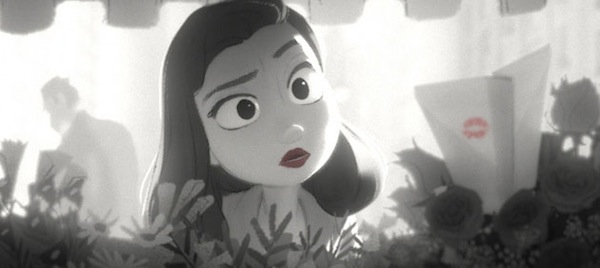
-Not all the drama on Oscar night happened on stage. I liked this story, about a producer of Best Animated Short winner Paperman being temporarily ejected from the auditorium for throwing a few paper airplanes from her seat when the movie won.

-Poor Anne Hathaway. Some people really just don’t like that girl. I’m not one of them, and although I have described her before as sometimes coming off as over-the-top in her eagerness and enthusiasm, I usually find her to be a class act with a good sense of humor. She has been ridiculed by people throughout the season for some of her speeches (she’s given a lot of them), which have been called insincere and rehearsed. Rehearsed? She’s admitted to practicing her speeches, but how is that any different from writing a speech or a list of names and reading from it? It’s just a different way of being prepared in case you win. I think what people have called a lack of sincerity is actually an abundance of it; she’s so sincere that it bugs people. Throughout the awards season I’ve found her speeches to be gracious, warm and genuine. She’s consistently and eloquently acknowledged her co-nominees, her cast and crew, and she has impressively avoided breaking down in a fit of tears, which…c’mon, Hathaway totally seems like the type who might lose it when winning an award, especially an Oscar. But she hasn’t and she didn’t. So don’t let the haters harsh your buzz, Anne. (I will say though, I wish you had cracked a joke about being back on the Oscar stage for the first time since your maligned hosting gig. And it would have been funny if you thanked Susan Boyle. And it would have been cool for you to mention that your mother played Fantine years ago in a traveling production of Les Misérables, making your win for playing the same character even more special. Cause that does make it more special, right? Or have I crossed an inappropriate line from telling winners what they should say to telling them what they should feel as well?

-The best speeches of the night came toward the end of the show. I still think Lincoln writer Tony Kushner should have taken home the Best Adapted Screenplay award, but I really liked what Argo winner Chris Terrio said about using intelligence and creativity to solve problems nonviolently.

I also liked Quentin Tarantino’s speech, calling out the actors who bring his characters to such memorable life, as well as all the other nominated writers for doing such great work.

Daniel Day-Lewis, always great with a speech, was no different last night, and once again had the crowd rolling as he described how he and presenter Meryl Streep had swapped roles, Abraham Lincoln for Margaret Thatcher. I kept hearing comments from people who were surprised by his humor, but in my previous post I provided links to other speeches Day-Lewis has given throughout the season, all of which have shown him to be as funny as he is humble and appreciative. How great would it be to see Day-Lewis in an intelligent, highbrow comedy? Somebody needs to get him in a room with Alexander Payne!

Best Actress winner Jennifer Lawrence took a spill on the way to the stage to accept her award, but superstar that she is, she humorously and gracefully brushed it off and went on to deliver an appreciative speech, despite her spinning head causing her to forget a few key people (which she rectified later).

And when Ben Affleck got to make his speech for Argo‘s Best Picture win, he once again spoke from the heart, echoing his BAFTA speech by thanking the people who have helped him rebuild his career. It’s a shame that Affleck missed out on the Directing nomination, because he almost certainly would have won had he been there. But given the way his career is going, he may get another chance before too long.

THE PRODUCTION
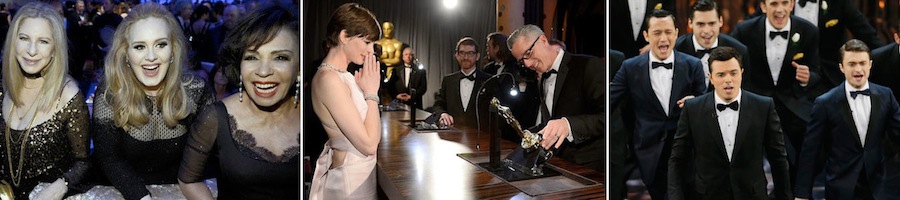
The show may have been long and overstuffed this year, but the stuffing was at least well-made, and attractively presented. The sets were beautiful, and I especially liked the background that looked like hundreds of slender stalks of light. It was like an electronic-age update of the set for The Police video “Wrapped Around Your Finger.” I half expected to see Sting frolicking in between the rows of light.

(Click Image to Enlarge)

-Once again, the show was directed by Don Mischer, and once again he proved he sucks at this. To his credit, he did better than the last two years when it came to showcasing celebrities in the crowd, but he still failed to spread the wealth around and provide a sense of the famous faces in the room. There was a point in the show when MacFarlane acknowledged the show’s producers Zadan and Meron, and then director Mischer, calling the latter “masterful.” At that moment, the master cut away to his favorite thing: a wide shot of the middle of the auditorium, with no recognizable faces. Later, when MacFarlane said, “How great was Jessica Chastain in Zero Dark Thirty?” Mischer again cut to middle of the crowd, where we caught a glimpse of Renee Zellweger and Queen Latifah, but not Jessica Chastain nor anyone we recognized as connected to Zero Dark Thirty.  When Reese Witherspoon was onstage introducing the first three Best Picture nominees, the camera cut to the contingent for the first two, Les Misérables and Life of Pi. But for some reason, despite knowing where all the nominees would be seated, the cutaway that should have showed the Beasts of the Southern Wild camp instead found Bradley Cooper and Robert De Niro. It would have been nice to have one shot all night of Beasts director Benh Zeitlin, to show the new kid on the block reacting to his first Oscar experience. But the only time Zeitlin was on camera was during the few seconds when the envelope for the Best Director award was opened. All the directors were on camera at the moment, except for David O. Russell, who was for some reason replaced with Emmanuelle Riva. It’s not like Mischer didn’t know where to send his cameramen to get the right person in the shot, but nevertheless he failed to do so. Throughout the night, he missed obvious opportunities to cut to certain audience members when they were being mentioned from the stage. Some of those mentions were spontaneous, and maybe a cameraman couldn’t get there in time, but others were during planned portions of the show, like the aforementioned Best Picture intros. He couldn’t have cut to the Lincoln or Zero Dark Thirty crews when their movies were discussed? This is the third year in a row that Mischer has directed the show, and the third year in a row that the show has been incompetently directed. When are they gonna dump this guy? I’m sure he’s nice and all, but maybe it’s time he hung up his headset.

-Speaking of those Best Picture montages, kudos to whoever put them together. They were nicely assembled, providing a good sense of each movie and not just looking like excerpts from the trailers.

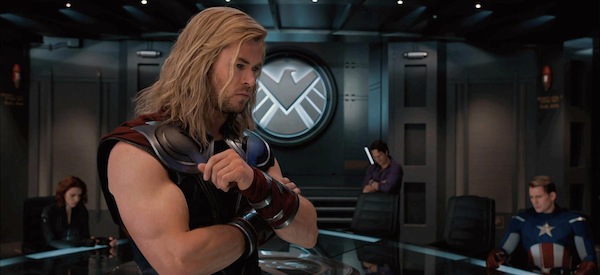
-The majority of The Avengers cast – Robert Downey Jr., Chris Evans, Mark Ruffalo, Jeremy Renner and Samuel L. Jackson – took the stage to present awards for Best Cinematography and Best Visual Effects. After cinematographer Claudio Miranda had finished his speech and left the stage, the presenters returned to the mic and, as you saw in the clip above, Jackson started to announce the Visual Effects nominees before Renner and Ruffalo interrupted him and told him he had just skipped a bunch of text. Downey started to chime in with some words about it being a big year for effects-driven films, but Jackson comically argued that they should honor the artists by simply presenting the award. It was an awkward bit of business, since it wasn’t clear if Jackson really had skipped a chunk of the presentation, or if the jokey bickering was in fact planned and there was no skipped material after all. I still don’t know the answer, but if it was the former, then the visual effects community was slighted again…and this time it would be worth getting pissed.

-The James Bond tribute was a bit of a disappointment. The producers said in an interview before the show that the intent was always to focus on the music of Bond, in keeping with the theme of the night, and that there was never a plan for the six actors who’ve played 007 to unite onstage. There were still rumors that there had indeed been an attempt to bring the Bonds together, but that Sean Connery and perhaps Pierce Brosnan were holdouts, killing the whole deal. Regardless, even as just a tribute to the music of Bond, the presentation was lacking. After a nice intro by Oscar winner and Die Another Day Bond girl Halle Berry, we were treated to a run-of-the-mill montage accompanied by the James Bond Theme, and then an instrumental of “Live and Let Die.” Not even the actual song with lyrics, but just an instrumental. I did enjoy the way that dovetailed right into the arrival of Shirley Bassey, looking great at 76, who belted out an impressive rendition of “Goldfinger.” I applaud Meron and Zadan for getting Bassey onto the show, but the rest of the tribute was sub par. Why was “Live and Let Die” the only song featured, and why was it not even the actual song? Where was “For Your Eyes Only” or “Nobody Does It Better”? Could they not have gotten at least one or two more singers to come on the show and perform their songs, at least partial versions, if they were concerned about time? Why not fold Adele’s performance of “Skyfall” into this segment, with more Bond clips projected behind her? (And when she did perform later in the show, why was she set so far back instead of out closer to the audience? Bad staging, that.) The tribute was a nice idea, but it should have been better.

-Did anyone notice that as Seth MacFarlane began to acknowledge the orchestra, the music swelled so loud that he could barely be heard, then sharply pulled back before rising again almost loud enough to drown him out as he continued his salute to their contribution? No? Nobody? Well…it made me laugh.

-The tribute to recent movie musicals was another mixed bag. It was strange to begin with that only three movies were featured, especially when one  – Chicago – was executive produced by Meron and Zadan, and another – Les Misérables – was a nominee for Best Picture, giving it more attention than any of the competition. Why focus on recent musicals only? Maybe because the Oscars featured a big tribute to movie musicals just a few years ago, when Hugh Jackman hosted? Okay, so they wanted to spotlight musicals of the last decade, rather than the decades worth featured in that big number from the 2008 show. Even then, why just Chicago, Dreamgirls and Les Misérables? There were plenty of other movie musicals to showcase. How about Sweeney Todd, Nine and Moulin Rouge? The Producers, Hairspray and The Muppets? Even Team America and A Prairie Home Companion could qualify as musicals. But these movies were all ignored.

As it was, the tribute began with Catherine Zeta-Jones performing “All That Jazz”, but it seemed a bit pointless since the whole number was staged exactly as it was in the movie. Why not try to bring something new to it, at least? (I also read some comments online that Jones was clearly lip-synching, but if it was true, I didn’t notice.) She was followed by Jennifer Hudson belting out “And I Am Telling You”, her signature number from Dreamgirls. The power of her vocals brought the crowd to their feet, but I’m not crazy about the song, which lacks a compelling melody and just seems designed for an impressive voice to screech and roar. The best number of the tribute was easily the Les Misérables medley. I was concerned this would flop, as medleys always run the risk of being corny. But it turned out to be excellent. It started off with a solo Hugh Jackman performing the nominated song “Suddenly”, then nearly all of the film’s main cast joined in bit by bit for the soaring number “One Day More”, with a dash of “I Dreamed a Dream” for good measure. Helena Bonham Carter and Sacha Baron Cohen’s presence seemed to be for inclusion’s sake only, since neither got to solo or even duet, and they aren’t actually part of “One Day More” in the film. Still, the whole performance was stellar (even Russell Crowe, whose singing in the film has earned more derision than it deserves) and was the highlight of the segment.

-One of the coolest things the Academy did this year was hold a contest for film students asking them to make a 30 second video explaining what they would contribute to the future of movies. Six winners were selected and invited to the Oscars to help hand out the statues, in lieu of the nameless spokesmodel types that usually do the honors, and Academy president Hawk Koch even introduced them all by name. I could have done without that part; no offense to them, but that time would be better spent letting a winner complete their speech. But the contest and opportunity is a great idea, and I hope the Academy makes it a new tradition. The winning videos can be seen here. (I like the second and third.)

-Why do people keep asking Kristen Stewart to present awards? She’s terrible at it. Whatever charisma or talent she brings to her performances, she brings none of it to her real life public appearances. She mumbles, she fidgets, she looks down, over and around…if it’s an effort to court younger fans, there are plenty of others who can accomplish that.

-Why does Kristen Stewart keep agreeing to present awards? She has often admitted that she’s uncomfortable and awkward in the spotlight, which is fully apparent from the way she mumbles, fidgets and looks down, over and around as if she can’t wait to get off the stage. Maybe she looked so sullen because of her fresh Razzie win for the final Twilight movie. Nah…she always looks that sullen.

-Although the emphasis on Chicago was a sort of ego-stroking gesture on the part of Meron and Zadan, it was nice to see Richard Gere, Renee Zellweger, Queen Latifah and Catherine Zeta-Jones present together. Where has Zellweger been these last few years? And where was John C. Reilly? I hope his absence was due to unavailability, because if they failed to invite him, that would be an egregious oversight…not to mention an ironic one for the guy who sang “Mr. Cellophane.”

-It seemed a little odd and unfair that only three of the five Best Original Song nominees were performed live on the show. After Hugh Jackman sang as part of the Les Misérables medley and Adele got a big moment to sing “Skyfall”, Norah Jones was trotted out in the middle of the Best Song presentation to perform “Everybody Needs a Best Friend” from Ted. It’s not a long song to begin with, but even so it was a truncated version. And did Jones even have time to exit the stage before the envelope was opened declaring a different song the winner? (Not that Jones would have taken the Oscar had the song won, as she didn’t write it, but still…kinda makes her performance, which already felt like an afterthought, seem all the more pointless.) Then there are the other two nominees, which were only featured as clips. “Before My Time” from Chasing Ice was performed in the film by Scarlett Johansson, who wasn’t at the Oscars due to her schedule on Broadway, but they could have found somebody else to perform the song. And “Pi’s Lullaby”, performed by Bombay Jayashree, would have lended itself to a nice visual presentation if the producers had worked it into the show. Maybe there was a reason they didn’t…but like I said, it seemed odd.

-Only two things were less surprising than wins by Daniel Day-Lewis and Anne Hathaway: Iran complaining about Argo‘s Best Picture win, and idiots complaining about Michelle Obama. Yes, when Jack Nicholson came out to present Best Picture, he introduced a surprise co-presenter. The First Lady appeared onscreen via satellite from The White House (awkwardly flanked by a number of military personnel in what looked like the most uncomfortable reception ever). The First Lady, of course, was all class and elegance as she talked about the importance of movies and then opened the envelope to reveal Argo as the winner. The idea to have Mrs. Obama on the show came from Harvey Weinstein’s daughter, and Weinstein helped make it happen. I suppose this year was a fitting one for something like that, with a number of Best Picture nominees being so politically relevant (Argo, Zero Dark Thirty, Lincoln, even Beasts of the Southern Wild and Les Misérables), but really it was just intended as an unexpected treat. Of course, not everyone saw it that way. Blowhards who feel the need to politicize everything expressed their disgust at the First Lady’s appearance. I love reading through some of the comments mentioned in this article, because it demonstrates what imbeciles these people are. I expected them all to be conservatives, but I stand corrected: one of the quoted douchebags is MSNBC commentator Donny Deutsch, whose remarks include calling Mrs. Obama “uninvited.” Yeah, that’s right, dipshit. She just took over the satellite feed and inserted herself into the Oscars. Do you know what “invited” means? You should look it up, and then use it properly, because you can’t possibly be stupid enough to think that she crashed the Oscars. Then there’s conservative Jennifer Rubin’s comment about Mrs. Obama “intruding” and feeling “entitled.” Hey moron, it’s not intruding when you’re asked to be there, nor are you being entitled when you accept an invitation. And to the Fox News fuckwad, Todd Starnes, how did Mrs. Obama “make it about herself?” She was asked to be there, and she talked about movies – same as any other presenter. Surely the conservative critics would have had complete respect for the Oscars had Michelle Obama not appeared, because, you know, conservatives love Hollywood. And as the article above points out, other First Ladies and even Presidents, including Laura Bush and Ronald Reagan, have been involved in past Oscar ceremonies, either in pre-taped appearances or in the case of FDR, a live radio address in 1941. So get over it. I’m only interested in one narrow-minded, politicized Oscar critique, and that’s Stephen Colbert’s.
Anyway, my only issue with Mrs. Obama’s presentation was her overly worshipful talk about the impact of movies. Not her fault; I’m sure it was written for her, and that sort of inflated praise is a hallmark of Oscar night. The Academy loves to give presenters long paragraphs about the power of movies. I love movies like I love little else, but even I tend to roll my eyes at this. Other than that, I thought the First Lady’s involvement was pretty cool. And I’m glad to see she’s brushing off the criticism without a second thought.

THE DRESSES
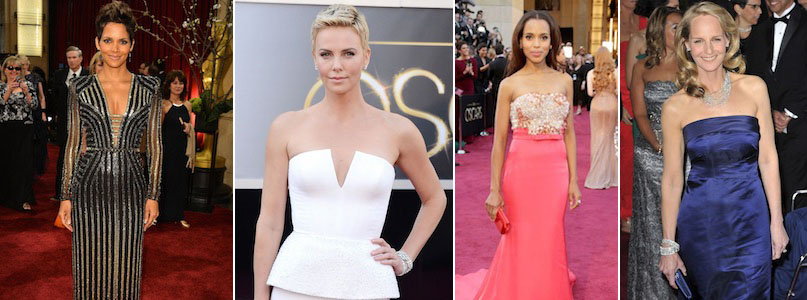
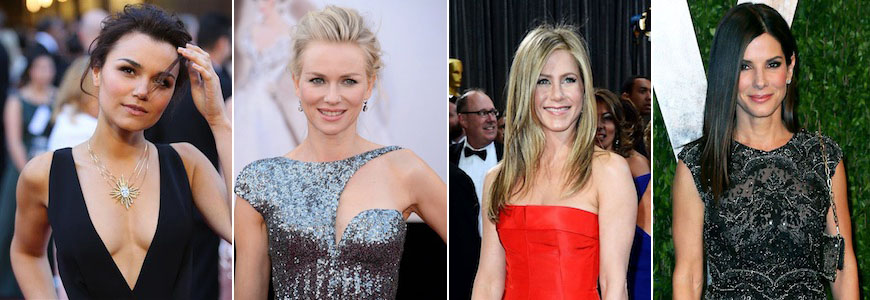
While critics were busy tearing up Seth MacFarlane for demeaning women, others in the media engaged in the time honored tradition of passing judgement on dresses and gowns, and by extension, the ladies wearing them. Well who am I to question this practice? I appreciate a nice Oscar dress and the person inside it as much as anyone, and among those whose Oscar night looks jumped out for me were Halle Berry, Jennifer Aniston, Kerry Washington, Jennifer Lawrence, Sandra Bullock, Samantha Barks, Charlize Theron, Jennifer Garner, Helen Hunt, Naomi Watts and Jessica Chastain.

X

Ladies, kudos to your good taste and your designers’ skills. And you’re all damn fine actresses to boot.

THE INDEPENDENT SPIRIT AWARDS
As always, Oscar Sunday was preceded by the breezier, more casual Saturday celebration at the beach in Santa Monica known as the Independent Spirit Awards. I like to take a detour and mention these, since they can sometimes be forgotten in the shadow of the golden guy. Silver Linings Playbook was the big winner, with awards for Best Picture, Best Director, Best Actress and Best Screenplay. John Hawkes and Helen Hunt won Best Actor and Best Supporting Actress, respectively, for their roles in The Sessions, while Best Supporting Actor went to Matthew McConaughey for Magic Mike.

The Spirit Awards are typically a loose and irreverent affair, and there are usually some great moments to emerge, whether courtesy of hosts, winners or presenters. The highlight this year came with the first award, Best First Screenplay, which was awarded to Derek Connolly for Safety Not Guaranteed. Although he seemed a little shell-shocked when he took the stage, he spoke logically and coherently. Well apparently he was totally plastered and just kept going on and on. I don’t know what happened in the room, but the TV broadcast, which was an edited version of the show and aired later in the day, jumped ahead five minutes to an amusing effort by Bryan Cranston to help presenter Kerry Washington get Connolly off the stage. The blitzed winner seemed oblivious to their intent, but finally allowed himself, with a bemused grin, to be led offstage.

The clip below covers the first fifteen minutes of the show, which includes a great opening monologue by host Andy Samberg, and the announcement of Connolly’s category. It ends as his name is called, and you can click here for the next segment, to see the bizarre moment that transpired when he got onstage. Those who felt the Oscars were too heavy on jokes about women and decried the lack of dick humor would do well to watch Samberg’s opening.

And with that, the 2012 awards season finally comes to a close…unless you’re holding out for the MTV Movie Awards in April (nominations were just announced…and surprisingly, given their track record of late, it’s a solidly non-embarrassing line-up). It’s been one of the more unusual years on the awards circuit that I can remember, with the kind of excitement, tension and twists worthy of the movies themselves. I’m sure next year will go back to business as usual, with a bunch of frontrunners on an inevitable march to victory. But here’s hoping for some similar excitement.

X

February 22, 2013

Oscars 2012: My Annual Absurdly Long Predictions Opus

Filed under: Movies,Oscars — DB @ 8:40 pm
Tags: , , , ,

On Sunday evening, the envelopes will be opened and one of the most unpredictable Oscar seasons in recent memory will come to a close. I can’t recall a year where so few categories had clear frontrunners…though I have a feeling that if I were to go back through the corresponding posts for years past, I would find that I made similar proclamations. But this time it’s really true. Really!

BEST PICTURE
Nine nominees grace the field this year, and right off the bat I’m eliminating Amour, Beasts of the Southern Wild, and Django Unchained as movies that never had a prayer; the nominations were the prize. Next I’m scratching off Les Misérables and Zero Dark Thirty, which coulda been contenders had they proven less divisive. That leaves Silver Linings Playbook, Life of Pi, Lincoln and Argo. And really, it’s the latter two that are seen as the last pics standing. Life of Pi is more admired than it is loved (though oddly, will probably end the night with the most awards), and Silver Linings Playbook, as much as people adore it, will probably be considered too lightweight for the top prize. (I disagree, but to date the Academy has not consented to my repeated, unfounded requests for membership, so my opinion means jack.)

When Ben Affleck was overlooked for a Best Director nomination, Argo‘s chances seemed dead. But the night of the nominations, the movie took Best Picture and Best Director at the Broadcast Film Critics Awards. That weekend, it repeated those wins at the Golden Globes (in the Drama category for Best Picture). It looked as though Argo was only mostly dead…which as we all know courtesy of Miracle Max, means slightly alive. Argo soon went on to win Best Picture from the Producer’s Guild of America, and has basically been unstoppable ever since, with the Best Cast in a Motion Picture prize from the Screen Actor’s Guild being the strongest indication of the industry’s wide support. That award goes one of two ways: either it really is a celebration of the actors, or it’s a celebration of the movie itself. Argo‘s win fell into the latter group. Not to take anything away from its excellent ensemble, but when put up against the casts of Silver Linings Playbook, Lincoln and Les Misérables it’s not the most deserving. A vote for the cast of Argo was a vote for the movie, and solidified its standing as Hollywood’s favorite of the year. If Silver Linings or Lincoln really had a shot at Best Picture, the SAG award would have been the clue. As it is, Argo is likely to overcome the handicap of Affleck’s absence from the Best Director race to take home the night’s top award…which will make it only the fourth movie ever to do so.

Personal: Lincoln. I’m happy for Argo‘s success and have no problem with it winning, but as I posted earlier this week, Lincoln was tops of the year in my eyes, followed closely by Silver Linings Playbook.


X
By the way, that Oscar poster at the top is just one piece of a larger, incredibly cool design by artist Olly Moss, who tweaked each statuette to represent that year’s Best Picture winner. To see the whole thing, click here and then enlarge to see the details. Click here to see them even larger, along with the name of each movie. The poster was done in partnership between the Academy and the awesome, pop culture-centric Gallery1988. In addition to Moss’ official poster for this year’s Oscars, the Academy also commissioned a series of posters for each Best Picture nominee. Check those out here.

And now, back to the show…

BEST DIRECTOR
Argo‘s march to the top prize leaves the Best Director category in a rare, unsettled state. Two things usually hold true: the movie that wins Best Picture also wins Best Director, and the winner of the Director’s Guild of America award takes home the directing Oscar as well. This year, Ben Affleck took the DGA honor, meaning an automatic divergence between the DGA and the Academy. Since Argo‘s momentum for Best Picture practically guarantees a Picture/Director split, where does that leave us?

Benh Zeitlin, the young filmmaker behind Beasts of the Southern Wild, was the category’s surprise nominee, and he’ll have to settle for that. Despite admiration for Amour, I think Michael Haneke is unlikely to triumph here. So we’re down to Steven Spielberg for Lincoln, Ang Lee for Life of Pi and David O. Russell for Silver Linings Playbook.  When people watch Lincoln, do they think of it as a director’s movie? The writing and the performances are what stand out, and Spielberg himself has stated that the movie features his quietest direction ever. Not that such a thing makes it unworthy, but voters might not see the movie as a director’s showcase. Life of Pi, on the other hand, is a more obvious achievement in direction. Lee had a book that was considered impossible to bring to the screen; his star was an inexperienced young actor; his second main character was a CGI tiger; the bulk of the movie was shot in a tank, leaving much to be created outside of the practical shoot; and he was filming in 3D. Dude sure didn’t make it easy on himself. Working against his chances, Pi has felt like a somewhat lifeless contender all season. Even with 11 nominations, second only to Lincoln, it doesn’t seem to have generated much conversation. Does Lee have the momentum to go the distance?

That leaves David O. Russell, clearly admired by his fellow directors, who also nominated him two years ago for The Fighter. Furthermore, the fact that Silver Linings scored the rare feat of landing a nominee in each of the four acting categories speaks to the admiration that actors, who make up the largest voting block within the Academy, have for Russell. The Fighter had three Oscar nominated performances, and garnered wins for Christian Bale and Melissa Leo (who beat co-star Amy Adams). He’s probably the guy right now, more than anyone else, that actors are dying to work with. Comedies don’t fare well with the Academy, which hinders Silver Linings’ chances for a Best Picture win. But for all those Argo supporters who can’t vote for Picture and Director in lockstep, here is an seldom-seen chance to honor a comedy (which is really more than a comedy, let’s be honest) and still feel, with the Picture vote, that they’re backing something more substantial. (A stupid argument, really, but Academy history bears out that they like to give Best Picture to movies they consider substantial.)

In the end, I think voters will go with Lee, but with no precedent this year and no nominee whose movie is way out in front, this prize is up for grabs. Interesting Trivia, Part I: If Lee wins, he will have the bizarre distinction of being the only person to experience both the DGA/Oscar split and the Picture/Director split….twice: he won for directing Brokeback Mountain even as Best Picture went to Crash, and he took home the DGA prize for Crouching Tiger, Hidden Dragon but lost the Oscar to Traffic director Steven Soderbergh. Interesting Trivia, Part II: If Spielberg wins but Lincoln loses Best Picture, it will be the second time he’s won for directing a movie that doesn’t capture the top honor (the other being in 1998, when Saving Private Ryan fell to Shakespeare in Love).

Personal: David O. Russell. Silver Linings Playbook could have been an entertaining but average rom-com. It’s Russell’s personal investment in the material, intense directing style and ability to bring out exceptional work from his actors that elevates it to something more.


X
BEST ACTOR
Not every statuette is up for grabs. This one is all-but-engraved for Daniel Day-Lewis, who is poised to carve himself a little piece of Oscar history as the first person to win Best Actor three times. He has steamrolled the competition all season long, and charmed crowds with warm and funny speeches at the Brittania Awards, Golden Globes, SAG and British Academy of Film and Television Arts ceremonies. In fact, it wouldn’t surprise me if he gets voted Pope when the bishops emerge from their conclave in the months ahead.

His performance as Abraham Lincoln is absolutely deserving, but it disappoints me that his win is such a given, because in a more just Oscarsphere, he would be engaged in a tight race with Joaquin Phoenix, who is equally mesmerizing in The Master. Denzel Washington, Hugh Jackman and Bradley Cooper (whose nomination makes me really happy) are all truly excellent, but Day-Lewis and Phoenix are in another league with their performances. It’s a shame Phoenix hasn’t been given the momentum during awards season to make this the neck-and-neck race it should be. As you may have seen via the link above, Day-Lewis even acknowledged Phoenix’s work in his SAG acceptance speech, remarking on his talent and wishing he were there with the rest of the Best Actor nominees. (Phoenix was passed over by SAG; his Oscar nod replaces SAG nominee John Hawkes, from The Sessions.) Some might argue that Phoenix hurt his chances with those comments last year about his discomfort with the whole awards machine, but I don’t believe the remarks made any impression on the many critics organizations who bestow awards, and if more of them had honored Phoenix, he might have emerged as a threat to Day-Lewis. (And for what it’s worth, Phoenix has attended all the major ceremonies at which he’s been nominated, including the Golden Globes and BAFTA awards.) Alas, it wasn’t to be. Phoenix is riding the bench with Washington, Jackman and Cooper. In the end though, they can all take consolation in the fact that if you’re not going to win an Oscar, losing to Daniel Day-Lewis is the next highest honor.

Personal: I’d have to call it a tie.


X
BEST ACTRESS
Like the rest of the contingent for Beasts of the Southern Wild, 9 year-old Quvenzhané Wallis (once again, that’s pronounced Kwah-VENN-Jah-Nay) will have to be content with her nomination. Naomi Watts is moving in The Impossible, but this isn’t her year (though I have to say, it surprises me that this is only her second nomination, after 21 Grams in 2003. Seems like she should have more than that).

As far back as late November, this category was shaping up as a race between Jennifer Lawrence for Silver Linings Playbook and Jessica Chastain for Zero Dark Thirty, who started to generate buzz even before the movie had been widely seen within the industry. When you factor in the many regional critics awards, Lawrence and Chastain have virtually split the precursor field, with both earning key wins along the way – Chastain took prizes from the National Board of Review, the Broadcast Film Critics Association and the Golden Globe for Drama; Lawrence won the Los Angeles Film Critics award, the SAG award and the Golden Globe for Musical/Comedy. Silver Linings and Zero Dark Thirty have helped establish Lawrence and Chastain as two of the brightest, most exciting new talents in movies. A win for either will cement their status; at the same time, voters know that both actresses will undoubtedly be back here again….which could pave the way for Amour‘s Emmanuelle Riva, who has been gaining ground in recent weeks. Riva is the oldest Best Actress nominee ever, and will be celebrating her 86th birthday on Oscar night. She’s picked up a few awards along the way, most notably and recently the BAFTA award (she also tied with Lawrence at the Los Angeles Film Critics awards). The BAFTA win gives pause, as it has occasionally marked a turn of the tide away from a frontrunner toward a less expected winner. However the BAFTA award has also been known at times to favor European actresses, and Riva’s strong performance in Amour may have been boosted by that continental pride.

Chastain’s hopes seem to have faded of late, along with the general fortunes of Zero Dark Thirty, and it’s now Riva who poses the greatest threat to Lawrence. She definitely has major spoiler potential, and Chastain could still pull it off, but I think Jennifer Lawrence will take it. She has the most well-rounded part, and she totally kills it. She’s young, yes – only 22 (Chastain is 35, for what it’s worth) – but this is already her second Best Actress nomination, and the Academy loves an ingénue.

Personal: Jennifer Lawrence. It’s such a dynamic, movie star role, allowing her to be funny, strong, vulnerable, angry, sad…she gets to do more than any other actress in the category, and she does it all perfectly. Plus, she’s generally awesome. Have you seen this girl do interviews? She’s offbeat, down to earth, poised, funny, she speaks her mind…she’s kind of a breath of fresh air. And her speeches at the Golden Globes and SAG awards have nicely balanced playful wit and genuine gratitude. That stuff matters to voters. (Then again, her Saturday Night Live monologue, in which she jokingly mocked her competition, was seen by some voters who have no sense of humor as being in poor taste. She could lose a few votes for that. Oh, and if you don’t get the Tommy Lee Jones joke from that monologue, or if you want to know why everyone was laughing at Will Ferrell and Kristen Wiig when they read the nominee names in that Golden Globes clip, you should watch this. It’s worth it.)


X
BEST SUPPORTING ACTOR
One of the widest open, toughest-to-call categories of the night. If we want to look for patterns and signs, recent history might favor Django Unchained‘s Christoph Waltz, since the last three winners of this award all have names beginning with “Chris” (Christopher Plummer, Christian Bale and Christoph himself, for Inglourious Basterds). Then again, I’d rather base my prediction on something more solid…not that there’s much terra firma to be found in this category. All five nominees are past winners, and a legitimate case for why they could (if not why they should) win can be made for all. Still, the weakest of those cases is for Alan Arkin, whose role in Argo is too brief, albeit quite enjoyable.

Of the precursor awards I’ve counted, The Master‘s Philip Seymour Hoffman has collected the most wins, though only one – from the BFCA – is among the major bellwethers. Tommy Lee Jones has done well too, with a key victory under his belt in the form of a SAG award. Waltz emerged as a surprise winner at both the Golden Globes and the BAFTA awards, giving him unexpected momentum. And then there’s Robert De Niro, doing his most acclaimed work in ages in Silver Linings Playbook. He hasn’t won any major awards so far, but he’s been out there championing the film and doing a lot of publicity…something else that voters apparently like to see.

Against each of them? The Master doesn’t seem to have enough traction with Academy members to land Hoffman a win. He’s widely admired, but the movie’s status as a critics’ darling accounts for his success on the precursor circuit. With Jones, some people just find him too damn ornery and don’t want to honor him, which is stupid reasoning, but it happens nonetheless. (Not that they’re necessarily wrong about him being too damn ornery; seriously, did you see his face in that Golden Globes clip linked above?). He’s undeniably entertaining in Lincoln, but will people see it as kind of playing himself? Waltz is a hoot in Django Unchained, but having won so recently, and for a role that is arguably quite similar to this one, are voters ready to make him a two-time winner? And De Niro may be great in Silver Linings, but does the performance stack up with the best work of his career? It’s great to see him on his game again, but the fact remains that the movie is, for now, an anomaly in an otherwise unimpressive slate of films and performances over the last several years. An Oscar win might seem like an overreaction to seeing him do strong work again.

Waltz or Jones are probably the safe bets, based on the awards they’ve already won, but I don’t get the sense that those wins are necessarily as telling in this race as they might normally be. Things really could go any way, and I’m guessing – with no evidence to support me – that voters may use this as something of a career achievement award for De Niro, who hasn’t won since Raging Bull in 1980 and hasn’t been nominated since Cape Fear in 1991. Many of the Academy’s younger members have never had a chance to cast a vote for him, and however disappointing his output has been over the last decade or so, they might want to personally honor one of the all-time greats. (Point of interest: if he does win, he’ll join presumed Best Actor winner Day-Lewis in the three-timers club; prior to Raging Bull, he took home Best Supporting Actor for The Godfather Part II.)

Personal: It really is a tough choice; all the performances are so damn good…though I say again that Arkin’s part is too small; he doesn’t really belong here. I’ll be happy to see any of the other four get it, but if pressed, I guess I would choose Hoffman. His character is a great counterpoint to Joaquin Phoenix’s, and just as provocative. Then again, De Niro…the nice thing about that role is that he gets to do a lot of different things. Funny De Niro, angry De Niro, emotional De Niro, loving De Niro…in some ways it’s a different kind of character for him.


X
BEST SUPPORTING ACTRESS
Anne Hathaway has this race pretty much in the bag. Like Daniel Day-Lewis, she has dominated the field up to this point, collecting awards from BAFTA, SAG, the BFCA, nearly every regional critics group, and taking the Golden Globe as well. Jacki Weaver’s surprise nomination speaks loudly of the actors’ branch support for Silver Linings Playbook, but while she’s essential to the movie’s success, it’s not enough of a standout role to win. Sally Field, another nominee going for her third Oscar, is a respected industry veteran whose fight to be cast in Lincoln has probably won her admirers, but the performance has received mixed reactions. With her fourth nomination, The Master‘s Amy Adams continues to be a favorite of Academy members, but she hasn’t yet found herself in that magical role that can take her all the way. As for Helen Hunt, The Sessions may not have been seen by enough people, and the performance probably isn’t deemed flashy enough for her to win. None of the nominees get the kind of for-the-record-books scene that Hathaway gets in Les Misérables, singing “I Dreamed a Dream” in one shattering, close-up take. She should face smooth sailing to a win, unless she’s capsized by a wave of sentiment for Sally Field. It’s not out of the question that Field could pull an upset, but it’s unlikely.

Personal: Helen Hunt. I’m taking nothing away from how good Hathaway is, but as powerful a showcase as she has with her solo, her time on-screen is too brief for me to say it deserves the win. I’d go with Hunt, who gave a low-key but deeply felt, moving performance as a sex surrogate in The Sessions. She’s so open-hearted, and beautifully details the character’s complicated feelings about her work with crippled poet Mark O’Brien. Given the size of the part and the role her character plays in the story, she should really be in the Best Actress category, but the studio likely thought she stood a better chance here.


X
That’s the end of the acting categories, and I would be remiss not to include these latest episodes of Between Two Ferns, featuring Zach Galifianakis interviewing nominated actors on the day of the Academy’s Nominees Luncheon earlier this month.


X

BEST ORIGINAL SCREENPLAY
John Gatins’ script for Flight is a smart and compelling piece of work that goes in some unexpected directions, but it was on the fringe to begin with, so the nomination is the win. I’d like to think Wes Anderson and Roman Coppola stand a chance for Moonrise Kingdom, as this category sometimes favors smart, touching and idiosyncratic comedies, but there isn’t a lot of chatter about the movie, and the fact that this is its sole nomination doesn’t bode well.

That makes it a three-way race between Mark Boal for Zero Dark Thirty, Michael Haneke for Amour and Quentin Tarantino for Django Unchained. And like so many categories this year, it’s genuinely up in the air. Boal took the prize from the Writer’s Guild of America, but neither Django nor Amour were nominated, having been deemed ineligible. A win for Boal would be a nice gesture of support in the wake of all the controversy that has unfairly dogged Zero Dark Thirty, and by extension it would acknowledge Kathryn Bigelow, whose surprising omission from the Best Director category has been overshadowed by Ben Affleck’s absence and the Argo momentum. Plus, the tide started to shift back toward more positive buzz for the movie right as the voting period was about to open, with endorsements from Leon Panetta and a coalition of 9/11 families. On the other hand, Boal won this award for The Hurt Locker just a few years ago, and voters might not be so quick to anoint him a two-time winner. Tarantino, meanwhile, seems due for a second screenwriting Oscar to join the one he already has for Pulp Fiction. He was expected to win for Inglourious Basterds (a better script) in 2009, but lost to Boal. He took home this year’s Golden Globe and BAFTA awards, neither of which were widely expected to go his way, so those help his case. But is the movie too controversial to amass enough support? In addition to its frequent use of the N word – era-appropriate but still troubling to many – the movie is incredibly violent. Voters were first exposed to it right around the time of the Newtown shooting, and it’s hard not to think about that and the subsequent debate over gun control, violence in movies, etc. when watching some of the movie’s excessively bloody moments. I have no idea if that will matter to voters, but I can see it being a factor for some.

Finally, there’s Amour, the unflinching depiction of an elderly couple dealing with the wife’s slowly fading mental and physical faculties. The movie was certainly powerful, but frankly it could have worked as a 40 minute short instead of a 127 minute feature. And I just don’t see it as much of a screenwriting achievement. But maybe that’s just me. Clearly it was admired within the Academy, in order to break out beyond the Best Foreign Language Film category and earn nods for Picture, Director, Actress and Screenplay. True, those are all branch-specific nominations, except for Best Picture, where the entire Academy votes for nominees, so it’s possible that the support isn’t as broad as it seems. Then again, a vote for Amour does allow those who loved the film but don’t get to chime in for Best Foreign Language Film (you have to see all five nominees in order to vote in that race) to have their shot at honoring Haneke.

I just don’t know. The pundits are split here. Some are calling it for Amour, others for Django, and a few still think Zero Dark Thirty is in play (I do too). The arguments for and against each make sense. I really have no idea which way this will fall, but I’m timidly going with Django.

Personal: Moonrise Kingdom. The detail and intricacy of Zero Dark Thirty is impressive, but I’m more drawn to the imaginative than the procedural. As I’ve said many times, Wes Anderson is one the most original filmmakers working today, and Moonrise Kingdom hit so many beautiful notes.

X
BEST ADAPTED SCREENPLAY
Once again, Beasts of the Southern Wild is first to go, although I’m sure it will collect its fair share of votes from those who admired its originality. David Magee’s script for Life of Pi provided the blueprint for making the unfilmable filmable, but the criticisms people have with the final product tend to focus on its structure and thematic content. The movie is ultimately seen as more an achievement of direction and technical artistry, even if it all began with finding a way to translate the novel to the screen.

As with the Original Screenplay category, three nominees look to have a reasonable shot: Chris Terrio for Argo, David O. Russell for Silver Linings Playbook and Tony Kushner for Lincoln. Silver Linings Playbook is clearly beloved by the Academy, and they are more likely to honor Russell here than in Best Director. His BAFTA win was probably that show’s biggest surprise, seeing as the movie was not nominated for Best Picture or Best Director. There is crossover membership between this Academy and the British Academy, so is Russell’s victory a sign?

Not necessarily. There’s also crossover between the Writer’s Guild and the Academy, and the WGA gave their award to Argo. I would have thought voters – especially a body of writers exclusively – would be hard-pressed to pass over Tony Kushner’s exquisite script for Lincoln, but their choice of Argo is yet another demonstration of the industry’s unwavering admiration for that movie. Chris Terrio’s sharp script has (and deserves) legions of admirers, absolutely, but I’ll be a little disappointed if it triumphs here, just as I was at its WGA win. I agree that it’s a terrific script, but Lincoln strikes me as the more challenging feat of adaptation, and the more impressive accomplishment. Faced with innumerable ways to approach a figure as dynamic as our 16th president, Kushner carved off a slice of Doris Kearns Goodwin’s massive book Team of Rivals and shaped it into a full course meal all its own. Not only does his script make the legislative process exciting and even funny, but the language alone is a feast for the ears. Plus, if Director goes to Ang Lee, this is really the best shot Lincoln has to win anything other than Best Actor. With a field-leading 12 nominations, it would be nice for Lincoln to take home more than one trophy. A vote for Argo here feels a bit like falling in line with the presumptive Best Picture favorite instead of analyzing the category individually and honoring the best example of adaptation and writing.

Still, I suspect that’s what will happen. Kushner and Russell are definitely in the running, but I think Chris Terrio will claim the prize for Argo.

Personal: At this point, it’s probably clear – Lincoln.


XBEST ANIMATED FEATUREAnother tough category to call. There tends to be an obvious front-runner in this race, but not this year. It doesn’t help that all the nominees are well-made, genuinely enjoyable and each deserving. That said, I think the most easily eliminatable (not a real word, I know) is The Pirates! Band of Misfits, though it’s a pretty funny movie that’s well worth a watch. ParaNorman and Frankenweenie (which would make a great double feature) would each be an absolutely worthy winner. Although ParaNoman has collected the most critics awards to date, I give Frankenweenie better odds due to the Tim Burton factor. I think there are a lot of people in the Academy who would love to see Burton win an Oscar. Actors adore him, and when you think of how much his movies rely on elaborate sets, costumes, makeup and visual effects, he surely has a lot of support from members of the below-the-line branches. Plus there’s a nice personal narrative to Frankenweenie, a successful expansion of one of Burton’s early short films which helped to launch his career. His live action movies of late have been less original and personal than his best work, but this labor of love was a reminder of Burton at his best.

Pixar’s Brave, while not as acclaimed as many of their other films, still managed to nab the Golden Globe and the BAFTA award, proving that the studio can never be discounted at awards time unless their movie centers around talking cars. Rounding out the competition is Wreck-It Ralph, which took the PGA award. Brave and Ralph are probably the ones duking it out for the win, and I’m giving Brave the edge due to wholly unfounded speculation that it will appeal to a wider array of voters than Wreck-It Ralph. But really, I have no idea who’s winning.

Personal: Honestly, I’d be happy with any of these; we really have an abundance of riches in this category. But I guess I’d be especially happy for ParaNorman or Frankenweenie…the former because it would be a nice boost to fledgling studio Laika, and the latter because I too would love to see Tim Burton win an Oscar. And hell, a Wreck-It Ralph win would also be nice, as Disney has yet to win this category for a homegrown movie.


X
BEST CINEMATOGRAPHY
Robert Richardson did great work on Django Unchained, but he won’t win this time. Neither will Janusz Kaminski, who lit Lincoln with only the kind of light sources that would have been available in 1865. A cool approach, but the results have received mixed reactions. The staging and choreography of Anna Karenina, which largely unfolds in just one space, set the scene for some creative work from Seamus McGarvey, but voters may have been paying more attention to the costumes and sets than the camerawork. That leaves Claudio Miranda’s work on Life of Pi, which took home the American Society of Cinematography’s award, and greatest-living-DP Roger Deakins – who somehow still has not won an Academy Award – for Skyfall. He has a fighting chance, but my guess is that he’ll once again miss out, with Life of Pi taking the award for what many voters will consider the more striking visual achievement.

Personal: I really, really want to see Roger Deakins win an Oscar. While I don’t think Skyfall is up there with his absolute best, it still boasts superb work that is certainly worthy of the Academy’s recognition. Check out this cool piece from Vulture in which Deakins comments on classic images from 10 of his movies. He’s shot every Coen Brothers film since Barton Fink, so lots of their stuff is here, but the list criminally omits his work in Martin Scorsese’s Kundun. I’d have asked him about that extraordinary shot that rises above the teenage Dalai Lama to reveal him standing amidst an unending mass of slaughtered bodies.


X
BEST FILM EDITING
Comedies don’t often get nominated for this award, so Silver Linings Playbook showing up here speaks to its Academy-wide appeal and the fact that it probably had heavy support in the Best Picture race during the nomination balloting. (Again, the movie is more than just a comedy, so maybe it’s not such a surprise after all if seen in a vacuum. But the fact that it was nominated over something like Skyfall surprised many…though I called it. Booyah!) Anyway, it won’t win, but it’s nice to see it here. Also out of the running is Lincoln, which likely got swept in on a tide of support for the movie over more deserving candidates like Cloud Atlas and, again, Skyfall. There’s a slim chance that it could go to Life of Pi, but the race is more likely down to Argo and Zero Dark Thirty. Either way, William Goldenberg will win an Oscar; he edited Argo on his own, and worked with Dylan Tichenor on ZDT. Conventional wisdom is that this award tends to align with Best Picture, though a look at the winners over the last 30 years, to pick a round and arbitrary number, reveals that in 16 cases, Editing and Picture did not match up. Still, in this case I think Best Picture-favorite Argo will take it.

Personal: Argo‘s editing really brings out the tension, smoothly blends the movie’s comedic and serious elements, and moves the story along at a brisk clip. Zero Dark Thirty moves more slowly, but I get the sense that there was much more footage and that the movie could have cut together in a lot of different ways. It feels like a movie that was made in the editing room more so than its competition, which gives it an edge for me. But I’m more than cool with Argo.


X
BEST PRODUCTION DESIGN
A tough category to call, less because it’s a tight race and more because none of the nominees scream “Winner” to me, at least not when you look beyond quality of the work and factor in how voters might feel about the movies in general. The work itself is all that should matter, but it’s rarely that simple.

The Hobbit: An Unexpected Journey might stand a better chance if the Lord of the Rings films hadn’t been here before (all three were nominated; Return of the King took the prize). The recreation of the 1860’s White House and House of Representatives chambers for Lincoln is impressive work, but probably too unassuming to win. Anna Karenina could take the prize for featuring a variety of gorgeous environments yet making most of them work within a single theatrical space. Les Misérables could also score a win here, but most pundits who aren’t calling it for Anna Karenina are favoring Life of Pi. At first, Pi might not seem a logical choice since so much of the movie takes place in a single location without much variety. Then again, the production design works nicely in conjunction with the cinematography to create a storybook appearance throughout the film. There’s a really lovely, pastel color palette employed, which especially pops during early part of the film that takes place in Pondicherry. I’m guessing it will nab the prize here, but Anna Karenina and Les Misérables are not easily dismissed.

Personal: Anna Karenina. Aside from being visually sumptuous, it employs such a creative use of space. But I’d be okay with Life of Pi, too; its colors have really stayed with me.

X
BEST COSTUME DESIGN
Lincoln, while again impressive, is probably too drab overall to win a category that almost always goes for garb that is colorful and elaborate. Both of the year’s Snow White films – Mirror Mirror and Snow White and the Huntsman –  made the cut, and while they both show off some fantastic wardrobes, it could be that neither was seen widely enough to pull off a win. Then again, Mirror Mirror‘s designer Eiko Ishioka, who won this category in 1992 for Bram Stoker’s Dracula, died of cancer shortly before the movie was released, and that may have grabbed voters’ attention along the way. If it did, and if they observed her sensational, creative work on the film, she might be hard to deny. If not Mirror Mirror, then Anna Karenina most closely fits the mold of the typical winner in this category, though it’s possible that not enough voters have seen that movie either. That could open the door to Les Misérables…but if little-seen movies like The Duchess and The Young Victoria could succeed here in recent years, so can Anna Karenina. That’s my guess…but the quality of Mirror Mirror gives me pause.

Personal: Mirror Mirror. There’s really nice work throughout the category, and there were many more that deserved to be here, including Cloud Atlas, Moonrise Kingdom and Django Unchained. But none of them are as visionary as Ishioka’s creations.


X
BEST ORIGINAL SONG

The one good thing about the omission of so many worthy selections from the list of nominees is that nothing here can challenge Adele’s title track from the latest James Bond film. It’s easily the best song in the category. And even if some of those deserving songs from the likes of The Hobbit, Brave and Django Unchained had made it and created a much stronger group, Adele would still win. Because she’s Adele and everyone loves her. And because “Skyfall” is a great song in a great movie. And because no song from a James Bond movie has ever won, and this is  the 50th anniversary of the franchise and the stars are aligned. I think the sky really will fall if Adele doesn’t win. But she will. This one’s a slam dunk. I can’t wait to hear her sing it on the show.

Personal: “Skyfall”


X
BEST ORIGINAL SCORE
Alexandre Desplat, the hardest working composer in movies, (dude scored eight features in 2012) is here with Argo, but I doubt the Best Picture frontrunner’s reach will extend here. It’s a nice score, but likely too understated to get noticed. The same could be argued of John Williams’ music for Lincoln, though as subtle as it is, it does have a distinct and more memorable theme, which boosts its chances. Still, Williams has lost the award for scores much more famous and impressive than Lincoln, so it’s hard to imagine a victory this time. Then there’s Thomas Newman for Skyfall. Like cinematographer Roger Deakins, also nominated for the Bond adventure, Newman is one of his field’s most impressive talents. Yet he remains Oscarless after 10 nominations. He makes a great contribution to Skyfall, and if voters are checking the movie off in the song category, perhaps they’ll do so here as well?

Probably not. Dario Marianelli’s lush score for Anna Karenina will put up a fight. But the favorite seems to be Mychael Danna for Life of Pi. Danna’s been around for a while and is enjoying his first nomination here, so I’m happy to see him earn the recognition; he should have been nominated in 1997 for The Sweet Hereafter. But honestly, the score for Life of Pi didn’t register for me at all, despite the acclaim. I saw the movie twice, and don’t remember noting the music either time. I definitely can’t recall any of it after the fact, while unnominated scores such as Cloud Atlas and The Hobbit are lodged in my head. I want to go with a prediction for Skyfall (which won the BAFTA, by the way; Life of Pi took the Golden Globe), but the majority of pundits who actually talk to Academy members think the award will go to Pi, so I’ll follow suit. And actually, I’m not counting out Anna Karenina or Lincoln.

Personal: Skyfall. Similar to my feelings about Deakins this year, I consider Skyfall a notch below the very best of Newman’s work, but it’s still excellent, and I’m so eager to see him win. How happy would it make me if Deakins and Newman win their first, long overdue awards in the same year, for the same film? Extremely happy. Both should have won as far back as 1994 for The Shawshank Redemption.


X
BEST MAKEUP AND HAIRSTYLING
Let’s knock out Hitchcock right away; it shouldn’t even be here. That just leaves The Hobbit: An Unexpected Journey and Les Misérables. The Hobbit is the showier choice, with its 13 hirsute dwarves, plus long-bearded wizards, pointy-eared elves and curly-haired, hairy-footed hobbits. Les Misérables is more about wigs and hair, as well as making the poor and suffering of revolutionary France look appropriately haggard and sickly. There are strong cases to be made for both. As the Best Picture nominee, Les Misérables might have an edge. On the other hand, fantasy usually triumphs over realism in this category. But on yet another hand, voters may feel like The Hobbit is just treading familiar ground; two of the Lord of the Rings films won this award, and those were both Best Picture nominees. On a fourth hand, those earlier wins could bode well for The Hobbit. Grrrr….I don’t know. Pundits seem to be siding with Les Misérables, but I have a feeling the more obvious work in The Hobbit will win out. You should probably just toss a coin.

Personal: The Hobbit. Yes, this is a return trip to Middle Earth, but we have over a dozen new characters front and center, all of whom have elaborate facial hair, and all of whom had to look distinct from one another.


X
BEST VISUAL EFFECTS
Great accomplishments all around in this category. ILM had to do a wide variety of work on The Avengers, and it all looks superb and blends perfectly. WETA’s work on The Hobbit demonstrates the continuing evolution of motion capture, with Gollum looking even better now than he did a decade ago (and not just because he’s 60 years younger); Prometheus employs elegant effects to sell its futuristic setting; and Snow White and the Huntsman deserves credit for pulling off CGI-heavy bits without giving them the over-the-top, super-obvious CGI look that comes off as cheesy-fake. But one of the few sure bets of the night is that this award will go to Life of Pi. All of its creature work is excellent, but it boils down to the Bengal tiger Richard Parker, who is more than a special effect; he’s the co-star of the movie.

It will be a bittersweet victory; Rhythm & Hues, the visual effects studio that did the work, just filed for Chapter 11 bankruptcy. They had to lay off hundreds of employees, some of whom are now suing them, and they are trying to get an influx of cash in order to complete the projects they’re currently working on. Another casualty of the sadly screwed up visual effects industry.

Personal: Life of Pi. There wasn’t a single second when it occurred to me that the tiger wasn’t really there, interacting with actor Suraj Sharma’s Pi. I left the movie wondering how they got the tiger to behave appropriately, and even when it dawned on me, “Oh yeah…the tiger wasn’t really there,” I still didn’t see how that could be true. Fantastic work.


X
BEST SOUND MIXING
I always talk about how my understanding of the sound awards is too unsophisticated to ever really make an informed guess of my own, so I usually look for consensus among the pundits and go with that. But this year, I actually feel like I can make a confident prediction in this category, and the fact that the pundits all agree just boosts my confidence. The Sound Mixing award usually goes to smart action movies or prestige dramas that have some action-y elements, like Apollo 13 and The English Patient. Unless, that is, there’s a musical or music-themed movie in the running. Victories in the last 25 years for Dreamgirls, Ray, Chicago and Bird provide the evidence. Of course, nothing is guaranteed; Walk the Line and Evita didn’t win the award. Still, the live singing factor that is so much a part of the behind-the-scenes narrative for Les Misérables should clinch it. Of the other nominees, Skyfall or Life of Pi seem the most capable of pulling an upset, while Argo and Lincoln are likely just along for the ride.

Personal: I remain too ignorant of how to judge sound work to really make an informed personal pick, but from what I understand of the task, I have to go along with Les Misérables.


X
BEST SOUND EDITING
I’m on less solid footing here, as the nominees all seem like plausible victors. We again have Argo, Skyfall and Life of Pi, along with Django Unchained and Zero Dark Thirty. The first problem with judging Sound Editing and Sound Mixing – and I say this every year – is that no one really understands what they mean…and that includes most Academy members. Last year, I linked to this article that helped explain the two disciplines, and this year I’ll add this video from an Entertainment Weekly series called “Behind the Ballot,” where sound mixers and editors weigh in on their craft and how they judge the work. The second problem – and I said this last year too – is that even understanding what the two mean doesn’t really help the layman evaluate what’s good, bad or best. So with that said, I’m guessing that Skyfall will be the victor here, while I fully acknowledge that any of the others could easily prove me wrong. (Pundits are split between Skyfall and Life of Pi.)

Personal: Django Unchained. After reading this article about Tarantino’s approach to the soundscape for Django, I took note of the movie’s sounds in a way I never would have otherwise. The whip cracks did sound different somehow. So while I have no real investment in the category, I’ll root for Django and be happy with whatever wins.


X
BEST FOREIGN LANGUAGE FILM
Now we get into the categories that, as usual, I’ve been unable to keep up with personally and know precious little about. In this race, Amour is the only nominee I’ve seen…and it’s the only one expected to win. But let me just say this: as I often point out in these annual write-ups, only Academy members who have seen all five nominated films can vote in this category, and the only people who likely have the time to do that are older, retired Academy members. And Amour…dear lord, it’s a brutal movie that’s all about getting old and dying. I mean…okay, that’s a bit glib. It’s a powerful film, moving, expertly made, wonderfully acted, and as the title suggests, it’s about love…what love looks like between two people who have built a life together and now have to face the end of that life. But it’s also a painfully up-close and extended look at the end of a life. So…it could hit awfully close to home for the people most likely to vote in this category. I still think it will win – apparently no foreign language film that was also nominated for Best Picture has ever lost in this category – but heavily favored films with multiple nominations have been overtaken here before. If Amour loses, it could well be because voters found it like looking into the world’s most truthful mirror and didn’t want to face what they saw.


X
BEST DOCUMENTARY FEATURE
All five nominated films are excellent, from what I’ve heard, but the buzz strongly indicates that Searching for Sugar Man will take home the gold. One of the nominees is 5 Broken Cameras, co-directed by Emad Burnat (a Palestinian) and Guy Davidi (an Israeli), about non-violent protests in a West Bank village that is being absorbed by spreading Israeli settlements. Earlier this week, Burnat and his family arrived at LAX, where they were held by immigration officials and threatened with being sent back if they could not produce papers explaining their business in America…even after such documents, including their invitation to the Oscars, were shown. With a little help from Michael Moore, they were finally released. It would be pretty awesome if Burnat won the Oscar and could then pull it out next time he gets detained. “You want to see my invitation? Here’s my invitation, motherfucker. Suck on that. PEACE!”

X
BEST DOCUMENTARY/ANIMATED/LIVE ACTION SHORT FILM
I’m not seeing consensus around a single winner in any of these three categories, but I am seeing pundits narrow each of them down to about two or three. For Documentary Short, Inocente, Mondays at Racine and Open Heart keep popping up. For Live Action Short, people expect it to go to Death of a Shadow, Buzkashi Boys or Curfew.

I’ve seen two of the Best Animated Short contenders – Disney’s charming black-and-white Paperman, and Maggie Simpson in The Longest Daycare. As the two higher-profile, studio-produced nominees, they’ve received more mainstream attention than their competition (Paperman played in theaters with Wreck-It Ralph, and The Longest Daycare with Ice Age: Continental Drift), but that doesn’t mean much when it comes to winning an Oscar. Since 2000, nearly every time a short from places like Disney or Pixar has been nominated, it has lost to something independent. However…for the first time this year, voting in this category (and in Live Action Short and Best Documentary Feature) has been opened up to the entire Academy. Before, as with Best Foreign Language Film, members had to attend special screenings and sign in, verifying they had seen all the nominees if they wanted to vote. With a much larger group able to cast a ballot this time, do the more recognizable titles stand a better chance? Some pundits are already liking Paperman‘s chances, and the expanded voting pool could make it happen. If you want to let history be your guide and choose a lower-profile pick, Adam and Dog and Head Over Heels are the ones popping up among the pundits. I’m going with Paperman.


X
Interested in making more informed decisions in these always tricky categories? Click on the links to learn more about the nominees for Best Documentary Short, Best Animated Short and Best Live Action Short, courtesy of Entertainment Weekly.

PREVIEWING THE SHOW
Okay, for better or worse, those are my predictions, and I’m not confident about many of them. But that makes it an especially exciting Oscar year, and I’m even more pumped than usual for Sunday’s ceremony, to see how these many unpredictable races play out. It also promises to be an interesting show. Producers Neil Meron and Craig Zadan have said that the theme of the night is music and the movies. There will be a tribute to movie musicals of the past decade, with performances by Jennifer Hudson, Catherine Zeta-Jones, and several cast members from Les Misérables. There will also be a tribute to 50 Years of James Bond, featuring Dame Shirley Bassey, who famously crooned the title tracks for Goldfinger, Diamonds Are Forever and Moonraker. Fans have been speculating and hoping that all six actors to have played Bond would appear on stage together, but Meron and Zadan recently said that was never in the game plan. Barbra Streisand will sing on the show, for only the second time, and after the Best Picture award is handed out, the show will have a proper close with some kind of musical number performed by host Seth MacFarlane and Kristen Chenoweth. (Yes, Seth MacFarlane can legitimately sing. He even put out an album of 1940’s and 1950’s standards.)

That’s a lot of production numbers…and it doesn’t even include performances of the nominated songs. Adele will treat us to “Skyfall” – her first time singing live since her baby was born in October, and her first time singing on TV since last year’s Grammys. Norah Jones will sing, “Everybody Needs a Best Friend” from Ted, (co-written by MacFarlane), and I assume that Hugh Jackman will perform “Suddenly” from Les Misérables. There’s been no word on who will perform the other two songs; only that they will indeed be represented. Scarlett Johansson sang “Before My Time” for the documentary “Chasing Ice,” but she can’t attend, as she’ll be in New York performing on Broadway in Cat on a Hot Tin Roof. And what about the fifth song nominee, “Pi’s Lullaby” from Life of Pi? It isn’t really your typical, performance-friendly song, so I’m not sure what they’ll do with it.
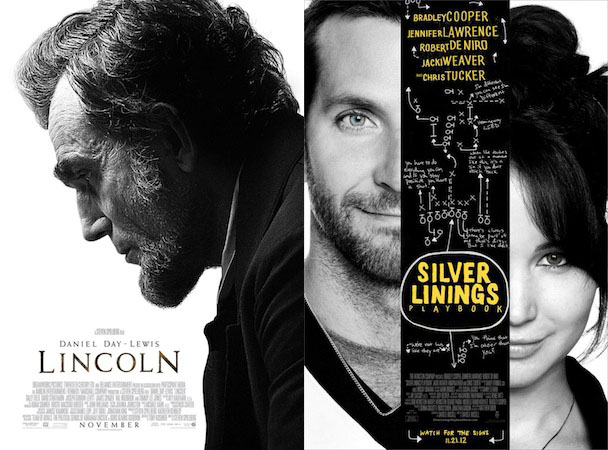
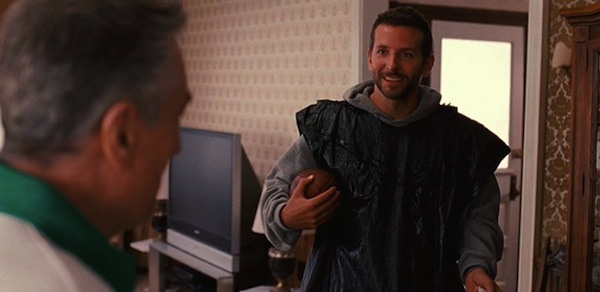
With the Skyfall and Les Misérables songs possibly being incorporated into broader tributes, will the other song nominees be given the same treatment? Maybe A Tribute to Climate Change for the song from Chasing Ice? How about A Tribute to Talking Bears for the song from Ted? They can work in “Bare Necessities” from The Jungle Book, “Movin’ Right Along” from The Muppet Movie, some Winnie the Pooh, those polar bears from The Golden Compass…I don’t know what to do with that Life of Pi song, though. Ugh, why did they nominate that?

I’m also excited to see what MacFarlane does as host. I’m not really a Family Guy guy (nothing against it, I just don’t watch it), but I enjoyed the hell out of Ted, and find him to be funny in general. I hope he doesn’t rely too much on character voices (I don’t think he will), but that he brings a streak of irreverence to the show. He has a take-no-prisoners sense of humor, but his love of old timey music also demonstrates a more traditional side. So in a way, he could be the perfect guy to host, especially under producers who are trying to modernize the show (as other producers have in recent years, with varying degrees of success) at the same time that they look to its past by incorporating lots of musical numbers, which can really be hit or miss. Plus, MacFarlane has his work cut out for him after Tina Fey and Amy Poehler threw down the gauntlet with their kick-ass stint at last month’s Golden Globes.

With all these tributes and production numbers, plus performances of the nominated songs, this could be one of the longest Oscars we’ve had in a while. Meron and Zadan have pretty much acknowledged that this ship ain’t coming in at three hours, though of course they hope to keep it close. I may be setting my DVR to go 20 or 30 minutes beyond the listed stop time. But this could also be one of the higher rated Oscars in a while. Not only is it possible that performers like Adele, Streisand and MacFarlane will draw in viewers, but the Best Picture nominees are actually a successful crop. The years with the biggest ratings are always the years with the biggest hits in the Best Picture race. 1997 – Titanic. 2003 – The Lord of the Rings: The Return of the King. 2009 – Avatar. Nothing this year is that massive, but six of the nine nominees (Argo, Django, Les Mis, Lincoln, Pi, Silver Linings) have grossed over $100 million domestically; some of them well over that. (Amazing to me that Lincoln, a 2.5 hour movie about passing an amendment, has made $177 million dollars…and without 3D jacking up the prices. How awesome is that? Only Spielberg, I swear…) A seventh Best Picture nominee – Zero Dark Thirty – is likely to cross the $100 million mark soon. (The Wrap.com’s Steve Pond, ultimate Oscars number cruncher, takes a closer look at how the ratings have related to the Best Picture grosses in recent years.) It all bodes well for a successful telecast.

One thing I’m not looking forward to? Don Mischer is returning to direct the show. So expect a few cutaways to the movie stars in the front rows and a shitload of cutaways to the middle of the auditorium with people who nobody recognizes. Just like you want from the Oscars. (Yes, I realize that the Oscar show director even being on my radar is a sign of how sad my life is, but if you remember how weirdly directed the last two shows were, you too would have wanted to know who was responsible). We’ll see if Mischer gets it together this year.

Alright, one last thing, and then I swear I will bring this excruciating write-up to an end. This is my 150th blog post. Now, that’s a bit misleading, because the blog has only existed for a little over a year and I’m nowhere near that prolific. Most of the content on this site existed in e-mail form prior to my putting it on the blog as I was getting it ready to launch. But it’s fitting that I should hit a milestone number while writing about the Oscars, since they were the subject of my earliest bloggish scribbles.  I’ve been writing Oscar predictions in one form or another since at least 2000, possibly earlier. The earliest such e-mail I could find was the one with my 2004 picks, and that’s now the oldest post on the site. Not sure what my point here was…I guess maybe to say thanks to anyone who actually reads the blog…especially these painfully long Oscar write-ups, which I really do for myself, without any expectation that anyone else could possibly be interested enough to read it all. If you try and succeed, you deserve a medal.

That about wraps it up. Enjoy the show, and good luck with your Oscar pools. If you go with my predictions, I hope I don’t steer you too far off course. Just remember: it’s all a guessing game. Hopefully you win big, and/or see your personal picks take home the gold…unless they conflict with my personal picks, in which case you can go to hell. Cheers!

February 19, 2013

The Year in Movies: 2012

Filed under: Movies — DB @ 2:10 pm
Tags: , ,

I’ve always responded to movies on an emotional level as opposed to an intellectual one. That’s one of the reasons I was never interested in being a critic and writing movie reviews. (That, and I don’t want to waste my time watching stuff I know is going to be bad and that I have no interest in.) Though I wish it were otherwise, I’m not much of a critical thinker, and rarely do I have a lot of analysis to offer about the movies I see. My reactions, even the most positive ones, tend to be on a gut level, and I’m usually not great at articulating why I respond to this movie or that. So the obsessive fan in me always approaches this annual post with mixed feelings. On one hand, I’m compelled to say something about the movies I enjoyed most during the year. On the other hand, I hate actually writing about them, and I’m almost never happy with what I have to say….which is a really convincing argument for you to go ahead and read it.

Anyway…my usual approach is to single out and rank the few movies that rose to best of the best for me, and then list my remaining favorites alphabetically, even if some really rank higher than others. This isn’t a top ten list, but rather a rundown of the movies – however many –  that left the biggest impression on me…with the full disclosure that over time, others that aren’t included here may grow on me to the point that I’ll regret leaving them off. C’est la vie…

1.
LINCOLN

There are countless stories to be told about the life of our 16th President, and a movie titled Lincoln might suggest it will try to tell a lot of them. Instead, director Steven Spielberg and Pulitzer Prize winning writer Tony Kushner hone in on one: the effort to pass the 13th Amendment to the Constitution, outlawing slavery. That decision to focus on a crucial and dramatic moment in Abraham Lincoln’s presidency – it was a month-long period, roughly, just before his second inauguration – allows for a focused, compelling story that still offers a fascinating insight into a legendary but mysterious figure in our country’s lore. The subject matter, while certainly interesting and dramatic, is not inherently exciting fodder for a movie, yet the result is completely riveting. Credit goes to Kushner’s phenomenal, language-rich script adapted from a small section of Doris Kearns Goodwin’s nonfiction tome Team of Rivals, and to the ever astonishing Daniel Day-Lewis.

As soon as it was announced that Day-Lewis would be playing this part, I knew we were in store for something special, and the actor does not disappoint. His Lincoln is every bit the immersive, hypnotic portrayal you would expect, as he presents the many complicated facets of a man leading the nation in the most troubling of times. We expect Lincoln to come across as intelligent, powerful and guided by an admirable moral compass. But the film also gives us a man who is warm, witty, sly, compassionate and haunted, and Day-Lewis embodies every nuance with such command, honesty and integrity that it seems like what we see on-screen isn’t a performance, but a resurrection. I could happily have continued watching him play the part long beyond the movie’s two-and-a-half-hour running time. And yet as much as Day-Lewis is key to the movie’s success, he is also absent during the lengthy scenes in which the amendment is debated in the House of Representatives. These sequences are as electrifying as any others in the movie, offering up great performances from Lee Pace and Peter McRobbie as the two most vocal opponents to the Amendment, and Tommy Lee Jones as its staunchest supporter. Jones, Pace and McRobbie are just a few among the deep reserve of talented character actors contributing to the movie’s success. Sally Field, David Strathairn, James Spader, Michael Stuhlbarg, Gloria Reuben, Jared Harris, Jackie Earle Haley…the list goes on, and they all deserve credit for their contributions, no matter the size of their part.

Kushner’s script may be as near a work of art as a screenplay can get. The time period calls for a formality of language, but Kushner makes the dialogue crackle and sing. It’s a joy to listen to these great actors speak such exceptional dialogue. There’s a scene in which Lincoln’s Cabinet discusses whether or not the amendment is necessary given the existence of the Emancipation Proclamation, and finally the president weighs in on why that order may or may not be legal, and why it is unsustainable as a solution to slavery. It’s easy to imagine the scene playing like a talking head moment in a documentary. But Kushner’s dialogue is so eloquent, and Day-Lewis so charming and incandescent, that we’re held spellbound, hanging on every word, oblivious to eating our vegetables because they’ve been so carefully crafted to taste like cake.

The movie’s flaws are few. The first scene (well, the second actually, in which Lincoln talks to some Union soldiers in the field), could have been omitted, as it indulges Spielberg’s tendency for over-earnestness. The movie also should have ended a few minutes earlier than it did (there’s a blatantly obvious moment at which to fade out), rather than including a coda that feels tacked on and out-of-place with the rest of the story. But everything in between works wonderfully, and Spielberg seems to be holding back and allowing the script and the actors to do their work. In collaboration with Kushner, Day-Lewis, and countless others in front of and behind the camera, he has brought an essential chapter of American history to vivid life.


2.
SILVER LININGS PLAYBOOK
David O. Russell has directed six movies, and there isn’t a weak one among them. His latest is stylistically similar to his previous, 2010’s outstanding The Fighter, in the way he brings the audience into such close proximity to the characters that all artifice seems to melt away and we’re left with something raw and real. The achievement is especially impressive here because the story has more than a few indie-cute trappings. The movie begins with Bradley Cooper’s Pat Solitano Jr. leaving a mental hospital after an eight month stay prompted by a violent reaction to discovering his wife’s infidelity. He moves in with his concerned parents (Jacki Weaver and Robert De Niro), determined to get his mind healthy and win back his now estranged wife. Those efforts are complicated when he meets his friend’s recently widowed sister-in-law Tiffany (Jennifer Lawrence), who has issues of her own. Oh, and in case you can’t tell from that brief synopsis, it’s a comedy.

A less talented filmmaker would not have been able to get past the more constructed elements of the plot; things that might have come off as overly quirky. But Russell has a way of teasing out the naturalism, allowing the film to transcend what could have been gimmicky. It starts with guiding his entire cast to sensational performances. The manic energy and brilliant timing and delivery brought by Bradley Cooper appear so effortless that it might be easy to overlook how great he is. This is his best performance to date. Jennifer Lawrence matches him move for move, locating the softness and vulnerability lurking just below Tiffany’s hard, no-bullshit exterior. Jacki Weaver’s loving mother trying to bring peace to the household is a great counterpoint to the equally loving but cunning matriarch that earned her an Oscar nomination in 2010 for Animal Kingdom. And De Niro…where has this guy been? His rich performance as Pat Sr. is a welcome reminder of what one of our greatest actors is capable of when he has material worth investing in. It’s an overdue return to form that allows him to play the kind of comedy, drama and at times even scariness that recalls glory day performances in films like Midnight Run, GoodFellas and Stanley & Iris. Just as essential to the mix are John Ortiz as Pat’s put-upon neighborhood friend Ronnie, Julia Stiles as Tiffany’s sister/Ronnie’s materialistic, controlling wife, Chris Tucker as Pat’s buddy from the mental hospital and Anupam Kher as his therapist.

Russell also deftly employs cinematography and editing to bring us up close and personal into Pat’s physical and mental space, creating an immediacy that infuses the entire movie. That stroke of inspiration by Russell, along with the performances he coaxes from his cast, make Silver Linings Playbook a comedy with a rare, exhilarating intensity.


The Rest:

ARBITRAGE
Writer/director Nicholas Jarecki pulls off a surprising trick in his crafty dramatic thriller: he gets the audience to root for, and at moments even empathize with, a crooked billionaire who represents the 1% that most of us have vilified in these troubled economic times. Jarecki’s equal partner in this feat is the perfectly cast Richard Gere, whose smooth performance as hedge fund manager Robert Miller is among his best ever. Miller’s charmed life faces a rapid unraveling when he falls under police suspicion for walking away from a fatal car accident, just as the impending sale of his company hits a roadblock, threatening to expose the fraudulent adjustments he’s made to its finances to cover a failed investment. What Jarecki and Gere capture so well is the bubble of wealth and privilege in which people like Miller are so deeply ensconced. He’s obviously extremely intelligent, but at the same time utterly clueless about the realities of life that average people face day to day…a fact that comes out in honest and sometimes amusing ways, particularly in his dealings with Jimmy Grant (Nate Parker), a young man from Harlem who becomes unwittingly involved in Miller’s troubles. The strengths of Jarecki’s script lie in believable details of Miller’s privileged world, in the contrast between that world and the one Jimmy occupies, and in making the viewer resent Miller for his greed and lies even as we understand that cooking the company’s books and trying to elude prison are as much acts of protection toward those who have given him their trust as they are acts of selfishness to save his own neck. Susan Sarandon is terrific as Miller’s wife, who knows more than she initially lets on, and Brit Marling is also superbly cast as Miller’s daughter who helps run his company.


ARGO

Ben Affleck’s third film as a director is his most ambitiously scaled to date. Working from a strong script by Chris Terrio, Affleck demonstrates absolute command with this thrilling, inspired-by-real-events story. He stars as Tony Mendez, a CIA operative who specializes in getting Americans out of tricky foreign entanglements. His most challenging mission comes up during the hostage crisis that begins when Iranians take over their country’s U.S. embassy out of anger over the Americans providing asylum to a toppled, now-ill and aging Shah. Six embassy employees manage to escape the building as it’s overrun, and they find refuge in the home of the Canadian ambassador, hiding in his house for over two months before Mendez arrives with a plan to get them out. That plan involves posing as a Canadian film crew who are in country to scout locations for a science fiction film. In order to sell the lie, Mendez enlists movie makeup artist John Chambers (John Goodman) and veteran producer Lester Siegel (Alan Arkin) to create a movie that must appear to be real but will never be made.

Similar to Apollo 13, in which Ron Howard managed to put us on the edge of our seats for a story whose outcome we already knew, so do Argo and Affleck put us through the ringer and make us forget what we know of the hostage crisis results. The movie is a briskly paced grabber from its opening sequence with the embassy takeover, yet it also manages to take a seamless detour into comedy as it depicts the Hollywood side of the operation, with fun performances by Goodman and Arkin. Never do the laughs seem ill-fitting or clumsily juxtaposed against the intensity of the situation, and the result is a movie that has broad commercial appeal by making audiences easily shift between laughter and anxiety.


THE AVENGERS

It worked. All that clever and strategic groundwork that Marvel Studios laid out beginning with the 2008 release of Iron Man paid off, as The Avengers brought together an eclectic crew of heroes and marvelously (no pun intended) succeeded in making a gigantic action movie that cares as much about its characters as its special effects. The big question I had going in, as I’m sure many others did too, was whether or not the movie could serve multiple protagonists, furthering their own storylines while also depicting the drama inherent in their coming together, allotting enough time to them in what needed to be an action-packed spectacle. The answer, courtesy of writer/director/geek God Joss Whedon, was a resounding yes.

That’s because the pleasure of The Avengers isn’t the spectacle, but the people in the midst of it: Robert Downey Jr.’s Tony Stark, Chris Evans’ Captain Steve Rogers, Mark Ruffalo’s Dr. Bruce Banner (and of course, their alter egos), Chris Hemsworth’s Thor, Scarlett Johannson’s Natasha Romanoff and Jeremy Renner’s Clint Barton (aka Black Widow and Hawkeye, respectively). Each character has been introduced in a previous Marvel film (with Ruffalo replacing Edward Norton), so The Avengers is partially a sequel. To its great credit, the movie advances each figure’s personal arc, so when we return to their own individual adventures, they’ll have arrived somewhere beyond where they were at the end of those movies and the beginning of this one. It’s impressive that with so many characters to serve, each one gets their due. Not only do they enjoy standout moments of action, but they also get chances to shine in quieter moments throughout the film. The climactic sequence, a massive battle against an invading alien force in the streets and skies of Manhattan, is big and packed with CGI…but because we’re so invested in these characters and the way they play off each other, the action and visual effects are not merely an end unto themselves. Storywise, the climax actually bears a strong similarity to the finale of Transformers: Dark of the Moon. But whereas that movie fails to impress beyond the quality of the effects and the orchestration of the action, The Avengers works because there are characters we care about, and watching them work together is a blast. These are all charismatic actors, and their interaction is what powers the movie.


THE CABIN IN THE WOODS

I’m generally not a fan of horror movies, and most of the ones I do like – classics like The Exorcist and The Shining – aren’t about a bunch of horny teenagers who run afoul of a blade-wielding boogeyman. So if taken on its surface, The Cabin in the Woods would not appear to be my cup of tea. But it turns out that what’s below the surface matters much more in this joyously clever twist on the formula. In fact, The Cabin in the Woods doesn’t really have a lot of typical scares. It’s more comedy than horror movie. At least, I found myself laughing often, more than I found myself jumping or squirming. Not much can be said without spoiling the fun, but in a nutshell, five college students take a weekend trip to a remote lakeside cabin, and, well…shit happens. Richard Jenkins and Bradley Whitford factor in as a pair of corporate drones, but that’s all I’ll say. Initially, most of the violence is handled off-screen or in relative darkness, so those of us with weak stomachs for the usual Saw/Hostel-like horror gore have little to worry about. By the time blood starts coming by the bucketload, things have become so giddily crazy and excessive that the violence is more comical than disturbing. I don’t know how it will play at home, on TV with just a few people in the room, but on the big screen with a packed crowd, this was definitely among the most fun theater-going experiences I had all year.


CLOUD ATLAS
Having avoided trailers in the hopes of being surprised, and having never read the novel by David Mitchell which was said to be unfilmable, I arrived at Cloud Atlas uncertain of what to expect. I exited enthralled, frustrated and eager to see it again, even with its nearly three-hour running time. The movie tells six separate but thematically connected stories spanning about 500 years, with the earliest set in 1849 and the latest in 2321. That set-up was the jumping off point for what became an uncommon exercise in commercial moviemaking: Run Lola Run helmer Tom Tykwer collaborated with the Wachowski siblings, Andy and Lana, creators of The Matrix, adapting Mitchell’s novel together and then working with two independent crews to shoot the movie before coming back together to edit it into a cohesive whole. The Wachowski’s filmed the sequences set in 1849, 2144 and 2321, while Tykwer shot the 1936, 1973 and 2012 stories. To highlight the interconnectedness, the filmmakers enlisted the principal cast members – including Tom Hanks, Halle Berry, Jim Broadbent (terrific), Doona Bae, Hugh Grant, Jim Sturgess, Hugo Weaving and Ben Whishaw – to fill roles in multiple storylines, playing central figures in some and supporting roles in others, while perhaps appearing only briefly in yet another.

If the movie isn’t entirely successful, it is nevertheless admirably ambitious and immensely watchable. It never quite hooked me emotionally, at least not to the extent that I felt it could have. And despite the cross-cutting between storylines, it didn’t achieve the kind of gut-level propulsion that Christopher Nolan created in The Dark Knight and Inception, an effect which should have been inherent in this storytelling approach. Yet the film is still skillfully edited and paced, moving smoothly and strategically between stories, and each individual tale is highly engaging as they run a gamut of genres, styles and eras. Cloud Atlas is love story, sci-fi action film, period drama, screwball comedy and mystery. It’s also a gorgeously mounted production, with superb set and costume design, cinematography, visual effects, makeup (a few distracting transformations notwithstanding) and one of the best music scores of the year. (Seriously, it was robbed of an Oscar nomination for its score, and for several of those other disciplines as well.) And on top of all that, there’s a sense of fun to the whole thing as we look to see which actors will pop up where, how they’ll look, and what meaning or connection there is – if any – to their roles across stories. Cloud Atlas makes me wish that more mainstream filmmakers would take more chances with unconventional material.


DJANGO UNCHAINED

Akin to his previous film Inglourious Basterds, Quentin Tarantino’s Django Unchained is a revenge fantasy boasting the director’s trademarks of tasty dialogue (the best of it going to Basterd‘s Oscar winner Christoph Waltz), colorful characters, excessive violence and inspired music selections. Jamie Foxx has fun in the title role, but it’s Waltz and Leonardo DiCaprio who stand out. Waltz plays Dr. King Schultz, a German bounty hunter who acquires the slave Django and offers him freedom in exchange for his help tracking down an elusive quarry. When he learns of Django’s intention to locate his still-enslaved wife Broomhilda (Kerry Washington, reunited with Foxx eight years after Ray), Schultz offers his help. The search leads to Broomhilda’s owner, the brash, vile Calvin Candie (DiCaprio) who presides over an infamous Mississippi plantation dubbed CandieLand. It’s great to see DiCaprio work as a member of an ensemble rather than the head of it, and to see him play more of a character actor’s role than he usually takes on.

On the whole, I can’t say this is Tarantino at his absolute best. I never felt the kind of tension in my stomach that I got from certain parts of Pulp Fiction, Jackie Brown or Basterds, and there were definitely scenes that should have had that quality. There was also a missed opportunity with Samuel L. Jackson’s character of Candie’s head house slave Stephen, whose sinister and despicable qualities are too often undermined in favor of playing up the humor of his being a foul-mouthed sycophant. Tarantino could have gone further and darker with Stephen, and it would have been great to see Jackson given the opportunity to go there. Still, the movie is a blast, even without shying away from the brutalities of slavery. There’s nothing glib about the savage treatment we see inflicted on the slaves, and the harsher the slavers are, the more satisfying it is to see Django dish out their comeuppance.


THE GREY

Director Joe Carnahan made an impressive mark in 2002 with the Jason Patric-Ray Liotta cop drama Narc, but his next two films – Smokin’ Aces and The A-Team – went big, loud and dumb. So the restraint he shows with The Grey is impressive and unexpected. Those two adjectives describe the whole movie, in fact: impressive and unexpected. Universal Pictures marketed the film as Liam Neeson vs. a bunch of wolves, but in truth what we get is more interesting than that. Neeson plays a hunter employed at an oil rig in Alaska to keep predatory wolves at bay. A company flight back to Anchorage crashes, leaving only a handful of survivors. They make their way across the harsh wilderness in hopes of survival, but must stave off the extreme cold, high altitude and yes, territorial wolves. But the drama is less focused on creating suspense around who will survive and who won’t than it is in putting us alongside these men who know that, in reality, they’re all likely to die. The ensemble and the narrative are tight, with the movie feeling much brisker than its two-hour running time. Directed by Carnahan in a way that feels more indie than Hollywood, this is a powerful drama of man vs. nature that was probably dismissed by a lot of people due to misleading marketing. It’s much better than you expected it to be.


THE HOBBIT: AN UNEXPECTED JOURNEY

If not quite as strong as the three films comprising the peerless Lord of the Rings trilogy, the first installment of The Hobbit series is still a wondrous and welcome return to Middle Earth as interpreted by Peter Jackson. Inheriting the role of a younger Bilbo Baggins from Ian Holm (who, with Elijah Wood as Frodo, appears at the beginning of the tale), Martin Freeman brings charm to spare, but also keeps Bilbo’s naiveté, fear and uncertainty in sight. Ian McKellan slips easily back into the grey cloak and unkempt beard of Gandalf, and we are treated to return appearances by Cate Blanchett, Hugo Weaving and Christopher Lee in a sequence that helps draw out the connections between this story and events of The Lord of the Rings. If the full ensemble of actors playing the dwarves don’t all make the impression that the members of the Fellowship did, I’ll chalk it up to the fact that there are 13 of them, with many similar sounding names, and the story – so far, at least – can’t serve them all equally. But those who get a bit of time in the spotlight all registered impressively, with Ken Stott’s elder Balin, James Nesbitt’s cheerful Bofur, Dean O’Gorman and Aidan Turner’s young whippersnappers Fili and Kili, and Richard Armitage’s stoic leader Thorin all standing out.

At nearly three hours, the movie does feel a bit long, though without knowing where the next two films will go as they draw not just from The Hobbit itself but from J.R.R. Tolkien’s vast background material, I’m happy enough revisiting Middle Earth to refrain from saying what should have been cut. The dwarves’ encounter with a trio of hungry trolls feels extraneous, but is one of the book’s signature scenes and is an early indicator for the dwarves of Bilbo’s cleverness. Scenes focusing on wizard Radagast the Brown also seem less than essential, yet they set up important things to come. The dwarves’ capture by the Goblin King, along with their escape, drags on a bit and feels overly busy, yet their detainment is necessary for Bilbo to lose his way and come upon Gollum, an encounter which unsurprisingly makes for one of the movie’s highlights. (Andy Serkis is again fantastic as the slinking, sneaky, pitiable creature.) So if I had some issues here and there, none were enough to make me weary of the movie or less excited for the next film. Jackson and his crew, many of them back from The Lord of the Rings, have no trouble readjusting to Tolkien’s rich world and making a film that fits snugly with those predecessors. It might not have drawn me in on quite the same emotional level or sent as many shivers along my spine, but I was still more than satisfied.


LES MISÉRABLES

I read Victor Hugo’s novel Les Misérables in high school, but this long-time-coming film was my first exposure to the beloved musical take on the story. It tells of former convict Jean Valjean (Hugh Jackman), who breaks his parole and assumes a new identity on his quest to become a better man, but is unable to escape the dogged pursuit of police inspector Javert (Russell Crowe). My first surprise was that this was a true musical. With the exception of only a handful of lines, everything is sung. My second surprise was how relentlessly stirring the music and story are, as Tom Hooper’s direction brings out the epic and the intimate in Hugo’s intricate narrative set against the backdrop of the French Revolution. Much has been made of the decision to have the actors all sing live during each take, rather than lip-sync to pre-recorded tracks (though contrary to what some of the publicity would have you believe, this is not the first time it’s been done). Given that the movie is entirely told through music, the decision no doubt lends to the power of the performances. There is a raw, deeply felt quality to the singing, especially from Jackman, Anne Hathaway and newcomer Samantha Barks (reprising her role from a 2010 stage production in London), the latter two conveying utter heartache in their respective performances of the musical’s best-known songs, “I Dreamed a Dream” and “On My Own.” Even Crowe, who cuts a formidable Javert, impresses as a singer after a slightly rocky start. He seems to be straining a bit to hit the notes in his first two numbers, but the remaining songs fit comfortably in his range, and though he’s not the strongest singer of the bunch, he certainly holds his own. Meanwhile, key roles in the story are also filled out by lesser known actors and new discoveries, notably Aaron Tveit as revolutionary leader Enjoras, and child actors Daniel Huttlestone as the precocious street kid Gavroche and Isabelle Allen as the young Cosette, who is taken in by Jean Valjean after her mother’s death.

The production is handsome and appropriately grand for the scale of the story, but it’s the music and the performances that pack the punch, combining a variety of vocal styles into a dazzling aural tapestry, from solitary tunes (like Eddie Redmayne’s trembling “Empty Chairs at Empty Tables”) to duets (Redmayne and Amanda Seyfried as the grown Cosette singing, “A Heart Full of Love”) to a rousing number like “One Day More” that cross-cuts between nearly all the characters on the eve of the climactic showdown in the streets of Paris.

I know the movie has become a love-it-or-hate-it sensation, and I know many people have taken issue with Hooper’s directing style; I’ve taken issue with it myself in regards to his past work. But this time, I wasn’t even aware of his normally aggravating visual choices, so caught up was I in the story and the music. Or maybe I just don’t agree that he made such choices this time around. All I know is that the movie flew by for me, and I loved it from beginning to end.


THE MASTER

Writer/director Paul Thomas Anderson is one of the most original voices in American film today, and each picture he makes is more unusual and puzzling than the last. They are always fascinating, however, and The Master is no exception. It’s a dense and demanding movie that can not be easily digested after only one viewing, if at all. I haven’t had the chance to revisit it yet, and so I remain uncertain of what to make of it. I don’t know what opinions I’ll come to after delving back in, but I can’t wait to see it again. And even if Anderson’s point continues to elude me, I’m okay with that. I’ve spoken before of directors like David Lynch and Terrence Malick taking me on journeys that I can’t always interpret, but which never fail to captivate.

That captivation begins with the amazing performance by Joaquin Phoenix as Freddie Quell, a troubled WWII veteran who returns home but can’t readjust or find his place. His wanderings eventually bring him into contact with Lancaster Dodd (Philip Seymour Hoffman), an author, doctor and founder of a religious movement that has attracted dedicated followers and wary skeptics. Dodd takes a liking to Freddie and welcomes him into an inner circle that includes his wife Peggy (Amy Adams), his son, his daughter and her fiancée. Freddie initially devotes himself to Dodd and his movement, but finds it just as difficult to settle in there as he does everywhere else.

Phoenix throws himself into the part with such ferocious abandon that it’s almost scary at times. Totally unpredictable, he seems to blur the line between where the actor ends and the character begins. At the same time that Freddie is an angry, adrift man, he’s a wounded, frightened child seeking love and acceptance. Dodd recognizes these struggling factions within Freddie, and plays on both of them, perhaps more to his own ends than to Freddie’s. Where Freddie is all raging and impulse, Dodd is calm and control (or so he tries to be). As such, Hoffman’s performance is appropriately reigned in and tight, but he’s just as effective as Phoenix and no less committed. Amy Adams impressively completes the triangle, depicting Peggy’s public loyalty to her husband, while making her, in private, a steely presence who is perhaps pulling more of the strings than we realize. Whether The Master ultimately has something profound to say (or succeeds in saying it), the story and characters it provides for this trio of actors, and especially the no-holds-barred performance given by Phoenix, are enough to make it an unforgettable piece of work.


MOONRISE KINGDOM

Another writer/director named Anderson, and another of American film’s most original voices, Wes Anderson’s latest triumph is also the year’s best love story. On the New England island of New Penzance, in the summer of 1965, Eagle scout Sam Shakusky and local girl Suzy Bishop run off together, mobilizing a motley crew to find them before a hurricane hits the island. In what may be Anderson’s most winsome movie to date, newcomers Jared Gilman and Kara Hayward give charming, intimate performances as the sweet, lonely kids who fall in love and simply want to be together. The supporting characters have unfulfilled desires of their own, which are brought to the surface as they get involved in Sam and Suzy’s drama. Bruce Willis, Edward Norton, Frances McDormand and Tilda Swinton make welcome additions to the Anderson stable, while the director’s go-to guys Bill Murray and Jason Schwartzman are great in small roles. But this movie belongs to Gilman and Hayward, terrific finds who are up to the task of handling Anderson’s unique humor and style. As always, the director meticulously arranges and choreographs every frame, marrying art direction, costume design, cinematography and editing in ways that illuminate the narrative rather than distracting from it.


THE PERKS OF BEING A WALLFLOWER

In a way, this would make a nice companion piece to Moonrise Kingdom, as another perceptive story of troubled teens and their complicated lives. There have been so many movies that attempt to capture the feelings of being young. It’s almost a genre unto itself, and within that genre, “young” can span a range of ages such that movies as varied as My Girl and The Graduate both fit the mold. The high school movie is its own sub-genre, and The Perks of Being a Wallflower, which has been favorably compared to the movies of John Hughes, earns a prominent position in that grouping. Logan Lerman gives a beautiful performance as Charlie, a quiet, thoughtful kid entering high school after some personal difficulties, mostly trying to walk the halls unnoticed. He takes a chance in approaching a senior named Patrick (the dynamite Ezra Miller), in whom he sees a potential friend. Meeting Patrick leads to meeting Sam (Emma Watson), Patrick’s step-sister, and soon Charlie is drawn into their circle of friends and finds himself slowly emerging from his shell, while continuing to deal with his demons and learning that his new friends are contending with struggles of their own.

The movie sometimes presents the characters’ youthful joy and abandon as if it’s the first movie to ever suggest that youth begets feelings of joy and abandon, or that these are the first teenagers to ever experience those feelings. But that can’t take away from the emotional honesty the film achieves as we learn more about the characters, what they’ve been through and what they’re going through. The movie is written and directed by Stephen Chbosky, based on his own acclaimed novel, and like John Hughes, Chbosky displays a keen insight into the secret life of the sensitive teenager. He has also cast the movie magnificently. Lerman is wonderful, never overplaying Charlie’s emotional baggage, always honest and at times heartbreaking. (There’s a moment when he’s at a party, high for the first time, and makes a startling revelation to Sam so casually that it took my breath away; it’s one of the best delivered lines in any movie all year.) Watson, in her first major role outside of the Harry Potter franchise, easily sheds Hermione, adopting an American accent and more importantly, making believable Sam’s vulnerabilities and past problems. As Patrick, Ezra Miller pops off the screen, just as he did in 2011’s little-seen indies We Need to Talk About Kevin and Another Happy Day, though here he gets to give a more joyful performance than the darker work he did in those films…not that he doesn’t get to play it serious as Patrick too. Perks comes with some of the trappings of the high school genre, but it taps into some authentic, universal truths that ultimately make it a great addition to the pantheon. If you ever went to a school dance and spent most of the night off to the side, or attended a party and sat quietly rather than mingling, or watched someone you were crushing on get together with the wrong person, or if you can simply recall what it was like to be young and hanging out with your friends on a Saturday night, you’ll connect with The Perks of Being a Wallflower.


THE SECRET WORLD OF ARIETTY

Another winner from Japan’s Studio Ghibli, this animated delight is based on the classic children’s story The Borrowers, by Mary Norton. Arietty belongs to a race of tiny people called Borrowers. She lives with her parents beneath a house in the country, and by night her father sneaks in to take the things their family needs – a cube of sugar, a tissue…little things that won’t be missed. The Borrowers are not supposed to be seen, but Arietty is spotted in the garden by a sickly boy named Sho, who has come to his aunt’s house to rest prior to having heart surgery. The Borrowers fear humans, but Sho attempts to befriend Arietty and alleviate her worries, with mixed results. The screenplay was co-written by Hayao Miyazaki, the Ghibli founder and Oscar-winning director of the exquisite Spirited Away. Like that film, my affection for Arietty has a lot to do with its depiction of a world hidden within or near to our own, and how its characters interact with the outside. Mysterious, touching and bittersweet, The Secret World of Arietty is a great addition to Studio Ghibli’s legacy of lovely, traditionally animated films. The U.S. dubbed version features voice work by Carol Burnett, Amy Poehler and Will Arnett, but I recommend the subtitled version in its original Japanese language.


SKYFALL

It shouldn’t be a surprise that Academy Award winning director Sam Mendes would deliver what is, by all accounts, one of the best installments of the 50 year-old James Bond franchise. Skyfall honors the Bond tradition while also carving its own unique place within the canon by daring to lift the veil on the world’s most famous spy. I don’t think anybody wants to put Bond on the psychiatrist’s couch to discover every event in his childhood that made him the resourceful and frosty spy he is today, so screenwriters John Logan, Neil Purvis and Robert Wade deserve credit for exploring Bond’s background without demystifying him. In fact, he might even be a little more enigmatic than ever by the end.

Javier Bardem’s vengeful, teasing Silva will surely take his place high on the list of Bond villains. He enters the movie late, but it’s a fantastic entrance all around, from the way Mendes and cinematographer Roger Deakins present it to the quiet humor with which Bardem plays it. In addition, the movie does right by its heavy focus on Judi Dench’s M. Her relationship with Bond continues to walk a tightrope as their professional obligations can’t mask their mutual affection – a line which Dench and Daniel Craig continue to play beautifully. After two films that stripped away the gimmicky side of the Bond franchise, Mendes and the screenwriters reintroduce some of those classic and playful elements while still maintaining the grittier tone that was ushered in when Craig assumed the mantle in Casino Royale. By the time Skyfall ends, it has ingeniously come around to a sense of the familiar and positioned the franchise to move forward in a way that honors its past while looking to the future.


SOUND OF MY VOICE

From the moment it begins, this gripping indie film thrusts us into a state of uncertainty and never lets up. Each time we think we’re coming to the end of the rabbit hole, it takes another turn. All I’ll reveal about the premise is that Los Angeles couple Peter and Lorna (Christopher Denham – also featured in Argo – and Nicole Vicius) attempt to infiltrate a cult in order to expose its leader, a young woman named Maggie (Brit Marling). Maggie claims to be…well, I won’t tell you….but she claims something that seems quite impossible, and Peter and Lorna are out to learn the truth. Quiet, disturbing, and full of surprises, watching the movie is as much a step into the unknown for the audience as investigating Maggie is for Peter and Lorna. And just as they are confounded by what they discover, so are you likely to be.  Admittedly, I found the movie somewhat bewildering in the end, due to a conclusion that is at once satisfyingly unexpected but frustratingly unresolved. Yet despite being unclear about what happens, I couldn’t shake the simplicity and quietly unnerving story. The movie runs a short 90 minutes, which means you won’t be sucking up too much time when it ends and you’re compelled to re-watch it in the hopes of figuring out what the hell just happened.

X

And there it is. As always, there are many other movies I really enjoyed this year, even if they didn’t quite earn a place on the list. Part of me wants to mention a few of them, but I know that would quickly turn into a list of 30 more movies, all with an effort at commentary. I gotta let it go. So last order of business: it’s always fun to think about some categories that don’t exist at the Oscars but would be kinda cool. For my own amusement, here are a few of them, with what I might have nominated.

BEST POSTER

(Larger Versions: The Cabin in the Woods; Don’t Go in the Woods; Life of Pi; The Master; Moonrise Kingdom)

BEST CASTING
Les Misérables; Moonrise Kingdom; The Paperboy; The Perks of Being a Wallflower; Skyfall

BEST ENSEMBLE
Argo; The Avengers; Lincoln; Silver Linings Playbook; Zero Dark Thirty

BEST BODY OF WORK
Mark Duplass (People Like Us; Safety Not Guaranteed; Your Sister’s Sister; Zero Dark Thirty)
James Gandolfini (Killing Them Softly; Not Fade Away; Zero Dark Thirty)
John Goodman (Argo; Flight; ParaNorman; Trouble with the Curve)
Matthew McConaughey (Bernie; Killer Joe; Magic Mike; The Paperboy)
Scoot McNairy (Argo; Killing Them Softly; Promised Land)

BEST TRAILER
Cloud Atlas (Extended); Django Unchained; Frankenweenie (“Homage”); The Master (Teaser #1); Zero Dark Thirty

X
Okay, I’ve had my say. To wrap it up, here’s a look back at the year in film that was.

X

February 8, 2013

Bringing Back That Love and Feeling

Filed under: Movies — DB @ 12:22 pm
Tags: , , ,

The effort on the part of Hollywood’s major studios to convince us that our moviegoing experience has been incomplete without the addition of a third dimension marches on, and today brings its most curious example yet: the 3D-converted re-release of Tom Cruise’s 1986 blockbuster Top Gun. In IMAX, no less! It’s not the first older film to be transferred to 3D and brought back to theaters, but there is something different about this one. The previous efforts have been animated or family movies like The Lion King, Finding Nemo and Star Wars Episode I: The Phantom Menace, part of a massively popular franchise. Then there was Titanic, the second most successful movie of all time…from the same director as the movie that displaced it while also ushering in this new age of tri-dimensional madness.

Top Gun doesn’t fit the mold. It’s not a family movie, and while it was a big hit, it was not a Titanic-sized hit. I don’t know if it will be the best test of audiences’ interest in seeing older movies re-released in 3D. Will the fans who grew up with it flock to see it again? Do people who grew up after it have any interest? Are the speeding jets enough of a draw for today’s teens and twentysomethings?

Paramount isn’t allowing much time to find out. The re-release is a special engagement, in theaters for only six days. I’m not sure what kind of business sense that makes. Even if it does well, can it do well enough in six days to justify the cost of the 3D conversion, the marketing (not that I’ve seen much, which doesn’t seem any way to help its chances) and the distribution? And if it does poorly, well…those costs could still go uncovered. Then again, if they let it play for a longer period, I doubt it would do robust business. It will be available on 3D Blu-Ray a few days after the theatrical run, but the percentage of homes with a 3D Blu-Ray player is tiny, so I can’t imagine those sales will add much to the tally.

Those of us who saw the movie in our youth may still enjoy it, but we also recognize its silliness and cheesiness. Still, whatever your feelings for Top Gun are today, and whether or not this re-release will be a hit, its legacy can’t be denied. It stands as one of the defining movies of the 1980’s. The Cold War may have been in its final years, but tensions remained high between the United States and the Soviet Union in 1986, and the movie’s portrait of American supremacy and heroism – however corny – was catnip to the masses of patriotic, Reagan-era moviegoers. It was the highest grossing film of its year, it made Tom Cruise a superstar, and spawned a hugely successful soundtrack that included Kenny Loggins’ “Danger Zone” and Berlin’s “Take My Breath Away,” which won the Academy Award for Best Original Song. (When I was in 8th or 9th grade in the early 90s, I learned “Take My Breath Away” on the piano in an effort to impress a girl who was all about Top Gun. It didn’t work.) Also, we have to acknowledge that the movie gave us such classic lines as…

I feel the need…the need…for speed.

Son, your ego is writing checks your body can’t cash.

Hey Goose, you big STUD!

and of course, the eminently quotable…

I could tell you, but then I’d have to kill you.” (This is common enough that I suppose it could have originated elsewhere, but as far as I know we have Top Gun to thank for introducing it to the masses.)

In addition, the movie provided some of the earliest memorable appearances by Tim Robbins, Meg Ryan and Adrian Pasdar. And perhaps most importantly, without Top Gun there would be no Hot Shots!

When is that underrated gem getting a 3D re-release?

Prior to his shocking and untimely death last year, director Tony Scott was pursuing a sequel to the movie that would detail what happened to guys like Maverick and Iceman when the military’s fighter jet program evolved from pilots actually flying missions to kids raised on video games sitting at a simulator and controlling drones. Cruise was on board with the concept, and he and Scott were scouting locations shortly before Scott died. The project fizzled in the aftermath of his death, though producer Jerry Bruckheimer says he’s still trying to figure a way to do it. (For what it’s worth, Scott supervised the 3D conversion before he died, so this re-release bears his seal of approval.)

I haven’t even mentioned one of the most oft discussed elements of Top Gun: its undercurrent of homoeroticism. Sorry, did I say “undercurrent?” I meant front and center, unmistakable, volleyballtastic depiction of guys whose machismo ain’t foolin’ nobody. Allow Quentin Tarantino to explain, in this scene from the 1994 indie flick Sleep With Me.

This re-release should have included some George Lucasesque alterations where Maverick, Ice, Slider and the others (except for that married big stud, Goose) openly and unabashedly embraced their homosexuality instead of trying to keep it in the cockpit, so to speak. It may have been tough to get away with in 1986, but today’s audiences would embrace it without a second thought. Then again, a more open depiction would take some of the fun out of a movie that is so quintessentially 80’s.

So if you take this opportunity to revisit Top Gun, enjoy its campy closetedness, its bitchin’ dialogue, its rockin’ soundtrack, its performance by Tom Cruise early in his prime, and of course its extra dimension of high-fivin’, Russkie-fightin’, jet-flyin’ action. America, fuck yeah!

« Previous PageNext Page »

Blog at WordPress.com.